- The paper demonstrates a multi-fidelity Monte Carlo estimator that leverages high-fidelity DSMC and low-fidelity panel models for cost-effective drag uncertainty quantification in VLEO.
- Using pilot-estimated cost ratios and high LF-HF correlations (ρ > 0.94), the method achieves up to a 20× RMSE reduction in mean drag estimation across CubeSat and operational cases.
- Validation via analytic models and satellite benchmarks confirms MFMC's robustness for efficient uncertainty propagation in the rarefied and transitional regimes of VLEO.
Multi-Fidelity Monte Carlo Estimation of Satellite Drag in Very-Low-Earth Orbit
Motivation and Problem Context
Uncertainty quantification (UQ) for aerodynamic drag in very-low-Earth orbit (VLEO) demands simultaneous accuracy and computational tractability. In the rarefied and transitional Knudsen regimes encountered at VLEO altitudes (200–500 km), high-fidelity molecular simulations, such as Direct Simulation Monte Carlo (DSMC), are needed to resolve the physics of gas-surface interactions. However, the cost of DSMC makes large-scale Monte Carlo UQ intractable at design or mission analysis scales. Low-fidelity panel methods offer speed but omit intermolecular collision physics essential in transitional regimes. This paper proposes a Multi-Fidelity Monte Carlo (MFMC) estimator that leverages DSMC as the high-fidelity (HF) model and two variants of the free-molecular panel method ADBSat as low-fidelity (LF) control variates, enabling unbiased estimation of mean and variance in drag with reduced computational expense.
Multi-Fidelity UQ Framework
The methodology rests on MFMC control variates based on the framework of Peherstorfer and Willcox, using pilot-estimated costs and correlations to allocate samples across fidelities for a fixed computational budget. The uncertain input space includes thermospheric species densities, temperature, and angle of attack, with atmospheric states resampled from MSISE-2.1 climatological data. The HF model (DSMC in PICLas) resolves rarefied flow on unstructured meshes with appropriate gas-surface interaction accommodation parameters. The LF models are two ADBSat variants distinguished by their gas–surface interaction models: Sentman and Cercignani–Lampis–Lord (CLL).
The MFMC estimator targets the first two moments of the drag coefficient CD via coupled nested sampling. Correlations and cost ratios from pilot runs drive optimal control-variate weights and sample allocations, with all moment estimation executed on independent, non-overlapping samples between pilot and production stages.
Verification via Analytic Toy Model
Correctness of the MFMC implementation is established via an analytic test case. The moments of a composite polynomial function with synthetic cost ratios are estimated using both HF-only Monte Carlo and the proposed MFMC. The empirical RMSE for the MFMC estimator matches theoretical predictions, achieving over a 5× reduction in error for the same HF-equivalent budget.
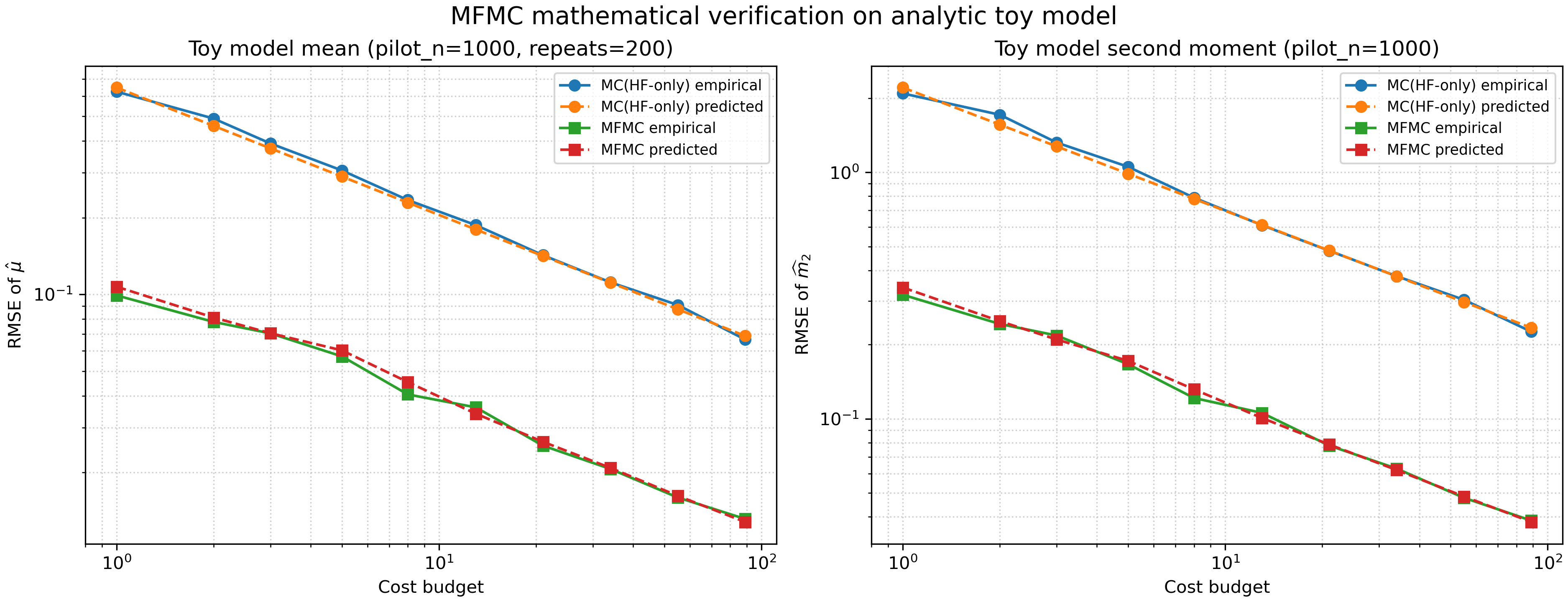
Figure 1: Analytic toy-model verification; RMSE for mean and second-moment estimation with HF-only MC and MFMC as a function of total simulation cost.
Correlation Analysis and Control Variate Efficacy
MFMC performance fundamentally depends on the Pearson correlation between DSMC and panel methods for both CD and CD2. The correlation between DSMC (PICLas) and ADBSat-LF outputs is systematically quantified for Cube and SOAR 3U CubeSat geometries at 200, 300, and 400 km. Across tested cases, CLL and Sentman models exhibit correlations ρ>0.94, reaching ρ≈0.995 for the canonical Cube at lower altitudes and even operational satellites such as GOCE.
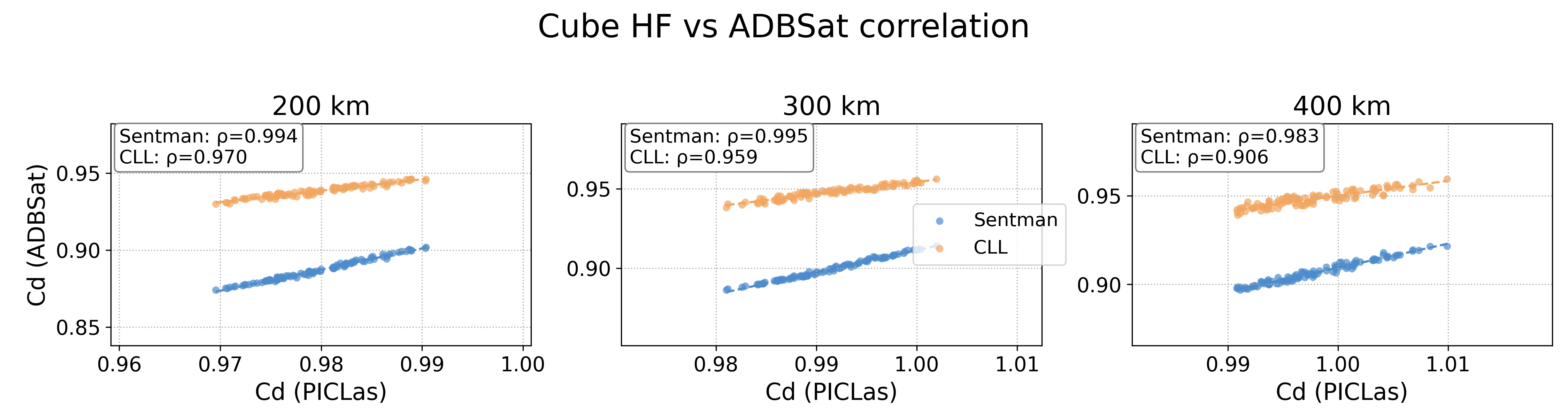
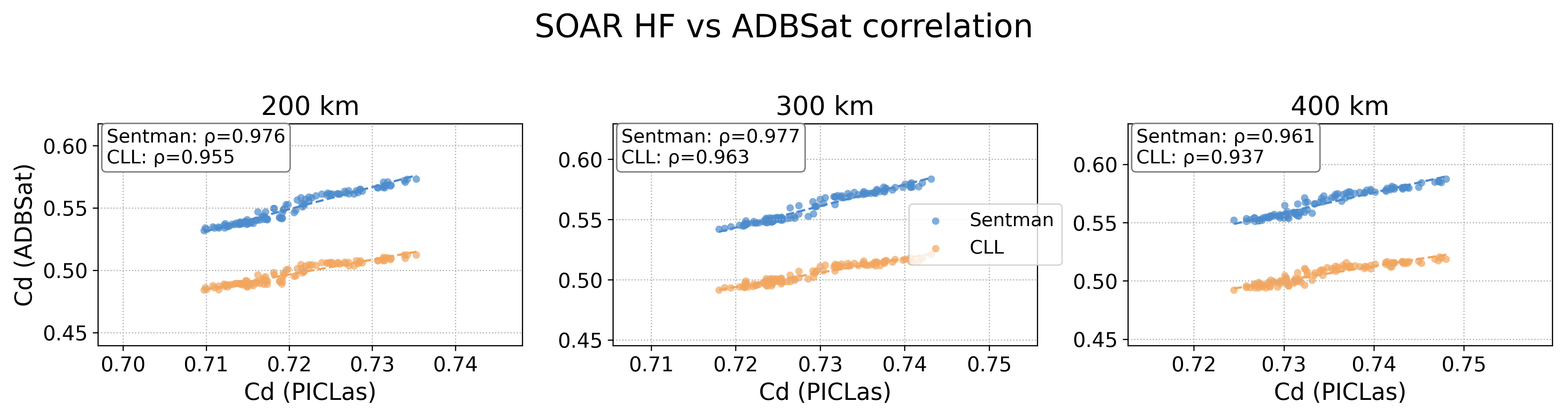
Figure 2: Cube geometry: Coupled DSMC/ADBSat predictions at 200, 300, 400 km, demonstrating high LF-HF correlation—especially for the Sentman configuration.
Validation and Benchmarking
Reference Generation and Convergence
For each case, a robust HF reference is built with objective convergence criteria: moving-window stability and 95% confidence interval width thresholds for both mean and variance of CD. This protocol assures that MFMC performance is always assessed relative to a statistically converged reference.
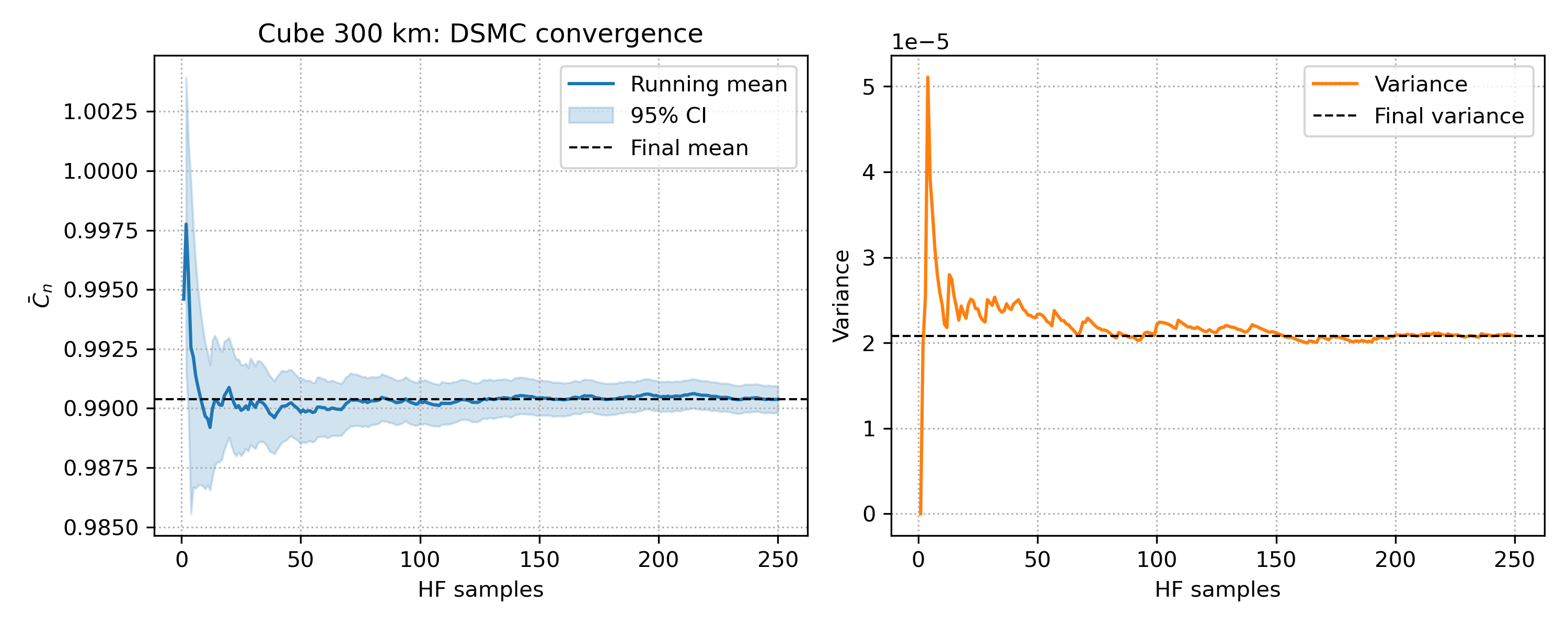
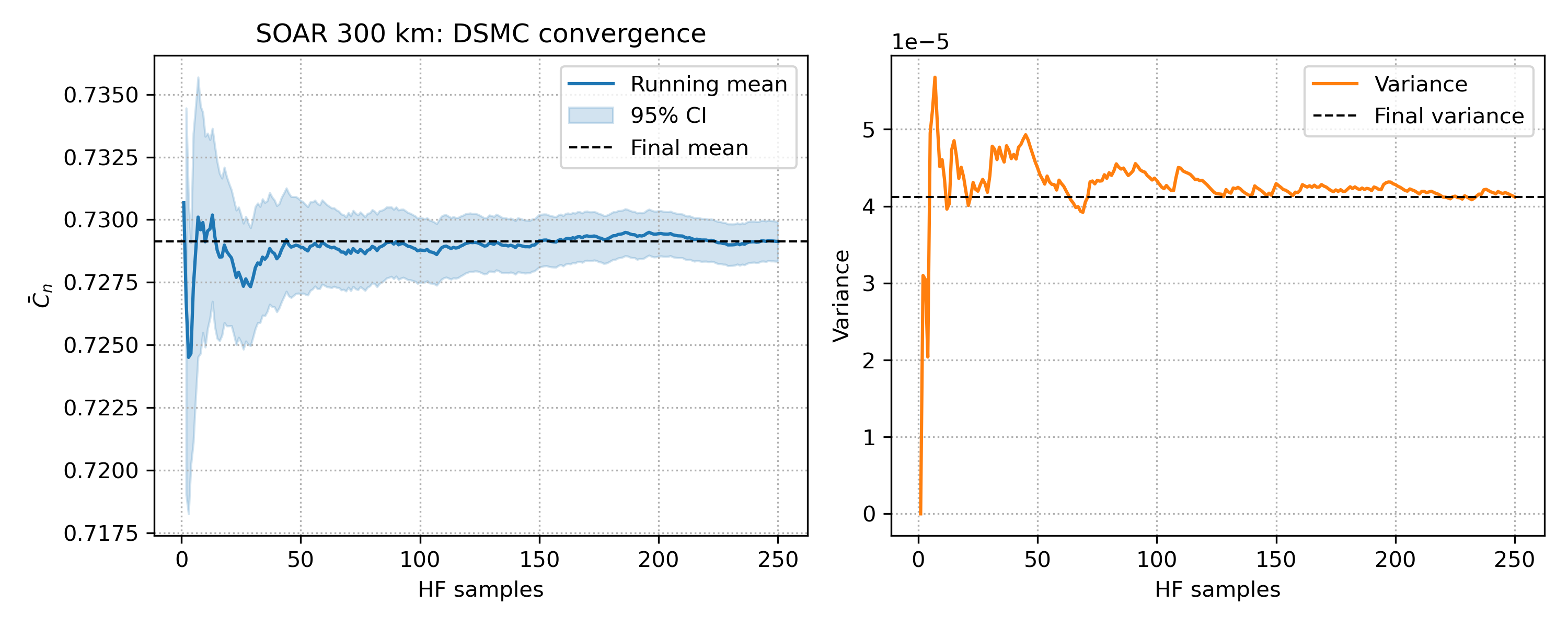
Figure 3: DSMC running mean and variance for Cube at 300 km; converged values and confidence intervals are established per the manuscript's criteria.
CubeSat and SOAR Benchmarks
MFMC achieves a 3×–4× reduction in mean estimation RMSE versus DSMC-only MC for Cube geometry across 200–400 km, and comparable but somewhat smaller gains for SOAR. The improvement for 5×0 is more modest due to cancellation sensitivity in finite-sample variance estimation.
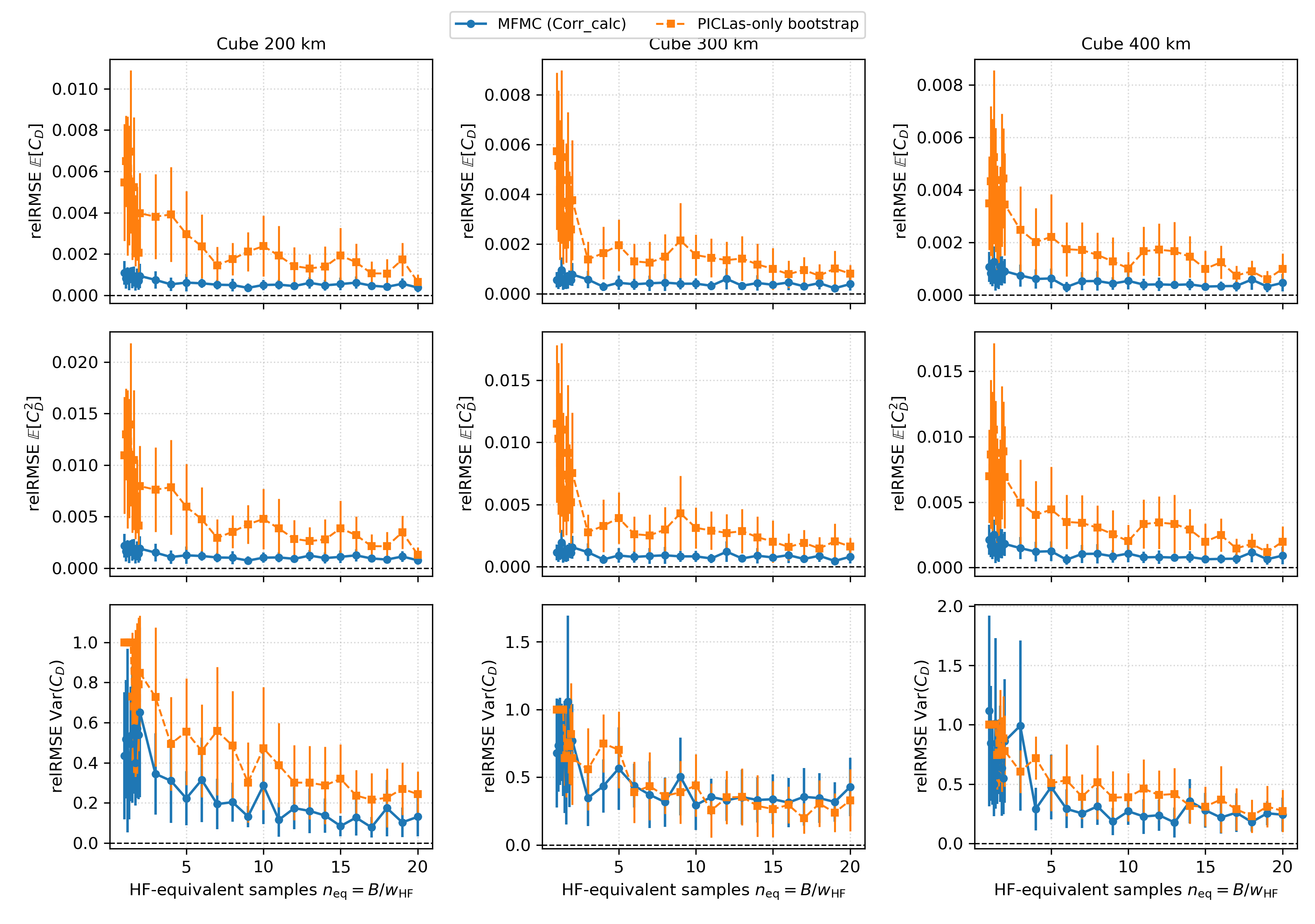
Figure 4: Relative RMSE for 5×1, 5×2, and 5×3 on Cube geometry across altitudes, showing pronounced MFMC gains especially for mean and second moment estimates.
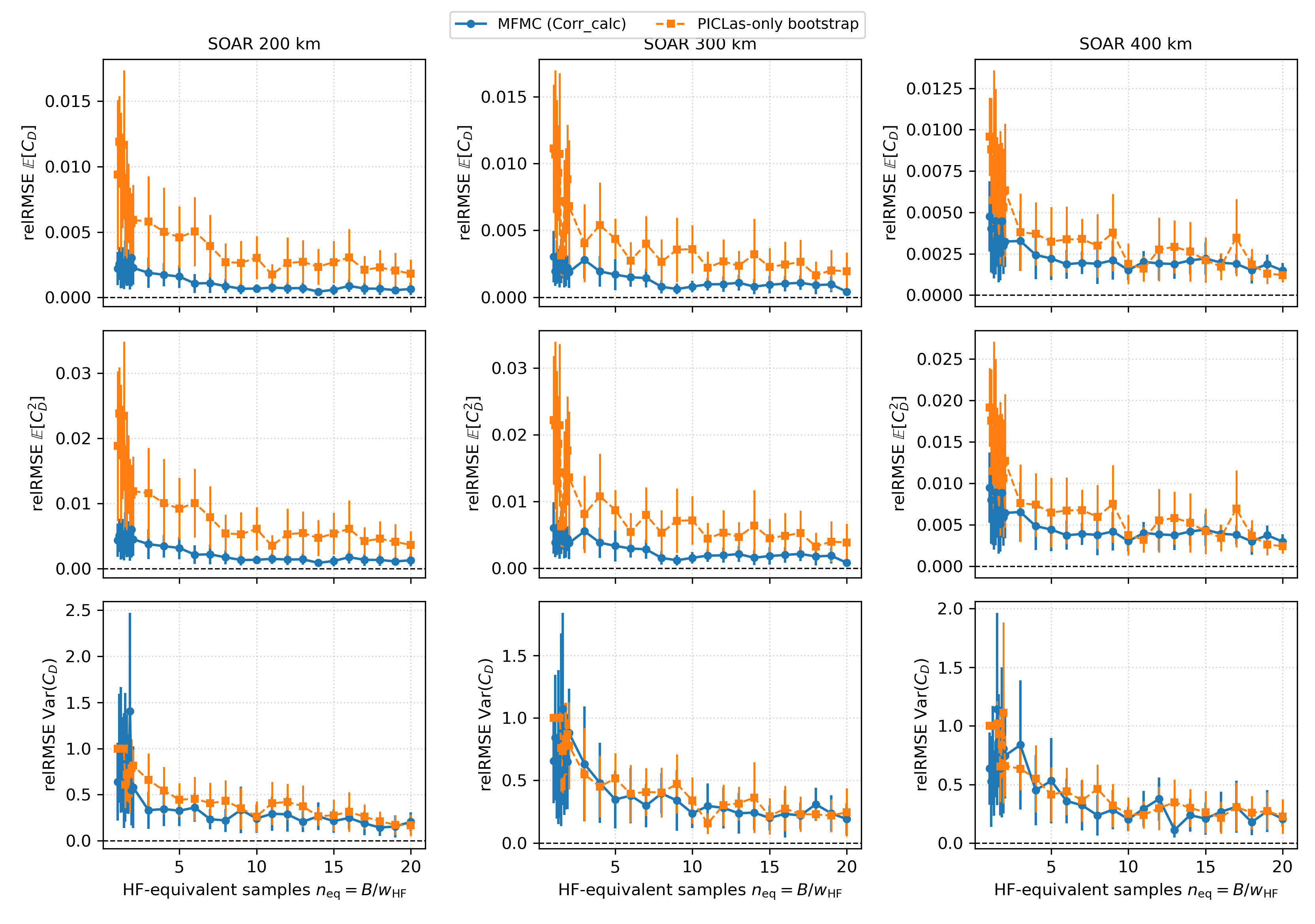
Figure 5: Verification on SOAR 3U geometry; MFMC yields consistent RMSE reduction for the first two moments, with variance improvements remaining more case-dependent.
Operational Satellites: GOCE and CHAMP
The method generalizes to realistic operational conditions. On GOCE at 250 km (with 5×4), MFMC outperforms bootstrap DSMC-only MC by factors up to 5×5 for the mean and 5×6–5×7 for variance. On CHAMP (454 km), relRMSE improvements for mean and second moment approach 5×8, with variance error also significantly reduced.
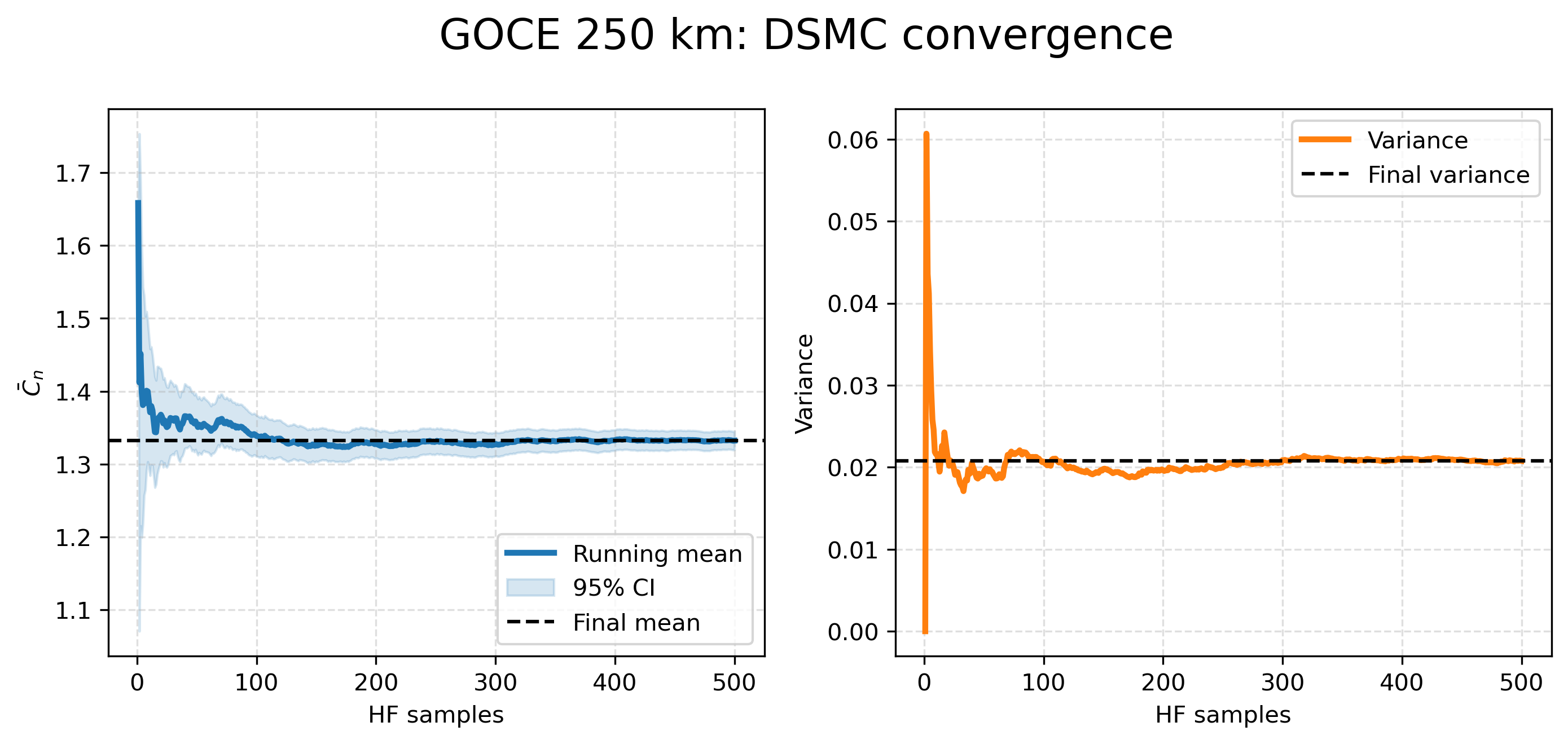
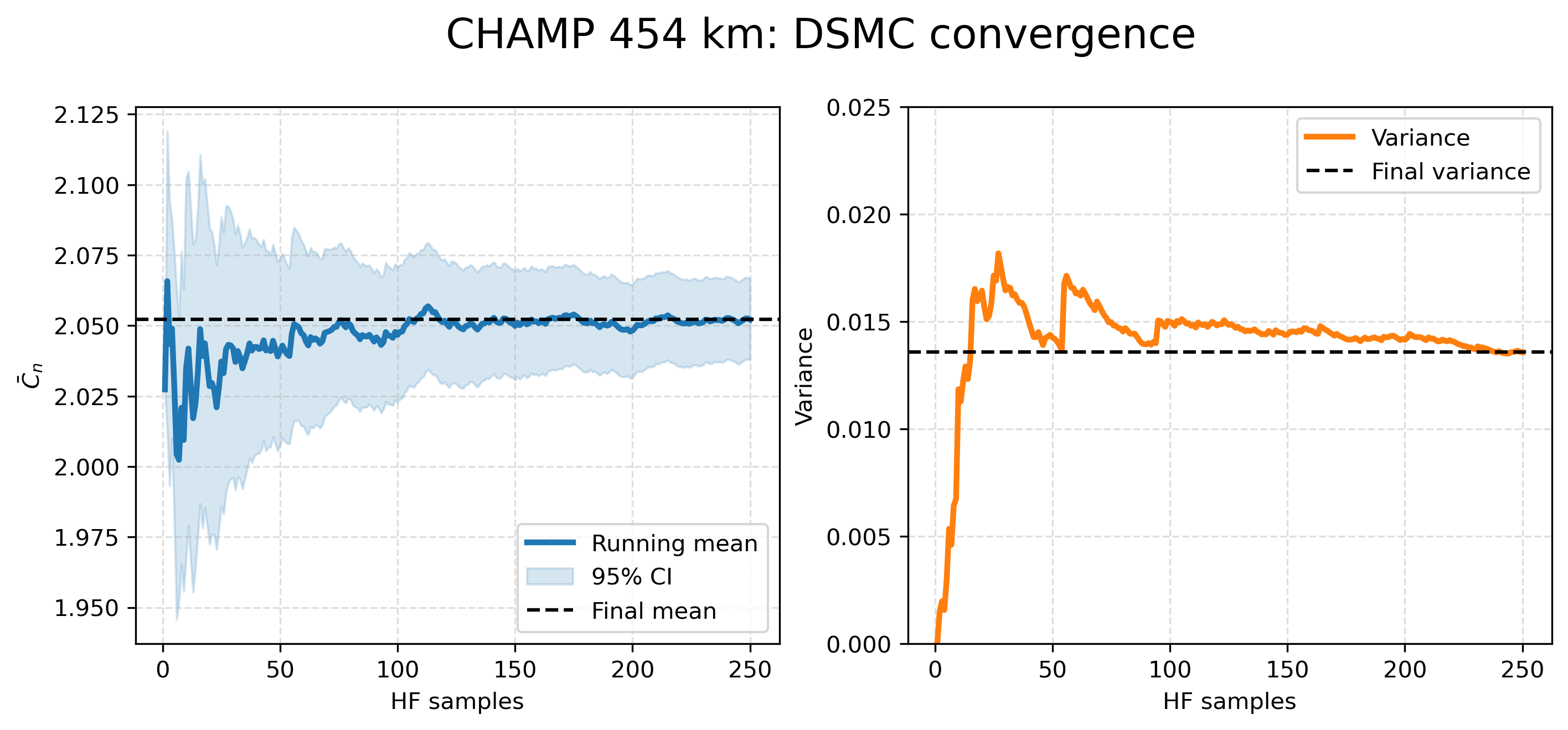
Figure 6: GOCE at 250 km, relRMSE comparison; high LF-HF correlation results in significant MFMC improvement, especially in the low-budget regime.
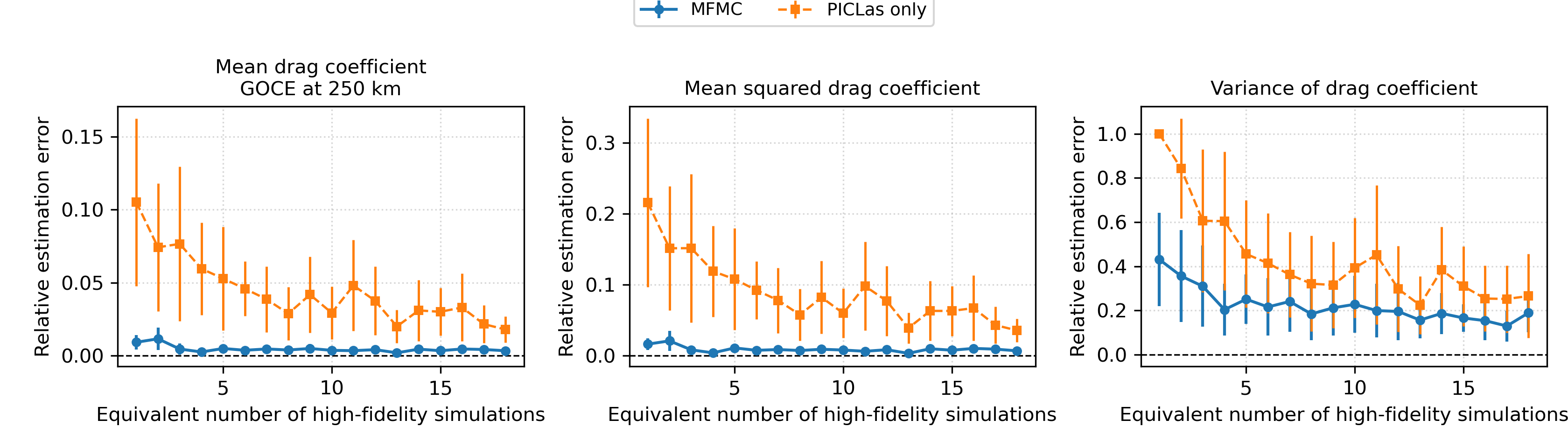
Figure 7: GOCE operational conditions; MFMC sustains strong mean and variance RMSE reduction over a broad budget range.
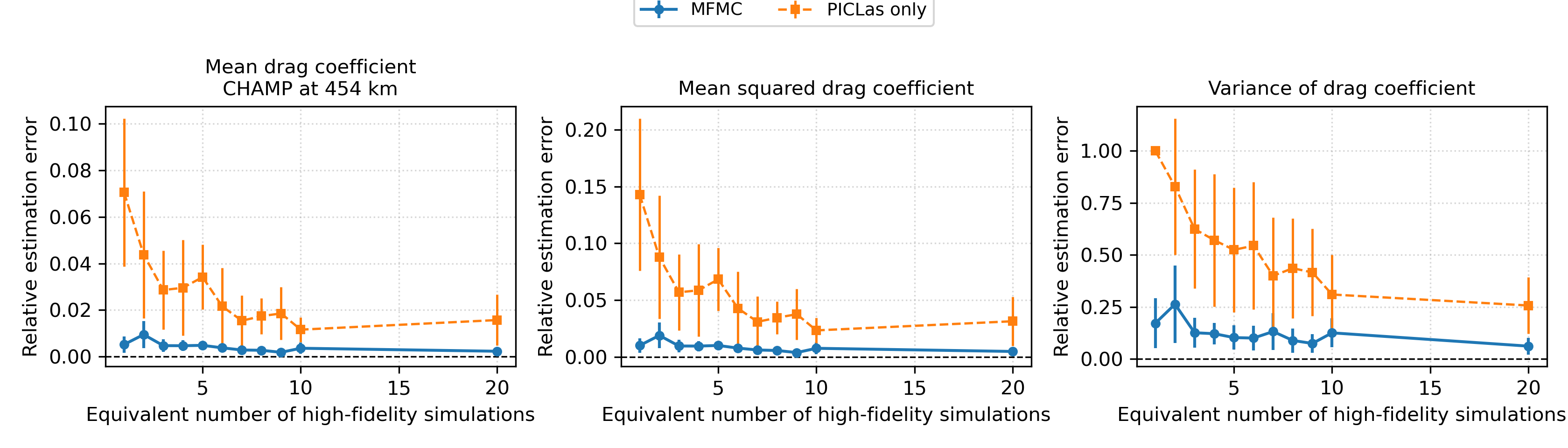
Figure 8: CHAMP at 454 km; MFMC delivers 5×9 improvement in all investigated metrics.
MFMC performance tracks three quantifiable drivers:
- LF-HF Moment Correlations: High correlation for both CD0 and CD1 is necessary to realize large RMSE reductions for mean and variance.
- LF/HF Cost Ratio: When the LF evaluation cost is less than CD2 of a DSMC run, effective sample size increases dramatically, allowing aggressive variance reduction in the matched-budget regime.
- Weight Stability: In cases where LF amplitude shrinks or correlations become less robust, MFMC weights become unstable, particularly for higher moments, necessitating careful pilot study tuning.
Variance is consistently more difficult to estimate than the mean, primarily due to the derived nature of the variance estimator and its sensitivity to finite-sample moment estimation errors.
Practical Implications and Theoretical Considerations
This study demonstrates that MFMC with panel-model control variates is effective in reducing the cost of DSMC-based drag UQ in VLEO, particularly for first and second moment estimation. For operational satellite analysis in the regime of high LF-HF correlation, MFMC yields robust improvements in estimation efficiency, facilitating uncertainty propagation studies previously infeasible at DSMC computational cost. From a theoretical standpoint, the paper clarifies that gains are contingent on correlation not just for the primary QoI but also for the higher moments directly entering mission risk and control analysis.
Practical implementation must include careful pilot-based estimation for control-variate configuration and repeated validation of correlation structure across the input space of interest.
Limitations and Future Work
The current implementation samples from empirical atmospheric ensembles without explicit temporal or orbital correlation, and holds the accommodation coefficients for gas–surface interaction fixed. Future work should address explicitly modeling temporal/orbital atmospheric variability, epistemic uncertainty in surface accommodation, and validation against in-flight drag data. Methodologically, exploring nonlinear or regression-based control variates could extend MFMC efficacy to higher-moment targets and non-Gaussian statistics.
Conclusion
The MFMC framework developed and demonstrated in this study provides a computationally efficient and robust approach for drag UQ in the VLEO regime when high-fidelity DSMC solutions are required yet cost-constrained. When low-fidelity models are highly correlated and computationally inexpensive, MFMC delivers order-of-magnitude error reductions over standard MC for the mean and second moment of CD3 at matched computational cost. Variance estimation remains a challenging outlier due to cancellation effects. The approach is immediately applicable to analysis for VLEO constellations, debris objects, and drag-augmented deorbiting scenarios, with strong theoretical justification for models with monotonic input-output dependence and high correlation structure.

