- The paper demonstrates that nontrivial sound speed modifies the quantum-information diagnostics of cosmological perturbations by dynamically altering squeezing parameters.
- The analysis utilizes the OTMSS formalism and a sound-speed-resonance parametrization to quantitatively track oscillatory modulations in purity, von Neumann entropy, and logarithmic negativity.
- Numerical simulations reveal that SSR delays classicality onset by enhancing decoherence and entanglement, suggesting new avenues for probing early-universe inflationary dynamics.
Motivation and Framework
The quantum mechanical origin of primordial cosmological perturbations remains a pivotal topic in modern cosmology. The paper addresses how quantum-information diagnostics, including purity, von Neumann entropy, R\'enyi entropies, and logarithmic negativity, are influenced by inflationary models with nontrivial sound speed (cs=1). Focusing on the open two-mode squeezed-state (OTMSS) formalism, the analysis circumvents the modification of observable definitions and instead tracks the dynamical imprint of sound speed through the evolution of squeezing parameters, rk (amplitude) and ϕk (phase), as dictated by the inflationary Hamiltonian.
A sound-speed-resonance (SSR) parametrization is employed:
cs2(η)=1−2ξ[1−cos(kη)]
with ξ modulating oscillatory deviations from canonical cs=1, thereby directly altering the effective frequency in the Mukhanov–Sasaki equation and ultimately the quantum state evolution. The observable sector is treated via the reduced density matrix (RDM) after tracing out environmental degrees of freedom, enabling rigorous information-theoretic diagnostics of subsystem mixedness and entanglement.
Squeezing Dynamics and Sound-Speed Resonance
The inflationary dynamics are formulated within a spatially flat FLRW metric, relating the scale factor a(η) to conformal time and utilizing the SSR ansatz for sound-speed oscillations. The quadratic action and subsequent Hamiltonian elucidate how cs enters explicitly:
H=21∫d3x[π2+cs2(∂if)2+zz′(πf+fπ)+a2Vϕϕf2]
where both background-driven squeezing and sound-speed contributions are transparent. Fourier expansion and mode decomposition allow the explicit construction of the OTMSS, with normalization controlled via dissipation coefficients u1 and rk0. The squeezing amplitude rk1 and phase rk2 evolve through coupled, stiff Schrödinger equations, regularized by the bounded variable rk3 to ensure computational stability within the inflationary regime.
Within rk4, numerical simulations demonstrate that nontrivial sound speed (rk5) induces pronounced oscillatory modulation of rk6 and rk7, confirming significant dynamical sensitivity.
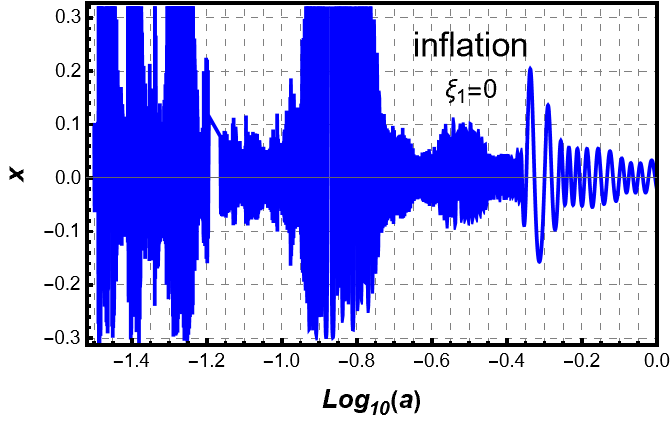
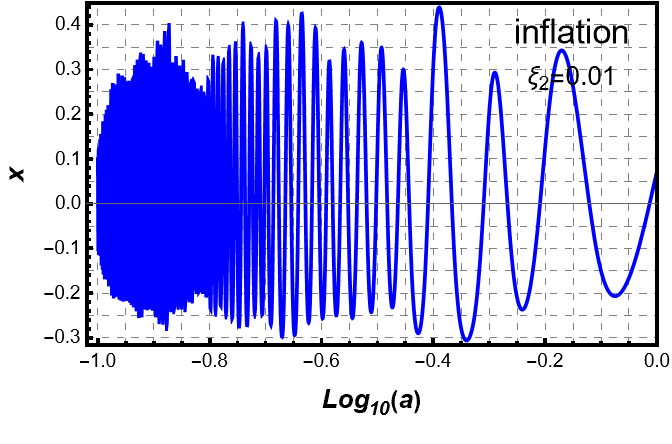
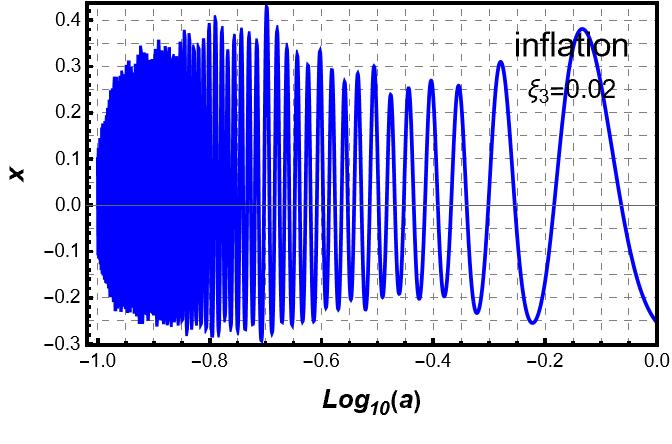
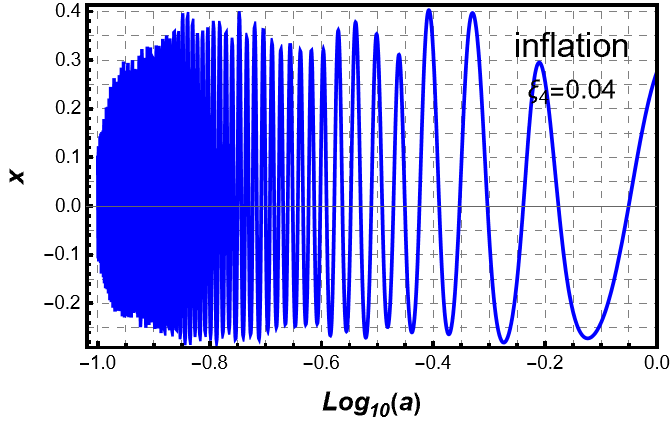
Figure 1: The numerical results of rk8 in terms of rk9, demonstrating SSR-induced oscillatory modulation for various ϕk0.
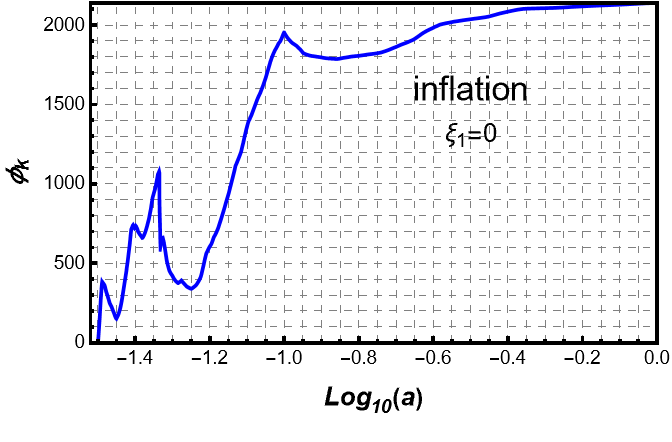
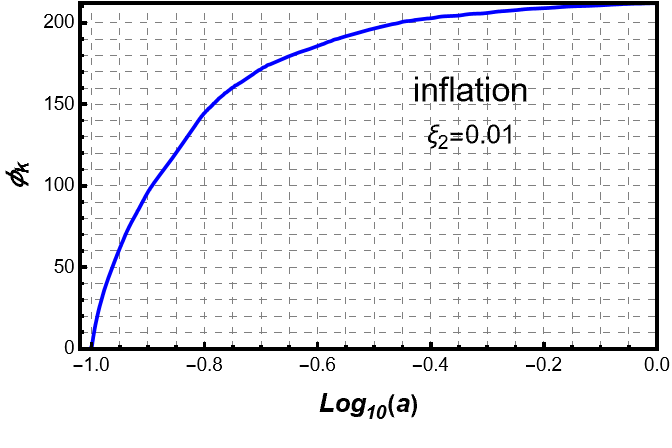
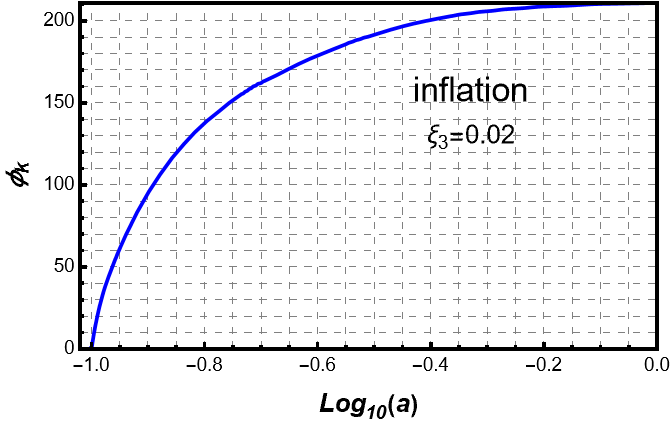
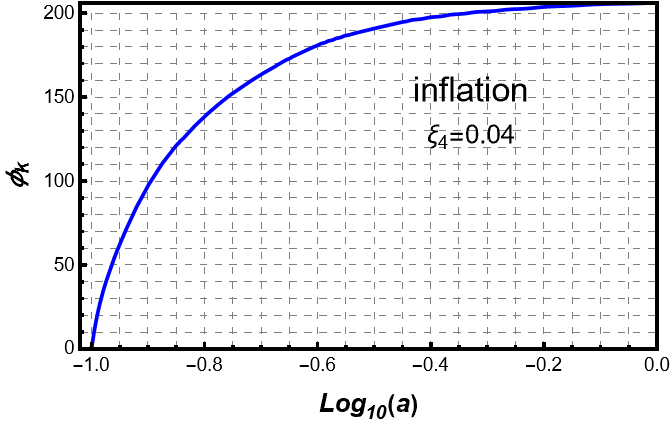
Figure 2: The numerical results of ϕk1 in terms of ϕk2, highlighting the SSR-driven suppression and modulation compared to the canonical case.
Tracing out one mode yields the RDM, diagonal in the occupation-number basis, with eigenvalues parameterized by the squeezing variables and open-system coefficients. The information-theoretic observables are computed as follows:
- Purity: ϕk3, sensitive to subsystem mixedness.
- Von Neumann entropy: ϕk4 quantifies uncertainty and entropy production.
- R\'enyi entropies: ϕk5 generalize the entropy, with ϕk6 and ϕk7 serving as robust numerical bounds.
- Logarithmic negativity: ϕk8 diagnoses genuine bipartite entanglement, derived from the partial transpose spectrum.
Numerical results indicate that SSR leads to substantial suppression of purity (enhanced mixedness) and amplification/modulation of entropic measures and negativity. This is not the result of altered algebraic definitions, but the inherited dynamical trajectory of the quantum state caused by the Hamiltonian's dependence on ϕk9.
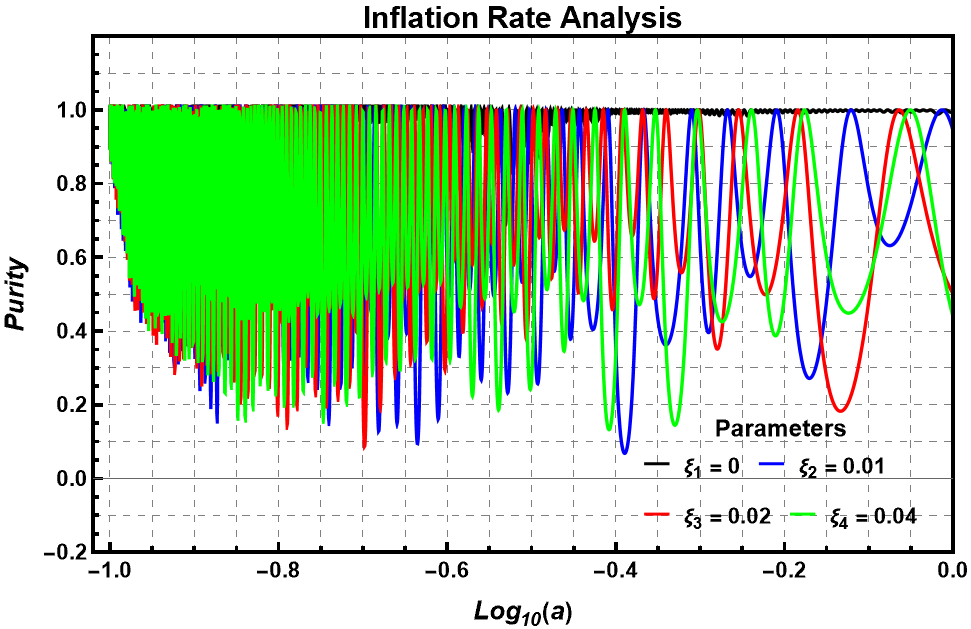
Figure 3: The numerical results of Purity in terms of cs2(η)=1−2ξ[1−cos(kη)]0, showing SSR-induced suppression and oscillatory behavior.
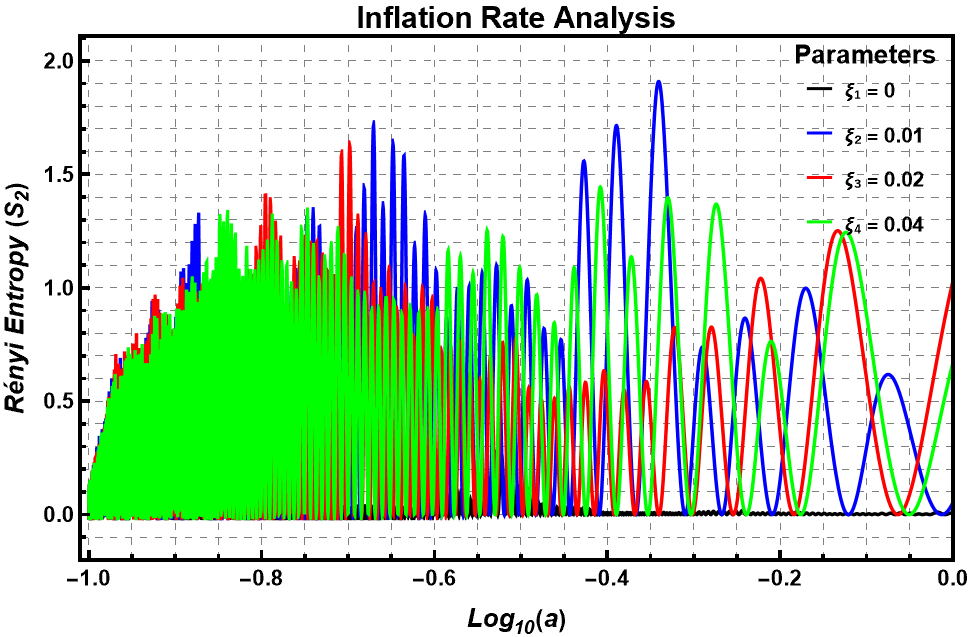
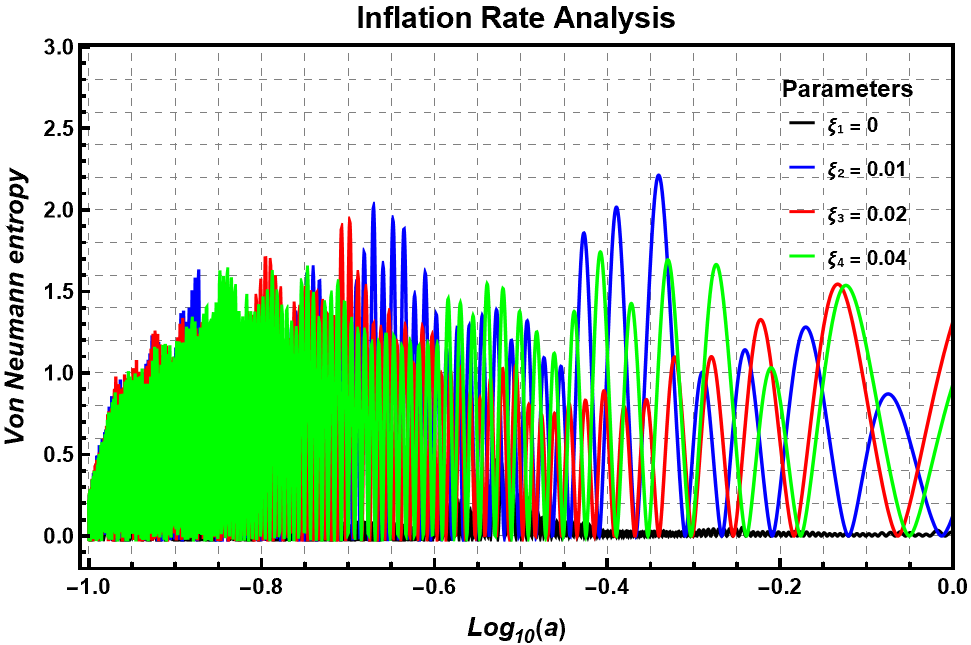
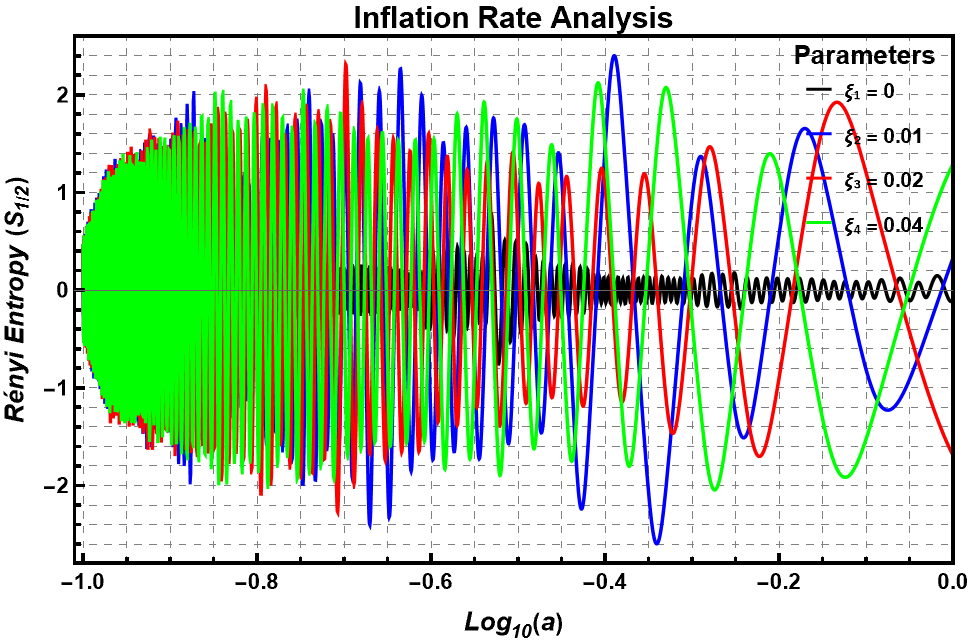
Figure 4: The numerical results of R\'enyi Entropy and Von Neumann entropy, presenting enhanced entropy production and modulation with increasing cs2(η)=1−2ξ[1−cos(kη)]1.
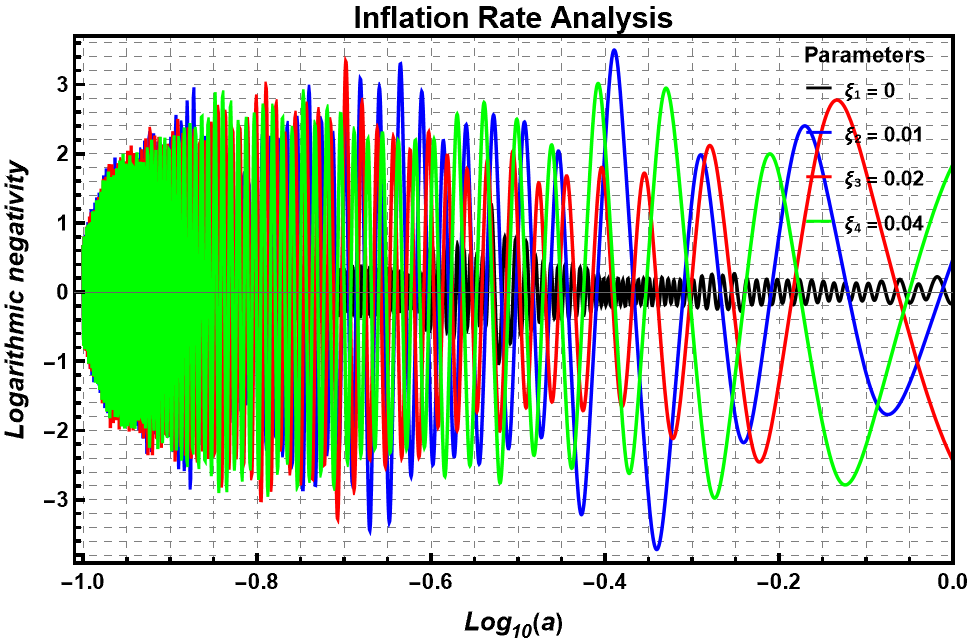
Figure 5: The numerical results of Logarithmic negativity, exhibiting amplified entanglement signatures under SSR.
Implications and Future Directions
The findings substantiate that a nontrivial sound speed during inflation postpones classicality onset by modulating decoherence and amplifying subsystem mixedness and entanglement structure. SSR leaves distinct quantum-information fingerprints in the early universe, with observable departures from canonical single-field models as evidenced by oscillatory suppression in purity and enhancement in entropy and negativity.
Numerical stiffness restricts analysis to the inflationary regime, but future work aims to extend diagnostics to RD and MD epochs via lattice methods. The paradigm and regularization strategy promise generalization to multi-field, cs2(η)=1−2ξ[1−cos(kη)]2, and non-inertial cosmological scenarios.
Conclusion
The systematic study delivers strong numerical evidence that nontrivial sound speed in inflation fundamentally alters quantum-information diagnostics of cosmological perturbations. The SSR-induced modifications are dynamically inherited, not algebraically imposed, affecting the decoherence and entanglement structure of primordial fluctuations. The paper offers a robust formalism to extract quantum-information signatures, guiding both theoretical interpretation and future empirical investigation of inflationary models. Potential advancements lie in rigorous covariance-matrix-based decoherence quantification, cross-epoch numerical stabilization, and generalization to broader gravitational and field-theoretic settings.