- The paper demonstrates that tunable symmetry-breaking via atomic layering and interfacial engineering stabilizes chiral spin-textures such as skyrmions and merons.
- Experimental observations using LTEM imaging and micromagnetic simulations validate the role of DMI and exchange interactions in defining magnetic ground states.
- The study underlines the potential for low-power spintronic devices by harnessing room-temperature, controllable topological spin states in vdW heterostructures.
Chiral Spin-Textures in van der Waals Heterostructures: Mechanisms, Experiments, and Theoretical Developments
Introduction
The emergence of intrinsic magnetism in van der Waals (vdW) materials and their integration into heterostructures has established an unprecedented platform for studying chiral spin-textures, including skyrmions, merons, and antimerons. The fundamentally tunable symmetry-breaking mechanisms—enabled by atomic layering, proximity effects, and interfacial engineering—are synergistic with the pronounced spin–orbit coupling (SOC) found in many vdW compounds. This interplay allows the stabilization, manipulation, and control of topologically nontrivial spin textures at reduced dimensionalities, with direct implications for low-power spintronic and magnonic device applications. The reviewed work (2604.21539) delivers a comprehensive and detailed account of the physical mechanisms, experimental observations, and theoretical approaches relevant to chiral spin-textures in vdW systems, emphasizing both prototypical and emerging material platforms.
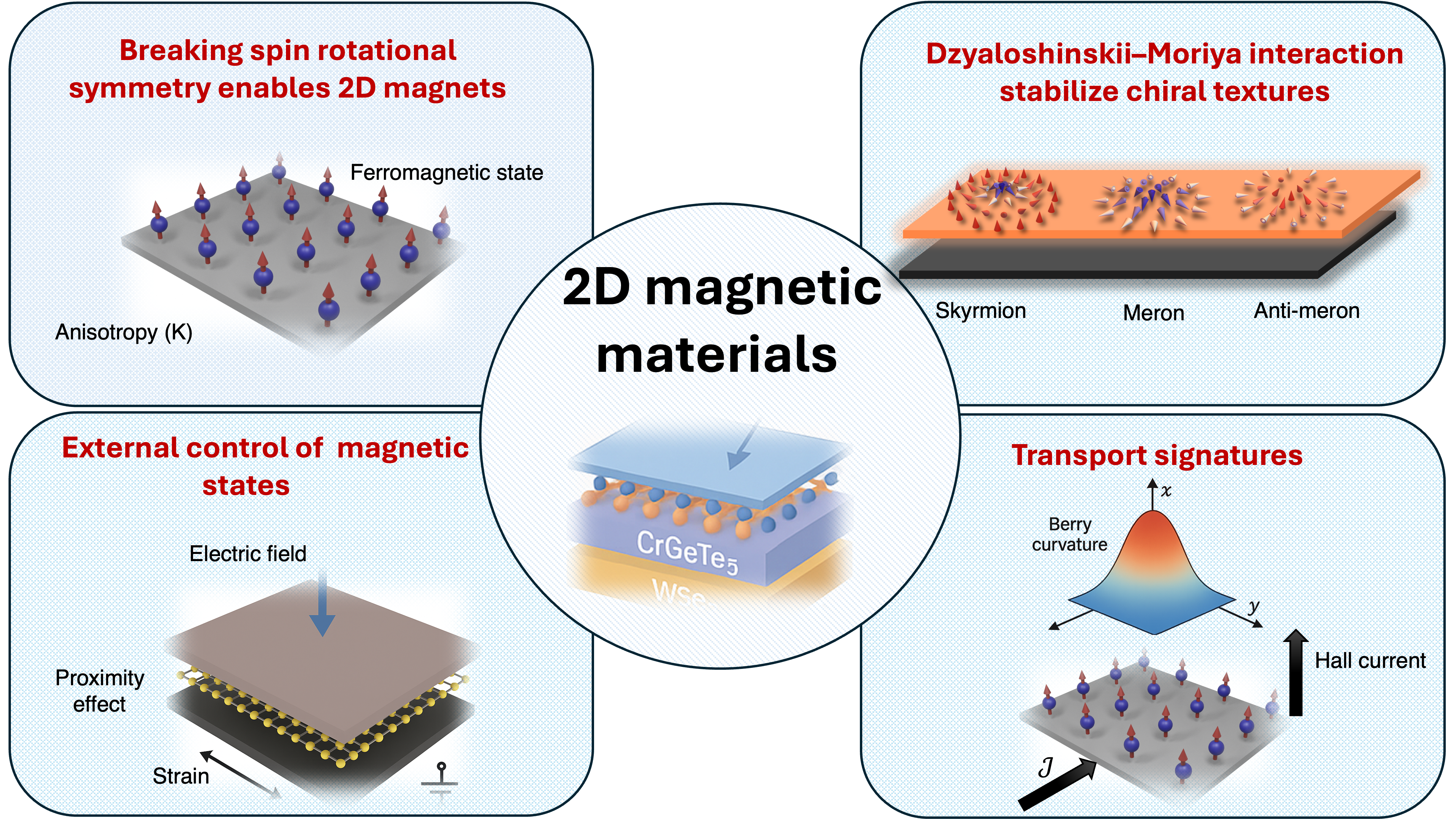
Figure 1: Schematic overview of key mechanisms in 2D vdW magnets: symmetry breaking enables long-range order; DMI stabilizes chiral textures; external fields/strain modulate the phases; Berry curvature leads to topological transport.
Fundamental Mechanisms Underlying Chiral Spin-Textures
Magnetism in 2D materials is governed by an intricate balance of exchange interactions, magnetic anisotropy, Dzyaloshinskii–Moriya interaction (DMI), and dipolar effects. Exchange interactions favor collinear spin alignment, whereas DMI—operative in the presence of strong SOC and broken inversion symmetry—induces chiral noncollinear states. The relative magnitudes and interplay among these terms dictate the magnetic ground state, support the existence of topological solitons, and control the energetics of domain walls and spin spirals (see Figure 2).
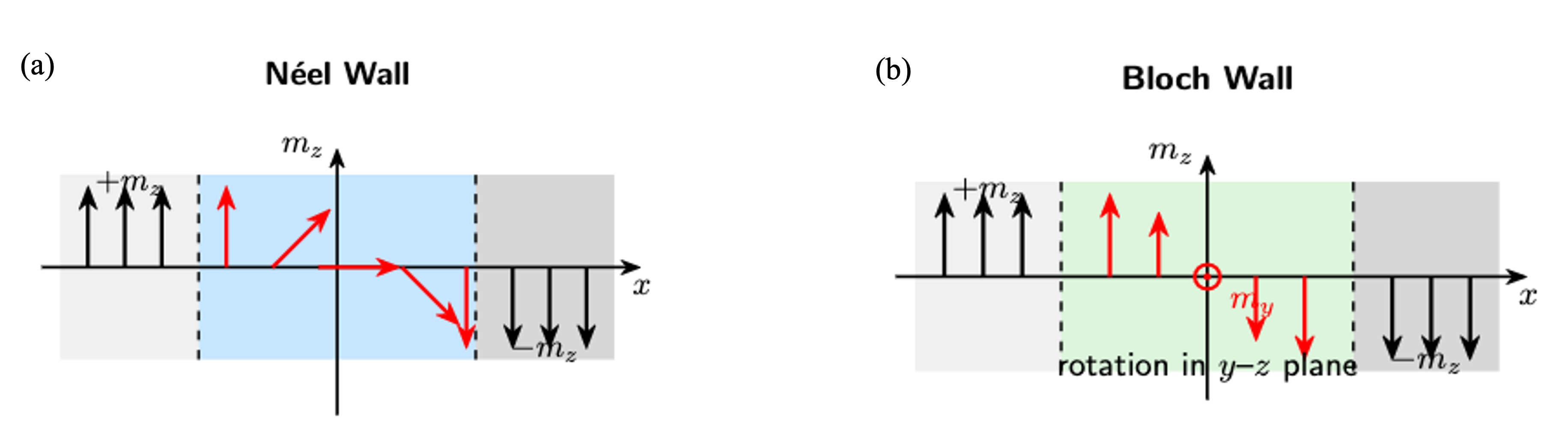
Figure 2: Chiral domain wall morphologies in ferromagnets: DMI symmetry defines N\'eel or Bloch wall structure and sense of rotation.
Skyrmions are stabilized when DMI competes with exchange and anisotropy, leading to robust particle-like spin configurations characterized by integer topological charge Q and chirality. Merons and antimerons (with Q=±1/2) arise as fractionalized solitons in especially frustrated or anisotropic environments, expanding the phase possibilities. Theoretical treatments at both atomistic and micromagnetic scales can be systematically derived and parameterized from first-principles, which is essential for predictive design.
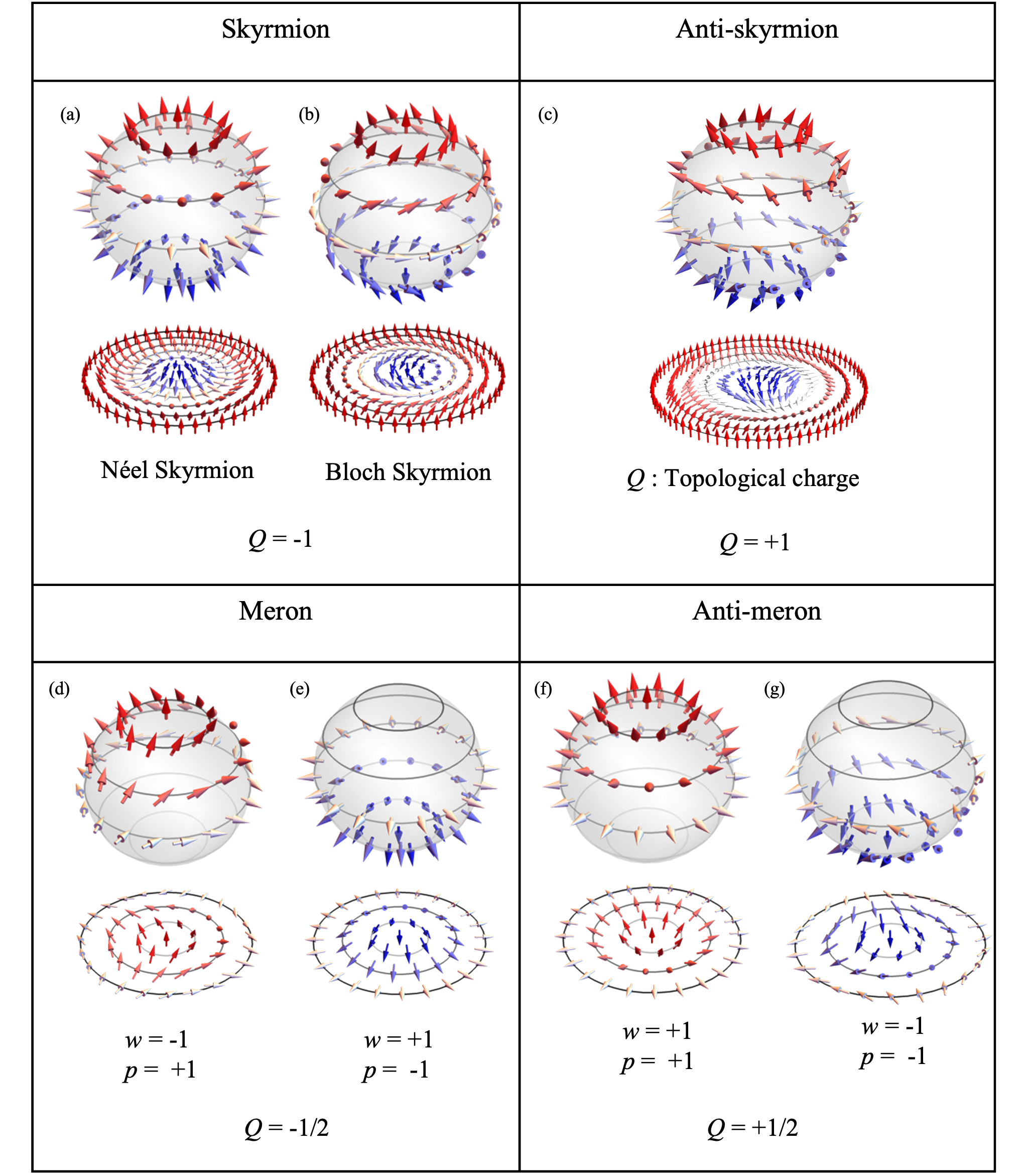
Figure 3: Diversity of topological textures in 2D magnets—Bloch and N\'eel skyrmions, anti-skyrmions, merons, and anti-merons mapped on spin sphere.
Experimental Realization and Engineering of Skyrmions in vdW Systems
Fe3GeTe2 (FGT) and Heterostructures
Experiments on FGT have demonstrated the nucleation and stability of skyrmion bubbles under external field and temperature protocols, even though bulk FGT is nominally centrosymmetric. This is attributed to surface-induced inversion symmetry breaking and the balance between anisotropy and dipolar energies, with DMI playing a subsidiary role (Figure 4). External stimuli—magnetic field, gating, or substrate-induced strain—expand the control and phase space, but robust chiral skyrmions are more efficiently stabilized through intentional symmetry breaking by heterostructuring.
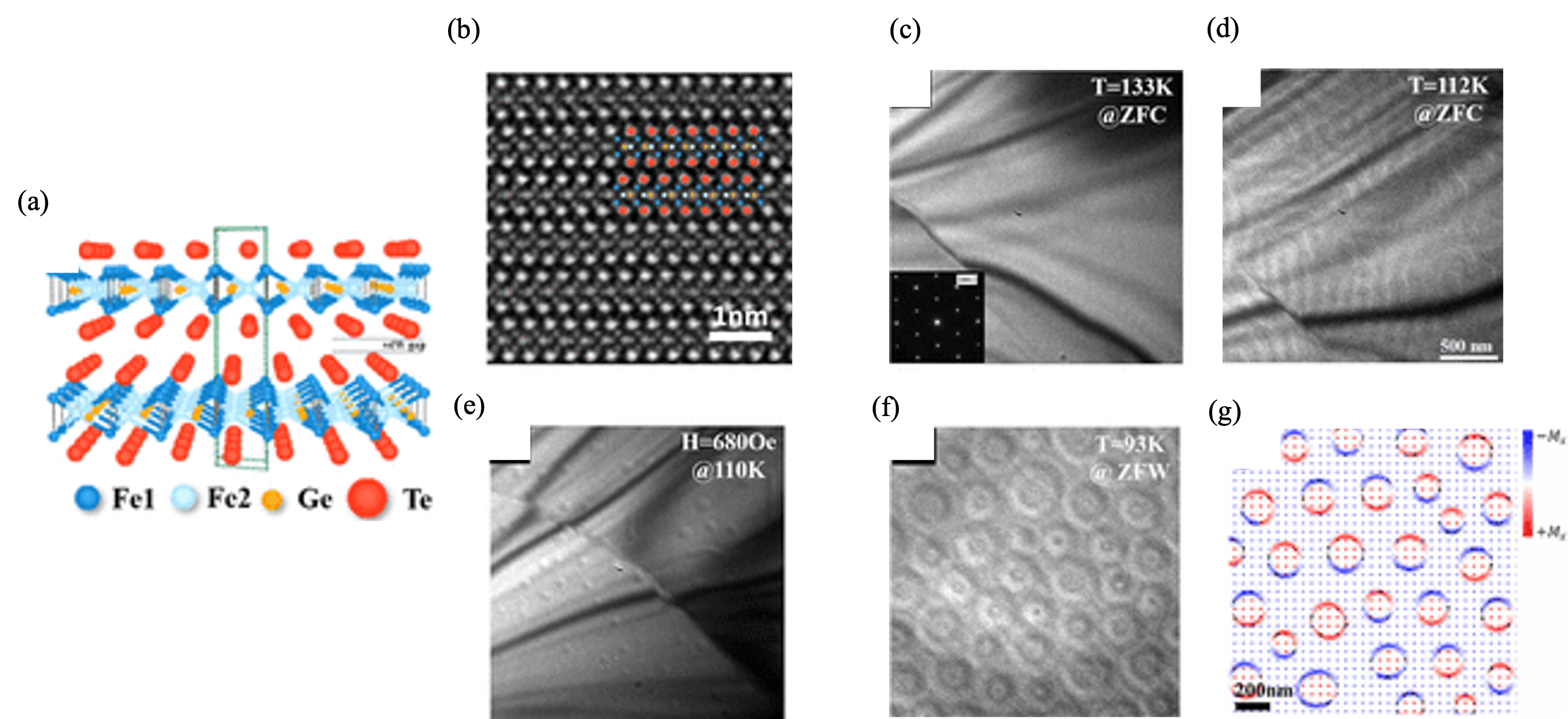
Figure 4: Comprehensive mapping of Fe3GeTe2 texture evolution: domain patterns, field-induced transitions, and micromagnetic simulation of skyrmion lattices [ding2020observation].
Interfacing FGT with monolayer WTe2 introduces strong interfacial DMI due to SOC and broken inversion symmetry, resulting in dense lattices of N\'eel-type skyrmions observable by Lorentz-TEM and quantified through DFT-derived simulation (Figure 5). The DMI is localized to the interface, decaying over a few layers into FGT, and the stabilization of skyrmions with defined chirality in such heterostructures marks a significant advance beyond the metastable bubble regime.
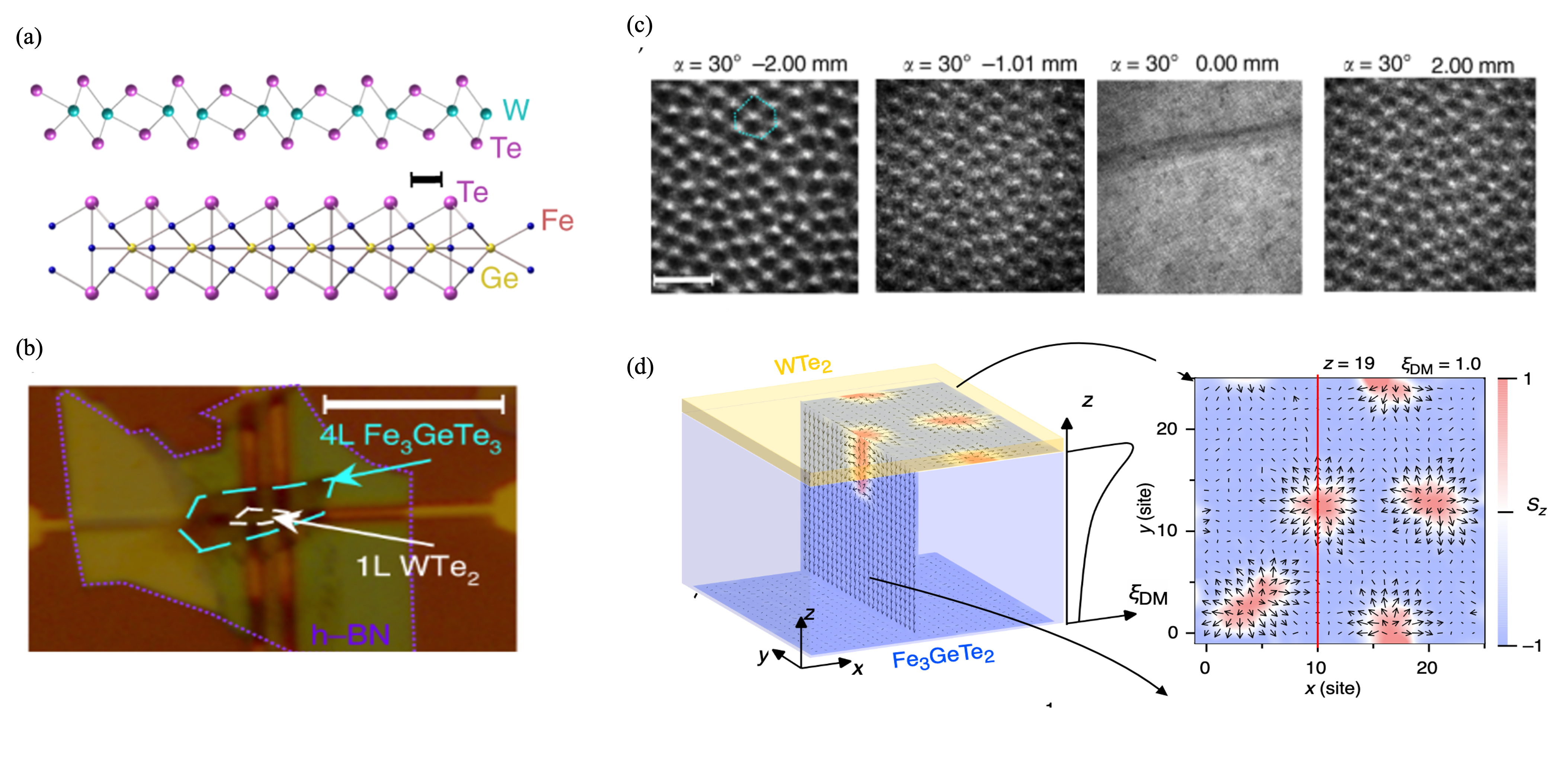
Figure 5: Engineering N\'eel-type skyrmion lattices in WTe2/Fe3GeTe2—interfacial symmetry breaking induces strong DMI and topological phase [Wu2020NatCommun].
FeQ=±1/20GaTeQ=±1/21 and FeQ=±1/22GaTeQ=±1/23
Recent work has revealed that FeQ=±1/24GaTeQ=±1/25 exhibits field-tunable coexistence of Bloch, hybrid, and N\'eel-like skyrmions, with vacancy-induced symmetry lowering (from Q=±1/26 to Q=±1/27) leading to pronounced DMI and the emergence of robust N\'eel-type skyrmions in FeQ=±1/28GaTeQ=±1/29. The combination of atomic-resolution STEM, LTEM imaging at multiple tilt angles, transport measurements, and micromagnetic modeling allows identification and tuning of the skyrmion character and size (Figures 6, 7).
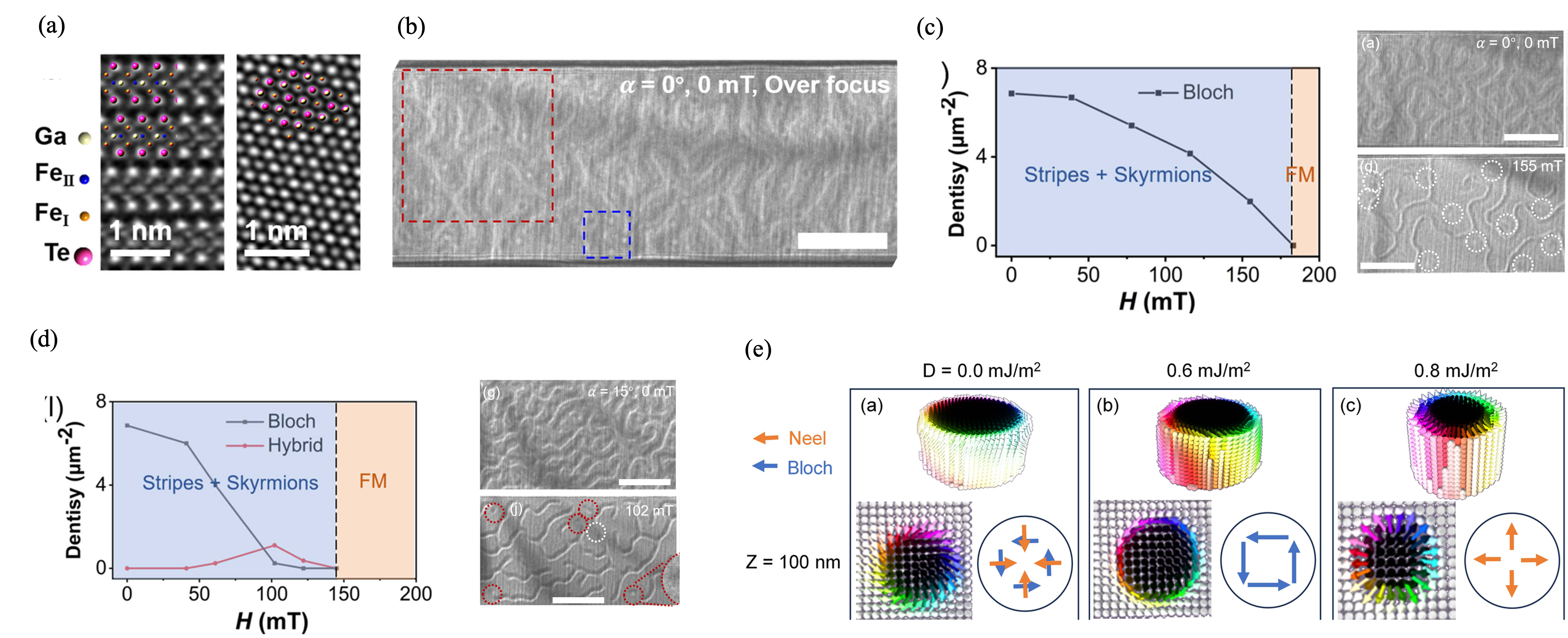
Figure 6: Fe30GaTe31: coexistence and field dependence of Bloch, hybrid, and N\'eel-type skyrmions, as seen in LTEM and simulations [Lv2024_distinct].
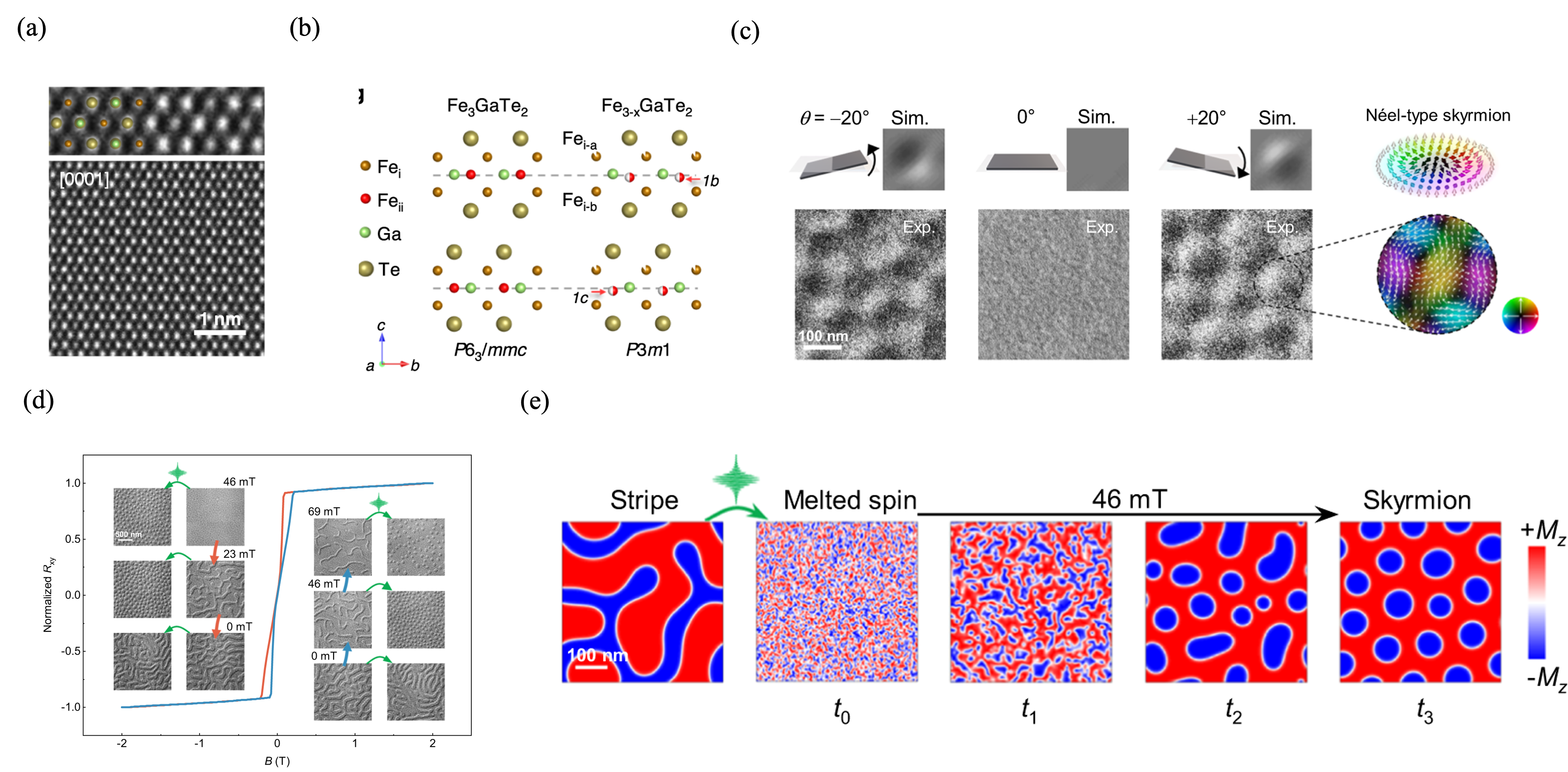
Figure 7: In Fe32GaTe33, Fe-vacancy-driven noncentrosymmetry enables N\'eel skyrmions confirmed by STEM, LTEM, Hall transport, and laser-induced writability [Li2024].
(Fe34Co35)36GeTe37 (FCGT)
FCGT exemplifies the intrinsic stabilization of N\'eel-type skyrmion lattices at room temperature due to polar stacking, without the need for heterointerfaces. The skyrmion size follows Kittel scaling as a function of film thickness. The system also supports high mobility under current above a threshold, as evidenced by changes in Hall resistivity. Phase diagrams map the stability window to moderate out-of-plane magnetic fields and room temperature (Figure 8).
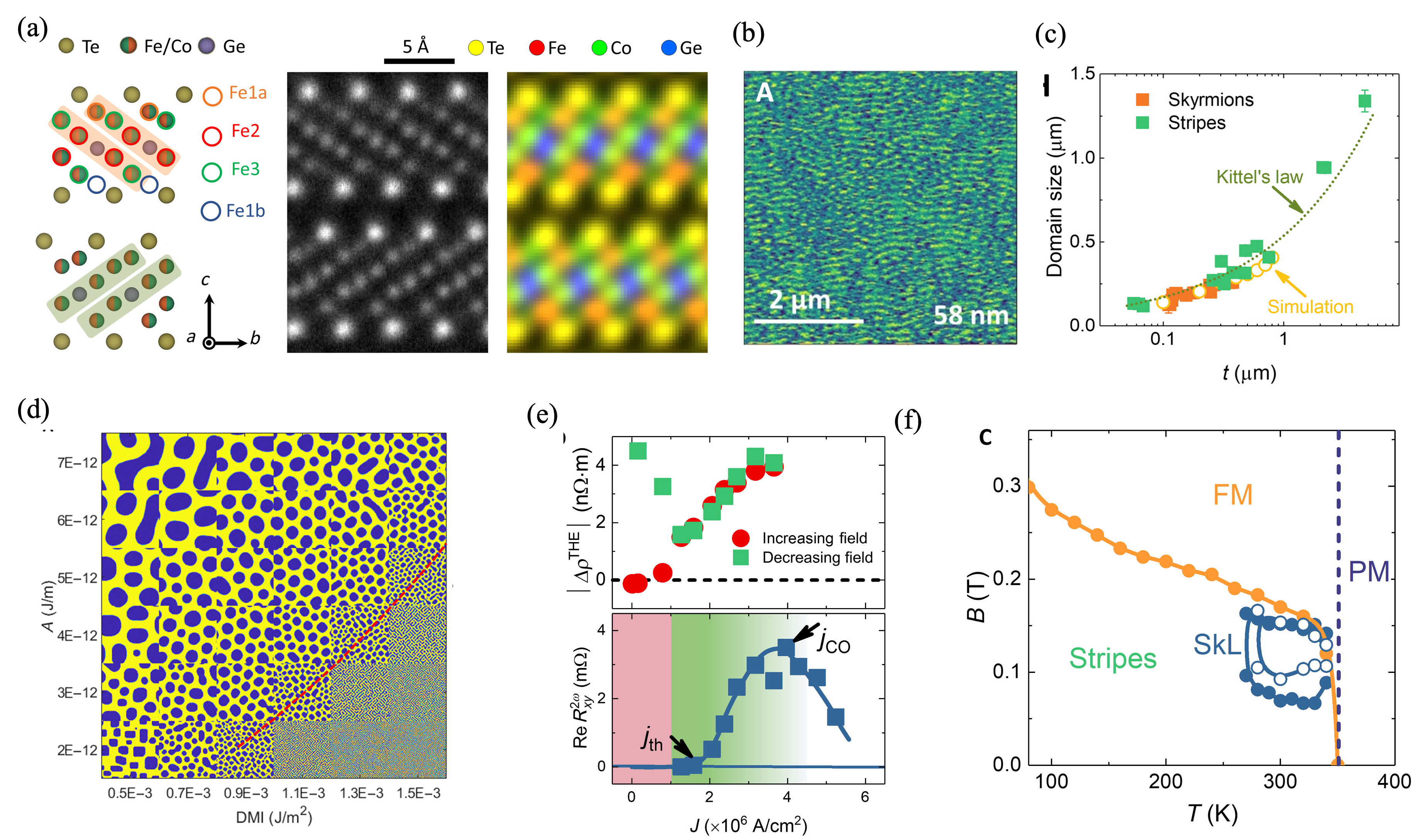
Figure 8: FCGT features an inversion-breaking AA38 stacking stabilizing room-temperature N\'eel skyrmion lattices with direct transport and thickness dependence [zhang2022sciadv].
Cr39Te20 and CrBr21
In Cr22Te23, self-intercalation of Cr drives polar distortion, inducing bulk DMI and stabilized N\'eel-type skyrmions confirmed by field-, thickness-, and tilt-dependent LTEM, with quantitative support from micromagnetic modeling. In contrast, CrBr24 shows that external in-plane magnetic fields can dynamically switch skyrmion chirality, driving transitions among liquid, hexatic, and crystal phases (Figure 9).
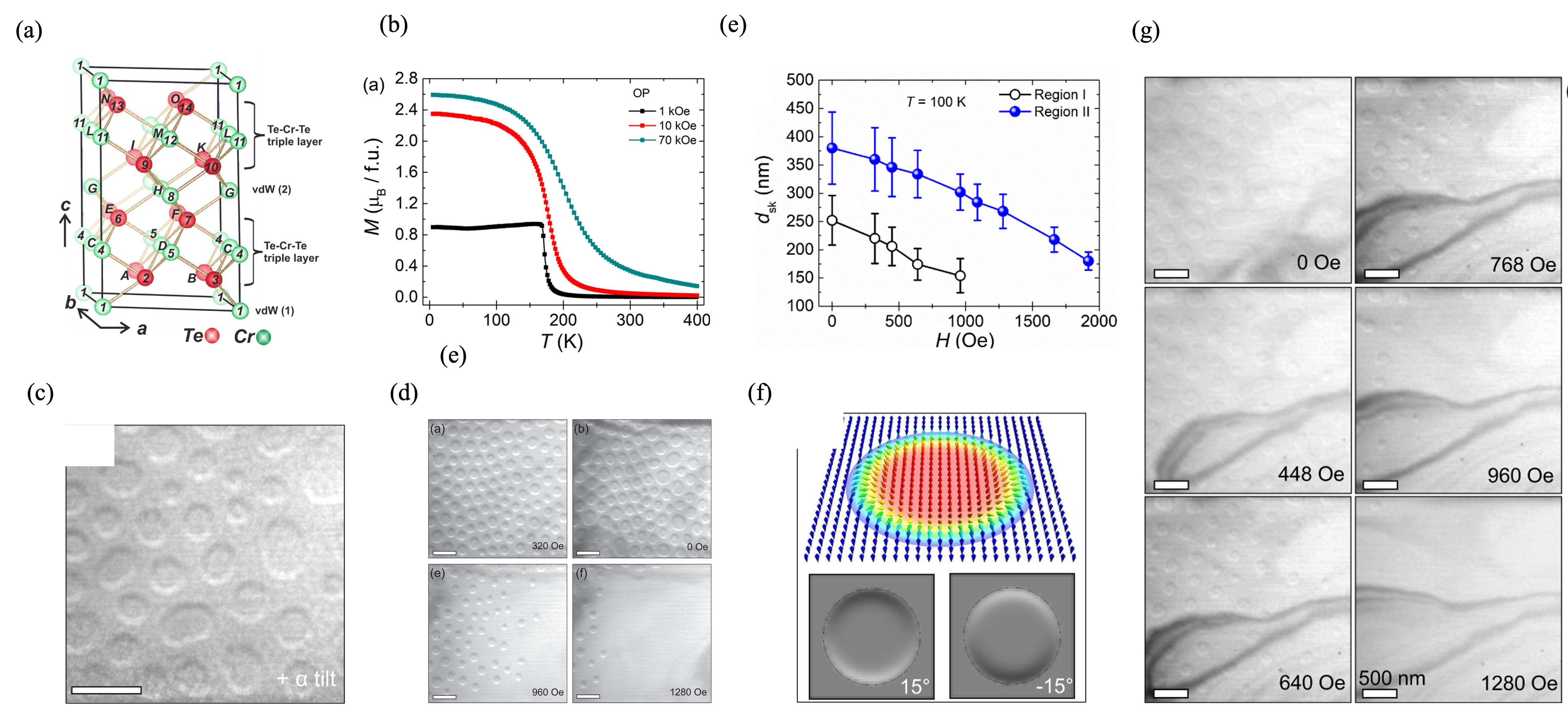
Figure 9: Chiral skyrmion generation in polar Cr25Te26 (panel a–g), with field-driven transitions and tilt-resolved LTEM chirality signals [saha2022natcomm].
Theoretical Insights and Predictive Modeling
Theoretical approaches—ranging from DFT parameterization to atomistic and micromagnetic modeling—are indispensable for elucidating the stability and mechanisms of topological textures. In centrosymmetric materials, only the combined influence of higher-order exchange, structural defects, or interfacial effects yield measurable DMI and stabilize chiral spin-textures. In systems engineered for strong DMI, theoretical modeling both guides and interprets experimental signatures (e.g., emergent Hall effects, domain-wall profiles).
Key advances include:
- Predictive designs for skyrmions and merons in strained Janus and moiré-twisted 2D systems, exploiting chemical and stacking asymmetry.
- Multiscale simulation of defect effects, edge/confinement potentials, and optical or electrical switching of skyrmions/merons.
- Identification of higher-order (biquadratic, multi-spin) exchange as significant energetic contributors in 2D vdW magnets, amplifying stabilization of complex topological phases even in weak-DMI contexts [qkqn-lfzk, Kartsev2020Biquadratic].
- Exploration of nonequilibrium phenomena (optical, electric, or current-driven manipulation) and emergent electrodynamics (magnetoelectric coupling, topological Hall responses).
Implications and Future Developments
The reviewed results substantiate that vdW magnets and their heterostructures provide a tunable, multifaceted platform for exploring and engineering topological spin solitons with substantial prospects for device applications. Direct visualization of room-temperature N\'eel skyrmion lattices, current-induced motion, and electrical or optical writability in such systems constitutes strong numerical evidence for their practical viability. Theoretical-experimental synergy in the design and control—through strain, gating, defect engineering, stacking, or heterointerfaces—is well-marked.
Major open questions include:
- Quantitative modeling of interfacial and higher-order interactions, finite-temperature stability, and transport in realistic device geometries.
- Integration of 2D magnets with topological insulators, superconductors, or multiferroic layers for hybrid quantum phenomena and non-volatile, ultrafast control.
- Scalability, reproducibility, and real-time manipulation of topological states at the single-nanometer scale.
Conclusion
Van der Waals magnetic heterostructures, with their atomically sharp interfaces, tunable symmetry-breaking, and strong SOC, establish a powerful paradigm for the creation, control, and exploration of chiral spin-textures. The interplay of intrinsic anisotropy, DMI—either engineered or emergent via defects or interfacial symmetry breaking—and external control fields enables diverse, robust, and functionally promising topological phases spanning skyrmions, merons, and beyond. Continued theoretical, numerical, and materials synthesis advancements are expected to drive this field toward programmability, energy efficiency, and integration into next-generation quantum and spintronic architectures (2604.21539).