- The paper's main contribution is its detailed taxonomy of representational failures in mixed-ability teams, derived from diary studies and interviews.
- It employs a qualitative multi-method approach that reveals practical workarounds and design implications for enhancing accessibility.
- The study highlights interdependence in accessibility, calling for integrated technical and socio-organizational solutions in knowledge work.
Introduction
This essay provides an expert analysis of the paper “If We Had the Information That We Need to Interpret the World Around Us, We Wouldn’t Be Disabled:” Barriers and Opportunities in Information Work among Blind and Sighted Colleagues (2604.21338). The study offers a qualitative and representationally-centered investigation into how professional teams comprising blind/low-vision (BLV) and sighted workers interact with information representations—such as documents, spreadsheets, and charts—during knowledge work. By leveraging a substantive diary and interview-based methodology, the authors elucidate a nuanced taxonomy of representational failures, workarounds, and socio-organizational phenomena shaping collective accessibility. The paper is positioned as a significant evidence-based contribution for designing more equitable knowledge work environments within contemporary technological and organizational constraints.
Study Design and Methodology
The research employs a multi-method qualitative design comprising a five-day diary study (with post-diary interviews) involving five teams (T1–T5, n=23) and two additional focus groups (T6–T7, n=7). Participants are professional knowledge workers with heterogeneous visual abilities, recruited across sectors such as academia, consulting, legal, and non-profit. The study utilizes thematic analysis, yielding a detailed codebook of 80 codes across eight detailed themes grouped in three high-level categories: (i) representational failures and workarounds, (ii) accessibility as a work priority, and (iii) social adaptations for representational accessibility.
Thematic Classification of Representation Barriers
The paper classifies key representational barriers that BLV workers encounter in mixed-ability teams into four closely interrelated types:
- Omission of Non-Visual Representation: Instances where crucial information is not available in a perceptible form for BLV participants, resulting in total exclusion (e.g., paper print-outs, inaccessible PDF attachments).
- Lack of Non-Visual Access to Visual Structure: Complex spatial or structural visual cues (such as merged cells in spreadsheets) cause confusion for BLV users, often forcing a linearization of content as a workaround.
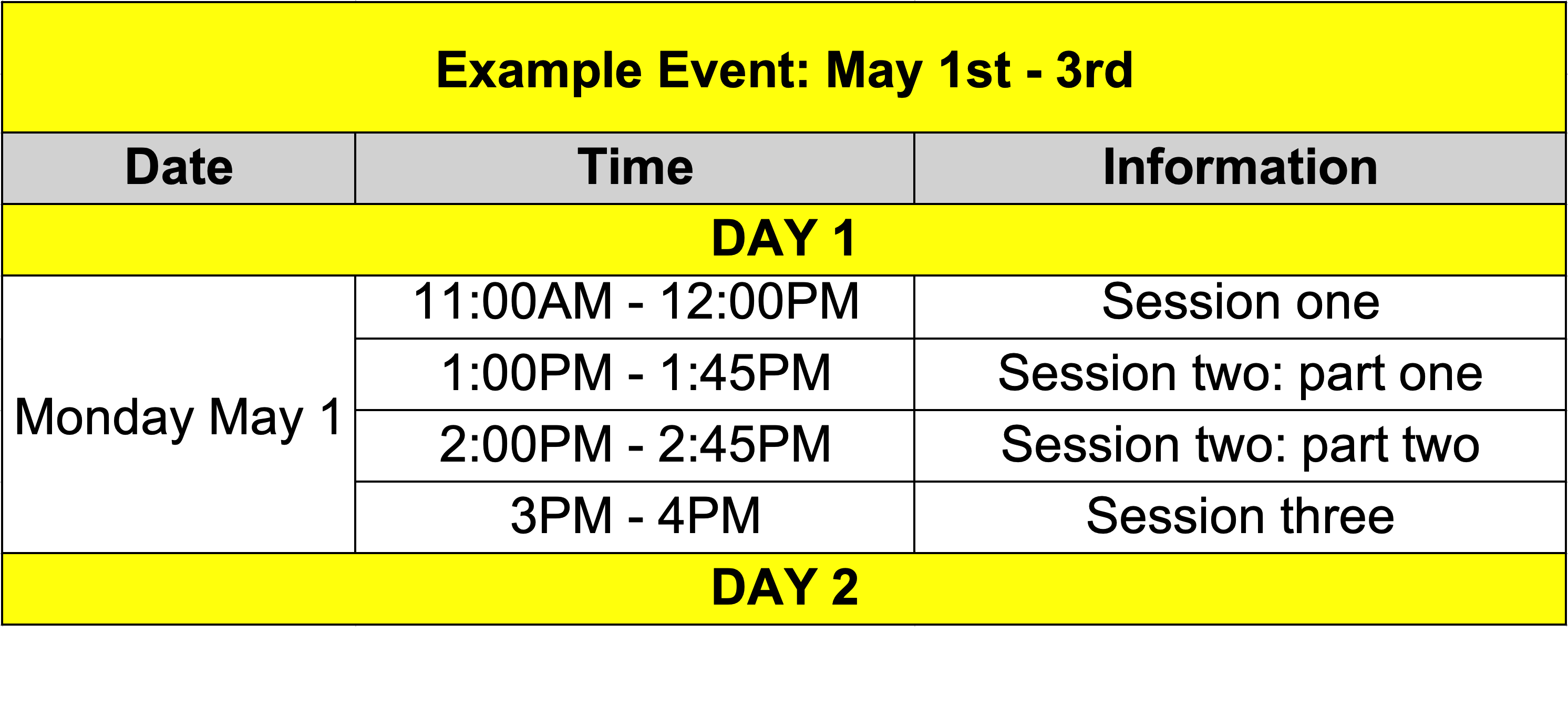
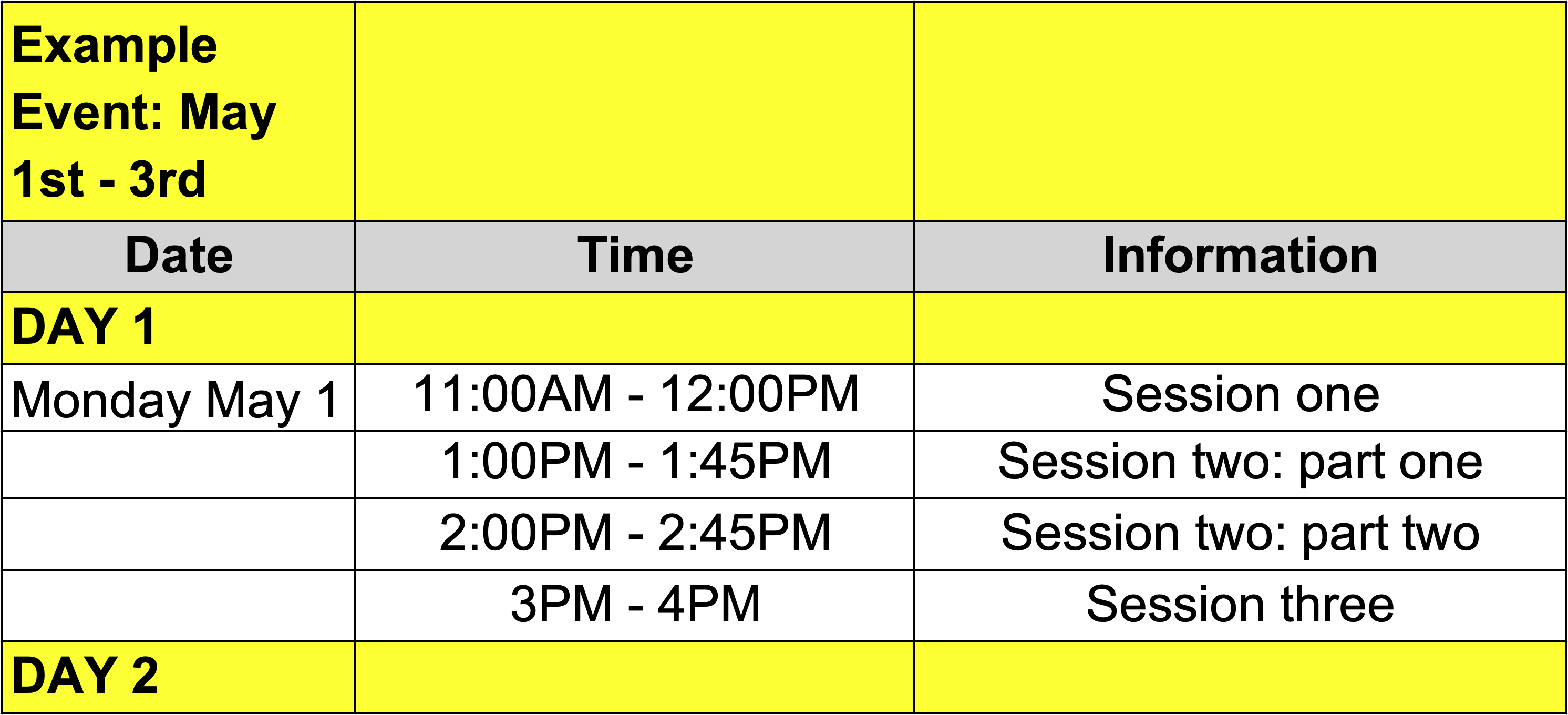
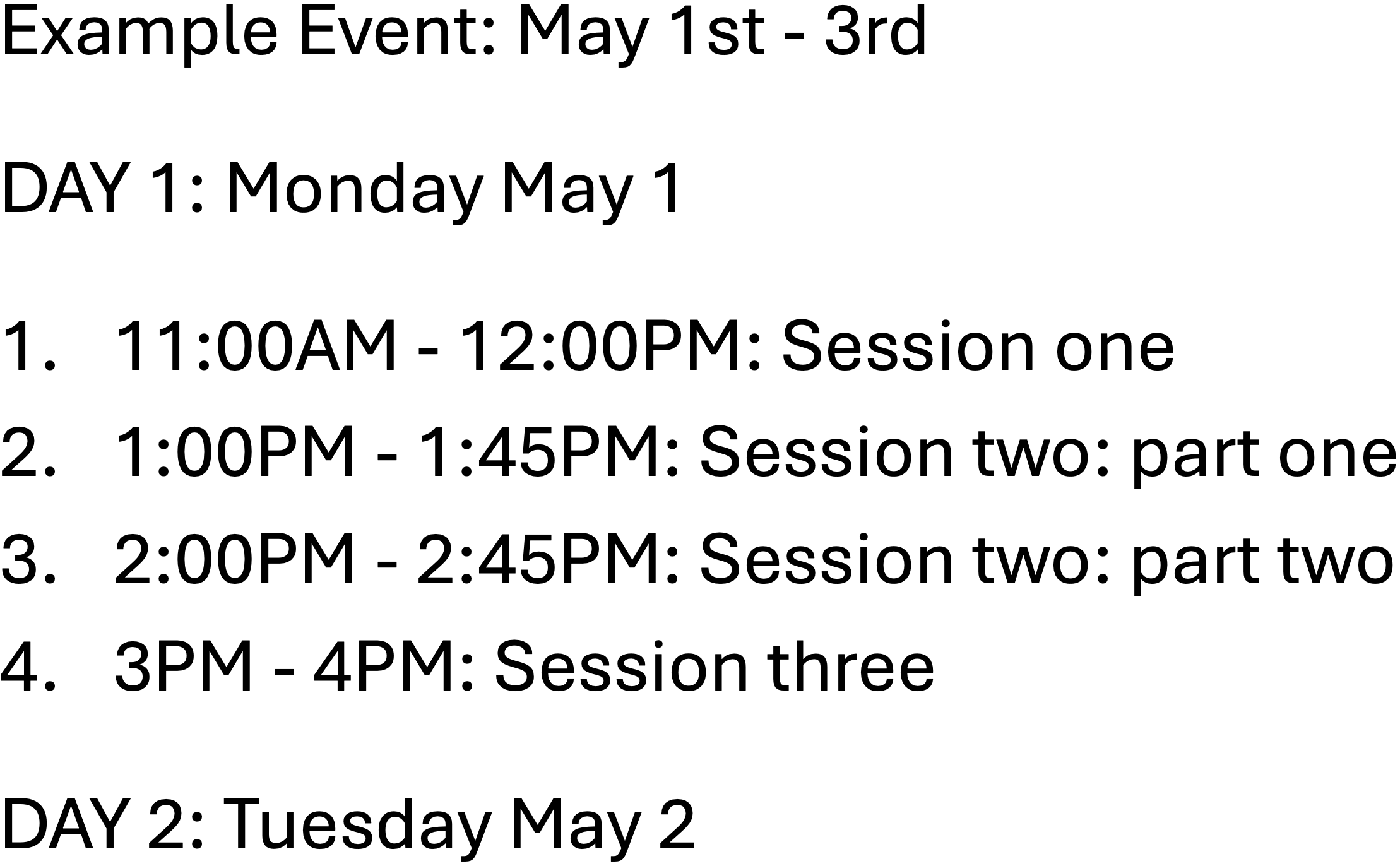
Figure 1: Original spreadsheet with merged cells exemplifying inaccessible structural cues for BLV users.
- Inadequate System Feedback During Editing: BLV users report lack of confirmatory feedback regarding their editing actions, making it difficult to produce normatively ‘professional’ documents without external sighted assistance.
- Loss of Cognitive Support: Visual representations provide cognitive scaffolding (e.g., overviews, quick pattern recognition) unavailable non-visually, increasing cognitive load and reliance on memorization for BLV participants.
The authors provide empirical evidence for both the technical and social costs arising from these failures. Notably, workarounds such as converting tables to lists, manually tracking editing details, or frequently requesting sighted verification often compromise productivity, accuracy, and autonomy.
Socio-Organizational Dynamics and Accessibility
Representation-centered failures cannot be decoupled from the socio-organizational context of knowledge work. The study delineates pervasive ableist assumptions, productivity-centered workplace metrics, and an institutional deprioritization of accessibility efforts. These systemic patterns drive both stigmatization and the “invisible labor” required for BLV workers to reach parity in output and perception.
An emergent theoretical insight is the construct of interdependence: accessibility in information work is collectively negotiated rather than individually attained, aligning with disability justice frameworks and contemporary critiques of independence-centric assistive technology paradigms [Bennett et al. 2018]. The paper details the progression from (1) unawareness and assumption, to (2) explicit advocacy or inquiry, and finally to (3) ingrained interdependent workflows, where representational choice and adaptability are distributed across the team.
Practical and Design Implications
The study demonstrates that technical efforts to enhance representation accessibility are insufficient without concurrent organizational and cultural shifts. Key findings include:
- Effective accessibility solutions require multifaceted approaches integrating improved technical representations, workplace policies prioritizing inclusion, and mechanisms to facilitate evolving awareness of colleagues’ access preferences.
- Bottom-up practices (e.g., participatory self-advocacy, flexible task allocation, ongoing dialogue) must complement top-down organizational commitments to accessibility.
- Simple linearizations often benefit BLV users at the cost of sighted colleagues and functionalities. Thus, supporting modality-native, semantically rich, and cross-indexed representations is advocated over post hoc translation from visual-centric artifacts.
- Generative AI, while under-adopted in the current work settings studied, is positioned as a promising approach for both automatically extracting meaning and producing tailored, concurrent multi-modal representations if its deployment is contextually aware and organizationally embedded [Perera et al. 2025; Lee et al. 2024].
The study advises that future representational ecosystems support real-time synchronization across modality-adapted artifacts, ensuring mutual awareness and editability without functional loss. This is exemplified in the contrast between translating from a visual-first model versus directly representing information in multiple modalities with integrative cross-indexing:
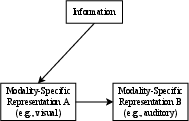
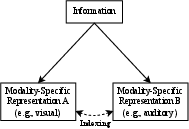
Figure 2: Information gets represented visually first, then translated into other modalities.
Theoretical Implications and Future Directions
By adopting a representational lens—grounded in distributed cognition and relational models of disability—the study substantiates that accessibility is not a property of solely the artifact or the person, but rather emerges from an ongoing, negotiated, context-sensitive interplay of representations, workers, and organizational arrangements. The findings reinforce calls for ability-based design [Wobbrock et al. 2011] and the necessity of including BLV workers as co-designers in representation ecosystems.
The trajectory of technological advancement, especially in generative AI and multi-modal synchronization, could structurally reduce many of the technical barriers outlined, but only if guided by socio-organizational paradigms that center interdependence, trust, and bidirectional awareness. Additionally, future work must address underexplored areas such as privacy-inclined applications of GenAI and the complexities introduced by distributed and hybrid working models.
Conclusion
This study offers a rigorous and granular characterization of representational challenges for mixed-visual ability teams in contemporary knowledge work environments. It empirically demonstrates that accessibility barriers are cumulative products of both technical and socio-organizational systems, and that sustainable solutions require shifts toward interdependent, awareness-driven, and adaptively mediated ecosystems. As digital work continues to evolve, integrating modality-native, semantically rich, and organizationally attuned representational infrastructures—augmented by ethically deployed AI—will be essential to actualizing equitable and productive mixed-ability collaboration.