- The paper introduces a unified framework that generalizes the Goodman–Pollack transversal problem through colorful and matroidal criteria.
- It develops novel matroidal join complexes and leverages equivariant topology to establish tight conditions for the existence of affine transversals.
- The results recover classical theorems like the colorful Helly theorem and provide explicit bounds on color and matroid rank requirements.
Colorful and Matroidal Extensions of the Goodman–Pollack Transversal Problem
Introduction and Problem Context
The paper "On colorful generalizations of the Goodman--Pollack transversal problem" (2604.19644) addresses the existence of affine k-dimensional transversals to families of convex sets in vector spaces over R or C. It focuses on unifying and extending a sequence of classical results in discrete and convex geometry concerning the intersection properties of convex sets (e.g., Helly’s theorem, the Goodman-Pollack-Wenger theorem), especially their colorful and matroidal versions.
The main motivation is to provide a single topological and combinatorial framework that explains when a k-dimensional affine subspace intersects every member of a colored (partitioned) or matroidally structured family of convex sets. The work incorporates and generalizes several notable theorems, including:
- The colorful Helly theorem (for k=0).
- Holmsen’s matroidal generalization of Goodman–Pollack–Wenger (for k=d−1).
- The matroidal Helly-type result of Kalai and Meshulam.
A major technical leap is the establishment of the first general solution to the “colorful Goodman–Pollack problem” for arbitrary k and d, encompassing both real and complex fields, and further generalized to arbitrary matroids. Prior to this, only the classical and certain special colorful or matroidal cases were settled.
Formal Statement of Main Results
The central result characterizes when, for a finite family F of compact convex sets in Fd (R0), colored or structured via a matroid R1, there exists a R2-dimensional affine transversal to a subfamily with controlled matroidal rank of the complement. The key combinatorial-topological condition involves the existence of a function R3 modeling certain affine dependencies, formalized in terms of matroidal dependencies and extendable to the context of colorings (partition matroids).
Specifically, the main theorem asserts:
Theorem:
Let R4 and R5 a matroid on R6 with rank R7.
If there exists R8 "modeling" R9-dependencies (as defined precisely in the paper), then there exists C0 such that C1 admits a C2-transversal and C3.
Through appropriate specialization, this theorem recovers known results at both extremal cases:
- For C4, one obtains the colorful Helly theorem and Kalai-Meshulam’s matroidal version.
- For C5, it recovers Holmsen’s colorful/matroidal extension of Goodman–Pollack–Wenger.
A colorful version follows immediately by choosing C6 as a partition matroid corresponding to a coloring.

Figure 1: Illustration of the condition in Theorem \ref{thm:holmsen}, visualizing the implication from intersecting convex hulls of image points after applying C7 to intersecting convex hulls of the original convex sets (independence in C8 assumed).
Technical Framework and Methods
At the heart of the proof, the paper develops a new topological machinery: matroidal joins, which generalize ordinary topological joins and are built using homotopy colimits indexed by the face poset of matroidal complexes. These provide fine control over the connectivity of parameter spaces associated with combinations of convex sets among the matroid structure.
Key technical components include:
- Construction and analysis of matroidal join complexes, establishing their high connectivity as dictated by matroid rank.
- Adaptation of machinery from equivariant algebraic topology and obstruction theory, notably nonexistence results for equivariant maps between Stiefel manifolds and spheres (using the Fadell-Husseini index and its extensions).
- New definitions that generalize "colorful" affine dependencies to arbitrary matroids, facilitating the general setting.
The equivalence between algebraic (matroidal, colorful) conditions and topological obstructions is exploited to demonstrate the existence of transversals or, equivalently, the impossibility of certain equivariant maps, following the paradigm of a generalized Borsuk-Ulam-type argument.
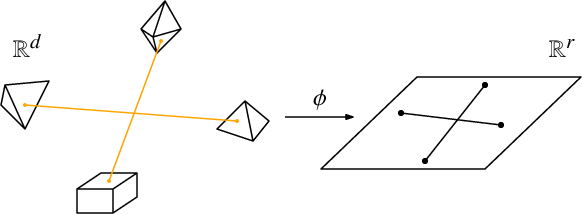
Figure 2: An illustration of the dependency pullback condition from [mcginnis2026necessary], exemplified for the hyperplane transversal case (C9), demonstrating the lifting of affine dependence from k0 to points in elements of k1.
Significance of Results and Numerical Implications
The results offer a complete characterization for the existence of transversals under colorful and matroidal constraints for all intermediate k2 in the range k3, thereby filling a well-known gap in discrete geometry and transversal theory. The numerical threshold for the number of colors (or matroidal rank restriction) is given explicitly in terms of the field dimension and the interplay between k4, k5, and k6. The bounds are tight in the sense that previous (non-general) theorems correspond to these specializations.
In summary, the work provides:
- Unification: All classical transversal and Helly-type theorems as special cases.
- Tight color/rank bounds: Required number of colors k7 for the main colorful theorem.
- Extension to matroids: Applicability to any matroid, far beyond partition matroids (i.e., colorings).
Theoretical and Practical Implications
From a theoretical standpoint, the results augment the toolkit for analyzing geometric and combinatorial intersection patterns, directly impacting our understanding of Helly-type, Carathéodory-type, and Tverberg-type phenomena for convex sets. The connection to equivariant topology also points toward broader applications in topological combinatorics, such as:
- The use of matroidal join complexes in analyzing high-dimensional data intersection properties.
- Application of obstruction theory beyond classical simplicial maps.
- Structured color or independence constraints in combinatorial geometry.
On a practical level, these results could inform algorithms and analysis for finding transversals in colored or partitioned geometric configurations, relevant in computational geometry, geometric modeling, and perhaps aspects of optimization and data analysis where constraints can be encoded by matroids.
Directions for Future Research
Future developments may include:
- Algorithmic aspects: Designing efficient algorithms for constructing transversals under matroidal/colored constraints.
- Broader fields and configurations: Extension to infinite fields or to other underlying spaces, such as manifolds or polyhedral settings, where topological constraints still play a role.
- Further topological generalizations: Investigating non-euclidean settings, actions of larger symmetry groups, or more intricate interaction models between geometry and combinatorics.
- Relation to Tverberg-type theorems: Deeper connections and possible analogues with intersection and partition theorems of Tverberg-type, topological Radon theorems, and generalized configuration spaces.
Conclusion
This work advances geometric transversal theory by providing a comprehensive colorful and matroidal framework extending the Goodman–Pollack problem. Through the introduction of matroidal join spaces and novel topological arguments, a wide range of celebrated intersection theorems are subsumed and unified, with explicit tight bounds and generalizations. The approach not only clarifies the structure of existing results but opens new avenues for both combinatorial geometry and topological methods in discrete mathematics.