- The paper introduces a novel algebraic framework for optimizing distances on algebraic varieties under polyhedral norms.
- It establishes a precise stratification of Voronoi cells with explicit degree bounds and dual geometric characterizations.
- The research provides algorithmic recipes for computing optimality directions, enhancing applications in computational geometry and anisotropic analysis.
Algebraic Distance Optimization in Polyhedral Norms: A Technical Overview
The paper "Algebraic Distance Optimization in Polyhedral Norms" (2604.19479) rigorously investigates the problem of distance minimization from a point in Rn to a real algebraic variety X⊆Rn, when the distance is defined by a polyhedral (not necessarily Euclidean) norm. The main focus is on the geometric and algebraic structure of Voronoi cells, the stratification of varieties induced by the dimension of these cells, and the algebraic description of medial axes in these metric settings.
In contrast to classical Voronoi diagrams, which have predominantly been analyzed for finite point sets and under the Euclidean norm, this work generalizes to arbitrary real algebraic varieties and investigates the profound impact polyhedral norms have on the geometric and combinatorial properties of Voronoi regions. Polyhedral norms naturally arise in applications that demand non-Euclidean, anisotropic, or piecewise linear geometry (e.g., optimal transport, Wasserstein metrics on simplices), motivating this broader perspective.
Polyhedral Norms and Dual Geometry
Polyhedral norms are defined by choosing a full-dimensional centrally symmetric convex polytope B (the unit ball), and setting hL(x)=maxℓ∈Lℓ(x), where L is a symmetric set of linear functionals corresponding to the supporting hyperplanes of B. The dual polytope B∗ is defined via classical polar duality, offering a tight connection between the combinatorics of B and B∗.
The paper establishes a systematic use of normal fans associated with B and X⊆Rn0: the inner normal fan of X⊆Rn1 partitions the ambient space into cones indexed by the faces of X⊆Rn2. The geometry of the intersection of the normal space to X⊆Rn3 at a point X⊆Rn4 with these cones controls the combinatorial structure of the Voronoi cell of X⊆Rn5.
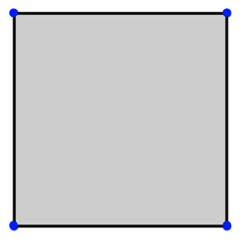
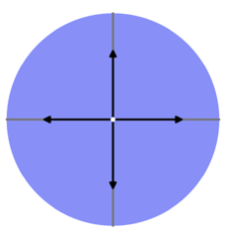
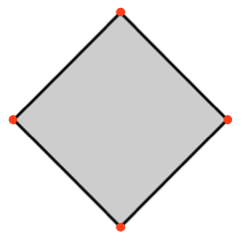
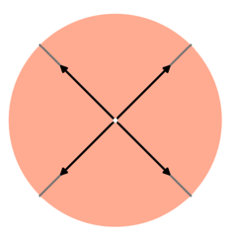
Figure 1: Unit square X⊆Rn6 and its inner normal fan; dual polytope X⊆Rn7 and its inner normal fan, illustrating the duality and cone structure critical to Voronoi geometry.
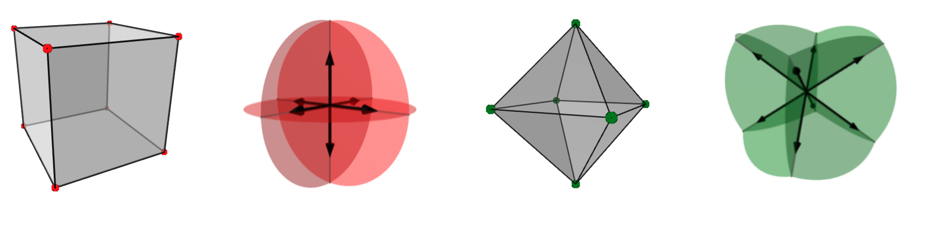
Figure 2: From left to right: the 3D cube X⊆Rn8, its normal fan, the dual octahedron X⊆Rn9, and the corresponding normal fan in three dimensions.
Voronoi Cells for Algebraic Varieties under Polyhedral Norms
For a fixed point B0, the Voronoi cell is defined as:
B1
The core contribution is the definition of the "Type" of B2, capturing the collection of faces B3 of B4 such that the normal space B5 of B6 at B7 intersects the corresponding normal cone B8. This provides an effective combinatorial encoding of the possible optimality directions for B9, which in turn determines a "Voronoi cone" that contains the actual Voronoi cell.
The paper's Theorem (see Theorem 3.2) confirms that hL(x)=maxℓ∈Lℓ(x)0 can equivalently be characterized via intersections of hL(x)=maxℓ∈Lℓ(x)1 with faces hL(x)=maxℓ∈Lℓ(x)2 of hL(x)=maxℓ∈Lℓ(x)3, offering a dual perspective that is algorithmically useful. For codimension-one varieties, the geometry simplifies: "Type" at generic points consists of only pairs of symmetric faces.
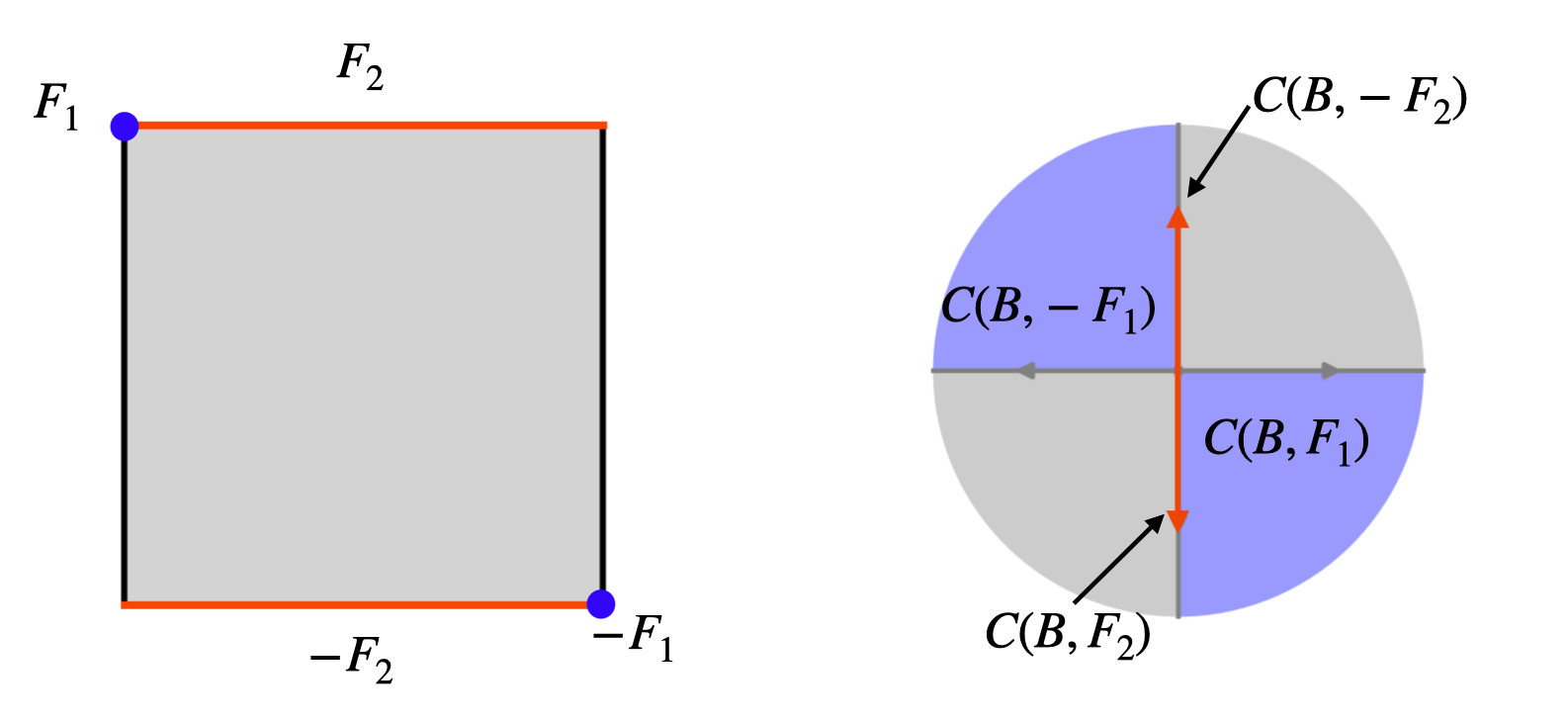
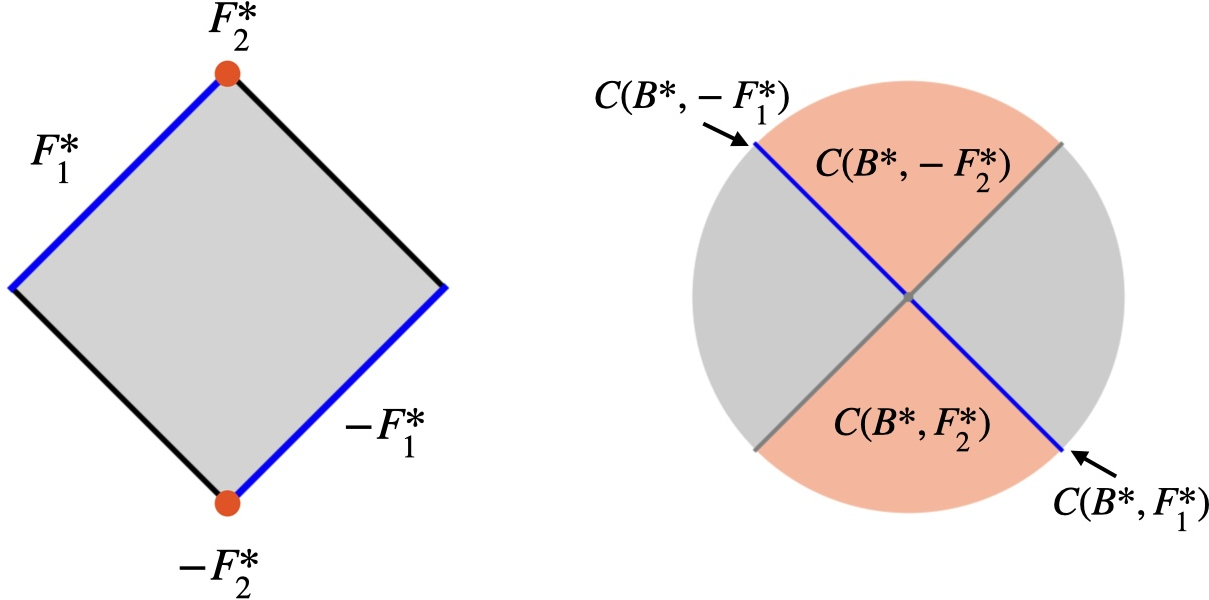
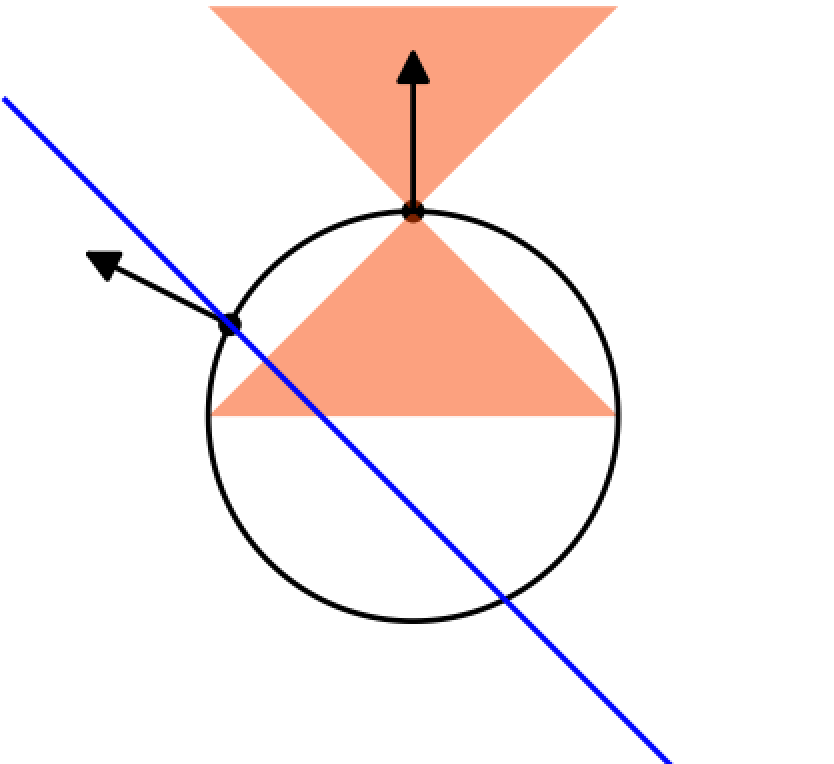
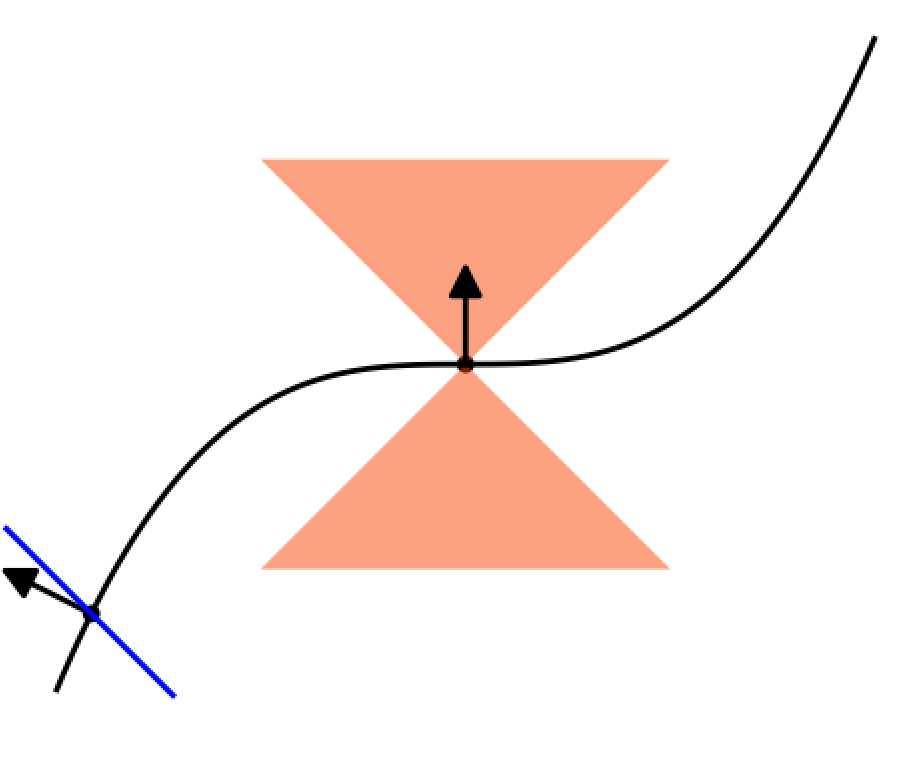
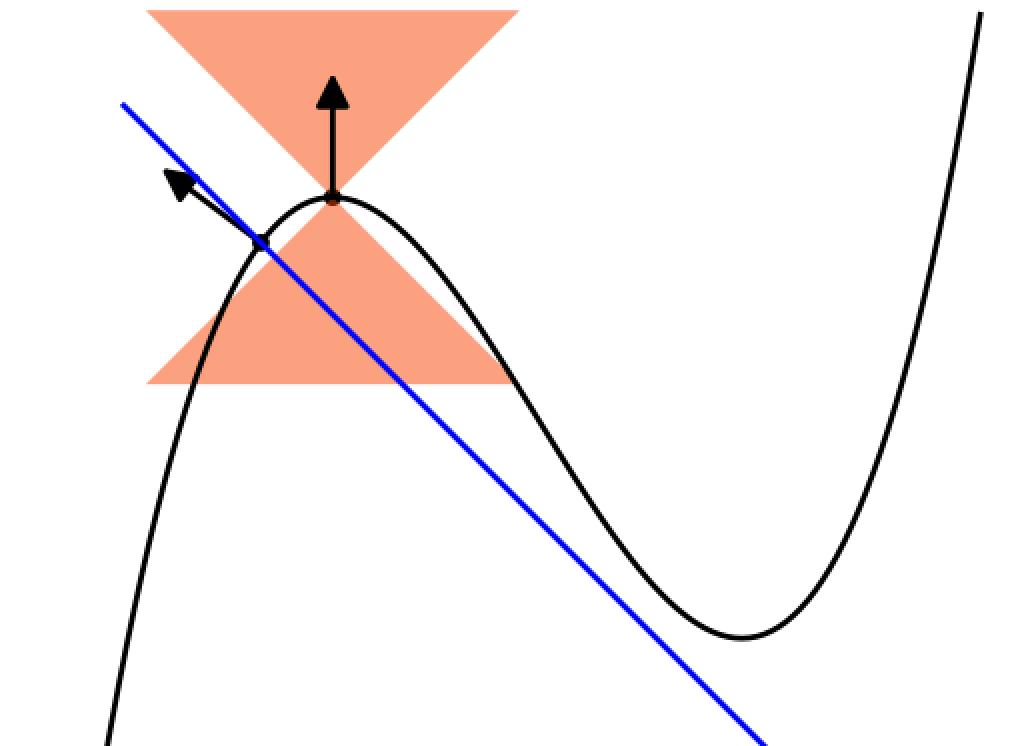
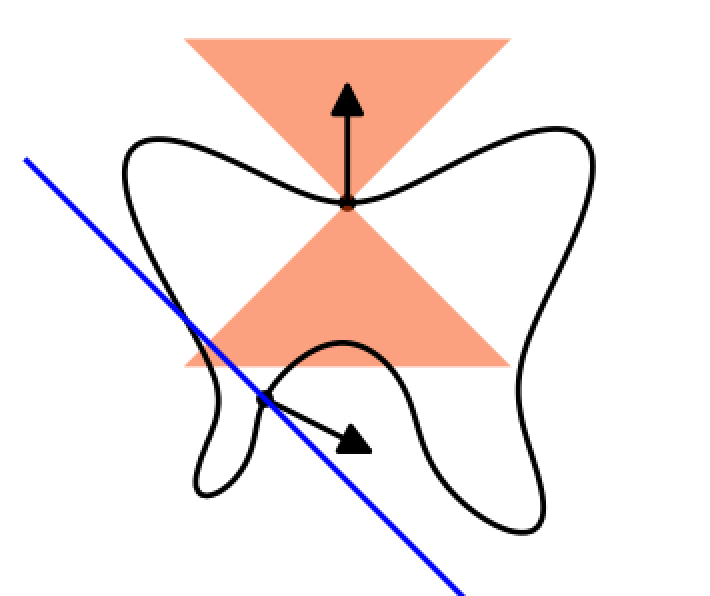
Figure 3: The unit square hL(x)=maxℓ∈Lℓ(x)4 and its normal fan hL(x)=maxℓ∈Lℓ(x)5, visualizing how the geometry of hL(x)=maxℓ∈Lℓ(x)6 dictates possible types and Voronoi cones.
Stratification of Codimension-One Varieties by Voronoi Cone Dimension
A strong result is the stratification of codimension-one (i.e., hypersurface) varieties into semialgebraic sets, where each stratum hL(x)=maxℓ∈Lℓ(x)7 consists of points whose Voronoi cones have constant dimension hL(x)=maxℓ∈Lℓ(x)8. This stratification is shown to satisfy manifold-theoretic conditions, including local closedness, and is computable with explicit semialgebraic descriptions via projections of incidence varieties that encode normal vector alignment with face cones.
Transversality is crucial: when the projection of the normal space to hL(x)=maxℓ∈Lℓ(x)9 is transverse to the strata of the projected normal fan of L0, this yields a genuine stratification. Failure leads to unexpected topological behaviors in the partition, as illustrated in toric and high-dimensional examples.
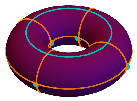
Figure 4: Partition of a torus L1 under the cubical norm, showing different strata L2, L3, and L4 colored distinctly.
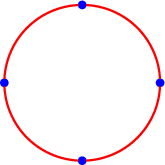
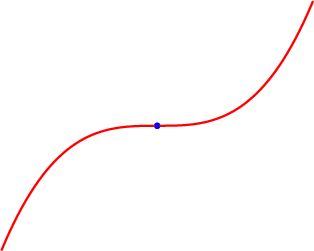
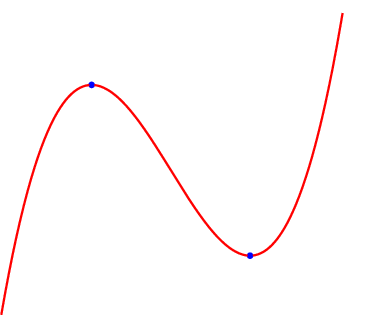
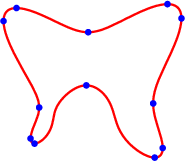
Figure 5: Stratification of stratum L5 for a curve under the square norm, illustrating semialgebraic decomposition by Voronoi cone dimension.

Figure 6: Stratification of a hyperboloid L6 under the cubical norm, where L7, L8, L9 have distinct geometric and algebraic character.
The medial axis, B0, comprises the locus of points B1 equidistant to B2 via two or more distinct minimizers. The authors provide an explicit algebraic construction: for all pairs of faces B3 of B4, they define an ideal whose vanishing set encodes the necessary tangency and equidistance constraints for the faces to serve as optimizers at B5.
The union of these loci across all face pairs, termed the "equidistant locus," strictly contains the Zariski closure of the true medial axis. The authors discuss implications of superfluous (i.e., non-minimal) algebraic components and provide combinatorial degree bounds for the equations describing the medial axis, depending on the class of face pairs (e.g., vertex-vertex, vertex-facet, facet-facet), leveraging resultants and elimination theory.
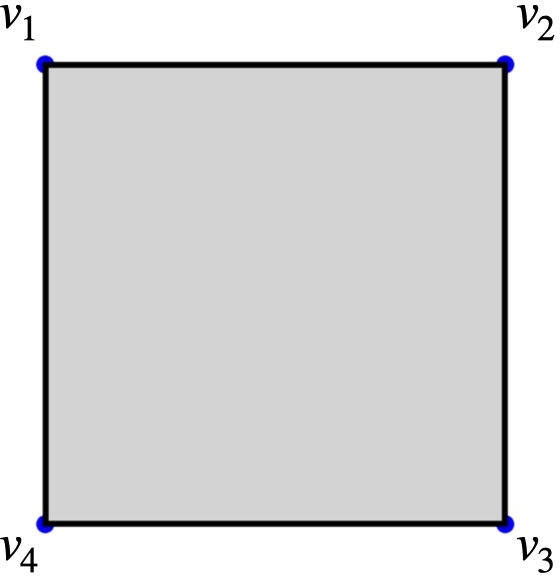
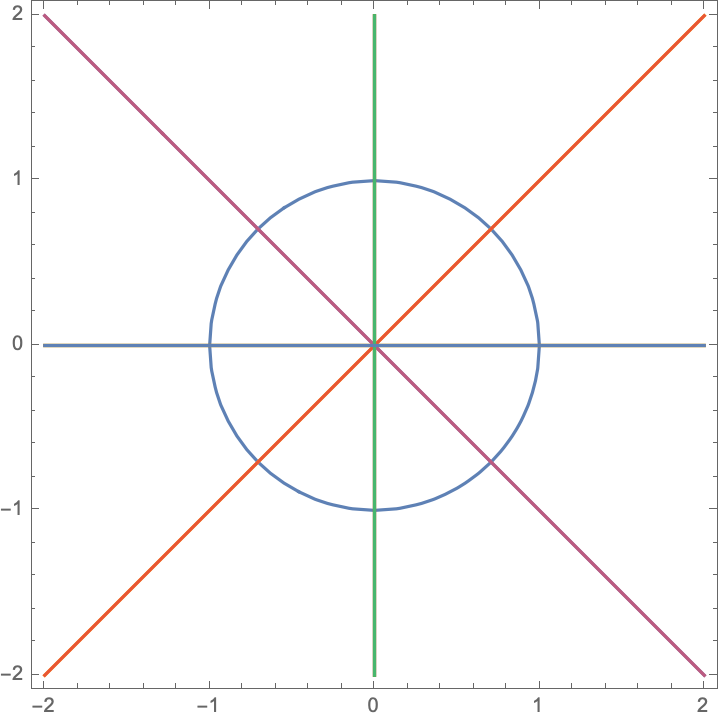
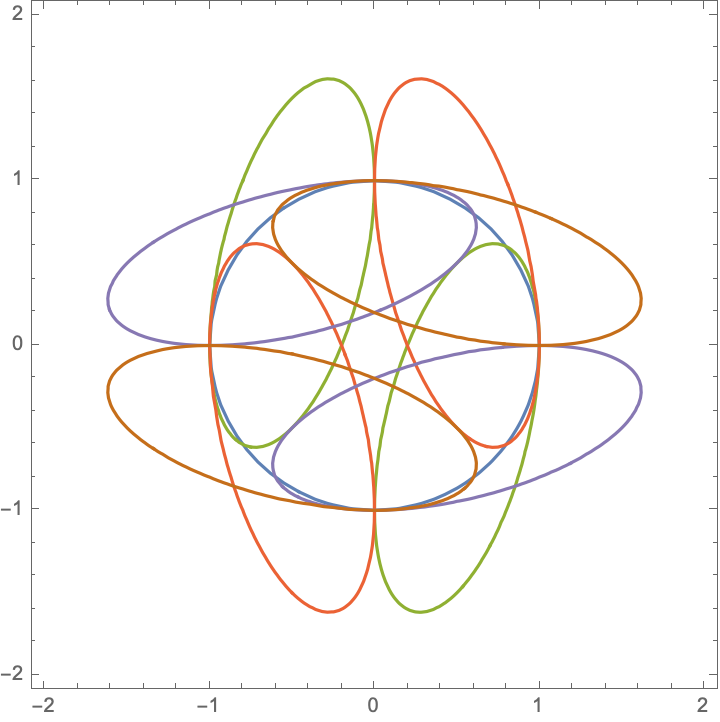
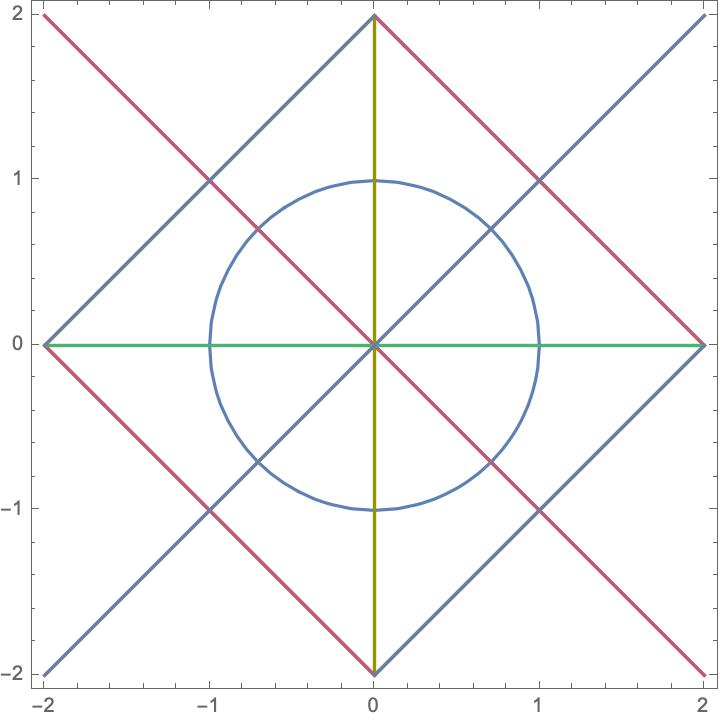
Figure 7: Polyhedral ball with labeled vertices, used to index the combinatorics of medial axis components.
Key Results and Quantitative Bounds
- Semialgebraicity of Strata: Every stratum B6 in the canonical stratification is semialgebraic, with explicit descriptions available in terms of the normal fan generators of B7 and the differential polynomials defining B8.
- Degree Bounds: For a hypersurface of degree B9, the degree of the component of the medial axis arising from two vertices is at most B∗0; for vertex-facet, at most B∗1; and for facet-facet, at most B∗2, where B∗3 count points in B∗4 tangent to the respective faces. For quadrics, all such degrees are at most B∗5.
- Computational Recipes: Algorithmic routines are given for computing B∗6 and hence the local structure of the Voronoi cell for any B∗7, relying on symbolic computation platforms (demonstrated with SageMath scripts).
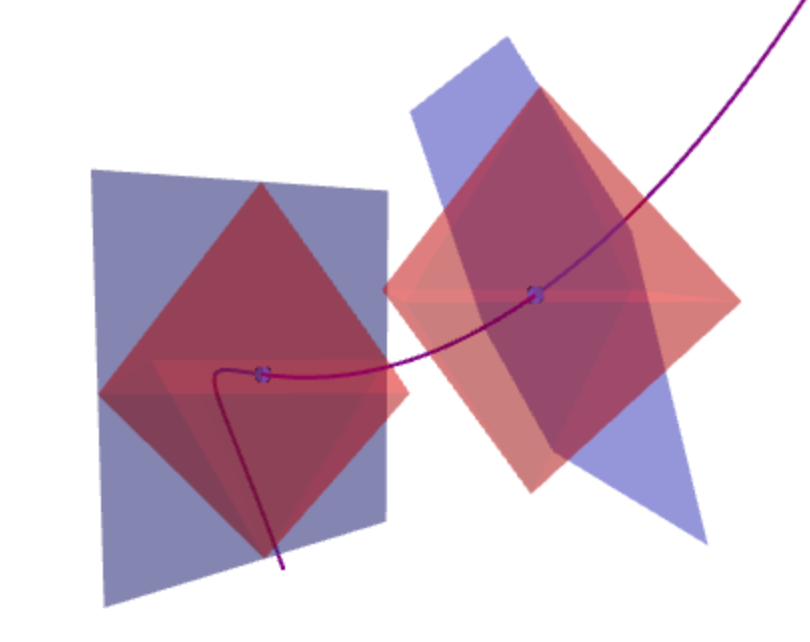
Figure 8: Twisted cubic with normal spaces at two points, showing the interaction of the normal spaces with the normal fan of the unit cube.

Figure 9: Hyperboloid example with a saddle point at B∗8, whose Voronoi cell degenerates to a singleton, indicating the importance of local geometry.
Implications and Extensions
The explicit polyhedral-norm-based framework and its algebraic recipe deepen understanding of metric properties of real algebraic varieties beyond the Euclidean case. The stratification induced by Voronoi cone dimension yields a canonical hierarchy of points encoding local optimality and robustness properties, useful for both theoretical applications (e.g., metric algebraic geometry, random sampling of algebraic models) and practical tasks in computational geometry and optimization in anisotropic environments.
Medial axis computations in polyhedral norms, with their efficient degree bounds and explicit incidence loci, have direct implications for applications ranging from computational vision (where proximity and bisector geometry matter under different metrics) to robust shape analysis in high-dimensional learning and inverse problems in algebraic statistics and optimal transport.
Future directions include extending the theory to non-smooth or higher-codimension varieties, relating the algebraic degree theory to tropical and piecewise-linear geometries, and seeking further connections to optimization over algebraic varieties constrained by anisotropic data models.
Conclusion
This work provides a thorough algebraic and geometric analysis of Voronoi cells and the medial axis of real algebraic varieties under polyhedral norms. The extension from Euclidean to polyhedral metrics introduces rich combinatorial and stratified structures, all of which are computable in closed-form algebraic terms. These results offer a foundational platform for both further mathematical study and direct computational applications in areas requiring generalized notions of distance and optimality.

