- The paper demonstrates that JWST IFU observations enable a 3D reconstruction of the ejecta, revealing two fragmented lobes and a ~300 km/s pulsar kick.
- It utilizes high spatial and spectral resolution to map emission lines and velocity profiles, quantifying clump fragmentation and asymmetric distributions.
- The analysis confirms deep hydrogen mixing and significant macroscopic instabilities, contrasting SNR 0540-69.3 with remnants like the Crab Nebula.
Three-Dimensional Morphology of the Inner Ejecta in SNR 0540-69.3 Revealed by JWST IFU Observations
Observational Strategy and Data Products
JWST Cycle 3 NIRSpec and MIRI/MRS IFU observations of SNR 0540-69.3 provided spatially resolved spectroscopy covering 1–28 μm, enabling the reconstruction of the 3D morphology for multiple strong emission lines in the central ∼4′′ region (roughly 0.7 pc) of the remnant. Both high spatial and spectral resolution were leveraged, especially with NIRSpec, to disentangle emission from H I, He I, [Ne II], [Ne III], [S III], [S IV], [Fe II], and [Ni II]. Absolute astrometry was obtained by anchoring the pulsar centroid to Gaia DR3, while the systemic velocity was determined using ISM lines across the FOV.
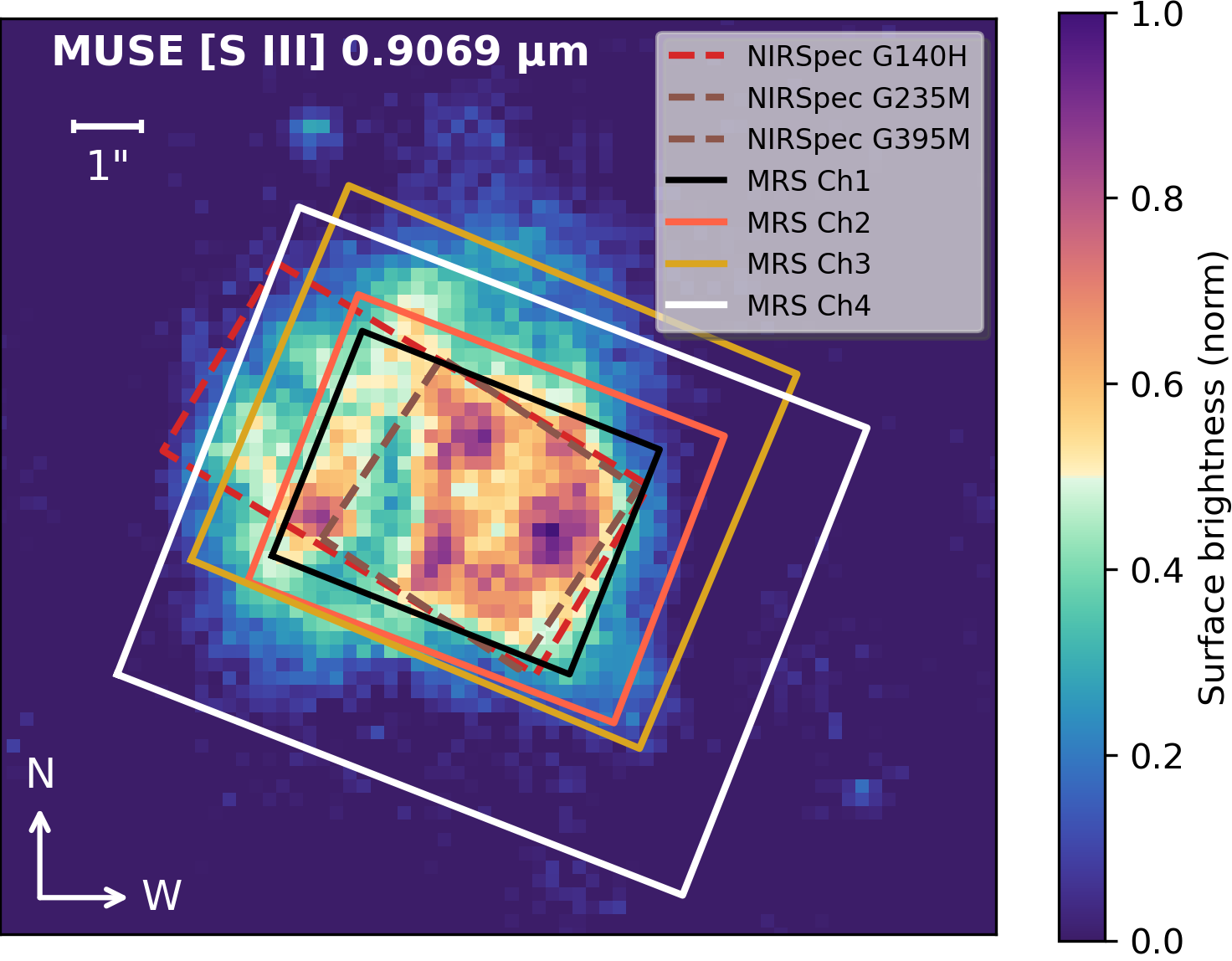
Figure 1: The JWST NIRSpec and MIRI/MRS footprints superposed on [S III] line emission illustrate the spatial coverage of the central region.
Velocity Structure and Global Morphology
Integrated velocity profiles reveal that the emission lines are extended primarily on the redshifted side (−700 to +1200 km/s). All profiles exhibit three broad peaks (at approximately −230, +320, +750 km/s), corresponding to distinct spatial structures in the ejecta. Detailed spatial-spectral slicing of [Fe II] 1.644 μm showed ring-like regions and complex filamentary morphology for each velocity interval.
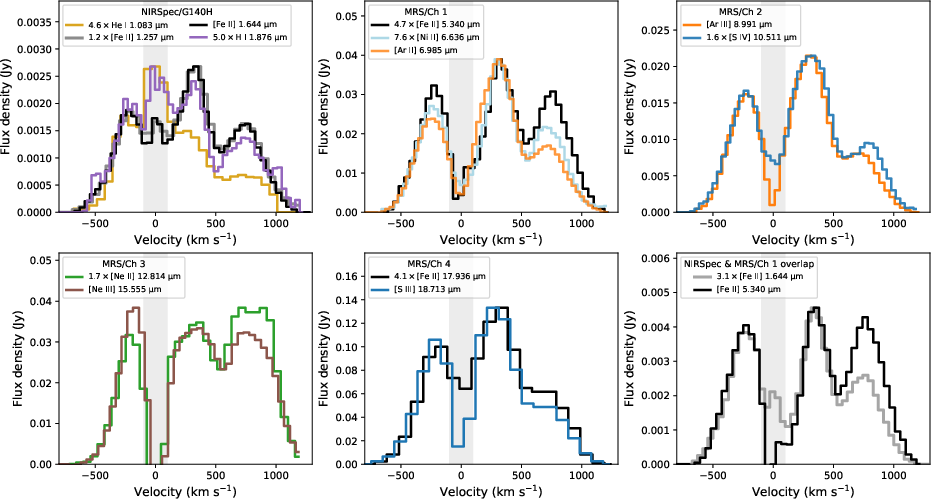
Figure 2: Velocity profiles for all lines highlight three principal velocity peaks associated with spatially distinct ejecta features.
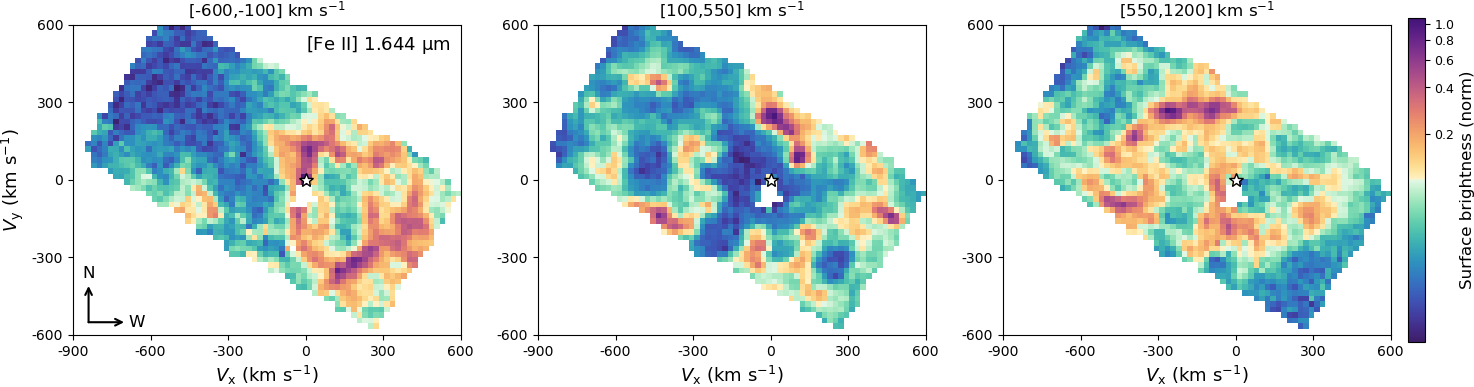
Figure 3: Spatial images of [Fe II] 1.644 μm emission in key Doppler intervals demonstrate that emission is distributed in knots and filaments, not uniform shells.
The 3D reconstructions indicate the inner ejecta are dominated by two fragmented lobes, largely symmetric about the pulsar in the sky plane, with diameters of approximately 600 km/s (∼0.7 pc). The lobes are nearly empty internally, but additional ring-like structures and weak emission are present on the redshifted far side. The symmetry in the sky plane is offset along the line of sight, with lobes centered around a velocity of +300 km/s, implying a strong constraint on the pulsar kick velocity.
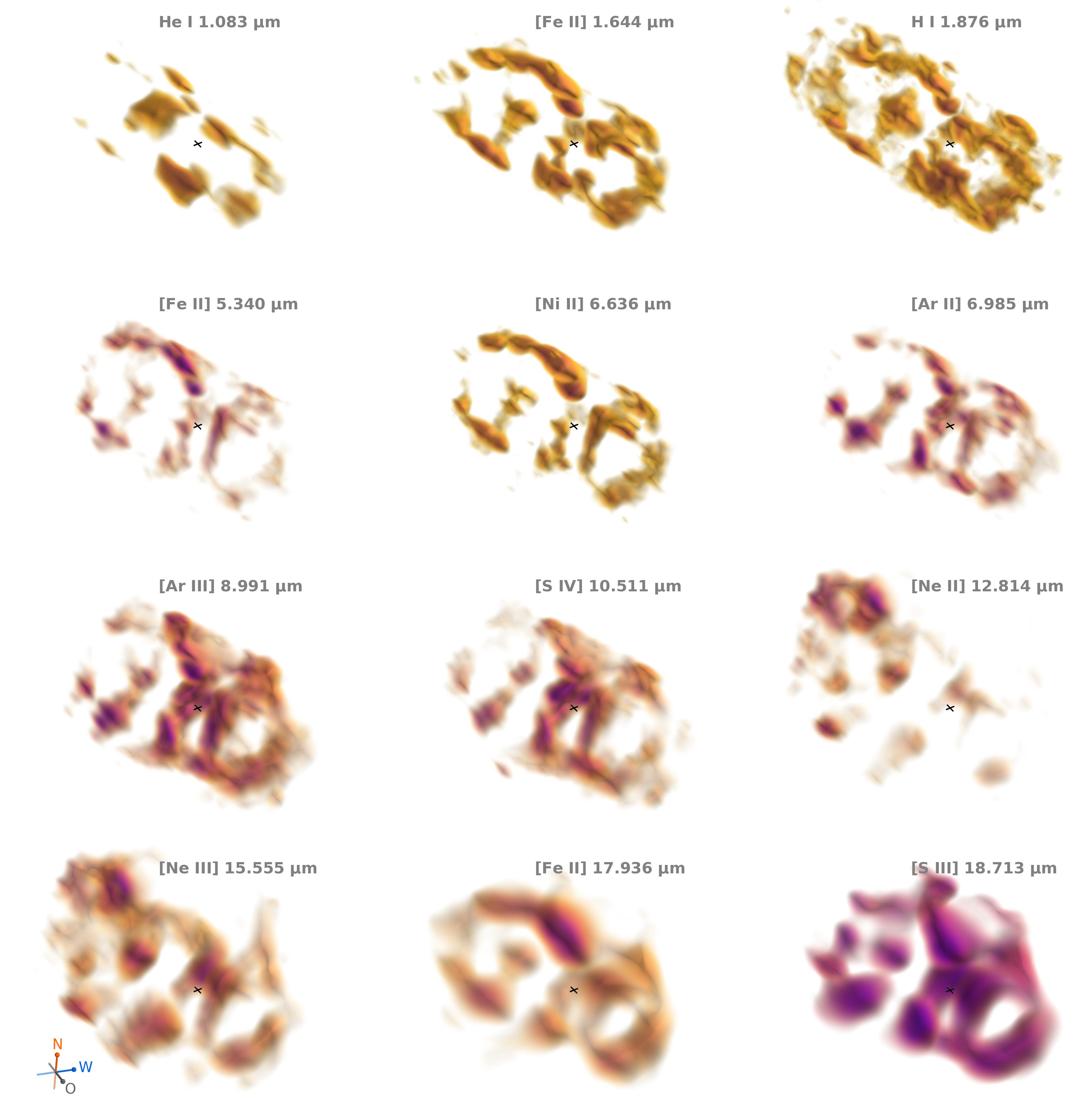
Figure 4: 3D volume renderings show the spatial fragmentation and lobe symmetry for each emission line, emphasizing the large-scale structure.
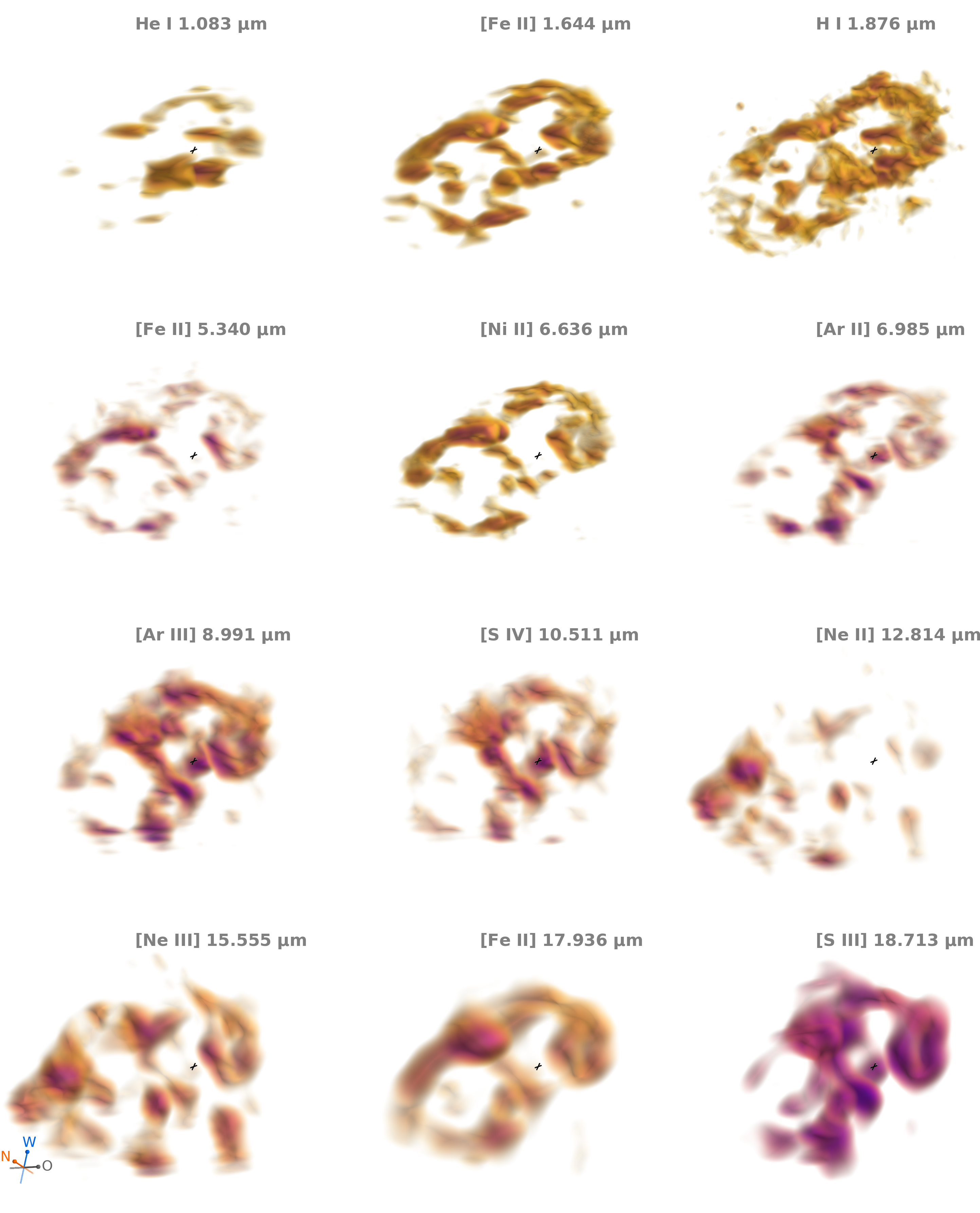
Figure 5: Alternate viewing angles further reveal the broken and ring-like morphology in 3D.
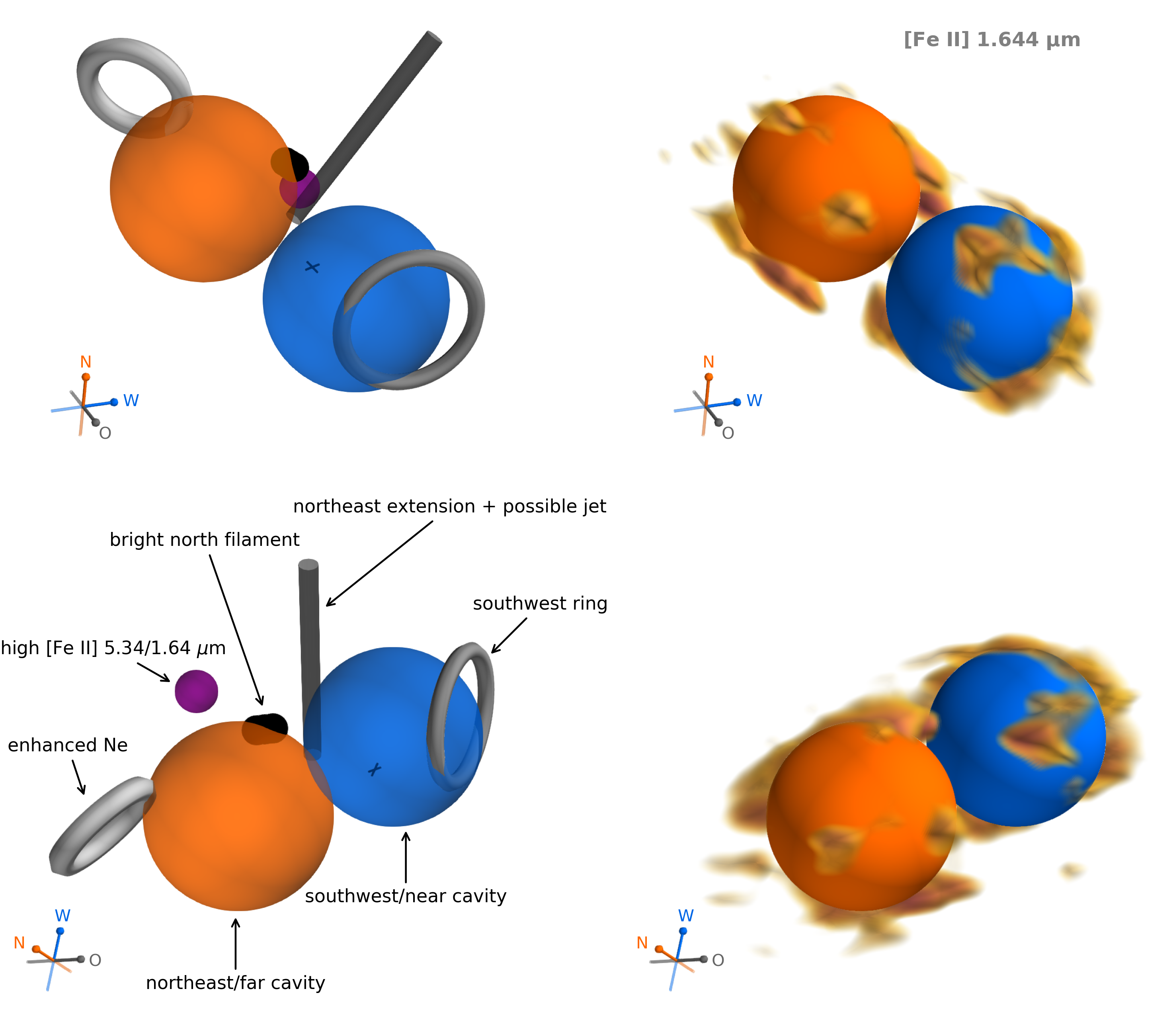
Figure 6: Schematic identifies the spatial components—main lobes, cavity, ring extensions, and enhanced Ne emission—summarizing the inferred structure.
Chemical and Physical Diagnostics in 3D
NIRSpec and MRS provide the opportunity to probe chemical stratification and physical conditions. The detection of H I 1.8756 μm in the innermost ejecta confirms the Type II SN classification, with hydrogen mixed down to velocities <400 km/s, indicative of strong hydrodynamical mixing during the explosion. Line ratio analyses (e.g., [Fe II] 1.2570/1.6440 μm and 5.3402/1.6440 μm) show that the former is robust against spatial variations, with a flux ratio 1.111±0.007, consistent with the ISM extinction and indicating negligible intra-ejecta dust extinction over the sampled region.
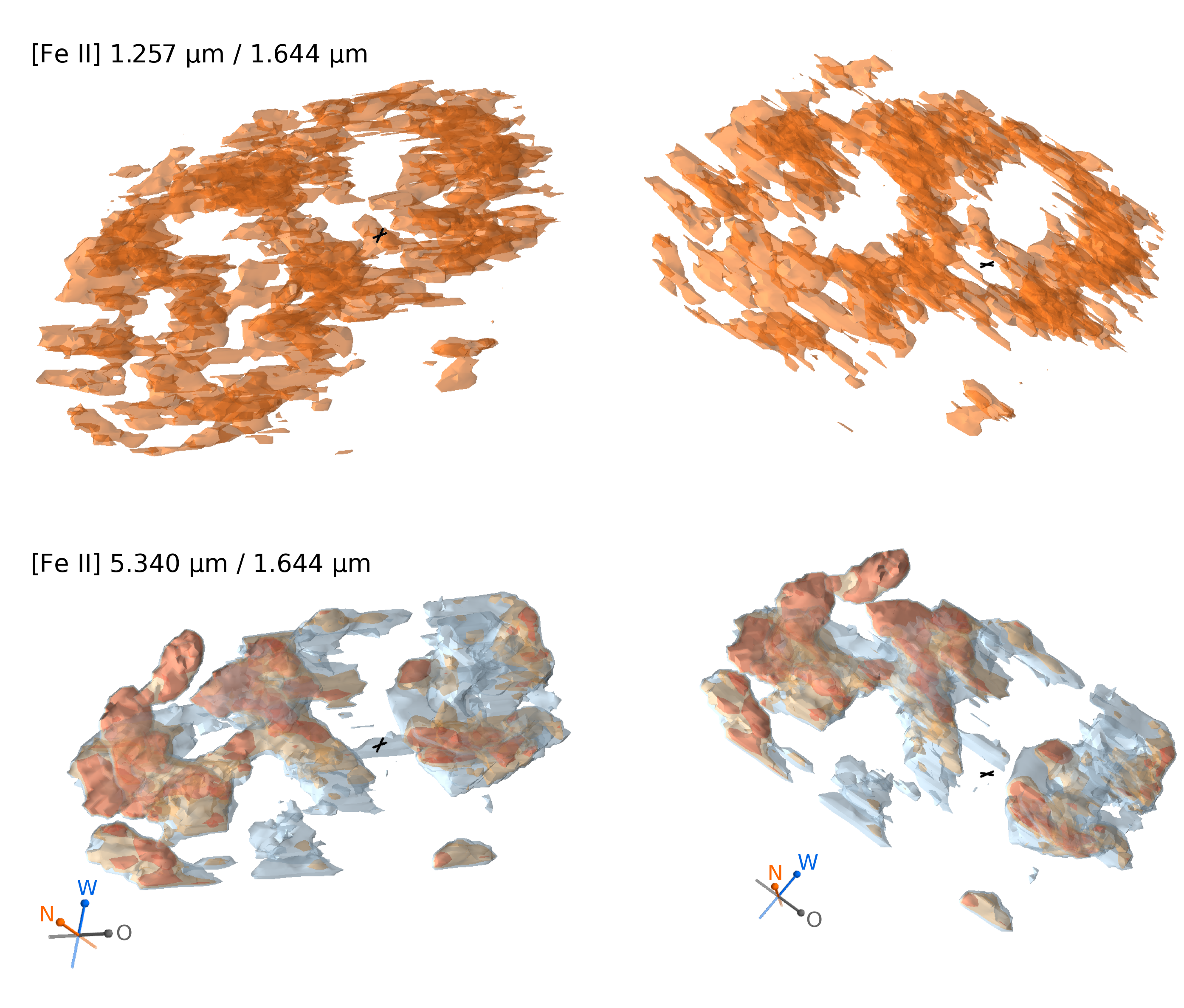
Figure 7: Iso-surfaces of [Fe II] line ratios demonstrate spatial uniformity in dust-sensitive ratios and inhomogeneity in temperature/density-sensitive ratios.
Enhanced [Ne II] and [Ne III] emission in a distinct ring on the far side provides clear evidence for macroscopic mixing, with abundance variations observable in the 3D data. The [Fe II] 5.3402/1.6440 μm ratio varies significantly across the remnant and is sensitive to −7000 and −7001; maximal values correspond to low density/temperature zones outside the main lobes. The He I 1.0833 μm line is notably weaker on the redshifted side, possibly due to lower −7002 affecting collisional excitation, further supporting physical stratification.
Clump Statistics and Spatial Fragmentation
Clump-finding analysis using FellWalker reveals the ejecta are fragmented into 12–22 clumps per line, with diameter distributions peaking in the 300–800 km/s range. The spatial arrangement of clumps confirms the symmetry in the sky plane, while systematic offset in near/far side distributions quantifies the asymmetry along the line of sight (120–240 km/s). The two main lobes are approximated by spheres with diameter 600 km/s, but significant fragmentation is observed.
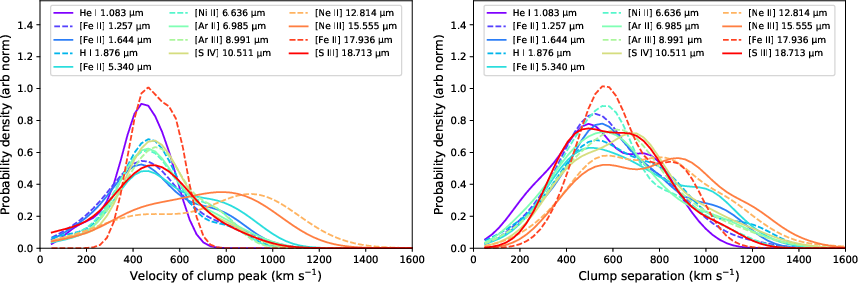
Figure 8: Gaussian KDEs of clump peak velocities and intra-clump separations quantify fragmentation and spatial symmetry.
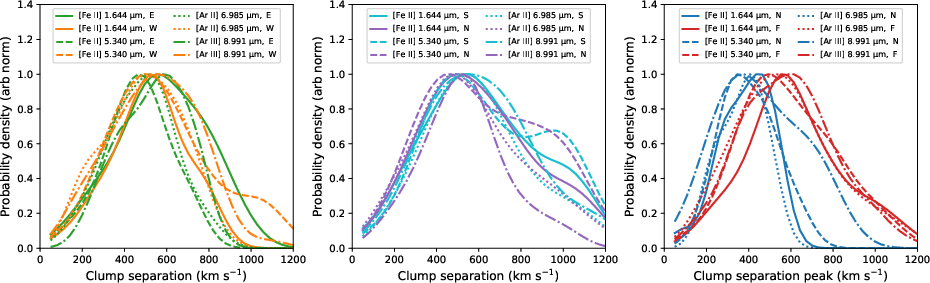
Figure 9: Distributions of clump separations for various axes reveal symmetry and offset, supporting the claim of a −7003 km/s pulsar kick.
Pulsar Wind Nebula and Comparison with Analogous Systems
The IR synchrotron continuum from the pulsar wind nebula (PWN) is elongated along the NE-SW axis, with a bright southern blob co-located with one of the main lobes. Comparison of spatial alignment between continuum and line emission shows similar extent along the eastern edge, differing from the Crab Nebula, where the synchrotron emission bursts through the ejecta shell. The Crab's overall elongation along the jet axis is not observed in SNR 0540-69.3, highlighting a diversity in PWN morphologies that likely stems from initial explosion asymmetries and local environment.
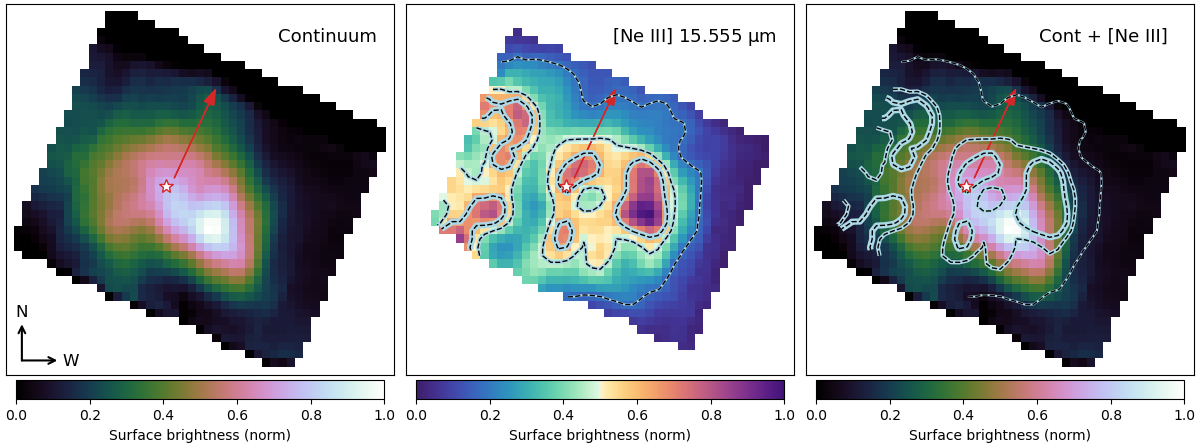
Figure 10: IR continuum and [Ne III] emission overlay confirms spatial alignment and provides constraints on the PWN-shell interaction.
Implications for Explosion Dynamics and Pulsar Kick
The symmetry of the lobes in the sky plane, but offset along the line of sight, supports the interpretation that the pulsar received a kick of −7004 km/s away from the observer. This is consistent with proper motion limits and typical Galactic kick statistics. The asymmetric ring structures, hydrogen mixing, and Ne enhancement confirm that SNR 0540-69.3 underwent strong macroscopic mixing, likely via Rayleigh-Taylor instabilities and Ni bubble effects, as has been modeled in neutrino-driven explosions. The evidence for spatially varying density and temperature, and negligible dust extinction, supports conditions similar to those inferred in the Crab and Cas A, but with distinct morphological consequences.
Conclusion
JWST IFU observations of SNR 0540-69.3 have enabled a comprehensive 3D reconstruction of the inner ejecta, delivering robust constraints on morphology, velocity structure, and elemental mixing. Key claims substantiated by strong numerical results include the symmetry and fragmentation of the ejecta into two main lobes of −7005 km/s diameter, the inferred pulsar kick of −7006 km/s, and confirmation of deep hydrogen mixing into the core. Spatially-resolved line ratios show negligible intra-ejecta dust extinction and significant variation in physical conditions, especially in temperature and density. The structural differences from the Crab Nebula underscore the critical role played by asymmetric explosions and progenitor structure in shaping young PWNe. Future work will exploit the spatially resolved spectra to model shock and photoionization processes and explore the evolution of the PWN-ejecta interaction, with ramifications for understanding explosion mechanisms, neutron star birth velocities, and the fate of core-collapse remnants.