Branes
Abstract: In this review branes of string theory are described from three different perspectives: as endpoints of open string, as supergravity backgrounds with BPS properties, as dynamical objects with gauge invariant actions. Based on these descriptions various effects of brane interactions are reviewed: brane bound states, Hanany--Witten and Myers effects, supertubes. The review is based on the lecture course given at MIPT.

Paper Prompts
Sign up for free to create and run prompts on this paper using GPT-5.
Top Community Prompts
Explain it Like I'm 14
What this paper is about
This review explains “branes,” key objects in string theory. It shows how branes can be understood in three different but consistent ways:
- as places where open strings end,
- as heavy, stable “backgrounds” in spacetime (solutions of supergravity),
- and as dynamical objects with their own actions (like membranes that can move, bend, and carry charge).
Using these viewpoints, the paper walks through how branes interact, how they carry charge, how they can combine into new states, and why they are central to ideas like holography (AdS/CFT) and to building realistic models of our universe.
The main questions the paper asks
- How do different pictures of branes—endpoints of strings, solutions in gravity, and moving charged objects—fit together and describe the same physics?
- How do branes couple to (and emit/absorb) the fields of string theory, and how can we compute their tension and charge?
- What new effects happen when branes interact (like creating new branes, forming bound states, “puffing up,” or making stable tubes)?
- How do branes help in important applications like holography and stabilizing extra-dimensional shapes in string compactifications?
How the paper approaches the topic (in everyday language)
Think of strings like tiny rubber bands. Some are closed loops (closed strings), others have ends (open strings). Branes are like higher‑dimensional “surfaces” or “membranes” where open strings can attach. The paper studies branes in three complementary ways:
1) Branes as places where strings end
- Open strings can start and stop on a brane. The allowed vibrations of these strings give rise to particles that live on the brane. For example, on a D3‑brane (a 3‑dimensional brane in space), the low‑energy vibrations look like a 4‑dimensional gauge theory (a cousin of electromagnetism) with lots of symmetry.
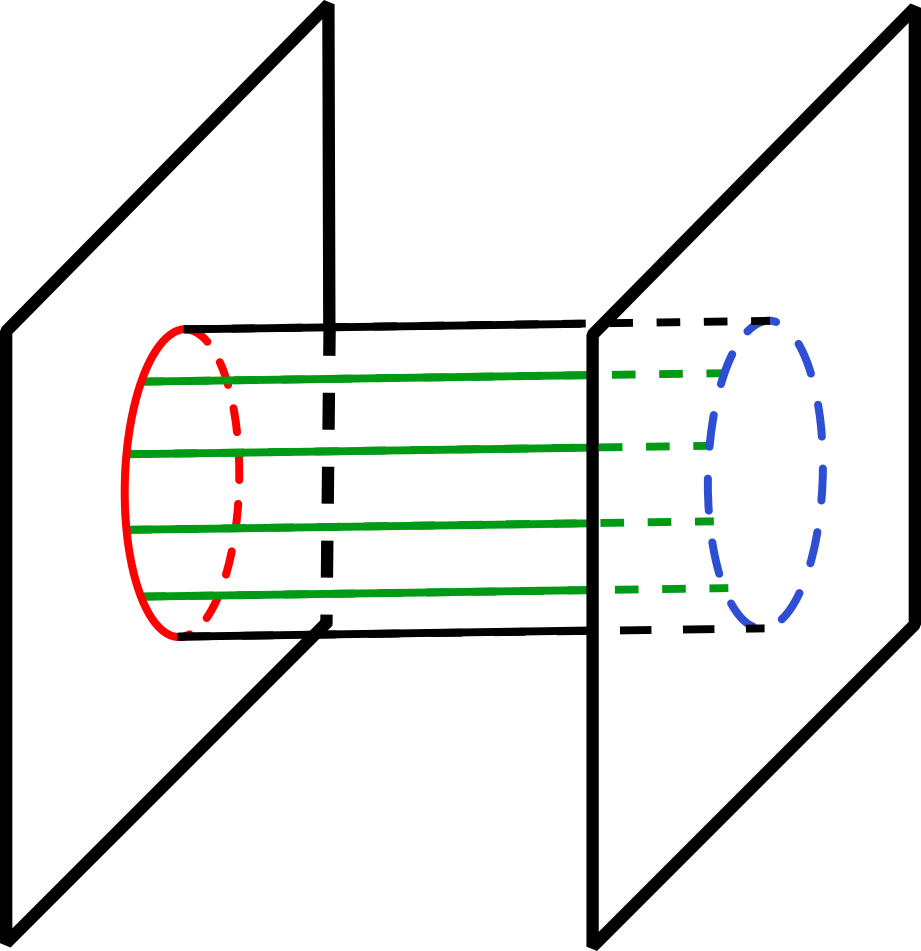
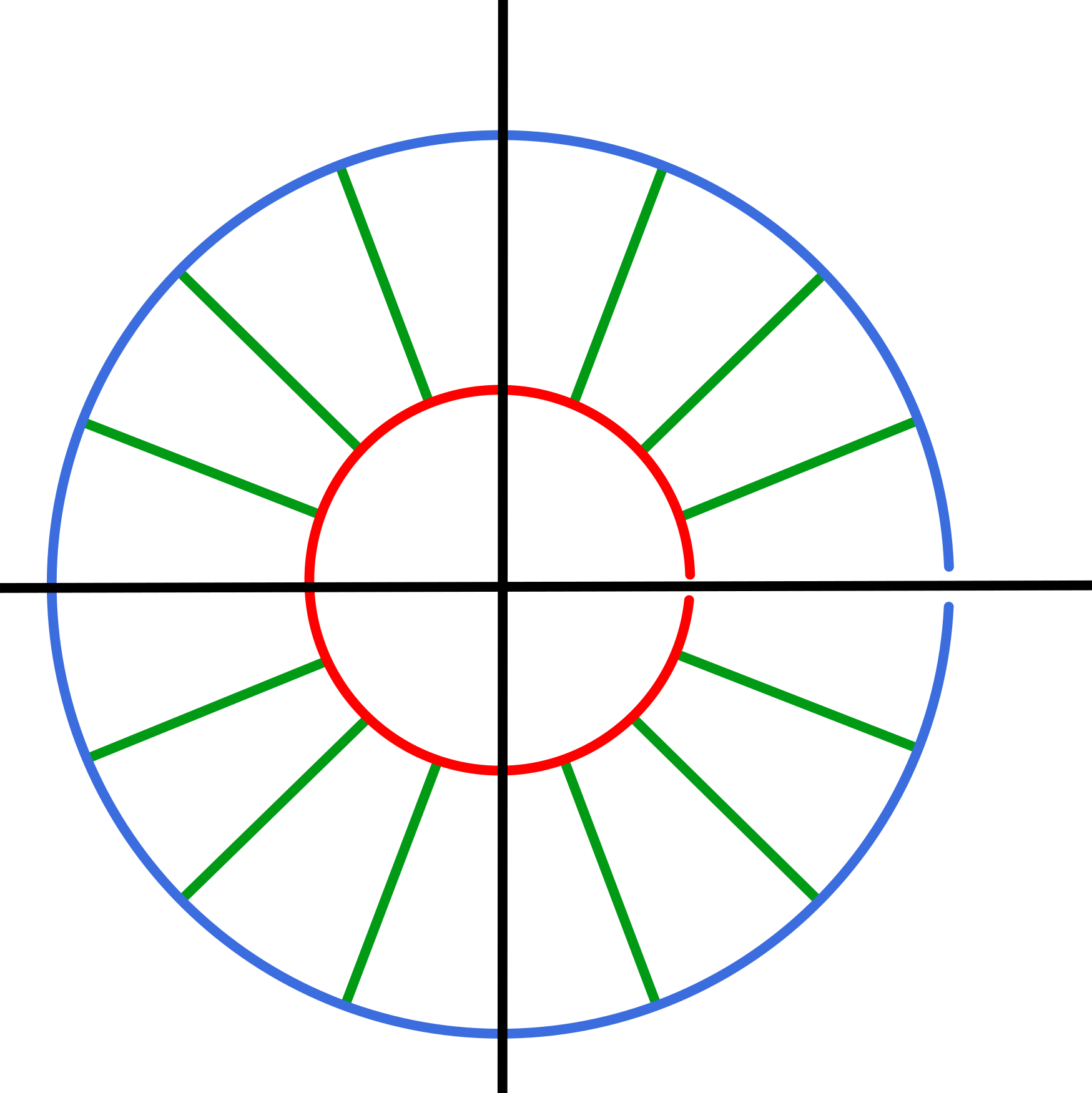
- There’s a powerful idea called open–closed string duality: the same worldsheet (a tiny 2D surface traced by a moving string) can be seen in two ways. A cylinder, for example, can be read as:
- a loop of an open string stretched between two branes, or
- a closed string traveling from one brane to another.
- Matching these two views lets us calculate how strongly branes couple to closed‑string fields and what their tensions (energies per volume) are.
2) Branes as dynamical objects with actions
- Like how a particle has an action that tells it how to move, a brane has an effective action. The “Nambu–Goto” idea (the action is proportional to the area/volume it sweeps) generalizes to branes as the Dirac–Born–Infeld (DBI) action, plus extra terms (Wess–Zumino terms) that describe how branes carry and feel charges.
- Branes carry special types of “charges” under higher‑form fields (like generalized electric/magnetic fields). For example, a Dp‑brane couples to a (p+1)‑form field, written as C_(p+1). This is like saying: a wire couples to a 1‑form (voltage), a surface couples to a 2‑form, and so on.
- The paper starts with a warm‑up: a charged particle’s action and how it couples to a vector field (ordinary electromagnetism). Then it scales that logic up to branes and their higher‑form charges.
3) Branes as supergravity backgrounds
- At low energies, string theory looks like a gravity theory in 10 dimensions (called supergravity). Branes show up as “extremal” solutions—stable, highly charged objects that curve spacetime (like black branes, the higher‑dimensional cousins of black holes).
- These solutions preserve some supersymmetry (they’re “BPS”), which makes them stable and easier to analyze.
A key technical bridge: matching two calculations
- The paper shows how to compute the force between two branes in two ways and match the answers:
- As an open‑string loop (the cylinder viewed as a loop of open string).
- As a tree‑level exchange of closed strings (the cylinder viewed as a closed string going from one brane to another).
- Matching them gives the brane’s tension and charge. An important lesson: at weak string coupling (small gs), D‑branes are very heavy (their tension scales like 1/gs), so in perturbative string theory they can be treated like rigid surfaces where strings end.
Main findings and why they matter
Here are the main takeaways, explained simply:
- Three consistent faces of the same object: The paper shows that “branes as string endpoints,” “branes as dynamical charged membranes,” and “branes as gravity solutions” are all equivalent descriptions of the same physics, just useful in different situations.
- Branes carry charge and have tension: D‑branes couple to special higher‑form fields (R–R fields) and to the metric (so they gravitate). Their tension and charge can be computed by the open–closed duality trick. This explains why D‑branes are heavy at weak coupling and why they’re powerful sources in the gravity description.
- Branes generate gauge theories: The vibrations of open strings on stacks of D‑branes produce gauge fields and matter living on the branes. For example, a stack of D3‑branes gives rise to a highly symmetric 4D gauge theory. This is the seed of the AdS/CFT correspondence, which relates certain gauge theories to gravity in curved spaces.
- Branes interact in surprising ways:
- Hanany–Witten effect: moving branes can create new strings or branes stretched between them, giving a microscopic picture of certain gauge theories.
- Myers effect: in certain background fields, stacks of branes can “puff up” into higher‑dimensional shapes.
- Supertubes and bound states: branes with the right charges and fields can form stable tube‑like or composite configurations. These play a role in constructing “microstate geometries,” which are candidate building blocks for black holes without horizons.
- Branes help build realistic models: In compactifications (shrinking 10D down to 4D), branes can wrap internal cycles of the extra dimensions. The fluxes they carry act like knobs that give masses to unwanted massless fields (moduli), helping stabilize the extra‑dimensional shape—an important step toward connecting string theory to the real world.
- A clear map of tensions and couplings:
- Fundamental strings (F1): tension ~ 1
- D‑branes (Dp): tension ~ 1/gs
- NS5 and KK5 branes: tension ~ 1/gs²
- This explains why some branes are non‑perturbative (hard to see in weak‑coupling expansions) and why different descriptions are useful in different regimes.
Why this work is useful
- It unifies perspectives: Having three consistent pictures of branes lets researchers choose the easiest tool for the problem at hand—field theory on branes, gravity solutions, or string worldsheet methods—and be confident they’re describing the same physics.
- It supports holography: The D3‑brane example leads to AdS/CFT: a powerful “dictionary” between certain gauge theories and gravity in curved spacetimes. This helps us study strongly coupled systems (hard problems in physics) using gravity.
- It guides model building and cosmology: Branes and their fluxes are key to stabilizing extra dimensions and constructing scenarios that could, in principle, connect string theory to observed physics.
- It builds black hole microstate tools: Brane bound states and supertubes are ingredients in attempts to understand what’s inside black holes at the most fundamental level.
- It teaches robust calculation tricks: The open–closed duality and boundary‑state methods used to compute tension and charge are standard tools in string theory, and the paper presents them clearly in one place.
In short, the review is a guided tour of branes: what they are, how to describe them in different languages, how they interact, and why they’re central to many of the most exciting ideas in modern theoretical physics.
Knowledge Gaps
Knowledge gaps, limitations, and open questions
Below is a consolidated list of unresolved issues, missing analyses, and open questions that future work could address to complete and strengthen the review’s aims.
- Derive Dp-brane tension and R-R charge in 10D Type II superstring directly (with full GSO projection, ghosts/superghosts, and BRST-invariant boundary states), rather than relying on a bosonic (D=26) heuristic; explicitly recover the standard formulas T_p = 1/[(2π)p α'{(p+1)/2} g_s] and μ_p = g_s T_p including precise 2π and α' factors.
- Provide a complete treatment of the tachyon divergence in the open-string annulus computation: demonstrate how GSO projection removes the tachyon in superstrings, specify a modular-invariant regularization, and show how the massless-pole extraction is performed consistently in Type II.
- Compute the closed-string exchange amplitude in superstring theory including both NS-NS and R-R contributions to explicitly demonstrate the BPS no-force cancellation while still extracting the individual couplings to the graviton and dilaton (and their relative normalizations).
- Reconcile the “no linear coupling to B-field” result from the boundary-state analysis with the DBI/WZ couplings where B appears via the gauge-invariant combination B + 2π α' F; clarify at what order (disk, higher orders in fields) the B-field couples and how this arises in boundary-state language.
- Derive the full Dp-brane worldvolume action (including the DBI and Wess–Zumino terms) from first principles (disk amplitudes or boundary states), showing the complete gauge-invariant structure μ_p ∫ C ∧ e{B + 2π α' F} and fixing the ratio μ_p/T_p and signs by comparison to SUGRA.
- Include the fermionic sector and κ-symmetry in the worldvolume action, show linearized couplings to the gravitino/dilatino, and explicitly verify supersymmetry and 1/2-BPS conditions within the three descriptions (open string, action, supergravity).
- Go beyond the linearized approximation: incorporate backreaction of closed-string emission on the D-brane trajectory and worldvolume fields, and compare with fully backreacted supergravity solutions (including how near-horizon limits emerge).
- Present and match explicit supergravity solutions for Dp, NS5, and KK5 branes (including harmonic functions, charges, and asymptotics) to microscopic parameters extracted from boundary states; show charge quantization and tension matching across frames.
- Provide the NS5- and KK5-brane actions (e.g., PST-type formulations), their coupling to dual potentials, and the identification of their charges in the boundary-state framework or via magnetic duals of F1/Dp; the review promises this, but explicit derivations are not shown in the provided sections.
- Address exotic branes: clarify their charges, tensions, monodromies, worldvolume descriptions, and how they fit into duality/extended geometry frameworks; currently only mentioned without detailed treatment.
- Clarify the gravitational coupling normalization: relate κ̃ (string frame) to κ (Einstein frame), g_s, and α' consistently throughout, tracking all numerical factors and frame changes in the amplitudes and actions.
- Discuss self-duality of the IIB five-form: how to implement it in the action used, how it enters the boundary-state couplings to D3-branes, and how it affects charge quantization and energy-momentum accounting.
- Extend the boundary-state construction to include all zero-mode subtleties, ghosts/superghosts, and full BRST invariance; detail normalization of boundary states and the measure over zero modes to unambiguously fix amplitudes.
- Analyze non-BPS branes and tachyon condensation (e.g., in Type II with brane–antibrane pairs): effective actions, decay channels, and how the three perspectives (open string endpoints, actions, supergravity) generalize beyond BPS configurations.
- Provide the non-abelian D-brane action beyond the low-energy SYM limit: current evidence for the non-abelian DBI and Wess–Zumino terms is incomplete; specify regimes of validity, higher-derivative corrections, and ordering ambiguities relevant for Myers effect and brane polarization.
- Detail brane interaction effects (Hanany–Witten, Myers, supertubes) with explicit calculations: parameter regimes, necessary supersymmetry, how charges and tensions reorganize, and how to match to supergravity (e.g., bubbling/supertube geometries); promised but not shown in the provided text.
- Incorporate anomaly inflow, K-theory charge classification, and Freed–Witten anomaly constraints on allowed brane wrappings and worldvolume bundles; currently not discussed but essential for consistent model building and charge quantization.
- Quantify compactification/moduli-stabilization claims: compute explicit potentials from wrapped branes and fluxes, include warping/backreaction and tadpole cancellation, and discuss constraints (e.g., from swampland conjectures) on realizing stabilized vacua.
- Explore finite-temperature and time-dependent brane dynamics (e.g., brane cosmology, brane inflation, rolling tachyons), which are outside the current scope but central to cosmological model building.
- Generalize open–closed duality checks to curved/warped backgrounds: demonstrate matching of one-loop open-string amplitudes and tree-level closed-string exchanges in nontrivial geometries and with background fluxes.
- Clarify Dirac quantization conditions and flux integrals for brane charges in all cases (Dp/NS5/KK5/exotic), including the role of Page vs. Maxwell charges, large gauge transformations, and monodromies; not addressed in the current derivations.
- Specify limitations of the approximations used (e.g., α' → 0, small g_s, linearization, static gauge choice) and outline controlled methods to include higher-genus (g_s) and higher-derivative (α') corrections in each of the three descriptions.
Practical Applications
Immediate Applications
The paper synthesizes three complementary descriptions of branes (open-string endpoints, effective worldvolume actions, and supergravity BPS solutions) and reviews interaction effects (Hanany–Witten, Myers, supertubes). This unified treatment enables several concrete uses now, primarily within academic research, education, and scientific software.
- Brane engineering of quantum field theories (QFT)
- Sector: Academia (theoretical and mathematical physics)
- Use case: Systematically designing supersymmetric gauge theories via brane configurations (e.g., Hanany–Witten setups, brane intersections) to derive matter content, dualities, and moduli spaces; building quiver gauge theories for benchmarking Seiberg duality, 3d mirror symmetry, and defect CFTs.
- Tools/workflows: “Brane cartoon” pipelines; symbolic derivations of boundary conditions and charges; integration with existing tools (Mathematica/xAct, Cadabra, SageMath) for tensor calculus and representation theory; code to automatically generate brane intersection matrices and supersymmetry projection conditions.
- Assumptions/dependencies: Supersymmetric/BPS regime; large-N or weak coupling when needed; control over anomaly cancellation and charge quantization; familiarity with boundary state formalism and worldsheet CFT.
- Holographic modeling at strong coupling
- Sector: Academia (high-energy, condensed matter, nuclear theory)
- Use case: Using the D3-brane AdS5×S5 dual to extract transport coefficients and thermodynamics of strongly coupled plasmas (e.g., heavy-ion physics) and to prototype holographic superconductors and strange metals in condensed matter.
- Tools/workflows: Numerical relativity solvers for Einstein–Maxwell–scalar systems; packages for computing Green’s functions and quasinormal modes; standardized pipelines for Kubo formulas and spectral functions.
- Assumptions/dependencies: Large-N and large ’t Hooft coupling; truncation to classical supergravity; matching dictionary between field-theory operators and bulk fields.
- Moduli stabilization workflows for string phenomenology
- Sector: Academia (string cosmology, phenomenology)
- Use case: Leveraging Dp/NS5/KK5 charges and fluxes to stabilize moduli in Calabi–Yau compactifications; scanning flux vacua with brane-induced tadpoles and consistency constraints.
- Tools/workflows: Databases of Calabi–Yau manifolds (e.g., CICY, Kreuzer–Skarke); automated consistency checkers (Bianchi identities, Freed–Witten); optimization scripts for flux vacua; effective potential evaluation based on DBI + Chern–Simons actions.
- Assumptions/dependencies: Validity of the 10D supergravity approximation; control of α′ and non-perturbative corrections; compact cycles exist and are suitably calibrated; tadpole/anomaly cancellation.
- Benchmarking and validation of symbolic/numerical physics software
- Sector: Software for scientific computing
- Use case: The paper’s explicit derivations (e.g., boundary states, one-particle exchange amplitudes, Dedekind-η modular factors, DBI normalization) provide ground-truth test cases for tensor-algebra libraries, PDE solvers for BPS equations, and worldsheet CFT modules.
- Tools/workflows: Unit tests for tensor manipulation, Clifford algebra, and propagators; regression tests for PDE solvers on known BPS brane solutions; reference implementations for annulus amplitudes and open–closed duality checks.
- Assumptions/dependencies: Accurate implementation of modular transformations and regularization; availability of HPC resources for PDE systems.
- Advanced graduate education and curriculum design
- Sector: Education
- Use case: Building cohesive courses tying open-string boundary states, DBI actions, and supergravity solutions; problem sets on tension/charge extraction and Hanany–Witten/Myers effects; visualization modules for open–closed duality.
- Tools/workflows: Interactive notebooks (e.g., Jupyter) for step-by-step derivations; automated plotting of brane configurations; small-scale symbolic computations of GSO projections and massless spectra.
- Assumptions/dependencies: Students’ background in QFT, GR, and basic string theory; access to symbolic math tools.
- Curated knowledge bases of brane interactions
- Sector: Academia/software
- Use case: Constructing searchable repositories of brane bound states, intersection rules, and induced charges (via Chern–Simons couplings), useful for quick model prototyping and literature navigation.
- Tools/workflows: JSON/YAML databases annotated with preserved supersymmetry, worldvolume fluxes, and induced lower-dimensional charges; integration with arXiv references.
- Assumptions/dependencies: Community-maintained curation; consistent conventions for charges and tensions.
- Concept-transfer to topological and geometric classification
- Sector: Mathematics/Mathematical physics
- Use case: Applying brane charge quantization and coupling structure to inform K-theory classification of D-branes; cross-checks between homology/cycles and worldvolume couplings.
- Tools/workflows: Computational homology packages; interfaces to geometry databases; workflows that map brane-induced fluxes to topological invariants.
- Assumptions/dependencies: Clear choice of conventions and backgrounds; reliable compactification data.
Long-Term Applications
Many of the deeper implications rely on unbroken supersymmetry, controllable compactifications, or translation to non-idealized systems. These applications require additional research, scaling, or engineering.
- Quantum gravity and black hole microstate physics
- Sector: Academia (quantum gravity)
- Use case: Extending supertube-based microstate constructions and brane bound states to resolve black hole information puzzles and to explore horizonless geometries (“fuzzballs”).
- Potential products/workflows: Automated BPS microstate solution builders; libraries for constructing multicenter solutions and checking regularity.
- Assumptions/dependencies: Validity of supergravity/BPS truncations; control over stringy corrections; techniques to bridge to non-supersymmetric/realistic black holes.
- Translation of holographic insights to quantum materials
- Sector: Materials science/energy
- Use case: Informing the design and understanding of strongly correlated materials (e.g., unconventional superconductors) by mapping universal transport and scaling from holographic models.
- Potential products/workflows: Data-driven pipelines that fit holographic transport models to experimental spectra; surrogate models trained on holographic PDE solutions.
- Assumptions/dependencies: Robust phenomenological dictionary; validation against experiments; extension beyond ideal large-N limits.
- Brane-inspired defect engineering in metamaterials
- Sector: Advanced materials/engineering
- Use case: Using analogies to brane intersections and creation effects (Hanany–Witten-like) to guide the design of tunable defects, domain walls, and networked interfaces in metamaterials and programmable matter.
- Potential products/workflows: CAD constraints from “brane intersection rules” for defect networks; optimization routines mimicking charge/tension balancing.
- Assumptions/dependencies: Viability of physical analogies; mapping tensions/charges to elastic or electromagnetic analogs; experimental prototyping.
- Quantum information and tensor network architectures
- Sector: Quantum technologies/computation
- Use case: Adapting holographic entanglement concepts and brane configurations to inspire new tensor-network ansätze for many-body systems, error-correcting structures, and circuit design.
- Potential products/workflows: Libraries for holographically motivated tensor networks; benchmarking suites for entanglement geometry vs. performance.
- Assumptions/dependencies: Establishing rigorous mappings between continuum holography and discrete architectures; scalability on NISQ and beyond-NISQ hardware.
- Automated supergravity and compactification solvers
- Sector: Scientific software/HPC
- Use case: Building “solution finders” that leverage the paper’s unified perspective (actions, boundary states, BPS conditions) to automatically search for new brane solutions and compactifications with prescribed features.
- Potential products/workflows: AI-assisted PDE solvers incorporating symmetry/BPS constraints; integrated pipelines linking geometry databases to EFT outputs (spectra, couplings).
- Assumptions/dependencies: Reliable training data; validated numerical schemes; community standards for output validation.
- String cosmology pipelines for model-to-observable mapping
- Sector: Academia/Policy (research strategy)
- Use case: End-to-end workflows that go from brane/flux compactification inputs to effective 4D cosmologies and observable predictions (e.g., inflationary spectra), enabling broader comparisons with data.
- Potential products/workflows: Modular toolchains that connect compactification data, moduli stabilization, reheating scenarios, and cosmological parameter estimation.
- Assumptions/dependencies: Control of higher-order corrections and non-perturbative effects; availability of high-quality cosmological data; agreed standards for statistical inference.
- Cross-disciplinary algorithmic innovation via dualities
- Sector: Software/ML
- Use case: Exploring duality-inspired optimization (mapping intractable strong-coupling problems to tractable duals), potentially influencing solver design for complex PDEs or inference in graphical models.
- Potential products/workflows: Solver templates that enforce dual consistency; ML architectures regularized by dual constraints.
- Assumptions/dependencies: Identifying faithful dual analogs in target domains; empirical validation; computational efficiency.
Notes on feasibility assumptions common across applications:
- Many constructions rely on supersymmetry/BPS limits and large-N/strong-coupling regimes that simplify dynamics.
- Effective descriptions use low-energy supergravity, assuming α′ and string-loop corrections are controlled.
- Compactifications presume suitable internal manifolds with calibrated cycles and tractable moduli spaces.
- Translational applications (materials, quantum tech) depend on validated dictionaries between high-energy models and emergent low-energy phenomena.
- Software and automation initiatives require sustained community curation of datasets (e.g., CY manifolds), HPC access, and robust verification suites.
Glossary
- AdS/CFT correspondence: A duality equating a gravitational/string theory on anti-de Sitter space with a conformal field theory on its boundary. "AdS/CFT correspondence one considers dynamics of the system of a stack of D3-branes"
- AdS: A ten-dimensional product spacetime of five-dimensional anti-de Sitter space and a five-sphere, central in the best-understood AdS/CFT example. "In the most well understood example of the AdS AdS/CFT correspondence"
- annulus (world-sheet): A cylindrical/annular two-dimensional surface used in string one-loop amplitudes. "sends the strip into a full annulus cut open along the real axis"
- B-field: Physicists’ shorthand for the Kalb–Ramond two-form field in string theory. "the Dp-brane does not emit the B-field quanta"
- black-brane: A higher-dimensional generalization of black holes with extended spatial directions. "black-brane solutions"
- boundary state: A closed-string state encoding the coupling of a D-brane to closed string modes. "Let us now construct the boundary state"
- BPS: States/solutions preserving some supersymmetry and saturating a mass–charge bound. "with BPS properties"
- Calabi–Yau manifold (CY): A Ricci-flat Kähler manifold used for supersymmetric compactification. "a CY manifold"
- chirality: The handedness (left/right) property of spinors in even dimensions. "the superscript denotes positive chirality"
- Clifford algebra: The algebra generated by gamma matrices/fermionic zero modes underlying spinor representations. "Define raising and lowering operators of the corresponding Clifford algebra"
- closed string: A string with joined endpoints; its excitations include gravity and other fields. "the closed string spectrum contains a massless spin-2 excitation"
- conformal quantum anomaly: Breakdown of classical conformal symmetry at the quantum level. "the conformal quantum anomaly is absent"
- Dedekind's function: A modular function η(q) appearing in string partition functions. "is the first Dedekind's function"
- dilaton: A scalar field in string theory controlling the string coupling. "the dilaton $\f$"
- dilatino: The fermionic superpartner of the dilaton. "Here $\l$ and $\y_\m$ are dilatino and gravitino respectively"
- Dirichlet boundary conditions: Boundary conditions fixing string endpoints’ positions transverse to a D-brane. "If in $9-p$ directions Dirichlet boundary conditions are imposed"
- Dirichlet surfaces: Surfaces where open strings end; D-branes as seen in the world-sheet description. "Dirichlet surfaces"
- Einstein--Hilbert action: The action functional for gravity in general relativity. "the standard Einstein--Hilbert action"
- electro-magnetic duality: Duality relating electric and magnetic descriptions, exchanging p-forms with their duals. "one has to perform electro-magnetic duality"
- exotic branes: Nonstandard branes with tensions scaling with higher inverse powers of string coupling. "exotic branes"
- extremal: Saturating a bound between mass and charge; often supersymmetric. "supersymmetric (extremal) black-brane solutions"
- F1 (fundamental string): The basic string-like object in string theory carrying NS-NS charge. "fundamental strings, which we will denote F1"
- gravitino: The spin-3/2 superpartner of the graviton in supergravity. "Here $\l$ and $\y_\m$ are dilatino and gravitino respectively"
- Green's function: The propagator solving linear differential equations with a delta source. "the transverse Green's function"
- GSO projection: A projection removing unphysical states (like tachyons) to ensure spacetime supersymmetry. "GSO projection can be consistently performed to remove tachyonic excitation"
- Hanany--Witten effect: Brane creation effect when branes cross in certain configurations. "Hanany--Witten and Myers effects"
- heterotic string: A string theory combining left-moving bosonic and right-moving superstring sectors. "heterotic string with or gauge group"
- holographic duality: Equivalence between a gravitational/string theory and a lower-dimensional quantum field theory. "The holographic duality is based on equivalence between two different descriptions"
- Kalb--Ramond field: The antisymmetric two-form gauge field Bμν in string theory. "an anti-symmetric tensor (Kalb--Ramond field) $B_{\m}$"
- Kaluza–Klein monopole (KK5): A five-brane solution associated with KK geometry/monopole charge. "Kaluza-Klein monopole (KK5)"
- light-cone quantization: A quantization scheme using light-cone coordinates simplifying string spectra. "In light-cone quantization"
- little group: The subgroup leaving a momentum vector invariant, classifying particle states. "belong to representations of the little group"
- moduli fields: Scalar fields parameterizing continuous deformations of compactification backgrounds. "moduli fields"
- moduli stabilization: Mechanism to give masses to moduli, fixing compactification parameters. "the whole process is called moduli stabilization"
- Myers effect: Polarization of D-branes into higher-dimensional branes in background fluxes. "Myers effects"
- Nambu--Goto action: The action proportional to world-sheet/volume area for relativistic extended objects. "a Nambu--Goto-like action"
- Neveu--Schwarz (NS) sector: A fermion boundary condition sector in superstring theory leading to bosonic states. "Neveu--Schwarz (NS)"
- NS-NS sector: Sector of closed strings built from NS excitations on both left and right, containing g, B, Φ. "the NS-NS (Neveu--Schwarz) fields"
- NS5-brane: A five-brane magnetically dual to the fundamental string in the NS-NS sector. "Neveu-Schwarz 5-branes (NS5)"
- open-closed string duality: Equivalence between open-string loop and closed-string tree channel diagrams. "The open-closed string duality states that the same world-sheet surface ... can be understood ... as an open or closed string diagram"
- open string: A string with two endpoints, which can end on D-branes. "open string attached to the D3-branes"
- Polyakov action: Quadratic world-sheet action introducing an auxiliary metric, easing quantization. "One advantage of the Polyakov action over the Nambu--Goto formulation"
- Ramond (R) sector: A fermion boundary condition sector in superstring theory yielding fermionic states. "Ramond (R)"
- RNS formalism: The Ramond–Neveu–Schwarz formulation of the superstring with world-sheet supersymmetry. "In the RNS formalism for the superstring"
- R-R charge: Charge under Ramond–Ramond p-form gauge fields carried by D-branes. "objects of string theory carrying R-R charges"
- Reissner--Nordström solution: A charged black hole solution in general relativity. "the familiar Reissner--Nordstrom solution"
- self-dual: A field equal to its own Hodge dual (up to sign). "restricted to have a self-dual field strength"
- string frame: A choice of metric frame where the dilaton multiplies the Ricci scalar in the action. "in the string frame, where the full action takes the form"
- supergravity: The low-energy effective field theory of strings coupling gravity to supersymmetry. "Type IIB supergravity"
- superstring: Supersymmetric string theory including both bosons and fermions on the world-sheet. "In the RNS formalism for the superstring"
- supertube: A tubular brane configuration with angular momentum and BPS properties. "supertubes"
- supersymmetric Yang--Mills (SYM): Gauge theory with supersymmetry; appears as D-brane world-volume theory. " super Yang-Mills theory"
- tachyon: An instability indicating a state with negative mass-squared in the spectrum. "tachyonic excitation"
- Type IIA string: A ten-dimensional superstring theory with nonchiral supersymmetry and even R-R forms. "Type IIA"
- Type IIB string: A ten-dimensional superstring theory with chiral supersymmetry and odd R-R forms. "Type IIB"
- vertex operator: World-sheet operator creating a particular string state. "defined as the corresponding vertex operator"
- Virasoro generators: Operators generating world-sheet conformal transformations; L0 counts levels. "the normal ordering of operators in Virasoro generators"
- world-sheet: The two-dimensional surface swept by a propagating string. "the world-sheet metric"
- world-volume: The (p+1)-dimensional manifold traced by a p-brane. "world-volume"
- Yang--Mills supermultiplet: The set of fields (gauge bosons and gauginos) forming a SUSY multiplet on a D-brane. "carries only the Yang--Mills supermultiplet"
Collections
Sign up for free to add this paper to one or more collections.