- The paper demonstrates that the 3D Hubbard-Holstein model exhibits a robust first-order transition between antiferromagnetic and charge-ordered insulators at half-filling.
- It utilizes an exact diagonalization-based semi-classical Monte Carlo method with a traveling cluster approximation to capture real-space inhomogeneities and phase competition.
- The findings reveal a universal high-temperature density of states collapse and pseudogap formation, offering fresh insights into correlated oxide physics.
Magnetotransport and Phase Competition in the Three-Dimensional Hubbard-Holstein Model at Half-Filling
Introduction and Context
The study conducts a comprehensive analysis of the one-band Hubbard-Holstein (HH) model in three-dimensional (3D) real-space at half-filling, a regime heretofore unexplored due to the significant computational complexity inherent to such systems. The HH model encapsulates the fundamental interplay between on-site electronic correlations (parameterized by Hubbard U) and local electron-phonon coupling (encoded via g, or equivalently V∼g2/K in the adiabatic limit). The authors investigate emergent ground-state and finite-temperature phases, including their transport and magnetic properties, using an exact diagonalization-based semi-classical Monte Carlo method, augmented by the traveling cluster approximation to access system sizes up to 83.
The research is motivated by phenomena in correlated compounds such as nickelates, cuprates, and vanadates, where both U and g are significant, driving competing or cooperative instabilities manifesting as Mott insulating, antiferromagnetic, charge-ordered, and bipolaronic states. The work rigorously addresses the phase topology and transport signatures as a function of U, V, and temperature, focusing on the robustness and competition between antiferromagnetic (AF) and charge-ordered (CO) insulating phases.
Model and Methodology
The model Hamiltonian comprises three main components: nearest-neighbor hopping with amplitude t on the cubic lattice, on-site Hubbard interaction U, and an adiabatic Holstein-type coupling (g0) to static lattice distortions (phonon coordinate g1). The interaction term is decoupled via a Hubbard-Stratonovich transformation, enabling the mapping onto a tractable quadratic fermionic Hamiltonian in fluctuating classical fields, solved using a self-consistent hybrid Monte Carlo-exact diagonalization (ED) protocol.
This approach provides the statistical sampling of both magnetic (spin auxiliary fields) and lattice (phonon fields) degrees of freedom, accurately capturing the effects of phase competition, real-space inhomogeneities, and transport across all regimes, including regions proximate to phase boundaries.
U-V Phase Diagram and Ground-State Competition
The principal result is the ground-state g2-g3 phase diagram at half-filling and low g4.
For small g5 and any finite g6, the system stabilizes in an AF-I phase, whereas for moderate-to-large g7 and small g8, a CO-I phase predominates. The two insulating phases are separated by a first-order transition boundary—demonstrated to be discontinuous via order parameter analysis—without an intervening metallic regime, even for weak interactions.
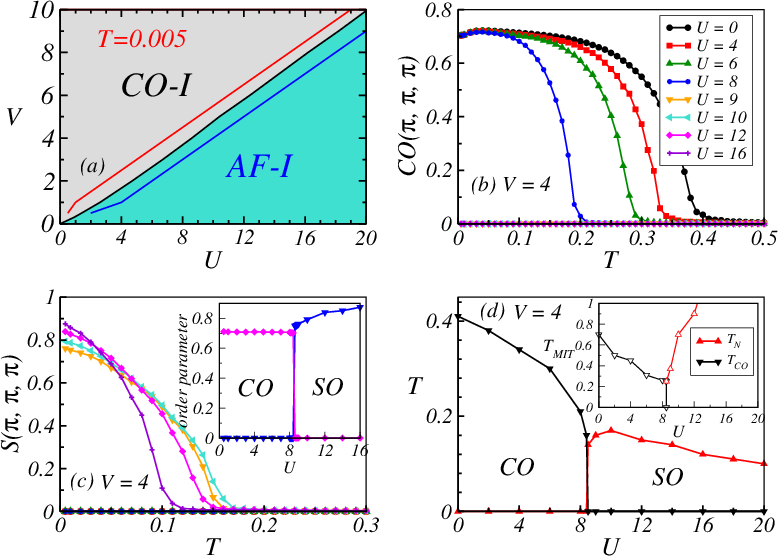
Figure 1: The g9-V∼g2/K0 ground-state phase diagram and order parameter evidence for the first-order AF-I to CO-I transition.
This lack of a metallic phase at the AF-CO intersection in 3D is in contrast with lower-dimensional studies, where short-range fluctuating metallic states often appear. Indeed, resistivity and DOS calculations show robust insulating gaps in both AF and CO regimes. Charge ordering temperatures V∼g2/K1 decrease monotonically with V∼g2/K2 (due to suppression of double occupancy), vanishing abruptly at the AF-CO transition, while V∼g2/K3 emerges for V∼g2/K4, as detailed in the temperature and interaction dependencies of V∼g2/K5 and V∼g2/K6.
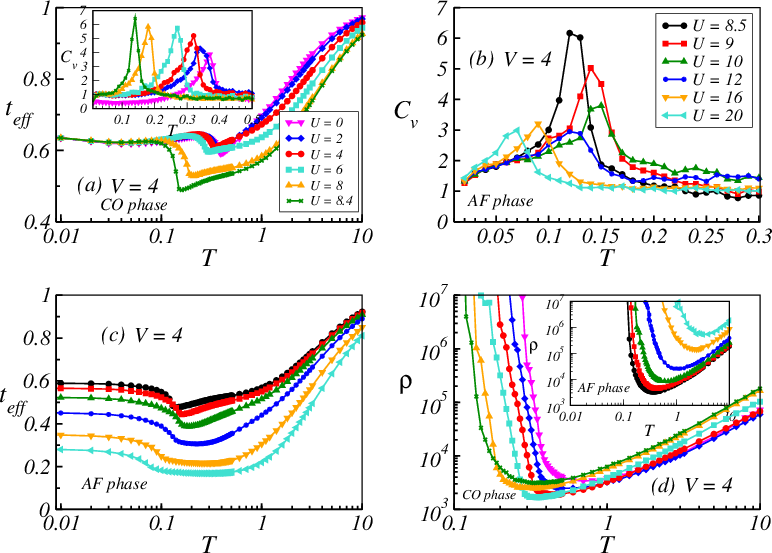
Figure 2: Temperature dependence of effective hopping, specific heat, and resistivity under varying V∼g2/K7 confirms the robustness and thermal evolution of the CO/AF phases.
V-T Phase Diagram at Fixed U: Finite Temperature Physics and Novel Phases
At fixed V∼g2/K8 (near optimal correlation strength), the temperature-coupling (V∼g2/K9-830) phase diagram reveals a complex structure: the system transitions from AF-I at small 831 to CO-I at larger 832, with an intervening regime characterized by high-temperature Mott-Hubbard (MH-I) and bipolaronic insulating (BP-I) phases, as well as two distinct bipolaronic metals (BP-M and BP-M*). All metal-to-metal and insulator-to-insulator transitions around 833 are first order, as determined by the bipolaronic order parameter (834).
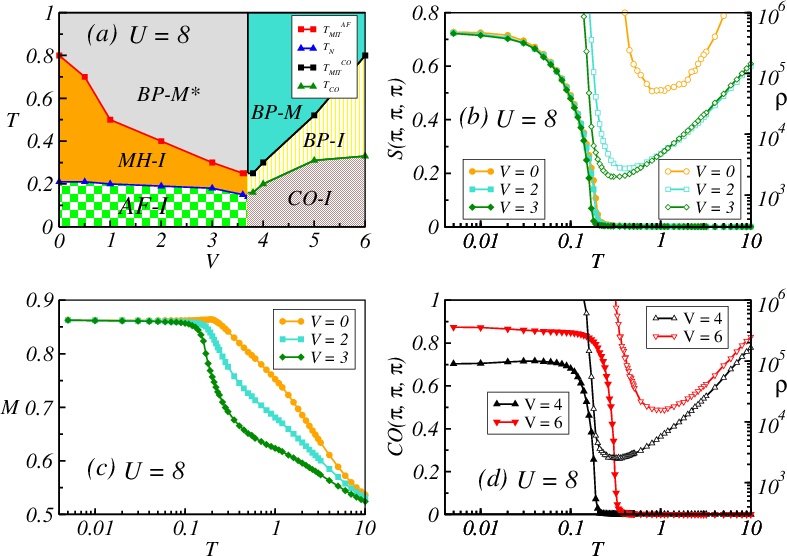
Figure 3: The 835-836 phase diagram at 837 unveils the sequence of competing phases and the first-order boundaries separating them.
The distinction between BP-M and BP-M* is elucidated through the temperature evolution of 838; BP-M* is characterized by a non-monotonic dependence of 839 on U0, peaking at intermediate temperatures, whereas BP-M increases monotonically upon cooling.
Universality and Pseudogap Phenomena Near the Phase Boundary
The paper documents a remarkable universality: spectral and transport properties above the ordering temperatures are nearly independent of whether the ground state is AF or CO. The density of states (DOS) collapses for different U1 values above U2/U3, indicating that the high-temperature electronic structure is governed by the same proximate electronic correlations, with the nature of order determined only upon entering the low-U4 regime.
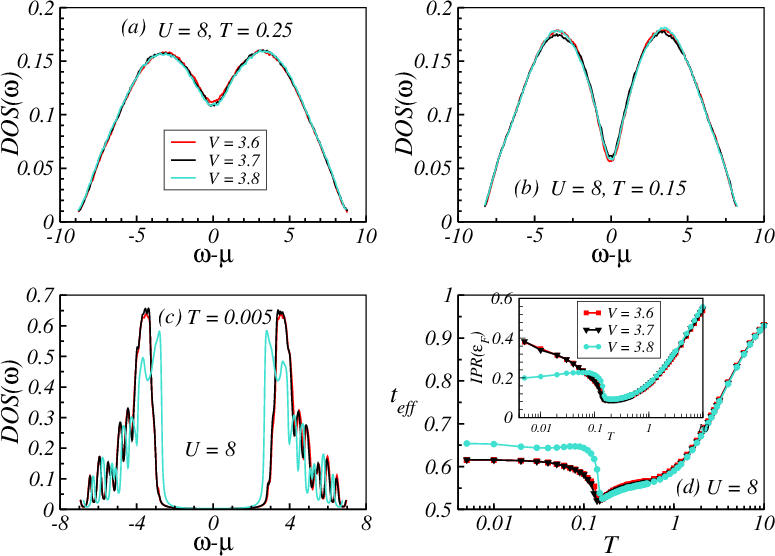
Figure 4: DOS demonstrates a collapse near U5 for various U6, indicating universal behavior and pseudogap formation preceding long-range order.
Pseudogap features are identified: a minimum in the DOS at the Fermi level emerges well above the true metal-insulator transition temperature. The pseudogap temperature U7 is consistently higher than U8, both in AF and CO regimes. The evolution and amplitude of the pseudogap are tied to short-range charge fluctuations, as quantified via the density susceptibility U9 and the bipolaronic order parameter.
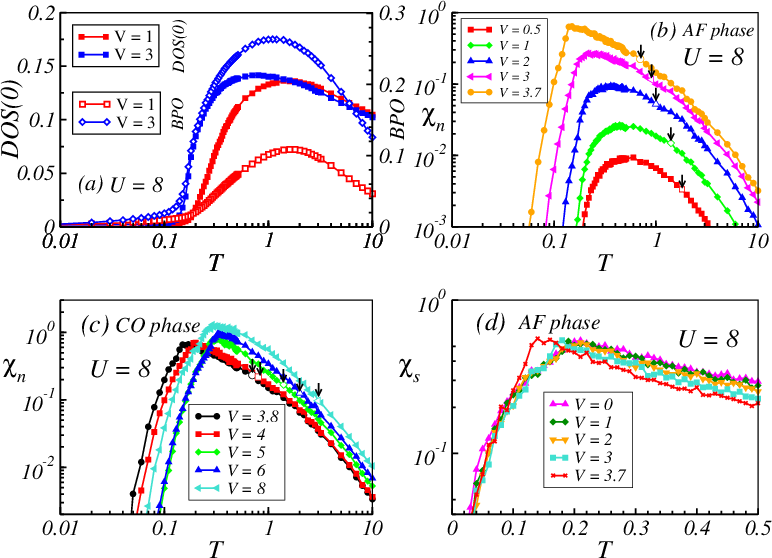
Figure 5: The peaks of g0 and g1 coincide, confirming the connection between charge fluctuations and pseudogap formation.
Magnetotransport and Spectral Characteristics Across the Boundary
Comprehensive resistivity and DOS analyses for variable g2 and g3 near and across the phase boundaries reaffirm that insulating phases are robust throughout the parameter space. Both in the weak-coupling (Slater, Peierls mechanisms) and strong-coupling regimes, the ground state is always insulating at low temperatures, with transitions manifesting as metal-to-insulator with the onset of AF or CO long-range order.
Local observables such as the phonon coordinate distribution g4, local moment distribution g5, and sublattice-resolved densities and double occupancies further differentiate AF and CO states. In the CO phase, distributions are bimodal (staggered distortions), while in the AF phase, distributions are unimodal, consistent with uniform charge and magnetic order.
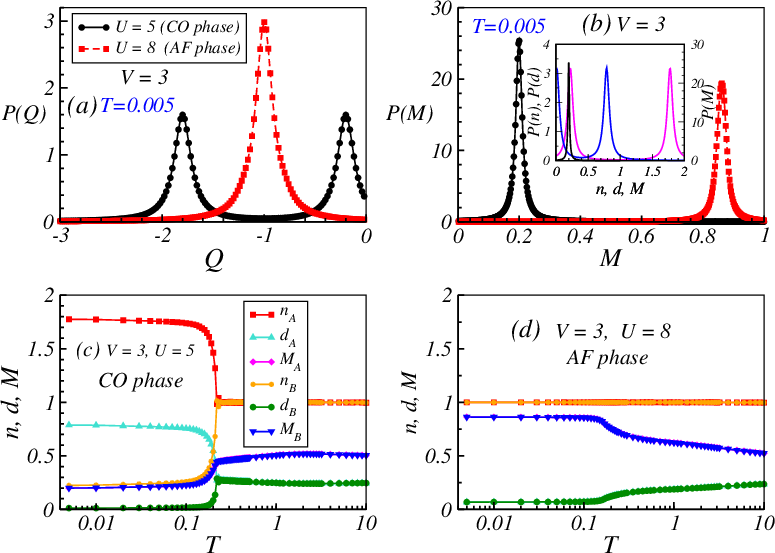
Figure 6: Phonon and local moment distributions distinguish CO (bimodal) from AF (unimodal) ground states.
Properties Along the Phase Boundary and Theoretical Implications
Systematic investigation along the AF and CO phase boundaries indicates nonmonotonic behavior of g6 and g7 with g8 and g9, respectively. While the critical temperatures decrease as one departs the pure Hubbard or Holstein limits, key local and sublattice-resolved observables retain their characteristic splitting or uniformity, highlighting the persistence of core electronic and structural features even under phase competition.
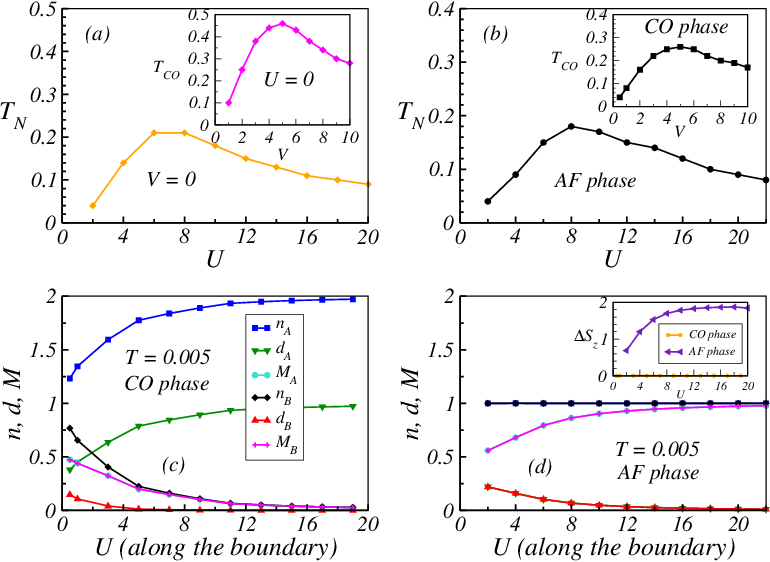
Figure 7: U0 and U1 show non-monotonicity and strong suppression under competing interactions along the AF and CO boundary lines.
These findings underscore the centrality of three-dimensionality in stabilizing ordered insulating phases at all relevant U2 and U3, suppressing metallicity found in lower dimensions—a result with direct relevance to the design and interpretation of experiment in real materials.
Conclusion
This work delivers a detailed phase-resolved portrait of the 3D Hubbard-Holstein model at half-filling, using robust computational methodology to chart transitions, transport, and electronic structure across a wide parameter space. The primary outcome is the strong stabilization of insulator-to-insulator (AF and CO) competition with no metallic intermediate, even for small U4 and U5. Strong first-order phase boundaries, the emergence and characterization of bipolaronic and MH states, and universality of high-temperature electronic structure are all quantitatively established.
The absence of a metallic phase at the AF/CO intersection, contrasted with lower dimensional results, and the persistence of charge/magnetic splitting in local observables, have significant implications for correlated oxide materials, especially in contexts where strain/doping/frustration can tune proximity to these phase boundaries. The demonstrated universality and pseudogap phenomenology above ordering transitions also inform theoretical perspectives on design principles for future multifunctional quantum materials, especially for artificial heterostructures exploiting proximity between AF and CO orders.
Further investigations—potentially including dynamical effects beyond the adiabatic limit, explicit symmetry-breaking perturbations, and interfacial engineering—are natural future directions to understand phase coexistence, proximity effects, and emergent functionalities at the boundaries between competing orders.