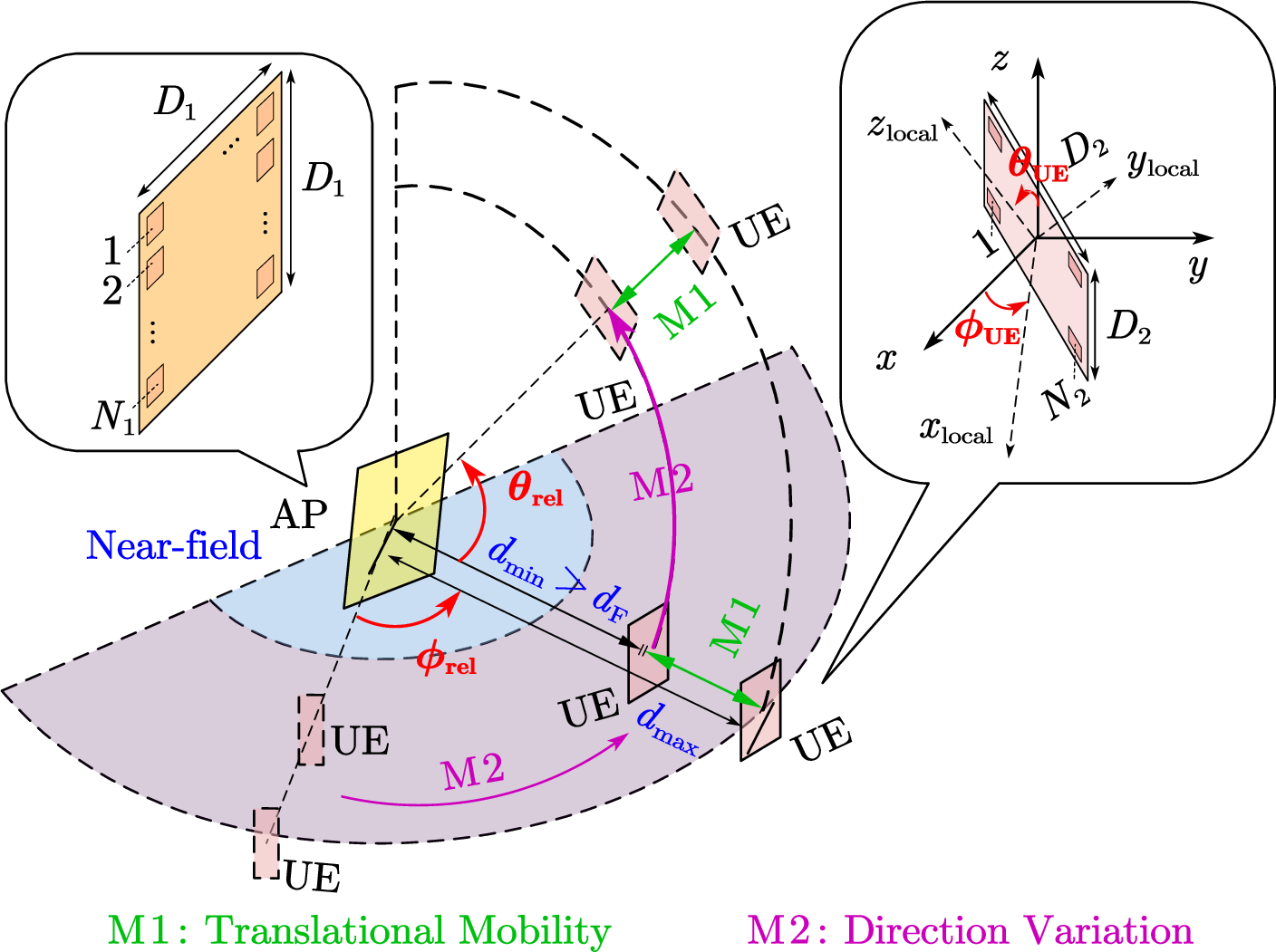
- The paper establishes that far-field operation is unfeasible for mobile THz links due to mobility-induced misalignment and aperture limitations.
- It introduces an analytical framework linking the Fraunhofer boundary with worst-case SNR to quantify feasibility limits under various rotation scenarios.
- Numerical results reveal that stationary links may support broadband channels, but mobile scenarios require near-field techniques and innovative hardware designs.
Near-Field Requirement for Mobile THz Communications Beyond 6G
Motivation and Problem Statement
The paper "User Mobility Demands Near-Field Communications in Terahertz Band Wireless Networks Beyond 6G" (2604.18040) analyzes whether far-field-only operation is physically feasible for broadband, mobile terahertz (THz) communication links targeting next-generation (beyond-6G) wireless access. Unlike stationary THz systems, mobile deployments confront non-stationary propagation, random orientation variations, and practical aperture/array limitations that jointly determine the electromagnetic regime. Classical far-field assumptions (plane-wave propagation, separable path loss) become invalid at the large apertures required in THz, and misalignment plus mobility further exacerbate modeling and signal-processing complexity.
The authors introduce a proof-by-contradiction analytical framework to rigorously link the Fraunhofer far-field boundary and a worst-case SNR/coverage constraint. The analysis quantifies explicit feasibility limits on maximum bandwidth and required transmit power for the far-field regime under various rotation/mobility scenarios. Results demonstrate that while stationary THz links can sustain extreme bandwidths with realizable apertures and reasonable power, mobile THz access demands lead to severe constraints, rendering far-field-only operation physically unattainable for practical systems.
Analytical Framework and Scenarios
The feasibility of far-field-only operation is evaluated for both stationary and mobile planar-array links. The framework enforces:
- Far-field geometric requirement: Minimum communication distance exceeds Fraunhofer boundary, dmin≥dF.
- Link budget requirement: Received SNR at worst-case distance meets threshold, SNR(dmax)≥SNRth.
The array gain models incorporate element directivity, aperture scaling, and orientation penalization. Misalignment is parameterized through (i) UE rotation, (ii) AP-side (relative) angular deviation, each in one or two dimensions.
Closed-form expressions are derived for:
- Far-field boundary as a function of aperture, wavelength, and misalignment.
- Worst-case SNR and required transmit power as a function of array gain, bandwidth, distance, and orientation.
Multiple scenarios are considered:
Numerical Results and Feasibility Limits
Stationary THz Links
Numerical evaluation (Figure 6) confirms that stationary THz links with reasonable apertures (≤ tens of cm2), typical transmit power (∼ 10--30 dBm), and modest noise figures can support extremely large (100+ GHz) bandwidths while satisfying both far-field and SNR constraints. The antenna sizes scale favorably with carrier frequency and link distance. The theoretical bandwidth limit often exceeds practical requirements, indicating no intrinsic far-field bottleneck for fixed links.
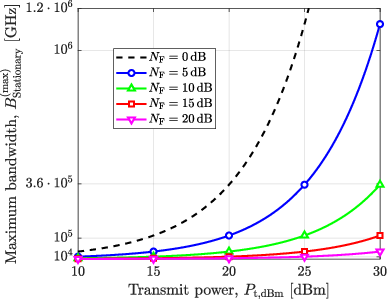
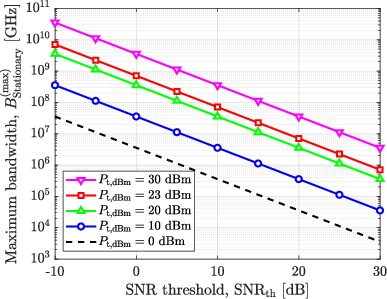
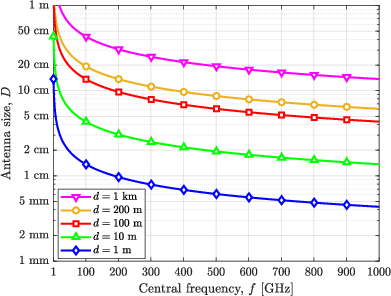
Figure 6: Maximum achievable bandwidth for far-field stationary THz links and required antenna sizes as a function of transmit power, SNR, and frequency.
Mobile THz Links: Impact of Mobility and Misalignment
For mobile THz links, the required simultaneous satisfaction of far-field and SNR constraints over a distance range (mobility coefficient M=dmax/dmin) and form-factor-induced aperture asymmetry (L=D1/D2) induces sharp penalties:
- As M increases, maximal feasible bandwidth decreases rapidly.
- As L increases (smaller UE array), bandwidth further diminishes.
- UE rotation or relative direction variation causes orders-of-magnitude degradation in achievable bandwidth, even for mild misalignment.
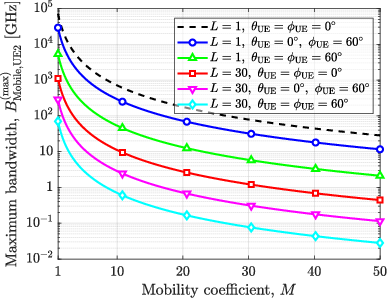
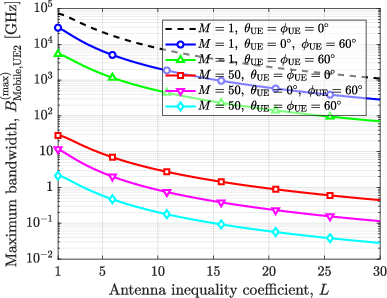
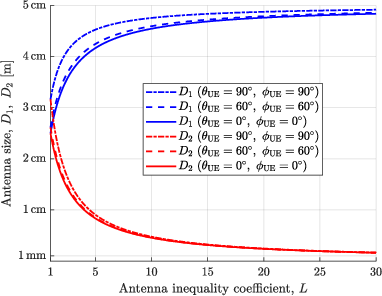
Figure 7: Maximum achievable bandwidth for mobile links under UE rotation and mobility, showcasing severe degradation as mobility and misalignment increase.
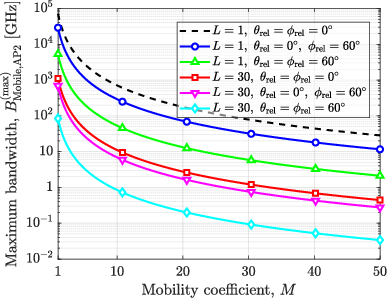
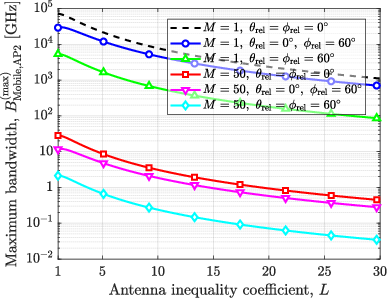
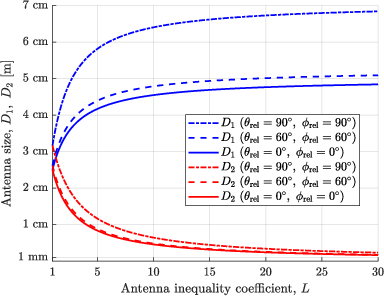
Figure 8: Bandwidth limitation for mobile THz links under direction variation and mobility; orientation mismatch imposes further constraints.
Power Penalties Across Frequency Bands
A cross-band comparison (sub-6GHz, mmWave, THz) is conducted to relate the required UE transmit power for a given target bandwidth under typical mobility and device form-factor parameters. For sub-6 GHz and moderate mmWave bandwidths, far-field operation with practical power budgets remains achievable even under rotation. In the THz band, to support tens of GHz bandwidth, the required UE transmit power quickly exceeds physically viable levels for battery-powered mobiles.
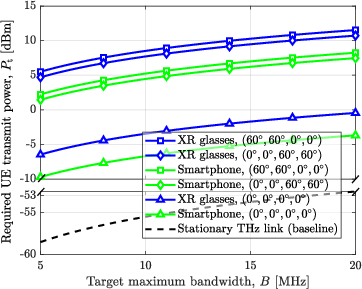
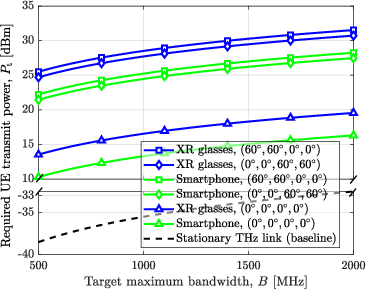
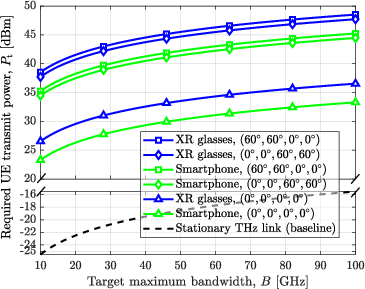
Figure 9: Required UE transmit power Pt vs. target bandwidth SNR(dmax)≥SNRth0 in sub-6 GHz, mmWave, THz; far-field-only operation becomes unfeasible at THz for mobile scenarios.
Theoretical and Practical Implications
Theoretical insight: For mobile THz systems, the classical far-field regime is fundamentally unattainable at broadband link budgets. Near-field propagation, with ensuing spherical-wave models, spatial focusing, and non-stationarity, is not simply a matter of advanced signal processing—it becomes a physical necessity dictated by aperture, frequency, mobility, and SNR requirements. All practical mobile THz access must thus be designed as inherently near-field-aware, regardless of system architecture.
Practical impact: Protocols relying on far-field channel models or codebooks (beamforming, channel estimation, resource allocation) are insufficient. Array design, beam management, and signal acquisition must be robust to range-dependent effects, angular complexity, and dynamic spatial selectivity. Hardware power budgets for UE must reflect the expensive link margin cost induced by mobility and misalignment. Near-field-aware algorithms and architectures (e.g., holographic MIMO, spatial focusing, range/angle joint estimation) are essential for viable THz access.
Future directions: The need to embrace near-field principles for mobile THz is likely to influence transceiver design, air interface protocols, and channel modeling in beyond-6G systems. Research in real-time near-field beam tracking, hybrid analog/digital architectures, scalable spherical-domain channel estimation, and robust spatial acquisition will be required to enable practical THz deployment.
Conclusion
The feasibility analysis rigorously establishes that, while stationary THz links can operate exclusively in the far field for extreme rates, mobile broadband THz links cannot: near-field operation is a physical inevitability. Far-field-only protocols fundamentally constrain bandwidth and require unrealistically high transmit power under mobility and orientation variation. Therefore, the design of mobile THz wireless networks beyond 6G must incorporate near-field-aware modeling, signal processing, and system architecture as a baseline requirement.