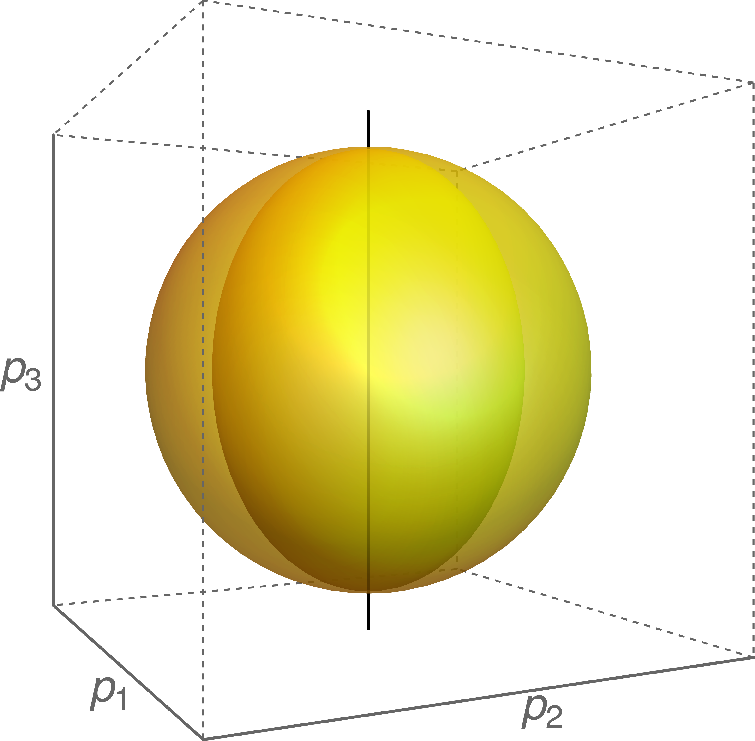
- The paper introduces a unified SME framework that parametrizes Lorentz violation in crystalline materials and predicts exotic wave phenomena.
- It applies group-theoretic analysis to align crystallographic and magnetic symmetries with SME tensor coefficients, refining predictions of anisotropy and birefringence.
- The study bridges high-energy physics and condensed matter by elucidating mechanisms for magnetoelectric responses and axion electrodynamics.
Crystallography, Lorentz Violation, and the Standard-Model Extension: An Expert Review
Motivation and Context
This work systematically explores the application of the minimal electromagnetic sector of the Standard-Model Extension (SME) to the theory of material media, focusing on crystal optics and electromagnetic responses in solids. The SME, originally formulated to parametrize tiny Planck-scale effects potentially resulting in Lorentz and/or CPT violation, is reframed here as a comprehensive formalism for describing anisotropic and magnetoelectric properties of crystals. The fundamental innovation is to recast the response properties of materials—as encoded in tensors such as permittivity, permeability, and magnetoelectric coupling—in terms of controlled SME background coefficients. This enables a unified, action-based relativistic treatment of ordinary and exotic electromagnetic phenomena in crystals.
The generalized SME Lagrangian for the electromagnetic sector incorporates two classes of Lorentz-violating but still gauge-invariant background terms:
- CPT-even sector: Parametrized by a fourth-rank tensor kFμνρσ, with the same index symmetries as the Riemann tensor. Its 20 independent components (including the often-discarded double trace) can directly encode diverse anisotropies and linear response properties in materials.
- CPT-odd sector (Carroll-Field-Jackiw, CFJ, term): Involves a background vector kAFκ, introducing novel P- and/or T-violating phenomena, and is shown to correspond to a θ-type response term or axion electrodynamics in condensed matter.
The SME constitutive relations can be expressed compactly, relating the displacement and magnetic fields to electric and magnetic fields through material tensors: (D H)=(ϵα −αTμ−1)(E B)
where ϵ, μ, α are (3×3) tensors built from kF components.
This matrix formalism enables the translation between SME coefficients and the electromagnetic response functions used in crystal optics and material science. Crucially, the mapping allows for the systematic imposition of crystallographic and magnetic point group symmetries, resulting in rigorous predictions for permissible SME background configurations in real materials.
Crystallographic and Magnetic Group Constraints
The core technical achievement is a complete group-theoretic analysis mapping the 32 crystallographic and 122 magnetic point groups onto allowed forms of the SME response tensors:
- The electric and magnetic susceptibility tensors (κDE and kAFκ0) are directly classified according to crystal symmetry, which determines the possible number and form of nonzero SME tensor components.
- For magnetoelectric couplings, all 90 non-T-invariant groups are considered, leading to an exhaustive tabulation of allowed kAFκ1 ("magnetoelectric") tensor structures.
This approach yields detailed predictions for the numbers and interrelationships of SME coefficients required to describe various material classes—triclinic, monoclinic, orthorhombic, uniaxial, and cubic—as well as nonmagnetic, magnetoelectric, and multiferroic systems. The methodology also rigorously treats the transformation properties (polar/axial nature) of each tensor under improper rotations and time reversal.
SME Foundations for Birefringence and Exotic Dispersion
A focal point is the full analysis of birefringence in the SME framework, going beyond first-order effects:
These analyses distinguish between conventional (uniaxial/biaxial) and "exotic" birefringence not previously cataloged in the optics literature. The group-theoretic enumeration shows that such behavior is generically possible in SME but not realized for most natural crystal symmetries.
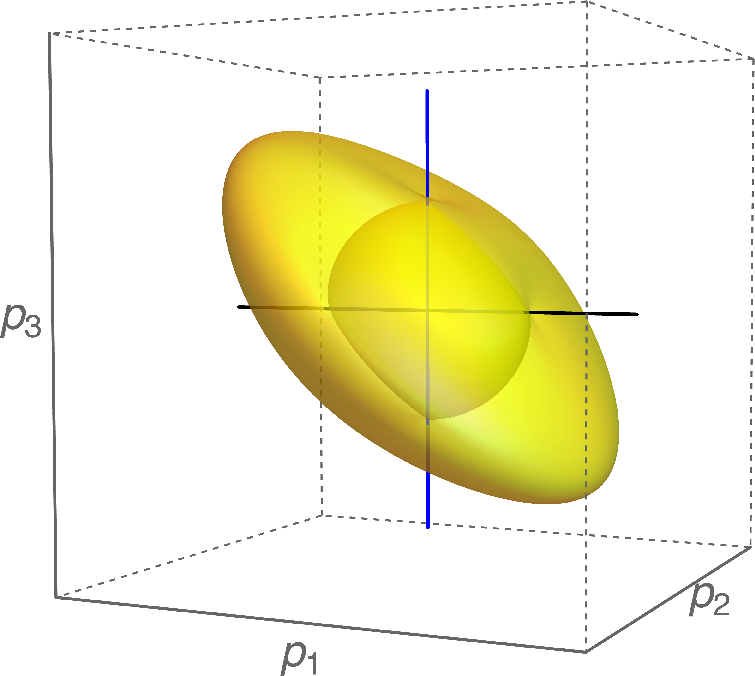
Figure 2: Biaxial surface for kAFκ4 configurations, reproducing and generalizing the classic Fresnel wave surface in SME terms.
Numerical and Materials Science Applications
Explicit mappings are given between tabulated optical data for specific minerals (e.g., datolite, andalusite, cinnabar, sphalerite) and SME tensor coefficients, demonstrating the practical extraction of effective SME backgrounds from refractive index and symmetry data. For instance, for monoclinic and orthorhombic lattices, closed-form solutions relate refractive indices to the relevant kAFκ5 and kAFκ6 coefficients. The same formalism captures the unconventional properties of magnetoelectric compounds like kAFκ7, interpreting their observed responses in terms of SME pseudoscalar and anisotropic couplings.
Magnetoelectric and Axion Electrodynamics
Particular emphasis is placed on the role of the CFJ term and the associated kAFκ8-term (axion response), both from the SME and the condensed matter perspective. It is shown that
- Classical Tellegen (nonreciprocal bi-isotropic) media, chiral media, and topological insulator responses are naturally encompassed.
- The formalism explains why high-symmetry (e.g., cubic) magnetoelectric responses require the presence of a pseudoscalar kAFκ9 term, not captured by the conventional Maxwell-θ0 approach.
- For Weyl semimetals, the θ1 identification elucidates the emergence of chiral anomaly-related electromagnetic phenomena.
Theoretical and Practical Implications
Major claims substantiated by the analysis include:
- General Covariance: The SME, with the minimal inclusion of the double trace and θ2, provides a complete and minimal action-based parametrization of all possible linear, local electromagnetic responses in (meta-)materials consistent with special relativity, including all anisotropies and magnetoelectricities compatible with the symmetries.
- Prediction of New Material Responses: The structure of SME coefficients dictates the possible existence of material classes with electromagnetic wave surfaces (dispersion relations) beyond those analyzed in conventional optics. The study predicts that artificial media (e.g., metamaterials) can realize these, calling for targeted synthesis to explore the unexplored sectors (θ3).
- Connection to High-Energy and Topological Physics: The action-based nature of the SME ensures natural extensions to non-Abelian, fermionic, and even quantum corrections; the analogy with axion, chiral anomaly, and topological phases establishes a deep connection between condensed-matter phenomena and high-energy physics constructs.
Future Directions
The analysis suggests several paths for both experiment and theory:
- The extension to higher-derivative SME (nonminimal) operators would further enable modeling of frequency-dependent (dispersive) or spatially nonlocal responses.
- The introduction of finite temperature, quantum, and nonlinear effects within the same SME structure is direct, given the action-based setup.
- Artificial metamaterials and engineered multiferroics may provide platforms to realize the predicted "exotic" SME sectors.
Conclusion
This work positions the SME as a universal, symmetry-informed toolkit for the classification and synthesis of material electromagnetic responses. By identifying the group-theoretic, tensorial, and action-theoretic correspondences, it both systematizes known properties and predicts genuinely new possible states of electromagnetic matter—notably, those with highly unconventional birefringence or magnetoelectric couplings. Its adoption by materials scientists, theorists, and optical engineers promises significant cross-disciplinary dividends.
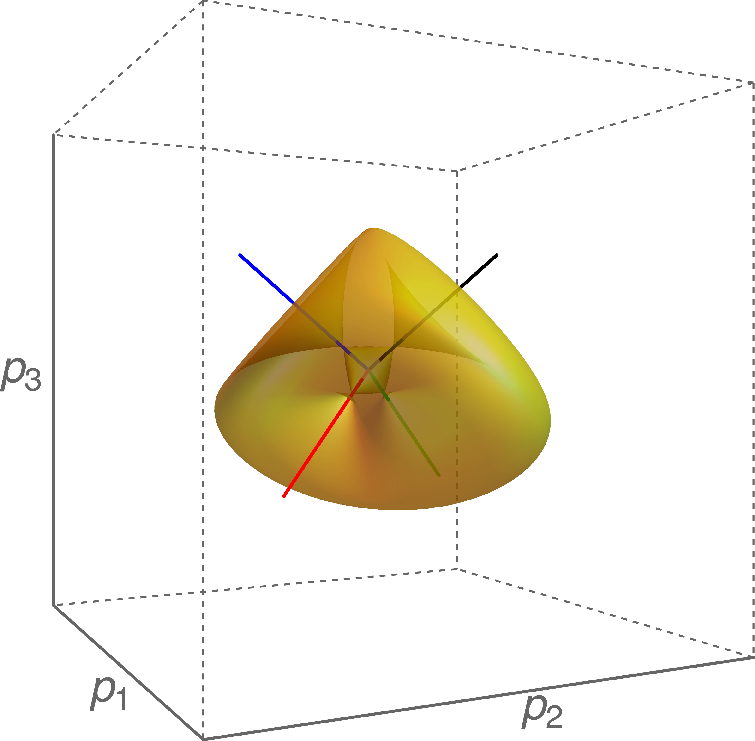
Figure 3: Kummer-type quartic wave surface representative of new birefringent regimes accessible within the general SME material framework.
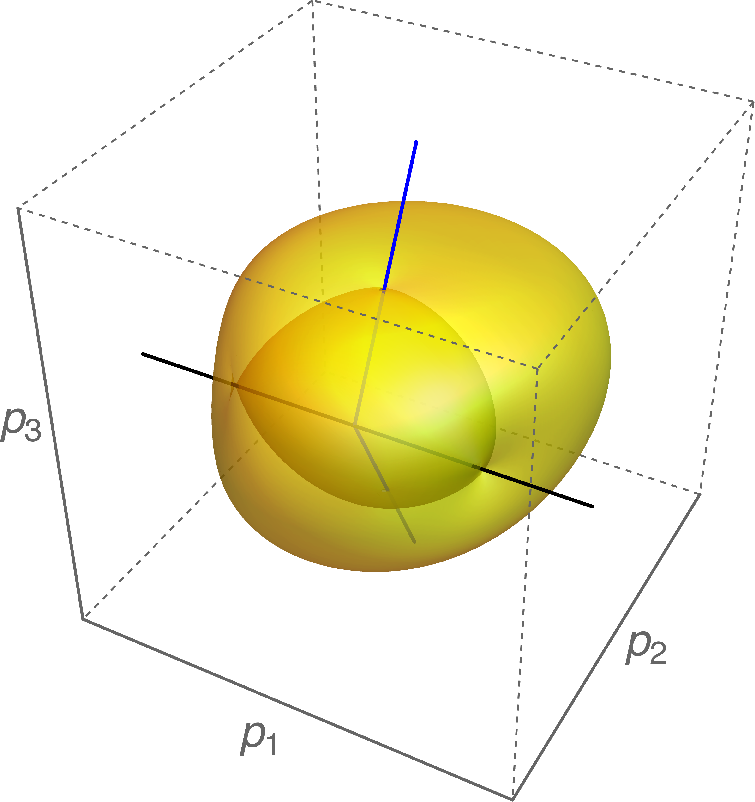
Figure 4: Composite SME response surface highlighting the range of possible electromagnetic propagation phenomena enabled by various SME coefficient configurations.