- The paper introduces a Bayesian framework operating in dirty map space that eliminates unstable Fisher matrix inversion and reduces bias in high-resolution SGWB anisotropy estimation.
- It demonstrates the method's effectiveness using simulated Advanced LIGO O3 data, analyzing estimator bias and SNR impacts across different multipole orders.
- The approach is extended to cross-correlation with electromagnetic tracers, enabling unbiased studies of GW backgrounds and their relation to large-scale structure.
Parameter Estimation of the Gravitational-Wave Angular Power Spectrum in the Dirty-Map Space
Overview and Motivation
This work presents a parameter estimation methodology for the angular power spectrum of the anisotropic stochastic gravitational-wave background (SGWB), as detected by terrestrial interferometers, addressing critical limitations arising from the singularity structure of the Fisher information matrix. Traditional approaches, which estimate the angular power spectrum via spherical harmonics decomposition, require deconvolution of the detector response through inversion of the Fisher matrix—a step that is numerically unstable and requires regularization, leading to bias and restricted angular resolution. This paper proposes a formalism for Bayesian inference operating fully in the "dirty map" space, where Fisher matrix inversion is not required, thus enabling higher-resolution parameter estimation.
The standard SGWB anisotropy search constructs a sky map via cross-correlation of strain data from detector pairs and expansion in spherical harmonics. The underlying model for the observable is
x^ℓm=f,t∑γℓm∗(f,t)P1(f,t)P2(f,t)H(f)C^(f,t)
where H(f) specifies the GW energy spectrum and γℓm(f,t) encodes the detector response. The covariance of the estimators is the Fisher matrix
Γℓm,ℓ′m′
whose structure is determined by detector sensitivity and geometric baseline coverage.
To derive unbiased estimators of the clean map coefficients a^ℓm and, by extension, the angular power spectrum A^ℓ, inversion of Γ is required. Regularization (often via singular value decomposition) is necessary due to singular and near-singular modes arising from the finite and incomplete directional sensitivity of the detector network. The regularization procedure is a source of bias, particularly affecting recovery of high-order multipole structure in the angular power spectrum.
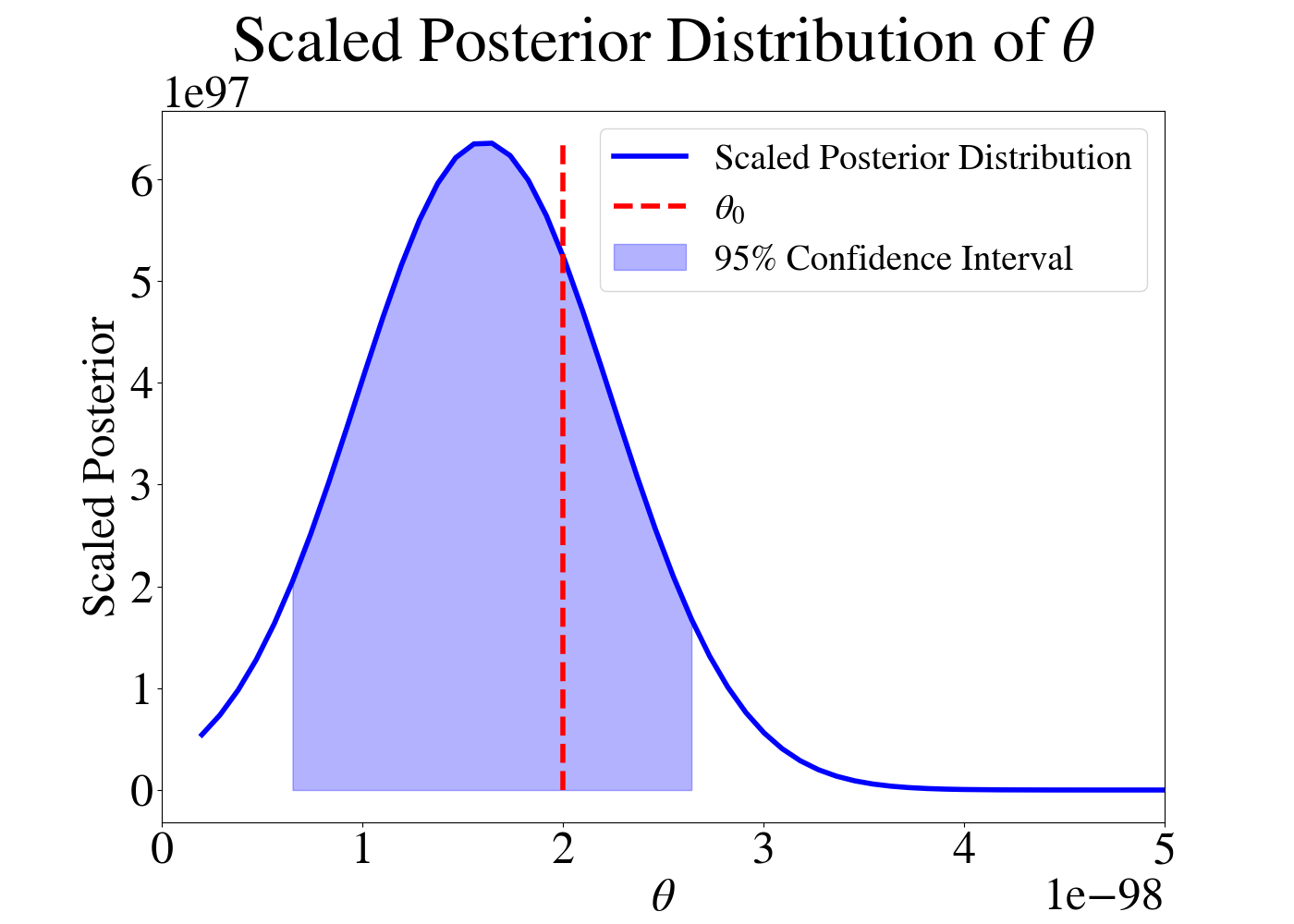
Figure 1: Example posterior distribution for the model parameter θ demonstrating the credible interval structure for given signal strength and angular multipole order.
Parameter Inference in the Dirty-Map Space
This work circumvents Fisher matrix inversion by constructing likelihood functions directly in the dirty map domain. The theoretical prediction, defined for the clean angular power spectrum as a function of model parameters θ, is synthetically propagated through the detector response (i.e., convolved with the Fisher matrix) to map predictions into the observational dirty space. This approach ensures that all available directional information is retained and prevents regularization-induced bias. Furthermore, the method naturally absorbs the covariance structure arising from both instrumental noise and astrophysical cosmic variance, fully encoding all statistical uncertainties.
From a practical perspective, the likelihood L for parameter inference is then defined as a Gaussian (for tractability), with mean and covariance matched to the dirty space observables, incorporating both theoretical and noise-induced variance components.
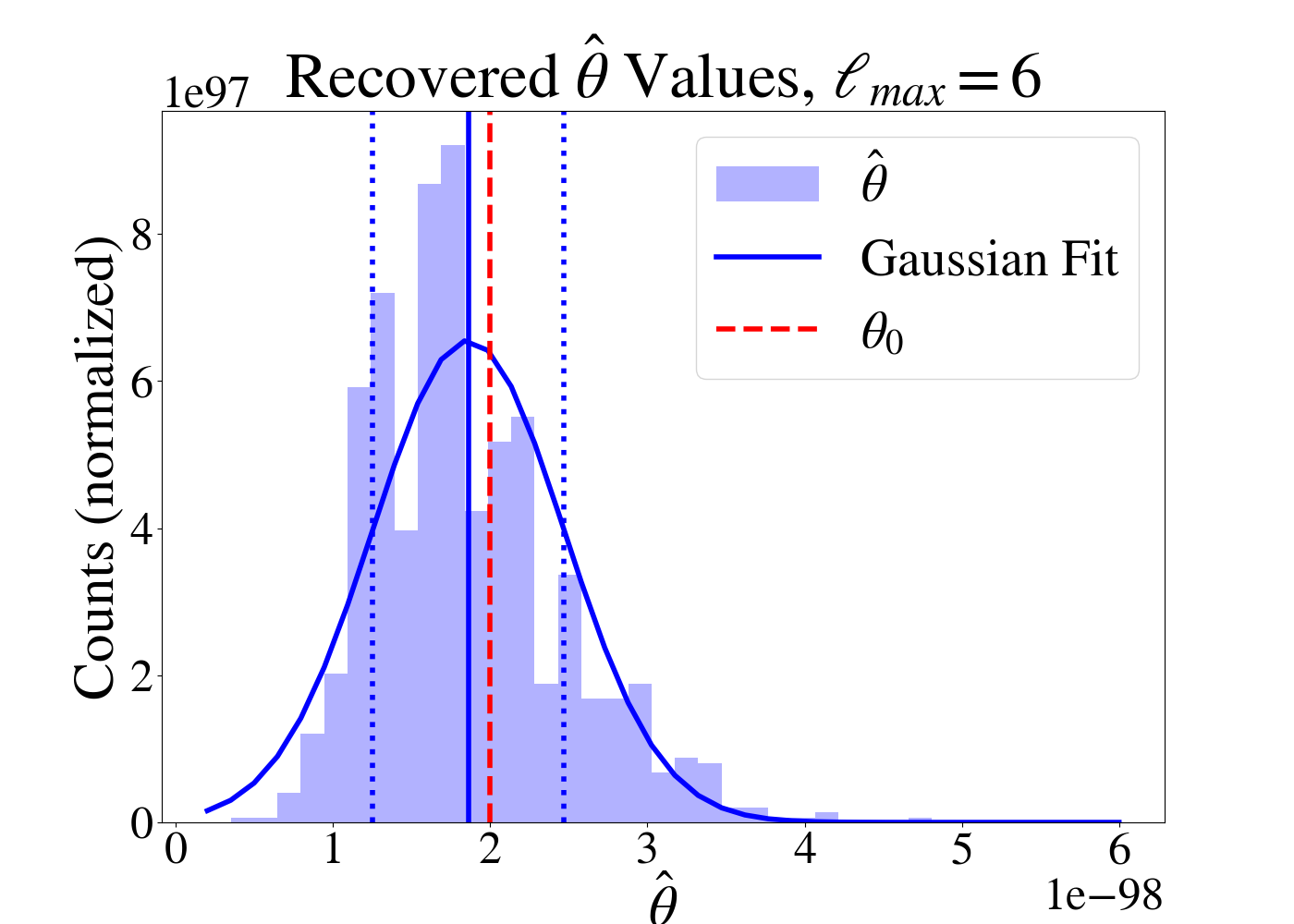
Figure 2: Histogram of maximum-likelihood recovered H(f)0 values for simulated signals, demonstrating the estimator distribution and systematic effects at low SNR.
SGWB Auto- and Cross-Power Spectrum Implementation
Bayesian inference is performed via likelihood maximization on simulated data constructed by injecting model signals, after propagation through the Fisher matrix, into realistic Advanced LIGO O3 noise realizations. For the SGWB auto-correlation case, angular power spectrum estimators are evaluated and their distributions analyzed as a function of signal amplitude and H(f)1. For the cross-correlation case—where the SGWB anisotropy is correlated with tracers of large-scale structure observed via electromagnetic surveys (e.g., galaxy counts)—the same framework is extended, with analytic formulas provided for the cross-correlation observable in dirty space.
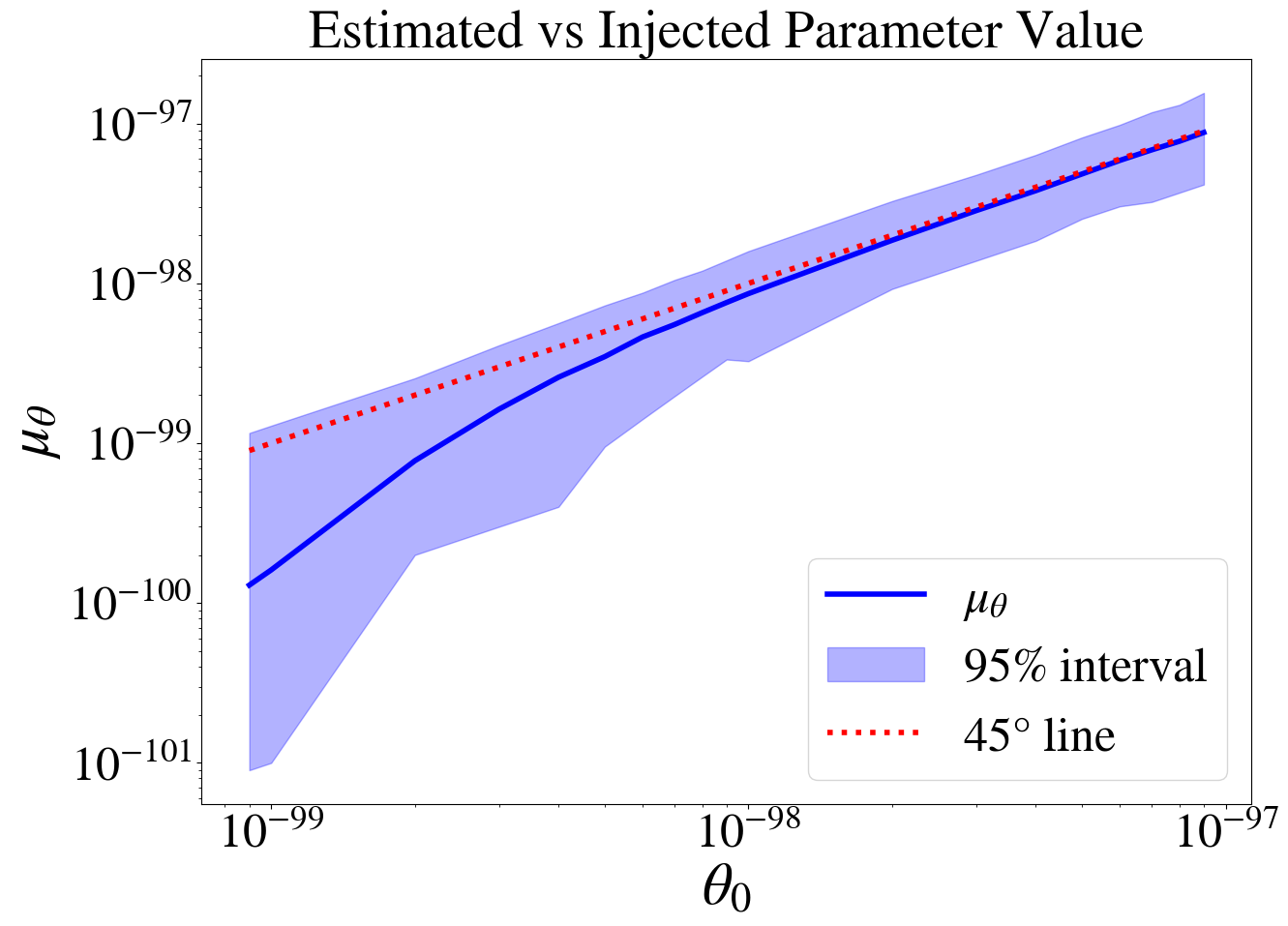
Figure 3: The 95% credible interval of the recovered H(f)2 as a function of injected H(f)3 with a red reference line indicating perfect recovery.
Recovery of the model parameters is assessed by repeated signal injection and the distribution of recovered maximum-likelihood estimators. The analysis confirms that at sufficiently high signal-to-noise, the method reliably recovers ground-truth parameter values within credible intervals. At low SNR, estimator bias emerges due to the Gaussian likelihood approximation and non-Gaussianity of the underlying statistic for small H(f)4.
Systematic exploration of H(f)5—the maximum multipole included in the estimation—demonstrates that increasing angular resolution sharpens estimator distributions but can also introduce bias if the Fisher matrix is poorly conditioned in these high-H(f)6 modes. This is an inherent property of the terrestrial GW detector network and cannot be addressed by regularization in the traditional scheme.
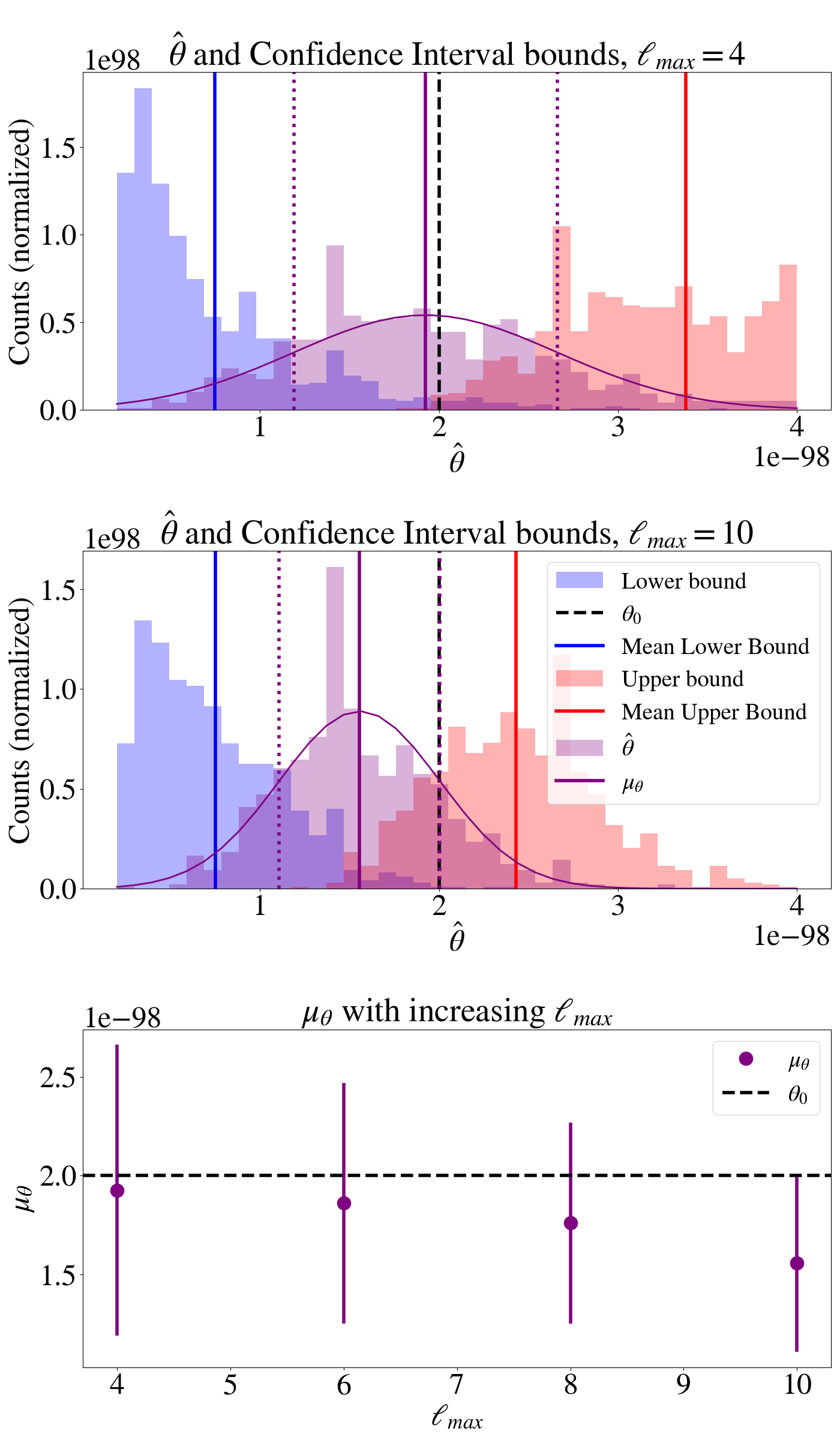
Figure 4: Distributional narrowing and estimator shift in recovered parameters for increasing H(f)7, demonstrating trade-offs in angular resolution.
Cross-Correlation with Electromagnetic Tracers
The formalism is extended to SGWB–electromagnetic cross-correlation studies, which are critical for connecting GW anisotropies to underlying large-scale structure and source populations. For simulated data with known signal correlation, the dirty map framework reconstructs the true cross-correlation coefficient (e.g., H(f)8) with expected credible intervals. The shape and position of these intervals are again sensitive to H(f)9 and SNR.
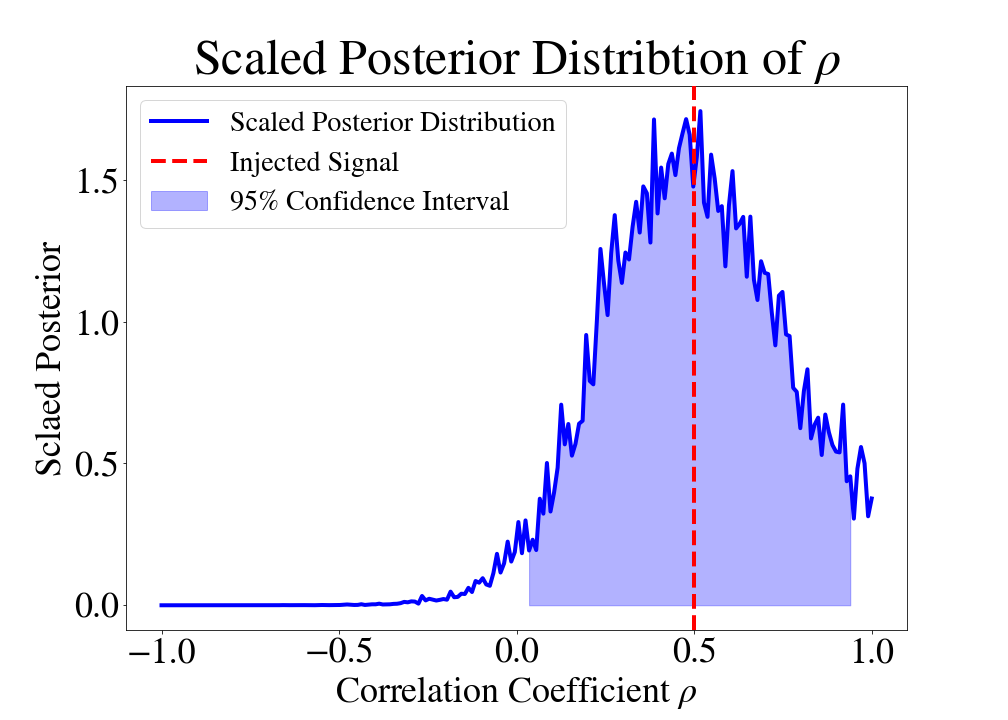
Figure 5: Posterior distribution over the cross-correlation coefficient γℓm(f,t)0, showing recovery of the simulated input value and credible interval structure.
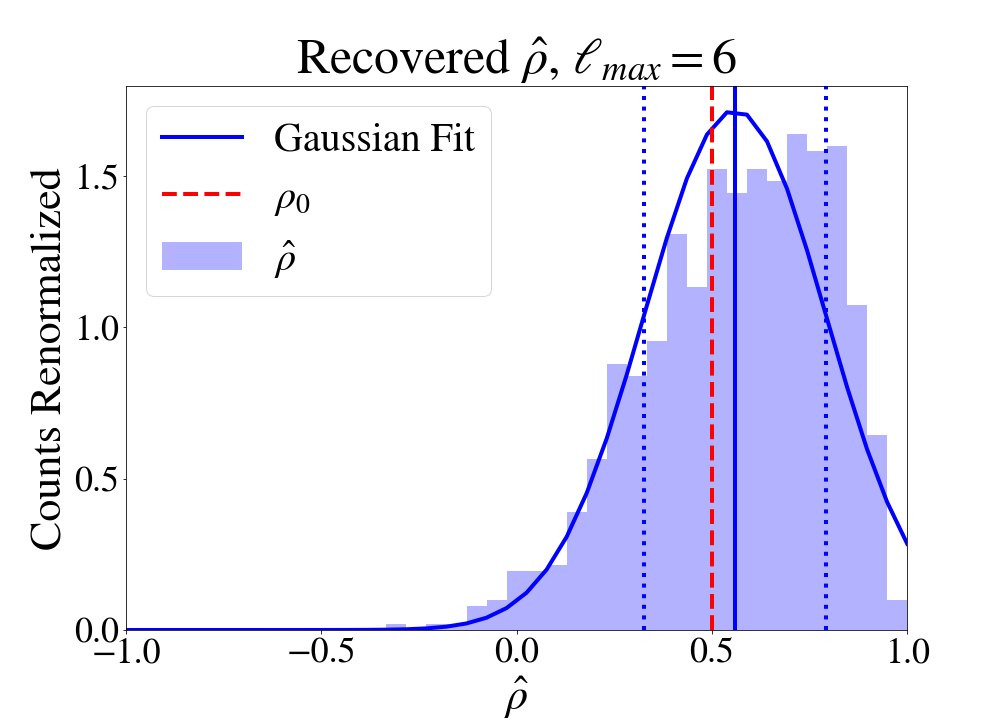
Figure 6: Histogram of the recovered γℓm(f,t)1 over repeated noise realizations indicating estimator variance and fit with the underlying distribution.
Uncertainty Budget and Computational Considerations
Uncertainty in this framework is dominated by two sources: instrumental noise via the Fisher matrix and draw (cosmic variance) uncertainty in the model realization. Notably, as signal strength increases, draw uncertainty grows; in the cosmic variance dominated regime, this leads to wider credible intervals even for strong signals. This is a necessary reflection of the limited information available from a single universe realization.
The methodology requires costly repeated synthetic realizations both for covariance estimation and to account for the dependence of variance on underlying model parameters. This computational expense grows with the complexity of the model (number of parameters, γℓm(f,t)2).
Implications and Future Developments
The proposed dirty map parameter inference framework overcomes fundamental obstacles imposed by Fisher matrix singularities and regularization bias, enabling higher angular resolution in gravitational-wave background anisotropy studies. This improvement is directly relevant for efforts to probe the astrophysical and cosmological origin of the SGWB, the distribution of GW sources relative to large-scale structure, and for cross-correlation analyses with electromagnetic surveys.
The approach remains subject to limitations from model non-Gaussianity at low γℓm(f,t)3 (where the underlying distribution is better understood as generalized γℓm(f,t)4), and computational tractability for high-dimensional parameter spaces. Extension of the method to general likelihoods and robust distribution-free statistical frameworks is warranted—recent works on non-parametric validation and optimal model testing (cf. [zhang_2025], [algeri_2025]) are directly applicable.
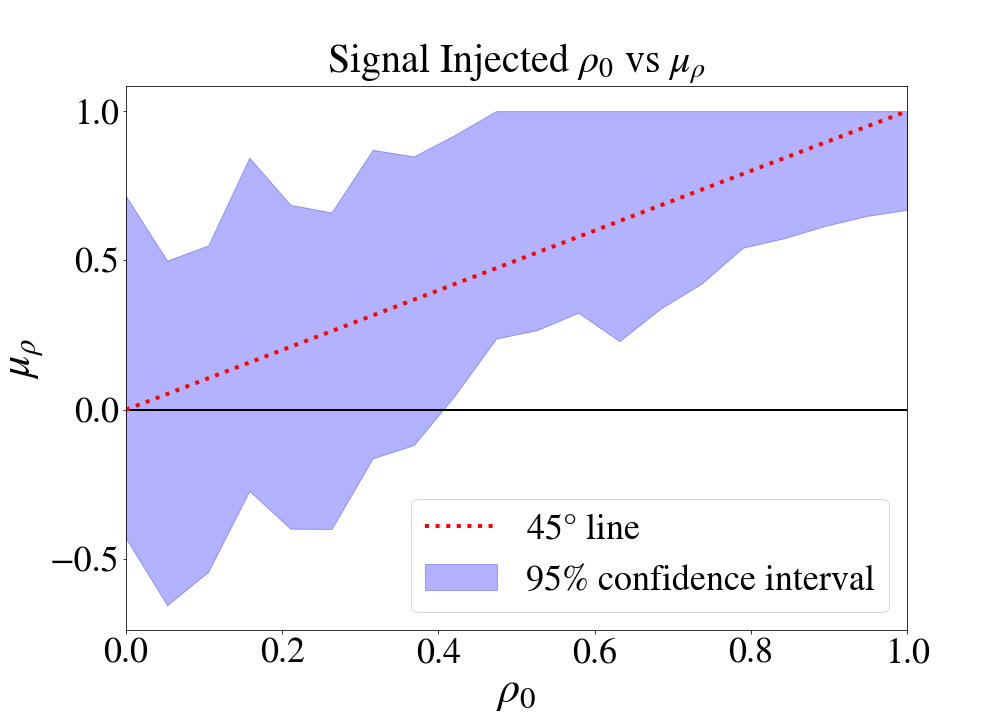
Figure 7: Confidence intervals for cross-correlation coefficient recovery as a function of injected signal, confirming detection threshold and estimator variance.
Conclusion
This work establishes a statistically optimal, regularization-free Bayesian inference framework for GW angular power spectrum estimation in both the auto- and cross-correlation channel, operating fully in the dirty map space. The approach robustly recovers injected model parameters while providing a statistically complete accounting of uncertainty, including both noise and cosmic variance sources. This methodology has direct application to upcoming high-angular-resolution SGWB searches and joint GW–EM studies, and is a critical step toward unbiased inference of GW background anisotropies in the era of advanced terrestrial and future space-based GW observatories (2604.17610).
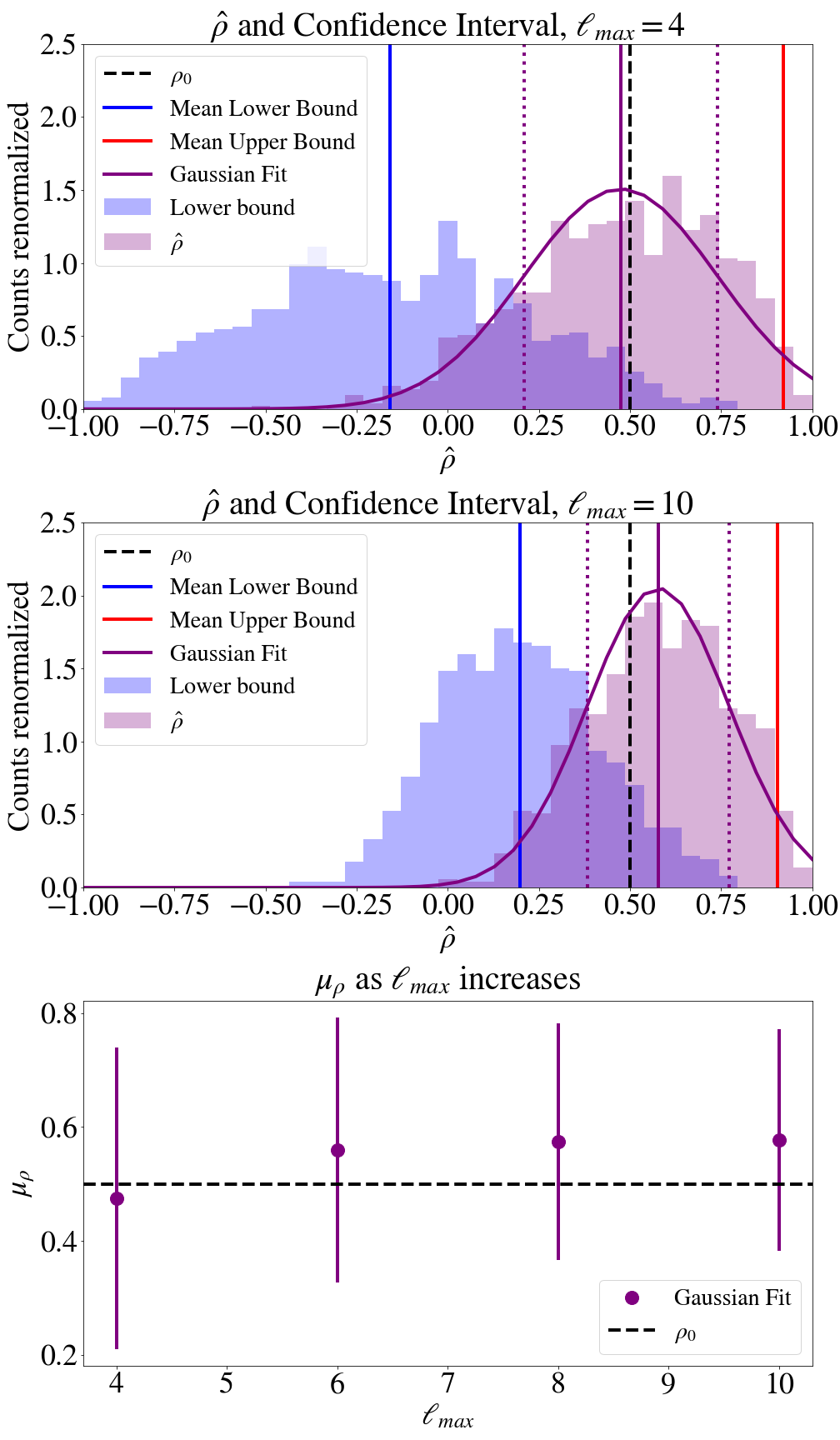
Figure 8: Demonstration of estimator concentration as γℓm(f,t)5 increases for the cross-correlation problem.
References
- "Parameter Estimation of the Gravitational-Wave Angular Power Spectrum in the Dirty-Map Space" (2604.17610)

