- The paper demonstrates that the traditional 1% exponential growth model is statistically invalid, revealing a linear trend that better fits global energy production data.
- It employs Bayesian inference and OLS regression to highlight non-Gaussian, crisis-driven deviations from the expected energy growth patterns.
- The paper introduces the KSN rescaling, which normalizes energy production by Bitcoin's hashrate to deliver a dimensionally coherent metric for civilizational advancement.
Statistical Falsification of the Kardashev Model and the KSN Resolution
Introduction
The paper "Kardashev's Conundrum: Statistical Falsification of the Standard Kardashev Model and the Kardashev--Sagan--Nakamoto Resolution" (2604.17516) critically re-examines the Kardashev scale—classically the canonical framework for quantifying civilisational advancement through energy throughput. Through rigorous statistical analysis of empirical global energy production data (1965–2024), the work demonstrates that the standard exponential growth model underlying the Kardashev conjecture is statistically untenable and physically incoherent. The paper then introduces the Kardashev–Sagan–Nakamoto (KSN) model, which renormalizes energy production by the global proof-of-work computational hashrate, and proposes this as a physically and dimensionally motivated variable for civilisation state assessment.
Statistical Assessment of the Standard Kardashev Model
The canonical Kardashev model posits that a civilisation's energy production grows exponentially at a fixed rate, with a standard baseline of 1% per annum. Extrapolation with this growth rate projects current humans reaching Kardashev Type II (stellar-scale) status in approximately 3,200 years post-1964.
The analysis reveals that this one-percent exponential model is a poor fit to the actual data. Applying Bayesian inference with MCMC, the empirical posterior for annual growth is r=2.01%±0.03% yr−1 (95% CI: [1.94%, 2.08%]), placing the standard Kardashev value far outside credible bounds. More fundamentally, both empirical residual analysis and tests for normality and independence (Shapiro--Wilk W=0.925, p=0.0014, negative skewness =−0.664) support path-dependence in the increments, driven by identifiable crises, contradicting the multiplicative structure with positive drift intrinsic to the model.
(Figure 1)
Figure 1: Global energy production 1965–2024 with standard Kardashev exponential (dashed), linear OLS fit (solid), and Type I/II thresholds. The Kardashev model diverges systematically from the OLS fit and data.
A linear OLS model provides an excellent statistical fit to the observed energy trajectory (R2=0.987), yielding a best-fit slope b=2.44×10¹¹ Wyr−1.
(Figure 2)
Figure 2: Zoom view on global energy production with both linear and free-parameter exponential models closely tracking the data. The Kardashev one-percent model diverges downward.
The Extrapolation Paradox and Kardashev's Conundrum
Despite its in-sample statistical adequacy, direct extrapolation of the linear fit to the solar luminosity threshold (L⊙=3.828×1026W) yields an absurd civilisational timescale of ∼1.6×10¹⁵ yr, exceeding the age of the universe by 105 times. The exponential model, regardless of parameter choice, always projects threshold crossing within a finite, tunable interval. Consequently, the analysis identifies the Kardashev Conundrum: no functional form fitted to energy production alone simultaneously yields statistical adequacy and physical coherence on extrapolation. Dimensional incompleteness is manifest—energy throughput is not a sufficient proxy for technological advancement.
A comparison using the Widely Applicable Information Criterion (WAIC) demonstrates that the linear model is slightly preferred over the free-parameter exponential ([1.94%, 2.08%]0), and both far outperform the legacy 1%-exponential. All function classes, however, fail to resolve the paradox when extrapolated.
Year-over-Year Dynamics and Path-Dependence
Analysis of year-on-year differences [1.94%, 2.08%]1 uncovers significant non-Gaussian structure, with prominent negative outliers synchronous with the 2008 financial crisis and the 2020 COVID-19 pandemic.
(Figure 3)
Figure 3: Year-on-year changes in energy production highlight non-Gaussian behavior with crisis-driven negative outliers.
These features directly falsify the independent-increment, positive-drift requirement of the exponential model family, indicating real-world path-dependence and the role of historical contingency in global energy trajectories.
The Kardashev–Sagan–Nakamoto (KSN) Rescaling
To restore coherence, the KSN framework renormalizes the primary energy production [1.94%, 2.08%]2 by the empirically auditable Bitcoin network hashrate [1.94%, 2.08%]3, yielding:
[1.94%, 2.08%]4
The KarNak (KSN) unit operationalizes the information-energy efficiency of computation, in direct lineage with the Landauer limit, providing a dimensionally complete state variable for civilisational classification.
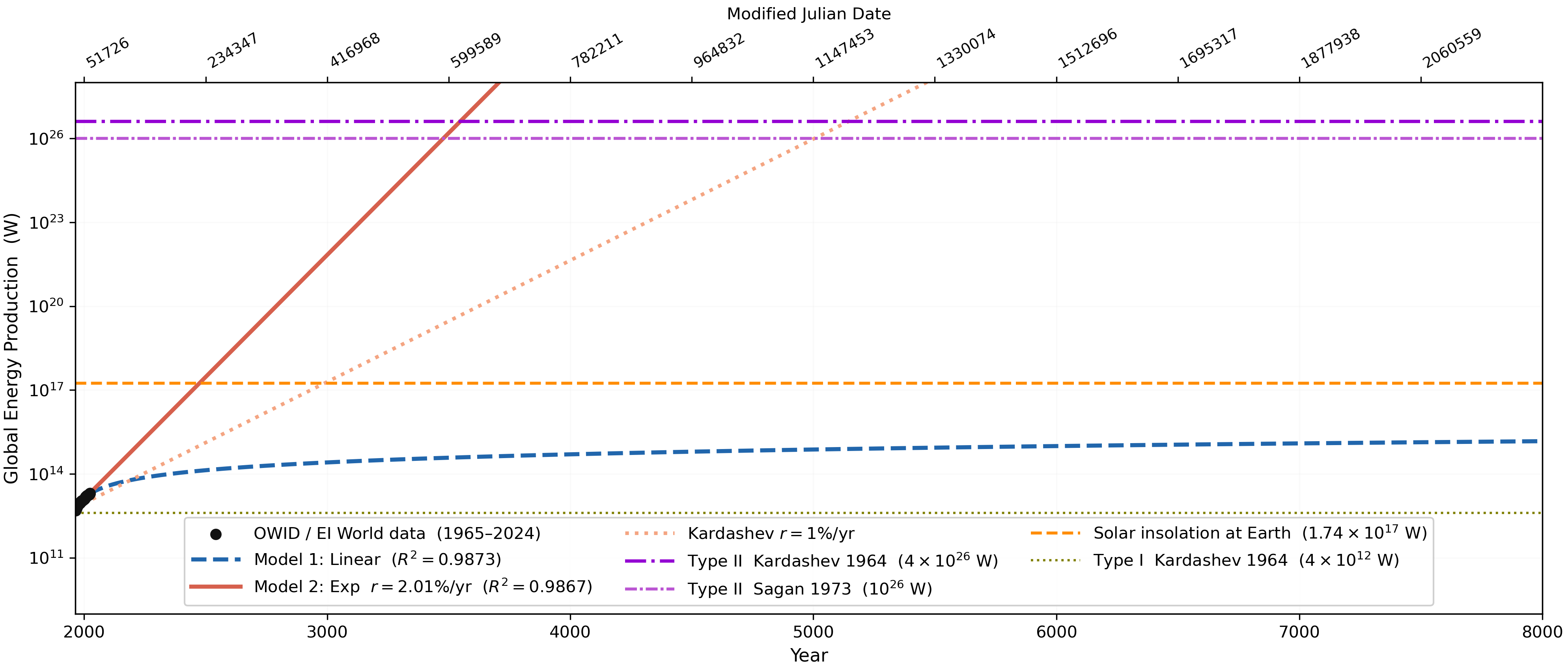
Figure 4: KSN state variable [1.94%, 2.08%]5 (J\,Hash[1.94%, 2.08%]6) for 2009–2024, reflecting the dramatic improvement in energy efficiency as Bitcoin mining transitioned from CPU to GPU to ASIC.
Over the observed baseline, [1.94%, 2.08%]7 exhibits a monotonic decrease spanning 14 orders of magnitude, modeling the rapid improvement in proof-of-work computational efficiency. This reframes the Kardashev scale: advancement is encoded not only in energy throughput, but also in the density of irreversible computation.
Implications and Theoretical Consequences
By constructing [1.94%, 2.08%]8, the paper directly addresses the original, often-ignored caveat acknowledged by both Kardashev and Sagan: the quality of information processing matters and must be encoded in any meaningful civilisational metric. The KSN variable aligns the energy dimension with information-theoretic richness and approaches physical limits (the Landauer bound), offering a universal yardstick.
The choice of Bitcoin network hashrate as normalizer is justified by its public auditability and non-forgeable global scale. However, limitations are acknowledged: Bitcoin PoW is a subset of global computation, and the present dataset spans only 16 years.
The KSN framework offers a physically grounded context for interpreting the Drake equation’s longevity parameter ([1.94%, 2.08%]9): only civilisations that approach the information-energy transform efficiency implied by minimal W=0.9250 are poised for maximum stability.
Additionally, the findings report, for the first time, that neither the 1% annual growth rate cited in the literature nor Putnam’s 3–4% empirical projection (referenced in Kardashev’s original manuscript) are statistically supported by contemporary data. The current empirical rate falls in-between and is itself context-dependent.
Outlook for Decentralized Computation and Open Science
A subsidiary discussion explores the implications of the KSN approach for open astronomy, decentralized research coordination, and the potential of blockchain-based protocols to underpin global-scale, trust-minimized scientific computation and data auditing. This intersects emerging research on blockchain-empowered federated learning and decentralized finance [zhu2023, (Jiang et al., 2023)].
Conclusion
The paper rigorously falsifies the legacy Kardashev exponential model using six decades of empirical data, demonstrates the dimensional and interpretive incompleteness of using energy throughput alone, and resolves the resulting conundrum via the KSN renormalization. The KarNak unit, grounded in the Landauer principle, is advanced as a universal metric for civilisational advancement. This framework places information-energy efficiency at the center of astrobiological and civilizational classification, and establishes a statistical and physical foundation for future analyses of technoeconomic and technological progress.

