- The paper presents optimal upper and lower bounds on quantum channel tomography query complexity across three distinct regimes.
- It introduces the dilation rate as a critical parameter, demonstrating a sharp transition from Heisenberg to classical error scaling.
- The work leverages novel reductions, packing net constructions, and quantum comb formalism to generalize and sharpen prior state-tomography results.
Quantum Channel Tomography: Optimal Bounds and a Heisenberg-to-Classical Phase Transition
Quantum channel tomography (QCT) seeks to characterize unknown quantum processes by their classical descriptions, given black-box access to the physical channels. This foundational task underpins the verification and benchmarking of quantum devices. Despite progress, determining the optimal query complexity—how many accesses are needed—remained unresolved for arbitrary quantum channels, especially regarding its dependence on the physical dimensions, channel Kraus rank, and estimation error.
This work rigorously defines QCT for channels with input dimension d1, output dimension d2, and Kraus rank r, aspiring to reconstruct the channel up to a trace norm (Choi) or diamond norm error ϵ. The authors introduce the "dilation rate," τ=rd2/d1, as the decisive parameter dividing the problem into three regimes: boundary (τ=1), near-boundary (1<τ<1+o(1)), and away-from-boundary (τ≫1).
Main Results: Query Complexity Phase Transition
The primary contributions of the paper are precise, regime-dependent upper and lower bounds for QCT query complexity, and the rigorous demonstration of a phase transition in error scaling—from Heisenberg-like 1/ϵ to classical 1/ϵ2—as a function of d20.
- Boundary regime (d21):
- For Choi trace norm error, matching upper and lower bounds of d22 are established.
- For diamond norm, an upper bound of d23 and lower bound of d24 are derived.
- Away-from-boundary regime (d25):
- Both Choi and diamond norm errors exhibit d26 query complexity.
- Heisenberg scaling is provably unachievable in this regime.
- Near-boundary regime (d27):
- The bounds interpolate between d28 and d29, showing a mixture of Heisenberg and classical scaling behavior.
- For Choi norm: r0 upper bound, and almost matching lower bounds.
These behaviors constitute a sharp Heisenberg-to-classical phase transition in QCT query complexity. The main distinctions between error metrics and parameter regimes are concisely visualized in (Figure 1).
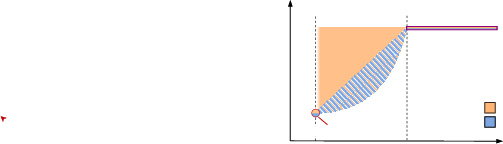
Figure 1: Heisenberg-to-classical phase transition in the query complexity of quantum channel tomography with respect to the dilation rate r1 and error threshold r2.
A complete characterization is given for r3-dimensional channels of Kraus rank r4: r5
Generalizing prior "pure" or "unitary" cases, the result recovers and sharpens known bounds for quantum state tomography as a special case.
Technical Approach
Upper Bound Construction and Reductions
Upper bounds leverage a novel reduction: Any parallel tester protocol for QCT with access to arbitrary Stinespring dilations can be simulated by querying the channel alone. This "dilation does not help" theorem is proven using representation theory and the quantum comb formalism, substantially generalizing previous state-tomography results and linking QCT of arbitrary channels to the more tractable case of isometries.
The reduction enables bootstrapping optimal algorithms for isometry (and unitary) tomography to the general channel setting, yielding tight performance guarantees in both Heisenberg and classical regimes.
Packing Nets and Lower Bounds
Lower bounds are derived via probabilistic constructions of large packing nets of channels (see Figures 2, 4, 5, and 7), designed to ensure that any two elements are r6-separated in the desired norm after tracing out the ancilla system. These constructions depend on the ability to locally randomize certain Kraus operator subspaces to ensure pairwise distinguishability.

Figure 2: Pictorial representation of channel packing net construction via perturbations in the Stinespring isometry.
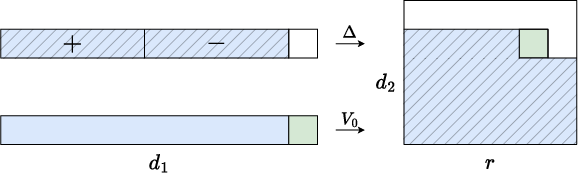
Figure 3: Illustration of key linear operator arrangements for packing net construction.
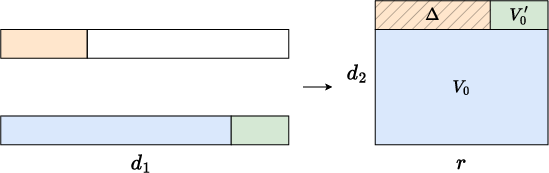
Figure 4: Configuration extending Figure 3 with additional operator structure.
The analysis then reduces QCT to a channel discrimination task, for which quantum comb formalism yields tight constraints on the probability of success versus query number. The critical observation is that orthogonality (in image or in Hilbert-Schmidt inner product) between the center and perturbation components is achievable away from the boundary (r7) but forbidden at the boundary, explaining why Heisenberg scaling disappears outside this regime.
Quantum Combs and Testers
The quantum comb framework is instrumental in both the upper and lower bound analyses: it allows modeling of the most general (parallel and sequential, coherent and adaptive) QCT testers, and provides rigorous mathematical machinery for composing, simulating, and bounding the power of various access models. The link product operation and Schur-Weyl duality are used to analyze and decompose symmetric structures in multisystem protocols. Figure 5 visualizes the combination of combs.
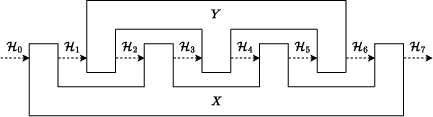
Figure 5: Composition of higher-order quantum combs representing adaptive multi-query testers.
Implications and Future Directions
These results settle the query complexity for QCT up to constant factors across nearly all regimes of physical interest, identifying the dilation rate as the unique parameter controlling the phase transition in achievable scaling. This advances the theoretical understanding of process tomography, informing the design of practical protocols to benchmark quantum devices.
On the theoretical side, the combination of packing net constructions, representation-theoretic techniques, and quantum comb formalism offers new tools for quantum information complexity, with possible applications to learning, cryptography, and quantum device certification.
The sharp boundary at r8 raises further questions about the precise limits in the near-boundary regime and for sequential (adaptive) testers. The conjecture that sequential testers offer no advantage over parallel ones (in the absence of ancillary system access) remains open, and resolving it would provide a fully unified theory.
From a practical perspective, these optimality results indicate when Heisenberg-limited protocols are possible in hardware characterization, informing experimentalists about achievable precision per resource cost as physical devices ascend in complexity.
Conclusion
This work rigorously characterizes the query complexity of quantum channel tomography under both trace and diamond norm error metrics. It discovers a sharp Heisenberg-to-classical transition governed by the dilation rate, with optimality arguments that bridge upper and lower bounds via reductions, probabilistic packing, and quantum comb formalism. These results form the new foundation for both theoretical studies and experimental implementation of QCT in high-dimensional, noisy, or partially coherent quantum devices.

