- The paper presents advancements in rip current detection and segmentation by leveraging large-scale pretrained vision models and the comprehensive RipVIS dataset.
- Key methodologies include ensemble strategies, multi-branch pipelines, and mask-derived detection to optimize recall and spatial accuracy.
- Results indicate that no approach surpassed a composite score of 60, underscoring the need for further domain-specific innovations.
NTIRE 2026 Rip Current Detection and Segmentation (RipDetSeg) Challenge: Technical Overview
Motivation and Problem Setting
Rip currents are hazardous nearshore flows that pose significant risk to swimmers, yet their diffuse and context-dependent visual signatures make robust automated detection a challenging open problem in computer vision. Visual identification is fundamentally complicated by the highly variable appearance of rip currents across coastal morphologies, camera viewpoints, environmental conditions, and the instability of indicators such as sediment plumes, disruptions in wave breaking, or color variations. Prior machine learning efforts have predominantly been constrained by limited datasets, a lack of standardized evaluation, and a focus either on overly coarse (detection-only) or insufficiently robust (segmentation-only) approaches.
The NTIRE 2026 RipDetSeg Challenge directly addresses these limitations by advancing the state of the art in rip current detection and instance segmentation. It leverages the RipVIS dataset, the largest curated benchmark for visual rip current understanding, to drive standardized algorithmic development, evaluation, and benchmarking.

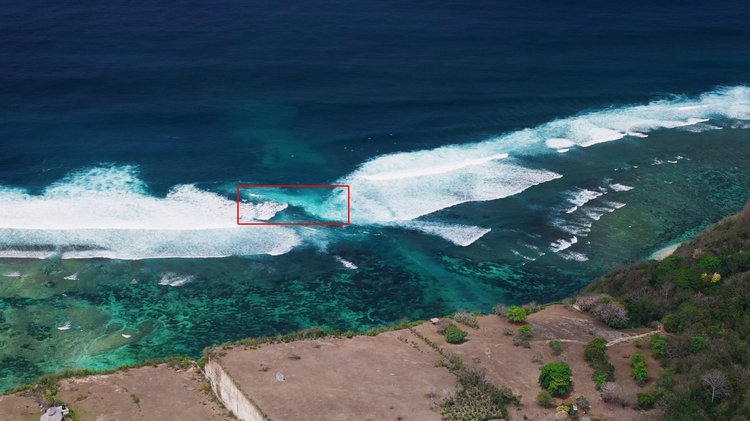
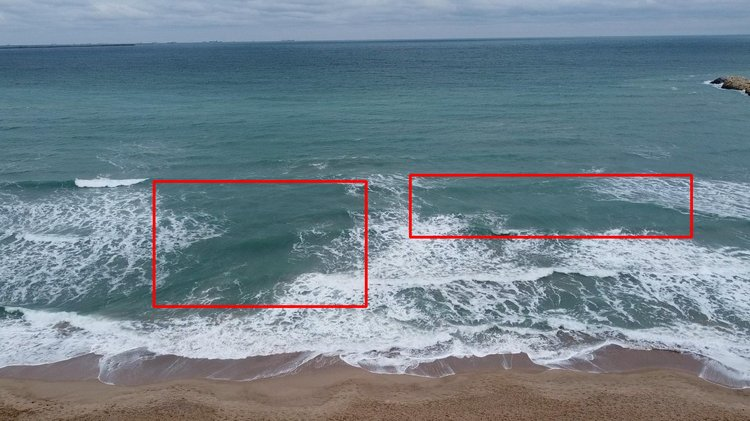
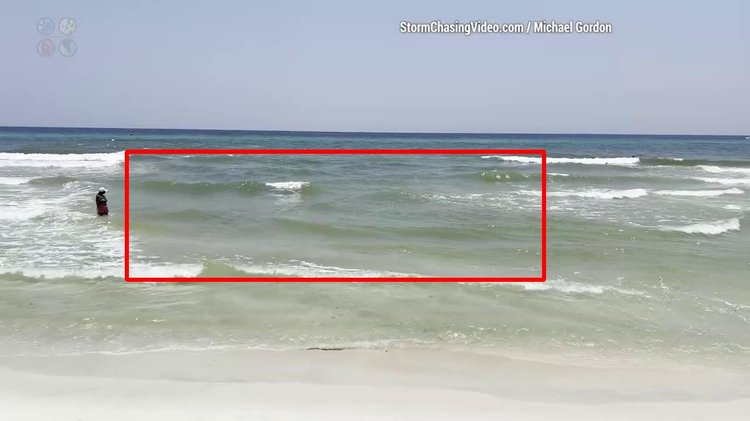
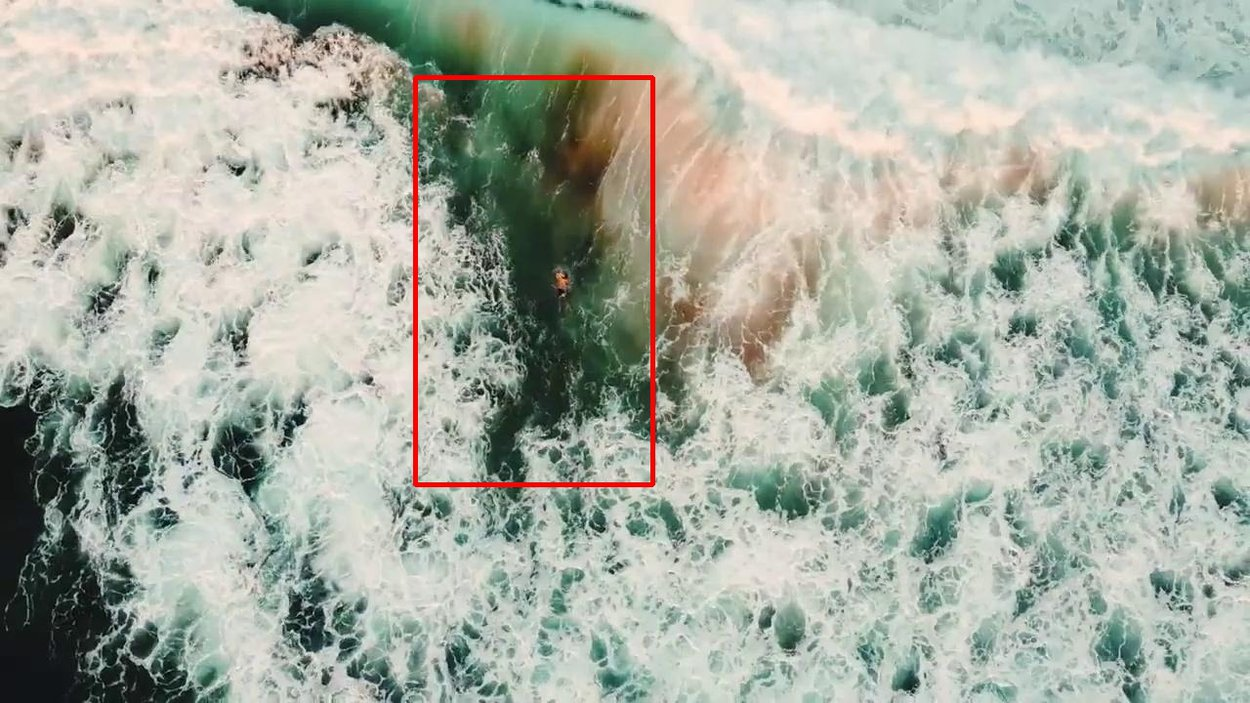


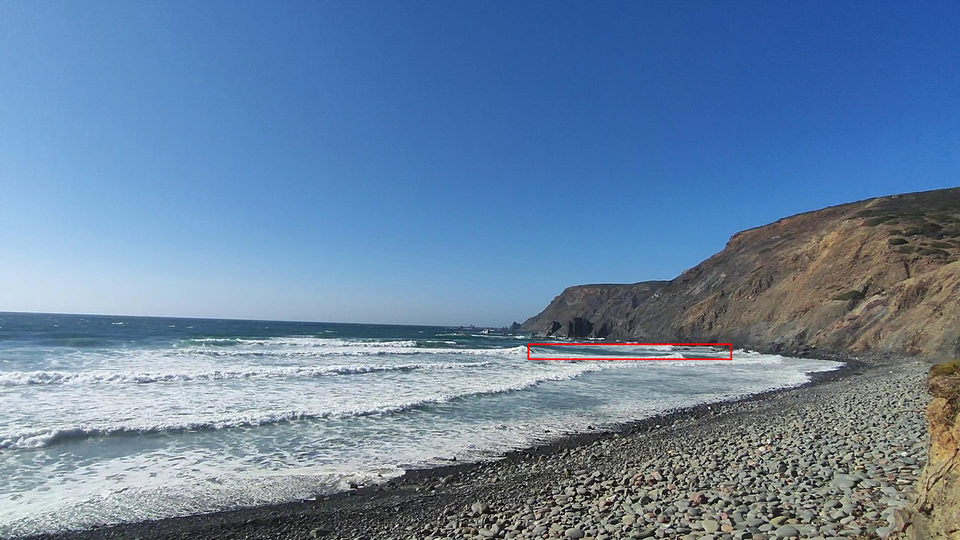
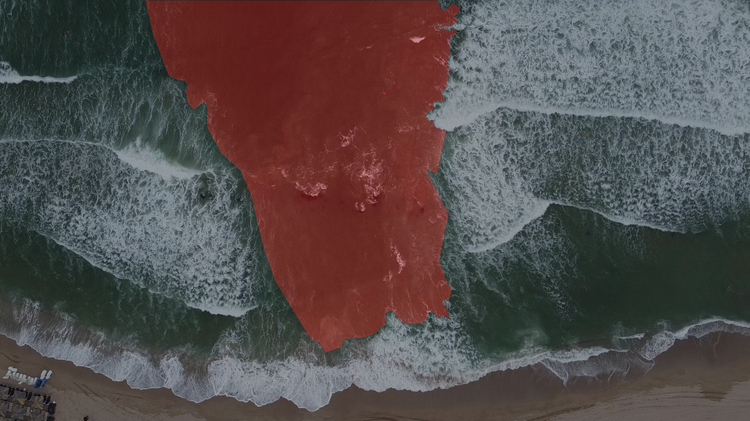
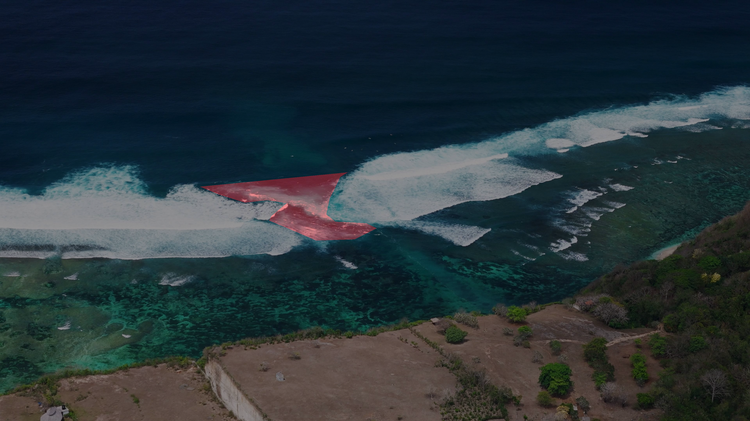
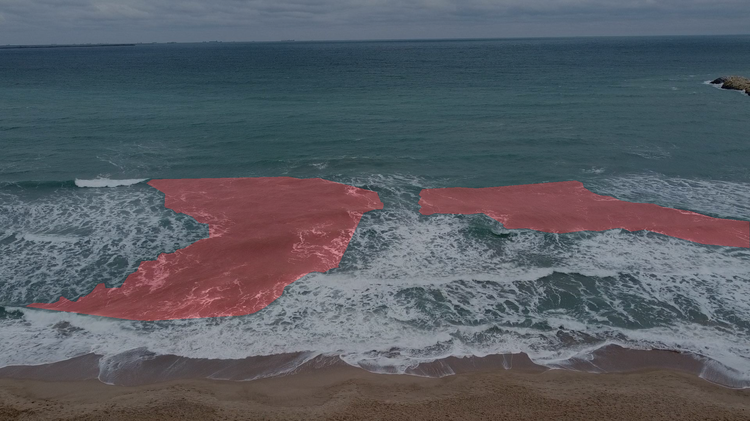
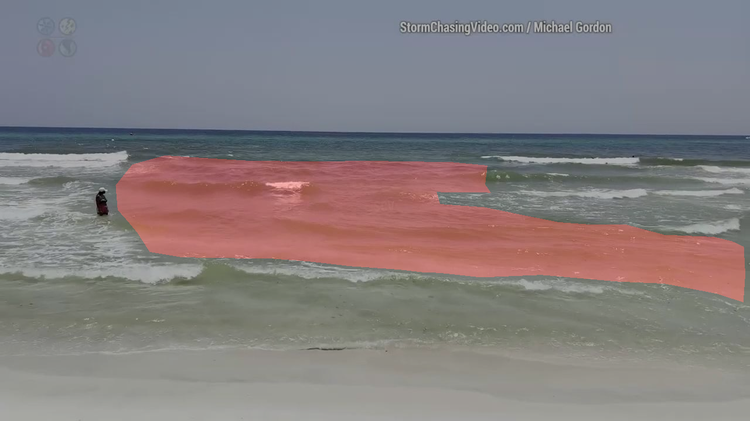


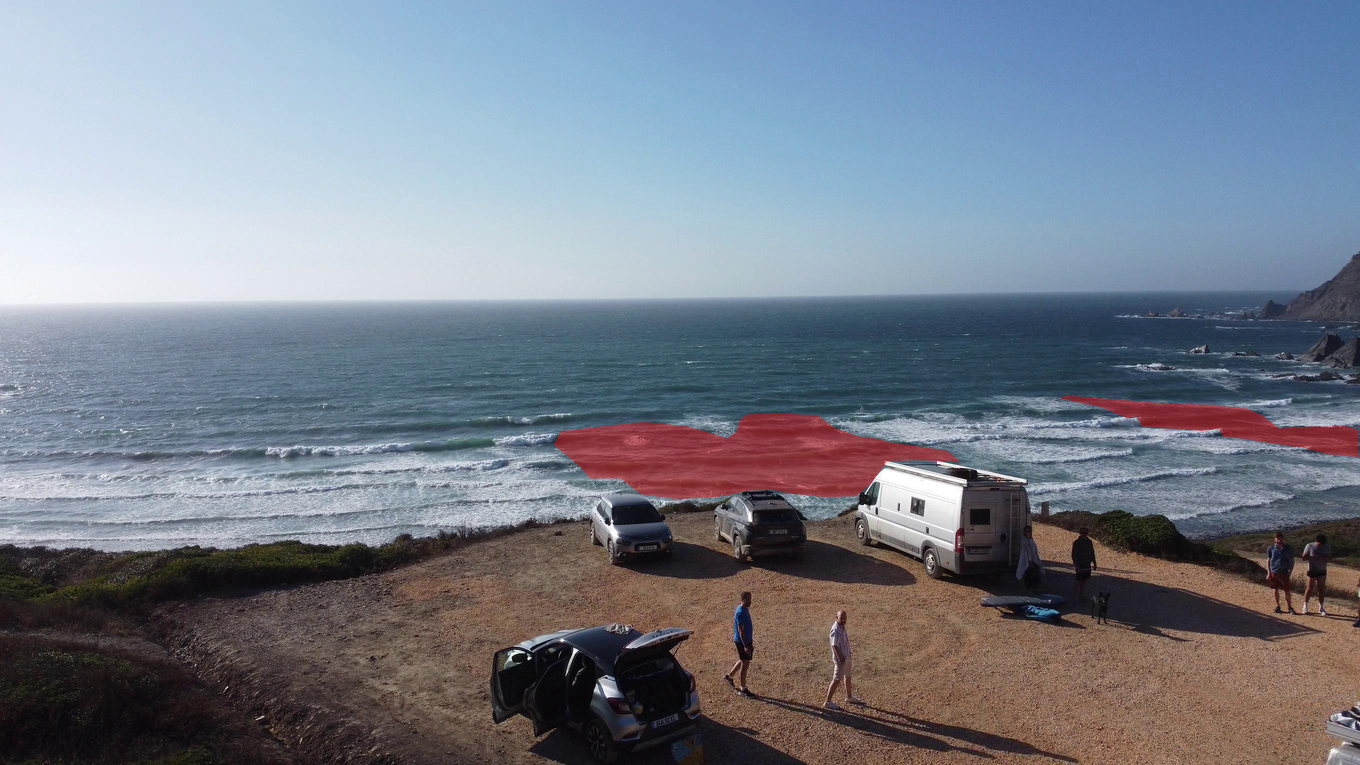

Figure 1: RipVIS dataset examples illustrating the appearance variability across camera orientations and conditions. Red annotations indicate ground-truth bounding boxes and masks for rip currents.
Dataset and Evaluation Protocol
The RipDetSeg challenge is grounded in the RipVIS dataset, which contains highly diverse imagery from more than 10 countries, four canonical camera perspectives (aerial bird’s-eye, aerial tilted, elevated beachfront, water-level beachfront), and a wide spectrum of sea and weather conditions. Rip current annotations are provided in both segmentation mask and axis-aligned bounding box formats. The dataset is strictly partitioned into training, validation, and held-out test splits, precluding overfitting and ensuring cross-domain generalization.
Participants are evaluated on two core tasks:
- Instance segmentation: Pixel-accurate delineation of rip currents, enabling interpretability and precise localization.
- Detection: Axis-aligned bounding box localization, for systems prioritizing efficiency or integration with conventional pipelines.
The composite metric averages F1 and F2 scores, computed at IoU 0.50 and as an average from 0.40 to 0.95, placing increased emphasis on recall (F2) essential to safety-critical deployment, yet maintaining a balanced precision-recall evaluation.
Solution Landscape: Model Designs and Pipelines
Top solutions exhibit a convergence towards large-scale pretrained general-purpose architectures (YOLO family, SegFormer, Mask2Former, DINOv3, etc.), with adaptation, post-processing, and ensembling acting as the primary axes for competition rather than the introduction of fundamentally novel backbones.
Strong Segmentation via Ensembling
Team UNO Pixel Pros adopts a SegFormer-B5 backbone, assembling cross-validated and full-data models. Output masks are aggregated per-pixel, thresholded, and separated into connected components to generate instance segmentation masks. This mask-centric pipeline yields robust segmentation, albeit without explicit modeling of instance separation during training.
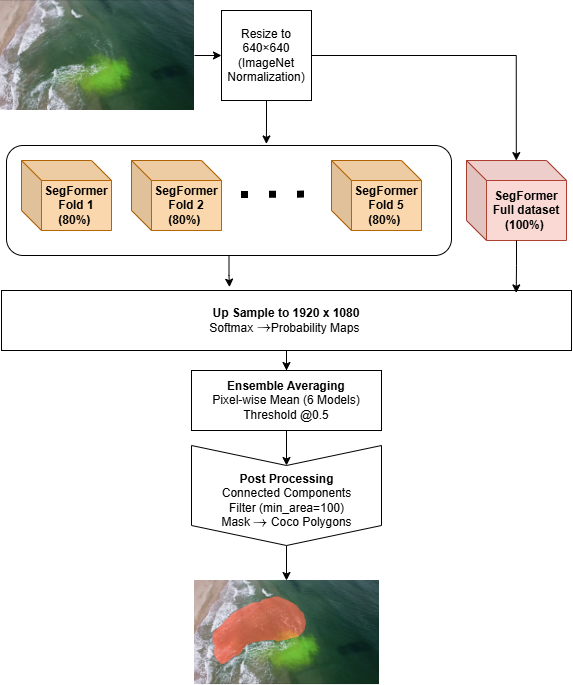
Figure 2: Team UNO Pixel Pros’s SegFormer ensemble pipeline for mask-level prediction, thresholding, and connected components extraction.
Multi-Branch Detection and Fusion
Team SiGMoid fuses outputs from both YOLO11x and YOLO11m branches, each trained independently for detection and segmentation. Fine-grained polygon refinement, morphological mask processing, and score fusion are coupled with geometric box/mask weighted fusion to maximize recall and spatial alignment.

Figure 3: SiGMoid’s dual-branch pipeline with polygon mask refinement and confidence fusion.
Segmentation-First and Mask-Derived Detection
Team Riposte demonstrates the effectiveness of training exclusively with segmentation masks and deriving detection outputs directly from predicted polygons (polygon-to-box). This approach emphasizes the utility of mask accuracy for both tasks and removes potential label mismatch issues.
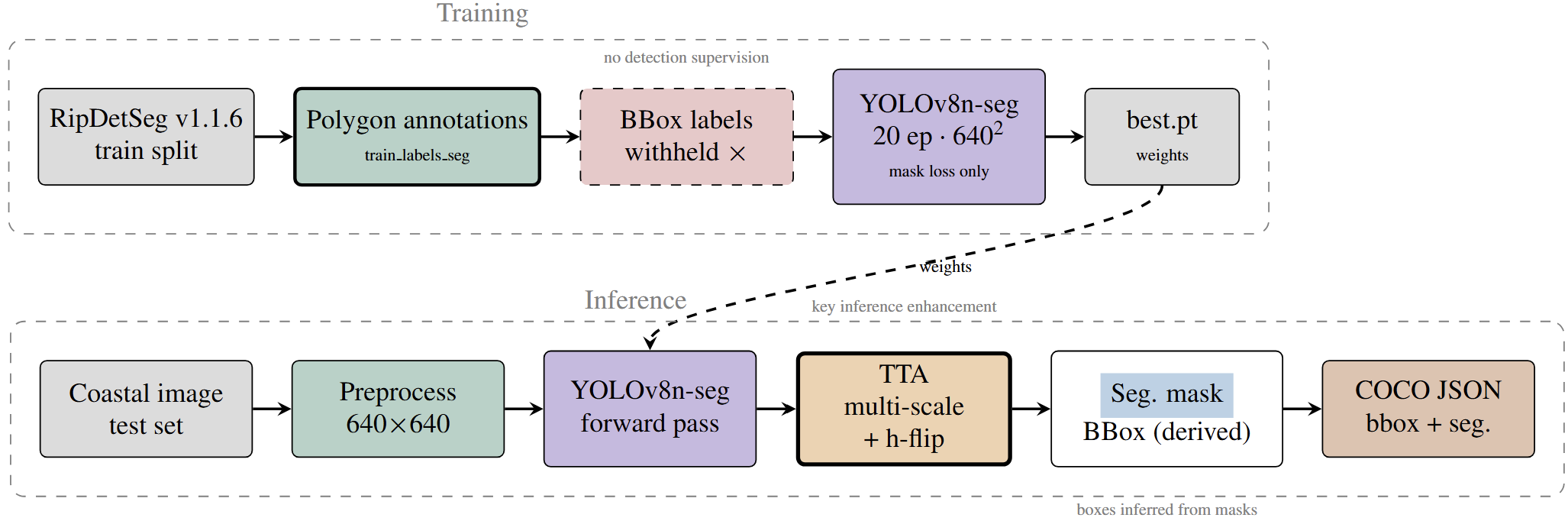
Figure 4: Riposte’s segmentation-only pipeline, deriving detection from outputs at inference.
Standard YOLOv8s Baselines and Clean Ablations
SoloSeg, RIP_YuvatejaReddy, and VisionX rely on vanilla YOLOv8s-seg paradigms, with ablation on augmentation, ensembling, and training/validation splits. VisionX introduces mask-based fusion and refinement, tightly coupling detection to mask quality rather than independent regression.
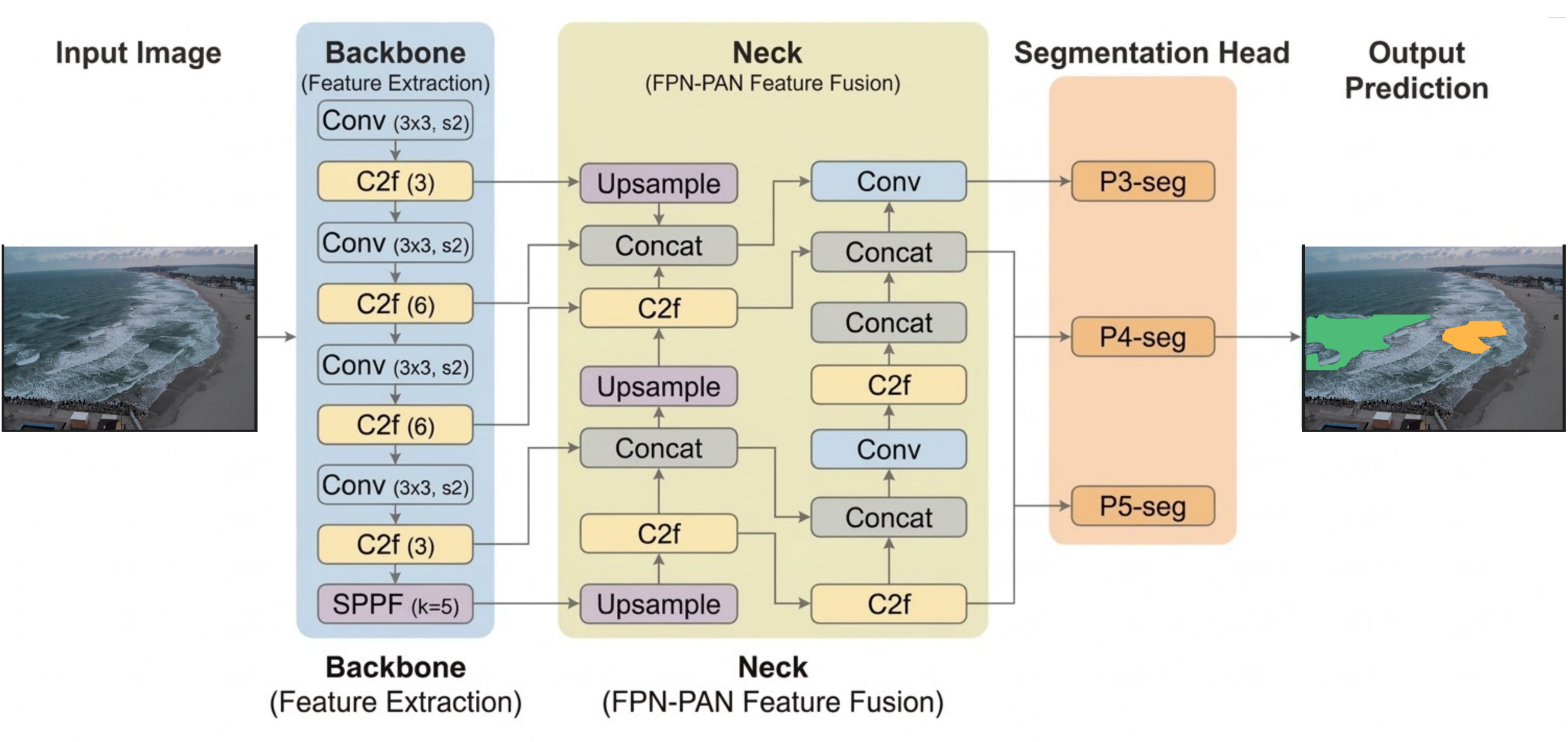
Figure 5: SoloSeg’s direct YOLOv8s-seg instance segmentation pipeline.
Two-Stage Integration of Detection and Segmentation
KMG develops a two-stage ensemble leveraging YOLOv13 and DINOv3 for detection, with detection-informed refinement of Mask2Former segmentation outputs. This modular approach enforces geometric consistency between detection bounding boxes and mask instances.
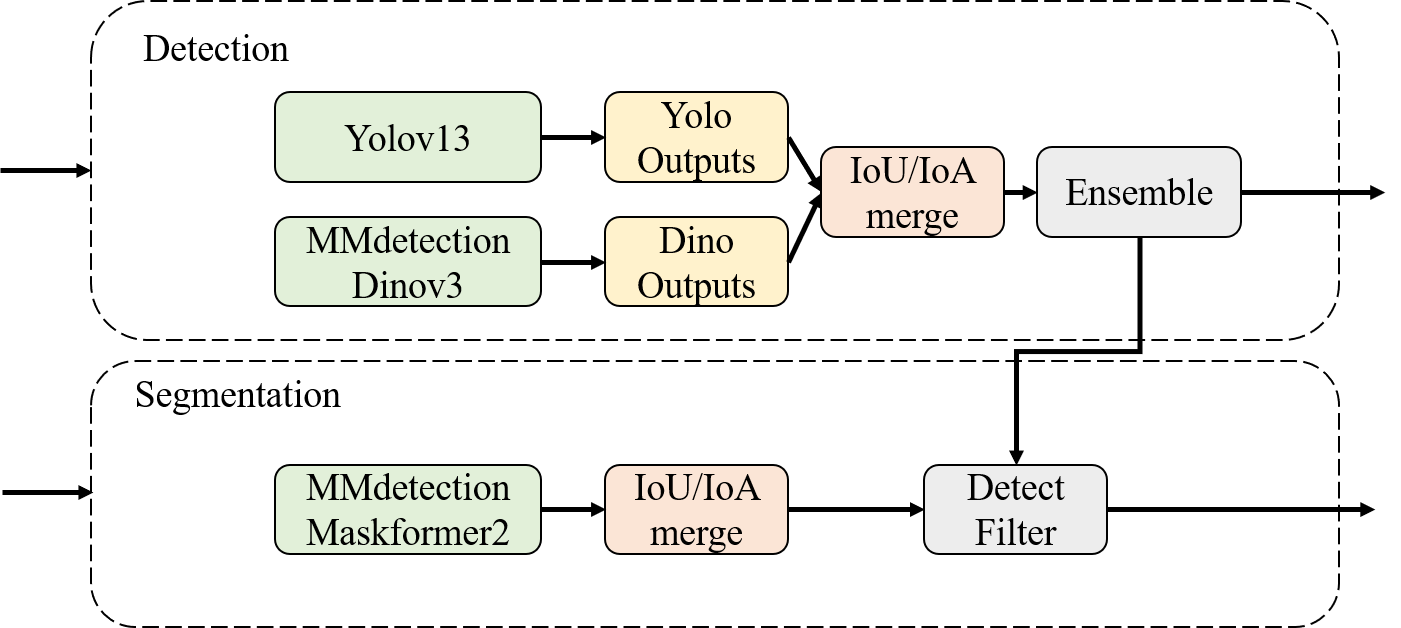
Figure 6: KMG’s detection-segmentation two-stage pipeline integrating DINOv3 and Mask2Former.
Large-Scale High-Recall Ensembles
NTR fuses high-resolution outputs from independent YOLO11x detection and segmentation models, with extremely low detection thresholds and weighted box fusion to maximize recall at the expense of higher computational load.
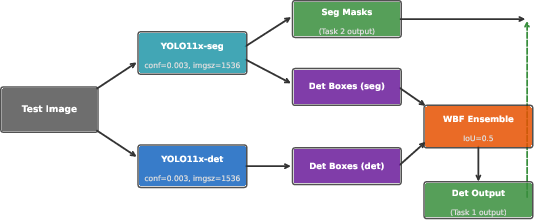
Figure 7: NTR’s inference pipeline leveraging independent high-resolution YOLO11x models for maximal recall.
Influence of Inference and Post-Processing
Across submissions, performance gains are less a function of architectural novelty than of inference time ensembling, test-time augmentation, geometric post-processing, and score fusion. Strategies such as connected component analysis, morphological mask cleaning, multi-scale evaluation, and NMS/harmonization play a decisive role for marginal improvements.
Main Results and Analysis
The most performant submission on the segmentation task yields a composite score of 55.79, and the top detection system 56.33, underscoring the intrinsic difficulty imposed by the visual ambiguity and diversity of rip current manifestations in natural imagery. No approach surpasses the 60-point mark on the composite metric, indicating the absence of any dominating solution and the necessity for further research bridging general-purpose visual recognition and the specific demands of coastal hydrodynamics.
Key empirical findings:
- YOLO-based models (YOLO11x, YOLOv8s, YOLOv13) provided the backbone for almost all high-ranking submissions.
- Ensemble and fusion strategies provide marked improvements over single-model variants.
- Mask-first or “mask-derived box” designs avoid inconsistencies inherent to independent detection-segmentation heads and are particularly robust when instance separation is ill-defined in training.
- Performance is bottlenecked by the lack of explicit instance differentiation in most semantic segmentation architectures, suggesting directions for further work in weakly/box-supervised instance segmentation tailored to amorphous and overlapping phenomena.
Implications, Theoretical Insights, and Future Trajectories
From a practical standpoint, the results reinforce that robust general-purpose vision models constitute a strong foundation for rip current recognition, but significant domain-specific adaptation remains necessary for further progress. This encompasses specialized augmentation (to simulate rip signature variability), temporal modeling (rip currents evolve over time and are temporally sparse), and multi-modal integration (e.g., coupling visual imagery with hydrodynamic sensors or contextual metadata). From a theoretical perspective, the canonical instance segmentation problem is shown here to be insufficiently expressive for “amorphous” and temporally-evolving structures, motivating new paradigms for instance discovery, mask propagation, and detection in complex physical environments.
Future advancements are likely to benefit from:
- Incorporating video and temporal priors
- Exploring self-supervised and multi-modal representation learning on RipVIS and related public datasets
- Integrating explainability to support deployment in safety-critical domains
- Extending evaluation to encompass forecasting (e.g., early alert frameworks such as RipAlert [80_wan2026ripalert]) and interventional prediction
Conclusion
The NTIRE 2026 RipDetSeg Challenge substantially advances rip current detection and segmentation research by providing a diverse, rigorously benchmarked dataset and a standardized multi-task evaluation protocol. The field currently benefits most from robust, large-scale vision backbones augmented by carefully tuned inference and ensemble pipelines. However, reaching deployable, high-confidence automation for rip current identification—given the complex, non-object nature of the target and the critical emphasis on recall and interpretability—requires further innovation in domain-specific architecture and multi-sensor data fusion.
The dataset and evaluation established here will catalyze future work at the intersection of physical environment modeling, robust perceptual grouping, and real-time coastal safety applications.
Reference: "NTIRE 2026 Rip Current Detection and Segmentation (RipDetSeg) Challenge Report" (2604.17070)