- The paper introduces a novel STFT-based methodology combined with ML to classify welding arc regimes with 94.4% accuracy.
- It leverages time–frequency descriptors such as ASI, spectral entropy, and harmonic distortion for clear physical interpretability.
- The system offers computational efficiency, enabling real-time diagnostics on microcontrollers and edge devices in industrial settings.
A Hybrid STFT-Based Machine Learning Framework for Physically Interpretable Arc Stability Classification in Electric Arc Welding Systems
Introduction and Motivation
Electric arc welding systems (EAWM) present substantial challenges for online monitoring and process optimization due to the inherently stochastic and non-stationary plasma–dynamic phenomena that drive arc behavior. Robust arc stability is a fundamental requirement for weld quality and operational safety across manufacturing environments, but traditional diagnostic approaches either lack interpretability or are computationally prohibitive for real-time industrial deployment. This work addresses these limitations by proposing a hybrid framework that fuses Short-Time Fourier Transform (STFT)-based time–frequency analysis with ML in a physically consistent, low-dimensional feature space.
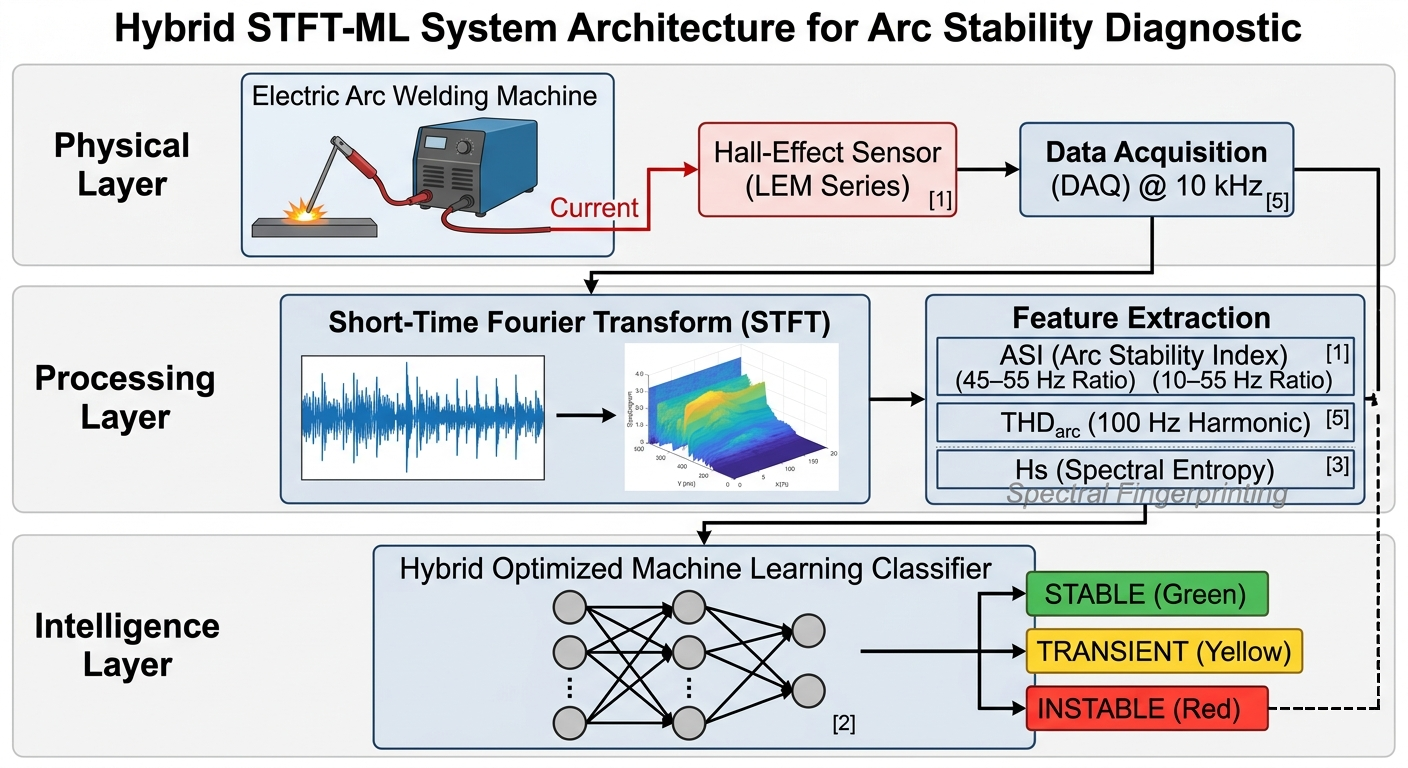
Figure 1: The hybrid STFT-ML architecture integrates Hall-effect sensing, STFT-based spectral fingerprinting, and optimized ML for real-time arc stability diagnosis.
The architecture achieves a direct correspondence between measurable electrical signals and diagnostic results, facilitating deployment in resource-constrained environments while preserving real-time response and explainability.
The primary current signal in EAWM is modeled as a stochastic, non-stationary observable reflecting plasma–dynamic transitions. Acquisition is realized with high-linearity Hall-effect sensors and high-resolution DAQ, ensuring preservation of transient and high-frequency phenomena. The methodology is structured as a functional pipeline from Hilbert-space signal acquisition L2(R) to feature extraction R10, efficiently mapping physical dynamics into a discriminative vector suitable for supervised learning.
STFT is employed to decompose the welding current, providing localized time–frequency representations that distinctly reveal the three operational regimes of arc welding: transient initiation, steady-state (stable), and instability/extinction. These regimes are manifested by significant changes in spectral concentration and energy reallocation, with primary indicators centered around the 50 Hz fundamental frequency and adjacent band energy.
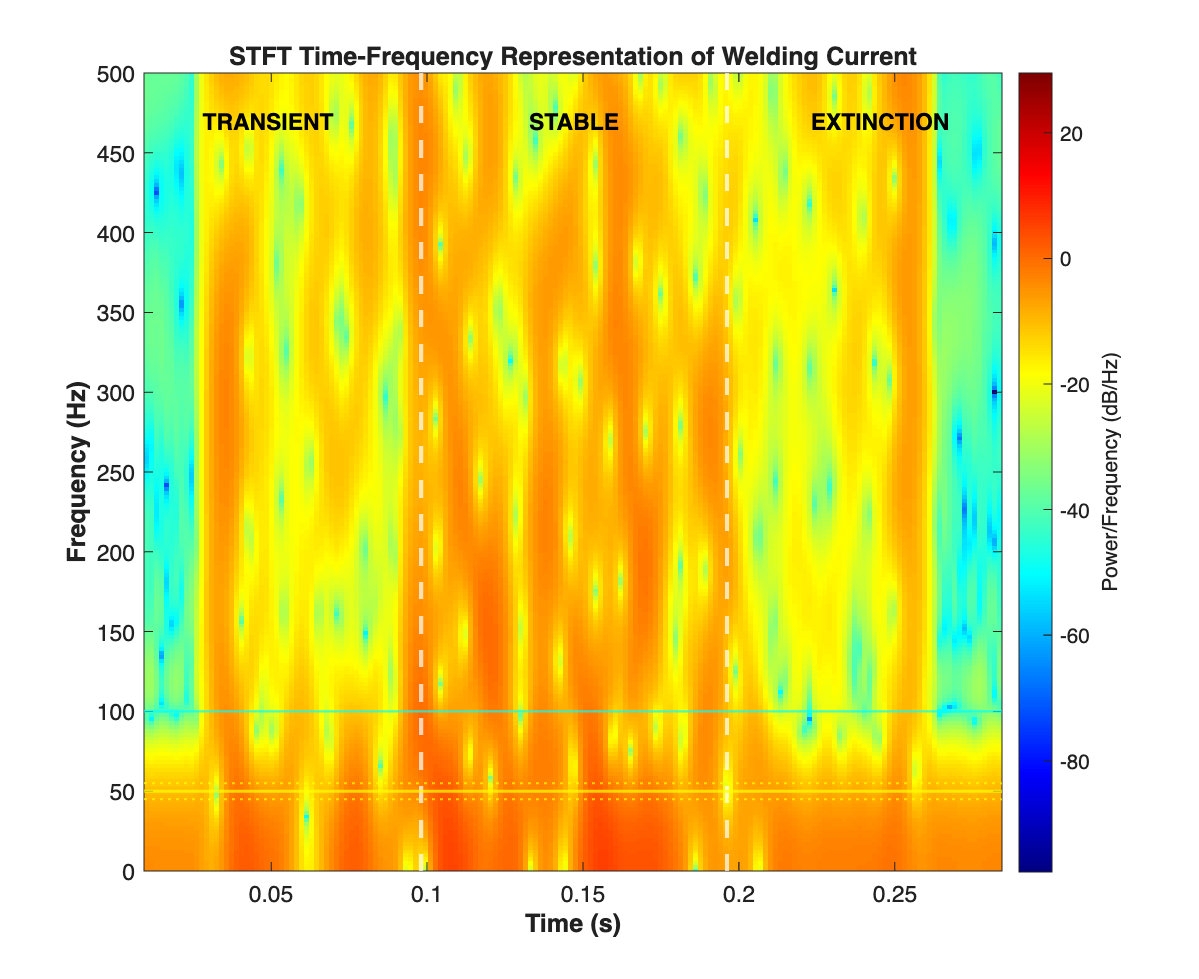
Figure 2: STFT time-frequency analysis demonstrates pronounced spectral shifts among transient, stable, and extinction phases, with clearly demarcated fundamental and second harmonic energy.
To rigorously encode these behaviors, several descriptors are aggregated:
- Arc Stability Index (ASI): Quantifies spectral energy redistribution around the fundamental, serving as a sensitive metric for incipient instability;
- Spectral Entropy (Hs): Captures disorder and loss of spectral concentration;
- Harmonic Distortion (THDarc): Measures nonlinear energy distribution in higher-order harmonics.
These core features, integrated with time-domain statistics (RMS, crest factor, kurtosis, zero-crossing rate), yield a 10-dimensional representation, balancing physical interpretability with discriminative power. The feature extraction mapping remains bounded and stable for all finite-energy, physically realizable signals.
Machine Learning Architecture and Decision Pipeline
The structured feature vector undergoes classification via an SVM with an RBF kernel, forming the main decision mechanism:
F=C∘Φ
where Φ is the feature extraction operator and C the classifier. The pipeline supports anomaly detection via thresholding on ASI for early instability warnings, with class outputs in {Stable, Transient, Extinction}.
Comprehensive experimental evaluation, using a Metal Active Gas EAWM under controlled lab conditions, demonstrates the framework's classification fidelity and physical relevance. Three regimes are well-separated in the feature space.
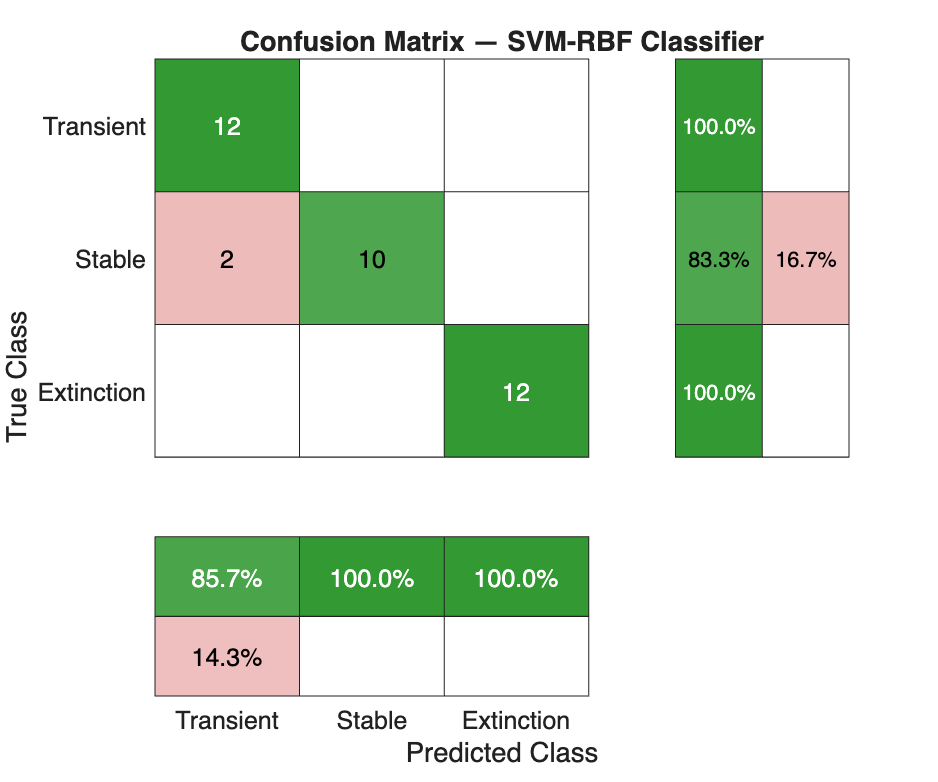
Figure 3: The SVM-RBF confusion matrix confirms high recall for Transient and Extinction phases, with overall accuracy of 94.4 %.
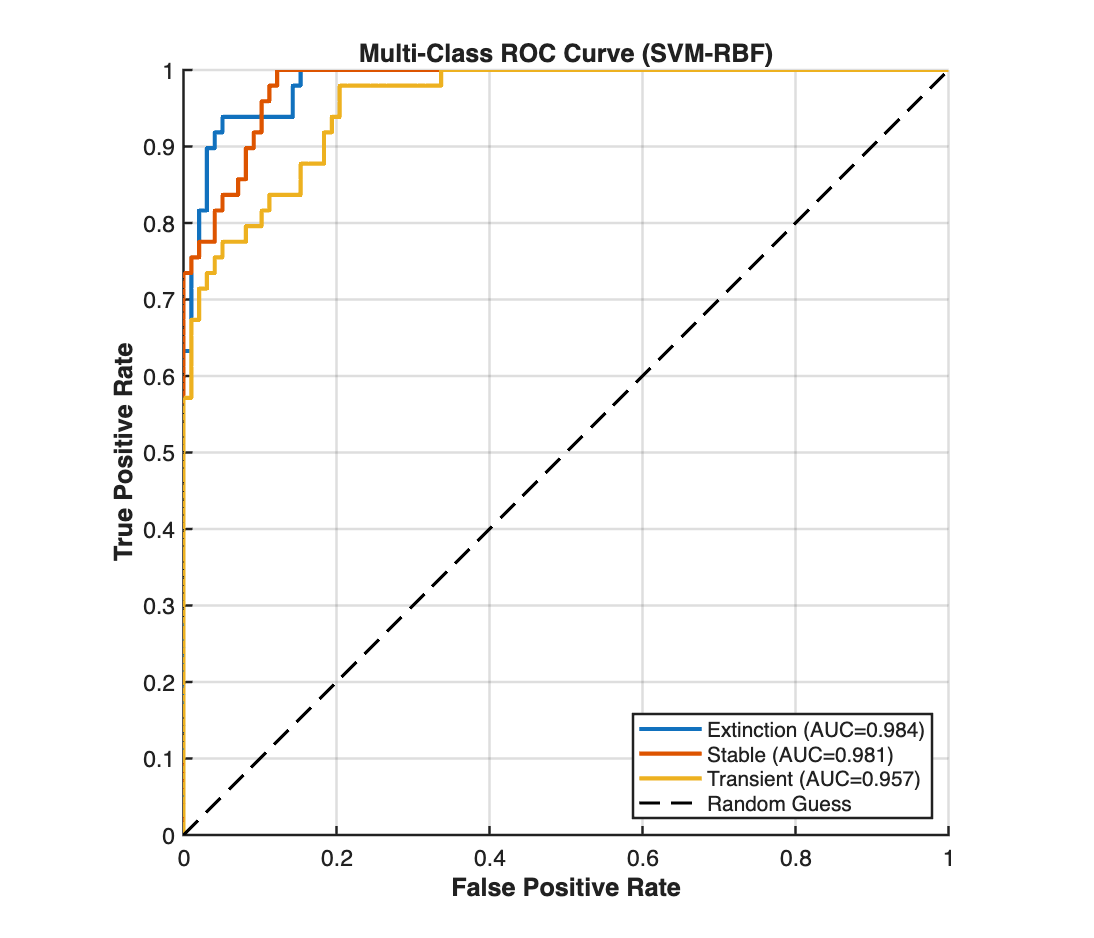
Figure 4: Multi-class ROC curves indicate excellent AUC for stable and extinction modes, evidencing strong class separability in the proposed spectral feature space.
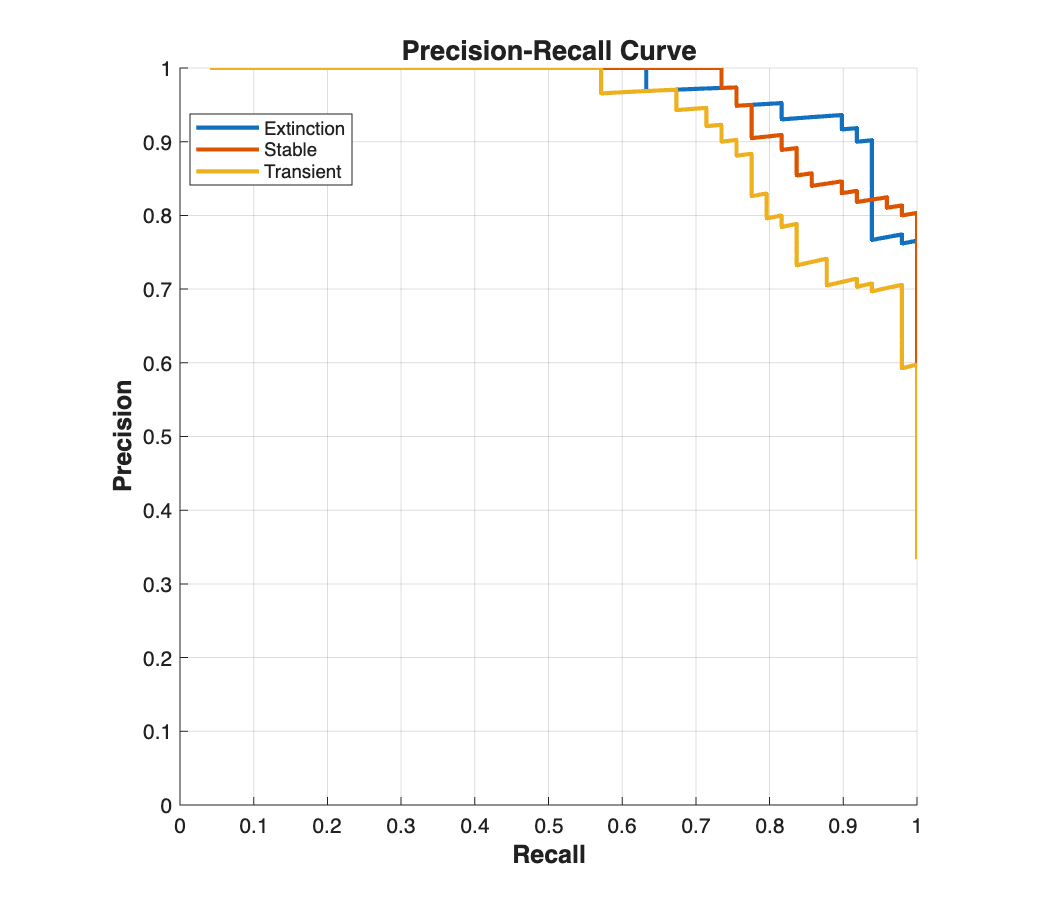
Figure 5: Precision–Recall analysis highlights near-ideal diagnostic reliability for extinction; lower precision for transient states aligns with their greater non-stationarity.
Statistical evaluation via hold-out, leave-one-out, and 10-fold cross-validation results (hold-out accuracy 94.4 %, CV 87.5 % ± 9.4) and a 95% CI of [81.65%, 92.50%] suggest generalization capability within the expected range of industrial fluctuation. The transient regime remains the most challenging due to intrinsic non-stationarity and feature overlap.
A three-dimensional visualization of spectral descriptor space illustrates the physical separation of operational regimes:
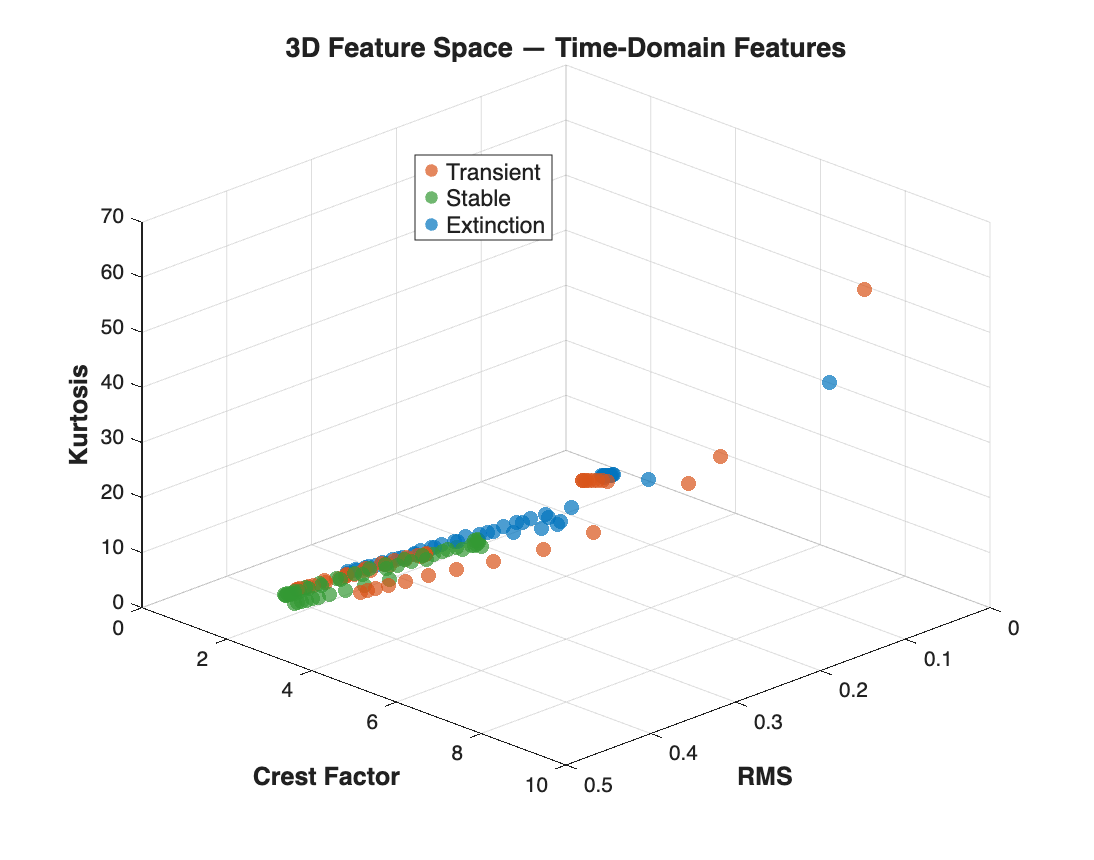
Figure 6: ASI, THDarc, and Hs form a low-dimensional manifold where stable operation clusters tightly, while instability and transient states span regions of greater entropy and distortion.
Real-time tracking of these indices provides actionable insight for predictive maintenance and process optimization:
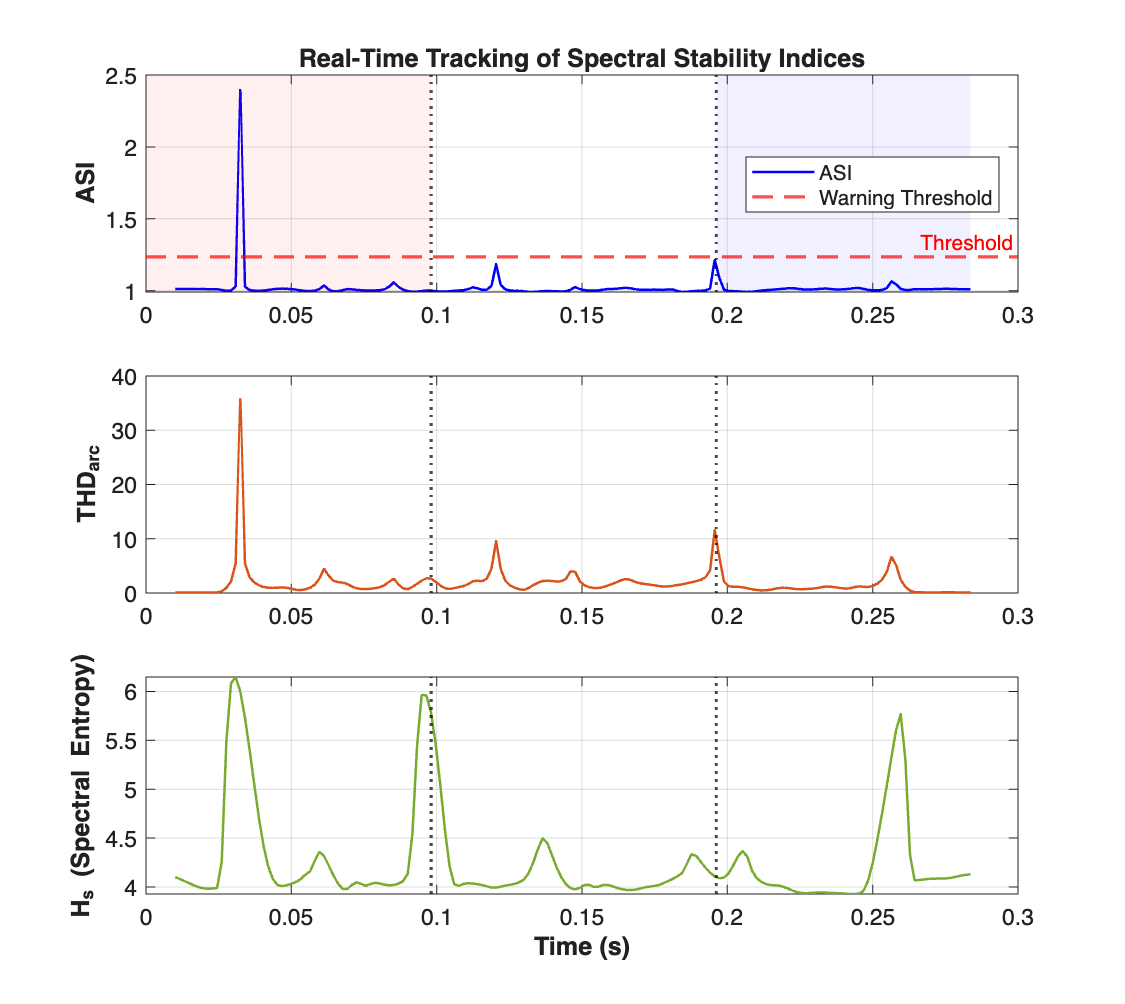
Figure 7: Online tracking reveals exponential ASI escalation as arcs destabilize, with concurrent rises in R100 and R101, supporting early warning triggers.
A complementary projection in time-domain feature space further demonstrates diagnostic robustness.
Figure 8: Time-domain embedding (RMS, Crest Factor, Kurtosis) enhances regime separability, especially for non-stationary transitions.
Computational Efficiency and Practicality
A comparative analysis with deep learning (e.g., AlexNet, ResNet) shows that the proposed method achieves competitive accuracy (94.4 % vs. 97.3%) while reducing model size (4K vs. 11.2M parameters) and inference latency (0.49 ms vs. 150 ms). This efficiency, together with direct physical interpretability, enables deployment on microcontrollers and edge devices, addressing critical constraints in industrial environments.
Implications and Future Perspectives
The framework substantiates that localized spectral energy redistribution, as quantified by ASI and related metrics, provides a robust indicator for arc instability. The hybrid STFT-ML approach forms a bridge between physically grounded diagnostics and data-driven decision systems, advancing the explainability and reliability of AI in manufacturing diagnostics.
Limitations include modest dataset size and regime overlap in highly dynamic transitions. Future research should extend dataset diversity, integrate adaptive feature extraction, and validate performance in complex, variable production ecosystems. On-chip implementation and hardware-in-the-loop validation represent practical steps toward widespread industrial adoption.
Conclusion
A physically-interpretable, computationally efficient hybrid STFT-ML framework has been developed for arc stability classification in EAWM. The integration of compact, feature-engineered vectors with ML enables reliable, real-time assessment while preserving correspondence to physical arc dynamics. Experimental results evidence strong diagnostic power and deployment advantages over high-dimensional deep learning models. The approach has direct implications for adaptive process monitoring, predictive maintenance, and future AI-driven manufacturing solutions.
(2604.17034)