- The paper presents QANM, which integrates Nesterov acceleration with quantized consensus to mitigate zigzagging and ensure finite-time convergence.
- Theoretical analysis guarantees R-linear convergence to a quantized neighborhood while quantifying the trade-off between quantization precision and communication cost.
- Empirical evaluations in distributed sensor fusion confirm accelerated convergence and robustness against data heterogeneity and limited bandwidth.
Nesterov Accelerated Distributed Optimization with Efficient Quantized Communication
Problem Formulation and Context
Distributed optimization is central to large-scale networked systems where communication constraints and heterogeneous data are prevalent, such as sensor networks, IoT systems, and federated learning. This work addresses unconstrained distributed optimization over directed computational graphs, where local objectives have disparate curvature directions, and inter-node communication is limited to quantized exchanges constrained by finite bandwidth. These structural realities create two major challenges: (1) severe zigzagging and slow convergence in gradient-based distributed algorithms due to ill-conditioning and (2) degradation in solution quality or consensus due to the quantization of messages.
Algorithmic Innovation: QANM
The paper introduces QANM (Quantized Averaged Nesterov Momentum), an algorithm integrating three critical features:
- Nesterov Acceleration: Each node performs momentum-based updates to accelerate convergence, directly mitigating the zigzag phenomenon by exploiting curvature information in local objective functions.
- Quantized Communication: Inter-node communication is subjected to quantization using a uniform asymmetric mid-tread scalar quantizer, thereby enforcing communication efficiency.
- Finite-time Quantized Consensus: A specialized consensus protocol operates at each outer iteration, ensuring all nodes average their local solutions with quantized updates to achieve finite-time agreement up to a quantization neighborhood.
This integration is implemented in a purely distributed and fully decentralized manner, supporting arbitrary strongly connected directed graphs and requiring no doubly stochastic weight matrices. Each node initializes its local estimate, iteratively performs a Nesterov-accelerated gradient step with quantized consensus after every update, and ensures that all iterates remain feasible and communication-efficient.
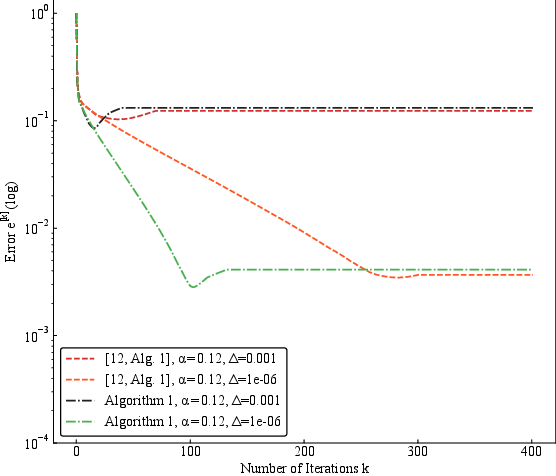
Figure 1: Comparison of Algorithm~QANM against baseline methods demonstrates accelerated convergence in terms of consensus error under different quantization levels.
Theoretical guarantees are established under strong convexity and Lipschitz smoothness assumptions on all local objective functions. The key analytical results are:
- Linear Convergence to a Quantized Neighborhood: QANM provably ensures R-linear convergence to a ball around the unique global optimum with radius proportional to the quantization level Δ. The explicit rate depends on local condition numbers and the network diameter.
- Consensus Guarantee: Leveraging a finite-time quantized average consensus protocol ensures that, after every update, the states of all nodes agree up to a bounded quantization error, in a deterministically bounded number of rounds.
- Trade-off Characterization: The analysis characterizes the interaction between quantization coarseness and asymptotic error, establishing that finer quantization reduces consensus error but increases communication cost.
The step size and momentum parameters are tuned locally subject to global network bounds. The average and maximum discrepancies in momentum coefficients across nodes are controlled to guarantee stability and convergence.
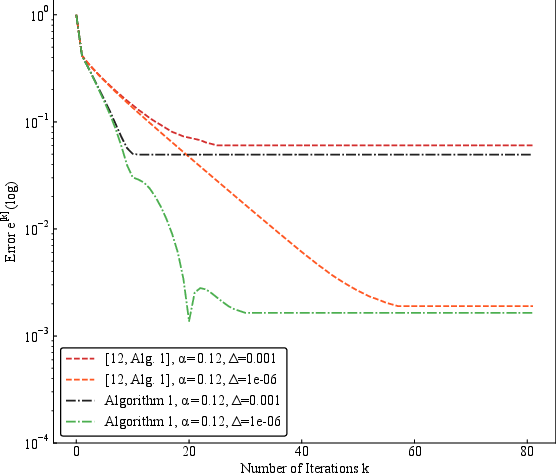
Figure 2: Comparative depiction of error trajectories demonstrating robustness of QANM to node-dependent weight heterogeneity and quantization.
Empirical Evaluation: Distributed Sensor Fusion
QANM is validated in distributed sensor fusion for multidimensional target estimation—a prototypical application with ill-conditioned local losses. Sensor nodes estimate a target's parameter vector by collaboratively minimizing a global cost with dimensionally varying penalties and measurement noise. Simulations encompass both homogeneous and node-specific weight matrices. Empirical results substantiate the following:
- Accelerated Convergence: QANM consistently outpaces prior quantized-gradient baselines, converging orders of magnitude faster to the quantized consensus region.
- Robustness to Quantization and Heterogeneity: The convergence behavior is preserved across quantization levels (Δ∈{10−3,10−6}) and in the presence of node-dependent curvature matrices, highlighting robustness to both communication and data heterogeneity.
- Linear Error Decay: The normalized error e[k] decreases monotonically, corroborating theoretical linear convergence predictions.
Implications and Future Perspectives
QANM establishes the feasibility of integrating Nesterov's momentum with quantization and consensus mechanisms in general directed networks, addressing core bottlenecks in communication and convergence. The approach relaxes classical assumptions (e.g., undirected or doubly stochastic weights) common in the literature, broadening applicability to realistic multi-agent and networked control scenarios.
Practically, this advances deployability of accelerated distributed optimization in communication-limited contexts such as wireless sensor networks, edge AI, and federated learning—where bandwidth, delay, and asynchrony are default realities. The concept of finite-time, quantization-level adaptive consensus accompanying momentum acceleration opens new directions for synthesis of rate-adaptive protocols, error-compensated optimization, and robust decentralized learning.
Theoretically, the paper demonstrates that the adverse impact of quantization can be systematically quantified and controlled, rather than merely tolerated, in accelerated consensus structures. Extensions to constrained optimization, adaptive quantization, and time-varying networks are natural future directions.
Conclusion
QANM achieves communication-efficient, accelerated distributed optimization by tightly coupling Nesterov-style updates with quantized consensus. It maintains linear convergence rates on directed digraphs without requiring structural weight constraints and guarantees finite-time consensus within quantization neighborhoods. Simulations on distributed sensor fusion tasks confirm these properties, underscoring acceleration and robustness. This framework solidifies foundational principles for future quantized optimization and consensus protocols under realistic networking constraints.