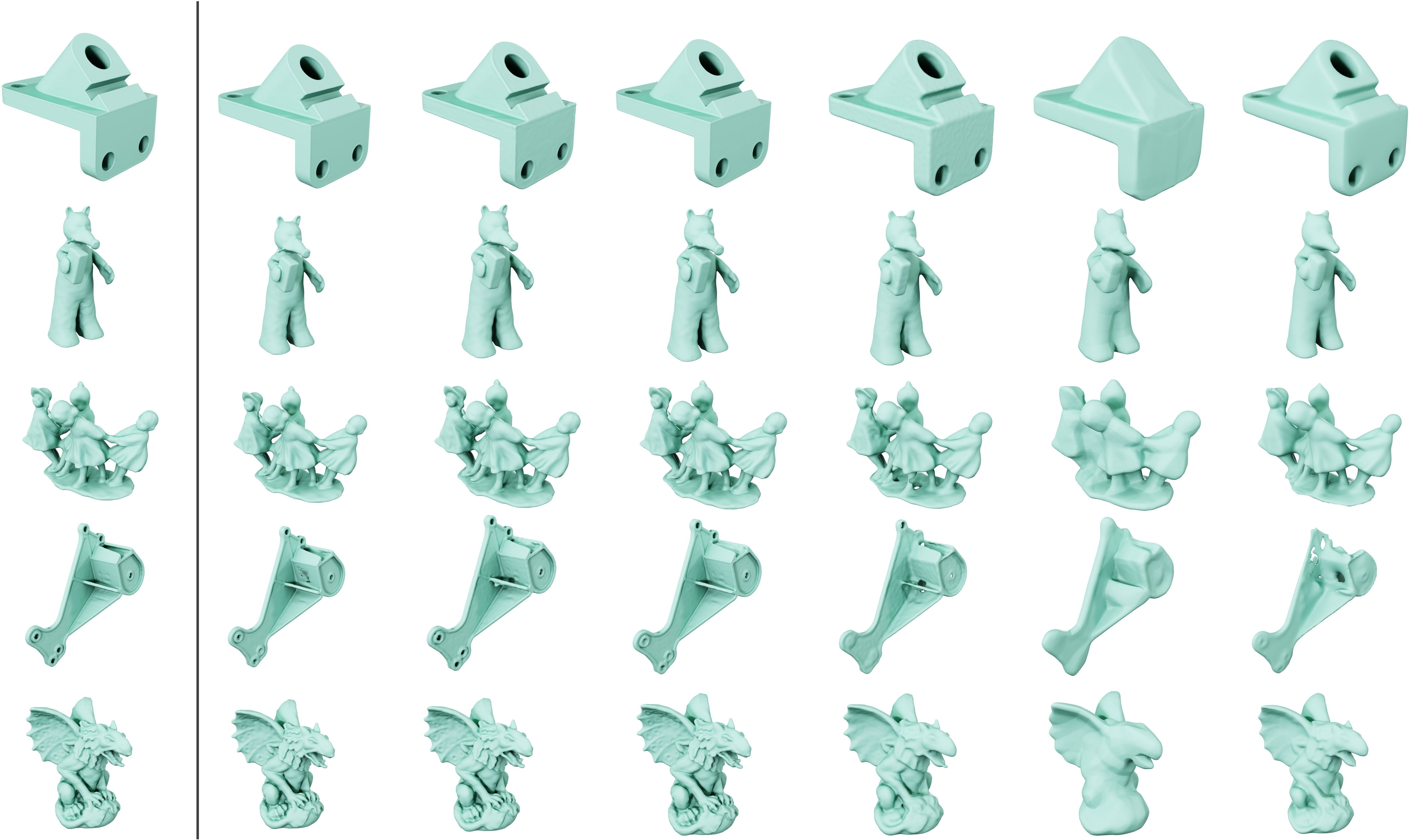
- The paper introduces a variational formulation that integrates medial axis modeling via a phase field approximation to accurately learn signed distance functions from unoriented point clouds.
- It employs a dual-network strategy with SIREN activations and adaptive Monte Carlo quadrature to enforce the eikonal constraint and second-order regularity in SDF reconstruction.
- Experimental results demonstrate state-of-the-art performance with minimal Chamfer and Hausdorff distances, validating the method’s precision in implicit geometry representation.
Introduction and Motivation
The paper "Medial Axis Aware Learning of Signed Distance Functions" (2604.16512) introduces a variational method for learning high-precision signed distance functions (SDFs) from unoriented point clouds. The SDF, which solves the eikonal equation almost everywhere, is pivotal in geometric learning tasks, underpinning applications in implicit geometry representation, collision detection, solid modeling, PDEs on surfaces, and sphere tracing-based rendering.
The authors rigorously incorporate the discontinuity structure of the SDF's gradient—the medial axis—into the loss formulation. Rather than traditional loss terms constrained only to the surface vicinity, their higher-order variational model penalizes second derivatives in normal directions away from the medial axis, while explicitly controlling the (d−1)-Hausdorff measure of the jump set itself. The medial axis is realized via an Ambrosio-Tortorelli-type phase field approximation, simultaneously trained alongside the SDF. This dual-network setup, implemented in PyTorch, abates difficulties associated with the singular, lower-dimensional manifold structure of the medial axis and enables efficient Monte Carlo quadrature via adaptive spatial sampling.
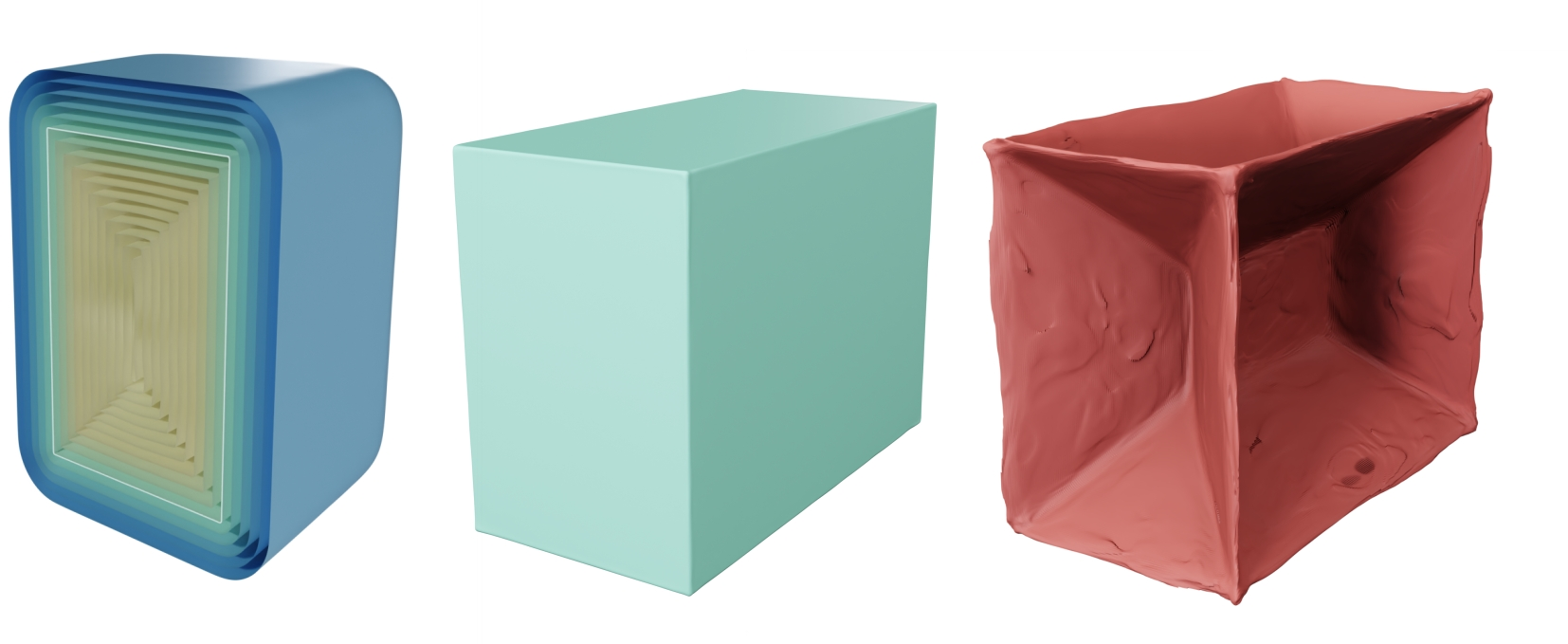
Figure 1: Left: Level sets of the neural SDF of a hexaeder. Middle: Zero-level set representing the surface. Right: Phase field approximation of the gradient jump set coinciding with the medial axis.
At the heart of the methodology is a higher-order variational functional combining three key terms:
- Eikonal Fidelity: Penalizes deviations from the constraint ∥∇ϕ∥=1, enforcing SDF’s character as a viscosity solution.
- Second-Order Regularization: Enforces D2ϕ∇ϕ=0 away from the jump set, capturing linear growth normal to surface level sets, enhancing global SDF robustness.
- Jump Set Measure Control: Directly penalizes the (d−1)-dimensional measure of the jump set, which coincides with the medial axis.
The discontinuity set is modeled via an Ambrosio-Tortorelli phase field function v, satisfying smoothness away from the jump set and decaying near it. Regularization is switched off locally where v is small, thus respecting the physics-driven singularity structure without arbitrarily smoothing the SDF across the medial axis.
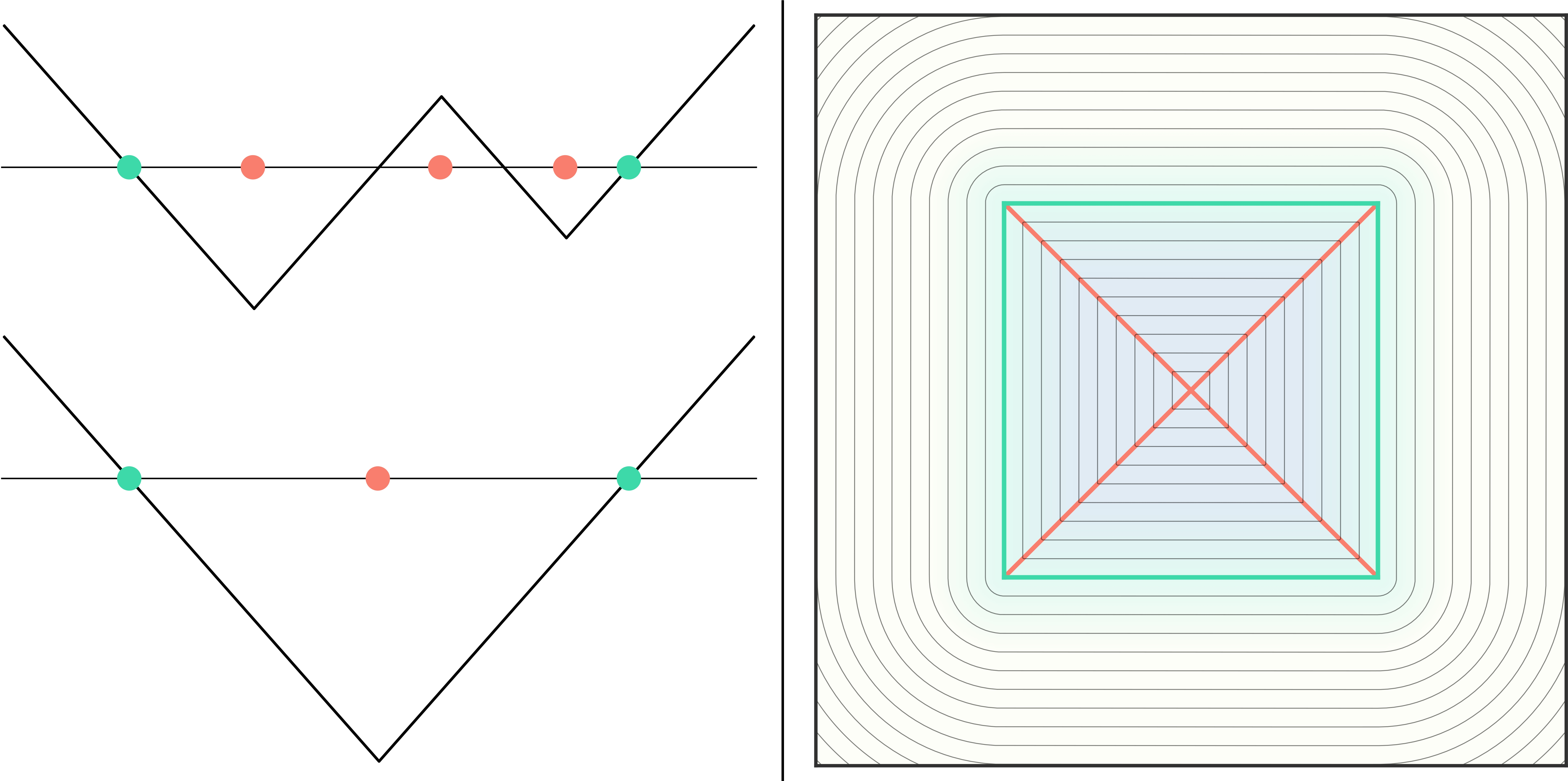
Figure 2: Medial axis and gradient jump sets for 1D and 2D eikonal solutions; equally spaced level sets demonstrate constant slope in normal direction.
The complete loss combines these terms, together with an exponential penalty biasing the SDF towards maximality, as per viscosity solution selection. Analytical guarantees ensure existence of minimizers for the functional and provide recovery of sharp-interface limit behaviors as the phase field parameter tends to zero.
Neural Architecture and Training Strategy
The method leverages two distinct neural networks: a quadratic MLP (QuaNet) for SDF and a ResNet-style network for the phase field. Both employ SIREN activations to ensure high-frequency expressivity. Training proceeds in three phases:
- Stage 1: SDF initialization with high exponential loss to avoid ghost geometry.
- Stage 2: Joint SDF and phase field optimization, progressively enforcing eikonal and higher-order losses.
- Stage 3: SDF fine-tuning with the phase field frozen for computational efficiency.
Monte Carlo integration over adaptive grids is employed to resolve the phase field near the medial axis and surface, increasing spatial resolution in critical regions.
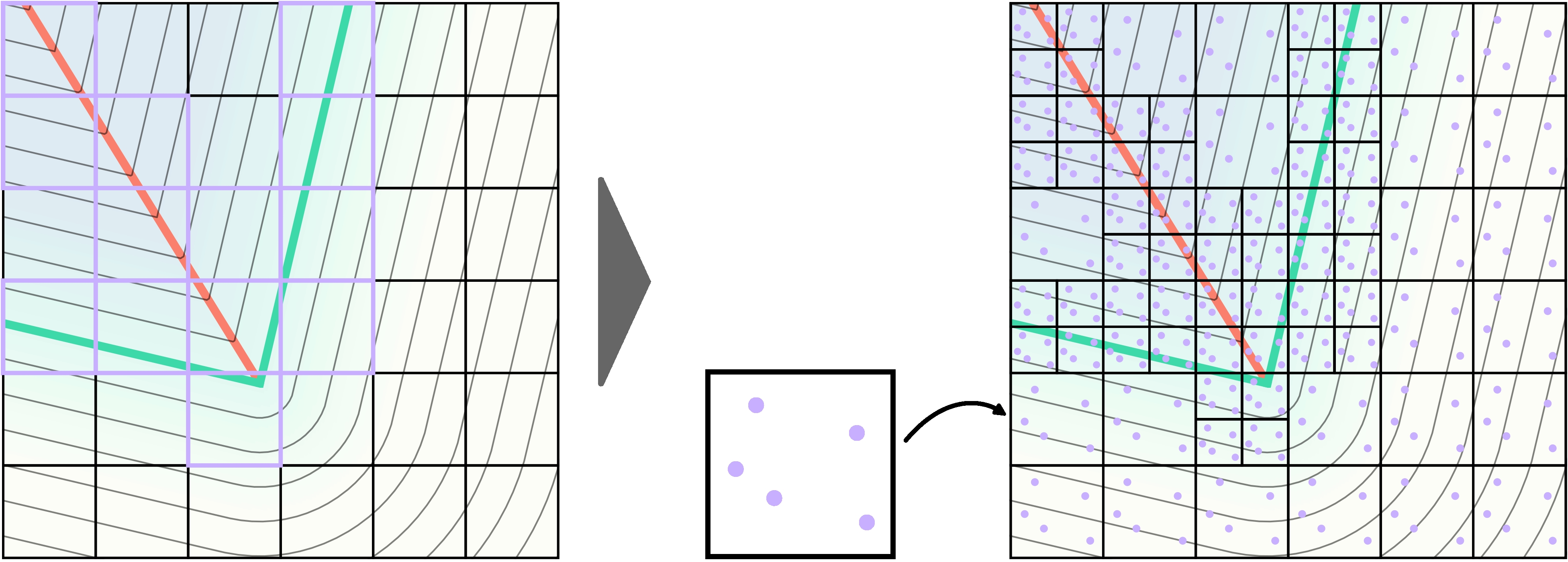
Figure 3: Adaptive sampling strategy using grid subdivision near the surface (where $|\phi_\theta| < \tau_{\mathrm{sdf}$) and medial axis (where $v_\eta < \tau_{\mathrm{pf}$).
Experimental Evaluation and Numerical Results
Experiments are conducted on both 2D and 3D datasets, including the SRB and Thingy10k benchmarks. Evaluation metrics encompass Chamfer distance, Hausdorff distance, normal alignment error, global SDF error, and eikonal error, computed in surface and domain-wide contexts. Qualitative and quantitative comparisons with state-of-the-art methods (HeatSDF, Hessian, HotSpot, 1-Lip, GSD) are comprehensive.

Figure 4: Visual comparison of SDF and phase field reconstructions for 2D shapes with HotSpot and ground truth.
Strong claims are substantiated by the following:
Practical benefits are highlighted via sphere tracing experiments, showing competitive iteration counts per pixel and visually high-quality renderings.

Figure 6: Sphere tracing qualitative results comparing Ours, HotSpot, and Hessian on torus and hand geometries with rendered iteration statistics.
Ablation Studies and Theoretical Discussion
Ablation experiments underline the necessity of phase field regularization: simply enforcing eikonal and second-order losses without explicit medial axis modeling yields less uniform and less accurate SDF reconstructions.
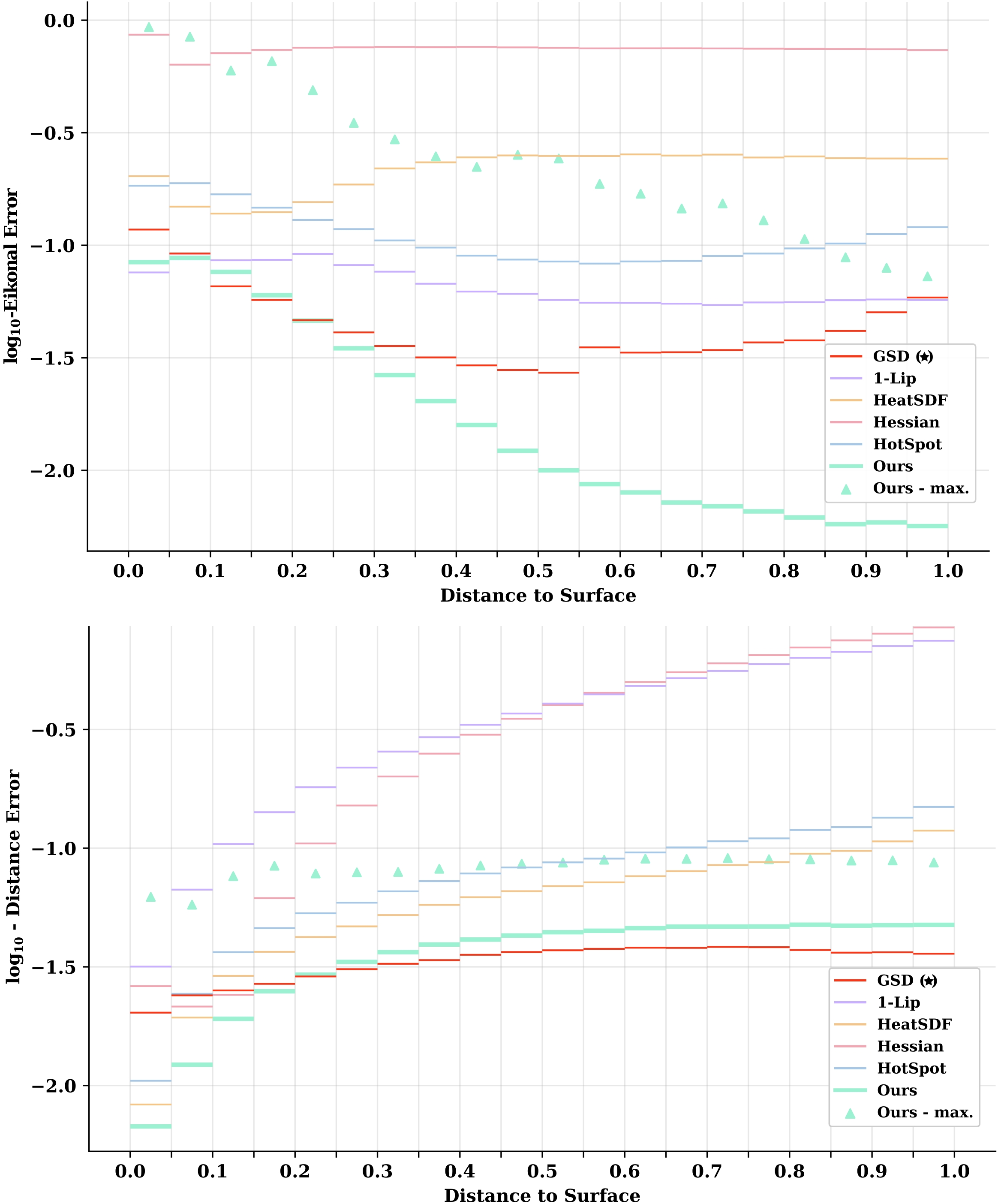
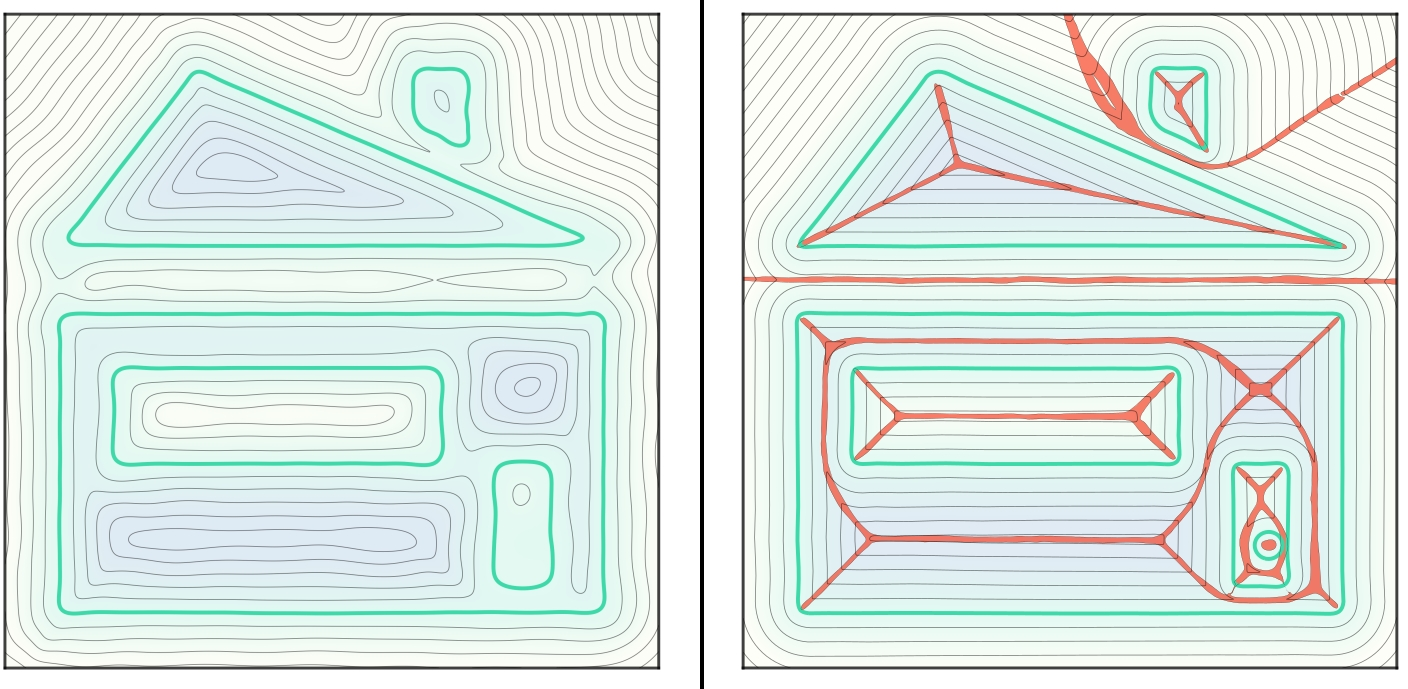
Figure 7: Quantitative eikonal and SDF error versus distance from surface, demonstrating accuracy in narrow bands and global regions.
Theoretical considerations note that while Ambrosio-Tortorelli penalizes only co-dimension 1 components of the medial axis, more complex topologies may require parameter reduction and architectural augmentation. The exponential loss is empirically effective in promoting viscosity solution behavior, but analytical guarantees remain an open question.
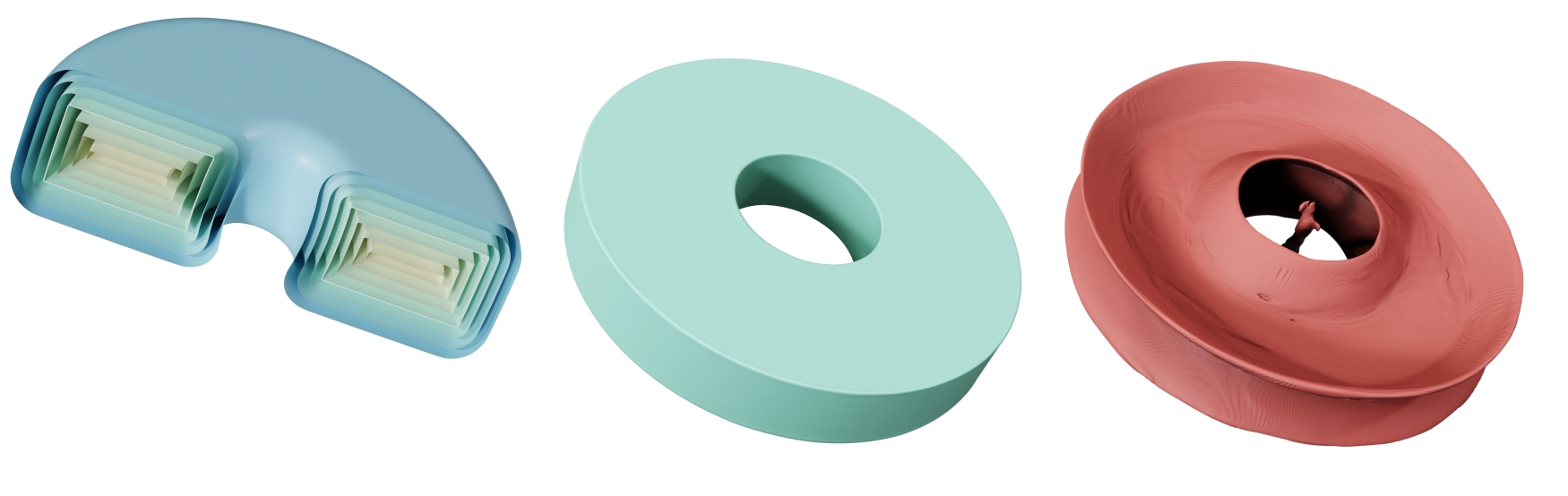
Figure 8: Medial axis phase field approximation on a torus; co-dimension 1 and 2 components are visible in phase field rendering.
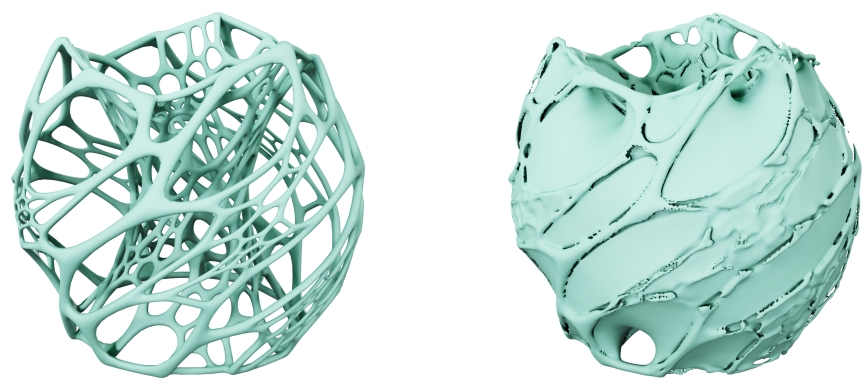
Figure 9: Failure case from Thingy10k illustrating limitations in highly complex topologies.
The second-order variational loss is shown to integrate seamlessly with other SDF approaches, such as HeatSDF, yielding sharper level sets and reduced surface noise.
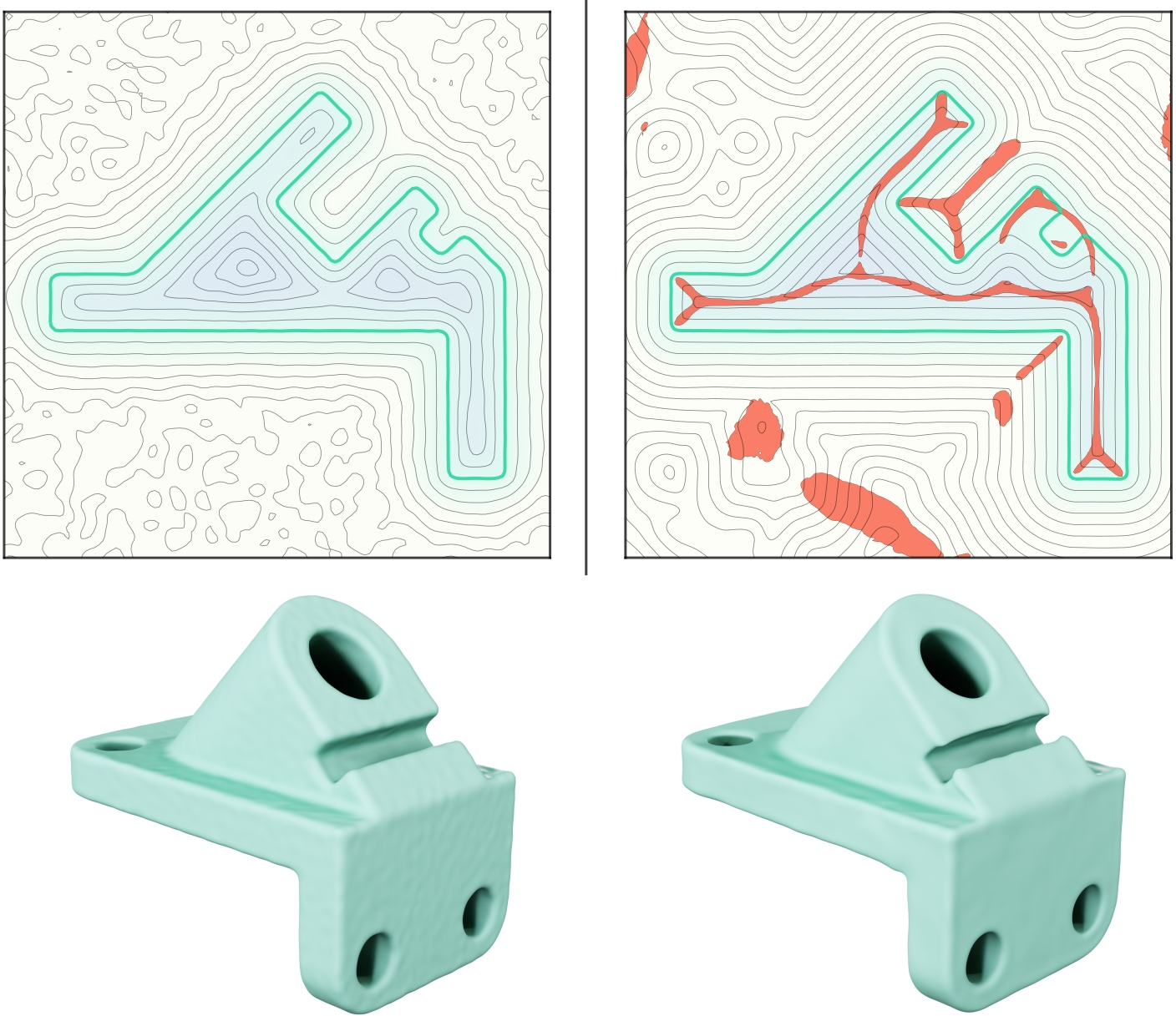
Figure 10: Original and modified HeatSDF with higher-order and phase field regularization: improved level set quality and reduced rendering noise in the variant.
Implications and Outlook
Practically, the variational method with phase field offers robust and accurate SDF recovery from unoriented point clouds without the need for surface orientation or segmentation. The approach is competitive both computationally and in fidelity, with runtimes matching single-network approaches and error metrics exceeding them for surface and distance accuracy. The explicit modeling of the medial axis is theoretically sound and empirically validated.
This framework may be extended for finer geometric representations, integration with gradient-driven PDE solvers, and applications requiring precise implicit geometry such as simulation, robotics, and real-time graphics. Future theoretical analysis is warranted regarding sharp-interface limits, viscosity solution selection, and phase field modeling for highly topologically intricate shapes. The modularity of the second-order regularization suggests broad utility in hybrid SDF learning paradigms.
Conclusion
This work advances the state-of-the-art in neural SDF learning via explicit modeling of the medial axis through phase field regularization, yielding accurate implicit representations both proximal and distal to the surface, robust to unoriented input data. Strong numerical results and extensive comparisons corroborate the methodology. The variational principle and neural phase field implementation enrich the analytic machinery available for geometry learning and modeling, inviting further theoretical and algorithmic development in the intersection of deep learning and geometric analysis.