- The paper introduces a transformer-based RL framework that prunes dynamic exploration graphs to mitigate computational and memory overload.
- The method models pruning as an MDP and leverages a GTrXL encoder with PPO to make sequential decisions under partial observability.
- Experimental results demonstrate up to 96% graph reduction while maintaining consistent coverage across diverse simulated environments.
Learning-Based Sparsification of Dynamic Graphs in Robotic Exploration Algorithms
Overview of Graph Sparsification in Robotic Exploration
The paper "Learning-Based Sparsification of Dynamic Graphs in Robotic Exploration Algorithms" (2604.16509) addresses a key scalability challenge in autonomous exploration: the continuous accumulation of large, redundant graph structures in classical frontier-based exploration and path planning algorithms. As exploration graphs grow, the computational overhead and memory requirements of robots scale adversely, often impeding real-time decision-making and effective environment coverage. The authors propose a hybrid framework: integrating deep RL to learn pruning strategies for dynamically evolving graphs, thereby intelligently limiting graph density during exploration.
The approach reframes sparsification as a sequential decision problem under partial observability, where a transformer-based policy—specifically utilizing Gated Transformer-XL (GTrXL)—is trained with Proximal Policy Optimization (PPO) to prune nodes during exploration episodes. The method leverages spatial regularity through Gaussian Mixture Models (GMMs), mapping policy predictions to variable-sized pruning actions based on node probabilities.
Robotic exploration algorithms, notably those based on Rapidly Exploring Random Trees (RRT), maintain dynamic graphs representing navigable frontiers and waypoints. As the robot explores, graph complexity escalates. Existing approaches either rely solely on algorithmic pruning based on heuristic criteria or on fully learned policies for exploration, each with limitations in adaptability or sample efficiency.
This work models intelligent pruning as a Markov Decision Process (MDP) with partial observability. Input states consist of tokenized environment images that encode both map and graph overlays, processed via ViT-style patch embedding followed by positional augmentations. The GTrXL encoder harnesses long-term dependencies for sequential pruning, critical for associating actions with delayed terminal rewards.
Actions are parameterized through GMMs, with the actor head predicting mixture parameters that induce spatial probability distributions. Rather than directly selecting nodes, the framework probabilistically prunes nodes whose coordinates correspond to GMM maxima, thereby enabling fixed-size action spaces even as the graph changes.
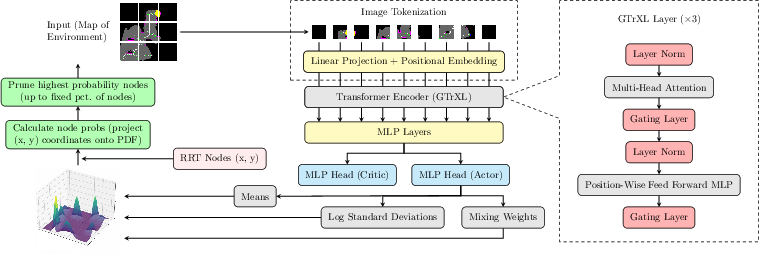
Figure 1: Framework architecture for dynamically encoding environment states, extracting features, and mapping actor predictions to spatial pruning probabilities via GMM.
The reward schema combines per-node penalties or bonuses based on structural role (frontier, leaf, split), a per-timestep pruning penalty discouraging excessive destructiveness, and an exponentially scaled terminal reward proportional to final environment coverage.
Experimental Results and Quantitative Evaluation
The authors evaluate their approach using custom 2D grid simulations of randomly populated environments. Under a fixed exploration budget, robotic agents using the RL-trained pruning policy achieve significant reductions in graph size—up to 96% smaller than unpruned graphs, as visualized below.
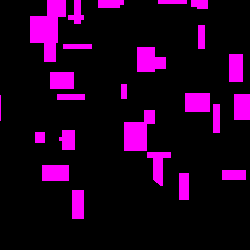
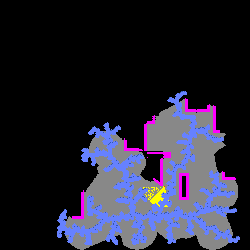
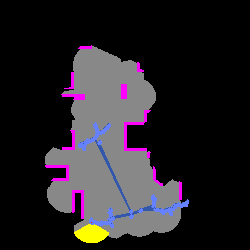
Figure 2: Environments and exploration progress with and without pruning. Up to 96% graph reduction is attained without catastrophic loss of coverage.
Learning dynamics are tracked across 106 timesteps. The value loss halves rapidly, and average reward and percent coverage curves stabilize after 400k–600k steps, indicating the policy effectively learns the relationship between pruning decisions and final mapping progression.

Figure 3: Training cycle metrics—value loss, reward, and coverage—demonstrate stable policy convergence.
Intelligent pruning, though leading to a mean coverage (42.84%) lower than both random pruning and unpruned baselines (approx. 71%), achieves the lowest standard deviation in coverage across diverse environments (±7.76%), underscoring the policy's consistency. The comparable performance between random pruning and no pruning for coverage suggests strong robustness of classical frontier-based exploration to sparsification; randomization does not degrade performance substantially unless intelligent pruning parameters are suboptimally restrictive.
Analysis of Action Parameterization and Bottlenecks
The expressivity of the GMM action parameterization is posited as a core bottleneck. Initial experiments introducing structured noise to GMM outputs yielded a 2.5× increase in early reward and 1.3× increase in initial coverage over primary settings, pointing to possible improvements through alternative probability density functions or hybrid pruning strategies.
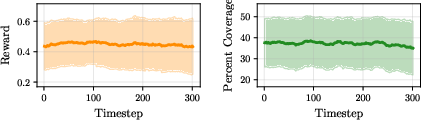
Figure 4: Noisy GMM parameterization accelerates initial exploration metrics, highlighting action space limitations.
The framework demonstrates resilience on random pruning, suggesting that baseline sparsification could augment more sophisticated RL-based approaches, potentially via pre-pruning or adaptive hybrid policies. Further, the paper suggests the possibility of integrating more expressive models, e.g., non-Gaussian densities, or environment-conditioned mixture selection, to surmount GMM expressivity constraints.
Practical and Theoretical Implications
This work advances RL-based graph sparsification from static and supervised settings to dynamic, sequential decision-making in robotics. The hybridization of classical RRT and transformer-driven RL delivers empirical consistency in exploration outcomes, enabling robots to perform frontier-based exploration with drastically reduced information overhead.
Practically, such a framework can underpin large-scale multi-robot systems or search-and-rescue deployments, where onboard memory and computational efficiency are crucial. The ability to learn pruning policies from delayed, sparse rewards is theoretically notable—demonstrating that deep RL architectures can form spatially regularized action spaces and assign credit effectively across long exploration horizons.
Challenges persist in scaling to real-world, high-clutter or uncertain environments, where SLAM errors and sensor noise dominate. Further investigations in policy generalization, adaptive action-space parameterization, and validation on physical agents comprise essential future directions. The interplay between graph sparsification and task-specific reward shaping (e.g., information gain, energy efficiency) will likely influence downstream robot autonomy and resilience.
Conclusion
The presented transformer-based RL framework establishes the feasibility of intelligent sparsification in dynamic exploration graphs, reducing graph size by up to 96% and yielding highly consistent coverage performance across environments. While coverage rates lag behind classical baselines due to action-space limitations, preliminary evidence advocates for more expressive parameterizations and hybrid pruning strategies. The results open new avenues for scalable, robust autonomous exploration, suggesting that RL-based graph pruning can appreciably mitigate computational burdens without catastrophically impairing exploration efficacy.