- The paper rigorously compares four I–V amplifier architectures—ILA, RILA, ILOGA, and MILAC—for quantum transport metrics.
- The study employs STM-BJ and MCBJ setups to evaluate noise, dynamic range, and calibration performance for atomic and molecular junctions.
- Findings provide practical guidelines for amplifier selection, highlighting tradeoffs between simplicity and extended dynamic range in quantum metrology.
Comparative Analysis of Current-to-Voltage Amplifiers for Quantum Transport in Atomic and Molecular Junctions
Introduction
The manuscript "Benchmarking Current-to-Voltage Amplifiers for Quantum Transport Measurements" (2604.16269) presents a comprehensive experimental benchmarking of four I–V amplifier architectures—single-stage linear (ILA), series-linear (RILA), logarithmic (ILOGA), and a custom cascaded multi-stage (MILAC)—in the context of quantum transport using break junction techniques. The study delivers a highly systematic evaluation of these architectures, emphasizing critical metrics such as noise performance, dynamic range, and measurement reliability, with direct consequences for single-molecule and atomic-scale conductance metrology.
Experimental Framework and Architectures
The two canonical platforms for quantum transport—STM-based break junctions (STM-BJ) and mechanically controllable break junctions (MCBJ)—were deployed as testbeds for amplifier evaluation.
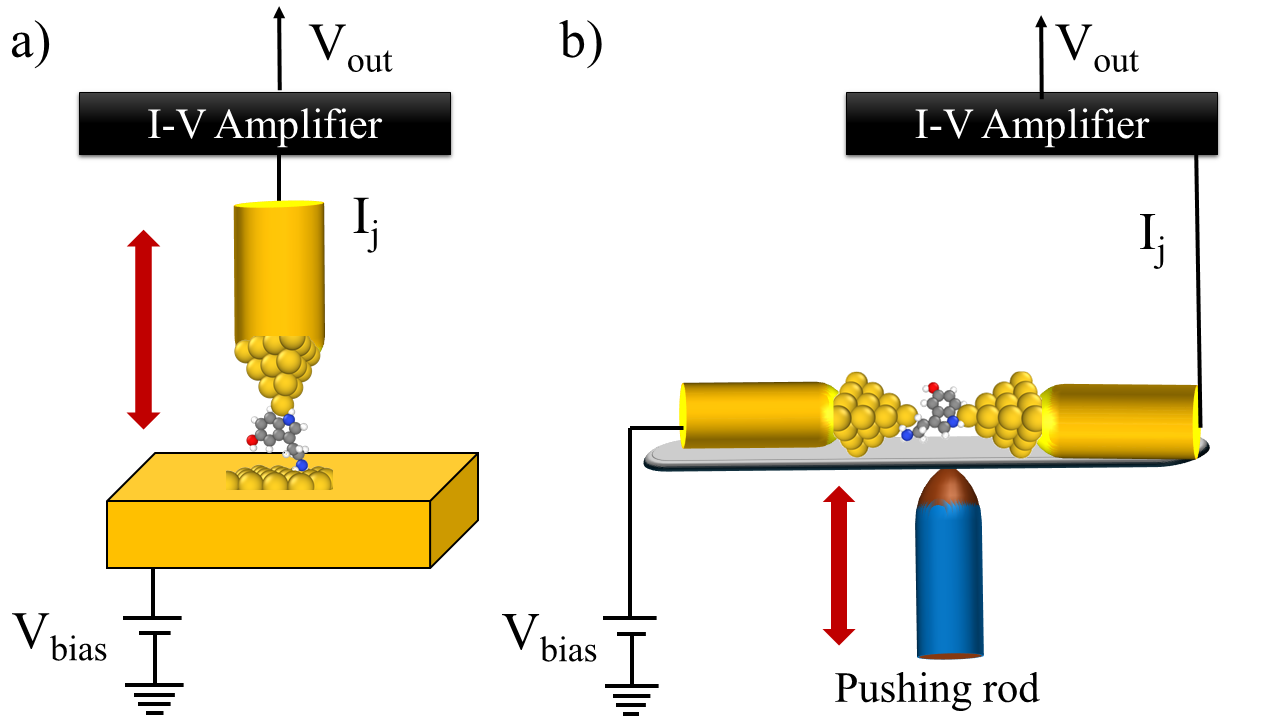
Figure 1: Schematic representations of the STM-BJ and MCBJ experimental platforms integrating a single-molecule junction with a piezo-driven actuation.
All current-to-voltage conversion circuits were positioned downstream from the nanoscale junction, with the DAQ managing both bias and piezoelectric actuation and recording amplifier output for post-processing.
Four I–V architectures were compared:
- ILA (Single-Stage Linear): A canonical transimpedance Op-Amp configuration, offering lowest noise and highest fidelity under high-conductance (metallic) regimes, but limited dynamic range.
- RILA (Series-Linear): Introduces a series resistor to the ILA to extend the measurable conductance downward and prevent amplifier saturation but at the expense of increased nonlinearity near saturation.
- ILOGA (Logarithmic): Employs the LOG104 IC to compress several orders of magnitude into a single voltage output, sidestepping the need for hardware gain switching; includes substantial trade-offs in nonlinearity and noise at the lower bounds.
- MILAC (Multi-Stage Cascaded Linear): Three-step cascaded amplification for an extended, linear dynamic range, requiring post-acquisition software-based stage-merging and calibration to concatenate outputs seamlessly.

Figure 2: Schematic diagrams for ILA, RILA, ILOGA (LOG104-based), and MILAC amplifier circuits, indicating critical gain-defining components and signal paths.
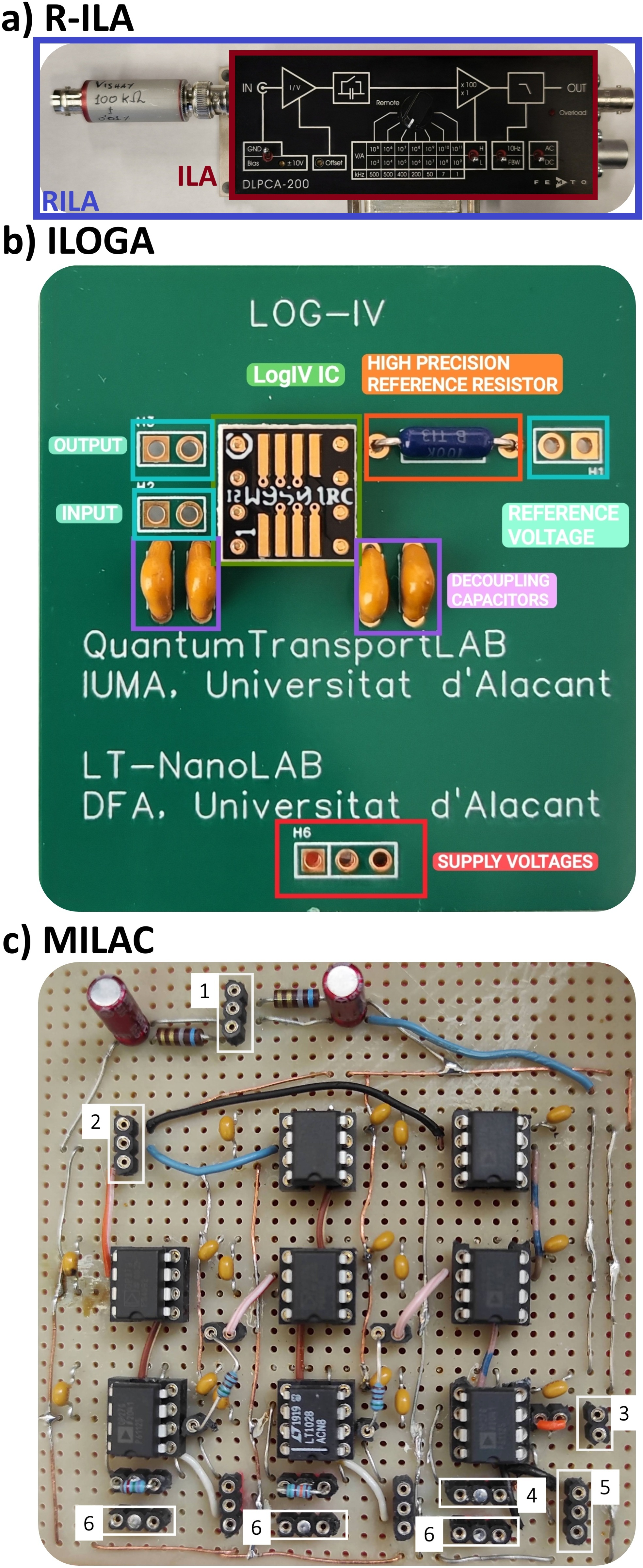
Figure 3: Photographs of hardware realizations for ILA, RILA, ILOGA (custom PCB), and MILAC (multi-stage protoboard).
Calibration and Dynamic Range Analysis
Conductance conversion frameworks and calibration routines for each architecture were addressed in detail, accounting for practical aspects of DAQ saturation, gain selection, and output polarity management. The study presents explicit conversion equations and validates these with systematic benchmarking against known resistances.
To quantify real performance, both the nominal and practical ‘credible’ dynamic range of each architecture is determined, factoring in hardware-imposed artefacts (parasitic capacitance, RC delays), DAQ digitization, and electronic noise. Especially for ILOGA and MILAC, extended characterization involving reference resistance/voltage optimization (for ILOGA) and gain-stage alignment (for MILAC) was performed.
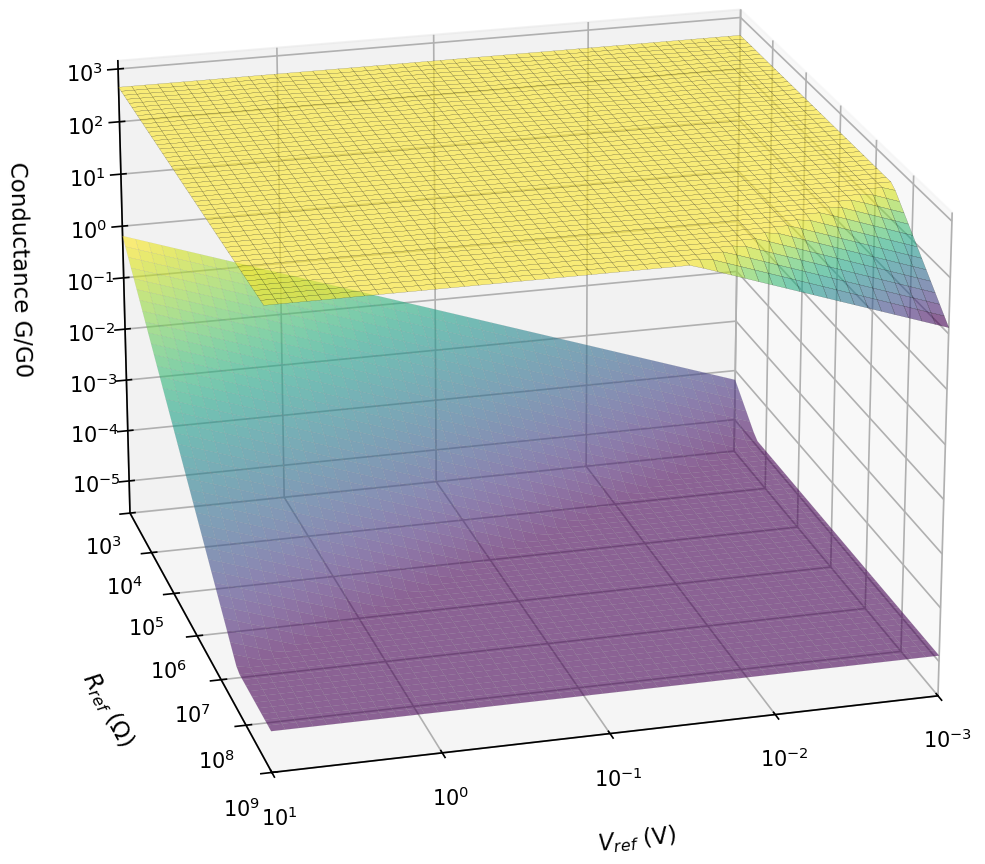
Figure 4: Theoretical upper and lower conductance bounds for the ILOGA architecture, highlighting the dependence on reference current parameters.
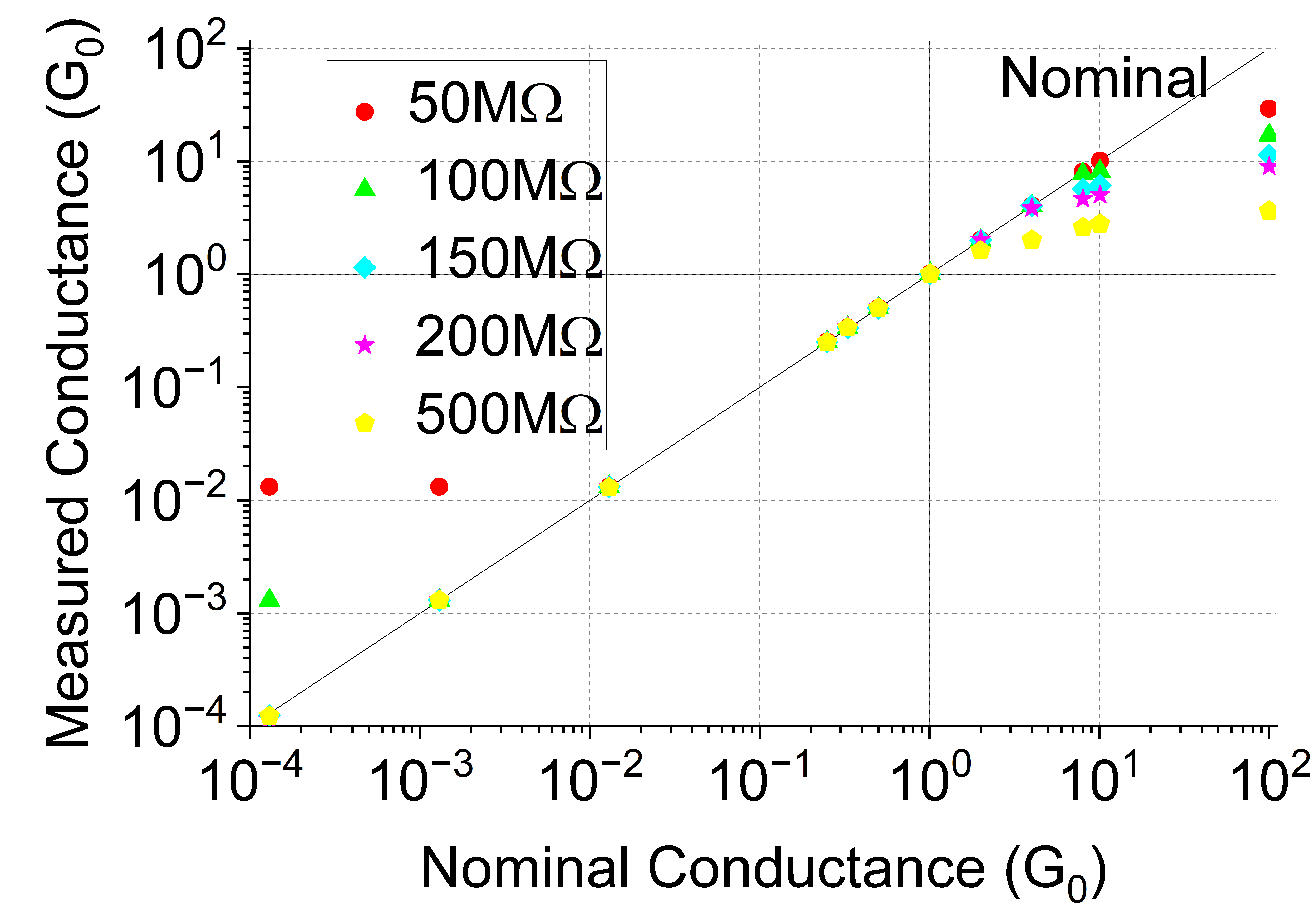
Figure 5: Deviation of measured conductance from nominal values as a function of reference resistance in ILOGA.
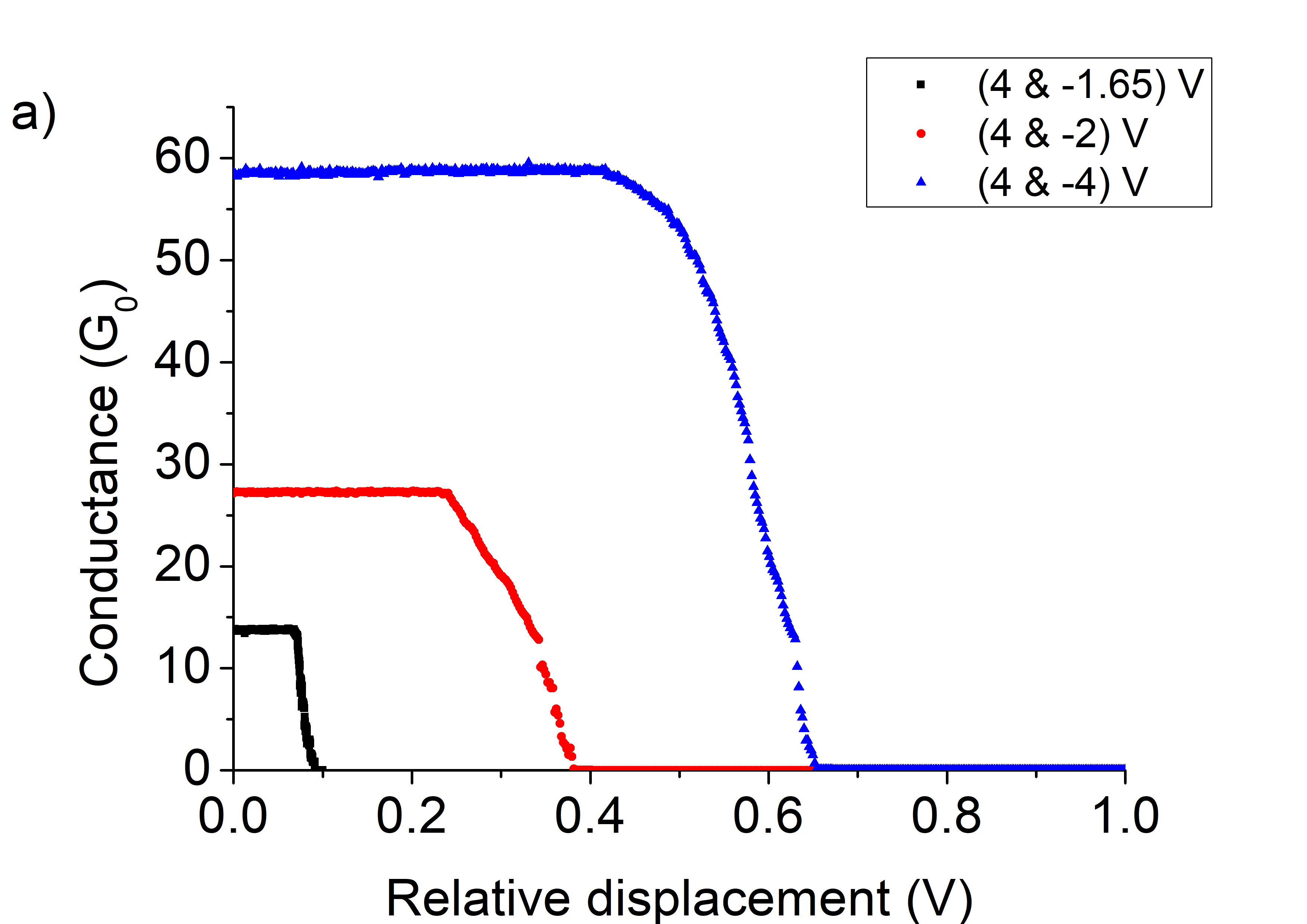
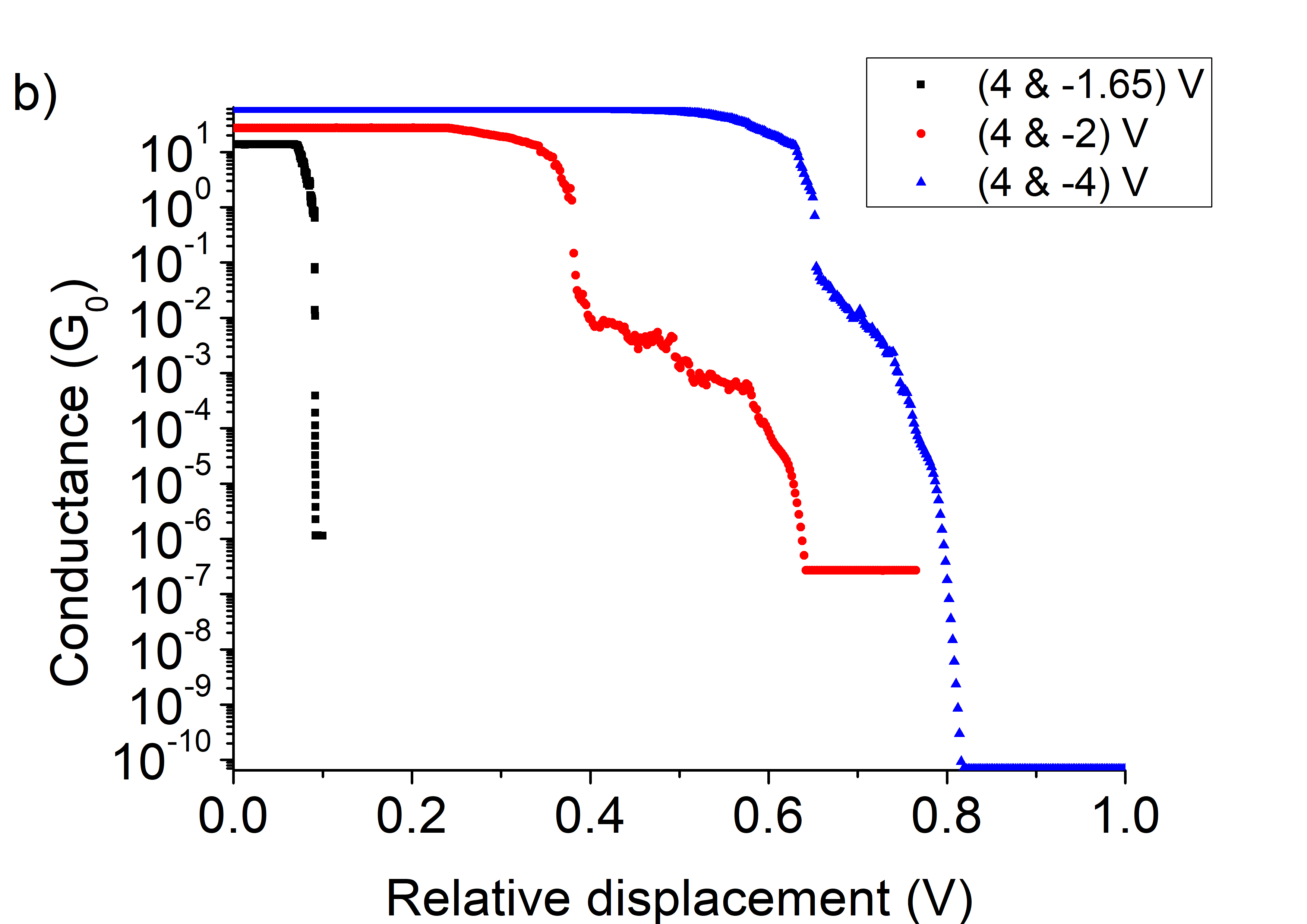
Figure 6: Effect of supply voltages on the ILOGA measurable window, showing limitation at both high and low conductance limits due to saturation and noise.
The MILAC system required particular attention to signal merging across stages, with post-processing (LabVIEW/VIs) to reconstruct seamless conductance traces and histograms.
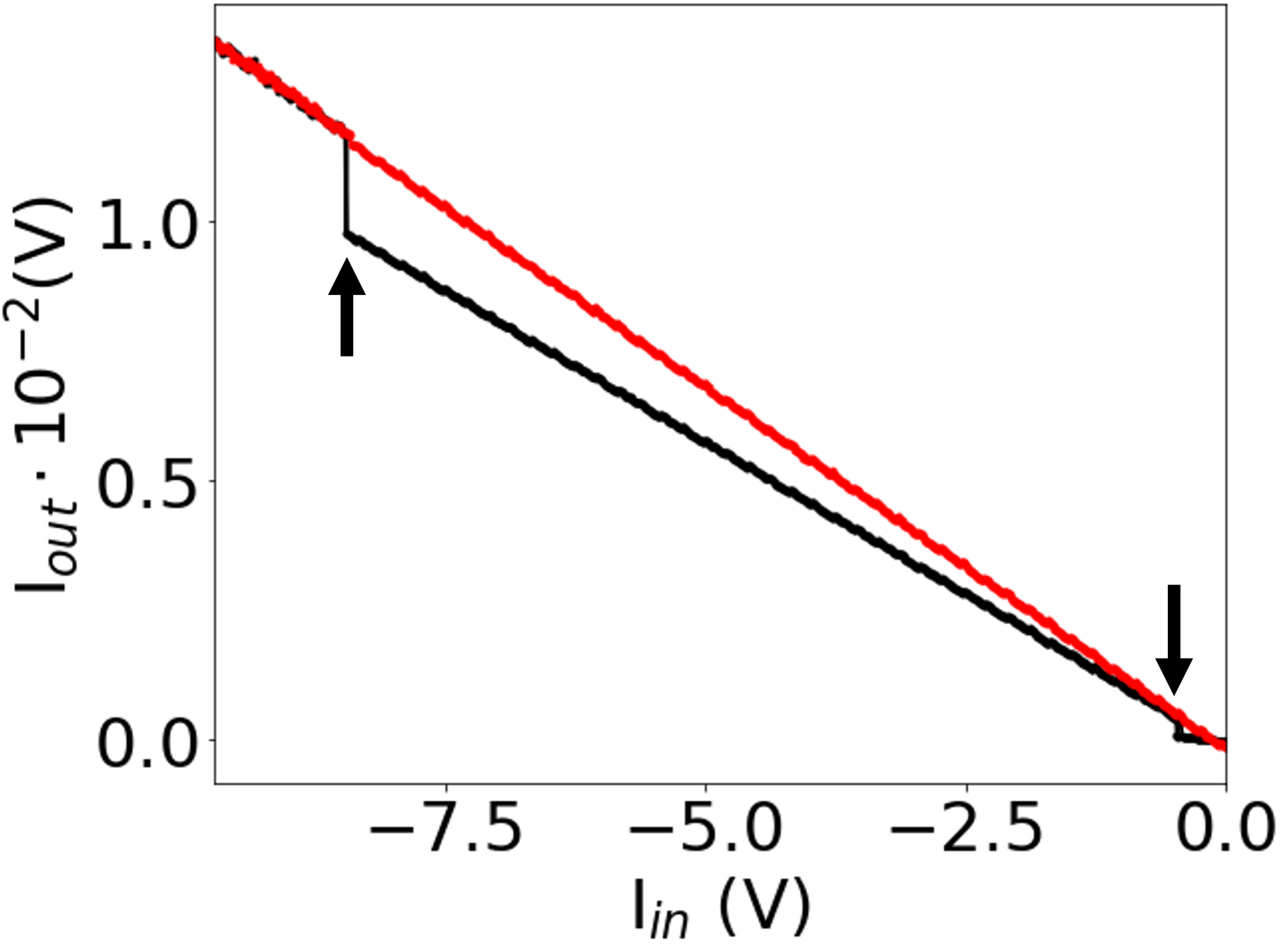
Figure 7: Evaluation of signal merging accuracy for the MILAC system, showing necessity for precise calibration to avoid artifacts.
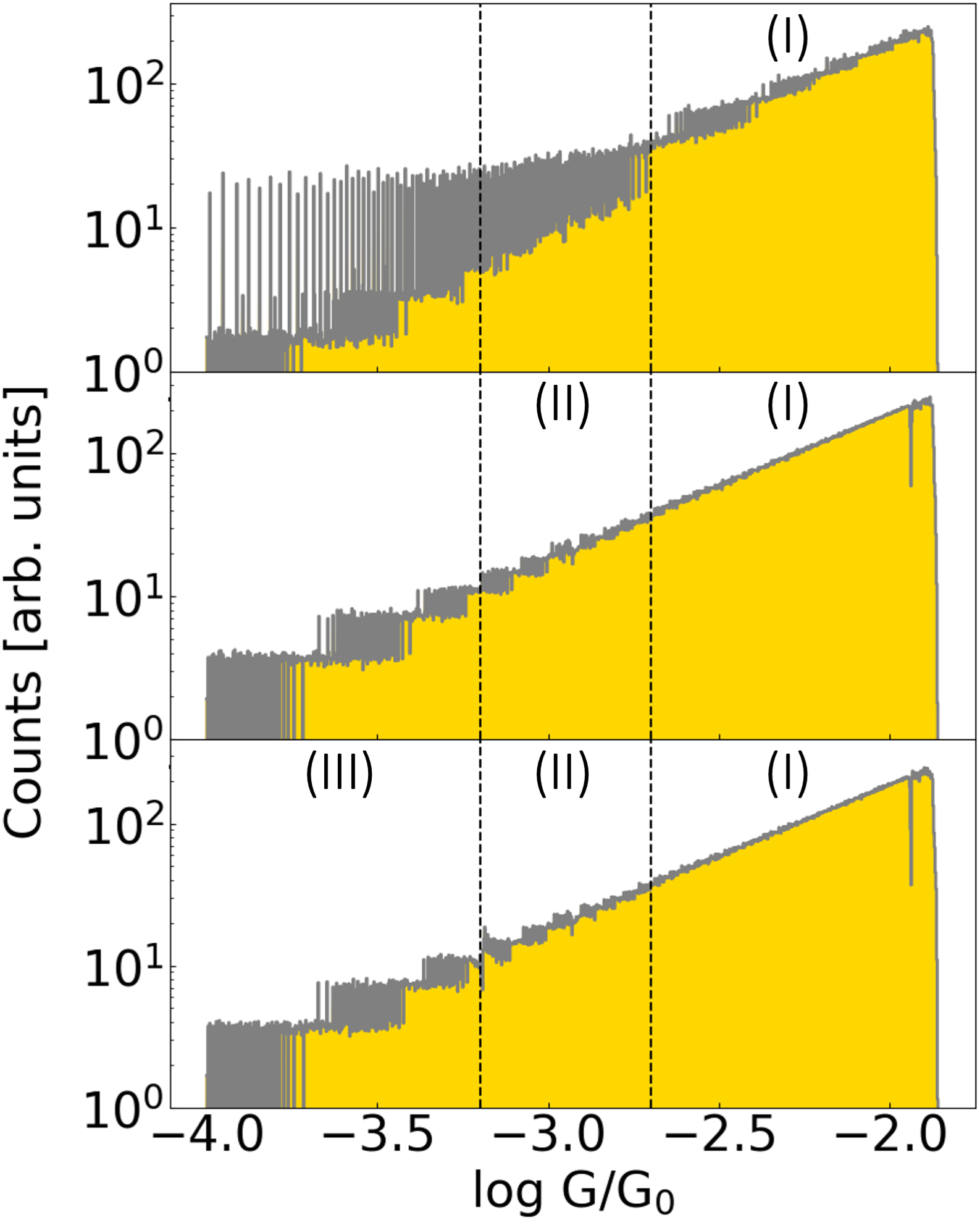
Figure 8: Stacked histograms for current/noise contributions at each MILAC amplification stage, quantifying progressive noise floor suppression.
Direct measurements on gold atomic junctions validated the effective range and performance of each amplifier. Explicit conductance traces and normalized histograms (log-scale) revealed distinct behavioral boundaries, artefacts, and detection limits.
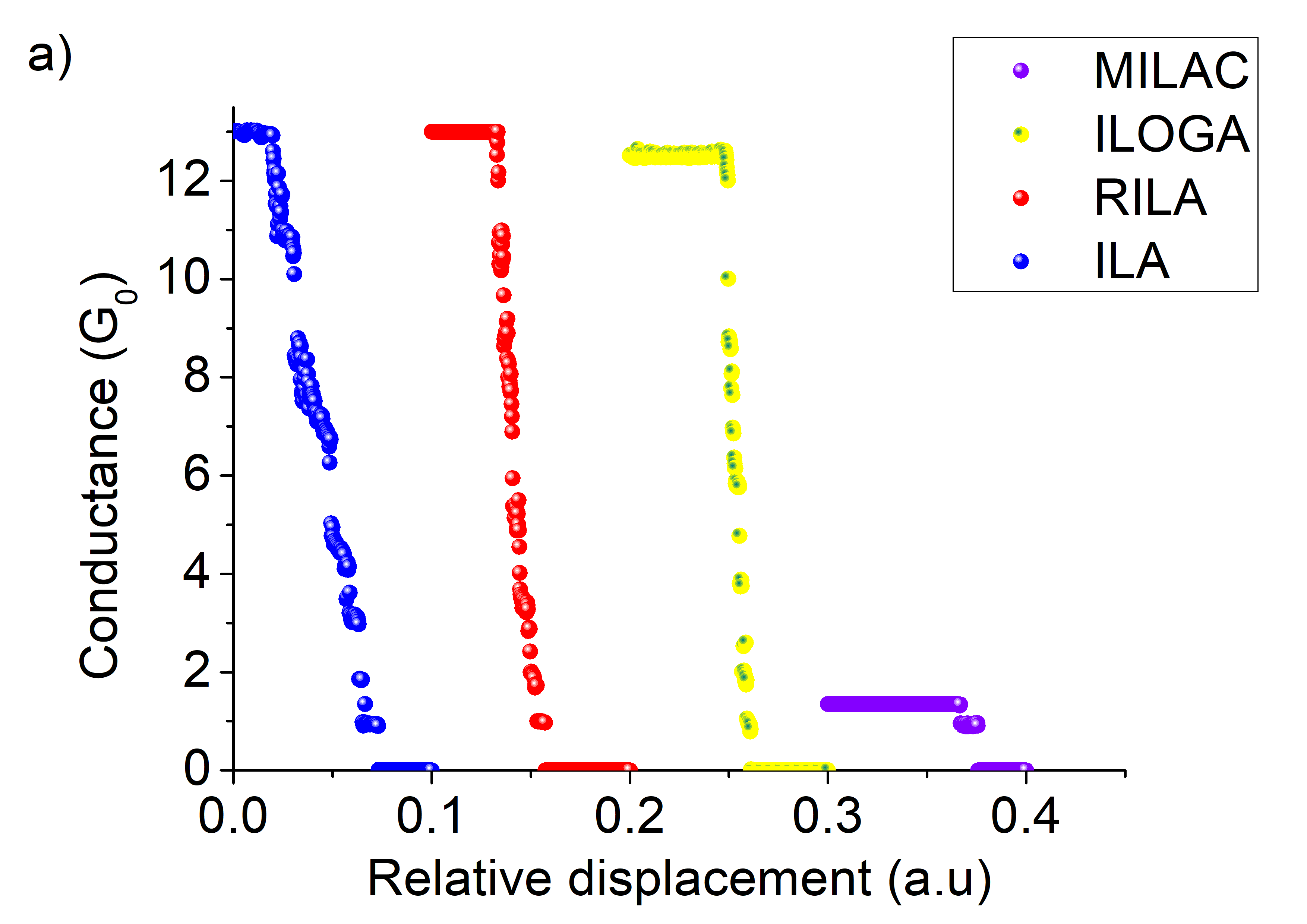
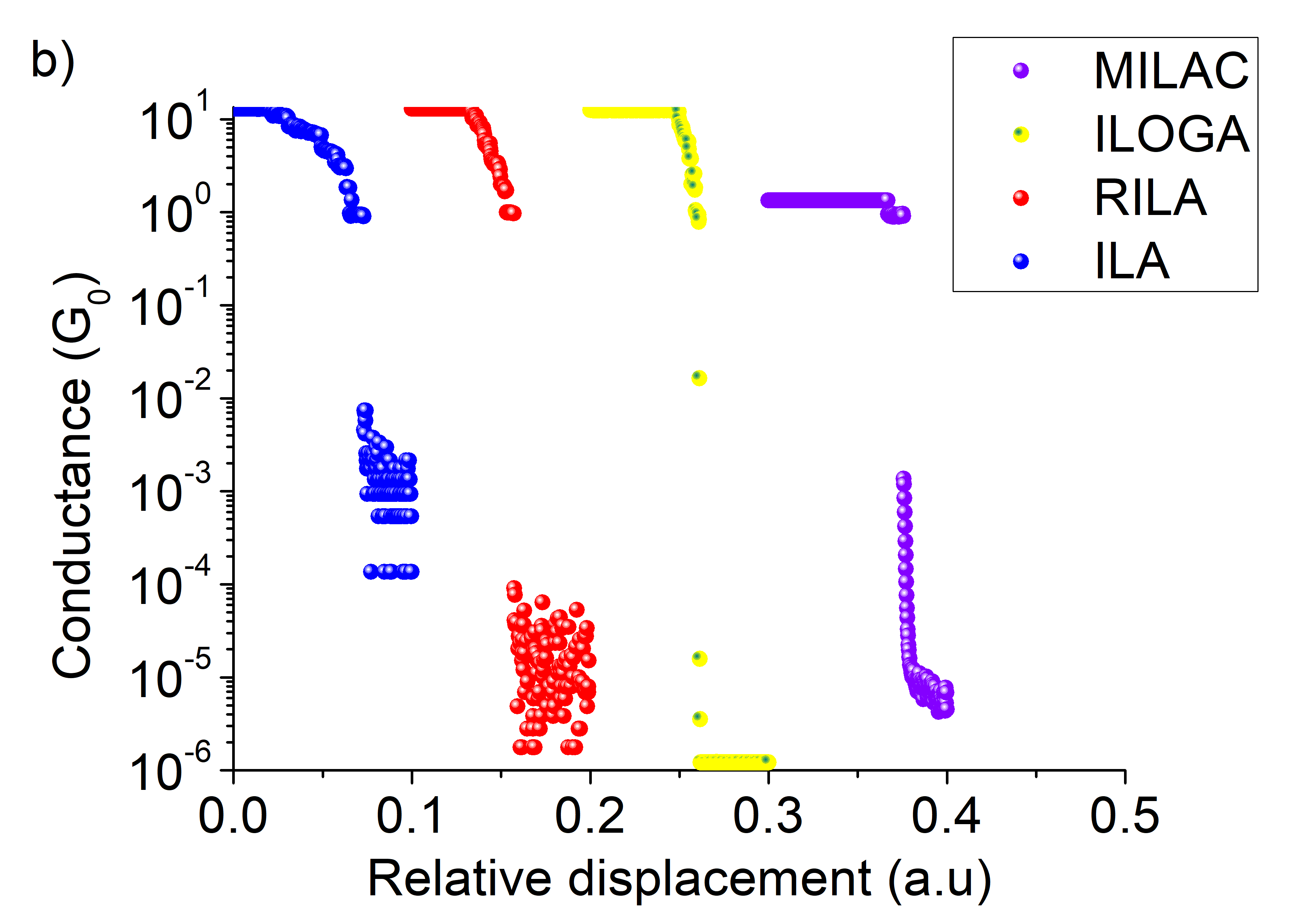
Figure 9: Representative breaking traces (linear and log-scale) in gold atomic junctions as measured by ILA, RILA, ILOGA, and MILAC.
ILA is limited by saturation and noise at 10−2G0; RILA extends down to about 10−4G0 but with nonlinearity. ILOGA compresses the signal, with an artefactual extension in measurement; credible range is reliably only down to 10−4G0 due to increased settling times and high susceptibility to artefacts near the noise floor. MILAC achieves time-resolved, wideband, linear performance over six orders of magnitude ($1.2$ to 10−5G0), albeit with complexity and a sensitivity to capacitive artefacts at low conductance.
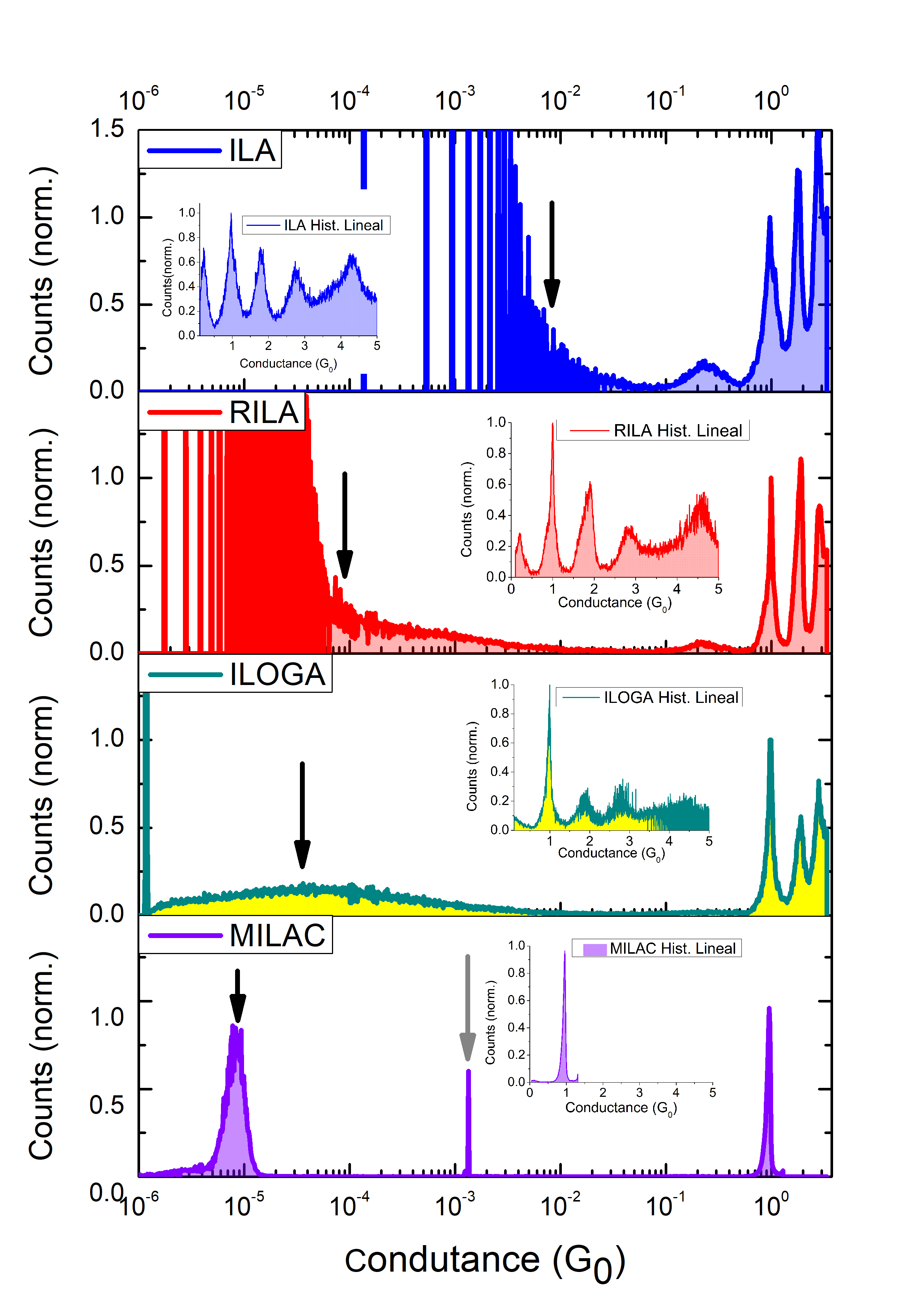
Figure 10: Normalized conductance histograms for all architectures. Black arrows indicate credible range, and gray arrow in MILAC highlights artifacts due to merging and contamination.
The study also details contamination recognition, filtering, and RC/capacitive artefact identification procedures—critical for avoiding the misattribution of instrumental features to physical quantum transport phenomena.
Discussion and Implications
The results deliver clear practical guidance: for metallic contacts, ILA or RILA suffice with minimal complexity; for molecular junctions and comprehensive dynamic range requirements (i.e., across several decades in conductance), ILOGA offers compression at the expense of linearity and potential artefacts, while MILAC approaches the ideal of seamless, artifact-free, extended-range, time-resolved measurement, subject to higher hardware and calibration complexity.
Notably, the study highlights:
- A rigorous separation between the nominal and credible conductance range, underlining the need for careful interpretation of ‘noise floor’ and ‘saturation’ as observed in typical quantum transport datasets.
- The inadequacy of non-specialized amplifiers or uncalibrated logarithmic designs for precision molecular transport measurements demanded in reproducible quantum device metrologies.
- Scalability and diagnostic relevance: The benchmarking framework is directly portable to 2D materials, van der Waals interfaces, and spintronic platforms, where similar requirements for high-dynamic-range, low-noise measurement persist.
Conclusion
This paper provides a definitive, quantitative comparison of key I–V0 amplifier architectures for quantum transport experiments, including extensive technical evaluation of artefact sources and practical guidelines for optimal amplifier selection. ILA and RILA are recommended for robust, high-fidelity metallic measurements, while ILOGA and MILAC enable multi-decade dynamic range with associated tradeoffs in complexity and post-processing requirements. These results establish an essential metrological baseline and diagnostic framework for nanoscale transport studies, facilitating reliable differentiation of genuine quantum signatures from instrumental artefacts.

