- The paper introduces a max-linear prediction framework employing excursion metric projections and Wasserstein distance to forecast heavy-tailed random fields.
- It demonstrates numerical implementation via stochastic gradient descent and the Adam optimizer, validating predictions on simulated models and real precipitation data.
- Key theoretical contributions address existence, non-uniqueness, and optimization challenges, enabling scalable and law-preserving extreme-value forecasting.
Extrapolation of Max-Stable Random Fields with Fréchet Marginals
Overview
The paper "Extrapolation of max-stable random fields with Fréchet marginals" (2604.16206) introduces a robust statistical methodology for predictive inference on stationary max-stable processes and random fields with heavy-tailed α-Fréchet marginal distributions. Addressing the inadequacy of classical kriging-based methods for extremes and the computational burdens of conditional sampling, the authors formalize extrapolation and prediction through excursion metric projections and Wasserstein penalization, connecting their approach explicitly to the Davis-Resnick distance. Critical existence, non-uniqueness, and numerical tractability results are derived, and the method is demonstrated across simulated Brown-Resnick, Smith, extremal Gaussian fields, and real precipitation data.
Core Methodology
Max-Stable Prediction Framework
The prediction functional is constructed as a max-linear combination that preserves the marginal law. Given observations at sites Tf={t1,…,tn}, the predictor for an unobserved site t0 is defined as X^λ=maxjλjXtj, with the weights λ selected by solving:
λ^=argλ∈Λmin{EHα(X^λ,Xt0)+γω22(Hα,Law(X^λ))}
where EHα is the excursion metric with respect to the α-Fréchet distribution, ω22 is the squared 2-Wasserstein distance, and γ is a penalty parameter calibrating marginal law preservation.
This approach bypasses moment assumptions and enables prediction for heavy-tailed processes (Tf={t1,…,tn}0) that are not amenable to Tf={t1,…,tn}1 methods.
Theoretical Contributions
Excursion Metric Analysis
The excursion metric is defined for random variables Tf={t1,…,tn}2 with measure Tf={t1,…,tn}3 as:
Tf={t1,…,tn}4
The authors show explicit connections between Tf={t1,…,tn}5 and the Davis-Resnick metric for max-stable random variables, e.g., for Tf={t1,…,tn}6:
Tf={t1,…,tn}7
This equivalence extends to metric projections, facilitating optimization in practical forecast settings.
Law-Preserving Constraint and Optimization
The prediction weights are constrained to ensure that Tf={t1,…,tn}8 and Tf={t1,…,tn}9 are identically distributed, formalized as:
t00
Given the geometric complexity of this locus, the practical algorithm employs t01 with penalization by Wasserstein distance, enabling tractable simulation-based optimization.
Non-Uniqueness and Existence
It is rigorously established that the metric projection is non-unique in general, particularly under exchangeability and independence conditions of the random field. The geometric interpretation of the feasible weights reduces to the boundary of a convex subset (often a simplex or ellipsoid), and optimization problems are shown to possess solutions due to compactness.
Numerical Implementation
Stochastic Gradient Descent and Empirical Metrics
The paper details practical solution strategies using stochastic gradient descent (SGD) and the Adam optimizer, robustly handling the non-differentiability of the objective in high dimensions and providing empirical convergence evidence. The optimization functional is evaluated by bootstrapped empirical distributions from learning samples.
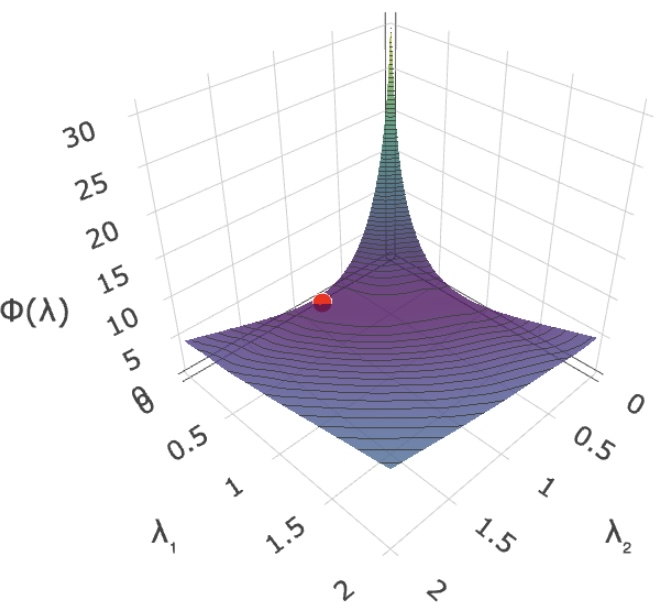
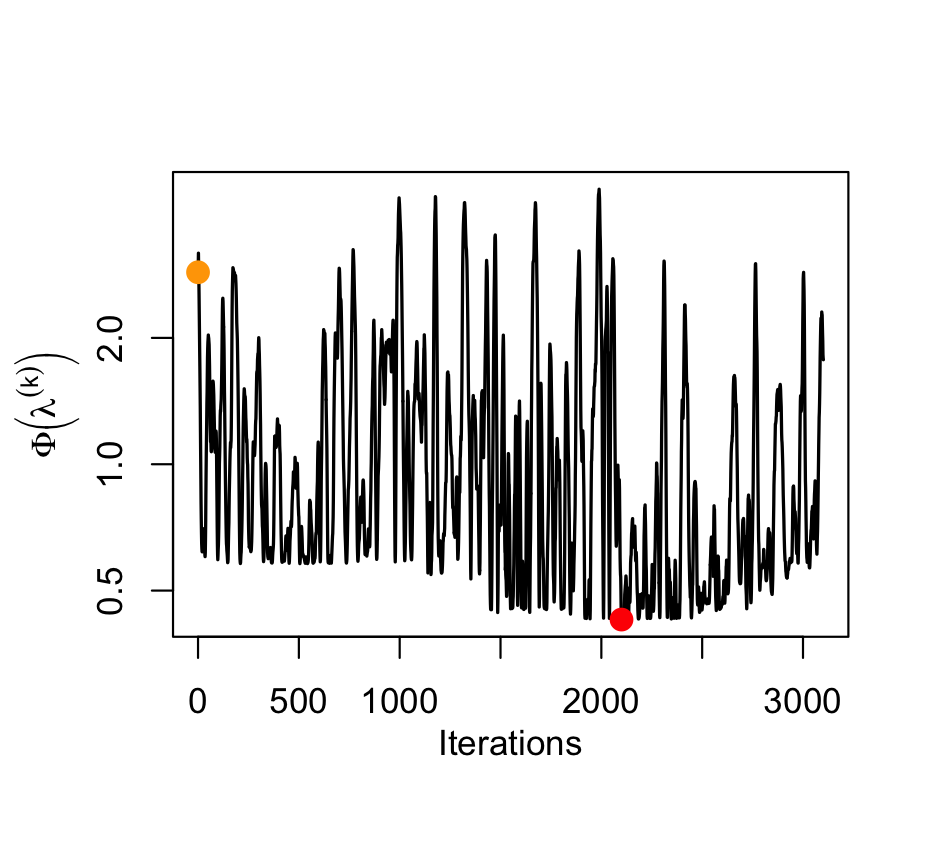
Figure 1: The left plot shows the function t02 associated to the Brown-Resnick process, with SGD solution surface and Adam optimizer convergence.
Simulation Results
Max-Stable Process Prediction
Twenty-step ahead predictions are compared for Brown-Resnick, Smith, and extremal Gaussian models, with varying dependence regimes (t03). The empirical and theoretical excursion metric trajectory for each forecast horizon validates the law-preserving approximation and quantifies stochastic independence as excursion metric approaches t04.
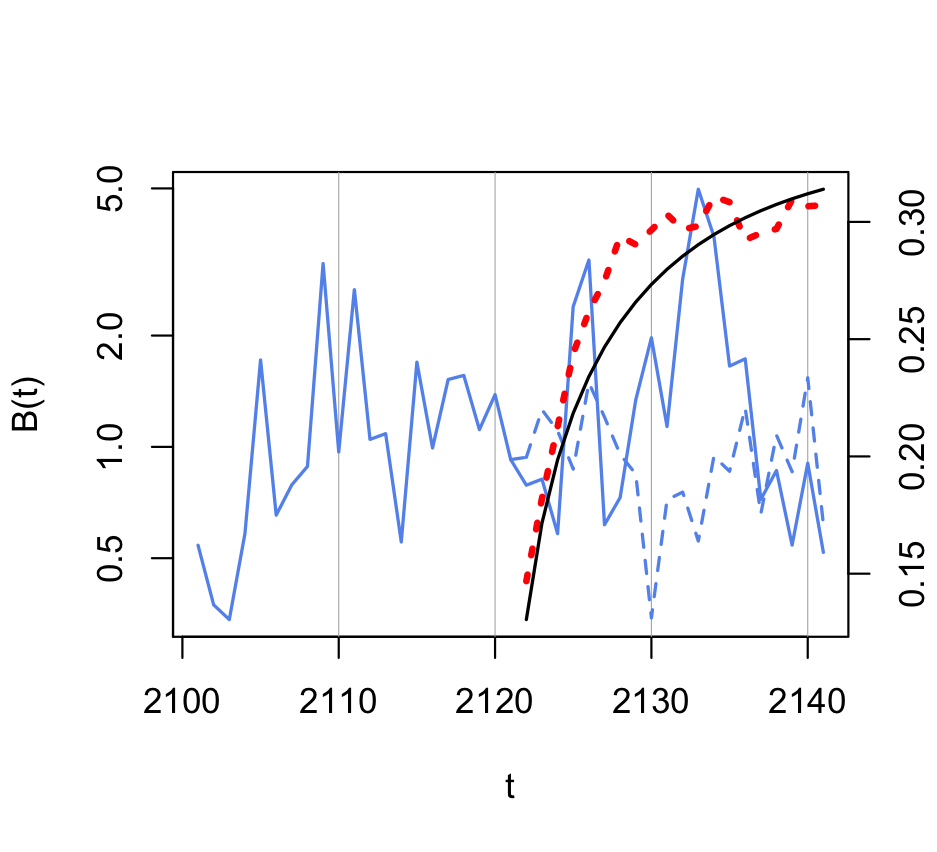
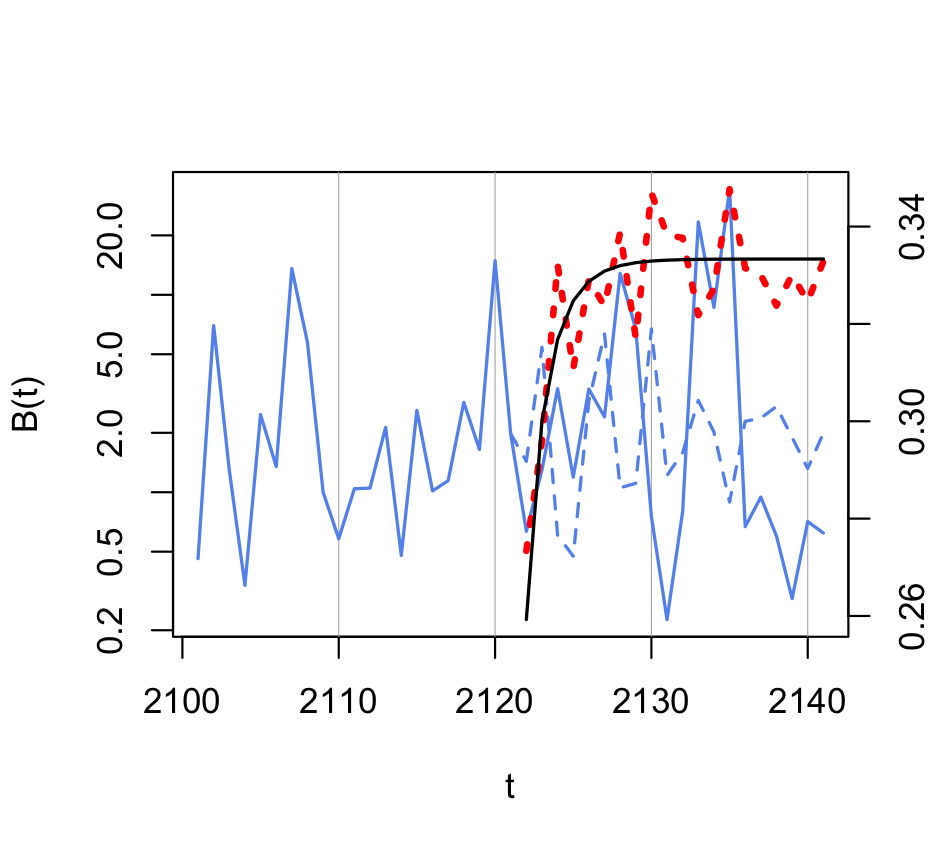
Figure 2: Forecast trajectories and excursion metrics for Brown-Resnick processes with two covariance regimes—highlighting rapid increase in metric with lower dependence.
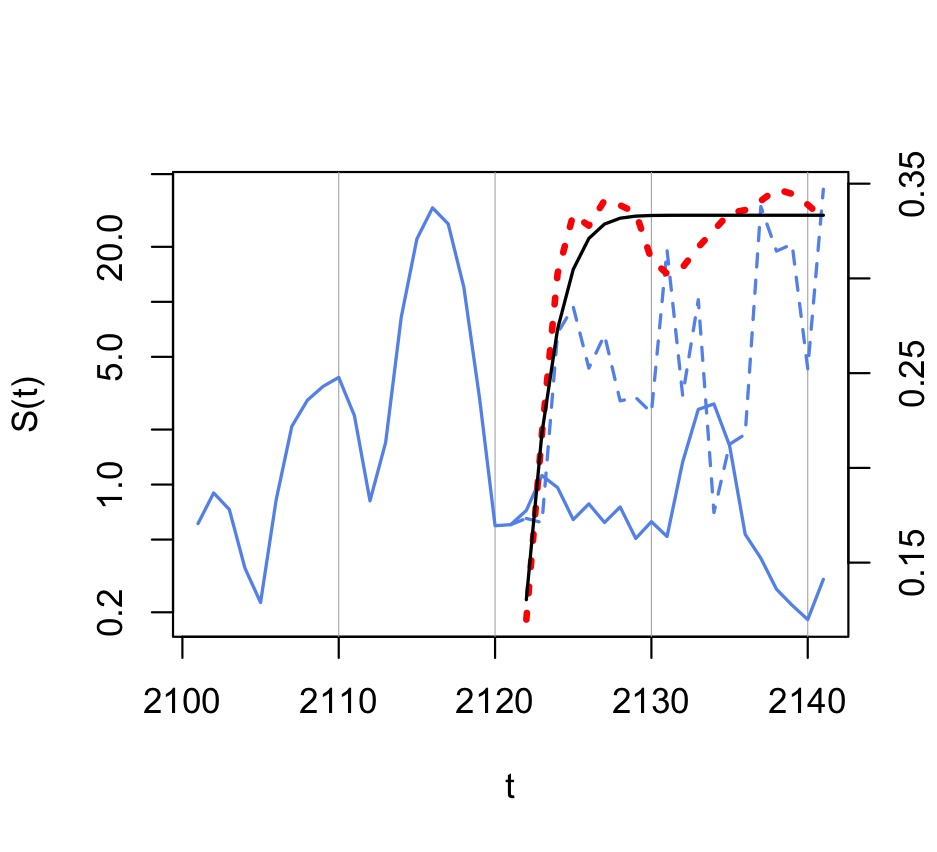
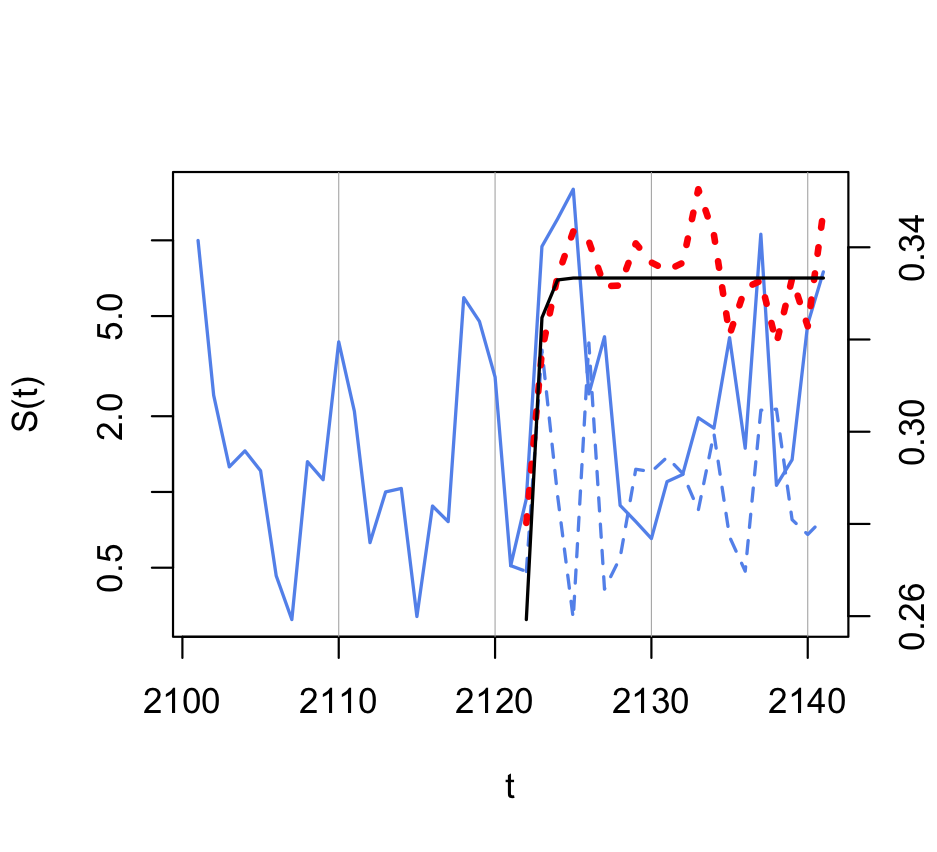
Figure 3: Forecast trajectories and excursion metrics for Smith processes; independence emerges earlier, as indicated by faster metric escalation.
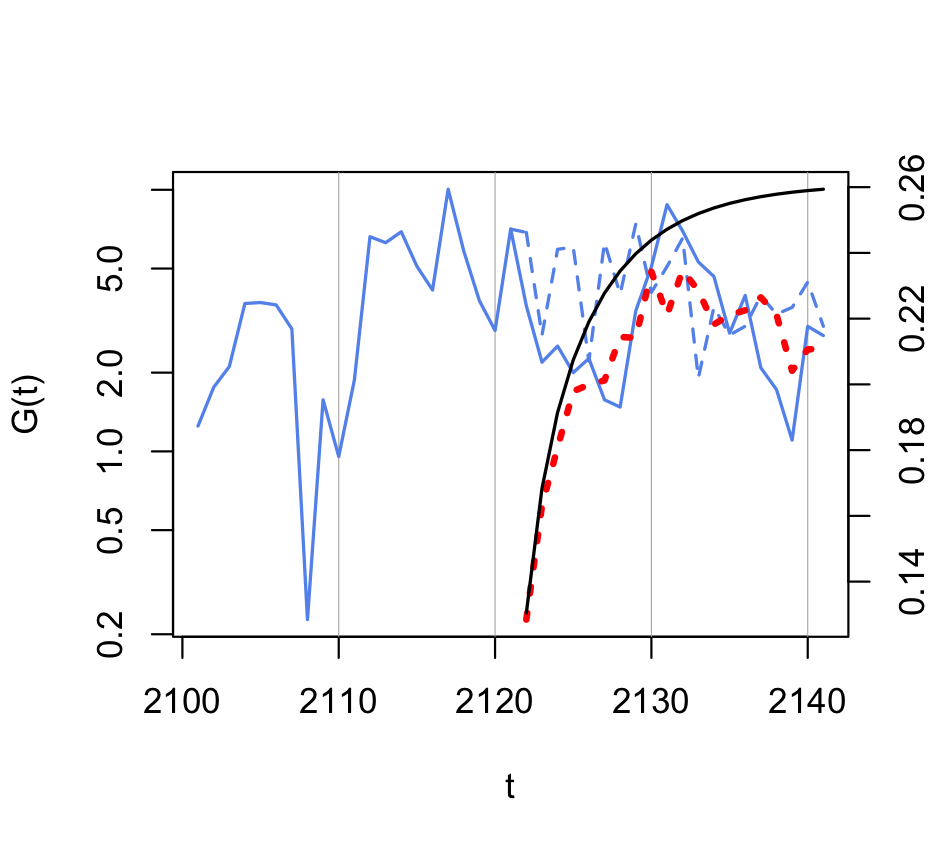
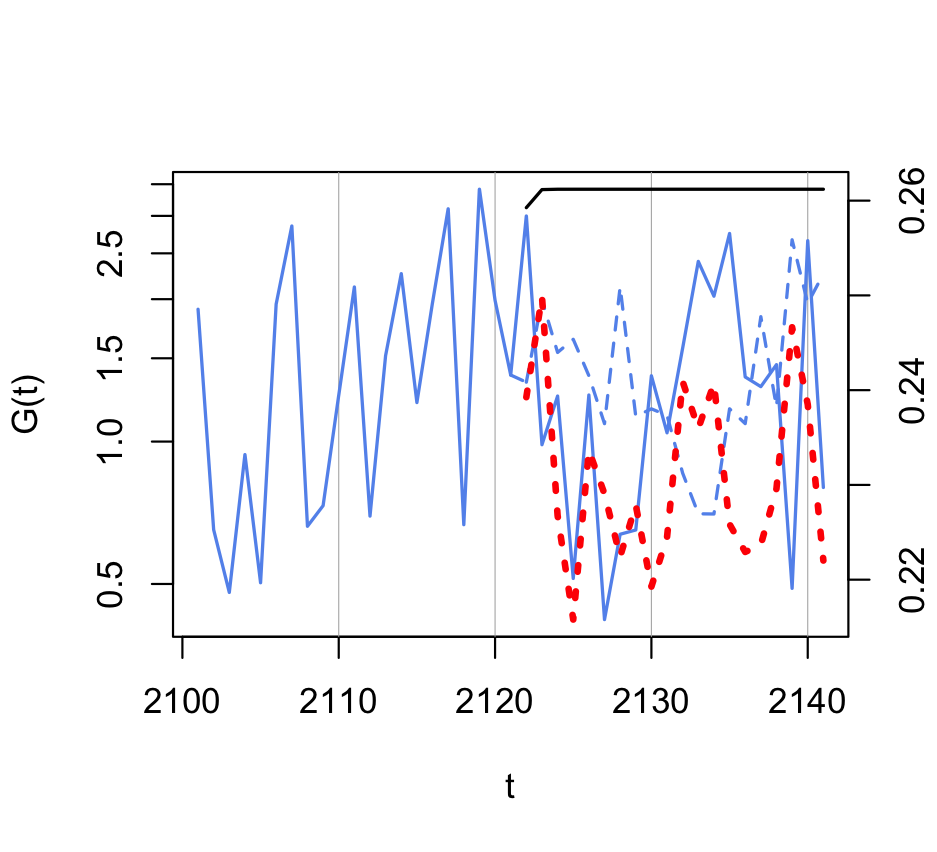
Figure 4: Forecast and excursion metrics for extremal Gaussian processes demonstrating the effect of non-ergodicity on Gini metric convergence.
Multivariate Spatial Prediction
Extension to spatial extrapolation in two dimensions is demonstrated, with predictor surfaces for Brown-Resnick, Smith, and extremal Gaussian random fields.
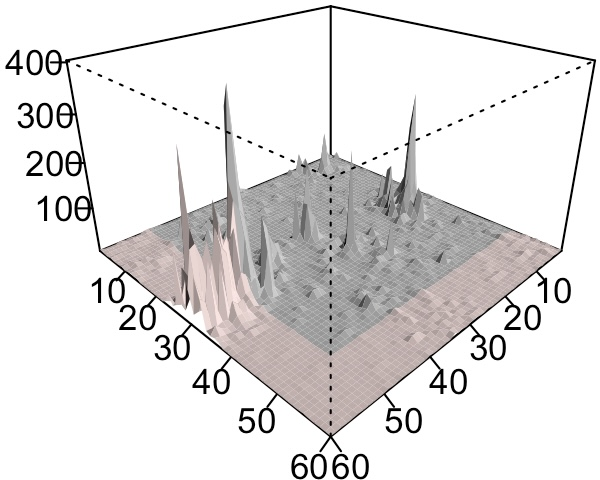
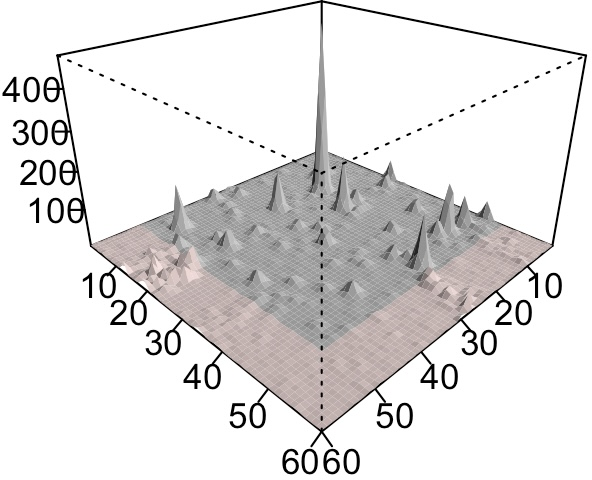
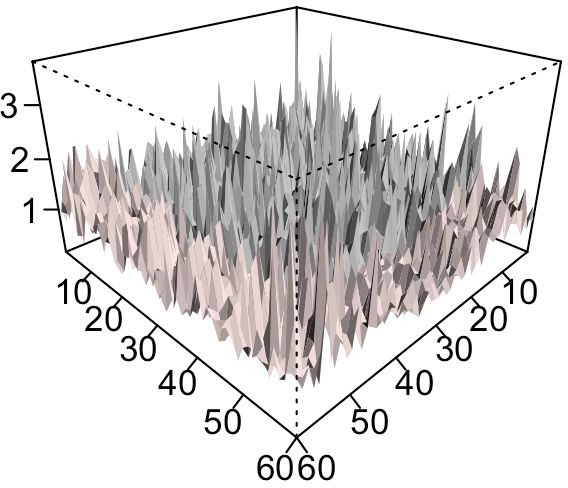
Figure 5: Law-preserving predictions for t05-step extrapolation of 3D random fields—each panel visualizes the extension of observed surfaces.
Penalty Weight Calibration
Penalty parameter t06 is systematically calibrated to minimize a tradeoff between the empirical excursion metric and mean squared error (MSE) of law preservation (via Wasserstein distance), leading to optimal values specific for the dependence structure.
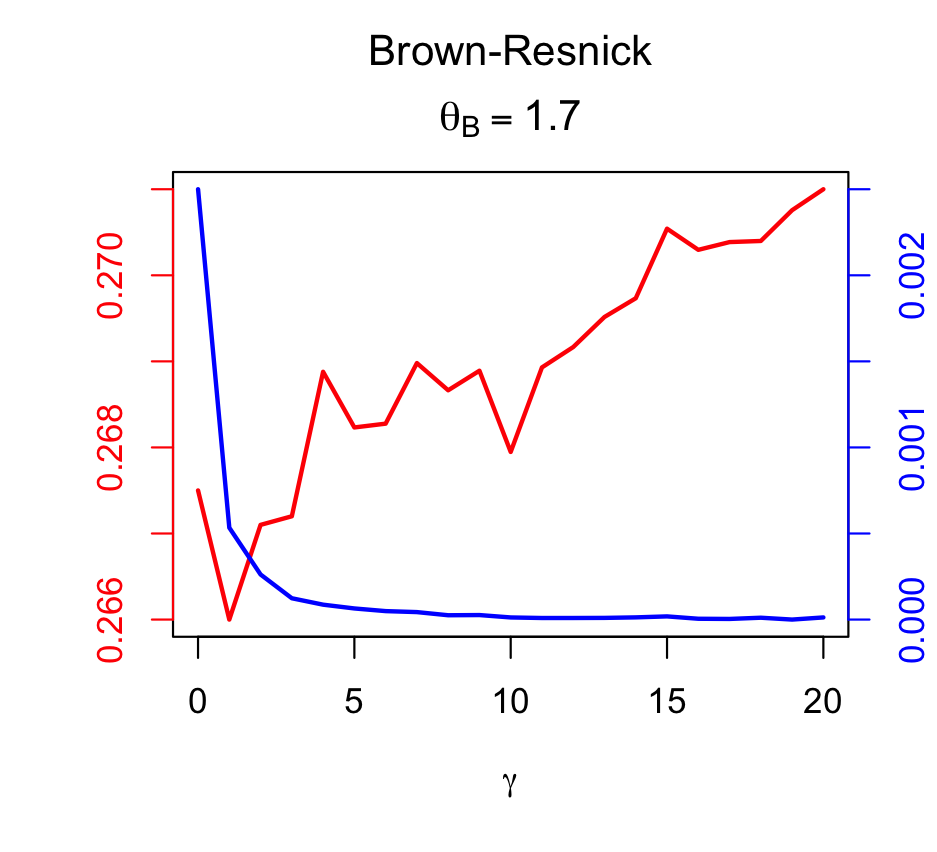
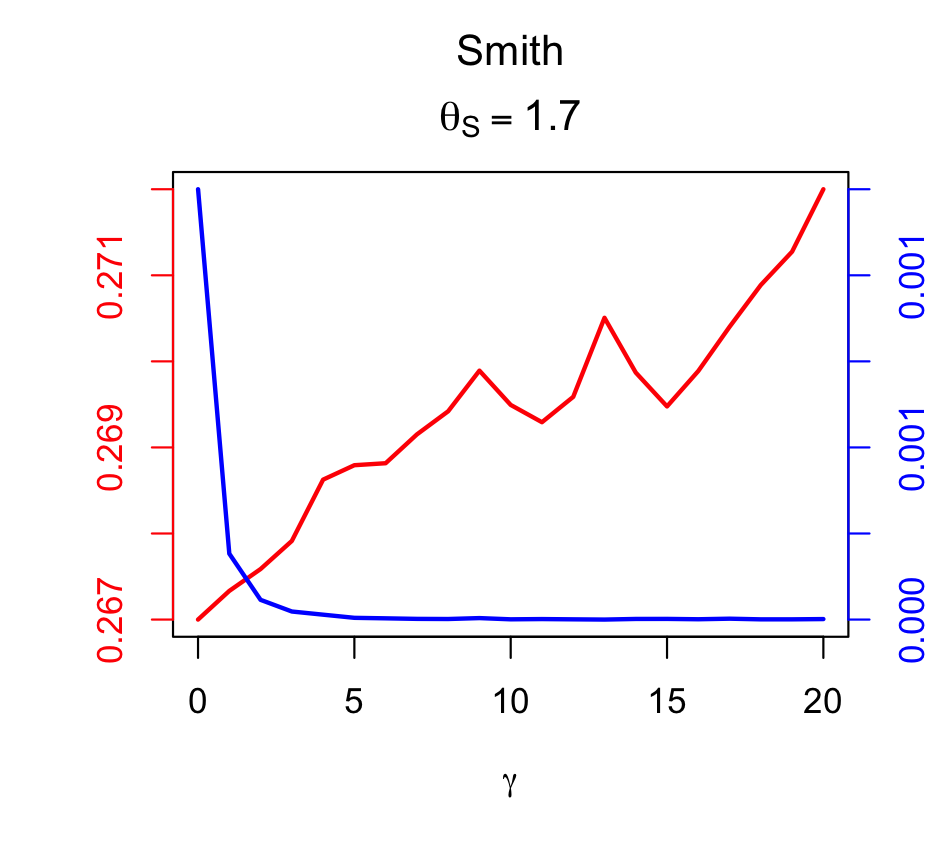
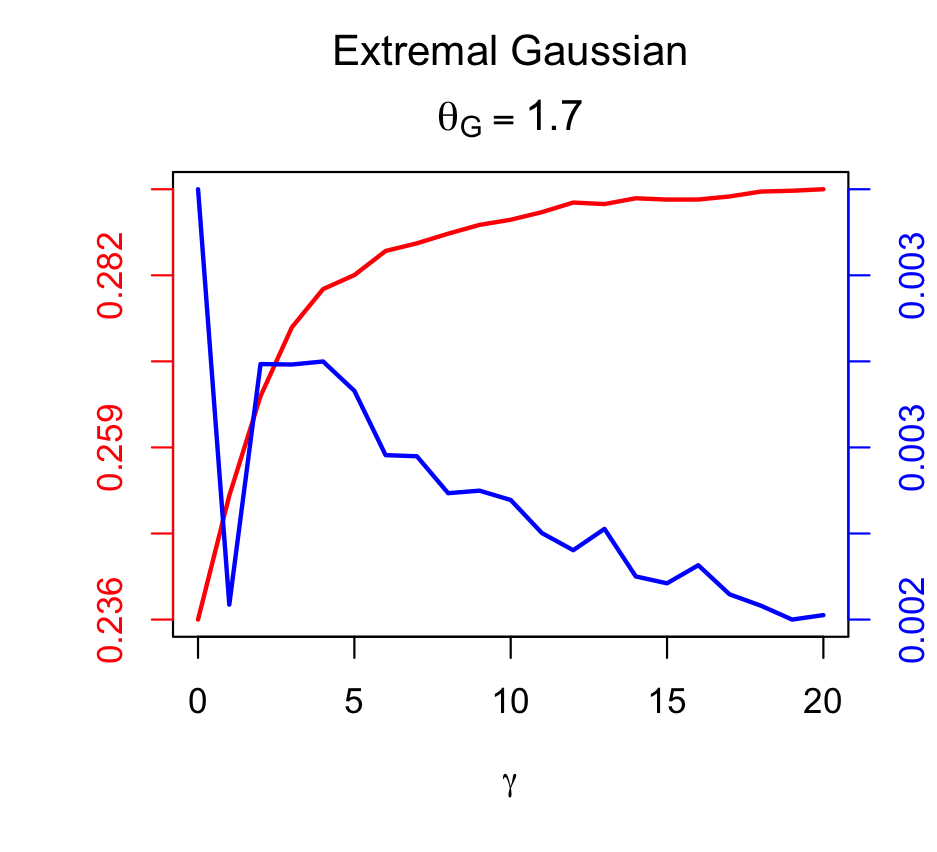
Figure 6: Empirical excursion metric and MSE as functions of t07 for three max-stable models; highlights the balance achieved by t08.
Real Data Application
Application to 147 years of annual maximum daily rainfall in Munich demonstrates the methodology's effectiveness, even for processes with weak dependence and non-heavy-tailed Fréchet fit (t09). The forecast envelope for 2023–2025 encapsulates observed values using both bootstrap and non-bootstrap variants.
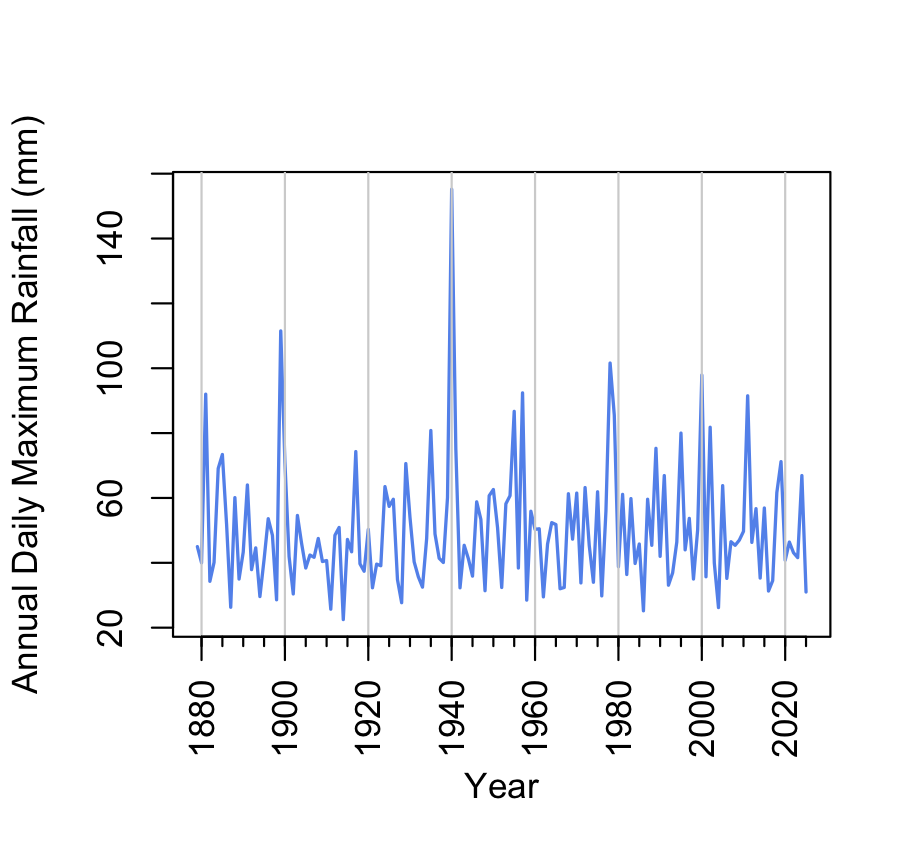
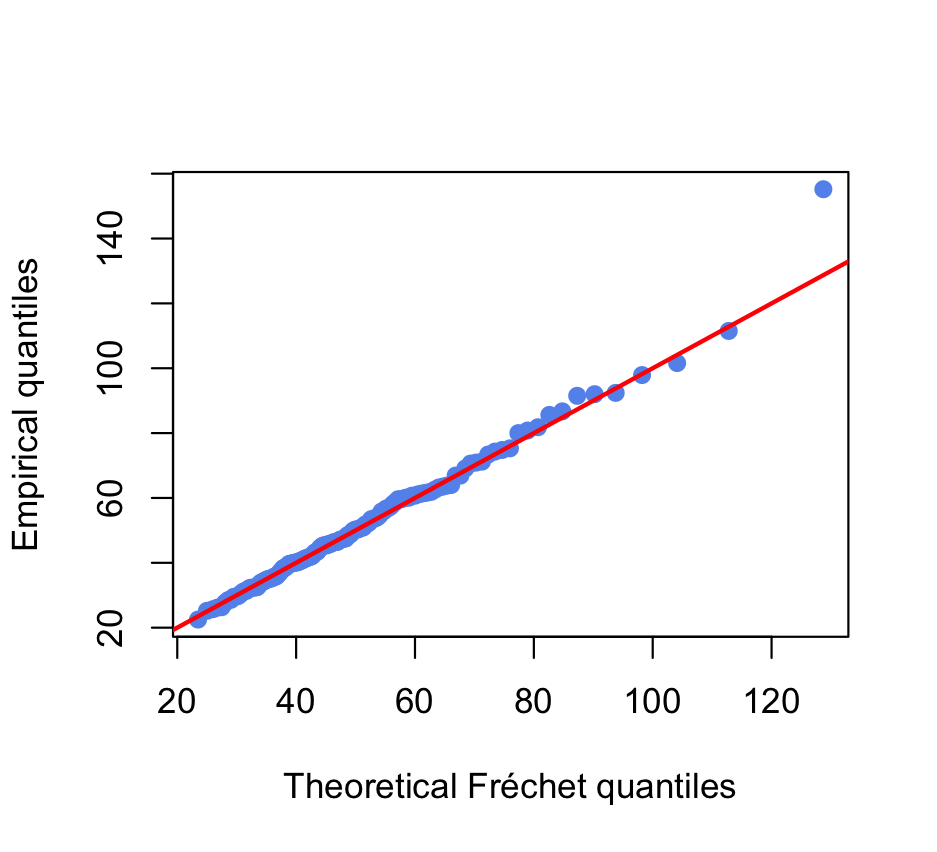
Figure 7: Empirical annual rainfall maxima and Q-Q plot for Fréchet fit derived via quasi-ML estimation.
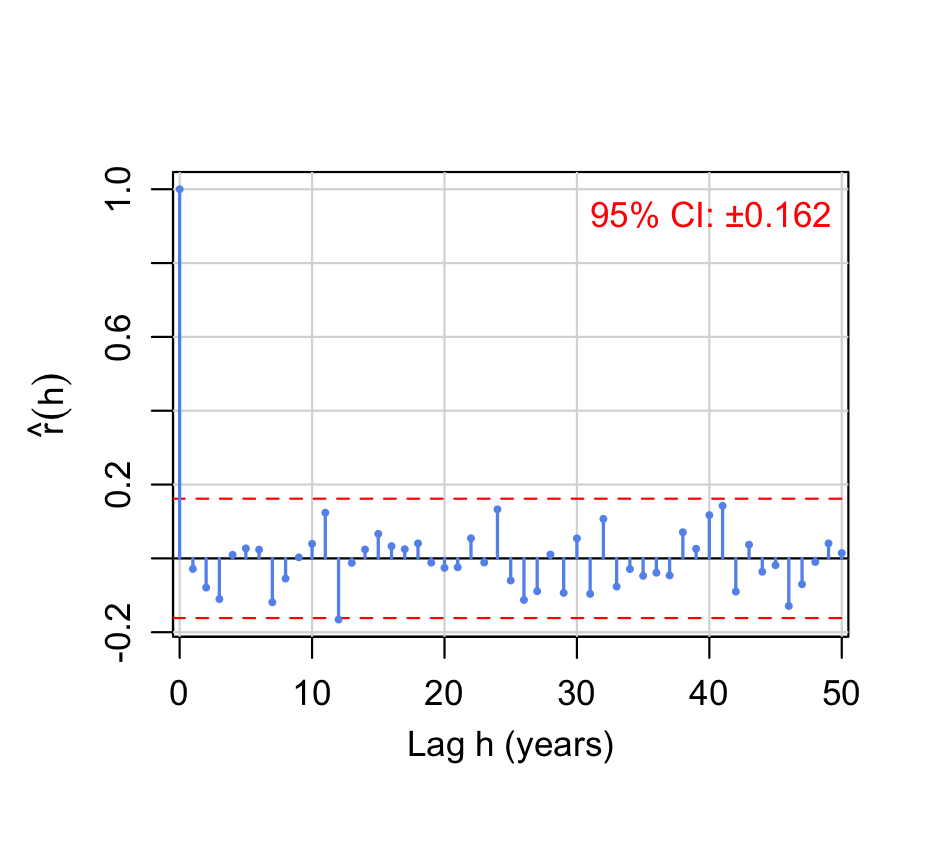
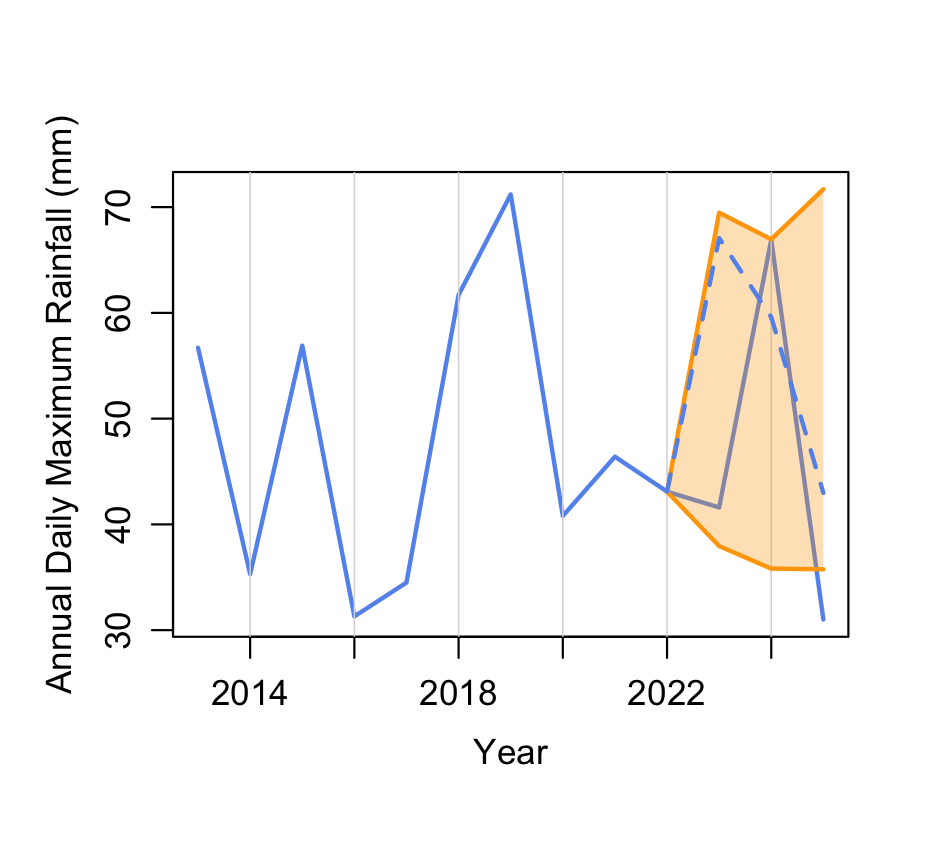
Figure 8: Autocorrelation plot of rainfall maxima and forecast envelope compared to true values; confidence interval estimation via bootstrapping.
Implications and Future Directions
The excursion-based max-stable extrapolation approach offers significant practical advantages: (i) computational simplicity versus conditional sampling, (ii) reliability and law preservation for extremes, (iii) scalability via stochastic optimization. The method is robust to heavy-tailed marginals and generalizes to other extreme-value models (Gumbel, Weibull).
Theoretically, the excursion metric provides a strong probabilistic foundation linked to established metrics (Davis-Resnick, Wasserstein). Non-uniqueness indicates the necessity of further research for additional uniqueness constraints, possibly via auxiliary information, spatial regularization, or hierarchical modeling.
This work opens up further investigation into predictive inference for non-ergodic fields, model selection via extremal coefficients, and real-time uncertainty quantification for rare events in hydrology, finance, and epidemiology.
Conclusion
The paper delivers a mathematically rigorous, computationally practical methodology for the prediction of max-stable random fields with Fréchet marginals. By leveraging excursion metric projections and Wasserstein penalization, it overcomes both theoretical and practical limitations of traditional approaches to extreme-value prediction. The analysis of existence, non-uniqueness, and optimization provides clarity for further development and application. Numerical studies, including the real rainfall data case, confirm strong empirical performance, marking this framework as a substantive advance for the statistical modeling of spatial-temporal extremes (2604.16206).