- The paper demonstrates that LLM-based content curation systems amplify polarization, with R² effects up to 0.055 in 98.1% of evaluation conditions.
- The paper employs comprehensive simulations involving 540,000 recommendations, three major LLMs, and six prompt styles across multiple social media platforms.
- The paper finds that while prompt engineering moderates toxicity and sentiment bias, it fails to mitigate demographic bias, indicating structural indirect discrimination.
Auditing Polarization and Bias in LLM-Based Content Curation
Introduction
The paper "Polarization by Default: Auditing Recommendation Bias in LLM-Based Content Curation" (2604.15937) critically investigates the structural and prompt-induced biases of LLM-powered ranking systems employed for social media content curation. Comprehensive simulations involving 540,000 recommendations span three major LLMs (OpenAI GPT-4o Mini, Anthropic Claude Sonnet 4.5, Google Gemini 2.0 Flash), three platforms (Twitter/X, Bluesky, Reddit), and six prompt styles. This study isolates non-personalized, model-level bias in ranking tasks, quantifying behavioral variance across multiple dimensions relevant to public discourse, content safety, and demographic fairness.
Methodological Framework
The experiment leverages three real-world social media datasets and evaluates 54 condition combinations (provider × platform × prompt). Each trial involves a model recommending a top-10 subset from pools of 100 posts, with features extracted using rule-based, NLP, and LLM-specific protocols. Prompt variations probe objectives ranging from neutral ranking to engagement, virality, informativeness, and controversy. Feature distributions between recommended and candidate pools are compared using Cramér's V and Cohen's d, unified via R2 effect size metrics.
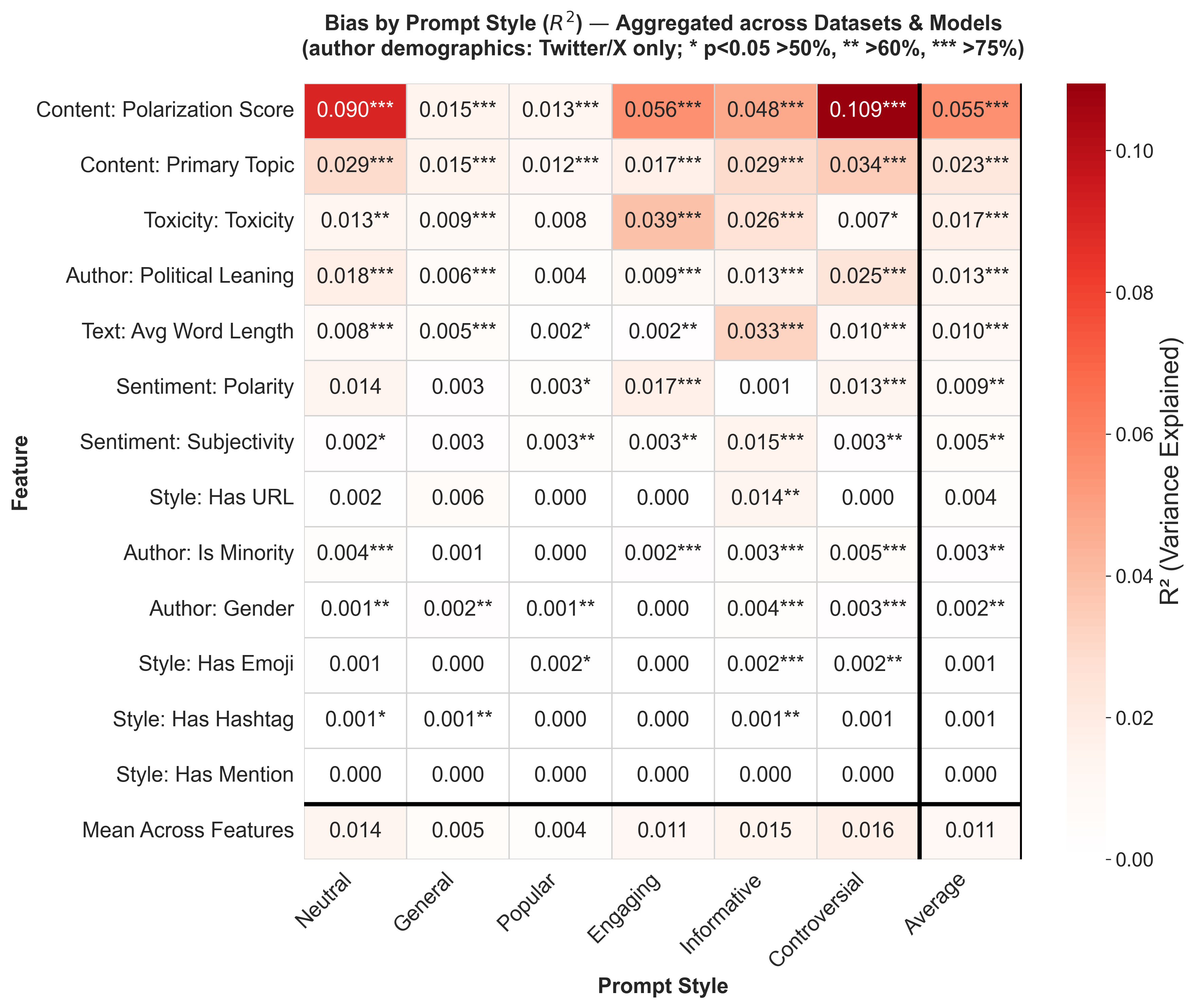
Figure 1: R2 (variance explained) for each of the 13 features across six prompt strategies, averaged over providers and platforms, revealing overall bias landscape and prompt sensitivity.
The approach ensures that bias reflects LLM-learned associations rather than explicit metadata, engagement, or author information, maintaining focus on model-level phenomena.
Content Bias Architecture and Prompt Sensitivity
Results reveal strong content bias, most notably regarding polarization, toxicity, and sentiment. Polarization scores demonstrate the highest and most consistent effect (R2 up to 0.055, significant in 98.1% of conditions), notably persistent even under neutral prompts which lack an explicit ranking objective. Bias in toxicity frequently inverts according to prompt framing: engagement-driven prompts amplify toxicity (Claude: +0.138, Gemini: +0.120), while informative-oriented prompts suppress it. Sentiment polarity shows predominantly negative directional bias under engaging and controversial prompts, with Gemini manifesting the strongest negative preference.
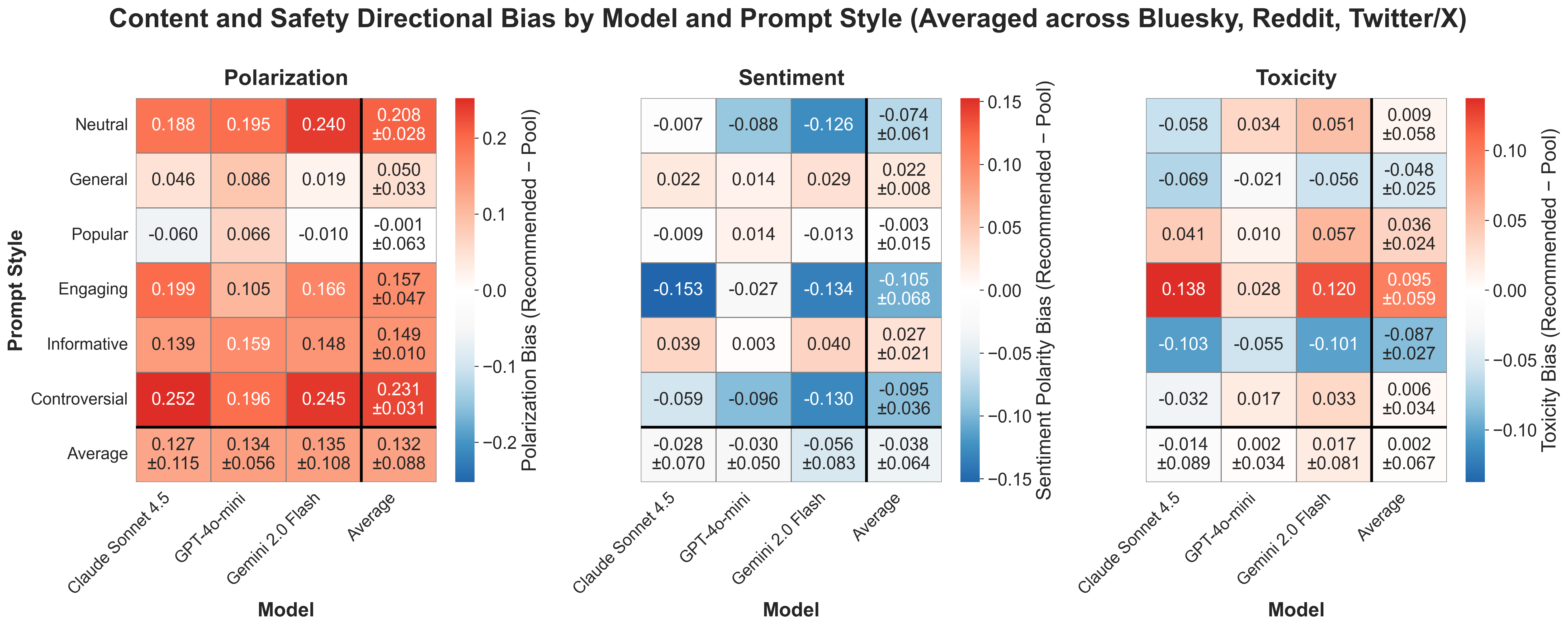
Figure 2: Content and safety directional bias by model and prompt style, visualizing polarization, sentiment, and toxicity bias averaged over platforms and prompt styles.
Vocabulary-level bias emerges as a secondary signal, with models favoring longer average word lengths and more technical/formal registers, especially under informative prompts.
Prompt engineering is a significant moderator for content biases. Average word length, for instance, shows a 16-fold variation across prompt styles, while demographic biases (e.g., political leaning) remain substantially less prompt-sensitive (4-fold less than word length), indicating structural entrenchment.
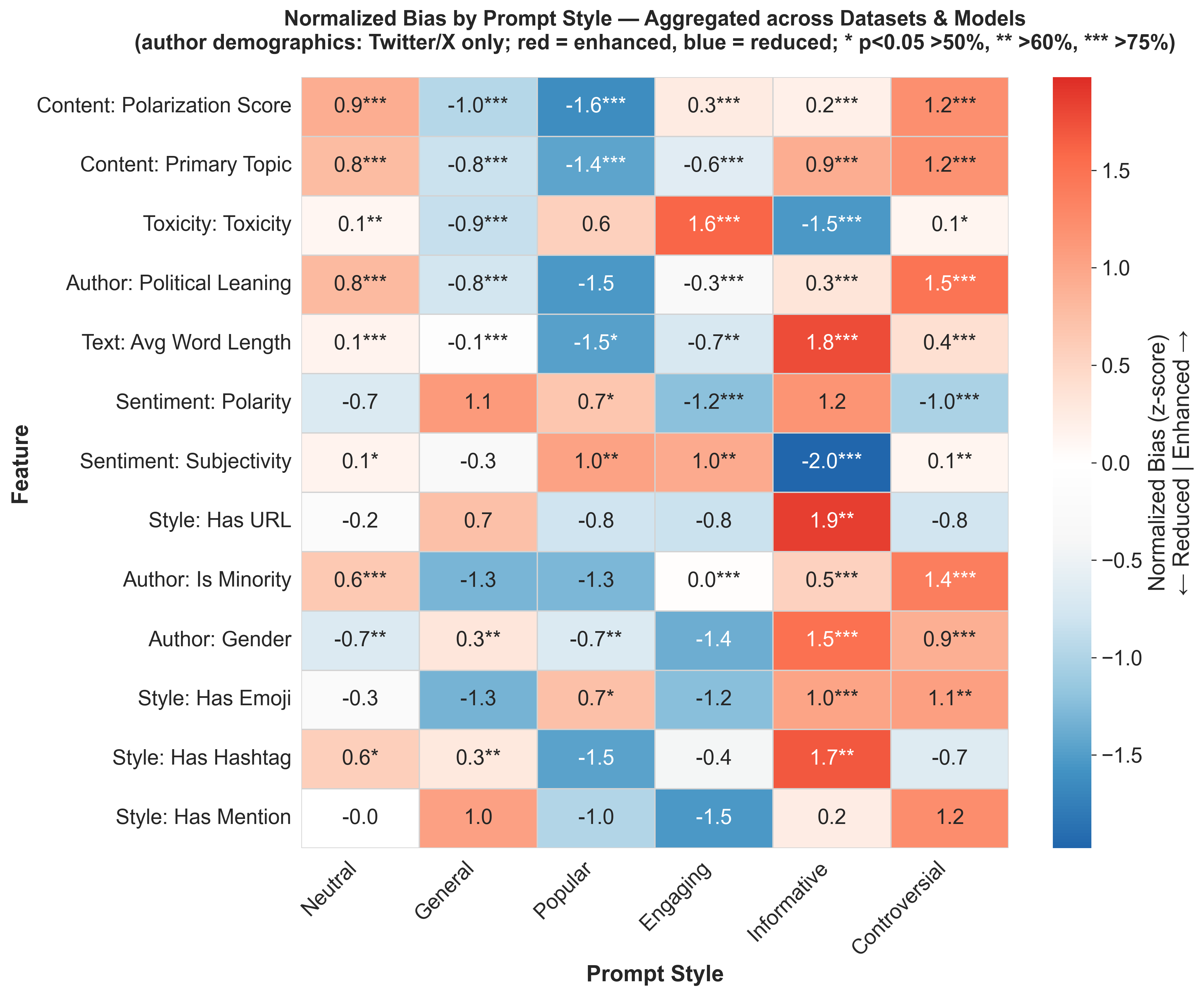
Figure 3: Normalized bias (z-scores) for each feature across six prompt strategies; content features exhibit higher prompt sensitivity than demographic features.
Topic bias is similarly prompt-dependent, with models systematically over-representing News {content} Social Concern and under-representing Diaries {content} Daily Life, most amplified under neutral and controversial prompts.
Provider-Level Divergence and Safety Trade-offs
Distinct behavioral profiles emerge from provider comparisons:
- OpenAI GPT-4o Mini: Most balanced and prompt-stable profile; moderate positive polarization and minimal volatility in toxicity or sentiment bias.
- Anthropic Claude Sonnet 4.5: Highest adaptivity in toxicity handling; context-specific amplification and suppression as prompt objectives shift.
- Google Gemini 2.0 Flash: Robust negative sentiment preference and consistent toxicity amplification across prompts.
These divergences underpin non-trivial provider trade-offs, challenging the assumption that fairness can be achieved through prompt engineering alone.
Demographic Bias: Persistent Political Leaning Skew
Demographic bias analysis on Twitter/X (where bios allow attribute inference) uncovers a robust, systematic over-representation of left-leaning authors, despite right-leaning authors composing the plurality in the candidate pool (right: 43.4%, left: 17.9%). Averaged across providers and prompt styles, left-leaning over-representation is +9.0pp, right-leaning under-representation is -4.2pp.
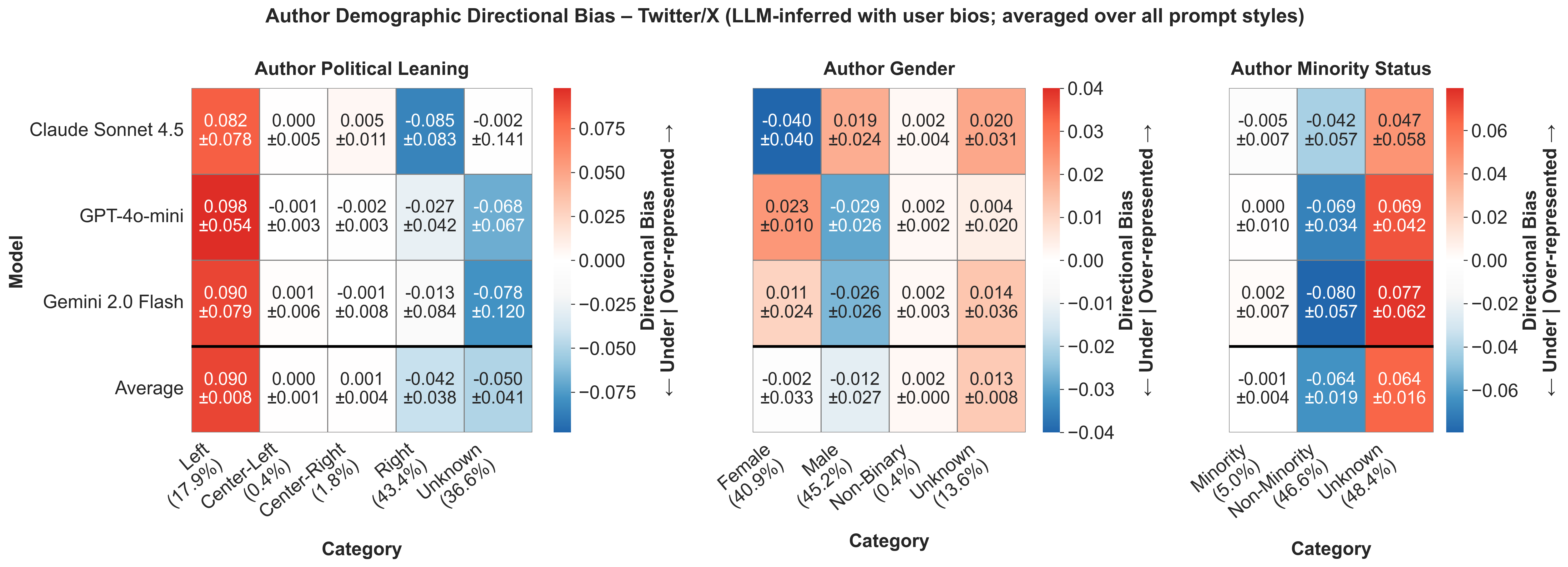
Figure 4: Directional bias in sensitive demographic attributes for Twitter/X, highlighting persistent political leaning and model-dependent gender/minority status biases.
Prompt effects are modest: controversial prompts maximize left-leaning bias, popular prompts nearly eliminate it, and engaging prompts are the only condition with no right-leaning penalization. Gender and minority status biases are less pronounced and inconsistent, with high unknown rates limiting interpretive confidence.
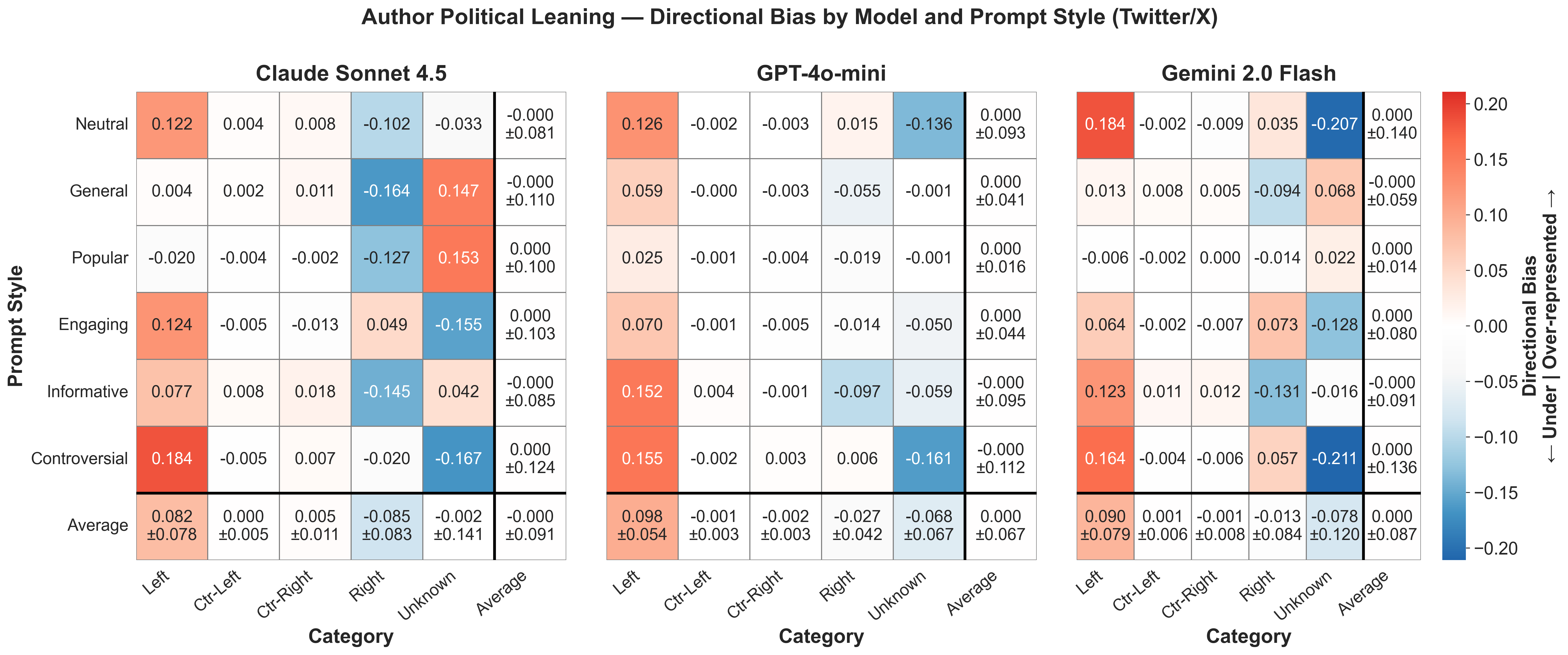
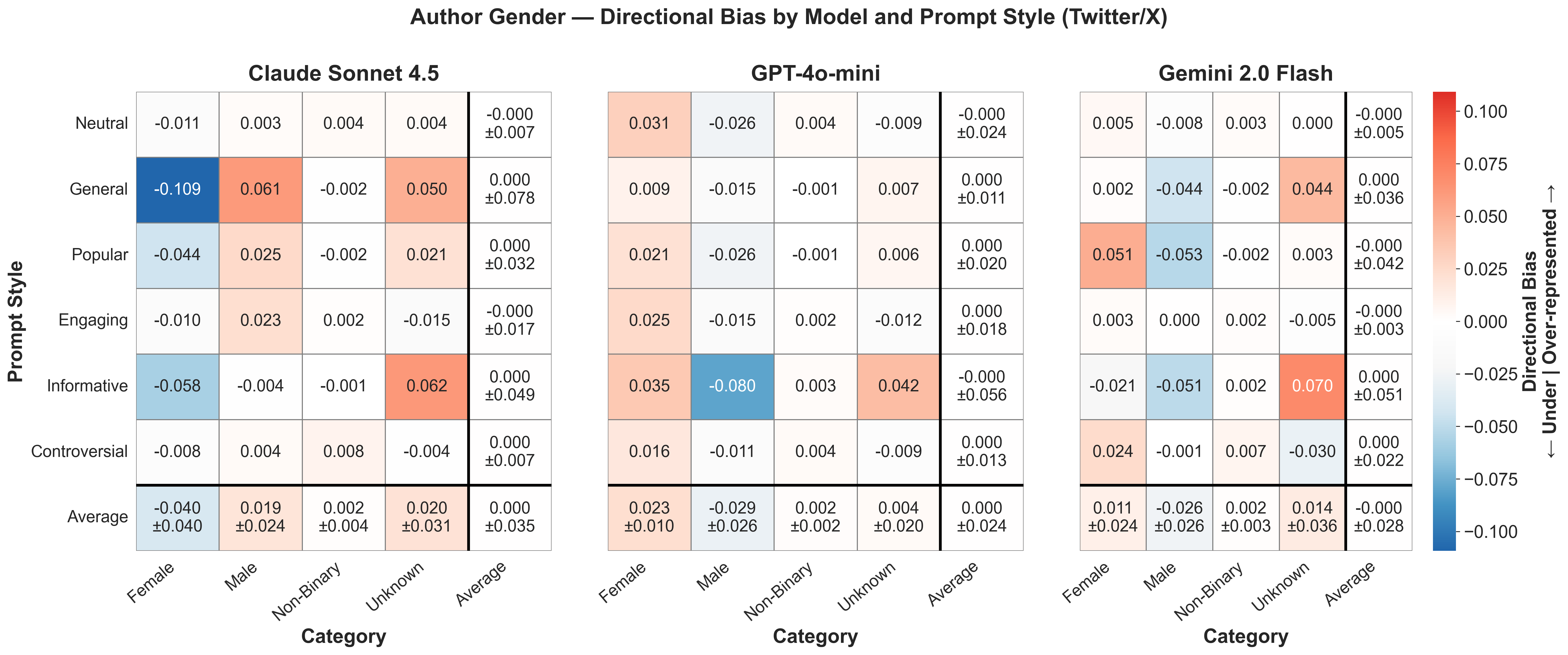
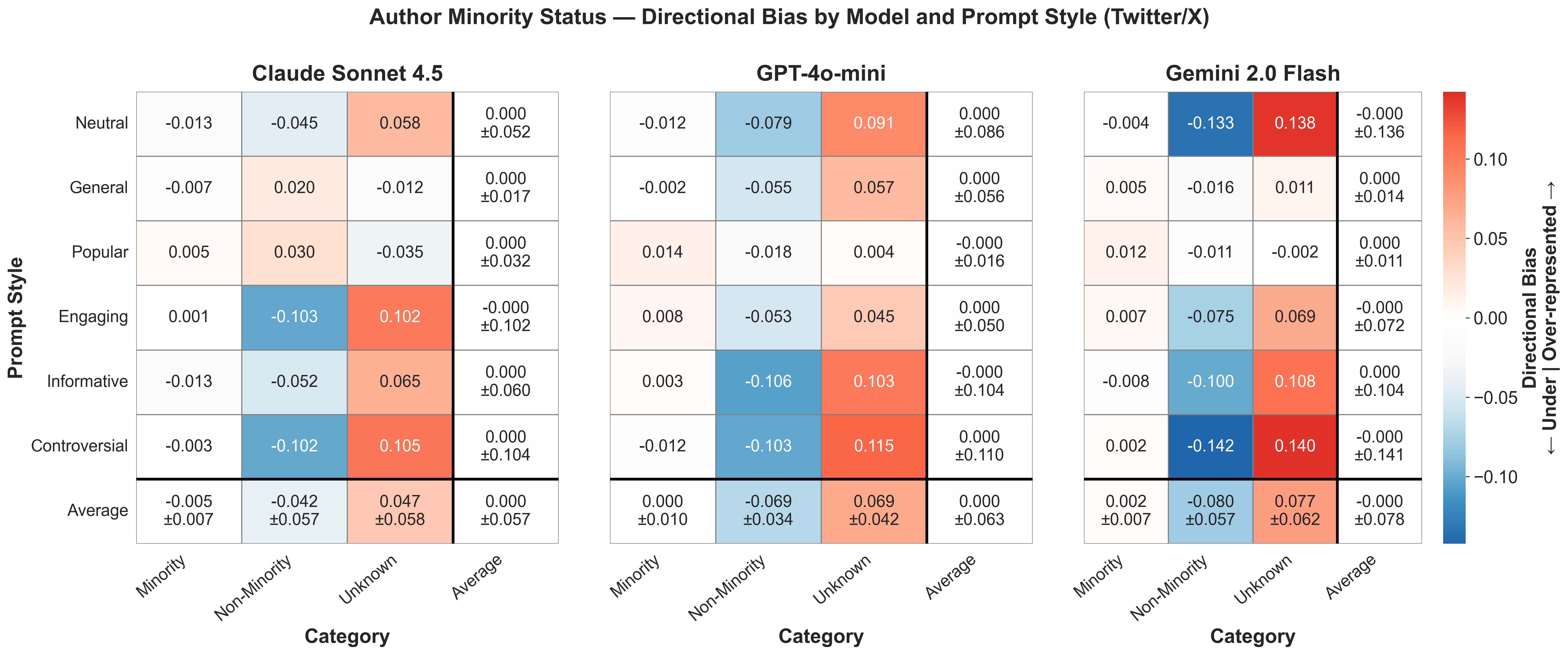
Figure 5: Political leaning; all models over-represent left-leaning authors and under-represent right-leaning authors in recommendations compared to pool proportions.
Mechanisms and Indirect Discrimination
Feature importance analysis via Random Forests and SHAP scores confirms that polarization, primary topic, and toxicity are the primary drivers of selection decisions across models, while demographic features possess negligible direct importance. This establishes indirect discrimination as the operative mechanism: demographic bias arises from content correlations rather than explicit attribute reliance, rendering simple metadata masking ineffective as a mitigation strategy.
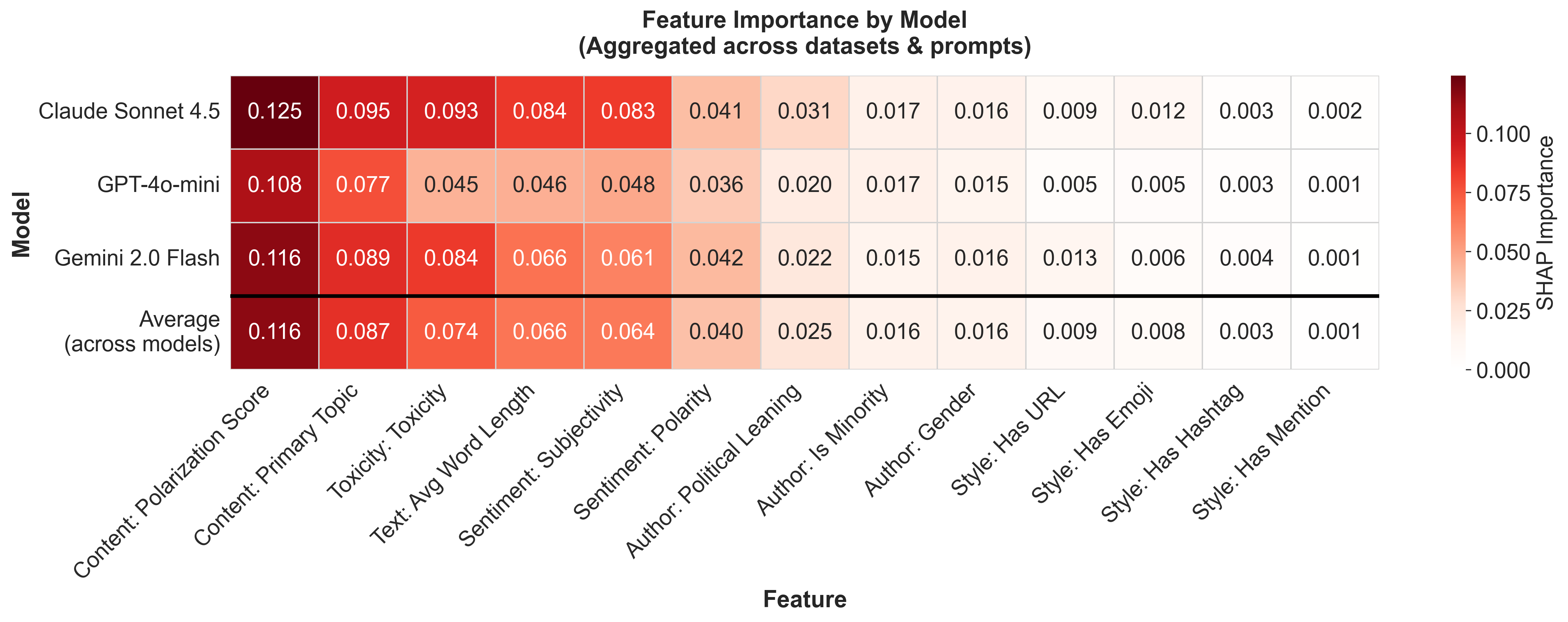
Figure 6: Feature importance by model (SHAP); polarization is the top signal, with demographic features showing near-zero direct importance.
Implications, Practical Directions, and Recommendations
The study identifies structural and persistent amplification of polarization—across providers, platforms, and prompt styles—as the dominant bias signal in LLM-based content curation. Theoretical implications include the risk of feedback loops, wherein models generating and recommending content to each other compound polarization. Prompt engineering is effective for style/content moderation but fails to mitigate demographic skew, particularly political leaning bias.
The practical recommendation is to supplement prompt-based approaches with fundamental interventions: adversarial debiasing, fairness constraints, training corpus refinement, and hybrid human-AI oversight. The neutrality of prompt framing does not yield bias-free baselines—default model behaviors activate non-trivial editorial signals absent explicit instructions. Auditing and transparency standards must be established for curation systems prior to deployment, given their increasing adoption in both proprietary and open-protocol social platforms.
Speculation on future developments suggests greater emphasis on intentional user-driven feed designs (e.g., BONSAI-like frameworks) and systematic comparison with traditional recommendation systems to quantify relative bias risk.
Conclusion
LLM-based content curation systems exhibit persistent, structural amplification of polarized and left-leaning content, with toxicity and sentiment bias modulated by prompt objectives but not eradicated. Political leaning bias represents the clearest demographic signal, resisting mitigation via prompt engineering and challenging assumptions regarding the neutrality of LLMs in high-stakes environments. Indirect discrimination via learned content-feature associations necessitates a paradigm shift towards robust auditing and intervention protocols before these systems are deployed at scale. Ongoing scrutiny and evolutionary refinement of fairness metrics, demographic inference, and intervention mechanisms will be crucial for aligning LLM-based curation with equitable information access standards.

