- The paper introduces a reconfigurable pneumatic joint that decouples global compliance from localized rigidity through pressure-tunable nodes.
- The methodology achieves a 3–4x increase in local stiffness and supports payloads up to 202 g while maintaining moderate growth pressures.
- Comparative analysis shows that the RPJ outperforms layer-jamming in growth speed, curvature response, and precise shape locking.
Reconfigurable Pneumatic Joint for Localized Selective Stiffening and Shape Locking in Vine-Inspired Robots
Introduction and Motivation
Vine-inspired robots leverage tip eversion to navigate complex and confined spaces, offering a unique form factor for soft robotics with applications in exploration, minimally invasive surgery, and manipulation. Despite the advantages of continuous lengthening and environmental adaptability, conventional vine robots are fundamentally limited by low axial stiffness, poor load-bearing capacity, and the inability to retain shape, especially during unsupported, free-space operations.
This paper introduces a reconfigurable pneumatic joint (RPJ) module that imparts discrete, pressure-tunable stiffness nodes along an otherwise compliant soft robotic backbone. The RPJ architecture enables a decoupling of global body compliance from localized rigidity, thus addressing core limitations of existing vine robot platforms. The design draws its biomimetic inspiration from the node structure of biological vines, interpreting nodes as discrete, controllable stiffness actuators capable of segment-wise shape locking and curvature control.
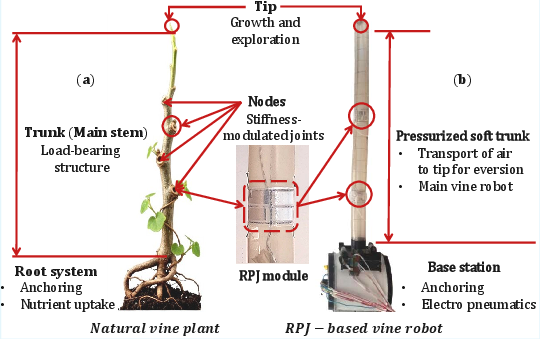
Figure 1: Bioinspired mapping of vine structure to modular RPJ nodes for localized stiffness in a tip-everting robot.
RPJ Mechanism: Architecture and Analytical Modeling
The RPJ consists of a modular unit incorporating multiple symmetrically arranged pneumatic chambers embedded at discrete locations along the tubular robot body. Upon pressurization, these chambers generate localized radial contact forces at the chamber-trunk interface, increasing the effective bending stiffness at that segment. Reinforced fabric elements within each chamber constrain radial expansion and direct pneumatic forces toward the axis of the trunk, minimizing shear and maximizing bending resistance.
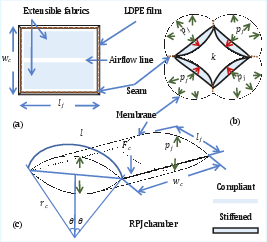
Figure 2: Detailed RPJ node geometry and chamber action, demonstrating localized radial force and effective curvature modulation.
The stiffness imparted by the RPJ node is a function of the pressure differential (pj−pt) between the chamber and the internal trunk, as well as the geometric and material properties of the chamber. The pressure-induced normal force (Fc) at each chamber is expressed as
Fc=(pj−pt)Ac
where Ac is the local contact area. The resultant moment directly modulates the effective bending stiffness, providing programmable mechanical impedance at each node.
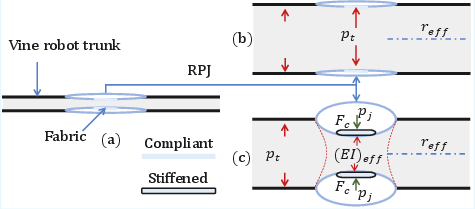
Figure 3: Interaction between a pressurized RPJ and trunk, showing transition from passive to actively stiffened states.
When integrated within the vine robot, RPJ nodes are coordinated with tendon-driven steering: selective pressurization of RPJs determines deformation locality, while tendon tension induces controlled bending and shape locking.
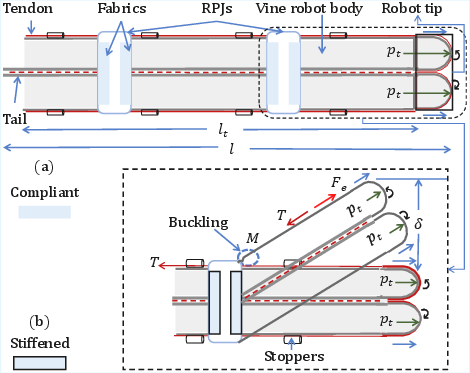
Figure 4: RPJ-augmented robot steering: unactuated RPJs permit growth; stiffened RPJs localize bending for shape control under tendon actuation.
Comparative Evaluation and System Characterization
Growth Pressure and Eversion Dynamics
Despite the introduction of RPJs and reinforcement fabrics, the robot maintains moderate growth pressures (Pgrow increases from 4.2 to 6.8 kPa across configurations), ensuring efficient free-space eversion without excessive power demand. The presence of RPJs marginally narrows the pressure window between eversion and burst but does not compromise operational safety.
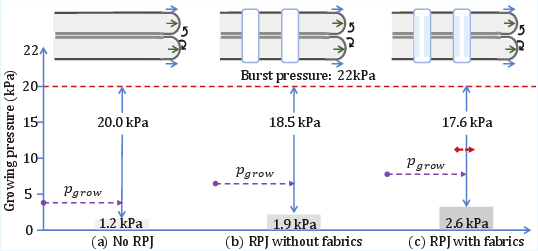
Figure 6: Pressure requirements for growth initiation and steady eversion across baseline, RPJ, and reinforced RPJ configurations.
Localized Stiffness and Load-Bearing Capacity
Transverse tip deflection experiments under incremental loading demonstrate that the RPJ provides a 3–4x increase in local stiffness compared to baseline, effectively reducing maximum tip deflection under identical payloads. Reinforced RPJ configurations cap tip displacement below 0.1 m at 200 g load over 1 m length.
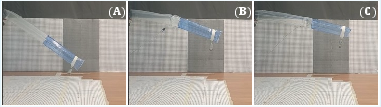
Figure 8: Final tip deflection under 200 g load for baseline, unreinforced, and reinforced RPJ robots.
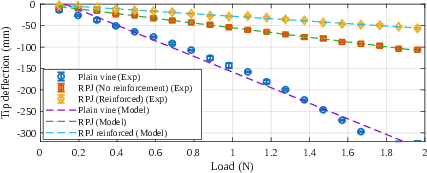
Figure 5: Load-deflection performance: reinforced RPJ robot shows marked stiffness augmentation relative to the baseline.
Benchmark Against Layer Jamming
When directly compared with state-of-the-art layer-jamming mechanisms, the RPJ-based architecture demonstrates faster growth (5 cm/s vs. 2.4 cm/s, 2.1x improvement), faster curvature response (0.4 s vs. 2.0 s to full bend), and smoother, more localized shape control without residual deformation. The layer-jamming system, by contrast, induces distributed stiffening, adds inertial resistance and friction, and exhibits telescoping under large curvatures.
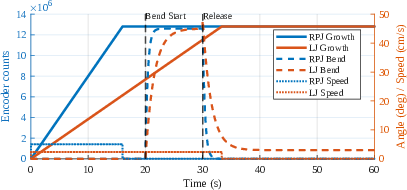
Figure 11: Quantitative analysis: RPJ-based robot surpasses layer-jamming in growth rate, bend speed, and recovery, with stable segment-wise morphology.
Manipulation Capabilities: Shape Locking, Retraction, and Payload Demonstrations
Segmental Shape Locking and Morphological Versatility
Through selective activation of RPJ modules, the robot achieves multi-jointed, locked morphologies in free space, including both arm-like and complex, non-planar profiles unattainable by continuum-only architectures. The spatial patterning of stiffness enables multi-point shape-locking via a single tendon drive.
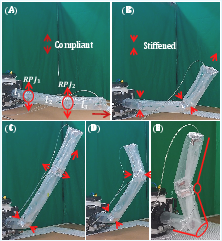
Figure 13: Annotated demonstration of segmental shape locking via sequential RPJ activation and tendon steering.
Cascading Retraction
An RPJ-specific cascading retraction protocol allows for controlled, bidirectional operation without auxiliary mechanical retraction implements. By maintaining upstream segment rigidity during tail withdrawal, the approach preserves structural stability during inversion and directly exploits the pressure-tunable modularity of the design.
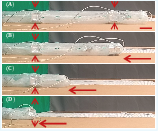
Figure 7: Stepwise cascading retraction sequence: RPJ nodes maintain local stiffness while distal segments retract.
Payload Support
The RPJ system supports payloads up to 202 g (tip module + mass) in unsupported, free-space eversion scenarios. Tendon-induced moments maintain orientation and suppress sag under dynamic load, demonstrating practical viability for tool and sensor delivery.
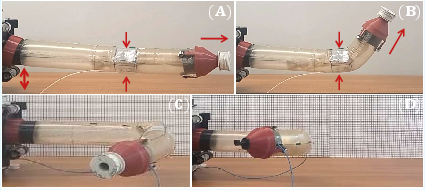
Figure 9: Payload-bearing validation: RPJ-based robot supporting and manipulating a loaded end effector during and after growth.
Practical and Theoretical Implications
The RPJ paradigm enables modular, programmable stiffness modulation with minimal increase in system complexity. The architecture is inherently scalable and compatible with both positive and vacuum-driven actuation schemes. Importantly, the mechanism preserves the soft robot’s global compliance, restricts rigidization to discrete, controllable sites, and supports both horizontal and vertical deployments without reliance on environmental bracing.
Theoretically, the RPJ introduces a new hybrid of segmented and continuum soft robotics, allowing discrete “joint-like” control within a continuously extensible backbone. The near-linear mapping between chamber pressure and node stiffness enables model-based control strategies, potentially enabling advanced closed-loop morpho-functional adaptation. The mechanism’s piecewise continuum property facilitates deployment in task-specific manipulation, adaptive exploration, and environmentally unstructured domains—areas challenging for both robots with fixed morphology and continuum soft robots relying on global actuation.
Future Directions
Key open problems include the integration of multiplexed pneumatic routing for high-joint-count robots, closed-loop control of pressure and tendon actuation for dynamic tasks, robust segmentation modeling under self-weight and environmental interaction, and direct incorporation of proprioceptive or exteroceptive sensors for fully adaptive operation. The RPJ architecture presents a promising foundation for future physically adaptive, compliant, and dexterous robots tailored to manipulation and exploration in variable, cluttered environments.
Conclusion
The reconfigurable pneumatic joint delivers a robust, biomimetically inspired mechanism for achieving controllable, segmental stiffness modulation in tip-everting vine robots (2604.15907). The RPJ markedly augments the manipulation and deployment capacity of soft growing robots, offering significant improvements in load-bearing, shape retention, and morphological adaptability over current strategies while maintaining the compliance critical to soft robot-environment interaction. The approach provides a clear pathway toward highly functional, structurally adaptive soft robotic platforms suitable for advanced task domains.