- The paper delivers a novel methodology integrating DBSCAN cloud identification with MCCD distance estimation to overcome kinematic ambiguities.
- It leverages high-resolution MWISP 12CO (1–0) data combined with Gaia EDR3 and 2MASS photometry to achieve typical uncertainties around 5–10%.
- Results include new distances for 47 out of 56 clouds, refining estimates of mass, scale, and spatial correlations with Galactic spiral arms.
Accurate Distances to Molecular Clouds in 10∘≤l≤20∘ from the MWISP 12CO (1–0) Survey
Introduction and Scientific Context
Precise distance determinations for molecular clouds are critical for quantifying their intrinsic properties—mass, size, and star-formation efficiency—as well as for reconstructing the detailed morphology of the Galaxy’s interstellar medium (ISM). The study presented in "Distances to molecular clouds in the Galactic longitude l=10−20∘ from the MWISP 12CO 1-0 survey" (2604.15658) addresses a long-standing challenge: reliable distance measurements in the inner Galaxy, specifically in complex regions with overlapping clouds and near-far kinematic degeneracies.
Traditional kinematic distances, based on Galactic rotation models, are susceptible to uncertainties and ambiguities. With Gaia’s astrometric revolution, methods leveraging stellar extinction jumps have become feasible for large cloud catalogs. However, crowding and confusion in the inner Galaxy require refined identification and estimation techniques. This work combines 12CO emission surveys, density-based clustering (DBSCAN), model-calibrated color–distance (MCCD) analysis, and stellar catalogs (Gaia EDR3, 2MASS) to derive distances for a significant molecular cloud sample, with first-time measurements for the majority of the objects.
Data Sets, Cloud Identification, and Distance Methodology
The analysis utilizes the Milky Way Imaging Scroll Painting (MWISP) project’s 12CO (1–0) data, covering 10∘≤l≤20∘, ∣b∣≤5.25∘, and −16≤VLSR≤32 km s−1, which robustly probes the Sagittarius–Carina Arm and Aquila Rift at heliocentric distances 120 kpc—the effective range permitted by Gaia/2MASS completeness.
Molecular cloud identification is executed with DBSCAN in position–position–velocity (PPV) space, mitigating the biases of traditional thresholding approaches and allowing for detection of clouds with irregular morphologies.
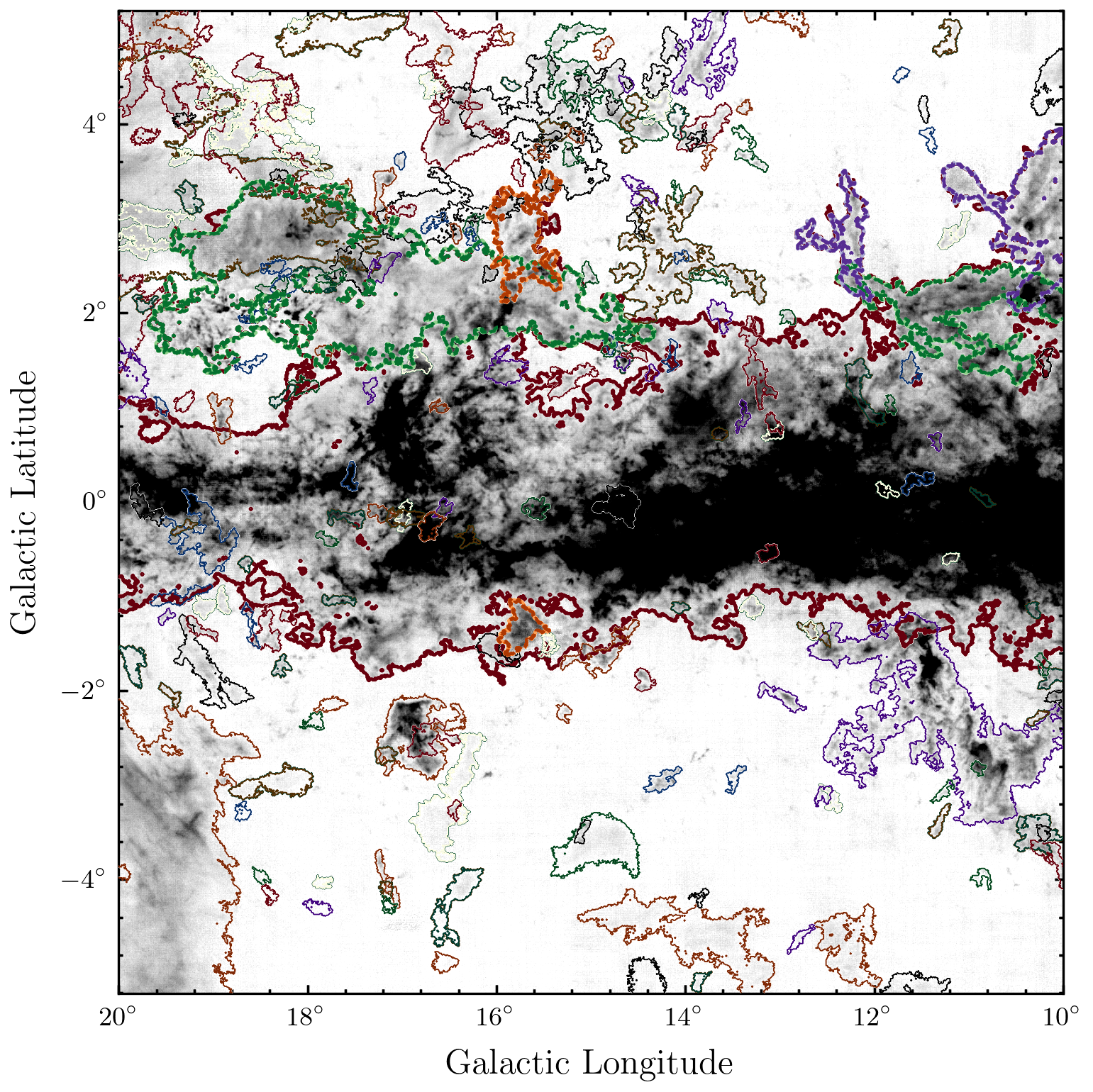
Figure 1: 121–122 distribution of identified molecular clouds on the 123CO integrated intensity background, with color-encoded DBSCAN cluster boundaries.
For distance estimation, the MCCD approach synthesizes simulated stellar color–distance distributions (via TRILEGAL) with the measured distribution for on-cloud stars, searching for a sharp increase in 124 color diagnostic of a cloud-induced extinction jump. Bayesian modeling with MCMC is employed to locate the most probable cloud distance, accounting for foreground diffuse extinction trends calibrated in cloud-free sightlines.
Distance Results and Validation
Of 216 125CO-identified clouds, 56 have direct distance determinations, spanning 275 pc 126 2118 pc. Notably, 47 distances are provided for the first time, with a typical statistical uncertainty of 1275% and acknowledged systematic effects (chiefly Gaia parallax error and the assumed Galactic extinction gradient) contributing an additional 12810% uncertainty.
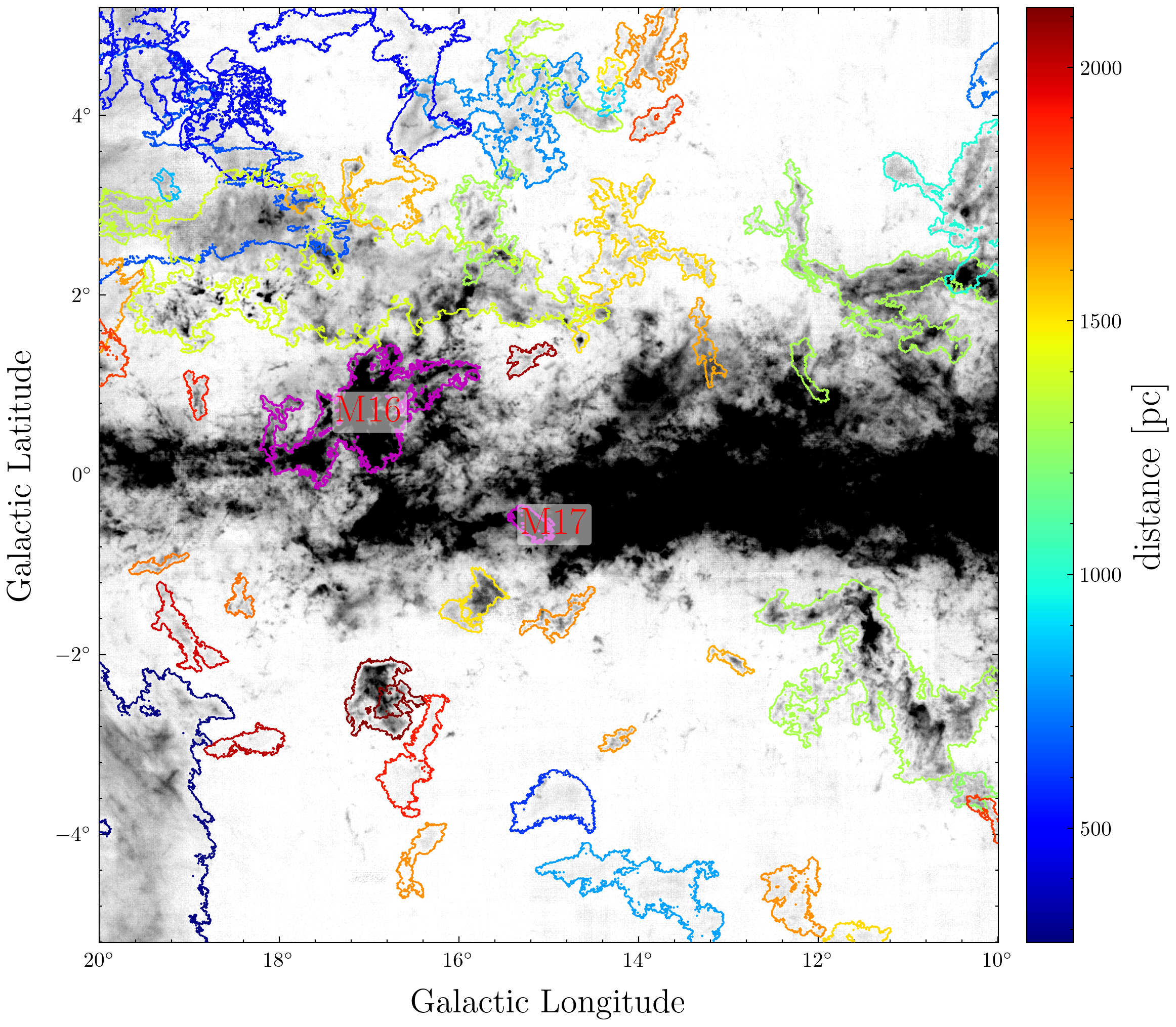
Figure 2: Map of distances to the 56 129CO molecular clouds, with color-coding by distance and l=10−20∘0CO integrated intensity in the background.
Comparisons between MCCD-derived and kinematic distances (using the A5 model of Reid et al. 2014) reveal broad consistency at l=10−20∘1 kpc, but systematic discrepancies for more distant clouds, where the kinematic method often overestimates distance or is rendered ambiguous by velocity overlap and non-circular streaming motions.
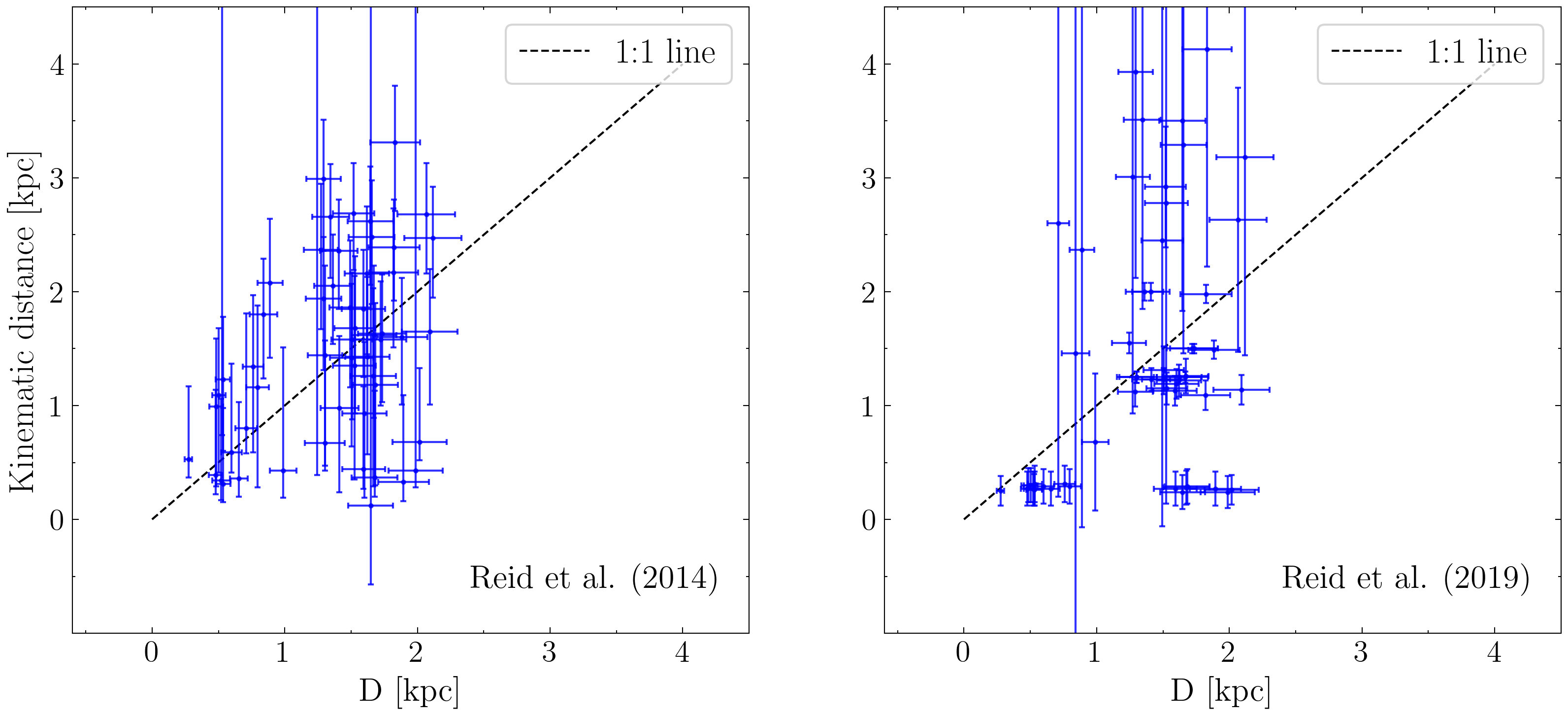
Figure 3: Direct comparison between MCCD and kinematic distances, demonstrating the breakdown of purely kinematic approaches at large l=10−20∘2 or in regions of near/far ambiguity.
For a subset of clouds, the derived distances were benchmarked against maser parallax measurements and other extinction-based literature values, with agreement well within combined uncertainties, further reinforcing the method’s reliability in the Gaia/2MASS era.
Physical Properties and Cloud Distribution
With secure distances, the authors derive linear radii (1.9–30.1 pc, median 5.25 pc) and masses (l=10−20∘3–l=10−20∘4 Ml=10−20∘5, median l=10−20∘6 Ml=10−20∘7) for the cataloged clouds, using standard l=10−20∘8CO-to-Hl=10−20∘9 conversion factors.
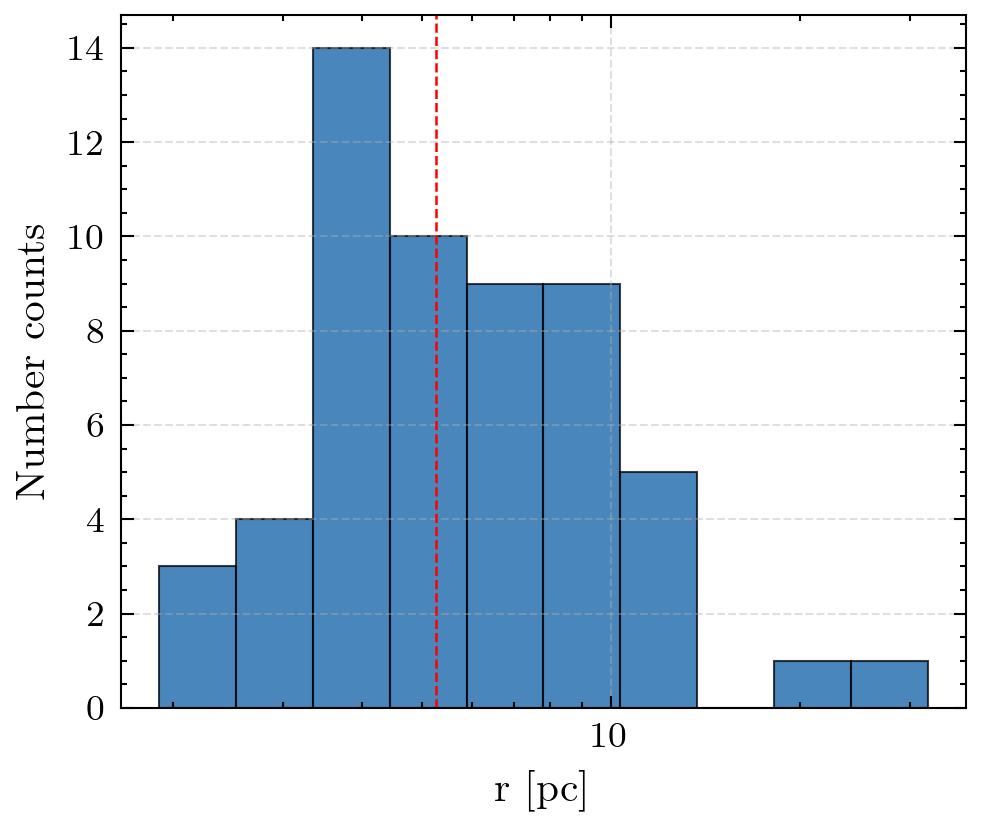
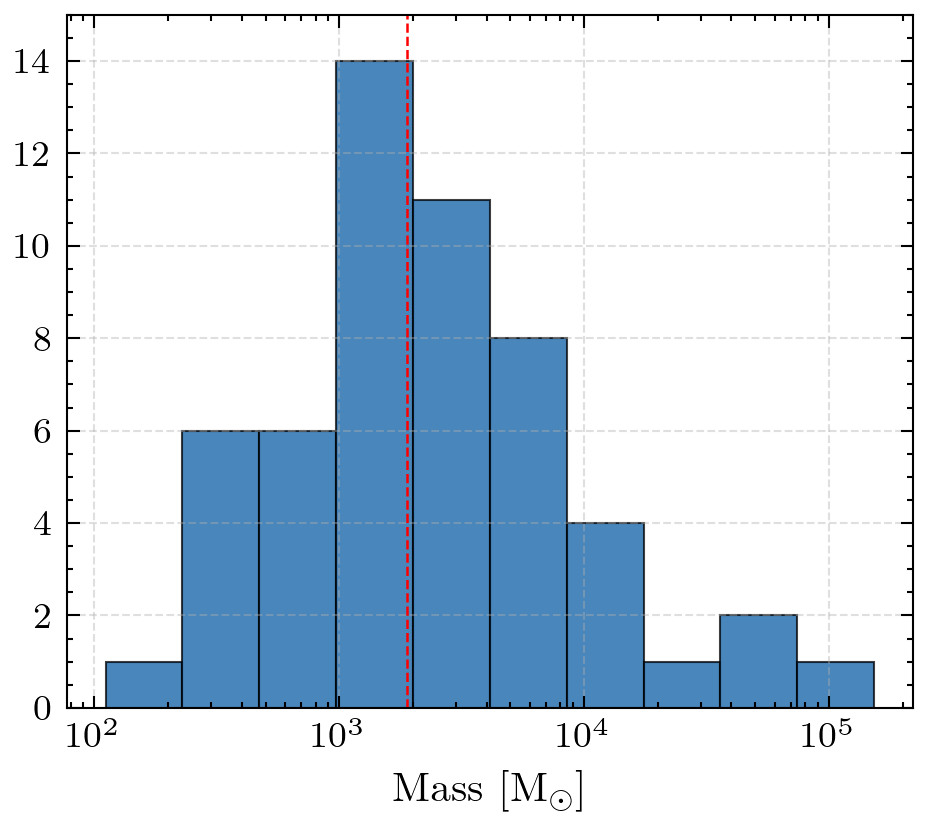
Figure 4: Histogram distributions of linear radii (left) and masses (right) for the distance-assigned molecular cloud sample. Red dashed lines mark median values.
Spatially, the newly cataloged clouds are situated in the near-side Perseus spur, Sagittarius arm, and inter-arm regions, in close correspondence to the dust distribution traced by independent 3D extinction maps [Vergely et al. 2022]. The analysis identifies several large clouds aligned with the trace of the Sagittarius–Carina arm.
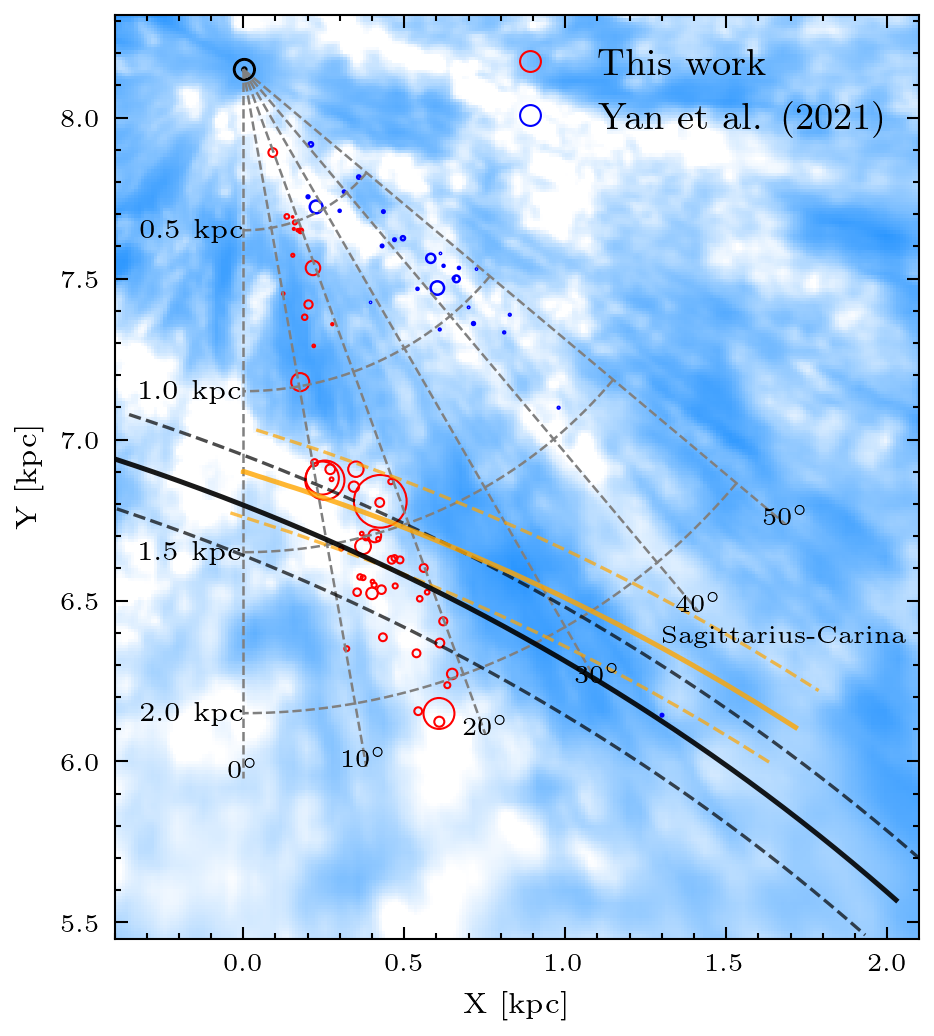
Figure 5: Plan view of cloud spatial locations (red) overlaid on the dust extinction map and compared with previously cataloged clouds (blue), showing excellent topological agreement.
Gas–Dust Correlations and Empirical Relations
The study quantifies the relationship between 120CO integrated intensity (121) and mean visual extinction (122), yielding a moderate correlation (123, 124), in line with previous findings [Li et al. 2024], but with notable scatter due to local environmental factors and cloud structure.
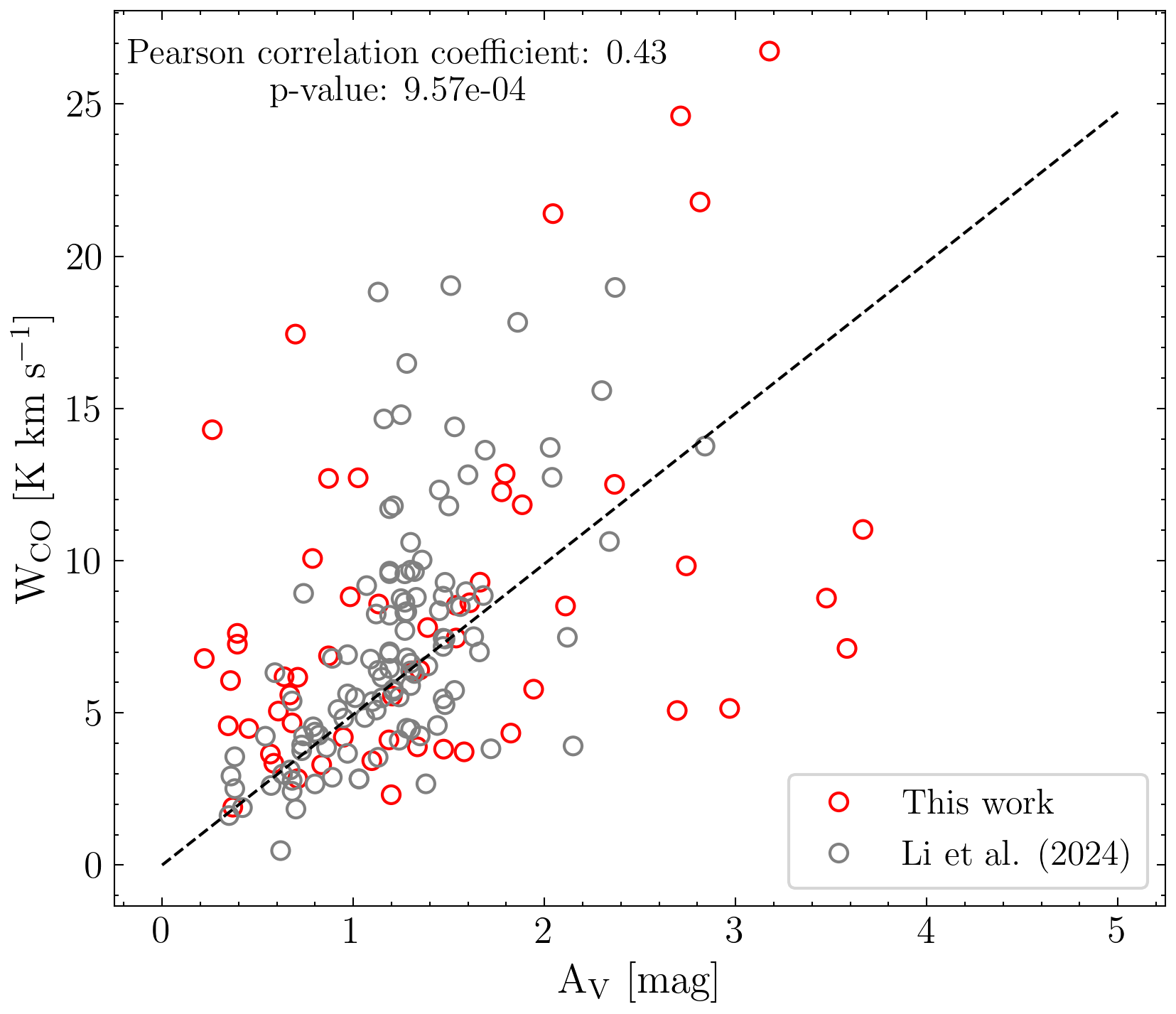
Figure 6: Relation between 125 and 126 for cataloged clouds, demonstrating a moderate but significant correlation consistent with canonical gas-to-dust conversion prescriptions.
Implications and Prospects
This work demonstrates that combining high-sensitivity CO mapping, modern clustering algorithms in PPV space, and Bayesian color–distance modeling anchored by Gaia/2MASS photometry yields a robust pipeline for deriving distances to molecular clouds even in crowded, ambiguous regions of the inner Galaxy. The systematic deployment of these techniques advances molecular cloud studies beyond the limitations of kinematic distances or manual assignment and extends reliable Galactic structure mapping to previously inaccessible sightlines.
The refined distances directly impact molecular cloud scaling relations and mass functions, resolve the spatial association of clouds with major spiral arm features, and facilitate investigation of star-formation efficiency and evolutionary status across environments. The moderate 127–128 correlation underlines the need for further studies to address environmental variations in the gas-to-dust ratio, metallicity gradients, and external radiation field effects.
Practically, this methodology can be extended to additional MWISP fields, enabling the assembly of a uniform, high-precision map of the molecular ISM for the entire northern Galactic plane. Theoretical implications include improved constraints on Galactic CO-to-H129 conversion factors, molecular cloud lifetimes, and the distribution function of cloud properties critical for numerical simulations of galaxy evolution.
Conclusion
The study provides a high-precision, systematically validated catalog of molecular cloud distances in a key inner-Galaxy longitude sector, with strong numerical reliability and methodological rigor. The combination of 120CO mapping, DBSCAN cloud identification, and MCCD extinction-based distance estimation effectively resolves longstanding ambiguities in mass, scale, and spatial allocation of molecular clouds. This work sets a new standard for ISM distance studies in complex and overlapping Galactic environments and offers a blueprint for future surveys and analyses (2604.15658).

