- The paper demonstrates that electron pressure anisotropy drives fast plasmoid-mediated reconnection in high-energy-density plasmas, validated by laser experiments and hybrid simulations.
- Time-resolved proton radiography and Thomson scattering diagnostics capture the evolution from monolithic current sheets to fragmented plasmoid structures.
- Hybrid simulations and linear instability analysis quantify how resistivity and isotropization influence the growth rates and dynamics of reconnection.
Experimental Approach and Diagnostic Innovations
This study targets the fundamental mechanisms underlying the onset and nonlinear evolution of plasmoid-mediated magnetic reconnection in high-energy-density (HED) plasmas—a regime directly relevant to space and astrophysical phenomena but notoriously difficult to probe in situ. The experimental platform employs the LULI2000 laser facility to generate counter-propagating, highly anisotropic plasma plumes via 5ns, 1014W/cm2 pulses on parallel copper (Cu) targets. The laser geometry yields current sheets with large aspect ratios (length ≫ width), matching astrophysical reconnection configurations more closely than preceding single X-line or bubble collision experiments.
Magnetic topology evolution is diagnosed using time-resolved proton radiography, capturing path-integrated perturbations in proton fluence as a proxy for evolving in-plane fields and current sheets. The proton images reveal: (1) initial monolithic, compressed current sheets, (2) progressive fragmentation with the emergence and coalescence of localized magnetic islands (plasmoids), and (3) a transition to a filamentary, nonlinear end-state.
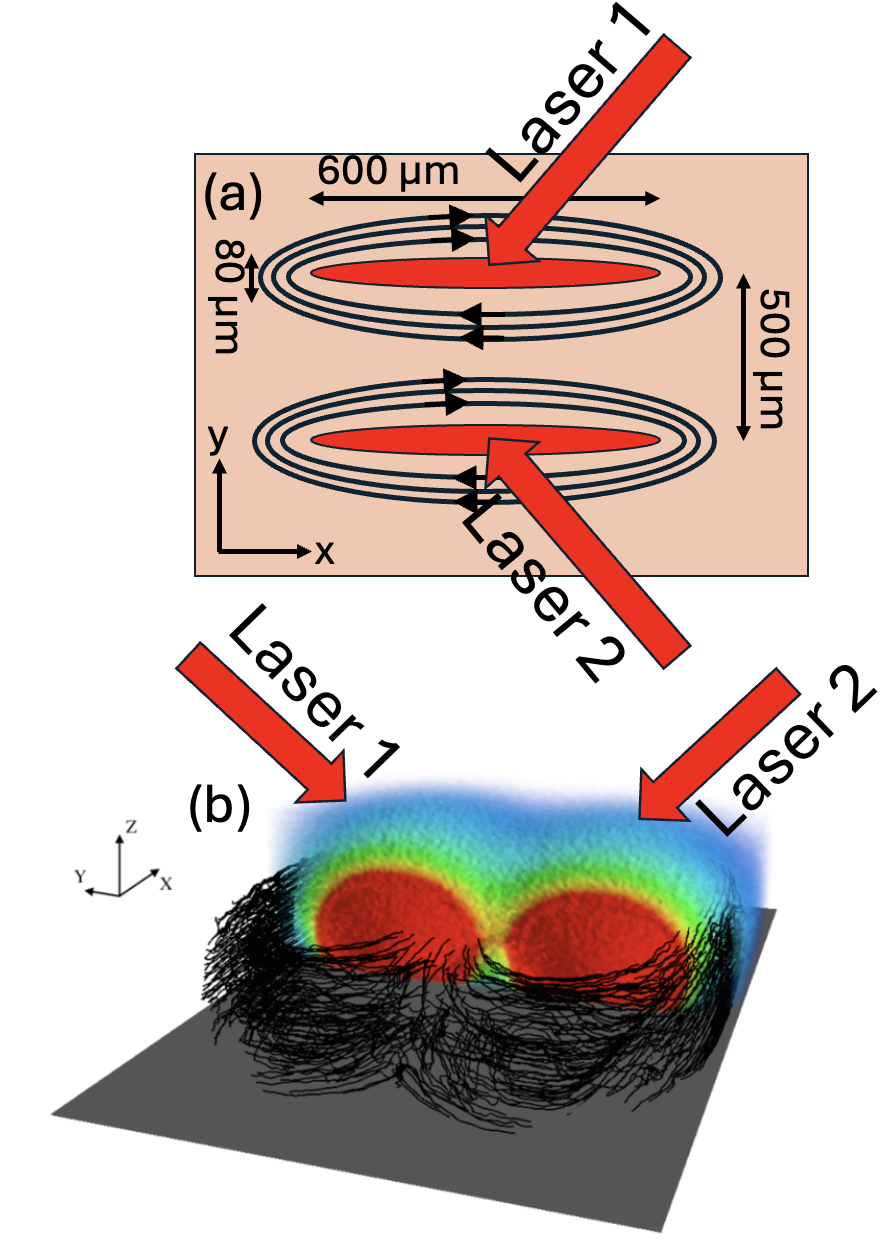
Figure 1: Schematic of the experimental geometry and 3D simulation setup, illustrating self-generated Biermann battery fields in expanding laser-driven plasmas prior to reconnection.
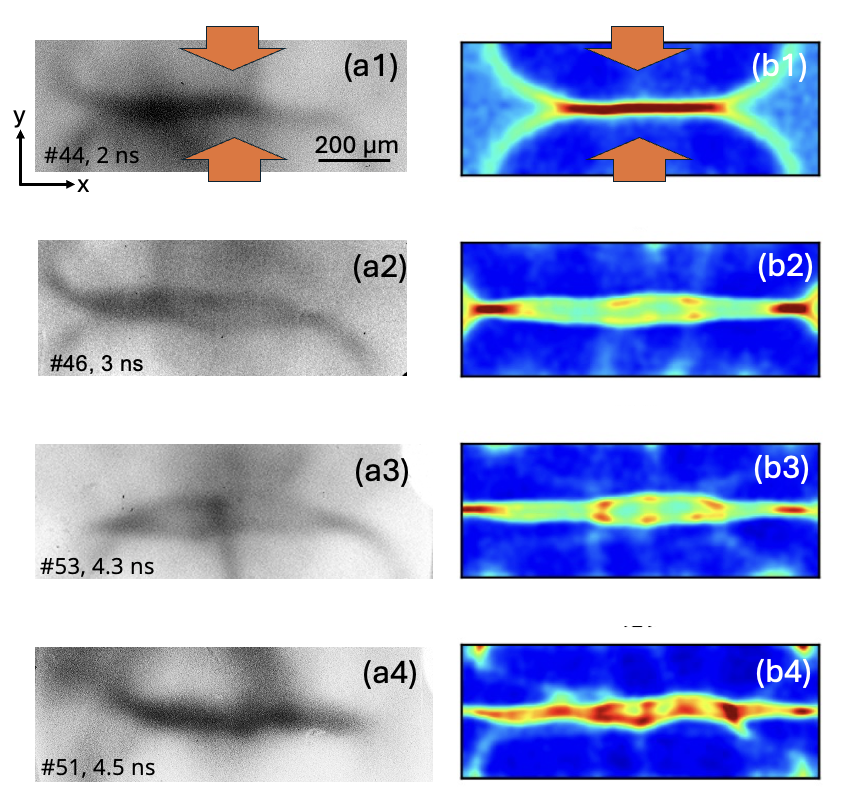
Figure 2: Temporal evolution of proton radiographs (top) and matching synthetic radiographs from hybrid simulations (bottom), showing the fragmentation of the current sheet and development of plasmoids.
Benchmarking with synthetic radiography derived from 3D hybrid simulations (ions as particles, electrons as a ten-moment fluid with closure for the pressure tensor) reveals quantitative agreement in the onset and fragmentation dynamics, supporting the validity of the physical model.
Role of Electron Pressure Anisotropy: Simulation and Analytical Results
Hybrid code simulations demonstrate that electron pressure anisotropy, quantified by the ratio A=Pxx/Pzz, catalyzes a fast tearing instability within the current sheet, driving reconnection and the onset of the plasmoid regime even in the near-absence of classical resistivity. This is corroborated by a linear instability analysis in the pressure-anisotropic regime, which predicts that the maximum growth rate γ is controlled by the degree of anisotropy and electron thermal velocity, with stabilizing contributions from both resistivity (η) and electron pressure isotropization (ωiso).
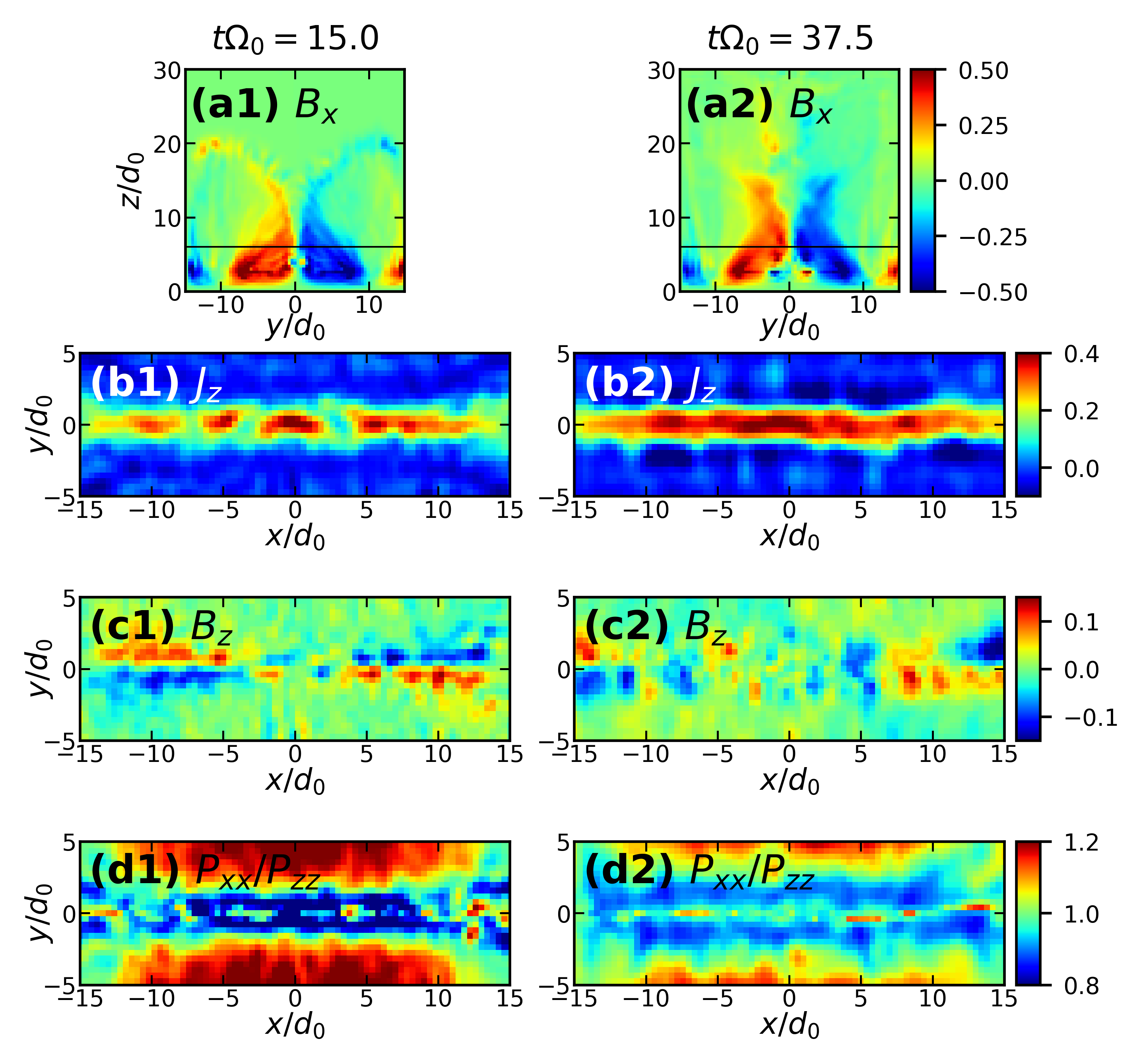
Figure 3: Hybrid simulation diagnostics show localized current density build-up, field line breakup, and growing electron pressure anisotropy, emphasizing its role in non-ideal reconnection.
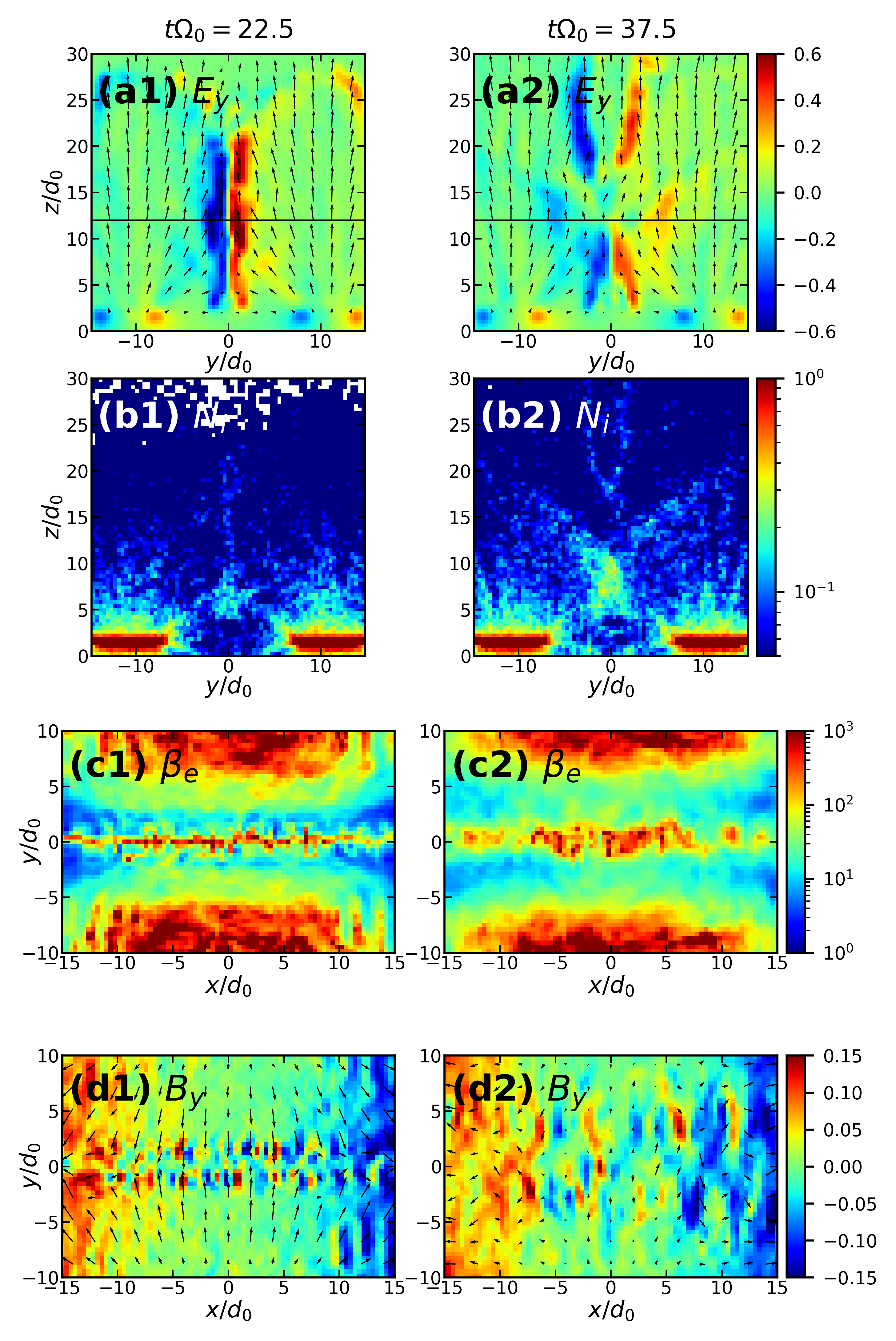
Figure 4: Mid-to-late time hybrid simulation snapshots highlight electric field and ion flow evolution, ion density accumulation, and redistribution patterns as reconnection proceeds.
The detailed structure of the reconnecting region reveals:
- In-plane field and current density mapping: Modulations consistent with tearing instabilities (Fig. 3a-b).
- Out-of-plane Hall field evolution: Transition from ordered quadrupolar to turbulent topology post-instability (Fig. 3c).
- Electron pressure anisotropy: Growth and saturation of Pxx/Pzz to ∼0.8 within the current sheet, supporting fast mode growth (Fig. 3d).
Sensitivity to Dissipative Processes
Parametric simulation scans elucidate the distinct roles of resistivity and pressure isotropization:
- Resistivity: Increased η suppresses plasmoid formation, producing smooth, broadened current sheets incompatible with experimental radiography.
- Isotropization: Moderate isotropization damps but does not eliminate tearing. Only for large isotropization rates do plasmoid signatures disappear, highlighting the robustness of anisotropy-driven growth in the physical regime realized experimentally.
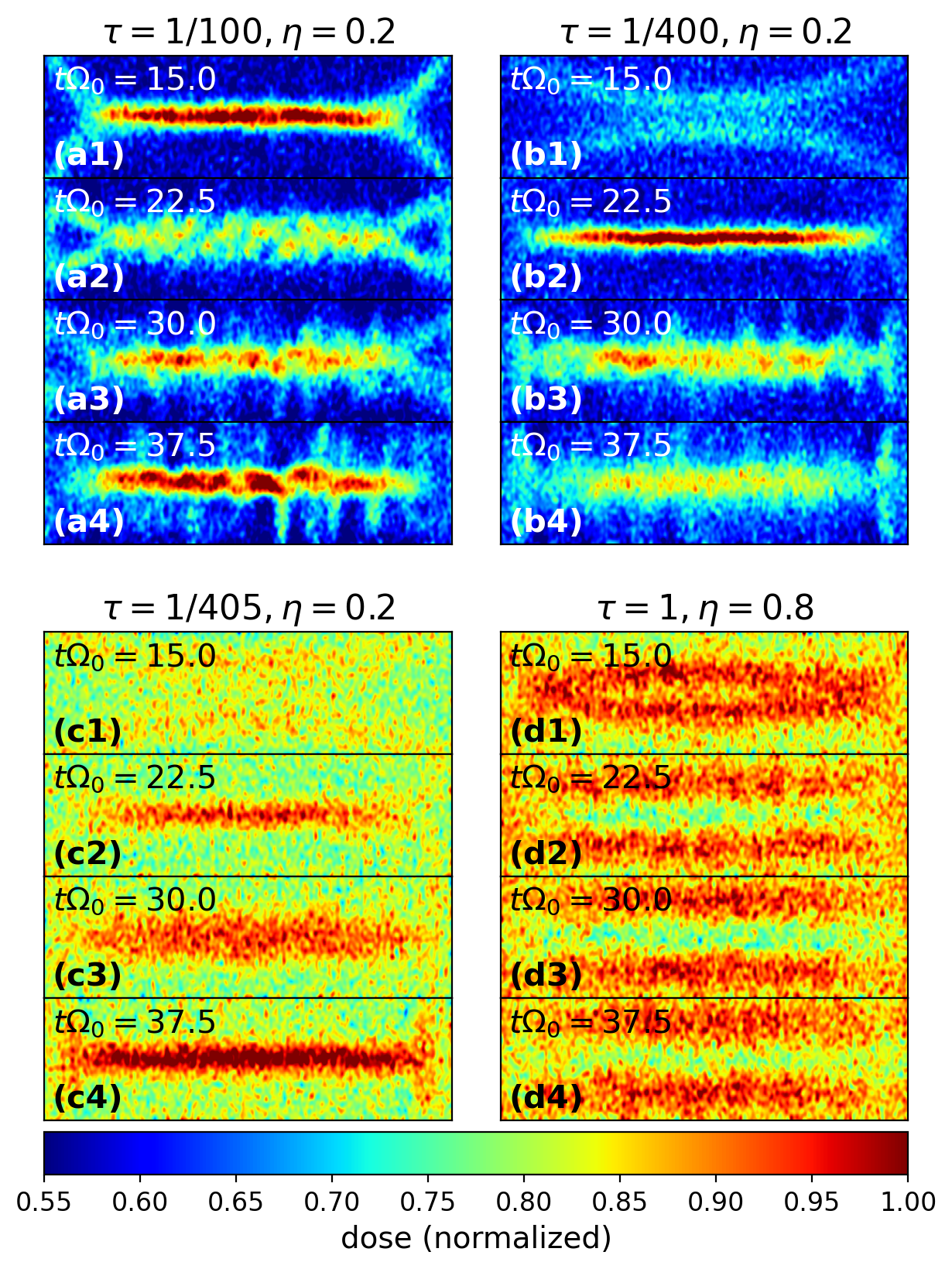
Figure 5: Synthetic radiographs for varied dissipation parameters. Increasing isotropization and resistivity progressively suppress plasmoid formation.
Linear Instability Analysis and Growth Rates
The study's analytical development, rooted in the ten-moment pressure tensor model, further clarifies the competition between kinetic drivers and dissipative stabilization. Linear growth rates for the unstable modes scale with pressure anisotropy and are maximized for intermediate 1014W/cm20 (wavelengths), while resistivity and isotropization shift the instability boundary and reduce mode amplitudes.
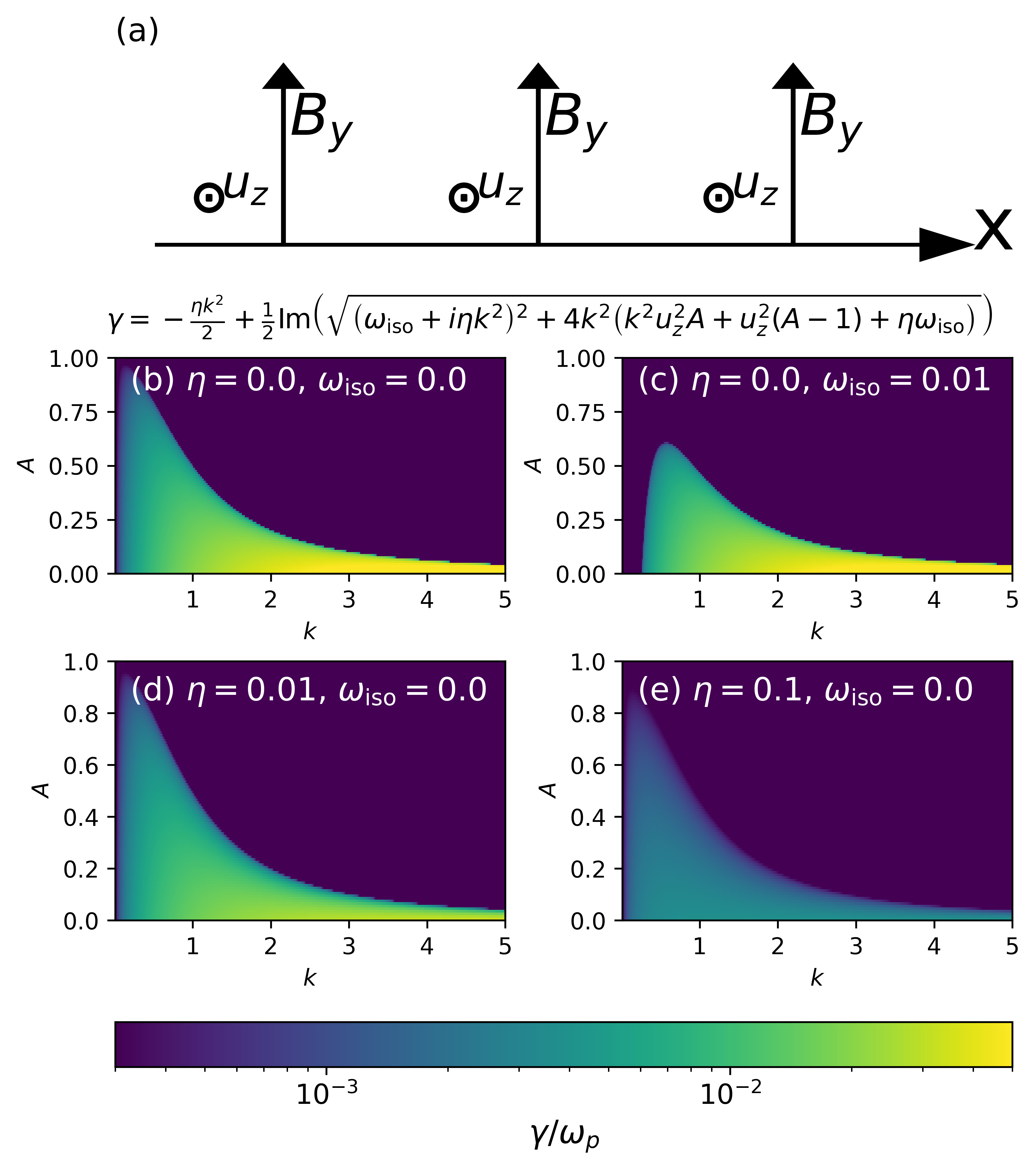
Figure 6: Linear stability analysis reveals dependence of the normalized growth rate 1014W/cm21 on wavenumber 1014W/cm22 and anisotropy 1014W/cm23, and demonstrates damping due to resistivity and isotropization.
Plasma Conditions and Thermodynamic Diagnostics
Thomson scattering diagnostics provide independent access to local electron and ion temperatures and densities across the reconnection region. High electron temperatures (1014W/cm24) and 1014W/cm25 are observed; the electron thermal pressure is enhanced during plasmoid growth, and electrons show a strong temperature excess relative to ions, particularly within the current sheet and plasmoids. This aligns with simulations, implying preferential electron heating and sustained pressure anisotropy as a consequence of reconnection dynamics.
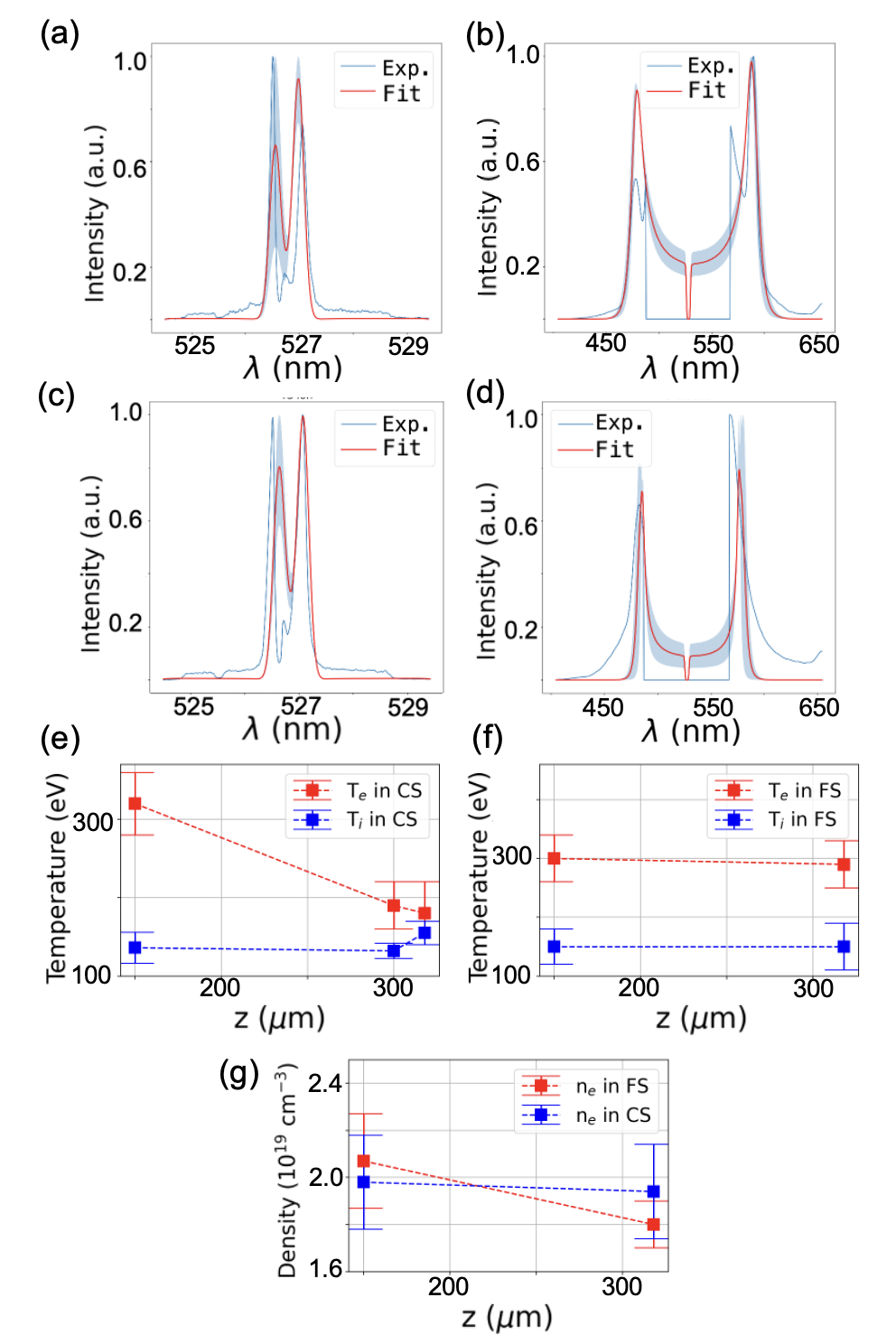
Figure 7: Fitted Thomson scattering spectra at multiple positions and time delays, establishing spatiotemporal evolution of 1014W/cm26, 1014W/cm27, and 1014W/cm28 in the current sheet and focal spot axis.
Temporal plasma self-emission measured by optical pyrometry further supports the existence of reconnection-driven instabilities and plasmoid formation. The fragmentation phase is accompanied by intensity oscillations and abrupt jumps in emissivity, corresponding to the dynamic emergence and ejection of plasmoids.
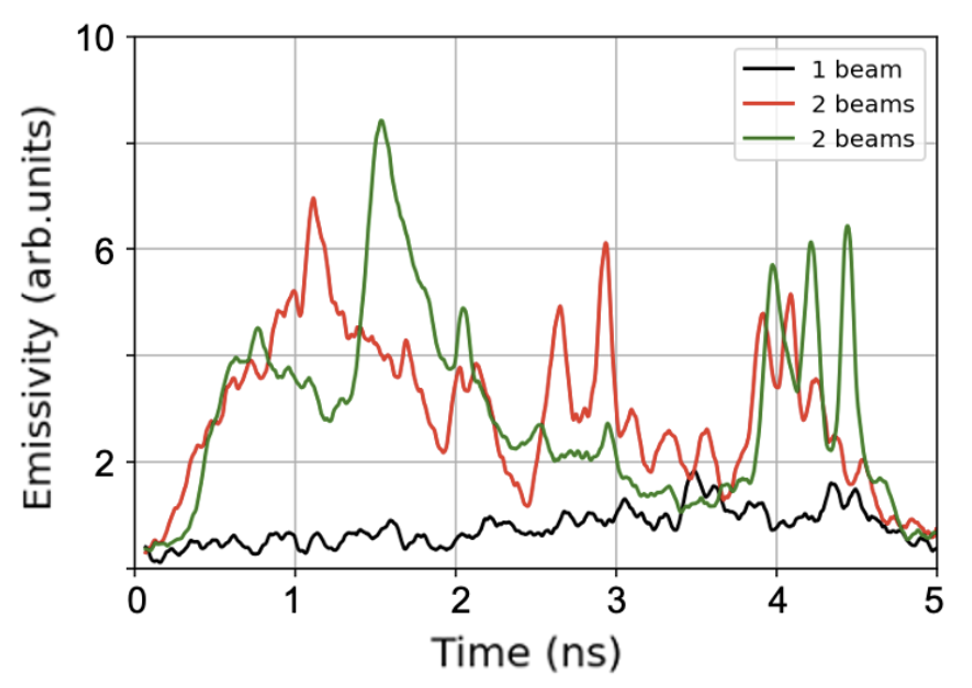
Figure 8: Time-resolved optical self-emission at the current sheet location reveals episodic emissivity bursts coinciding with sheet fragmentation and nonlinear reconnection.
Implications and Future Directions
This study offers clear laboratory evidence that electron pressure anisotropy can serve as the dominant microphysical driver of plasmoid-mediated magnetic reconnection in high-1014W/cm29, weakly collisional HED plasmas, even in near-absence of classical resistivity. This mechanism operates effectively under extended aspect-ratio current sheet geometries and underscores the limitations of purely resistive or collisionless tearing theory for describing reconnection in intermediate regimes.
The hybrid kinetic-fluid modeling framework is validated by the close correspondence to proton radiography, enabling predictive simulation-based interpretation of experimental observations. However, limitations remain: the path-integrated nature of radiography and finite spatial resolution of the simulations constrain the ability to resolve sub-ion and electron scales, suggesting the need for complementary full-PIC calculations or next-generation diagnostics.
Theoretical and Astrophysical Relevance
This work has direct implications for the modeling of reconnection in planetary magnetotails, solar coronae, and accretion flows, where electron pressure anisotropy and effective collisionality may both vary dramatically. The demonstration that non-resistive microphysics can trigger and sustain fast reconnection places bounds on the expected reconnection rates and energy partitioning in both laboratory and natural plasma systems.
Conclusion
By combining high-resolution laboratory experiments, sophisticated hybrid simulations, and analytical modeling, this study establishes electron pressure anisotropy as a key driver of plasmoid-mediated magnetic reconnection under accessible HED plasma conditions. The findings bridge a critical gap between classical resistive and fully kinetic models, and motivate further work on multi-scale simulation and improved kinetic closures for electron dynamics. Future developments may exploit these mechanisms to design controlled reconnection platforms, probe astrophysical scaling, and optimize energy release in magnetized plasma applications.