- The paper introduces explicit constructions using topological path integrals to generate magic and non-Clifford gates with quantified resource metrics.
- It employs Chern-Simons and Dijkgraaf-Witten theories to contrast gate realizations via fusion tensors, modular transformations, and group cohomology.
- The study outlines topological obstructions and potential schemes for advanced gates like the Toffoli, linking algebraic invariants to computational power.
Magic and Non-Clifford Gates from Topological Quantum Field Theory
Introduction
This work presents a systematic investigation into the emergence of magic and non-Clifford gates through path integrals in topological quantum field theory (TQFT). The analysis is performed primarily within Chern-Simons theory and Dijkgraaf-Witten theory, elucidating how algebraic and topological data dictate the accessibility and nature of non-Clifford computational resources. The authors delineate explicit constructions for magic-generating gates, examine the intrinsic limitations associated with different TQFTs, rigorously quantify resource-theoretic properties such as non-stabilizing power and non-local magic, and demonstrate contrastive behavior between different TQFTs regarding which levels of the Clifford hierarchy are realized through modular path integrals.
Topological Quantum State and Operator Preparation
The framework is founded upon the established correspondence between path integrals on three-manifolds and state preparation in TQFT [Salton et al., (Salton et al., 2016)]. For Chern-Simons theories, the path integral over a solid torus with a Wilson loop through its non-contractible cycle prepares a basis state labeled by an irreducible representation (Figure 1):
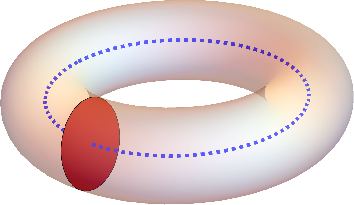
Figure 1: Path integration on the solid torus with a Wilson loop along C generates ∣j⟩ in HT2, where j indexes the irreducible representation.
Multipartite and operator structures are constructed by considering more involved three-manifolds, e.g., the "eta" manifold (a solid torus with internal tori removed), which facilitates the preparation of fusion tensors and, correspondingly, entangling gates (Figure 2):
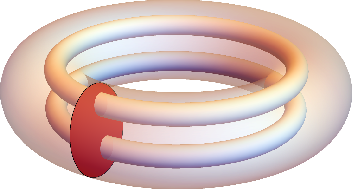
Figure 2: The eta manifold, path-integrated with Wilson loops, prepares states with coefficients proportional to Nj1j2j3, the fusion tensor entries.
These constructions translate topological and algebraic operations into explicit linear transformations and stabilizer-state preparations.
Clifford and Non-Clifford Gates in Chern-Simons Theory
Clifford gates in SU(2)1 Chern-Simons theory are realized as modular transformations and fusion-derived operators. The modular S and T transformations generate the full Clifford group action on the torus Hilbert space: for SU(2)1, S yields the Hadamard, and composite modular transformations in conjunction with Pauli operators yield phase gates and controlled-sum gates. The construction shows that the Chern-Simons path integral provides a topological method for Clifford unitary preparation.
The central advance is the explicit topological realization of the Ising interaction gate:
∣j⟩0
where ∣j⟩1 and ∣j⟩2 are Pauli ∣j⟩3 operators on separate logical qubits, each implementable as a fusion tensor in ∣j⟩4 via the eta manifold.
The construction of this gate leverages the path integral over the disjoint union of two eta manifolds, corresponding to the tensor product operator ∣j⟩5. The non-Clifford nature of ∣j⟩6 emerges for generic ∣j⟩7: the only Clifford points correspond to ∣j⟩8 values associated with the identity or certain Clifford gates.
Strong numerical results are provided for this two-qubit gate:
- The operator linear entropy of ∣j⟩9, a proxy for operator entanglement, is HT20 and peaks at HT21.
- The non-stabilizing power, HT22, quantifying average magic generated from stabilizer inputs, is HT23, peaking at HT24.
Both quantities vanish at the Clifford points, confirming that HT25 produces genuine magic except at discrete angles. Non-local magic is explicitly demonstrated by tracking how the conjugation by HT26 rotates local Pauli strings into operators with nontrivial bipartite entanglement—a result formalized via operator linear entropy.
Topological Obstructions and the Toffoli Gate
The authors then address the accessibility of more intricate non-Clifford gates, exemplified by the Toffoli gate. The fusion algebra of HT27 is isomorphic to HT28, insufficient to distinguish control states with only parity: specifically, fusion cannot discriminate the logical control configuration HT29 from j0. This provides a sharp topological obstruction to realizing a Toffoli via j1 path integrals.
In contrast, j2 exhibits sufficiently rich fusion rules: j3. The presence of distinct fusion channels conditioned on dual control qubits enables one to enforce the logical AND structure underlying the Toffoli. The authors outline a scheme in which a connected 3-manifold mediates the sequential fusion operations, selecting the spin-1 intermediate state only for the j4 control configuration, which can then be used to implement a controlled j5 on the target. The explicit surgery presentation and demonstration of leakage cancellation in the logical subspace are left as technical open problems. Nevertheless, density arguments from the mapping class group in j6 Hilbert space ensure that the Toffoli gate can be approximated to arbitrary precision by topological path integral constructions [Freedman et al., quant-ph/0101025].
Dijkgraaf-Witten Theory and the T-Gate
A significant contrast with the Chern-Simons setting arises in Dijkgraaf-Witten theory with finite gauge group j7 and generating 3-cocycle j8. Here, the modular j9-matrix, implemented by a single Dehn twist, realizes
Nj1j2j30
on the 4-dimensional torus Hilbert space. With a logical encoding in the Nj1j2j31 subspace, this yields the standard Nj1j2j32-gate:
Nj1j2j33
This is a manifestly non-Clifford operation at the third level of the Clifford hierarchy, prepared exactly by the path integral—no approximation or parameter tuning is required. The result underscores the role of group cohomology: the cocycle data rather than conformal dimensions dictate the Clifford hierarchy level accessible via modular path integrals.
Comparative Analysis and Theoretical Implications
The paper draws a clear architectural distinction between Chern-Simons and Dijkgraaf-Witten realizations of non-Clifford gates:
- In Nj1j2j34 Chern-Simons, modular Nj1j2j35 produces Clifford only; magic must be constructed via continuous deformation of certain fusion-based operators, such as Nj1j2j36.
- In Dijkgraaf-Witten with Nj1j2j37, modular Nj1j2j38 is inherently non-Clifford, determined by 3-cocycle inputs.
Theoretical implications are multifaceted:
- Resource Theory: The study reveals that the ability to produce magic, especially non-local magic, is determined by the topological and algebraic data of the TQFT—linking quantum resource theory with topological invariants and modular group representations.
- Topological Quantum Computing: The results illuminate the constraints and avenues for implementing universal gates in topological codes through path integral and surgery techniques, identifying minimal models required for key logical operations.
- Clifford Hierarchy and Cohomology: The cohomological origin of higher-hierarchy operations in Dijkgraaf-Witten theory suggests a route to classifying the computational power of TQFTs indexed by group cohomology classes, in accord with general constraints derived for locality-preserving gates in topological codes [Beverland et al., J. Math. Phys. 57, 022201 (2016)].
Prospects and Open Problems
Several open directions are highlighted:
- The explicit construction—via surgery presentations—for the topological Toffoli in Nj1j2j39, along with rigorous demonstration of logical leakage suppression.
- The existence (or not) of topological invariance in operational measures of magic, in analogy to entanglement entropy's topological invariance across certain subsystems.
- The development of a unified topological encoding admitting Ising, Toffoli, and SU(2)10-gates across a single theory.
- Further comparison between magic generated through manifold surgery versus non-Clifford gates induced by anyon braiding in non-abelian theories at higher levels.
Conclusion
By connecting non-Clifford gate construction to the algebraic and topological features of Chern-Simons and Dijkgraaf-Witten theories, this work provides a cohesive operator-theoretic characterization of magic in TQFT. The findings demonstrate that topological path integrals can realize non-Clifford resources at multiple Clifford hierarchy levels, but that topological and cohomological obstructions circumscribe which gates are accessible in a given theory. This establishes a rigorous bridge between topological quantum resource theory and the operational demands of quantum computation (2604.14271).