- The paper demonstrates an AI-driven workflow that iteratively explores nonperturbative ansatze to extract quark TMD PDFs from Drell–Yan data.
- It employs a multilayer perceptron surrogate model combined with affine-invariant MCMC for efficient Bayesian uncertainty quantification.
- Comparisons with replica-based methods highlight differences in uncertainty bands and showcase the approach’s potential for advancing precision QCD analyses.
Overview and Methodological Advances
The paper presents a comprehensive global analysis of unpolarized quark transverse-momentum-dependent parton distribution functions (TMD PDFs) from Drell–Yan data, employing a Bayesian inference framework enhanced with AI tools at multiple stages. The theoretical calculations leverage TMD factorization at N3LO combined with N4LL resummation accuracy. The work integrates fixed-target, RHIC, and LHC data, achieving a full coverage of experimentally accessible kinematics for quark TMDs.
A notable methodological innovation is the AI-driven iterative exploration of nonperturbative ansatze. Specifically, OpenAI Codex (GPT-5.4) was used to systematically generate, rank, and refit candidate functional forms for both the nonperturbative TMD PDF sector and the Collins--Soper evolution kernel, subject to strict theoretical constraints and phenomenological diagnostics. This approach enables a data-driven, less biased parameterization and thoroughly interrogates the ansatz space, essential for robust uncertainty quantification.
Bayesian inference is facilitated by the construction of a multilayer perceptron (MLP) surrogate model for the TMD cross section. This emulator dramatically accelerates likelihood evaluation, permitting efficient posterior sampling via an affine-invariant ensemble Markov Chain Monte Carlo (MCMC). The Bayesian results are directly compared to those from the Monte Carlo replica method—an established frequentist approach—to assess differences in fit quality and uncertainty structure.
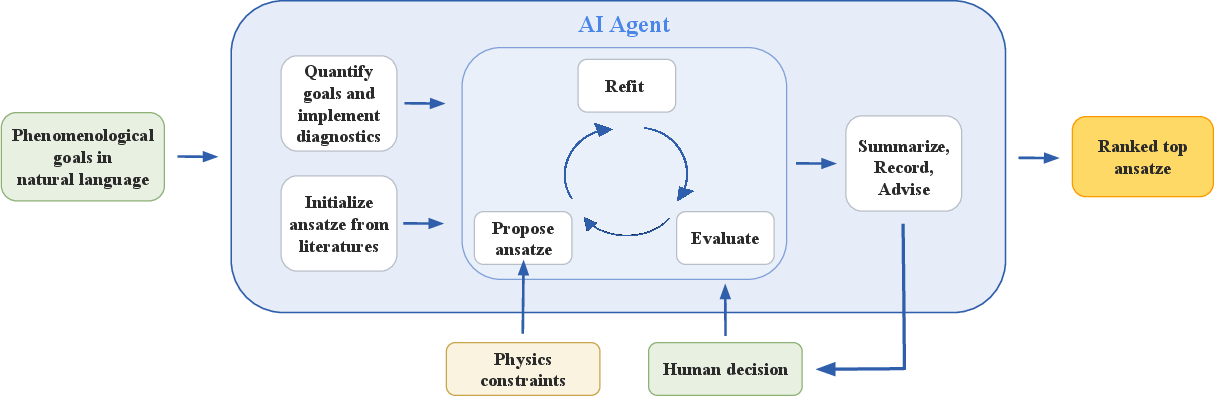
Figure 1: Schematic overview of the AI-agent-driven workflow for exploring nonperturbative ansatze. The blue box highlights the tasks carried out by the AI agent.
AI-driven Workflow and Bayesian Inference
The AI-agentic workflow follows a controller–executor–reviewer structure, orchestrated by GPT-5.4 Codex, to adaptively score, generate, and validate candidate ansatze and surrogate models. The agent leverages multistart refits, global χ2/Npt diagnostics, dataset-specific normalization checks, finite-difference Hessian analysis for parameter significance and correlations, and domain-specific physicality constraints (e.g., positivity and smoothness of TMD PDFs in (x,b) and (x,kT) space).
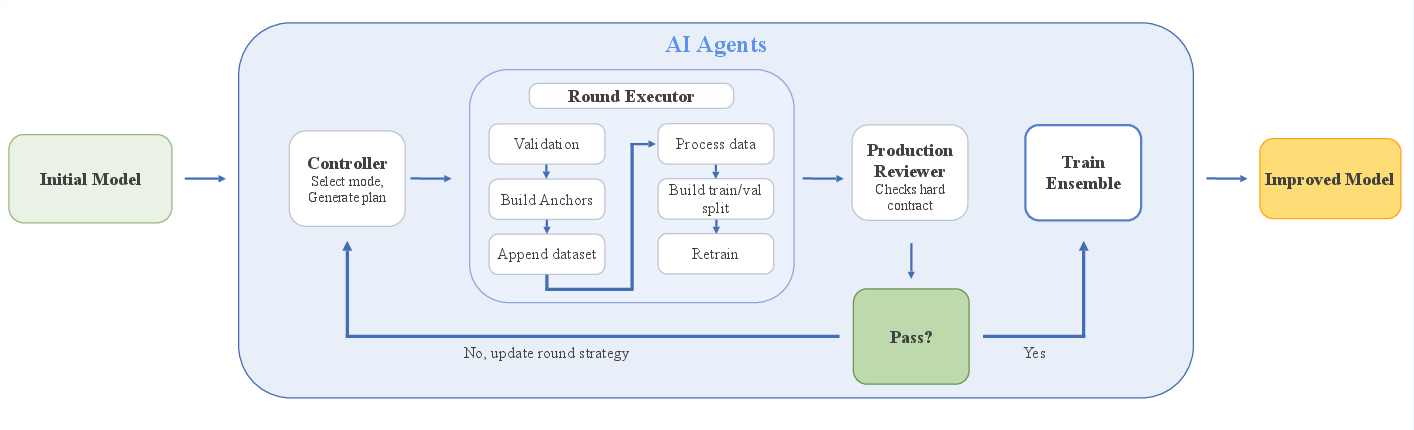
Figure 2: Schematic view of the controller–executor–reviewer workflow for adaptive anchor scoring, truth-level data generation, surrogate retraining, and review against fixed validation criteria.
The Bayesian inference proceeds under a marginalized likelihood, explicitly propagating collinear PDF uncertainties via replica averaging. The nested MLP emulator learns whitened residuals in PCA-compressed latent space, achieving near-exact reproduction of the full theory predictions. Predictive uncertainty is handled using deep ensemble variance and a trust-score-based fallback mechanism to direct exact theory evaluations when necessary.
Posterior sampling employs emcee’s affine-invariant ensemble MCMC, with Beta priors in normalized coordinates. Diagnostics include autocorrelation time, split-R^, and acceptance fraction, ensuring sampling efficiency and posterior fidelity. Posterior summaries yield both marginal distributions and detailed correlation structure among the nine nonperturbative parameters.
Quantitative Results and Parameter Correlations
The central 68% intervals of the fitted parameters are obtained for both the Bayesian and replica analyses. The fit achieves χ2/N≃1 for nearly all datasets, encompassing collider and fixed-target measurements.
The replica and Bayesian methods yield consistent central parameter values and similar fit qualities, though modest differences are observed in the uncertainty bands and parameter correlations. The Bayesian approach favors broader uncertainties for selected parameters (e.g., σx in the Gaussian deformation of lnx), while the replica method yields larger uncertainties for others (notably c0 and 40 governing the Collins–Soper kernel).
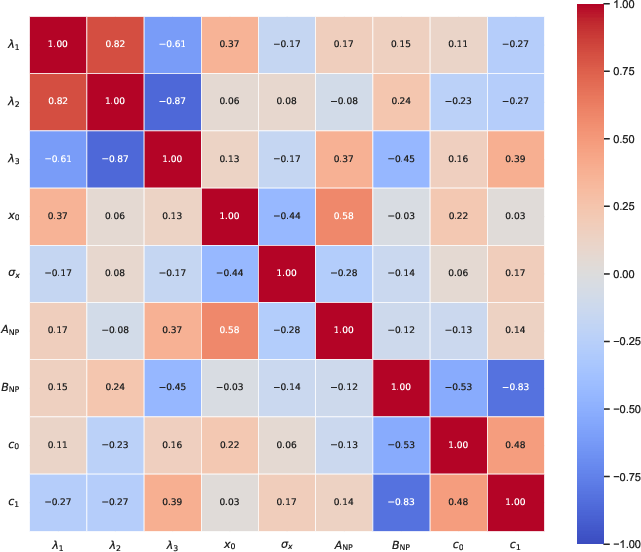
Figure 3: Correlation matrix for the replica distribution of the nonperturbative parameters. The entries displayed in each cell are the corresponding correlation coefficients.
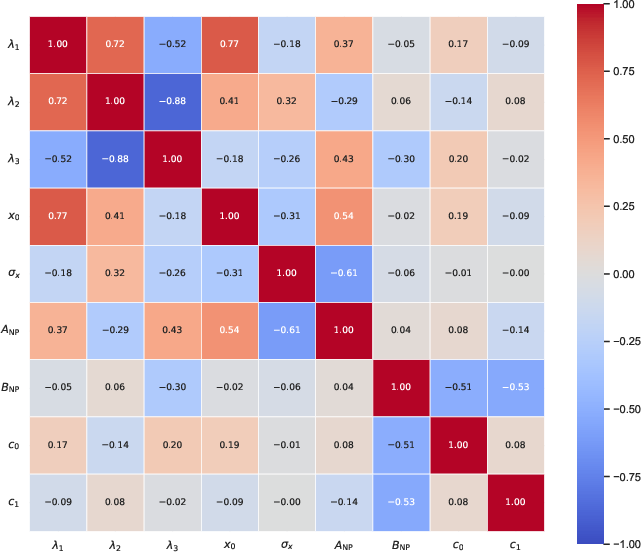
Figure 4: Correlation matrix for the Bayesian distribution of the nonperturbative parameters. The entries displayed in each cell are the corresponding correlation coefficients.
Parameter subsets are clearly identified: shape parameters (41, 42, 43), Gaussian parameters (44, 45, 46), and Collins–Soper kernel parameters (47, 48, 49). Correlations are strongest within subsets, particularly among shape parameters and Collins–Soper kernel coefficients.
Collins–Soper Kernel and TMD PDF Extraction
The extracted Collins–Soper kernel at χ2/Npt0 GeV is compatible across inference methods, with overlapping 68% bands. Comparison to previous phenomenological (EEC, ART23/25, MAP24) and lattice QCD (ASWZ24, LPC23, BGMZ24) determinations shows good agreement, particularly in the perturbative region and for large χ2/Npt1, the extracted kernel lies closest to EEC and ASWZ24, interpolating the spread seen in the ART series.
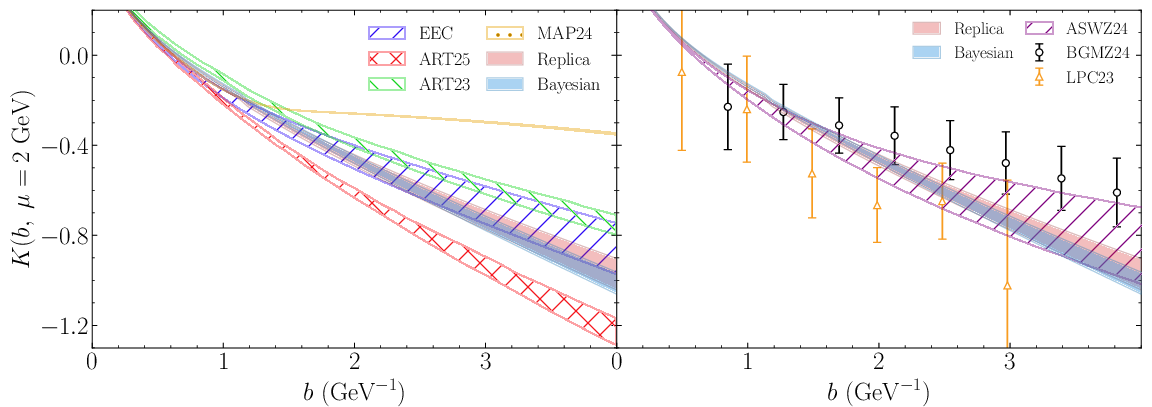
Figure 5: Comparison of the extracted Collins–Soper kernel with phenomenological and lattice determinations. Here, χ2/Npt2 is plotted.
The reconstructed χ2/Npt3-space and χ2/Npt4-space TMD PDFs are smooth, positive-definite, and exhibit the expected suppression at large χ2/Npt5 and broadening at higher χ2/Npt6. The evolution effects shift the maximum of the TMD PDFs and modify the χ2/Npt7 dependence across scales.
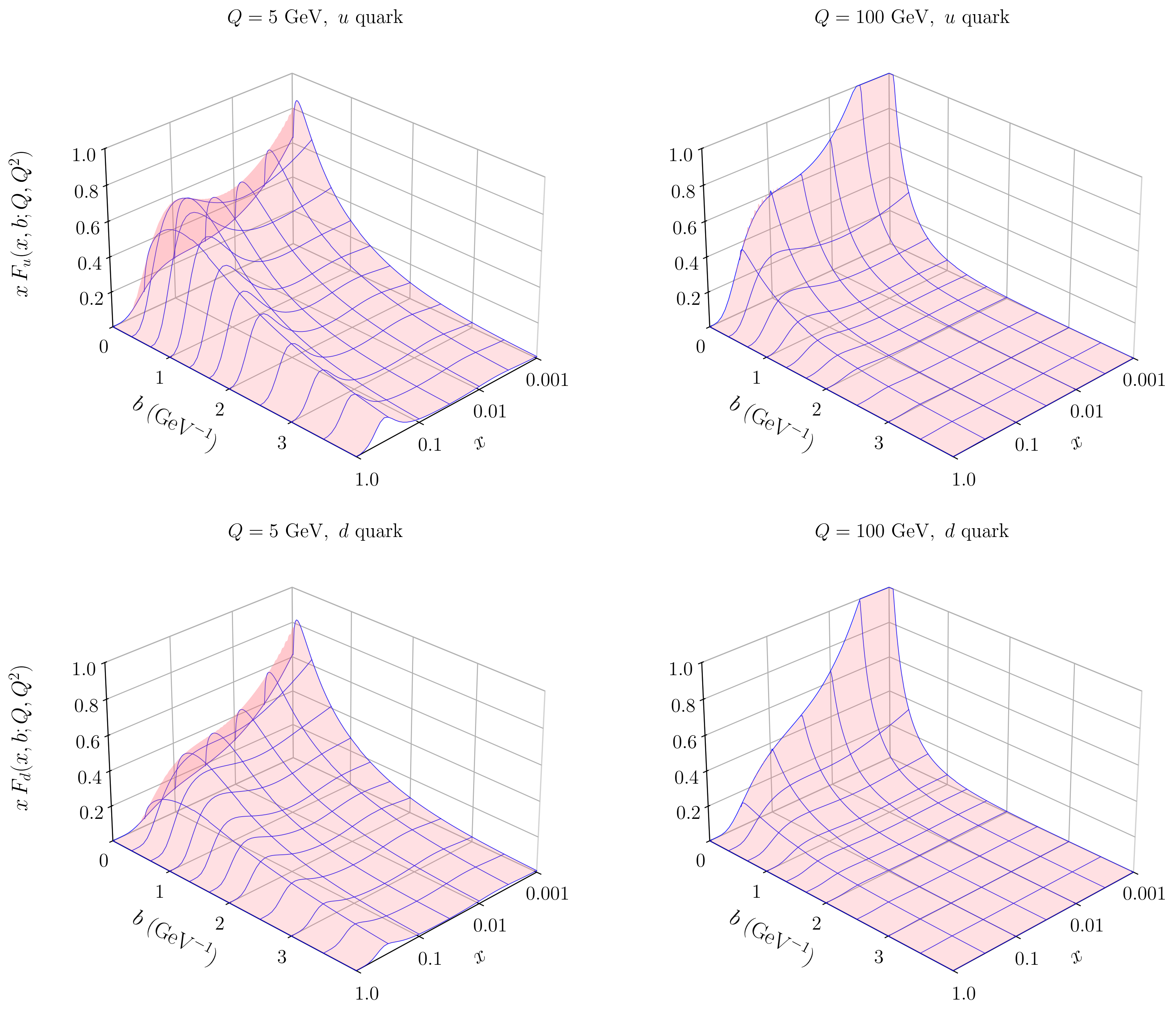
Figure 6: χ2/Npt8-space TMD PDF χ2/Npt9 for (x,b)0 at (x,b)1 and (x,b)2.
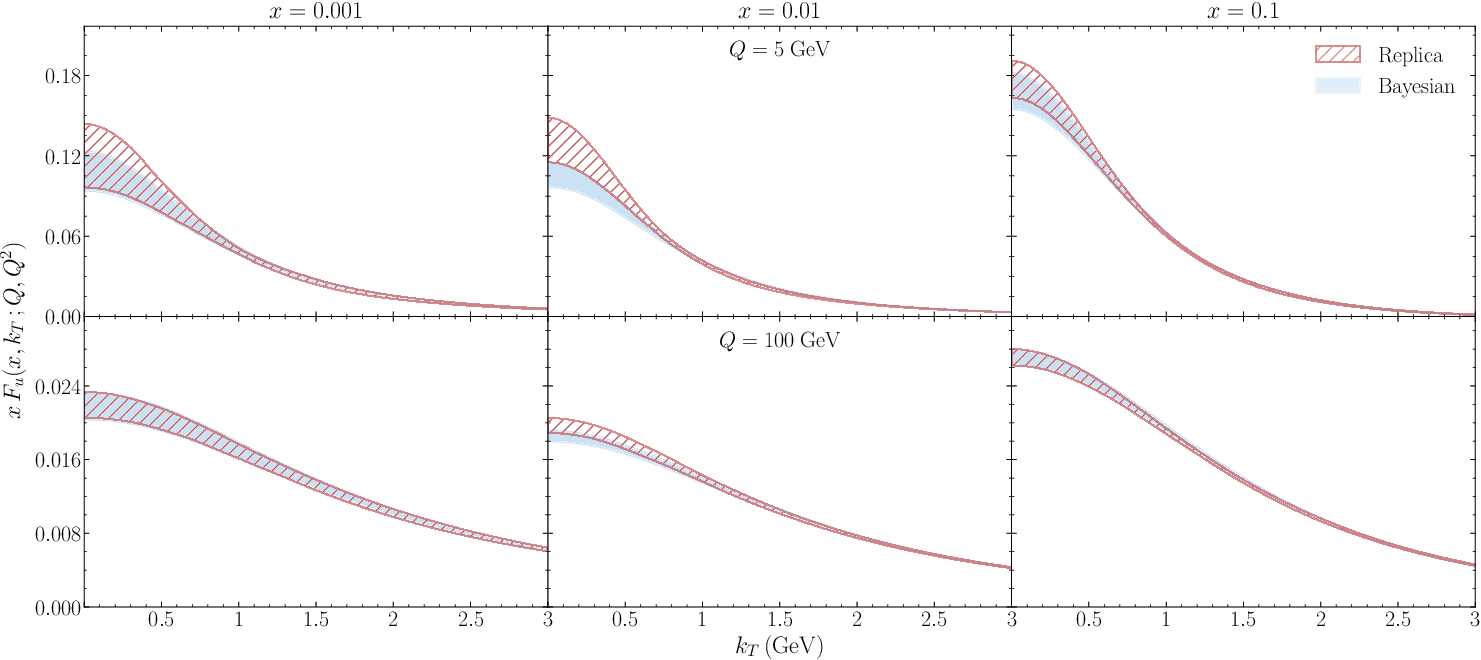
Figure 7: Comparison of replica and Bayesian 68\% uncertainty bands for the momentum-space TMD PDF (x,b)3. Three (x,b)4 values and two (x,b)5 slices shown.
Comparison to Data and Uncertainty Estimates
Cross-section predictions, compared to ATLAS, CMS, and LHCb collider data as well as fixed-target E288, E605, and E772 datasets, demonstrate highly consistent central predictions between replica and Bayesian analyses. Differences manifest primarily in band widths; Bayesian bands are on average 23% broader across all datasets.
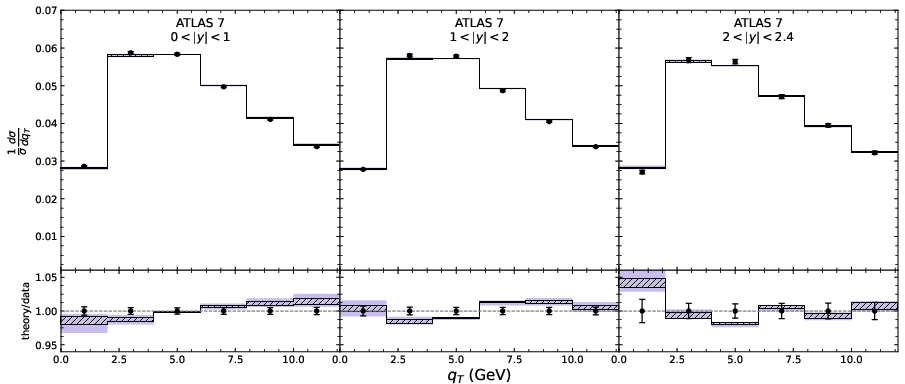
Figure 8: Comparison of replica and Bayesian 68\% uncertainty bands for normalized ATLAS measurements at (x,b)6.
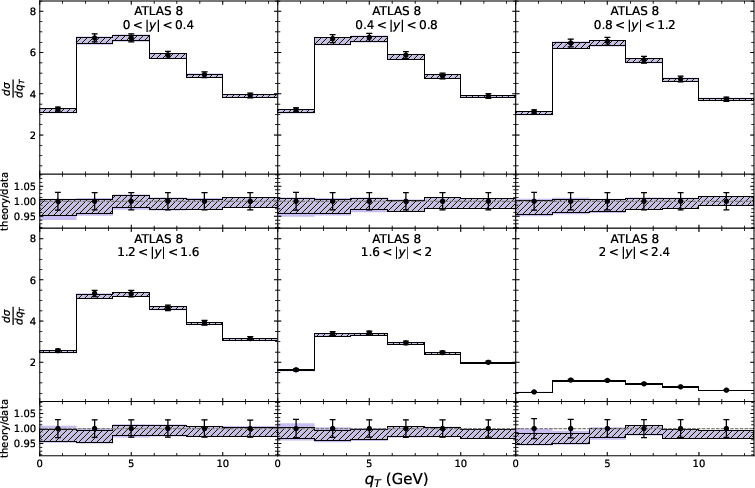
Figure 9: Comparison of replica and Bayesian 68\% prediction intervals for normalized ATLAS measurements at (x,b)7.
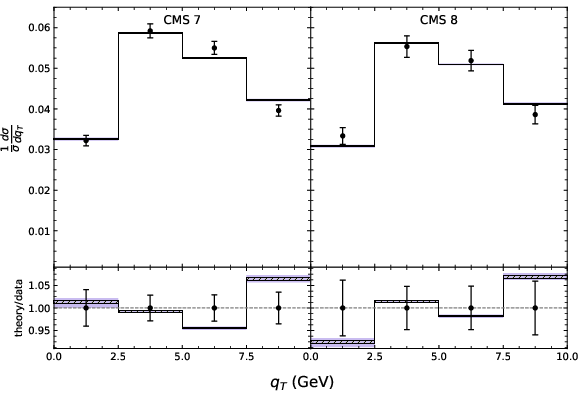
Figure 10: Replica and Bayesian uncertainty bands for CMS measurements.
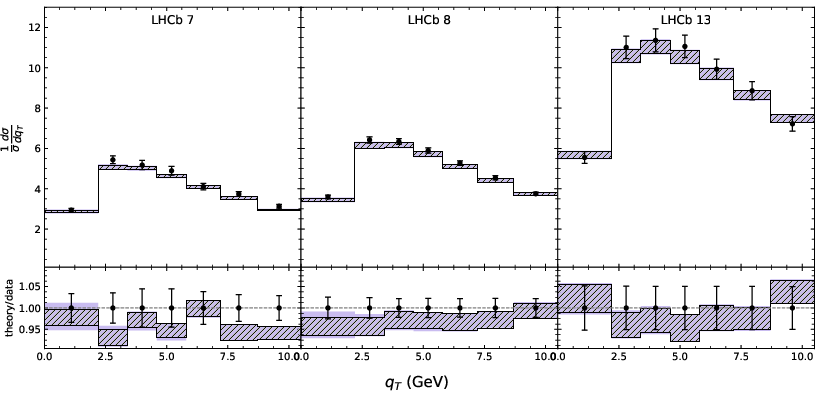
Figure 11: Replica and Bayesian uncertainty bands for LHCb measurements.
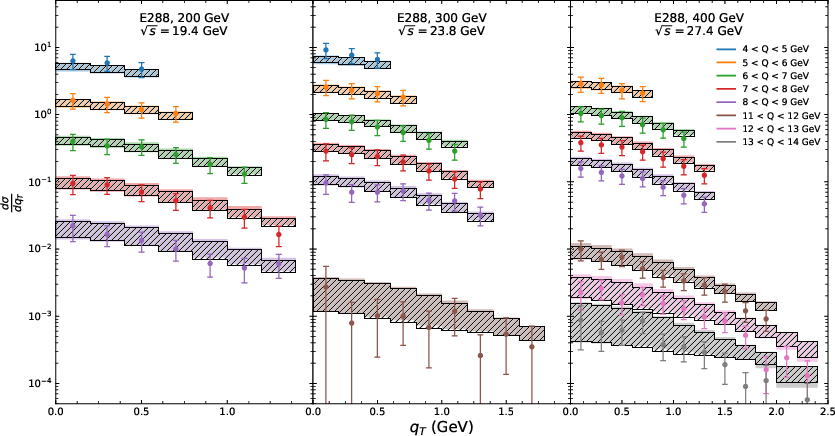
Figure 12: Replica and Bayesian uncertainty comparison for the E288 fixed-target data set. Predictions are shown on a logarithmic scale.
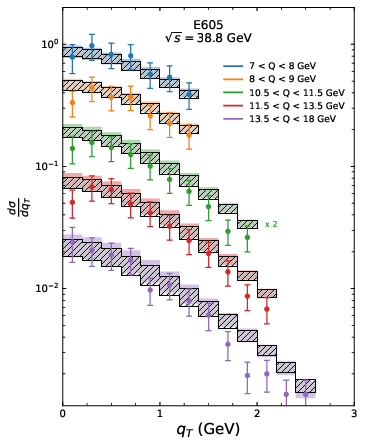
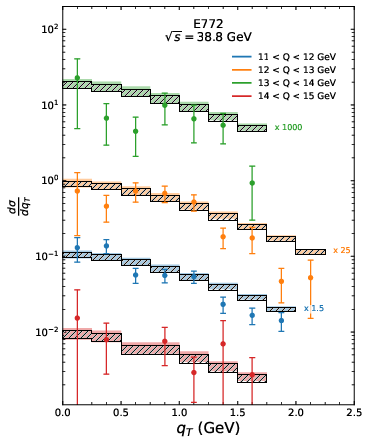
Figure 13: Replica and Bayesian uncertainty comparison for the E605 (left) and E772 (right) fixed-target data sets. Some mass bins are displayed with multiplicative factors.
Bayesian and replica methodologies are dissected in the Gaussian limit: replica uncertainties are governed by the inverse Fisher information averaged over replica resampling, while Bayesian uncertainties derive from the curvature of the marginalized likelihood and prior. Marginal uncertainties show that the Bayesian results align better with Hessian expectations for Gaussian statistics, suggesting easier propagation in further fitting pipelines.
Practical and Theoretical Implications, Future Directions
The rigorous incorporation of Bayesian inference with AI-driven parameterization provides a direct probabilistic interpretation of uncertainties and explicit accounting for prior assumptions and marginalization over nuisance parameters. The comparison to replica-based approaches highlights where methodological choices affect uncertainty structure and parameter correlations.
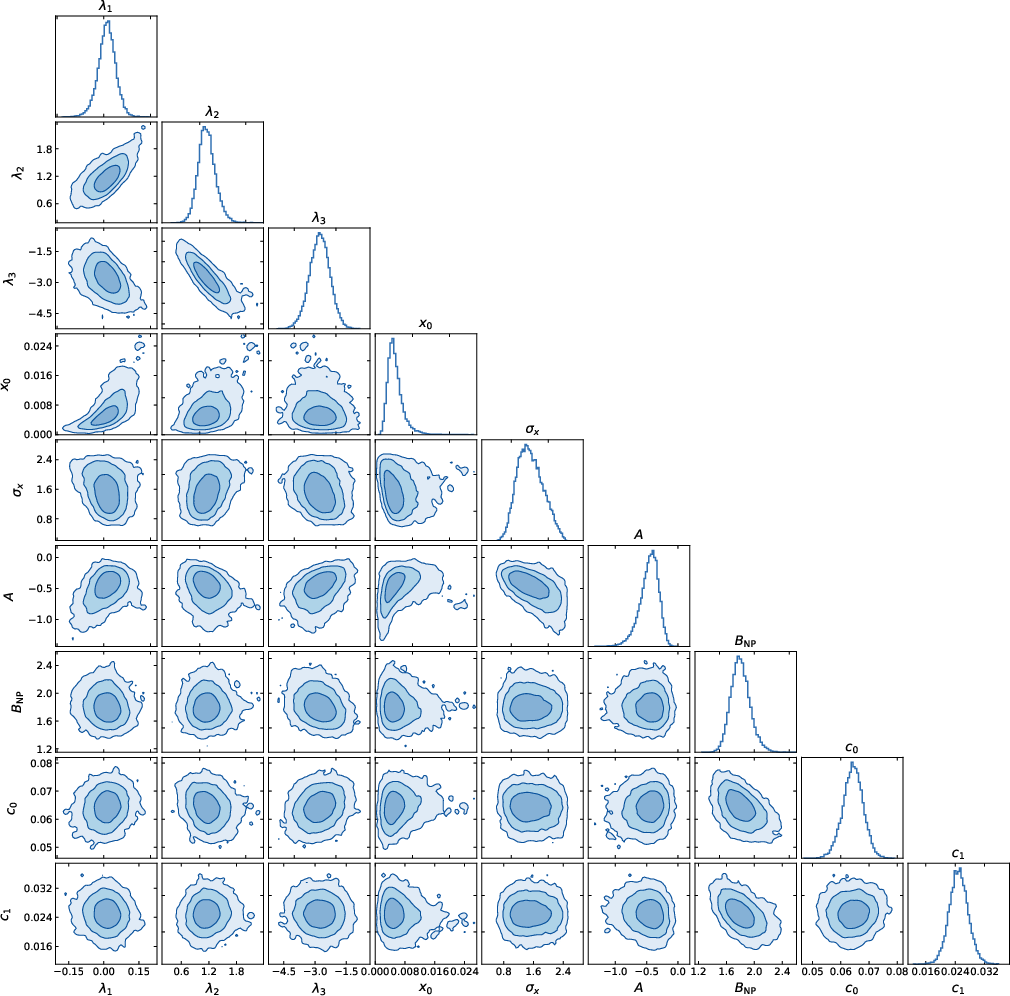
Figure 14: Pair plot for the Bayesian posterior distribution of the 9 nonperturbative fit parameters, showing marginal and joint distributions.
Practically, the AI-enhanced workflow accelerates model exploration and reduces human bias in ansatz selection, supporting extensible frameworks as experimental precision increases (e.g., at the Electron–Ion Collider). The Bayesian approach enables natural combination of diverse data types—including lattice QCD constraints—within unified statistical inference.
Future research will benefit from further integration of AI-assisted modeling, expanded probabilistic frameworks (such as meta-analysis across multiple processes), and tighter coupling of lattice, collider, and SIDIS data. Enhanced uncertainty quantification will improve precision studies of proton structure, flavor separation, and evolution effects, advancing the interpretation of next-generation QCD measurements.
Conclusion
The study delivers a robust, AI-assisted Bayesian extraction of unpolarized quark TMD PDFs from Drell–Yan data, validated against replica-based uncertainty quantification. AI-driven parameterization, together with surrogate modeling, proves essential for scalable, interpretable inference at high theoretical accuracy. Bayesian and replica methodologies are consistent in fit quality but differ in uncertainty structure; Bayesian results offer more conservative bands and favorable Gaussian statistical properties for uncertainty propagation. The extracted Collins–Soper kernel agrees with both phenomenological and lattice results, and the integrated framework is well-positioned for future precision QCD analyses.