Published 15 Apr 2026 in physics.optics, eess.SP, physics.app-ph, and quant-ph | (2604.14119v1)
Abstract: A mode sorter separates a set of M orthogonal spatial modes in a shared input channel into M different output channels. Here we present an analytic derivation and experimental validation of a single plane device for sorting spatial modes from a diverse variety of mode families, including Hermite-Gaussian (HG), Laguerre-Gaussian (LG), Bessel-Gaussian (BG), with almost no cross-talk. This sorting capability is required for a wide range of applications that employ classical or quantum light. We also show that applying this design in order to sort a set of Orbital Angular Momentum (OAM) modes with zero radial index reproduces the well-known Fork grating configuration. Furthermore, by taking the limit of M -> inf, we present an analytical expression for sorting all the modes of a given family. By operating this device in reverse, it can be used to generate arbitrary modes, by illuminating it with a Gaussian beam. The power transmission coefficient for this sorter goes as 1/M and we provide a mathematical proof that this is optimal for any typical arrangement of the detector positions. We further study the sorter sensitivity to wavelength and random phase noise.
The paper introduces an analytic model for single-layer spatial mode sorting that maps arbitrary spatial modes to spatially separated detectors with minimal cross-talk.
Experimental validation shows high sorting fidelity (up to 96.6%) and power transmission scaling as O(M⁻¹) across various mode families.
The approach simplifies traditional multi-layer systems, proving robust against phase noise and wavelength variations for both classical and quantum photonic applications.
Single Plane Spatial Mode Sorter: Analytic Theory, Implementation, and Experimental Validation
Introduction and Motivation
The paper "Single Plane Spatial Mode Sorter" (2604.14119) introduces a theoretical model and experimental realization for spatial mode sorting using a single optical layer. Efficient spatial mode sorting is crucial for high-dimensional information transfer in optical communications, quantum computing, and imaging. Traditional mode sorters demand complex setups (often multilayer), making scalability, robustness, and universality challenging. This work addresses these issues with an analytic, single-layer approach capable of sorting arbitrary spatial mode sets—orthogonal or non-orthogonal—with minimal cross-talk, extending the performance and applicability of spatial mode sorting systems.
Theoretical Framework and Sorter Construction
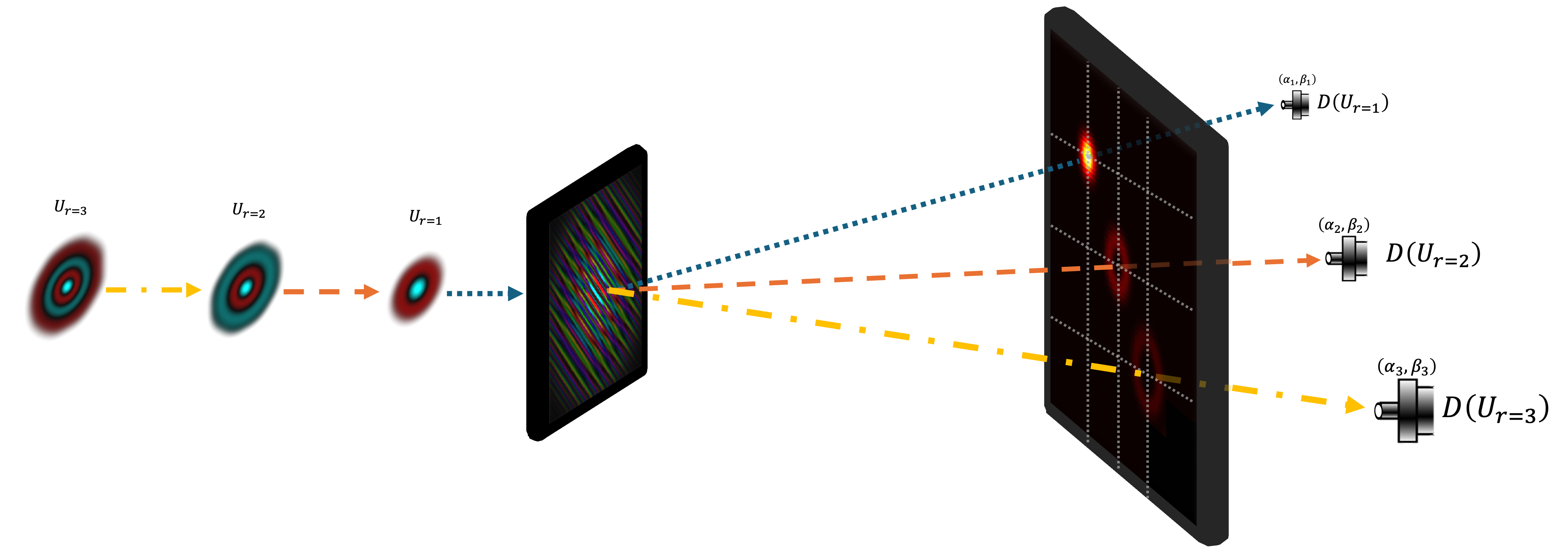
The proposed mode sorter is derived analytically for an arbitrary set of M spatial modes {fm(x,y)}, combining amplitude and phase terms into a single mask S(x,y). Detection is performed in the far-field with spatially separated detectors that correspond to each mode. The mask is defined as:
S(x,y)=M1m′=1∑Mfm′∗(x,y)eiλz2π(αm′x+βm′y)
This formulation ensures each mode fm maps predominately onto its corresponding detector (αm,βm) with near-zero cross-talk in the case of orthogonal modes.
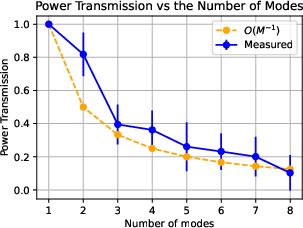
Analytically, for non-orthogonal modes, cross-talk is given by the average inner product squared, i.e., CT=M1μ>m∑∣⟨fμ∣fm⟩∣2. The transmission function scales inversely with the number of modes, O(M−1), representing the theoretical limit for a single-layer device given arbitrary detector placement.
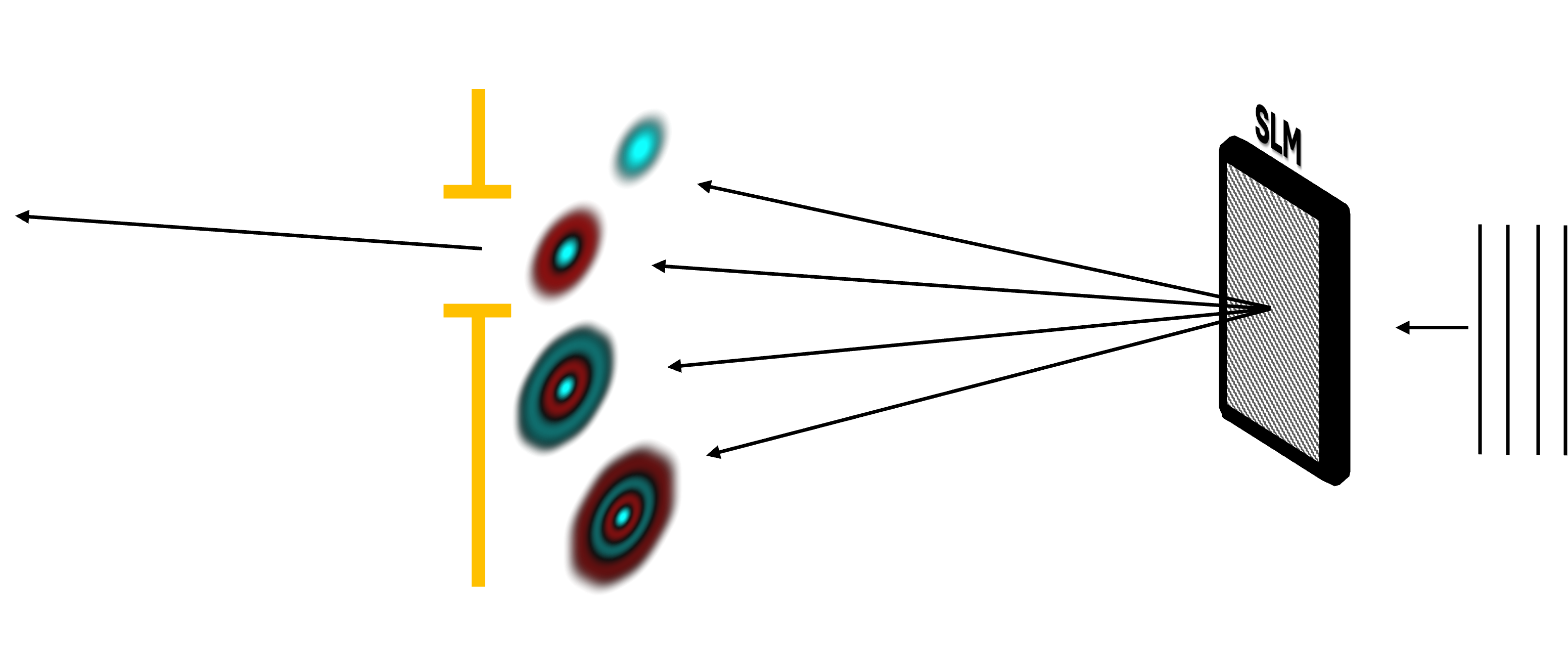
Figure 1: Schematic of the experimental setup showing spatial modes traversing the SLM resulting in intensity detected only at their corresponding detector position.
Experimental Implementation and Results
The experiment leverages a He-Ne laser, spatial light modulators (SLMs), and filtering optics, with programmable spatial masks. Phase-only masks are used in practice even though analytic construction provides both amplitude and phase; phase-only projection is shown to be sufficient for most mode sets.
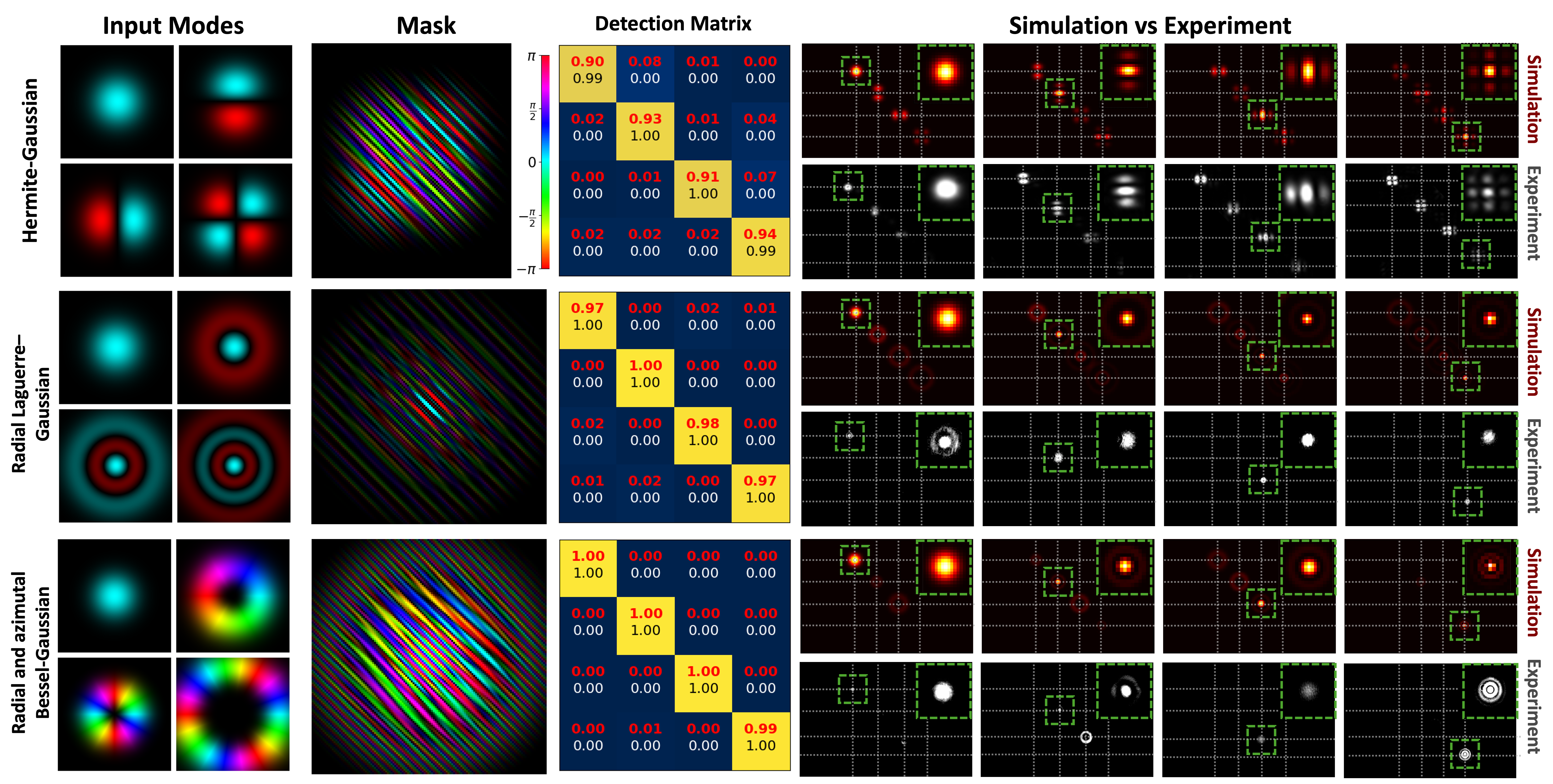
The sorter is tested on Hermite-Gaussian (HG), Laguerre-Gaussian (LG), Bessel-Gaussian (BG), and mixed mode sets, validating analytic predictions.
Figure 2: Sorting results for HG, LG, and BG mode families; experimental detection matrices show high diagonal elements, indicating high sorting fidelity.
Average sorting efficiency reaches 96.6% for four-mode sets across mode families; cross-talk averages at 2.7%. Power transmission coefficient decreases as O(M−1), confirmed experimentally.
Figure 3: Experimental relationship between power transmission and mode count; standard deviations account for optical and measurement noise.
Key Applications and Extensions
Orbital Angular Momentum Sorting
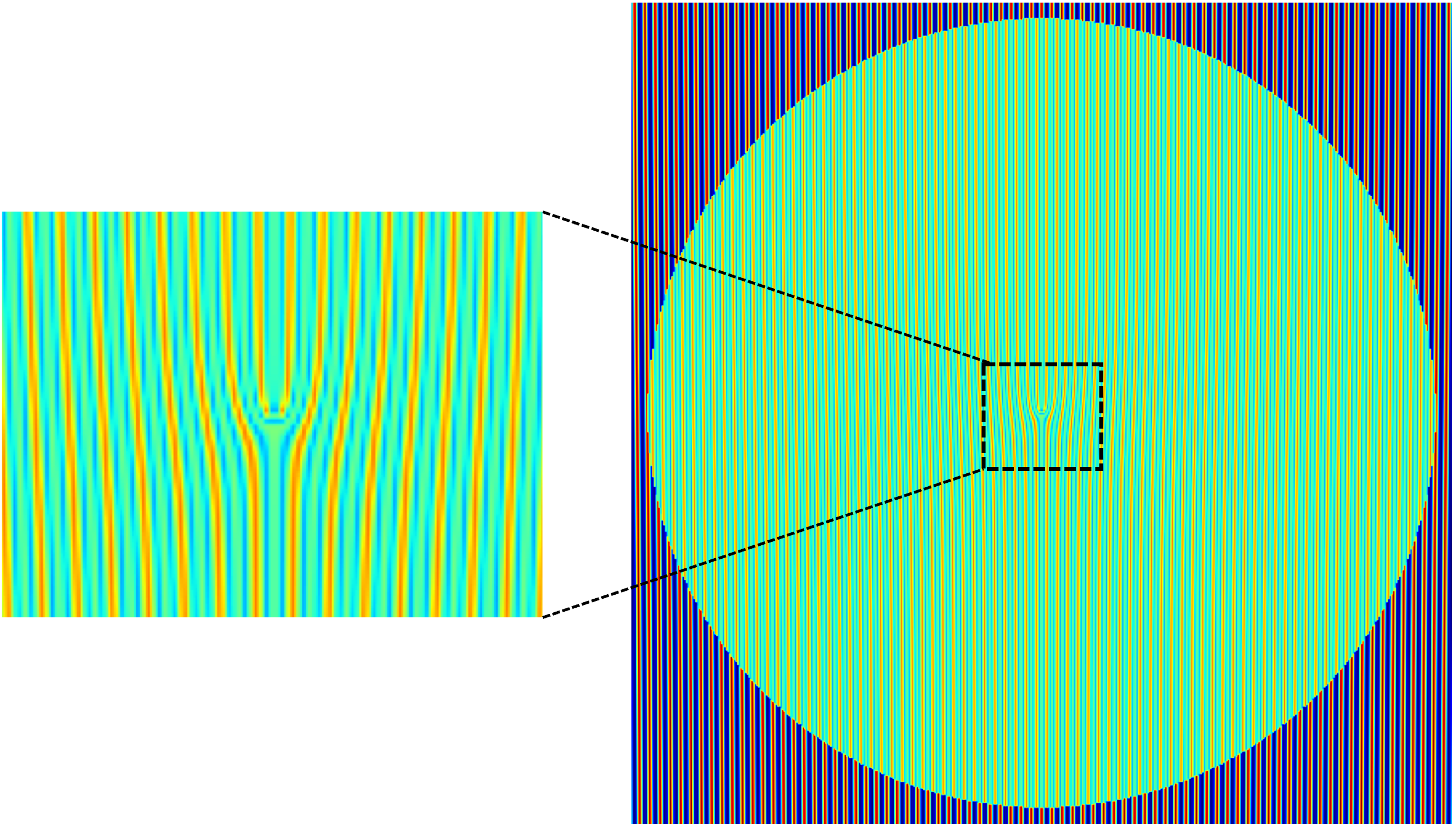
The analytic construction recovers well-known fork grating masks for OAM modes, generalizing established approaches. Fork-shaped masks provide zero cross-talk for modes with zero radial index.
Figure 4: Fork mask for OAM mode sorting—mask generalizes fork grating for spatial mode separation.
Figure 5: Experimental sorting of LG modes with differing OAM values; sorting fidelity confirmed.
Infinite Mode Limit and Generating Functions
By taking M→∞, analytic expressions for all-mode sorters for HG, LG, OAM, and BG modes are obtained via generating functions. The analytic mask for the all-mode sorter is given explicitly for each mode family. In practice, physical device limitations (spatial resolution, maximum frequency) restrict mode support.
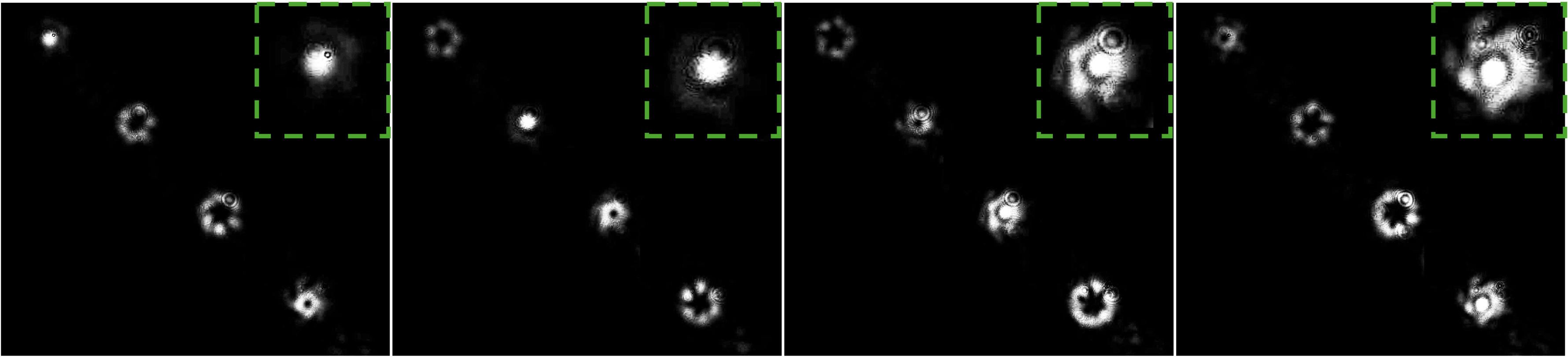
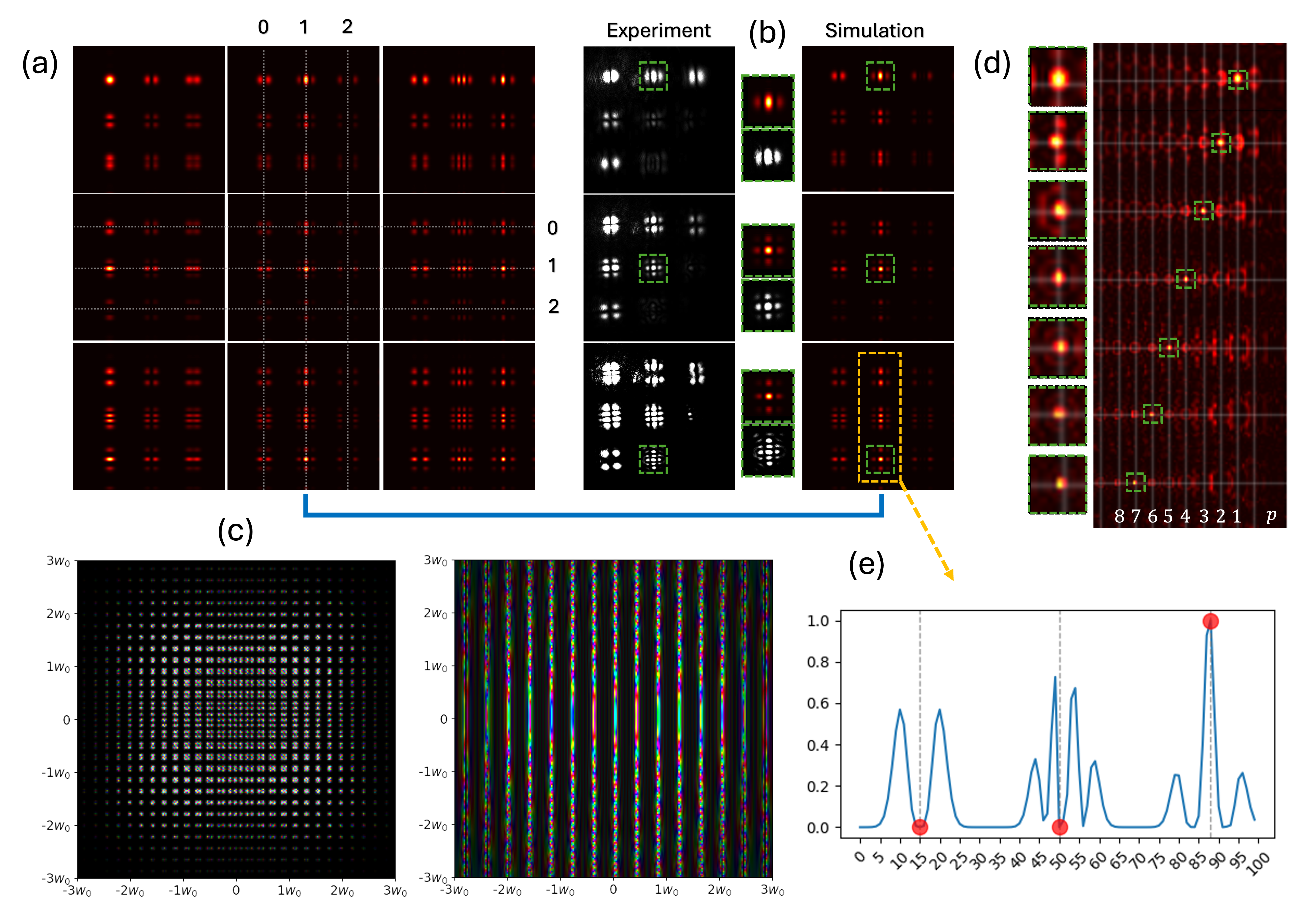
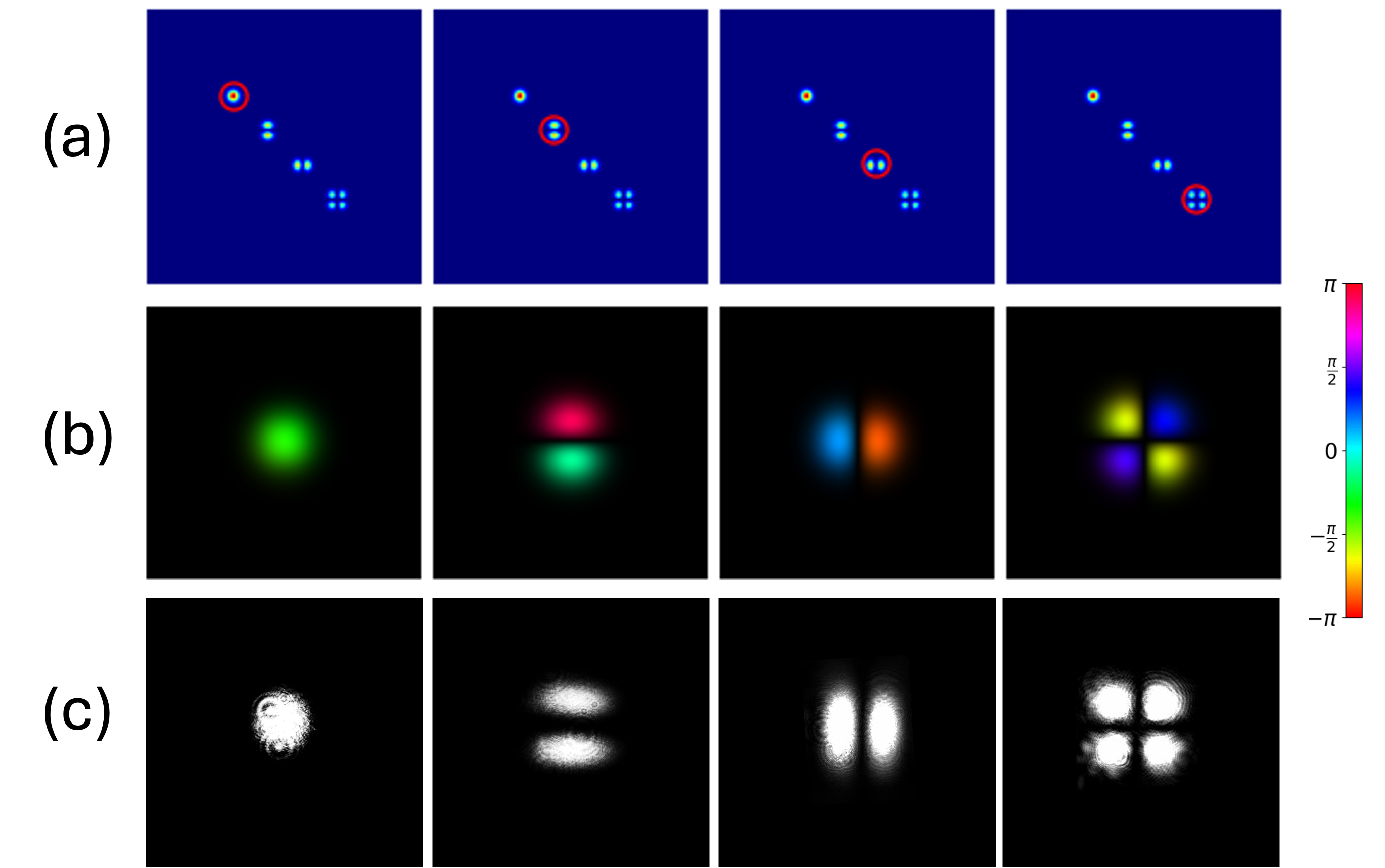
Figure 6: Analytic mode sorter masks and sorting results for HG and radial LG modes; sorting positions and transmission illustrated.
Mutually Unbiased Basis Sorting
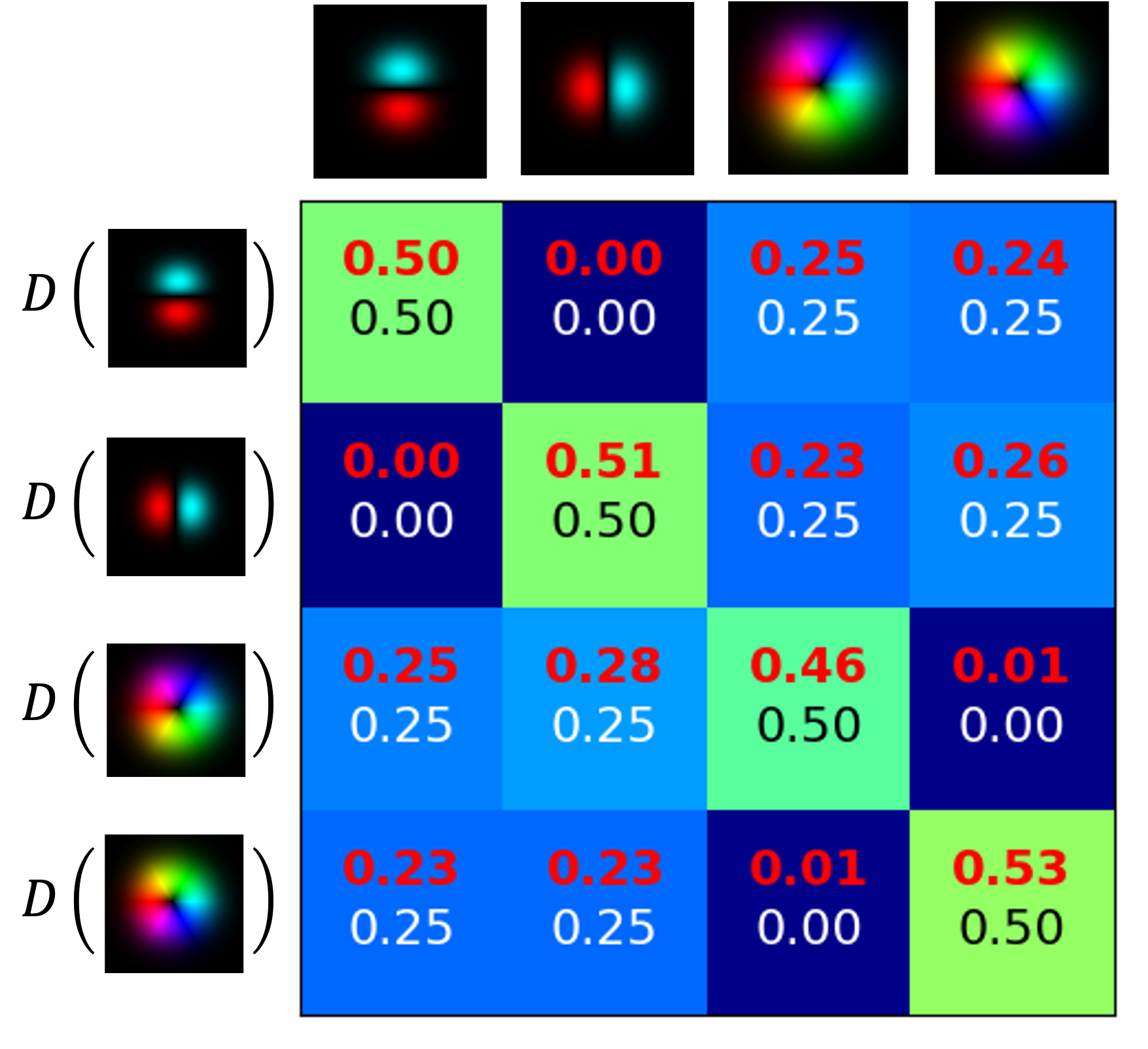
Sorting mutually unbiased bases (MUBs) is demonstrated, highlighting increased cross-talk due to lack of orthogonality, which is consistent with analytic predictions. This is particularly relevant for QKD, where MUBs are foundational for key distribution security.
Figure 7: MUB confusion matrix showing experimental and simulated results; increased off-diagonal elements correspond to expected cross-talk.
Mode Generation
The inverse operation of sorting (mask in reverse) enables arbitrary mode generation, allowing simultaneous creation of multiple spatial modes from a Gaussian input. Each generated mode receives equal power, facilitating balanced mode multiplexing.
Figure 8: Schematic and experimental demonstration of mode generation using the sorter in reverse.
Robustness: Noise and Wavelength Sensitivity
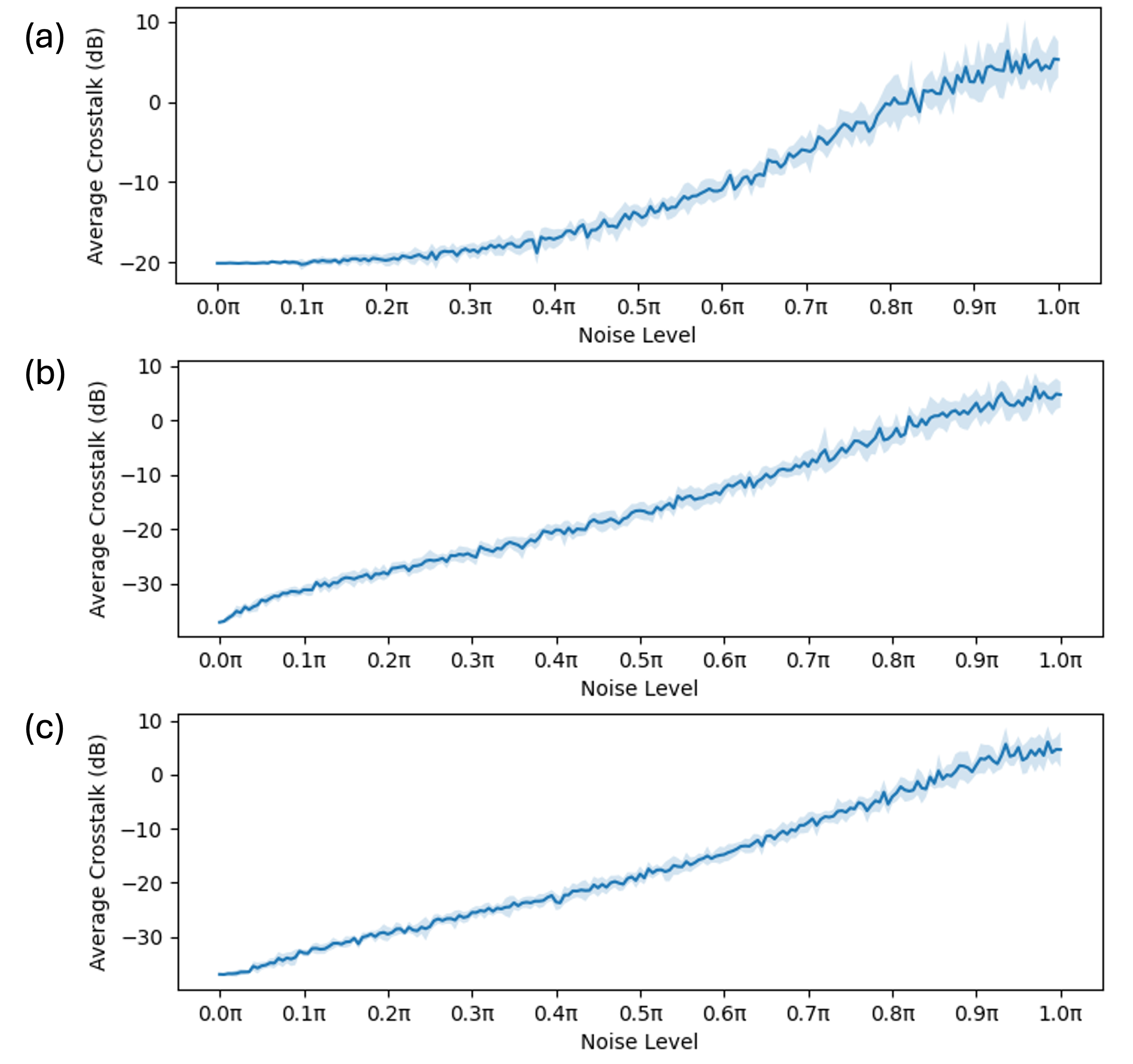
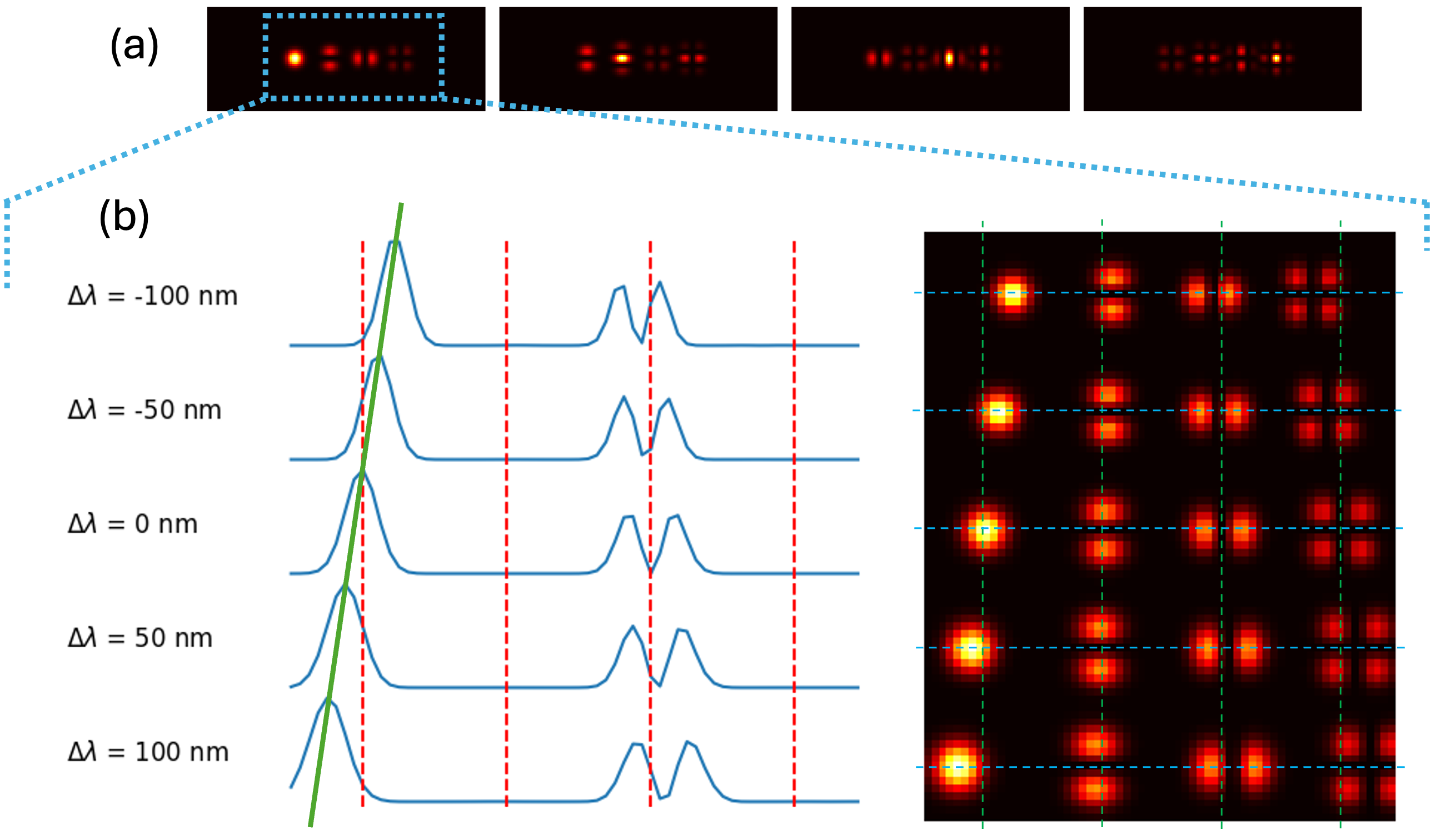
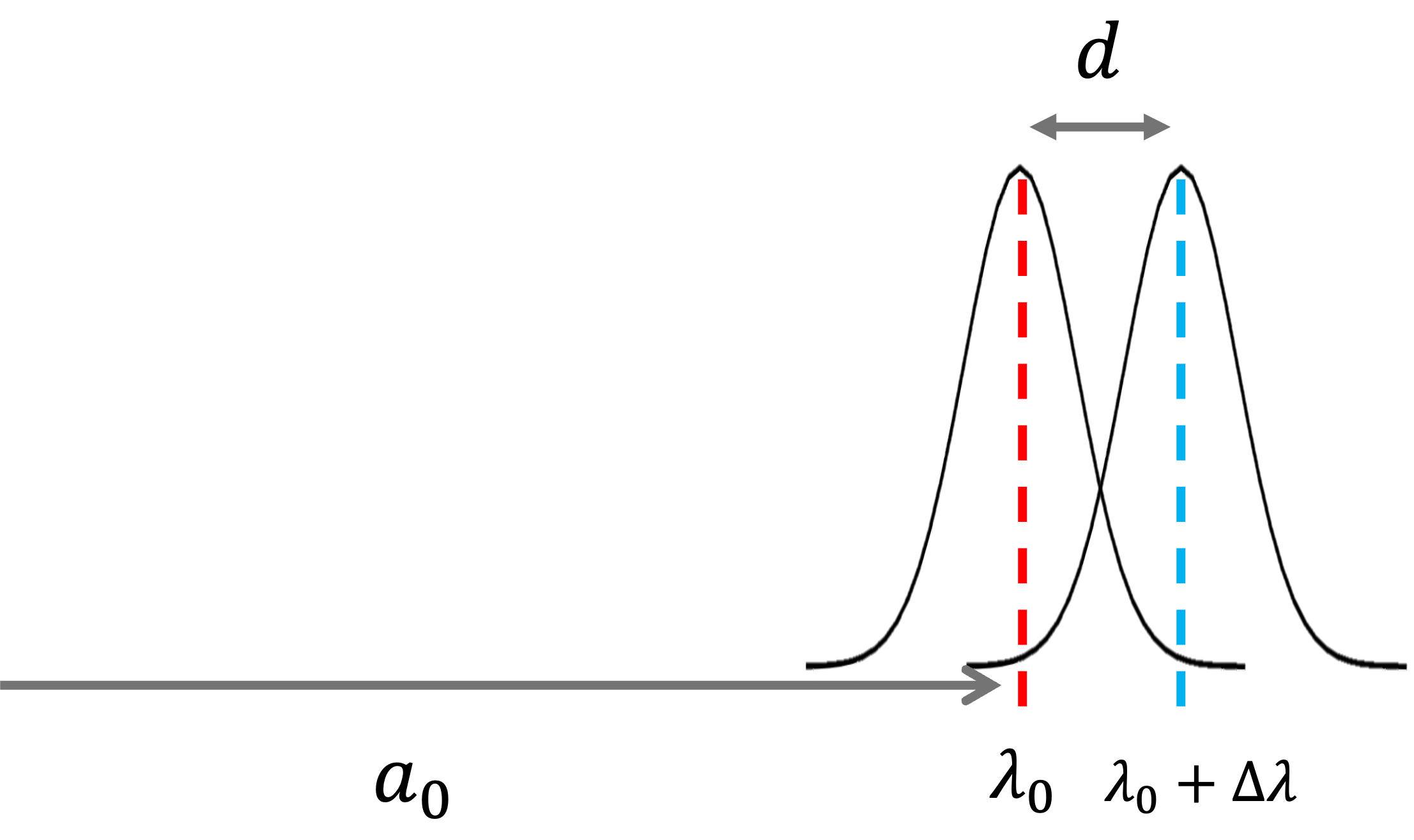
Phase noise analysis confirms robustness to moderate independent phase fluctuations—performance remains high for noise standard deviation up to {fm(x,y)}0. Wavelength sensitivity is modest except for large sorting angles, where detector shifts induced by wavelength changes enable spectroscopic application.
Figure 9: Cross-talk versus phase noise standard deviation for HG, LG, BG; shaded regions reflect statistical variability.
Figure 10: Wavelength deviation analysis; projected intensity patterns and required detector calibration for small wavelength shifts.
Spectroscopic application exploits wavelength-dependent spatial shifts, achieving nanometer-scale resolution when device pixel spacing is minimized.
Comparative Analysis and Practical Implications
Contrasted with Multi-Plane Light Conversion (MPLC), the single-plane sorter offers substantial reduction in system complexity, analytical precision, and minimal cross-talk. While MPLC achieves higher transmission for large mode counts, it demands extensive calibration and alignment, and suffers from optimization-related crosstalk. The sorter is highly competitive for moderate mode counts in classical multiplexing, imaging, and quantum applications. In QKD, sorter losses are not a limiting factor (can be compensated via amplification or longer integration), whereas fidelity is critical.
Phase-only implementation, justified analytically and numerically, further simplifies practical deployment.
Limitations and Future Directions
The main scalability limit arises from power splitting; as mode count rises, transmission per mode decreases as {fm(x,y)}1. Device spatial resolution restricts the effective sorting of higher-order modes. Nonetheless, the analytic sorter achieves the theoretical optimal for single-layer devices.
The authors propose future extensions to electron beam manipulation, fiber mode sorting, and compact, laser-printed mask fabrication. Sorting for quantum wavefunctions and MUB measurements is suggested as a promising avenue, particularly for QKD.
Conclusion
This work establishes an analytic and experimentally validated single-plane spatial mode sorter with universal applicability—capable of sorting arbitrary spatial mode sets with minimal cross-talk and optimal single-layer power transmission. The approach provides an efficient solution for high-fidelity spatial mode manipulation and generation in both classical and quantum photonics. Its analytic construction, compactness, and robustness position it as a valuable tool for multidimensional optical encoding, communication, and quantum measurement platforms. Theoretical and experimental results indicate potential for practical deployment in multiplexing, super-resolution imaging, and quantum information protocols, and motivate development of further devices optimized for broader spatial mode families and higher efficiency.
“Emergent Mind helps me see which AI papers have caught fire online.”
Philip
Creator, AI Explained on YouTube
Sign up for free to explore the frontiers of research
Discover trending papers, chat with arXiv, and track the latest research shaping the future of science and technology.Discover trending papers, chat with arXiv, and more.