- The paper demonstrates that quantum interface efficiency can be fully characterized through experimentally accessible scattering observables in bilayer atomic arrays.
- It introduces a non-symmetric design that enables the active elimination of diffraction losses and the dynamic tuning of collective coupling for quantum memory applications.
- Optimization strategies based on varying interlayer spacing and measuring reflectivity and transmissivity show promise for scalable implementations in superwavelength tweezer arrays.
Non-Symmetric Quantum Interfaces with Bilayer Atomic Arrays
Overview
The paper "Non-symmetric quantum interfaces with bilayer atomic arrays" (2604.14101) establishes a universal framework for analyzing and optimizing quantum light-matter interfaces using bilayer atomic arrays with arbitrary interlayer spacing. Departing from the traditional focus on Bragg-symmetric configurations, the work demonstrates that interface efficiency can be fully characterized through two experimentally accessible scattering observables: reflectivity and transmissivity. This generalization provides new design flexibility and paves the way for substantially improved interface efficiencies, including the active elimination of higher-order diffraction losses and novel quantum memory protocols deployable in superwavelength tweezer arrays.
Generalized 1D Scattering Framework
The central methodological contribution is the mapping of the bilayer atomic array problem to a non-symmetric two-sided one-dimensional (1D) quantum interface. Here, the efficiency of quantum tasks realized at the interface—such as photon storage or state transfer—is governed by classical scattering coefficients for the bilayer system, encapsulating both forward (transmission) and backward (reflection) amplitudes. In this model, the quantum efficiency rq is
rq=Γq+γq,lossΓq,
where Γq is the coupling rate to the target photonic mode and γq,loss aggregates all non-target losses, including both diffraction and non-collective channels. Crucially, for non-symmetric geometries, rq depends on both r± (reflection) and t± (transmission) coefficients measured from opposite sides of the array, generalizing the standard reflectivity-based figure of merit applicable only to Bragg-symmetric or single-layer interfaces.
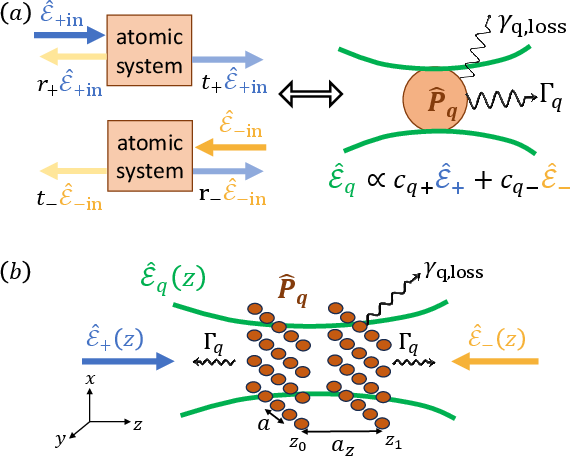
Figure 1: Diagrammatic summary of the 1D quantum interface model and its realization with a bilayer atomic array of arbitrary interlayer spacing.
By casting the full bilayer multiple-scattering problem into this compact framework, the efficiency for quantum tasks is reduced to experimentally accessible parameters, thus enabling direct optimization strategies in non-symmetric realizations.
Diffraction Engineering in Superwavelength Bilayer Arrays
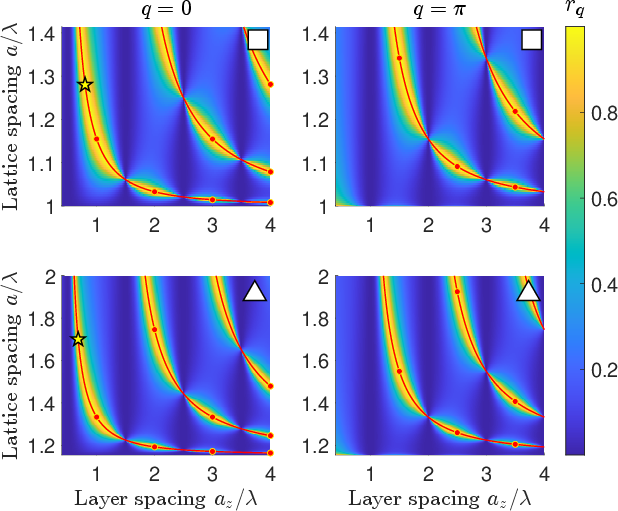
Most practical tweezer-based atomic arrays operate with intralayer lattice constants exceeding the optical wavelength (a>λ). In this superwavelength regime, higher-order radiative diffraction channels catalyze severe scattering losses. Addressing this, the framework identifies precise interference conditions—in the form of "resonant curves" or discrete resonant sets in the (az,a) parameter space—where all radiative diffraction orders destructively interfere, thus eliminating these loss channels and maximizing rq.
Detailed analytical and numerical analyses reveal:
Critically, simulations of finite-size arrays with realistic Gaussian illumination show that the inefficiency rq=Γq+γq,lossΓq,0 scales as rq=Γq+γq,lossΓq,1 with atom number per layer, confirming robustness against practical geometric constraints.
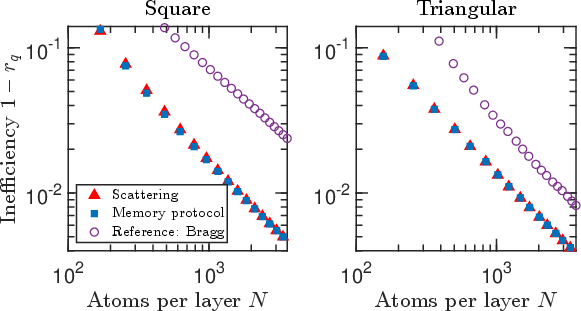
Figure 3: Scaling of coupling inefficiency rq=Γq+γq,lossΓq,2 with array size for resonant, Bragg, and non-symmetric configurations. Non-symmetric protocols yield substantial efficiency improvement.
For higher-order diffraction suppression, the non-symmetric design uniquely enables simultaneous cancellation—unachievable under Bragg constraints—thus supporting large-scale tweezer arrays with minimal collective loss.
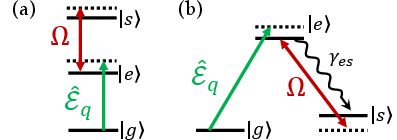
Figure 4: Resonant sets in parameter space for simultaneous suppression of two radiative diffraction orders, achievable only via non-symmetric bilayer configurations.
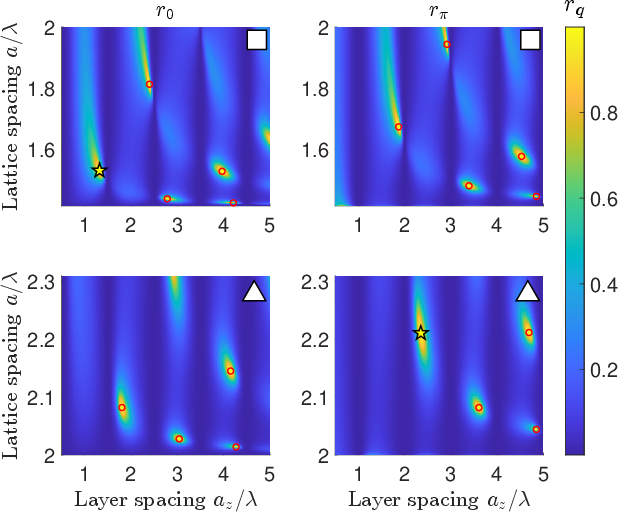
Figure 5: Scaling of inefficiency for configurations eliminating multiple diffraction orders, showing effective convergence towards rq=Γq+γq,lossΓq,3 behavior for increasing atom number.
Quantum Memory Protocols Via Tunable Collective Coupling
A further key application is the design of efficient quantum memories based solely on two-level atoms, dispensing with auxiliary metastable states required in ladder or rq=Γq+γq,lossΓq,4-schemes. In the bilayer interface, the collective coupling rate rq=Γq+γq,lossΓq,5 is dynamically tuned (e.g., by continuously varying the interlayer spacing rq=Γq+γq,lossΓq,6), providing on-demand access to collective dark states in the system. The protocol enables high-fidelity storage and retrieval by switching coupling between regimes of strong light-matter interaction and complete decoupling.
The memory efficiency rq=Γq+γq,lossΓq,7 is bounded predominantly by the residual diffraction loss (scaling as rq=Γq+γq,lossΓq,8) and the protocol switch time rq=Γq+γq,lossΓq,9. In well-optimized configurations, efficiencies Γq0 are shown to be achievable for realistic system sizes and experimental constraints. Analytical results and direct protocol integration confirm this performance.
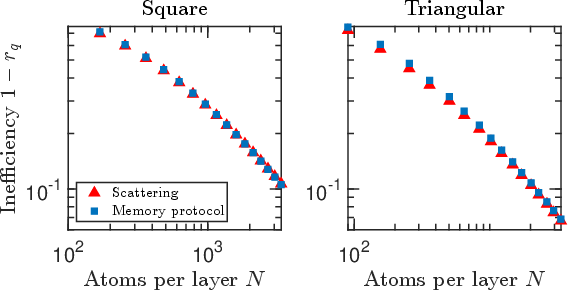
Figure 6: Diagrammatic comparison of ladder-type and Γq1-type quantum memory schemes, emphasizing individual-level vs. collective-level limitations.
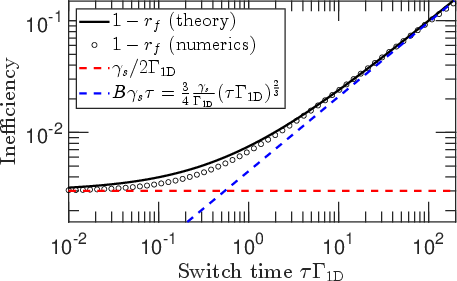
Figure 7: Memory protocol inefficiency Γq2 as a function of the dynamic switch time, showing asymptotic limits and agreement between theory and simulation.
Importantly, the requirement for synchronized tuning of both Γq3 and Γq4 in the superwavelength regime is addressed and shown compatible with current experimental capabilities (e.g., dynamic tweezer control at sub-100Γq5s rates).
Theoretical and Practical Implications
This framework establishes that bilayer atomic arrays, when operated beyond the Bragg condition, constitute an expansive platform for tailorable light-matter quantum interfaces. Central implications include:
- Universality: The formalism unifies the treatment of array-based quantum interfaces by reducing all key performance metrics to classical scattering observables, applicable to arbitrary symmetry breaking and array geometry.
- Experimental Accessibility: Interface optimization is reduced to standard scattering measurements, obviating the need for intricate quantum process tomography.
- New Quantum Memory Architectures: The ability to dynamically tune collective modes ushers in scalable memory protocols relying solely on two-level physics, relevant for rapid and robust implementation in a range of atomic platforms.
- Diffraction-Loss Engineering: Access to multi-order diffraction-loss suppression with only two layers markedly reduces technical complexity relative to elaborate multilayer or cavity configurations.
Prospects for Future Research
The findings directly motivate several extensions:
- Beyond Bilayer Arrays: The generalized formalism can be adapted to multilayer, non-planar, or disordered array architectures, promising further efficiency and control enhancements.
- Nonlinear and Entangled-State Generation: The non-symmetric interface regime opens new possibilities for the generation and manipulation of multipartite entanglement and nonlinear quantum optical phenomena.
Conclusion
By introducing a universal, experimentally grounded approach to the efficiency of quantum interfaces in non-symmetric bilayer atomic arrays, the paper demonstrates both theoretical and practical advances over traditional Bragg-constrained designs. The ability to tailor light-matter coupling and systematically eliminate diffraction-induced losses yields substantial performance improvements for quantum networking and memory applications, positioning non-symmetric arrays as a cornerstone for next-generation quantum technology platforms.