- The paper presents a mixed-domain virtual mirror map framework combining low-frequency Zernike decomposition with high-frequency FFT analysis for accurate mirror surface evaluation.
- It bridges legacy interferometric data with advanced optical simulations to assess spectral fidelity, quantify optical losses, and evaluate higher-order mode content.
- Validation across AdVirgo+ and Einstein Telescope scales demonstrates optimized surface reconstruction and statistical performance matching reference measurements.
Virtual Mirror Maps for Einstein Telescope Mirror Surface Evaluation
Motivation and Background
Accurate metrology of mirror surfaces is fundamental for optimizing optical performance in high-precision gravitational-wave interferometers. Surface defects, including figure errors and coating inhomogeneities, induce excessive scattering and degrade mode purity and detector sensitivity. While current interferometer mirrors are characterized by high-resolution phase maps, future instruments such as the Einstein Telescope (ET) necessitate robust predictive modeling before fabrication. The concept of Virtual Mirror Maps (VMMs) addresses this need by generating synthetic mirror surfaces with statistical and spectral fidelity to measured data from existing facilities.
The paper introduces a systematic framework for constructing VMMs with controlled randomization, leveraging measured phase maps, Zernike polynomial decomposition, and spatial frequency analysis. This approach enables quantitative evaluation of candidate mirror specifications for ET, bridging the gap between legacy data and advanced optical simulation methodologies.
Mathematical and Computational Framework
Measured phase maps provide high-resolution matrices representing local surface height deviations, typically acquired via interferometric profilometry. The Zernike basis, Znm(ρ,θ), is employed for low-spatial-frequency decomposition, effectively capturing aberrations up to a chosen radial order. Orthogonality and normalization enable robust surface reconstruction:
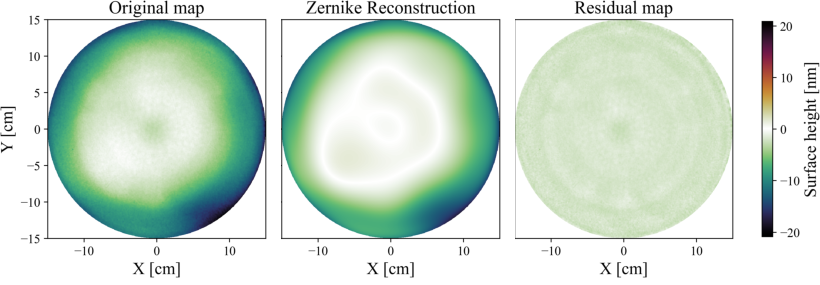
Figure 1: Phase map (left), Zernike reconstruction up to n=12 (center), and residual map (right) highlighting limitations in capturing fine-scale structure.
Increasing the Zernike order improves low-frequency reconstruction but fails to recover high-frequency surface roughness, as demonstrated by ASD analysis:
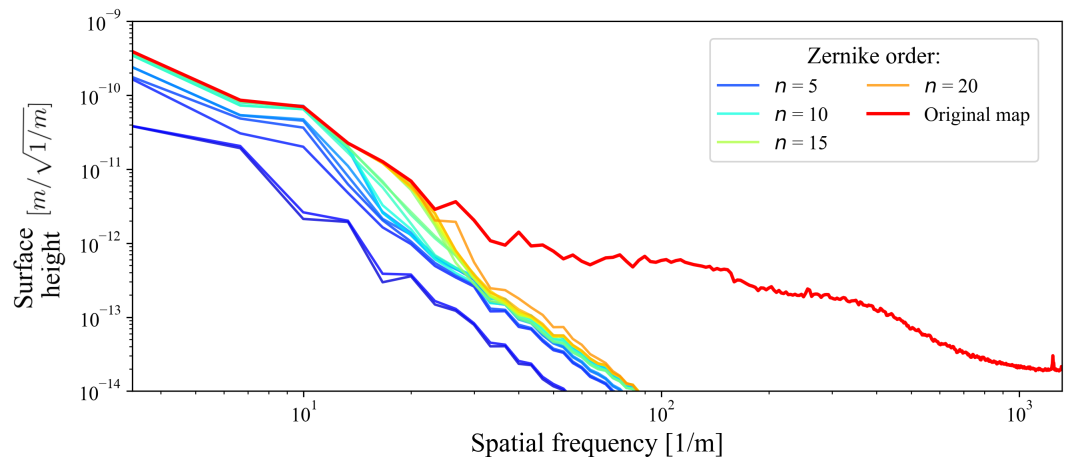
Figure 2: ASD comparison for original surface and Zernike reconstructions; high-frequency content is not sufficiently reproduced with increasing order.
To complement the Zernike method, FFT-based spectral analysis is performed. 2D PSDs are derived and radially averaged into 1D ASDs, revealing frequency-resolved characteristics of surface textures. FFT-based VMMs accurately preserve the high-frequency tail but misrepresent low-frequency features:
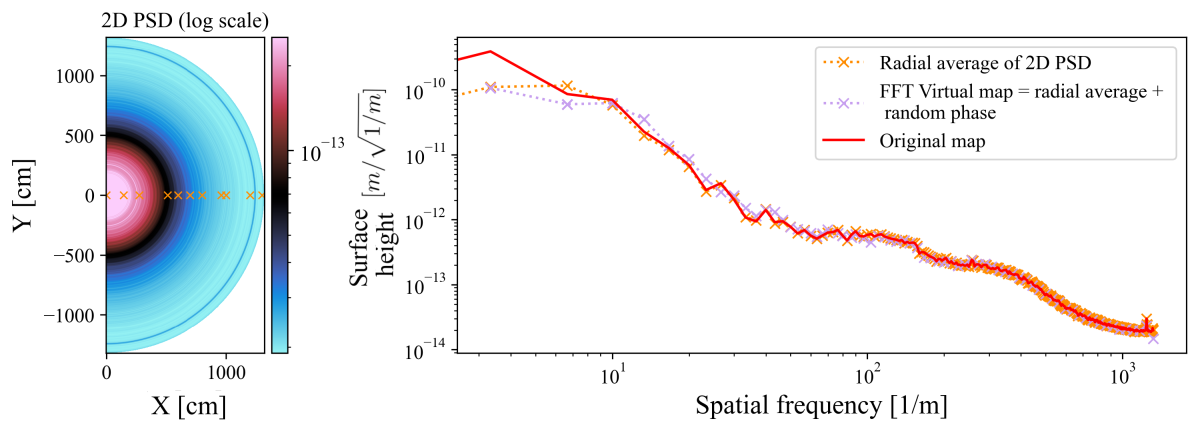
Figure 3: Log-scale 2D PSD, spatial frequency sampling, and ASD comparison for FFT-generated VMM; accurate high-frequency reproduction but reduced fidelity at low frequencies.
Recognizing the strengths and deficiencies of both approaches, the authors introduce a mixed-domain reconstruction, combining low-order Zernike structure with high-frequency FFT components. The high-frequency residual from an FFT map is added to the Zernike reconstruction, ultimately generating synthetic surfaces that closely mirror spectral and spatial properties of measured data:
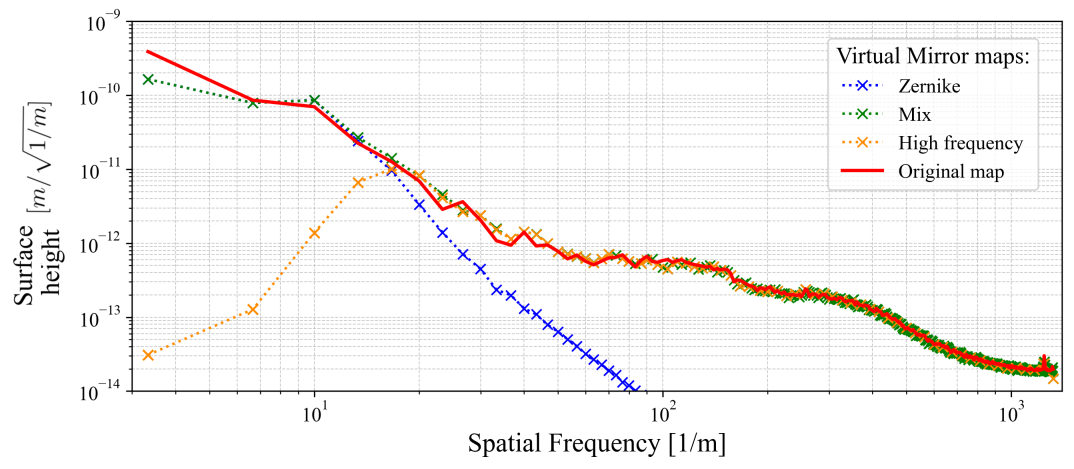
Figure 4: ASDs for original, Zernike, high-frequency residual, and mixed VMM; the mixed method preserves both low-frequency structure and high-frequency flatness.
Statistical Modeling and Semi-Randomization
Mirror fabrication induces deterministic coating-related surface profiles, notably flattening the central region and introducing radial symmetry. The semi-random VMM generation method retains axisymmetric Zernike modes (up to n=14) from ensemble reference data, while randomizing remaining modes according to measured statistical spreads, and restoring high-frequency structure through FFT residuals:
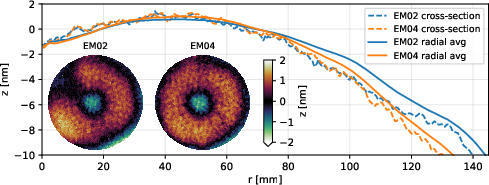
Figure 5: Surface maps and radial cross-sections of EM02/EM04 mirrors after curvature and tilt removal, showing central flatness.
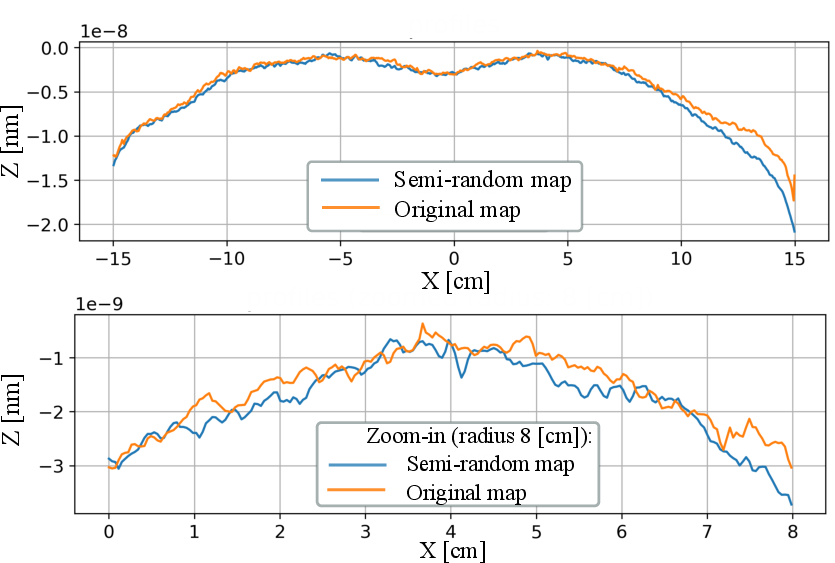
Figure 6: Central surface profiles for original and semi-random mixed map; fidelity at low spatial frequencies is maintained, with stochastic higher-order deviations.
Diameter Scaling and ET Application
VMM methodologies are adapted to arbitrary diameters by rescaling measured maps. For ET mirrors, diameter scaling (with or without pixel count adjustment) modifies spectral coverage. Notably, Zernike reconstruction shifts ASD content toward lower frequencies, while FFT interpolation extends spectral content without offset. Artificial spikes confirm that FFT-based expansion preserves original spectral features, whereas Zernike-based scaling modulates the spatial frequency distribution:
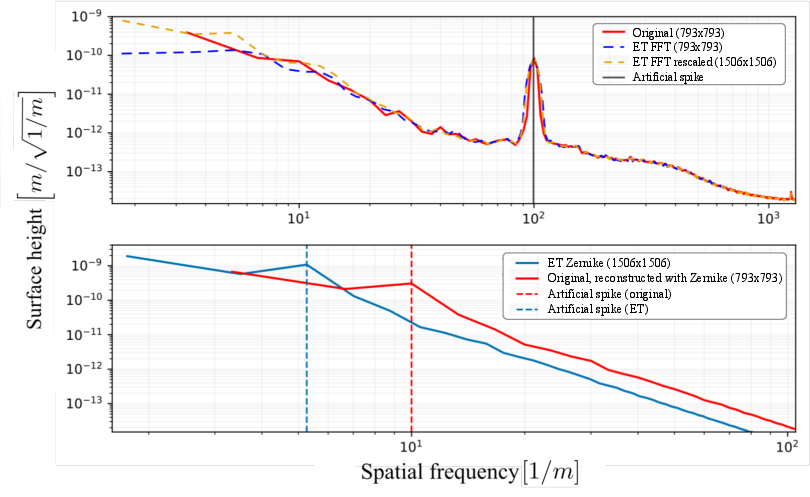
Figure 7: ASD behavior under diameter scaling for FFT and Zernike methods; FFT interpolation preserves spectral content, Zernike scaling shifts frequencies.
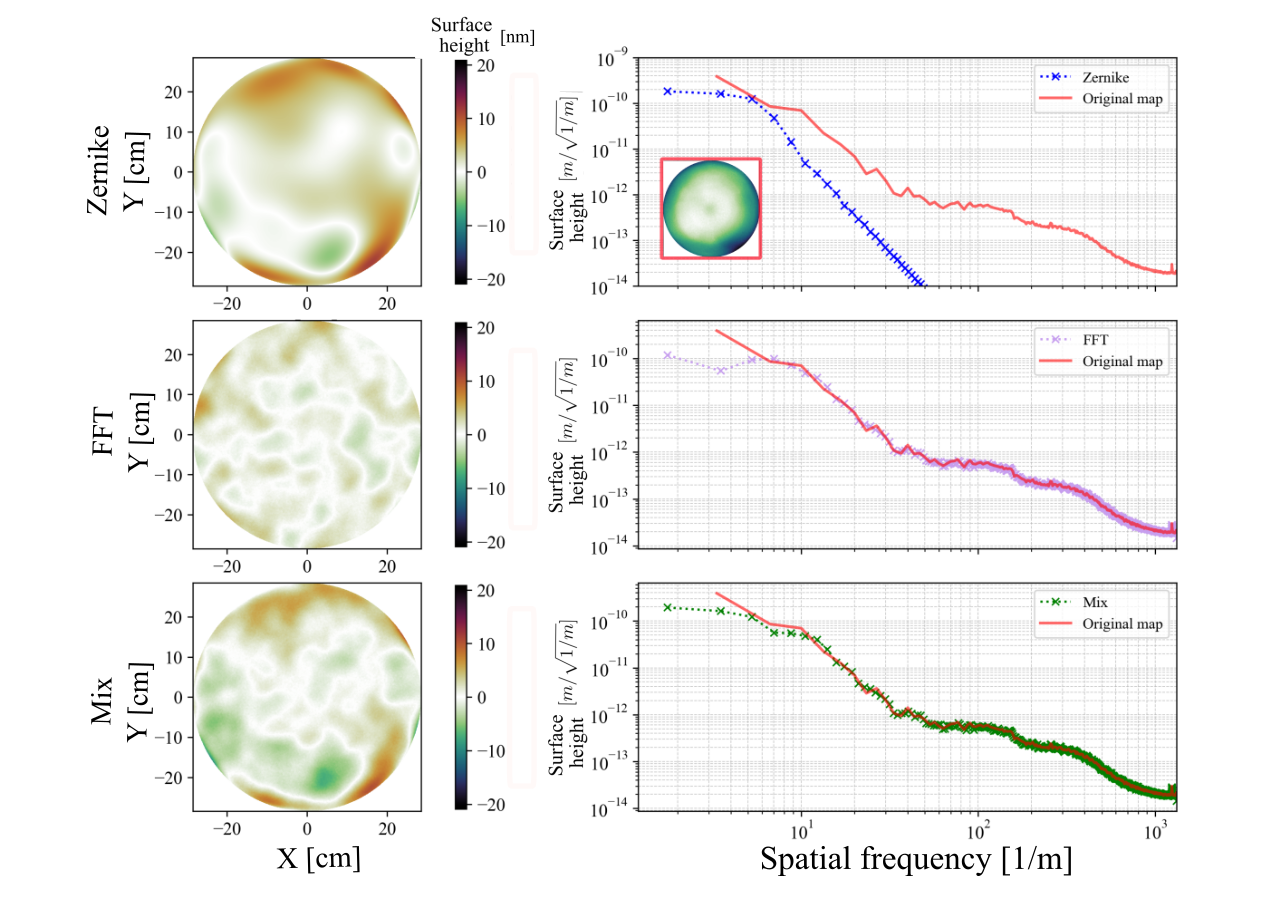
Figure 8: ET virtual mirror maps and corresponding ASDs compared to reference; Zernike scaling alters low-frequency content, FFT/mixed methods closely reproduce original spectral behavior.
Map Preprocessing for Optical Simulations
Simulation fidelity depends on preprocessing to remove piston, tilt, and curvature—features actively controlled in detector operation. Two strategies are compared:
- Zernike Removal: Subtracts low-order polynomials, filtering aberrations but lacks Gaussian weighting.
- Hermite-Gauss Removal: Weights subtraction by beam intensity profile, efficiently suppressing higher-order mode content within the spot region.
Hermite-Gauss preprocessing delivers superior mode suppression and more physically relevant surfaces for optical simulation:
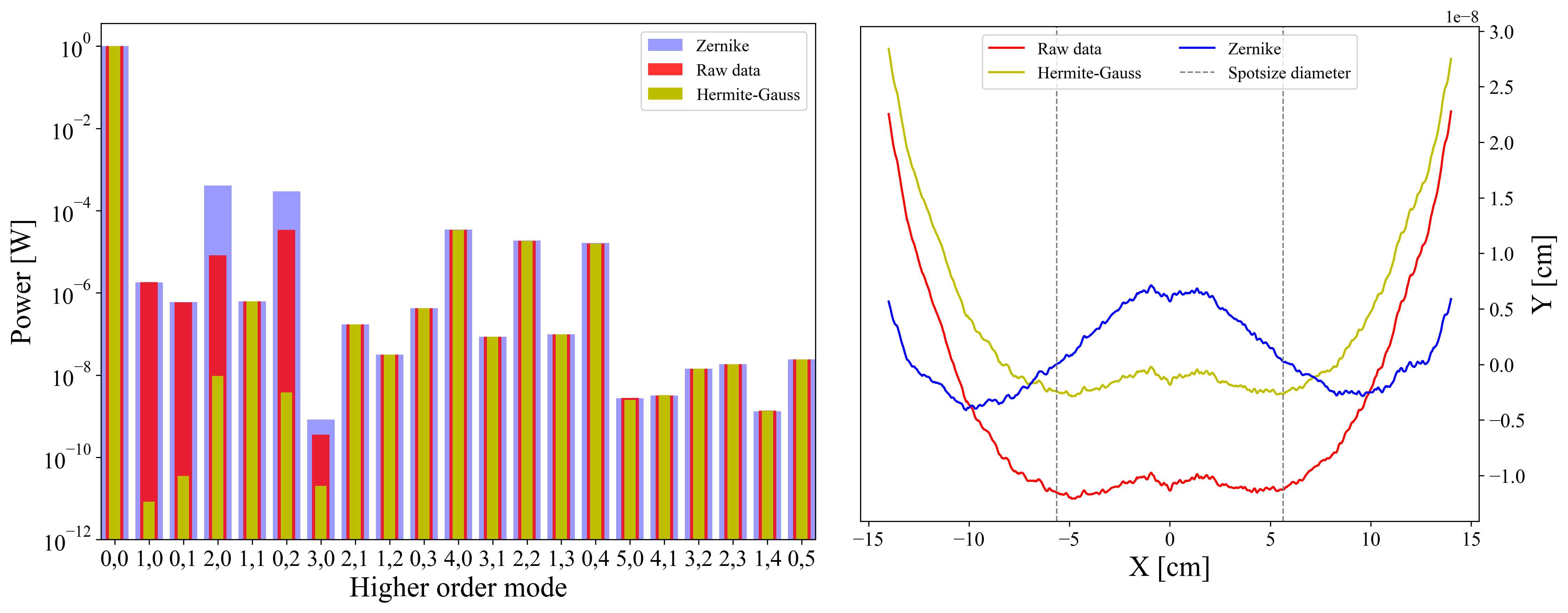
Figure 9: HOM power distribution and surface profile after tilt/curvature removal; Hermite-Gauss method suppresses mode content more effectively than Zernike.
Validation employs ensembles of VMMs—Zernike, FFT, mixed, and semi-random—for both AdVirgo+ and ET configurations. Key findings include:
- Spectral Fidelity: The mixed method achieves robust agreement with measured ASDs across spatial frequencies; Zernike underestimates high-frequency tail, FFT misses low-frequency structure.
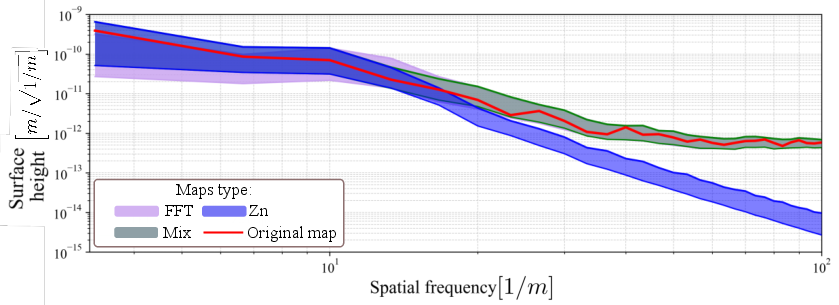
Figure 10: Range of ASDs for AdVirgo+ VMMs; mixed and FFT methods track the original map across full spatial frequency range.
- Optical Losses: Fundamental mode power loss distributions reveal that Zernike-based maps have systematically lower losses (due to smoother profiles), while FFT-based maps produce broader, higher loss distributions. Mixed methods yield realistic, stable losses in both AdVirgo+ and ET scales.
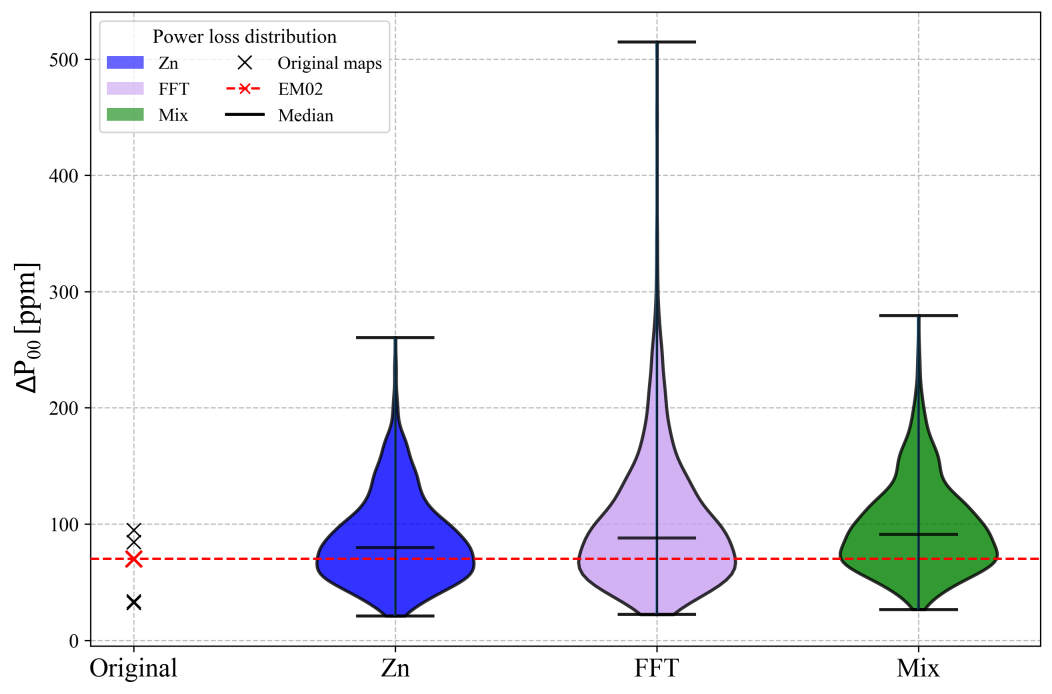
Figure 11: Violin plots for optical power losses; distributions for different VMM generation methods and reference mirrors.
- HOM Content: All methods maintain HOM power below the 1ppm threshold, with efficient suppression via preprocessing.
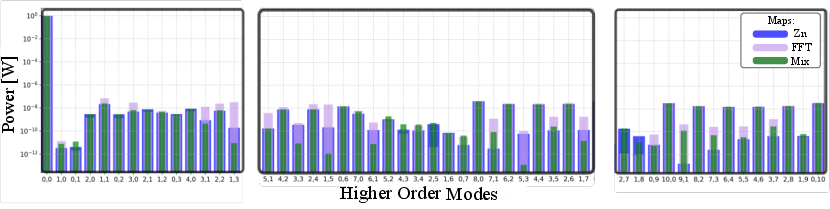
Figure 12: Average HOM power content for AdVirgo+ VMMs; surface distortions scatter power into both low and high-order modes.
- Semi-Random VMMs: Fidelity to reference spectral and optical loss distributions is achieved by combining deterministic radial modes and stochastic higher-order content.
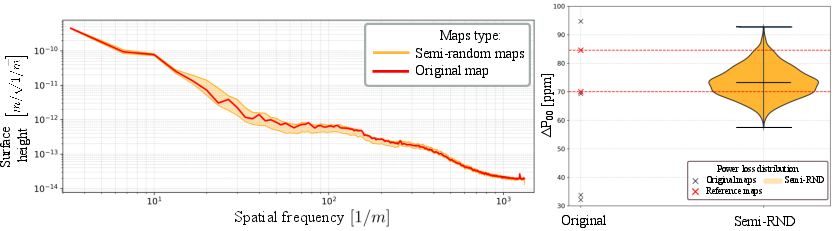
Figure 13: Semi-random maps' ASD and optical loss closely match measured reference mirrors.
ET-Specific Results
Extrapolation to ET mirror sizes confirms the stability of the mixed VMM approach, which continues to best reproduce reference spectral statistics and yields statistically consistent optical losses across randomized ensembles.
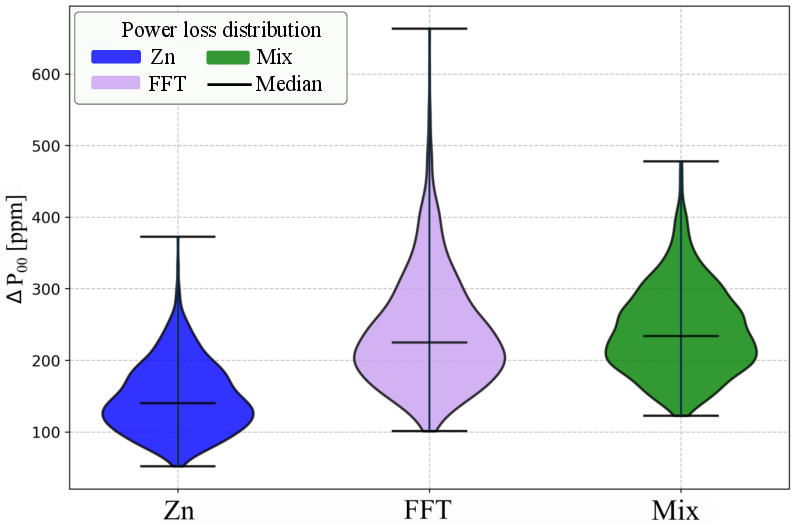
Figure 14: Optical power loss distributions for ET-HF VMMs; mixed method delivers realistic and stable values.
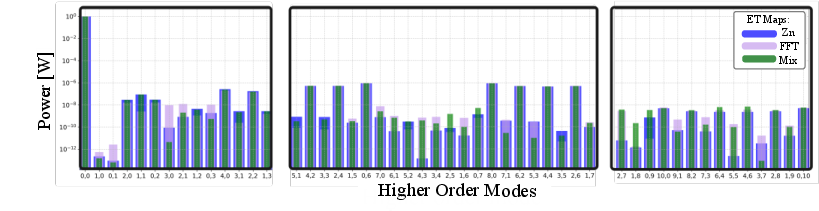
Figure 15: HOM power distributions for ET-scaled maps; all ensemble averages well within operational thresholds.
Implications and Future Directions
The rigorous framework for VMM construction enables systematic exploration of mirror surface specifications prior to fabrication, allowing ET design teams to quantitatively assess tradeoffs in spatial frequency content, optical losses, and RMS flatness. The mixed method's fidelity and statistical robustness support its adoption for modeling next-generation interferometers. Hermite-Gauss-based preprocessing should be standard for simulation workflows targeting effective mode profiles.
Further development may include integration of more sophisticated surface models (e.g., spatially non-isotropic defects), real-time VMM generation pipelines for iterative design, and application to broader classes of optical systems where surface quality critically impacts modal coupling and detector sensitivity.
Conclusion
The study presents a comprehensive framework for generating statistically controlled virtual mirror maps, combining low-frequency Zernike and high-frequency FFT methods to produce realistic synthetic surfaces for optical performance assessment in gravitational-wave interferometers. The mixed-domain approach achieves optimal spectral and spatial fidelity to measured reference maps, supporting loss analysis and HOM statistical evaluation for the Einstein Telescope. Hermite-Gauss preprocessing is validated as the most effective technique for removing compensated surface distortions. The methodology facilitates specification development and simulation-driven optimization for future high-precision optical systems.

