- The paper introduces a hybrid framework combining RSMA precoding with unsupervised RISnet to maximize weighted sum rate under limited CSI.
- It details a scalable neural inference architecture that infers full RIS configurations from partial CSI using efficient tensor operations.
- Extensive simulations with ray-traced channels demonstrate RSMA's robustness and near-optimal performance compared to traditional SDMA.
Scalable Design for RIS-Assisted Multi-User Downlink System Empowered by RSMA under Partial CSI
Overview and Motivation
The paper addresses the challenge of scalable, robust transmission in RIS-assisted multi-user downlink systems, particularly when relying on partial channel state information (CSI) for large-scale RIS deployments. Full CSI acquisition is infeasible as RIS size increases due to complexity and hardware limitations. To mitigate performance degradation and improve robustness in these scenarios, the authors propose a scheme integrating rate-splitting multiple access (RSMA) with an unsupervised learning-based neural architecture called RISnet. The approach is tailored to leverage partial CSI obtained from anchor reflective units and infers full RIS configuration for optimal precoding and beamforming under stringent unit modulus and power constraints.
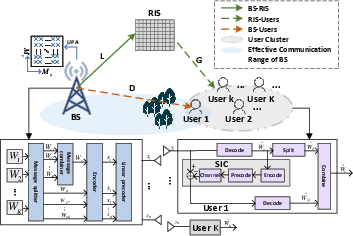
Figure 1: RIS-assisted downlink architecture, illustrating MU-MISO RSMA transmission with partial CSI anchor elements.
The scenario consists of a multi-antenna base station (BS), multiple single-antenna users, and a large-scale RIS with N reflective units, only N′≪N of which are RF-enabled anchor elements. The RSMA protocol divides each user’s message into common and private parts, combined into streams which are precoded and transmitted. The received signal incorporates RIS-induced phase shifts and channel effects, formulating a combined channel matrix dependent on the RIS configuration.
The authors formalize a weighted sum rate (WSR) maximization problem targeting joint optimization over the precoder and RIS phase shifts, subject to unit-modulus constraints for RIS and transmit power constraints at the BS. The complexity of jointly optimizing these parameters motivates a hybrid analytical-learning solution—utilizing a low-complexity WMMSE-based RSMA precoder and RISnet as an unsupervised learning mechanism for phase configuration inference.
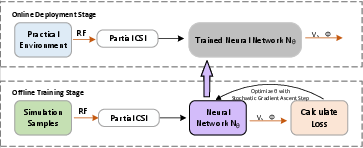
Figure 2: Two-stage unsupervised learning approach integrating RISnet and RSMA for scalable joint optimization.
RISnet Architecture and RSMA Precoding
RISnet: Neural Inference from Partial CSI
RISnet is designed to infer full-scale RIS phase configurations from partial CSI by encoding local and global channel features through dense and expansion layers. Channel feature tensors are constructed from amplitude and phase of the partial channel estimates. Dense layers process features for current user/unit and aggregate across the system; expansion layers systematically increase anchor element coverage, enabling inference for all RIS units as network depth increases.
RISnet’s architecture is scalable: parameter count is independent of the RIS size, and its design exploits tensor operations for efficient parallel computation. The unsupervised learning paradigm avoids label generation and directly optimizes the system objective via stochastic gradient ascent.
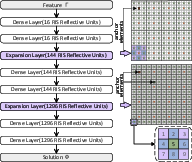
Figure 3: RISnet architecture: channel feature tensor Γ is mapped to phase configuration Φ via stacked dense and expansion layers.
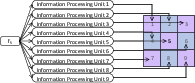
Figure 4: Expansion process: anchor element information propagated to adjacent units, increasing CSI coverage.
RSMA Precoder: Robustness via WMMSE
The RSMA precoder is derived analytically via weighted minimum mean square error (WMMSE) optimization, leveraging iterative updates for equalizers, weights, and precoder vectors. The approach relaxes the original optimization to facilitate efficient per-iteration computation, reducing reliance on expensive CVX-based solvers. Initialization utilizes normalized eigen-beamforming vectors with power allocation split between common and private streams. Alternative updating strategies further decrease computational burden during RISnet training.
Numerical Results
Extensive simulations are conducted using DeepMIMO outdoor ray-traced channels, with BS, RIS, and users placed in realistic propagation scenarios. The proposed scheme is benchmarked against SDMA baselines, evaluating both WSR and training complexity with respect to RISnet depth and CSI conditions.
Key empirical findings include:
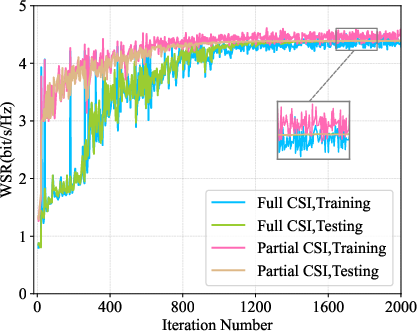
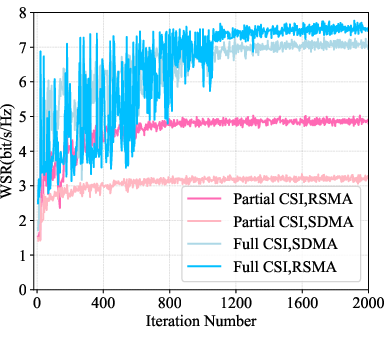
Figure 6: Training results: RISnet with SDMA and RSMA for random channels, highlighting RSMA robustness under partial CSI.
Figure 7: Training and testing performance for RISnet with RSMA in ray-tracing channels, with similar results for partial and full CSI.
Implications and Future Directions
The integration of RSMA and scalable neural inference architectures advances practical RIS-assisted communications, particularly for large-scale deployments where full CSI is prohibitive. RSMA provides resilience to imperfect CSI, enabling robust performance under more realistic fading environments. The proposed framework supports low-latency, real-time operation after offline training, presenting a compelling case for neural-empowered, scalable MU-MISO systems.
Potential future developments include:
- Generalization to arbitrary channel environments with more complex partial information structures.
- Joint optimization of anchor element placement and selection strategies to further reduce CSI acquisition overhead.
- Integration with reinforcement learning and advanced hybrid architectures for adaptive real-time configuration in dynamic environments.
Conclusion
The paper presents a comprehensive framework for robust, scalable RIS-assisted multi-user downlink transmission under partial CSI. By fusing unsupervised RISnet neural inference and RSMA-driven WMMSE precoding, the scheme achieves near-optimal performance in deterministic channels and substantial robustness under stochastic fading, outperforming SDMA baselines. Theoretical and empirical insights underscore the efficacy and scalability of the approach, charting a path for practical large-scale RIS deployments in future wireless networks.