- The paper introduces an autoencoder-based CSI compression method that cuts channel sounding overhead by over 50% while maintaining a cosine correlation above 0.97.
- It leverages convolutional layers, channel attention, and an entropy bottleneck to achieve a tunable compression ratio (η = 1/4) that reduces per-STA feedback to ~3,000 bits.
- Simulation using ray-traced indoor channels and SimPy demonstrates that the method improves throughput by up to 40% and minimizes latency compared to legacy MAPC systems.
Introduction
The paper "Autoencoder-Based CSI Compression for Beyond Wi-Fi 8 Coordinated Beamforming" (2604.13500) addresses critical scalability and performance issues in next-generation Wi-Fi deployments, particularly dense networks leveraging multi-access-point coordination (MAPC). It introduces an autoencoder (AE)-based channel state information (CSI) compression scheme tailored for Coordinated Beamforming (Co-BF) in IEEE 802.11bn. This approach targets the excessive CSI feedback overhead inherent to standards-aligned joint NDP channel sounding, offering substantial reductions in channel sounding overhead and latency, and enabling practical MAPC operation under future ultra-high reliability (UHR) requirements.
MAPC mechanisms in Wi-Fi 8 (IEEE 802.11bn) aim to maximize spatial resource utilization by allowing multiple APs to coordinate transmissions within overlapping basic service sets (OBSS). Co-BF is the preferred scheme for interference mitigation, requiring the acquisition of CSI from both in-BSS and OBSS stations (STAs) for real-time spatial nulling and beamforming. The standard CSI compression method (IEEE 802.11 Givens rotations) generates feedback sizes upwards of 14 kbits per STA, which is prohibitive under joint NDP sounding and threatens protocol scalability by inflating MAC overhead and TXOP durations. The paper formally demonstrates the signaling structure for Co-BF with joint NDP procedure to highlight protocol complexity and feedback impact.
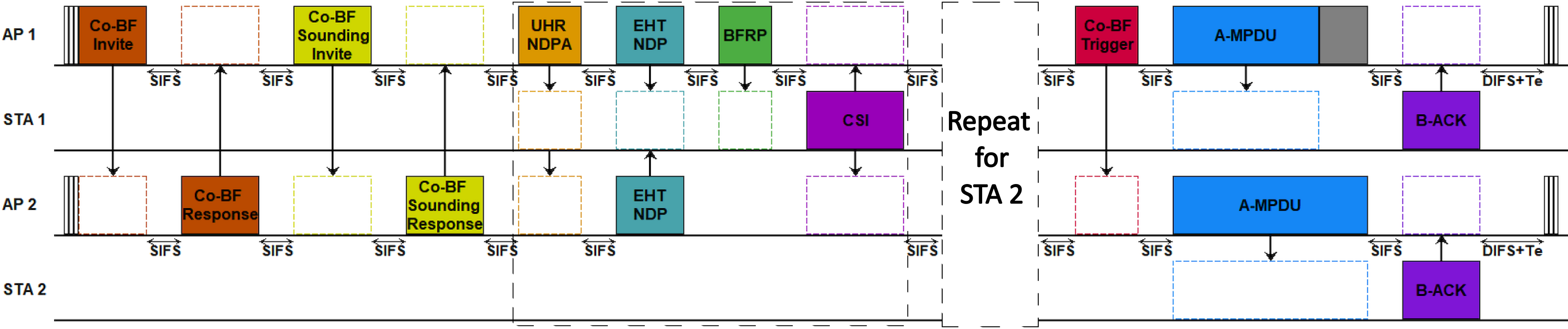
Figure 1: TXOP signaling structure example with 2 STAs for Co-BF with IEEE 802.11bn joint NDP channel sounding procedure.
Autoencoder Architecture for CSI Compression
To address feedback bottlenecks, the authors propose an AE-based compression framework. The architecture incorporates convolutional encoder and decoder layers, channel attention modules, and a learnable entropy bottleneck layer for variable-rate quantization and entropy coding. The latent vector size is tunable via the compression ratio η, enabling explicit control over the tradeoff between reconstruction accuracy and feedback overhead. Training is conducted using realistic ray-traced channels (Sionna RT) representative of complex indoor office deployments, maximizing practical relevance.
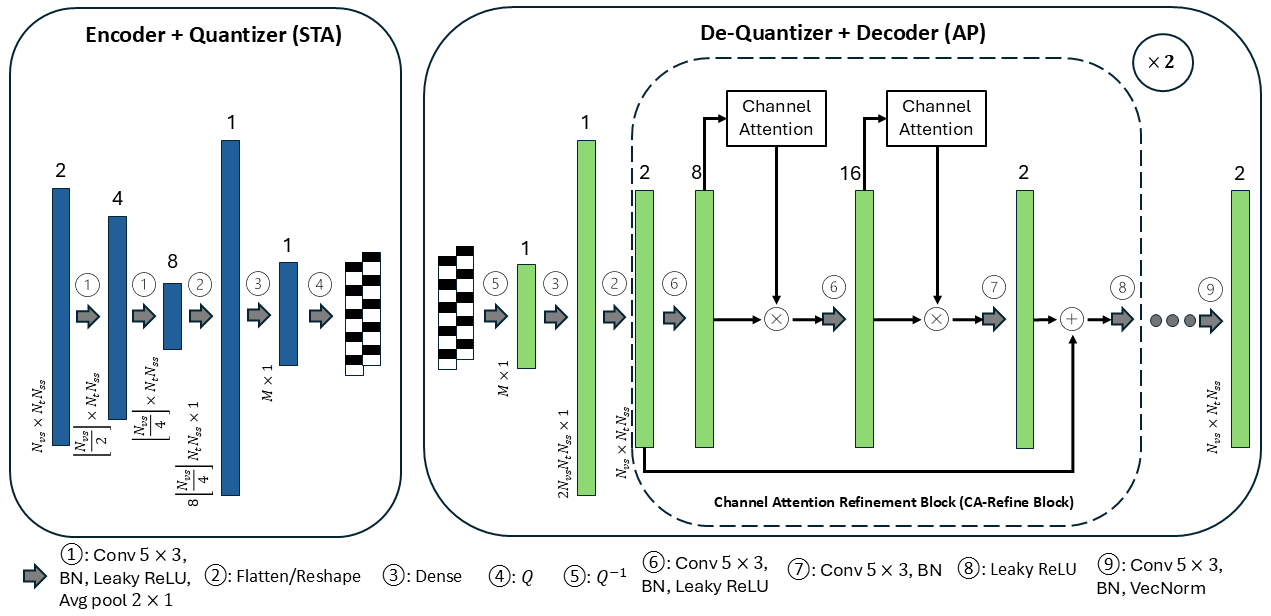
Figure 2: Proposed autoencoder architecture for CSI compression with encoder layers (blue) decoder layers (green) and entropy bottleneck layer (checkered).
A channel attention module is integrated to refine latent representations and improve domain generalization and effective vector reconstruction.
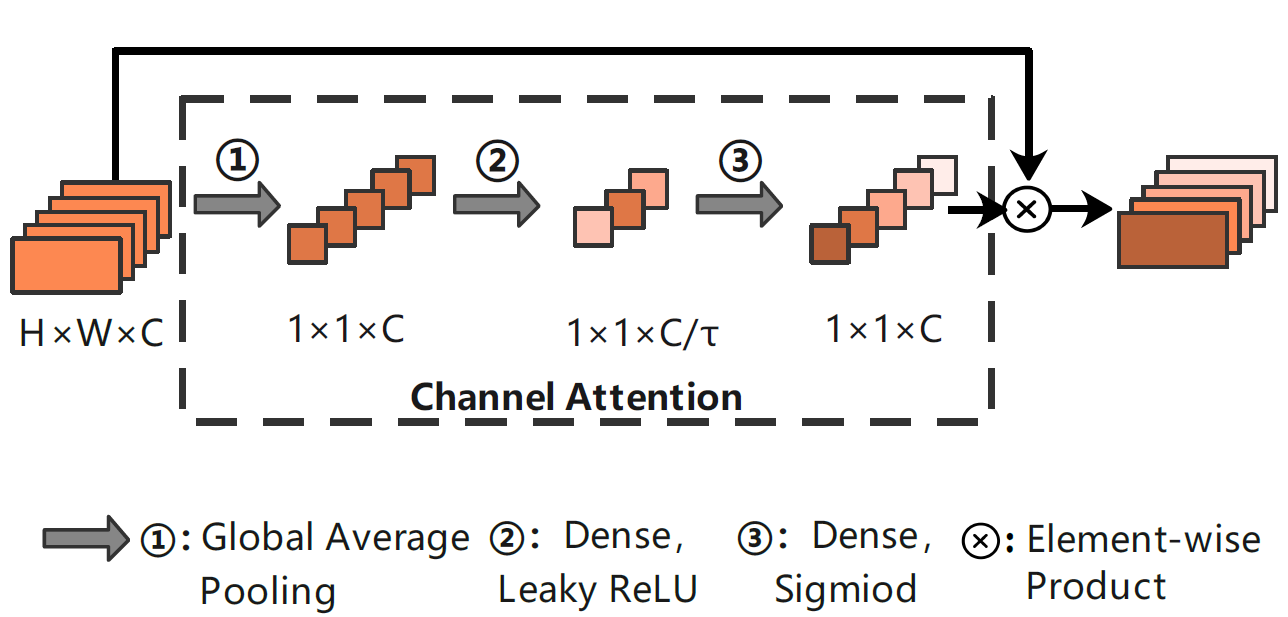
Figure 3: Architecture of the channel attention module.
Simulation Scenario and Methodology
Simulations are conducted on a multi-room indoor office topology with four ceiling-mounted APs and mobile single-antenna STAs. RSS heatmaps validate the spatial distribution and multipath richness captured by Sionna RT.
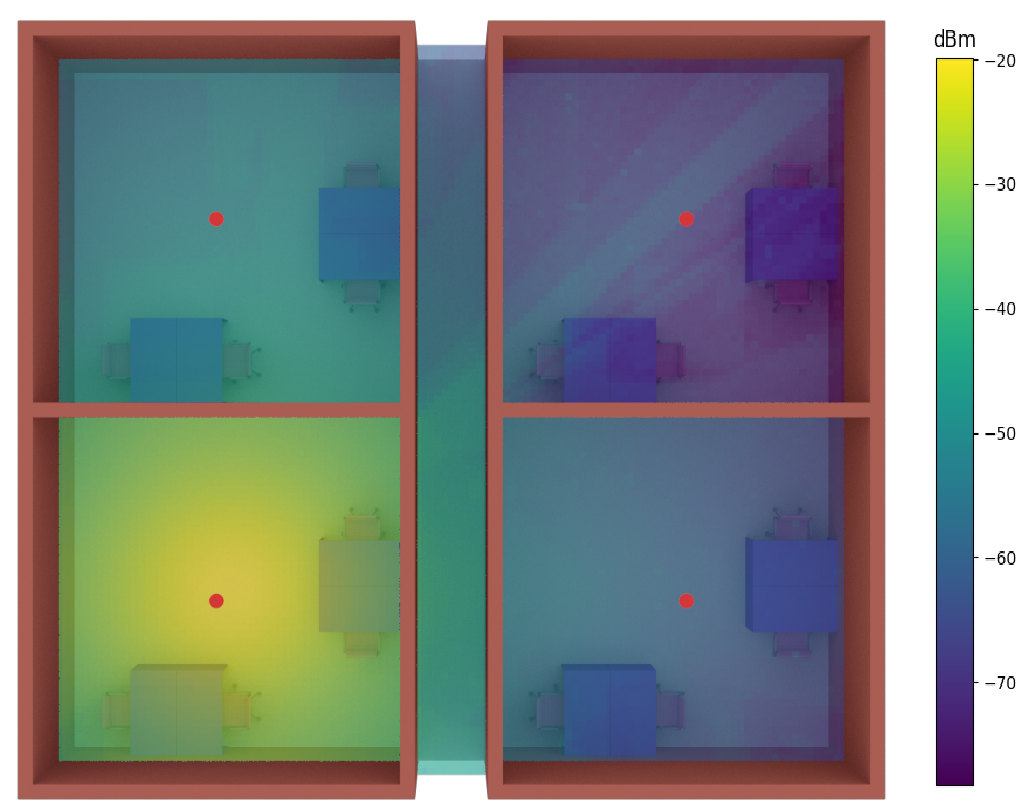
Figure 4: Indoor office with RSS heatmap of bottom-left AP.
Event-driven simulations leverage SimPy for MAC timing and packet handling, evaluating end-to-end performance (throughput and data latency) under realistic traffic loads, mobility, and contention scenarios. Across deployment scenarios, multiple compression ratios are tested, and protocol overheads are empirically measured.
CSI Compression Efficiency
AE-based CSI compression achieves more than 50% reduction in channel sounding overhead compared to IEEE 802.11 standard methods across all evaluated settings. With a compression ratio of η=1/4, feedback size is reduced to ~3,000 bits per STA, while maintaining mean cosine correlation (ρ) above 0.97 on both training and unseen datasets, ensuring robust reconstruction even in NLOS conditions.
Violin plot analysis reveals that AE compression consistently keeps sounding overhead well below the MAC TXOP deadline, whereas IEEE 802.11 methods approach or exceed the limit, particularly in high STA density/load scenarios.
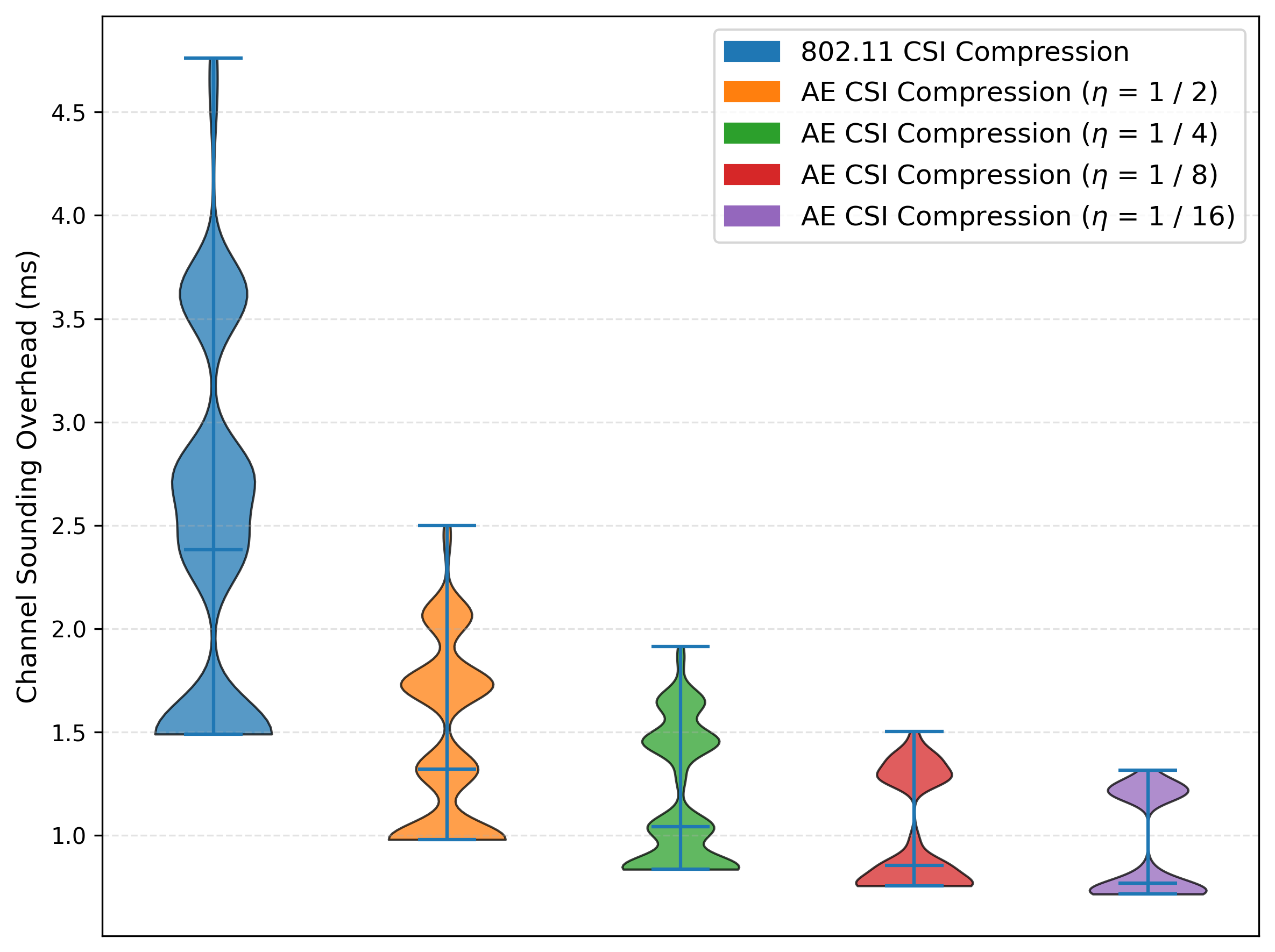
Figure 5: Violin plots of Co-BF channel sounding overhead at high load.
Latency and Throughput Tradeoffs
System-level analysis confirms that η=1/4 yields the lowest data latency by optimizing the balance between feedback size and precoder-channel alignment fidelity. Lower ratios (η<1/4) induce degraded alignment and subsequent SINR/MCS selection errors, while higher ratios offer only marginal improvement at increased overhead. Median and 99th percentile latency metrics validate these observations.
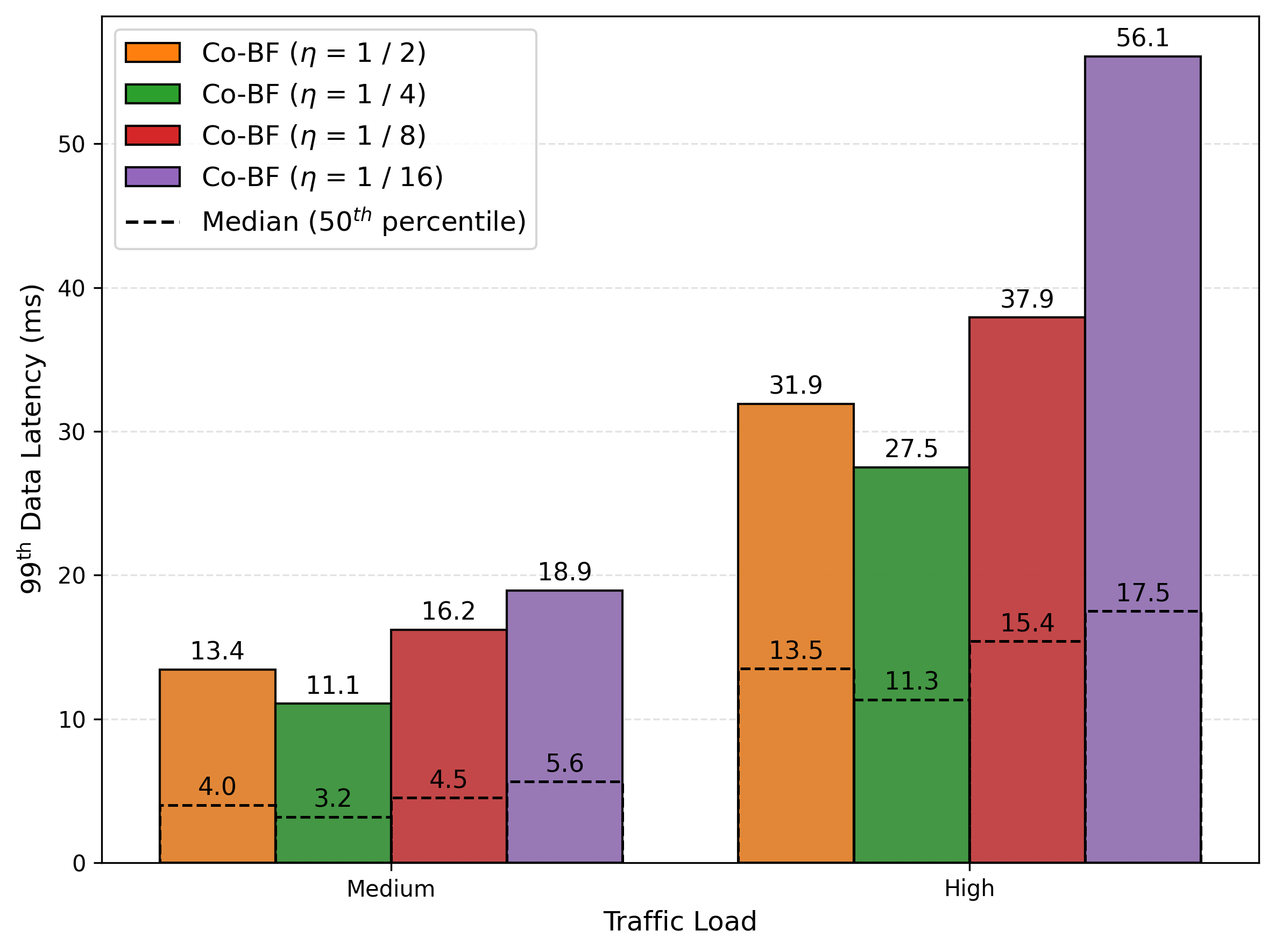
Figure 6: 99th percentile and median latency with 4 STAs per AP.
Comparison with Legacy MAPC and Transmission Modes
When benchmarking against legacy non-MAPC (single AP) and legacy 40 MHz/80 MHz channel splits, AE-based Co-BF results in up to 40% throughput improvement at high STA densities, and eliminates the data latency penalty observed with IEEE 802.11 compression. In all cases, AE compression enables Co-BF to outperform legacy configurations, even under adverse traffic and contention.
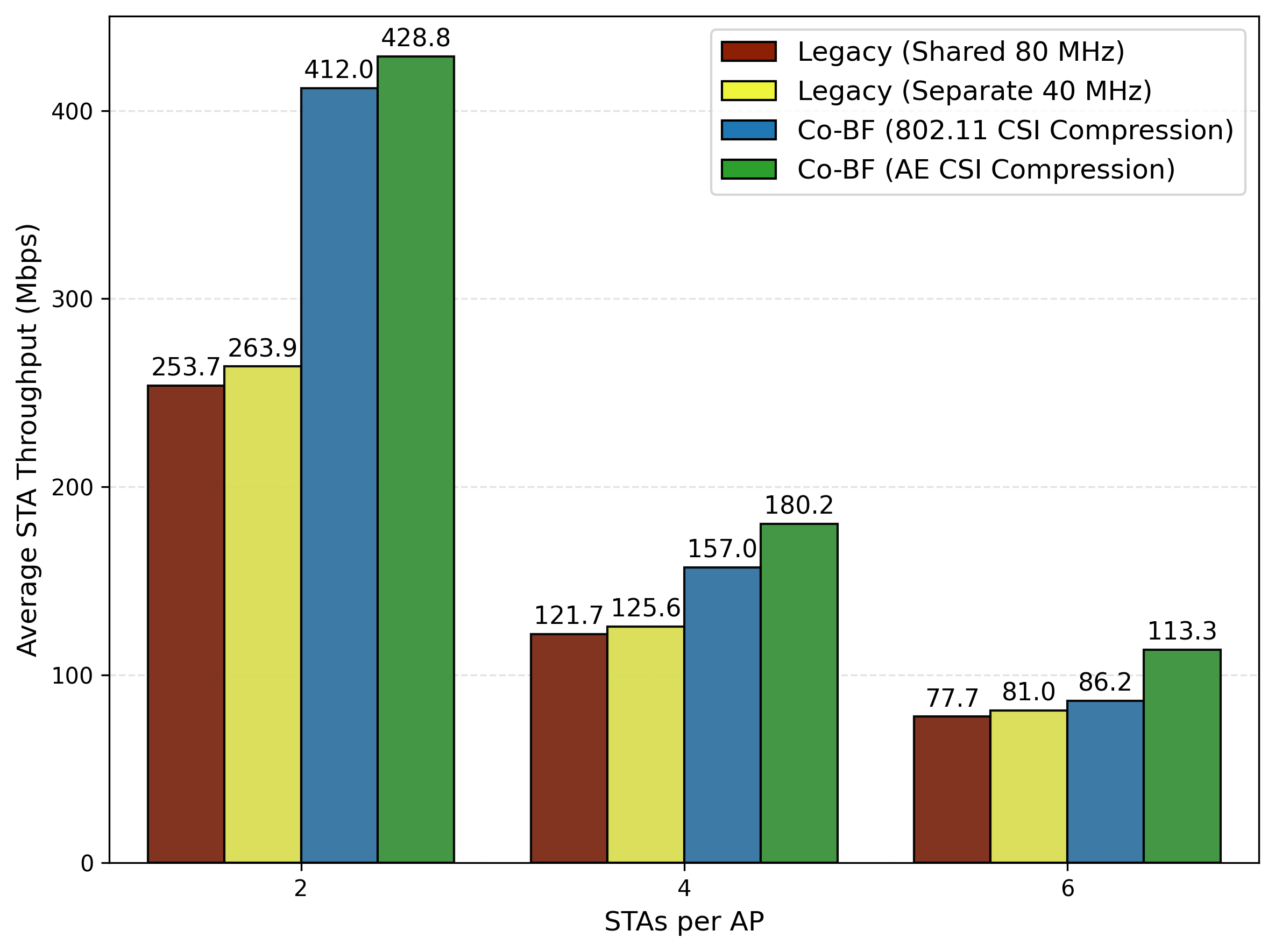
Figure 7: Average throughput per STA comparison.
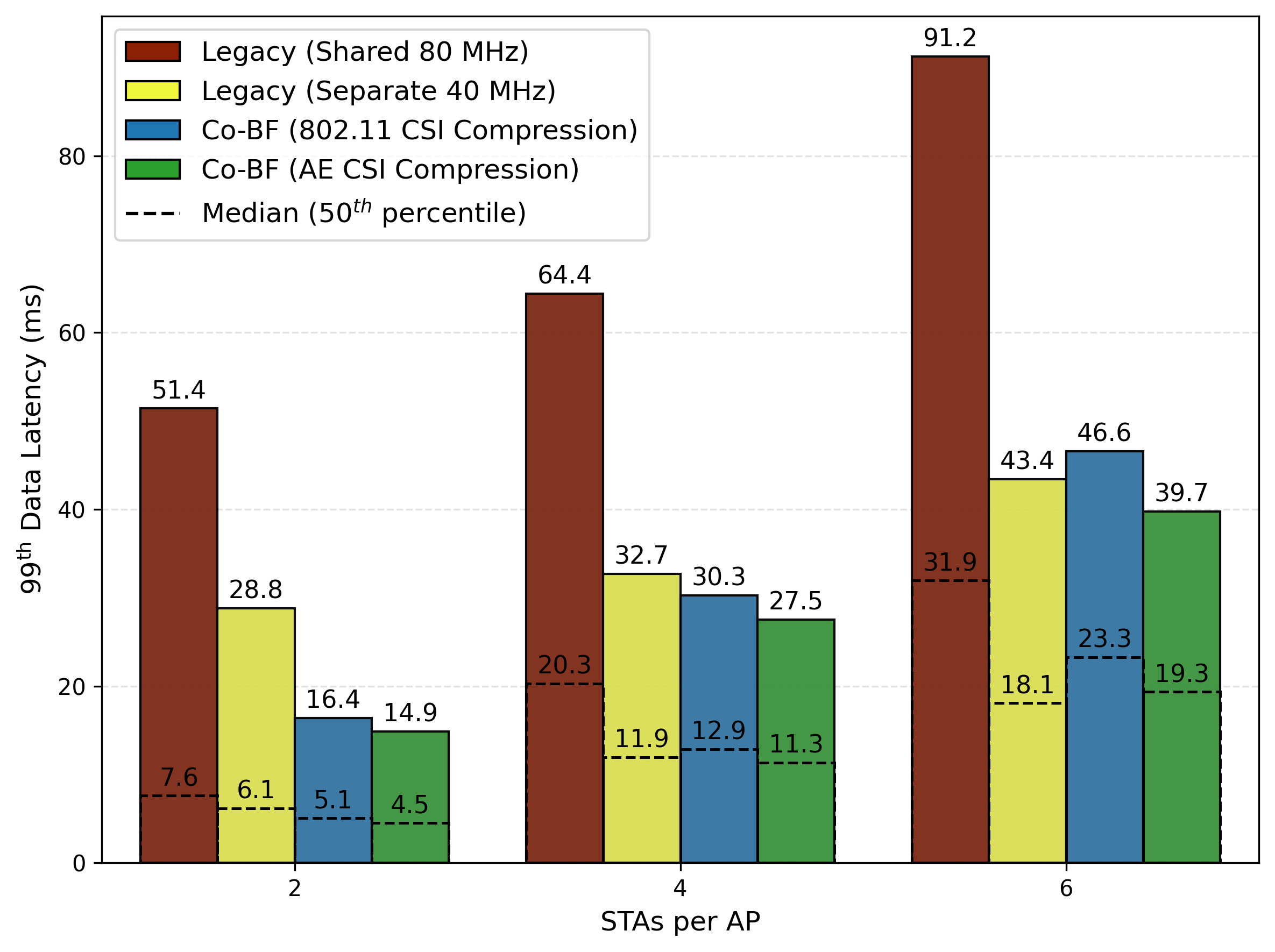
Figure 8: 99th percentile and median data latency comparison.
Implications and Future Directions
The formal integration of AE-based CSI compression into standards-aligned MAC protocol structures demonstrates the feasibility of neural compression in practical Wi-Fi environments. The results strongly support AE compression as a candidate enabler for scalable Co-BF and high-efficiency MAPC under IEEE 802.11bn. However, current AE models are trained on site-specific data—future extensions demand universal AEs capable of generalizing across diverse channel statistics, antenna configurations, and protocol variants. The paper identifies model size, deployment, and runtime efficiency as critical concerns for real-world adoption, and notes the lack of cross-scene generalization analysis in existing literature.
Conclusion
This work substantiates the efficacy of AE-based CSI compression for Wi-Fi 8 Co-BF, demonstrating dramatic reductions in channel sounding overhead and latency, optimal tradeoffs at η=1/4, and robust improvements over both legacy and standard-compressed MAPC protocols. These findings carry significant practical and theoretical implications for next-generation wireless standards and AI-driven PHY/MAC integration, motivating further research into universal AE designs and scalable model deployment for future Wi-Fi systems.