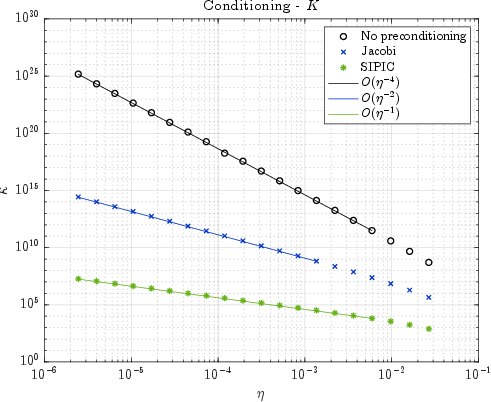
- The paper introduces a deflation-based preconditioner that projects out problematic basis functions, effectively removing small eigenvalues caused by trimmed elements.
- It systematically demonstrates that standard preconditioners like Jacobi, SIPIC, and Schwarz are configuration-sensitive and often ineffective in challenging cut scenarios.
- Extensive numerical results show that the proposed method achieves convergence rates and condition numbers nearly independent of mesh size, polynomial degree, or cut configuration.
Deflation-Based Preconditioning for Immersed Finite Element Methods and Immersogeometric Analysis
Introduction and Background
Immersed finite element methods (IFEM) and immersogeometric analysis (IGA) provide unmatched flexibility for the numerical simulation of PDEs on CAD geometries with complex boundaries and interfaces subjected to trimming, intersection, or merging. However, such flexibility comes at the cost of severe algebraic ill-conditioning in the resulting discrete systems, particularly when small cut elements create basis functions with vanishing support, leading to small eigenvalues and deteriorated convergence of iterative solvers.
Addressing this ill-conditioning is nontrivial because commonly used strategies—penalization, stabilization, or preconditioners—display a complex spectrum of success and failure. The paper "Deflation-based preconditioning for immersed finite element methods and immersogeometric analysis" (2604.12848) systematically analyzes the inefficacy of standard preconditioners and introduces a robust deflation-based preconditioner targeting the removal of small-eigenvalue-induced ill-conditioning in IFEM/IGA.
Mechanisms of Ill-Conditioning in Immersed Discretizations
The ill-conditioning in IFEM/IGA arises from two distinct mechanisms: scaling discrepancies among the energy norms of basis functions (associated with small cut elements) and near-linear dependencies of basis functions, especially with higher continuity.
Small volume fractions after trimming generate basis functions supported on minimal domains, resulting in Gram matrices with extremely small eigenvalues (Figure 1).

Figure 1: Trimmed 1D line: schematic illustrating a cut element at the right boundary leading to ill-conditioned system matrices.
The scaling of the condition number due to small cut elements is quantified as follows: for polynomial degree p and minimum volume fraction η, κ(K)≳η−(2p+1−2/d), aligning with strong numerical evidence.
Limitations of Existing Preconditioning Strategies
Diagonal Scaling (Jacobi)
Although Jacobi (diagonal) scaling is optimal among diagonal preconditioners, it only normalizes scaling discrepancies and is largely ineffective against near-linear dependencies (Figure 2). For maximally smooth splines (e.g., B-splines with high continuity), diagonal scaling is sometimes sufficient due to beneficial local regularity even when the global space is only C0. Contradicting previous intuition, this efficacy is not explained by the global smoothness of the space, but by the local regularity of the basis itself.
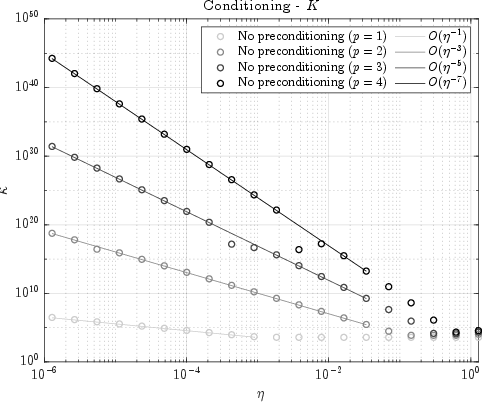
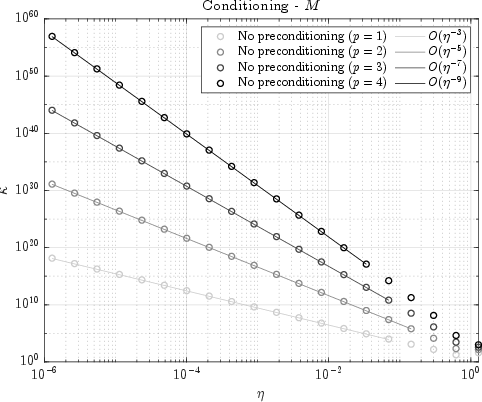
Figure 2: Condition number κ(K) for the stiffness matrix, demonstrating the inadequacy of Jacobi scaling for C0 Lagrange bases on trimmed domains.
Furthermore, in higher dimensions, the cut configuration (e.g., "sliver-cut", "corner-cut", or "middle-cut") and the alignment of knots/interpolation points critically affect the conditioning, and Jacobi preconditioning loses robustness in pathological configurations.
Local Orthonormalization and SIPIC
The SIPIC (Symmetric Incomplete Permuted Inverse Cholesky) preconditioner augments Jacobi scaling with local Gram-Schmidt orthonormalization of suspected nearly linearly dependent basis sets, but its pairwise-dependence detection is mathematically insufficient: higher-order dependencies involving three or more basis functions are systematically missed, leading to persistent ill-conditioning in practical cases.
Schwarz-Type Preconditioning
Additive and multiplicative Schwarz preconditioners define local blocks (typically overlapping basis functions over cut elements or intersecting supports); these in theory should address near-linear dependencies. In practice, effectiveness is highly sensitive to the block selection strategy. Strategies based on cut elements may miss overlapping support dependencies, and the community still lacks consensus on a robust selection method. Even advanced block selection (based on intersecting supports) cannot guarantee unconditional removal of the small eigenvalues induced by challenging cut scenarios.
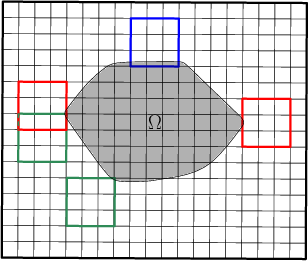
Figure 3: Support of several badly trimmed basis functions. Multiple overlapping basis functions on trimmed regions exacerbate near-linear dependencies.
Deflation-Based Preconditioning: Theoretical Foundation
The paper introduces a deflation-based preconditioner for SPD matrices arising from IFEM/IGA. Deflation, as formulated here, projects the iterative solution onto the space orthogonal to the span of problematic basis functions (identified geometrically as those with support exclusively on cut elements).
The preconditioner operates as a projector:
P=I−AZ(ZTAZ)−1ZT
where Z collects the indicator vectors for all "weakly" supported basis functions. The projected system PAx~=Pb eliminates the contribution from small eigenvalues associated with these basis functions, fundamentally changing the convergence properties of CG-type solvers. Crucially, the size of ZTAZ (the ‘coarse’ system) is small compared to the original system, and thus assembly and factorization are computationally inexpensive.
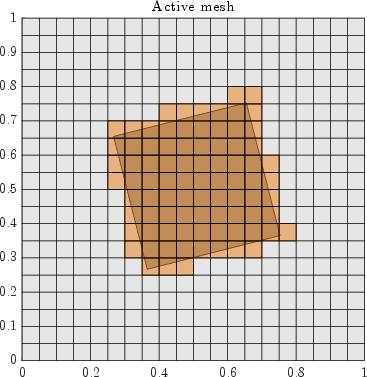
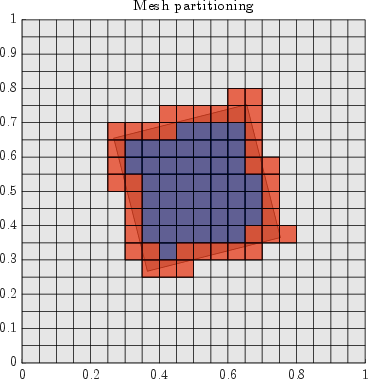
Figure 4: Computational domain η0 (orange) formed by all active mesh elements, clearly indicating the partitioning needed for deflation.
This approach is formally justified by spectral interlacing theory—small (problematic) eigenvalues disappear from the spectrum, and the CG convergence rate is governed by the effective condition number (excluding the deflated modes), which is much reduced compared to standard preconditioning.
Construction and Rank Reduction of Deflation Space
The naive choice for η1 would use all basis functions supported solely on trimmed elements (the set η2; see Figure 5):
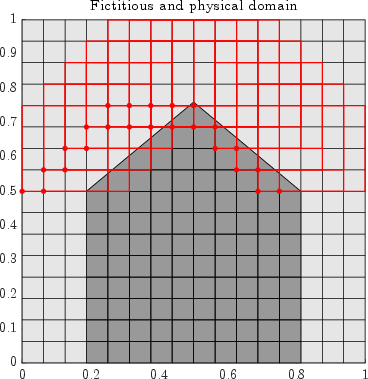

Figure 5: The full set η3 of weakly supported basis functions, forming the initial candidates for the deflation space.
However, not all such functions induce ill-conditioning—many are already decoupled by diagonal scaling. The paper proposes a precise heuristic for rank reduction: group and include only those functions whose supports nearly coincide and are concentrated on actual small-volume regions, filtered via overlap and union/intersection metrics with a user-tuned threshold. This dramatically reduces the deflation matrix size and improves computational efficiency without loss of robustness.
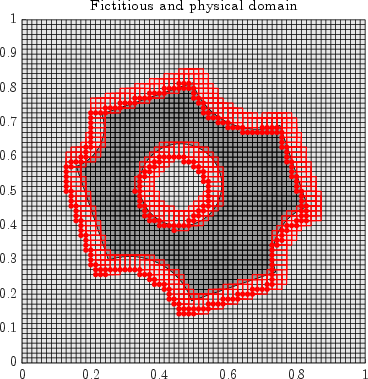
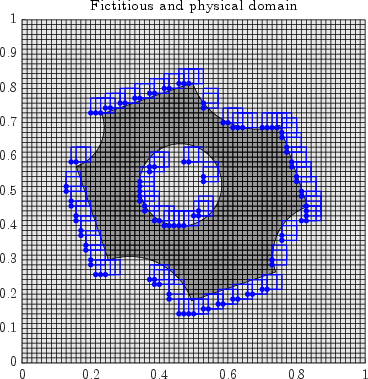
Figure 6: Reduced set η4 after rank-reduction, capturing only the pathologically problematic support patterns.
Numerical Results
Extensive numerical results demonstrate:
Practical and Theoretical Implications
The deflation-based preconditioner is non-intrusive and immediately applicable to existing IFEM/IGA software as a solver-side augmentation, with only the geometric labeling of basis functions required. Since deflation focuses exclusively on ill-conditioning from small cut elements, the native approximation and variational properties of the method are preserved. The approach is extensible to more general PDE types, but proper treatment of other sources of ill-conditioning (such as high polynomial degree) may require integration with η5/η6-robust (multigrid) preconditioners.
On the theoretical side, the paper settles several open questions about the (in)efficacy of diagonal scaling and local orthonormalization, highlighting that local basis smoothness and precise support geometry, not just global regularity, govern preconditioner effectiveness.
Conclusion
This work provides a comprehensive theoretical and computational analysis of preconditioning in immersed finite element and immersogeometric analysis. By introducing a deflation-based preconditioner tailored to the geometric and algebraic structure of immersion-induced ill-conditioning, the authors demonstrate a robust, scalable, and non-intrusive strategy. The analysis in the paper shows that standard preconditioners often fail to eliminate ill-conditioning from pathological trimming scenarios, and only a global, geometry-aware deflation approach guarantees robust solver performance.
Future directions include extending deflation approaches to indefinite, nonsymmetric systems, and advanced integration with multilevel and domain-decomposition preconditioning for other discretization-induced ill-conditionings.