- The paper introduces a novel many-body van Vleck-Gutzwiller formalism that links classical mean-field chaos to quantum interference and spectral universality.
- It employs trace formulae and semiclassical propagators in Fock space to capture key dynamical features such as coherent backscattering and eigenstate correlations.
- The work demonstrates that many-body quantum chaos emerges from the interference of distinct mean-field paths, providing insight into scrambling and OTOC behavior.
Quantum Chaos in Many-Body Systems of Indistinguishable Particles: A Semiclassical Perspective
Introduction: Bridging Classical Chaos and Many-Body Quantum Systems
Quantum chaos has traditionally referred to the study of quantum systems whose classical analogs exhibit chaos. In single-particle (SP) systems, semiclassical techniques—especially those based on path integrals and asymptotic expansions in ℏ—have enabled detailed connections between classical phase-space structures and quantum signatures, including spectral statistics and eigenfunction morphology. Gutzwiller's trace formula provided a direct link from classical chaotic periodic orbits to quantum spectral properties, and subsequent work established the universality of quantum fluctuations in chaotic systems as described by random matrix theory (RMT).
However, many-body (MB) systems composed of indistinguishable particles, such as bosons or fermions, pose fundamentally different challenges. These systems admit a distinct semiclassical limit, not in ℏ→0, but in the inverse particle number 1/N→0, and are naturally described within the framework of quantum field theory and Fock space. The reviewed work delineates the recent advances in extending semiclassical methods into the many-body regime, elucidating the universal features of MB quantum chaos, and clarifying the interplay of mean-field dynamics, interference, and scrambling.
Semiclassical Regimes in Many-Body Quantum Systems
The standard semiclassical regime corresponds to large classical action compared to ℏ, typical for systems of a fixed, small number of particles:
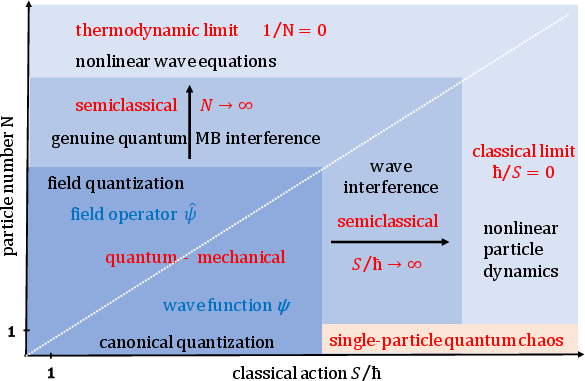
Figure 1: Schematic of emergent classical limits and semiclassical regimes in the action-particle number plane; vertical scaling shows particle number N and horizontal scaling shows action S/ℏ.
In MB systems, a complementary semiclassical regime emerges for 1/N→0 at large N, leading to mean-field-type classical equations (e.g., the Gross-Pitaevskii equation for bosonic fields). The quantum-classical transition, whether via ℏ→0 or 1/N→0, is inherently singular and associated with new scales such as the Ehrenfest time, after which quantum interference becomes dominant. The theoretical framework developed here treats both limits and provides the tools to analyze spectral and dynamical MB quantum chaos.
Semiclassical Propagators and the Many-Body van Vleck-Gutzwiller Formalism
Single-Particle Systems: Periodic Orbits and Spectral Universality
The semiclassical van Vleck-Gutzwiller propagator, which exploits stationary phase approximations around classical paths, offers explicit representations for the quantum time evolution and spectral density. In chaotic systems, the periodic orbit theory leads to universal features in spectral fluctuations and a deep connection with RMT.

Figure 2: Correlated periodic orbits in SP systems—pairs of nearly identical orbits differing in localized encounters are essential for understanding universal spectral correlations.
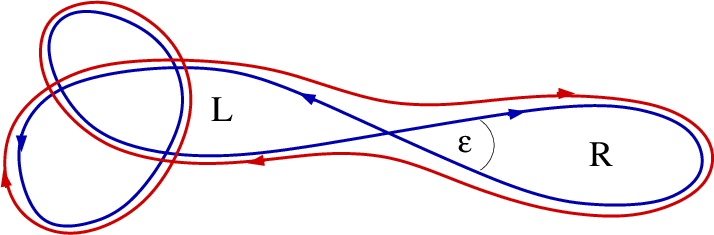
Figure 3: Schematic of a pair of classically correlated periodic orbits linked via a common self-encounter region—a critical structure for spectral statistics.
Many-Body Systems: MB Classical Limit and Genuine MB Interference
In the MB context, the classical limit is realized as the mean-field dynamics of the underlying field theory. The MB semiclassical propagator, an extension of the van Vleck-Gutzwiller approach, is constructed in Fock space and sums over mean-field (i.e., nonlinear semiclassical) solutions subject to two-point boundary value conditions. Crucially, MB quantum interference arises from the coherent sum over distinct mean-field trajectories, a feature inherently missing from mean-field approaches and not fully captured by probabilistic classical expansions like TWA.
This semiclassical framework yields trace formulae for MB level densities, analogously to the SP case, and enables analysis of both dynamical observables and spectral properties in large-ℏ→00 systems.
Applications: Dynamical and Spectral Quantum Chaos in MB Systems
Dynamics Beyond the Truncated Wigner Approximation
The truncated Wigner approximation (TWA) incorporates fluctuations in initial conditions but neglects interference between different classical (mean-field) solutions. Numerical and analytical results show that the TWA fails to capture post-Ehrenfest quantum dynamics, where semiclassical interference effects dominate.
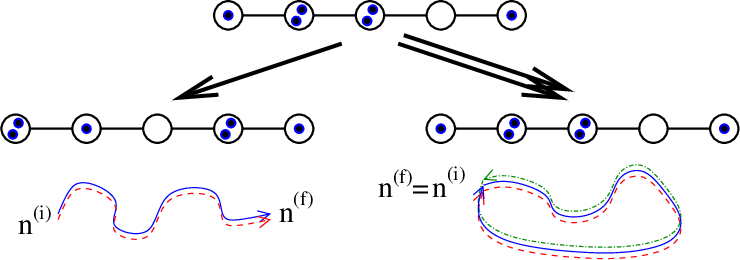
Figure 4: Many-body coherent backscattering in Fock space arises from the constructive interference of time-reversed mean-field paths, enhancing return probabilities beyond classical predictions.
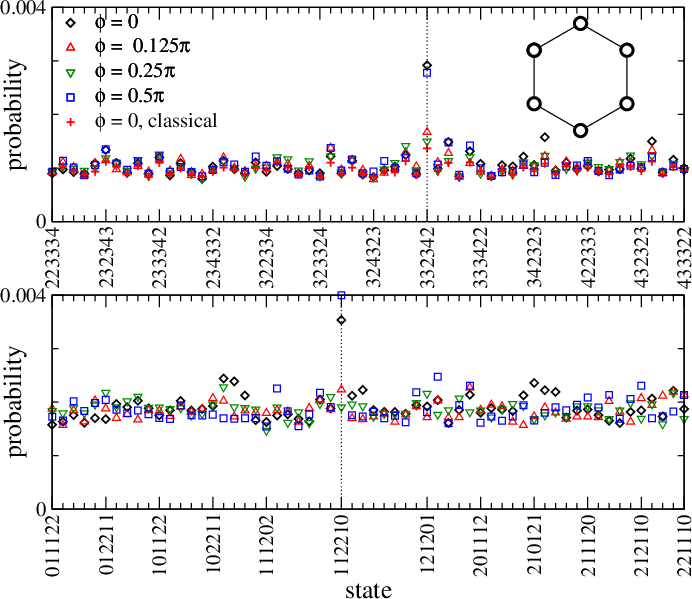
Figure 5: Numerical demonstration of coherent backscattering in the Bose-Hubbard model; the return probability exhibits enhancement due to quantum interference, suppressed upon breaking time-reversal symmetry.
Spectral Properties: Many-Body Trace Formula and Universality
The MB trace formula expresses the density of states as a sum over periodic mean-field solutions, mirroring the structure of the SP Gutzwiller trace formula. In systems with chaotic mean-field dynamics, RMT universality emerges in spectral correlations for large ℏ→01. The proper generalization of encounter calculus to MB systems allows identification of the relevant interference mechanisms underpinning universal fluctuations.
Eigenstate Structure: Many-Body Random Wave Model
The eigenstate statistics of MB systems with chaotic mean-field dynamics extend the Berry random wave model to Fock space. Numerical data for Bose-Hubbard chains show robust correlations between Fock-basis expansion coefficients that are not captured by RMT, but are well described by the semiclassical theory.
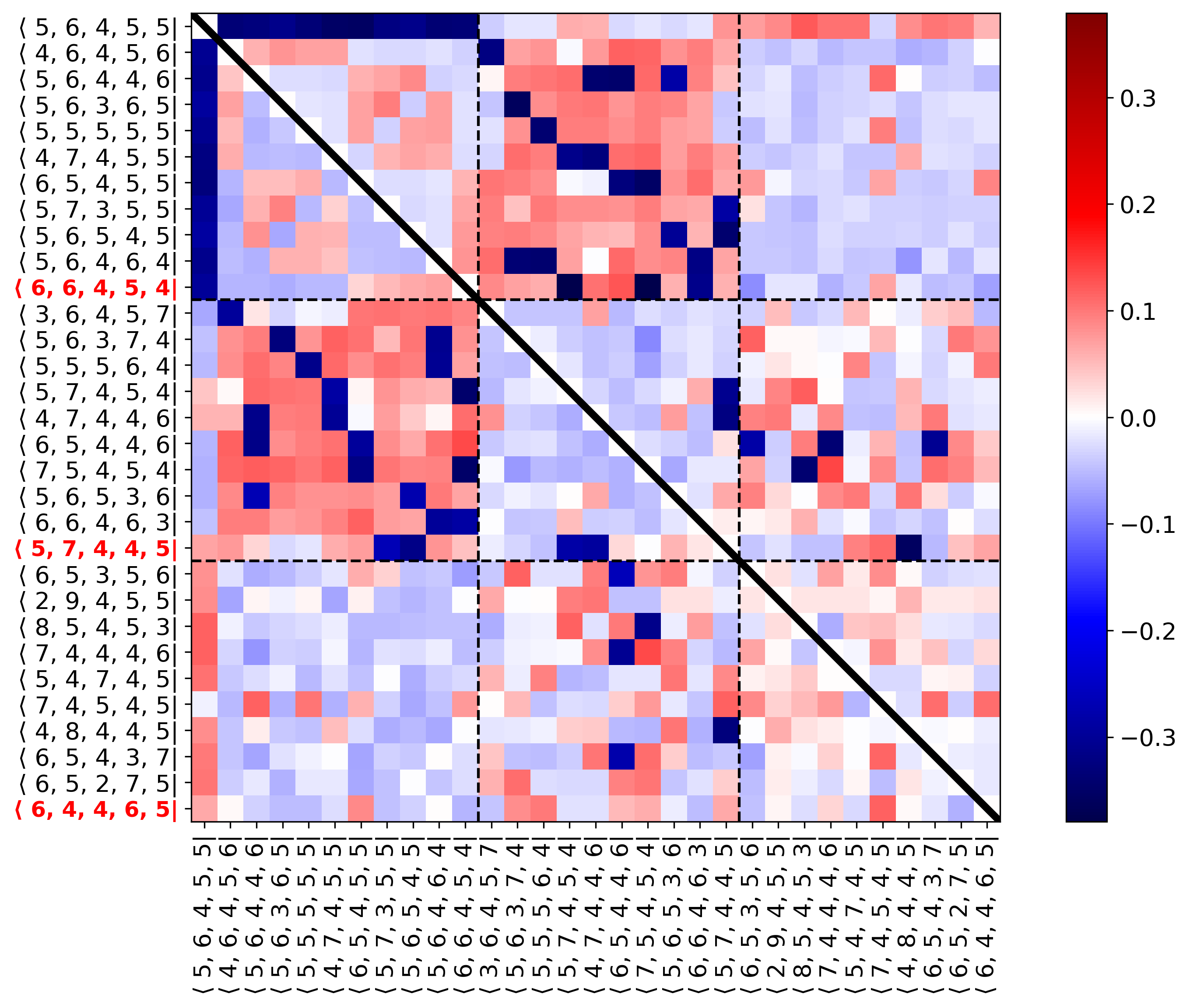
Figure 6: Cross-correlations ℏ→02 among Fock-state expansion coefficients of MB eigenstates in a Bose-Hubbard chain; significant mesoscopic correlations are observed, in agreement with semiclassical predictions.
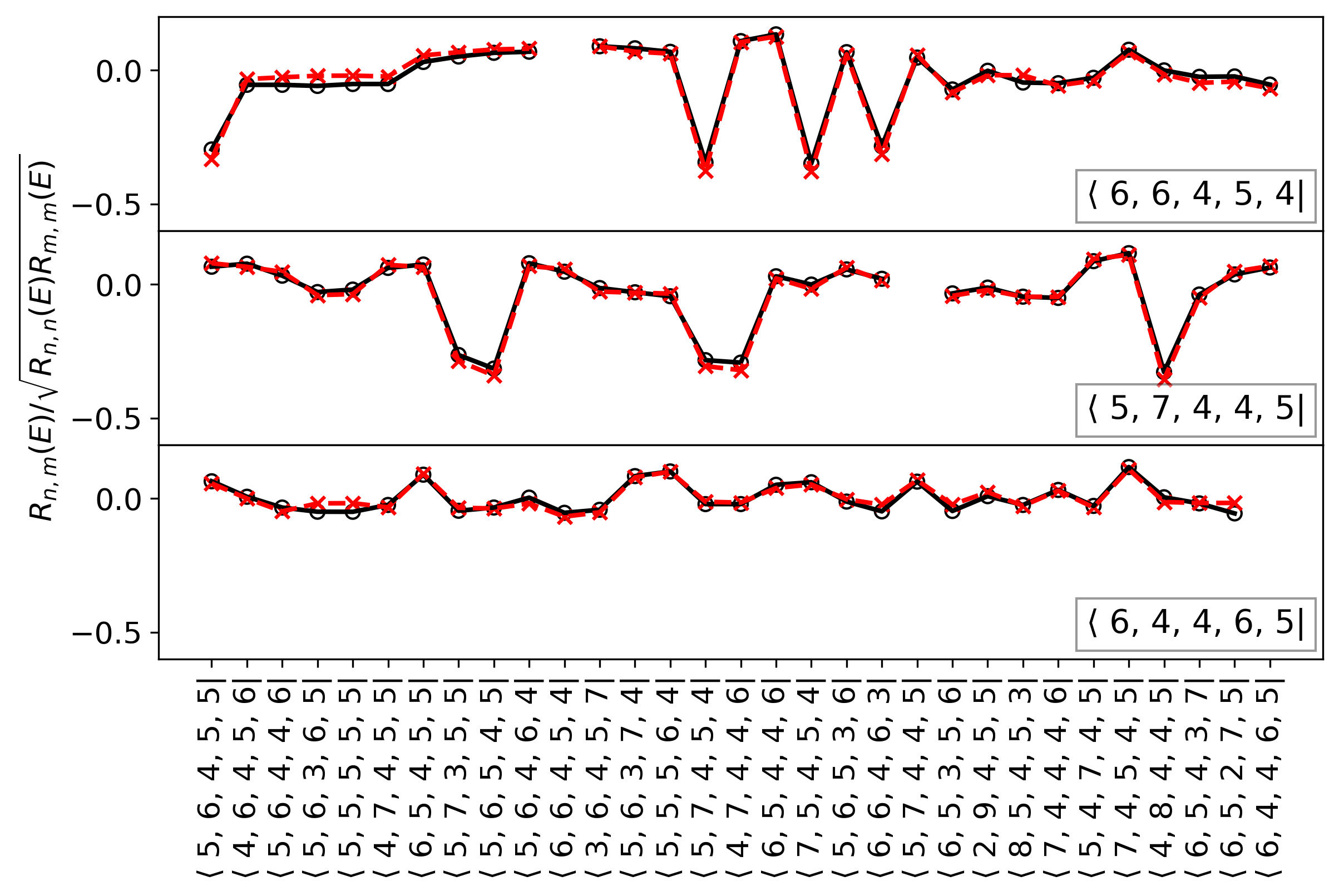
Figure 7: Individual normalized correlators illustrate the detailed quantitative agreement between the semiclassical Fock-space RWM and exact numerical results across different initial states.
Scrambling and OTOCs: Universal Semiclassical Mechanisms
MB scrambling, a central phenomenon in quantum information and MB chaos, is quantified via the out-of-time-ordered correlator (OTOC). The semiclassical theory maps the initial exponential growth of the OTOC to the Lyapunov instability of mean-field dynamics, while the saturation at the Ehrenfest time is due to genuine MB quantum interference resulting from the encounter of multiple mean-field paths.
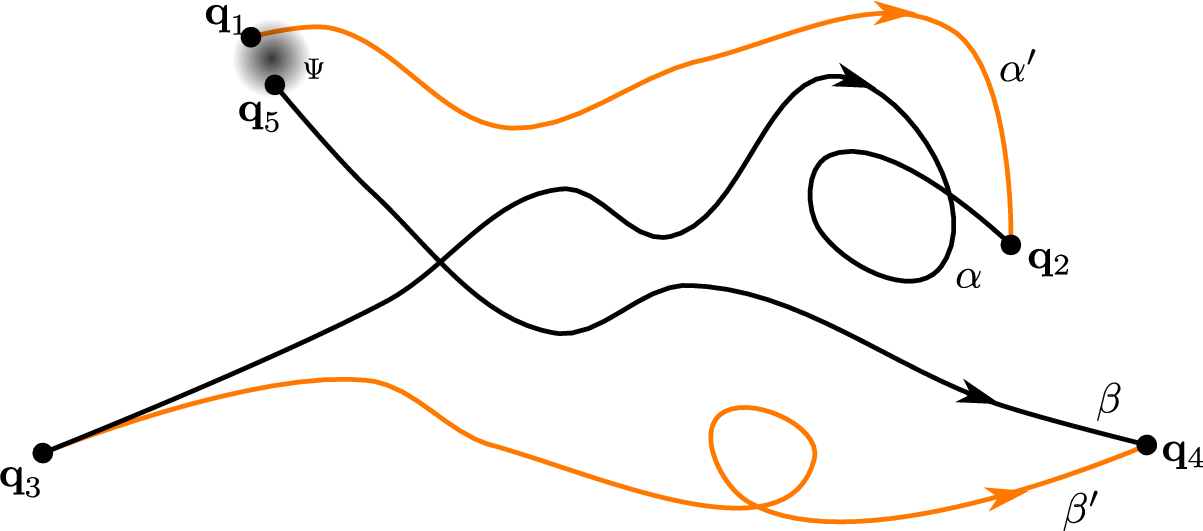
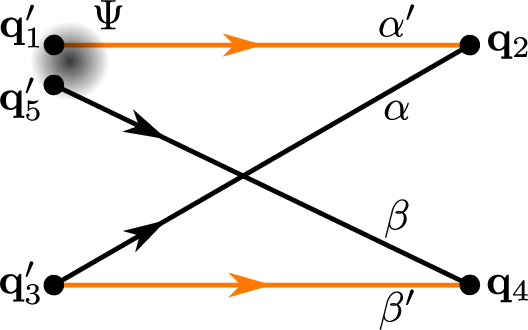

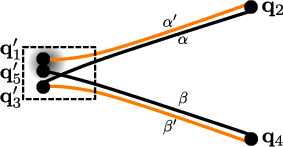
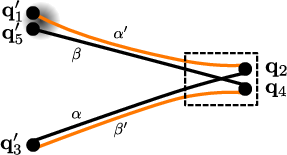
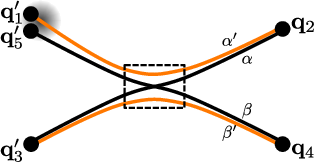
Figure 8: Schematic of interfering mean-field paths contributing to the OTOC ℏ→03—different encounter geometries are mapped to distinct physical processes governing scrambling and saturation.
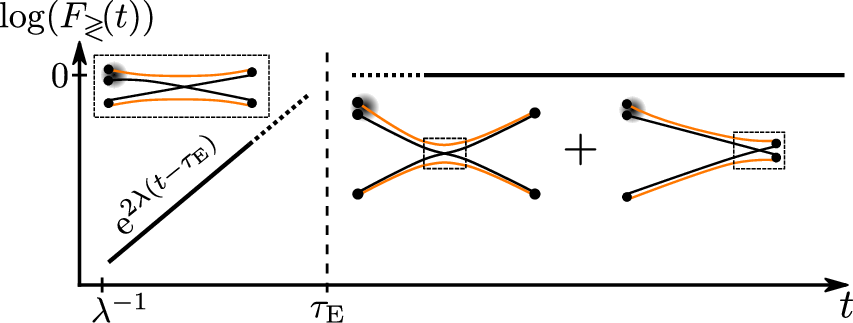
Figure 9: Universal time dependence of the OTOC: exponential growth up to the Ehrenfest (scrambling) time, followed by quantum interference-induced saturation.
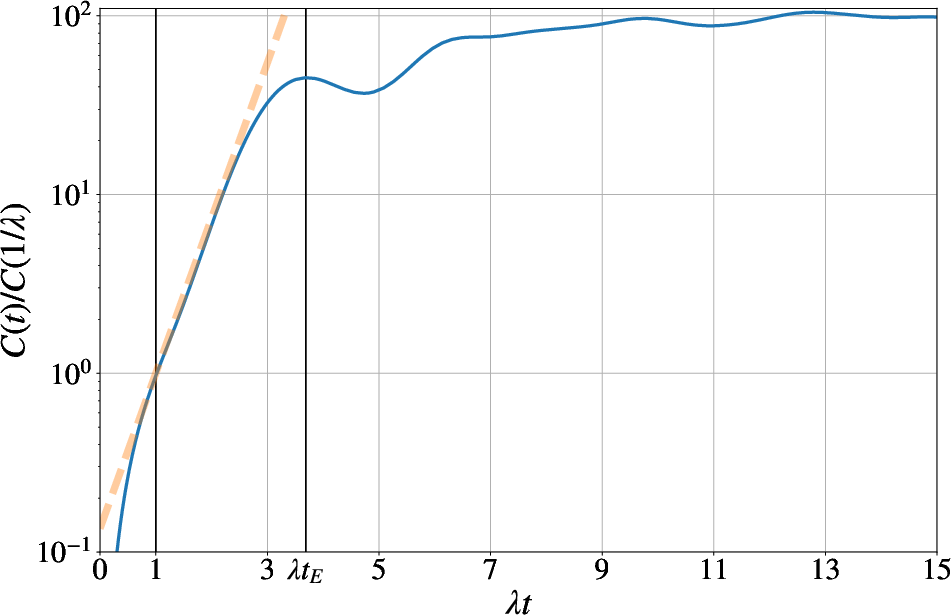
Figure 10: Numerical OTOC in a Bose-Hubbard chain with ℏ→04; exponential regime and saturation behavior are clearly visible, corroborating the semiclassical predictions.
Implications and Future Directions
The semiclassical theory of MB quantum chaos presented here provides a unified framework for understanding universal spectral statistics, eigenstate morphology, and quantum information scrambling in bosonic systems with large particle number and chaotic mean-field limit. It establishes the conceptual foundation for lifting SP signatures of quantum chaos into the MB domain, rigorously identifying the role of MB encounters and interference as the mechanisms behind universality and dynamical complexity.
Potential future developments include extending this approach to fermionic systems, investigating quantum criticality and transition phenomena in MB quantum chaos, and leveraging semiclassical tools for quantum control and quantum simulation platforms. The explicit connection between MB quantum chaos and classical field-theoretic dynamics may also provide insights for models of quantum gravity and fast-scrambling systems.
Conclusion
The reviewed work rigorously extends semiclassical methods to the MB domain, elucidating the emergence of quantum chaos in systems of indistinguishable particles and establishing a direct link between classical mean-field chaos and complex quantum dynamics. The MB van Vleck-Gutzwiller formalism and the associated encounter calculus are central to understanding dynamical and spectral universality, eigenstate statistics, and quantum scrambling—all of which are corroborated by robust numerical evidence and have potentially broad implications for quantum many-body physics, statistical mechanics, and quantum information science.
Reference: "Quantum chaos in many-body systems of indistinguishable particles" (2604.12745).