- The paper introduces a sparse radial neutrino telescope design featuring a five-arm configuration with 1100 optical modules to optimize muon track detection.
- The design enhances sensitivity to horizontal muon tracks by retaining 40% of signal events while effectively reducing atmospheric background noise.
- Simulations demonstrate improved point source sensitivity at multi-TeV to PeV energies, offering a scalable and cost-efficient alternative to traditional detectors.
POLARIS: A Novel Sparse Radial Neutrino Telescope Design
The POLARIS project introduces a sparse radial neutrino telescope tailored for deployment in the Pacific Ocean, specifically engineered to optimize detection of neutrino-induced muon tracks in the multi-TeV to PeV energy regime. This configuration diverges from conventional cubic-kilometer architectures, offering significant advantages in terms of cost-efficiency and sensitivity to horizontal neutrino tracks. POLARIS utilizes a unique radial planar setup that maximizes cross-sectional exposure to these tracks, simultaneously attenuating atmospheric background noise.
Introduction to Neutrino Astronomy
Neutrino astronomy has been propelled into the forefront of observational astrophysics through instruments like IceCube and its successors, which have pioneered large-scale detection capabilities from the South Pole to the Northern Hemisphere. However, these detectors face challenges in expanding their architecture to address the ultra-high-energy regime (above ~100 TeV), necessitating disproportionate infrastructural expansion. The paper argues that detecting near-horizontal muon tracks is vital for exploring the ultra-high-energy frontier due to the Earth's opacity confining observations to narrow horizon bands.
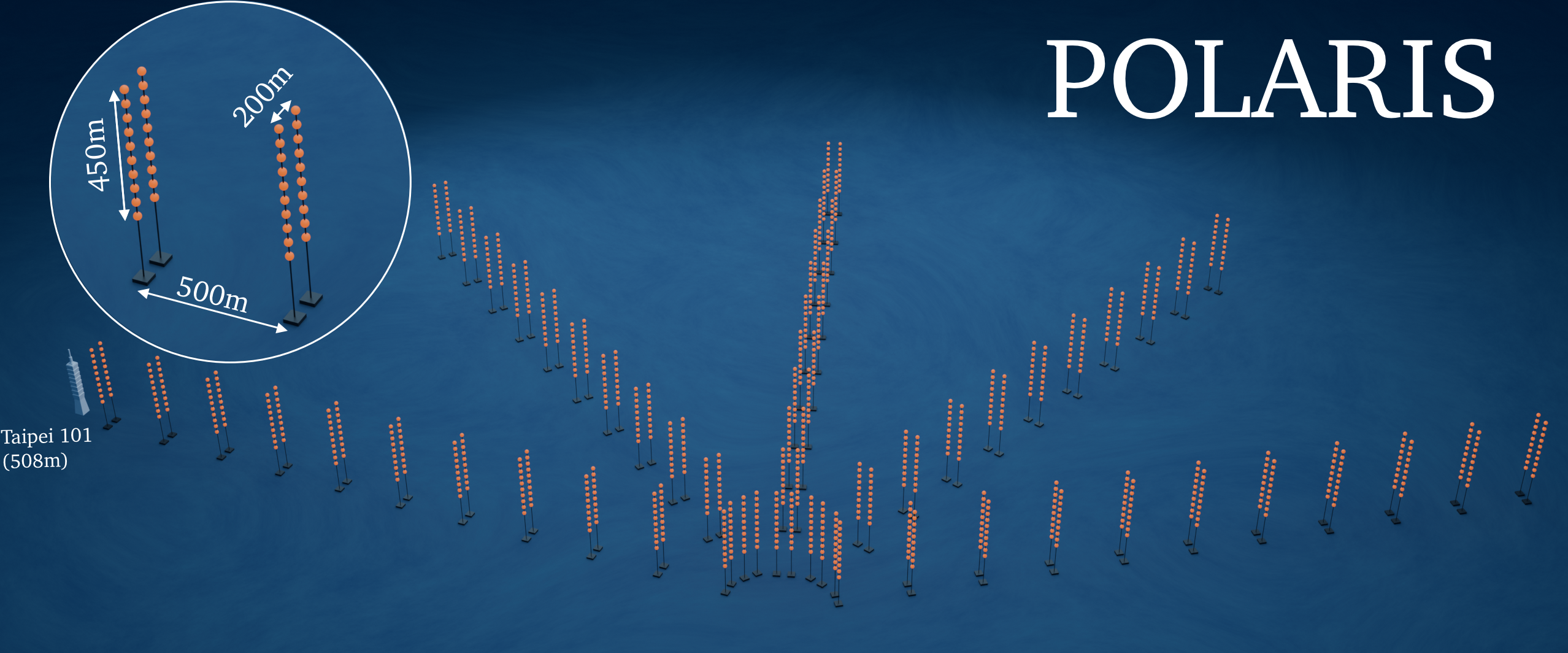
Figure 1: Illustration of the five-arm POLARIS detector geometry with perpendicular string pairs.
Detector Design
POLARIS employs a sophisticated geometry composed of five radial arms extending from a central hub, each equipped with optical modules arranged in gates. This design includes a radial planar configuration, strategically aimed at maximizing sensitivity to horizontal muon tracks, with each arm instrumented with 220 optical modules resulting in a total of 1100 modules. The configuration (Figure 1) minimizes background noise, leveraging vertical spacing to discourage down-going cosmic-ray secondaries.
Event Selection and Classification
The telescope's architecture inherently categorizes event topologies, distinguishing between muon tracks that produce sequential hits along radial strings and cascade events occupying localized regions. The design suppresses background through geometric selection criteria, retaining 40% of signal tracks while eliminating cascade-induced noise efficiently across a vast energy spectrum.
Astronomy Potential
POLARIS exhibits promising point source sensitivity; simulations illustrate superior detection prospects compared to existing detectors. The instrument demonstrates effectiveness by achieving statistically significant detection results across the energy spectrum, with marked performance gains at PeV energies. This capability is mirrored in the diffuse flux sensitivity analysis, showcasing POLARIS's adeptness at capturing astrophysical signals with fewer modules than its predecessors.
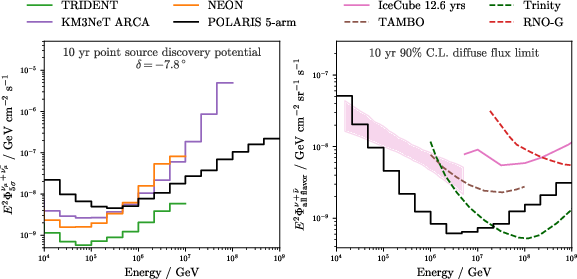
Figure 2: Sensitivity curves for point source detection and comparison across instruments.
Discussion and Implications
POLARIS's hierarchical sparse geometry exemplifies a practical solution targeting ultra-high-energy neutrinos while circumventing the broad-band limitations inherent in denser configurations. This specialization is underscored by the ability to provide fundamental coverage of the muon-flavor channel, thereby complementing tau-optimized experiments like TAMBO and Trinity. The potential scalability of the radial arm design, coupled with its favorable modular architecture, positions POLARIS as a compelling addition to the global neutrino observational network.
Future research will focus on optimizing site-specific optical assessments and implementing advanced reconstruction techniques. Additionally, refining geometric spacing and event selection through machine learning paradigms could bolster detections, propelling POLARIS towards groundbreaking contributions within neutrino astronomy.
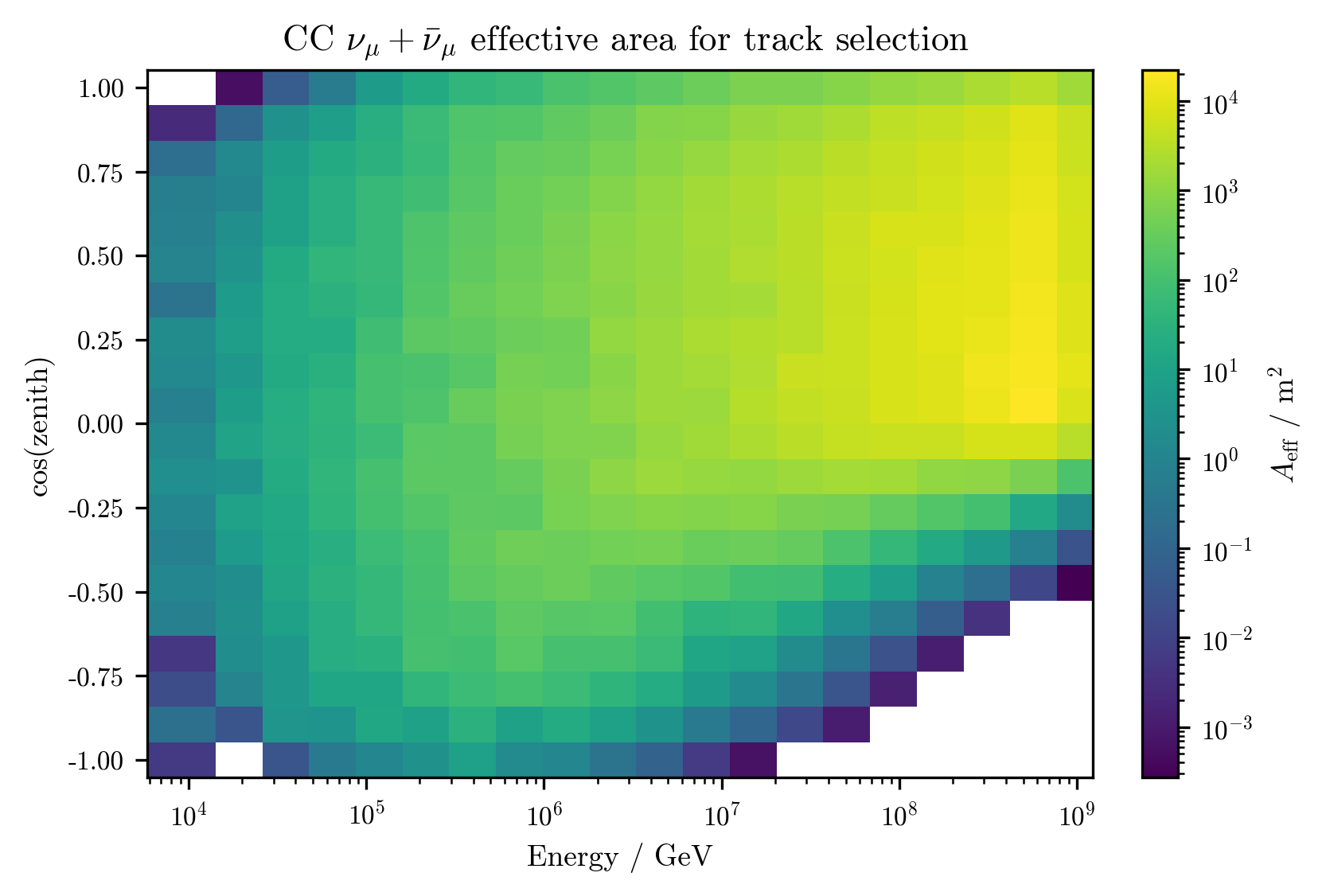
Figure 3: Effective area for CC muon and anti muon neutrinos for the POLARIS geometry.
Conclusion
Through its innovative radial arm configuration, POLARIS demonstrates the strategic efficacy of specialized detector arrays in neutrino astronomy, positioning itself as a cost-effective and potent tool for high-energy astrophysical exploration. This design not only complements existing instruments but expands observational capabilities across the Northern Hemisphere, promising substantial contributions to both theoretical and practical advancements in high-energy particle astrophysics.