- The paper presents a unified framework using configuration-space Faddeev equations that accurately treats elastic, breakup, and recombination processes.
- It employs mass-scaled Jacobi coordinates and partial wave expansions to disentangle asymptotic channel contributions and benchmark results against neutron-deuteron scattering.
- Numerical strategies using GMRES with block-diagonal preconditioning ensure high accuracy, with defects as low as 10⁻⁵ below breakup energies.
Scattering Faddeev Calculations in the Double Continuum: A Detailed Review
Formalism and Unified Treatment of Three-Body Scattering
The study presents a rigorous development of configuration-space Faddeev calculations for three-particle scattering processes, specifically in the double continuum regime where all particles are asymptotically free. The methodology unifies single continuum (1+2) channels (one free particle, two bound) and double continuum (1+1+1) channels (all free) via a unique scattering matrix, enabling a consistent treatment of elastic, breakup, and recombination processes. Core technical elements include mass-scaled Jacobi coordinates for representing internal degrees of freedom, partial wave expansion via bipolar spherical harmonics, and the integral Jacobi transform that couples Faddeev component equations and facilitates summation of physical observables.
A principal challenge addressed is the disentanglement of asymptotic channel behaviors in the computed wavefunction, given their non-orthogonality. The approach leverages the fact that two-body channels are naturally described in Jacobi (cartesian) coordinates, whereas three-body breakup channels require polar coordinates. Asymptotic channel functions are derived: for (1+2) states, bound plane waves involving Ricatti-Hankel functions; for (1+1+1) states, cylindrical waves described by outgoing Hankel functions. The methodology employs resampling of Faddeev components from polar to cartesian grids to accurately extract bound state contributions, a process schematically represented in (Figure 1).
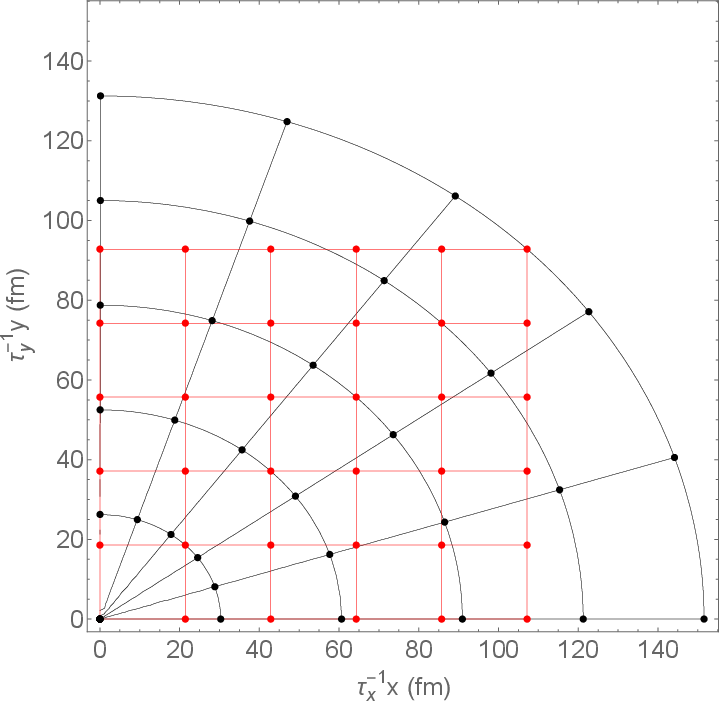
Figure 1: The resampling process maps Faddeev components from polar to cartesian grids, facilitating the isolation of bound plane wave contributions.
Benchmark Application: Neutron-Deuteron Scattering
Applying the developed formalism, neutron-deuteron scattering is addressed in both singlet and triplet channels under benchmark potentials, treating nucleons as identical except for isospin. Detailed operator construction includes spin and isospin recoupling in the kernel operator via Hadamard and Kronecker products. Partial Faddeev components are computed on non-uniform polar grids optimized for the necessary range and density, with careful boundary conditions imposed per channel type and energy regime.
Typical computed Faddeev components below breakup energy exhibit clear separation: the triplet channel demonstrates bound plane wave asymptotics; the singlet channel remains confined to the inner region due to closure.
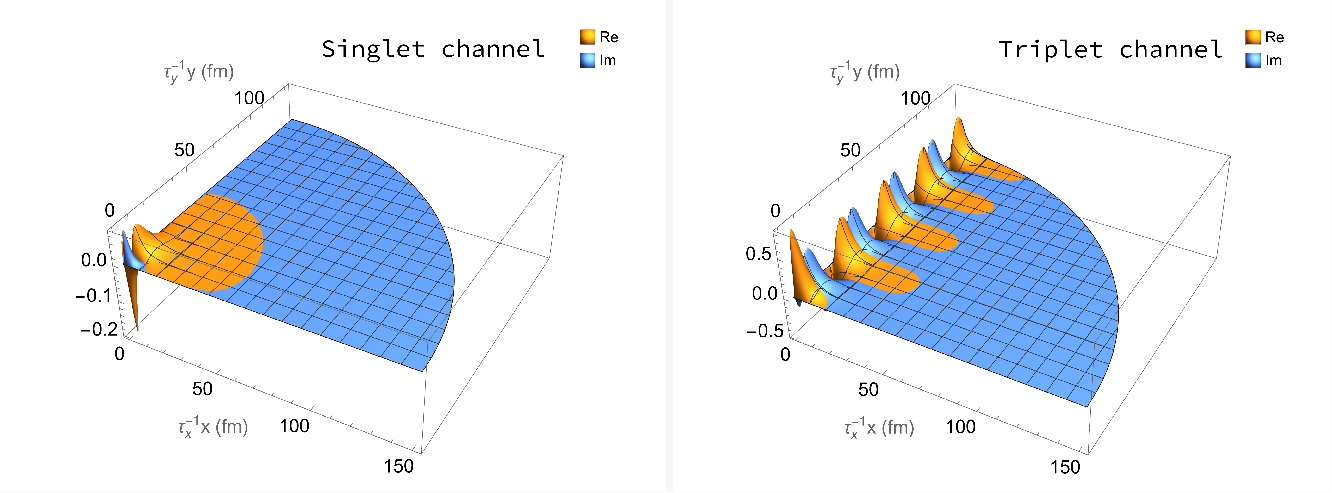
Figure 2: Calculated partial Faddeev components for neutron-deuteron scattering at E=−1 MeV, illustrating channel separation below breakup.
Above breakup, at E≈7.17 MeV, both components show asymptotic cylindrical wave behavior, with the triplet channel retaining a bound plane wave component.
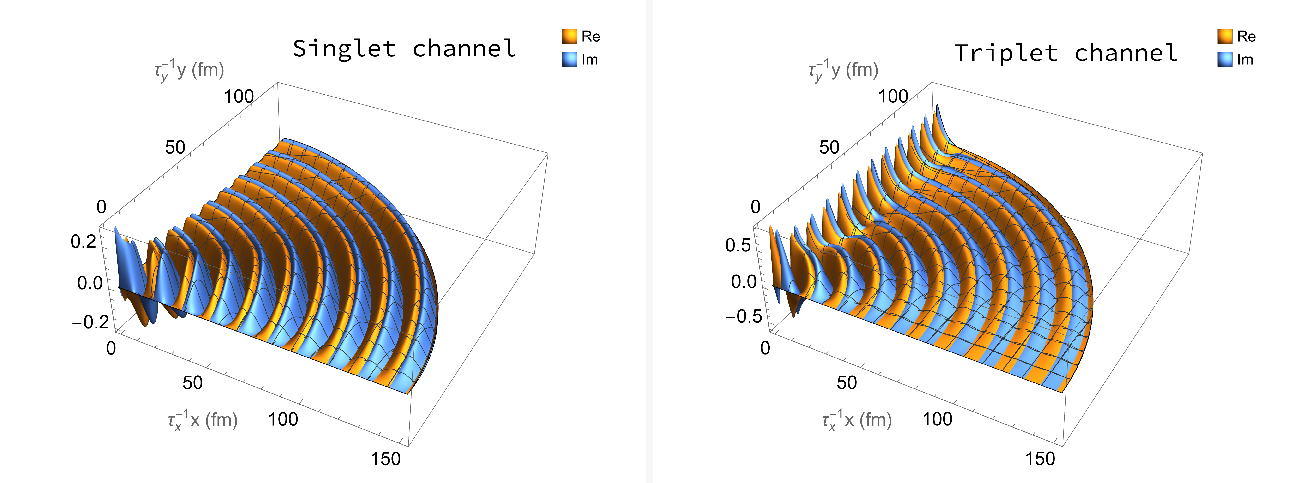
Figure 3: Calculated partial Faddeev components for neutron-deuteron scattering at E=7.17 MeV, revealing double continuum asymptotics.
Numerical Solution Strategies
The algebraic system derived from the operator synthesis reaches dimensions O(105), resolved via the GMRES iterative method with a block-diagonal preconditioner exploiting Kronecker product structure to efficiently invert relevant sub-operators. Numerical quality checks hinge on ensuring the vanishing coefficients of regular (non-physical) asymptotic components extracted during the fitting procedure—verified consistently across all channels and energy regimes.
Scattering Matrix Structure, Numerical Results, and Defects
The scattering matrix S, constructed for up to three open channels (one (1+2), two (1+1+1)0), is renormalized by reduced mass differences to accurately relate probability fluxes. The elastic scattering element (1+1+1)1 is computed over a wide energy range, displaying excellent agreement with configuration-space and momentum-space benchmark results.
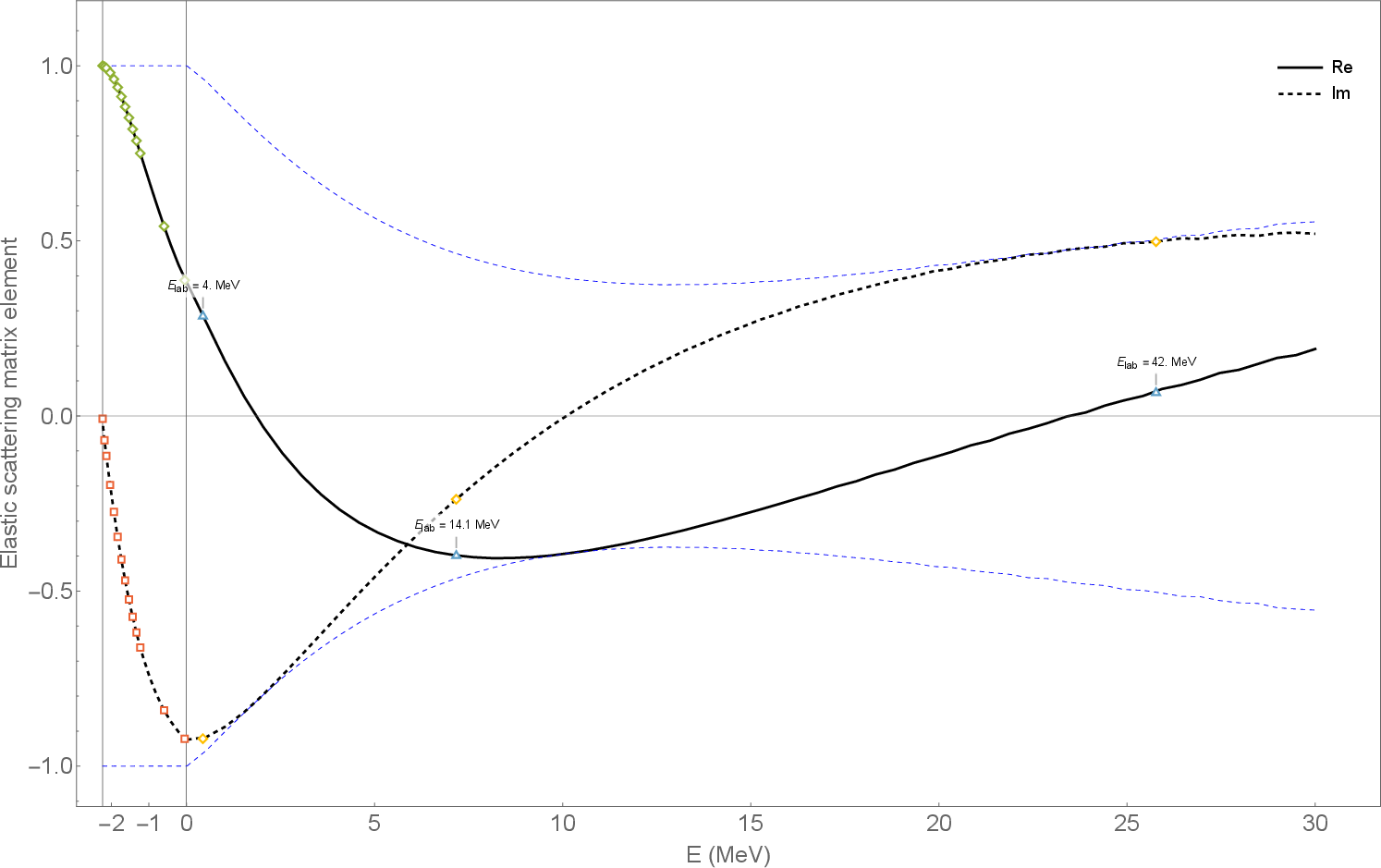
Figure 4: Elastic scattering matrix element (1+1+1)2 for the doublet (1+1+1)3 as a function of center-of-mass energy, with benchmark envelopes.
Breakup amplitudes (1+1+1)4 and (1+1+1)5 in the singlet and triplet channels, respectively, are in substantial agreement with benchmark data, with only slight deviations near (1+1+1)6 attributed to grid limitations.
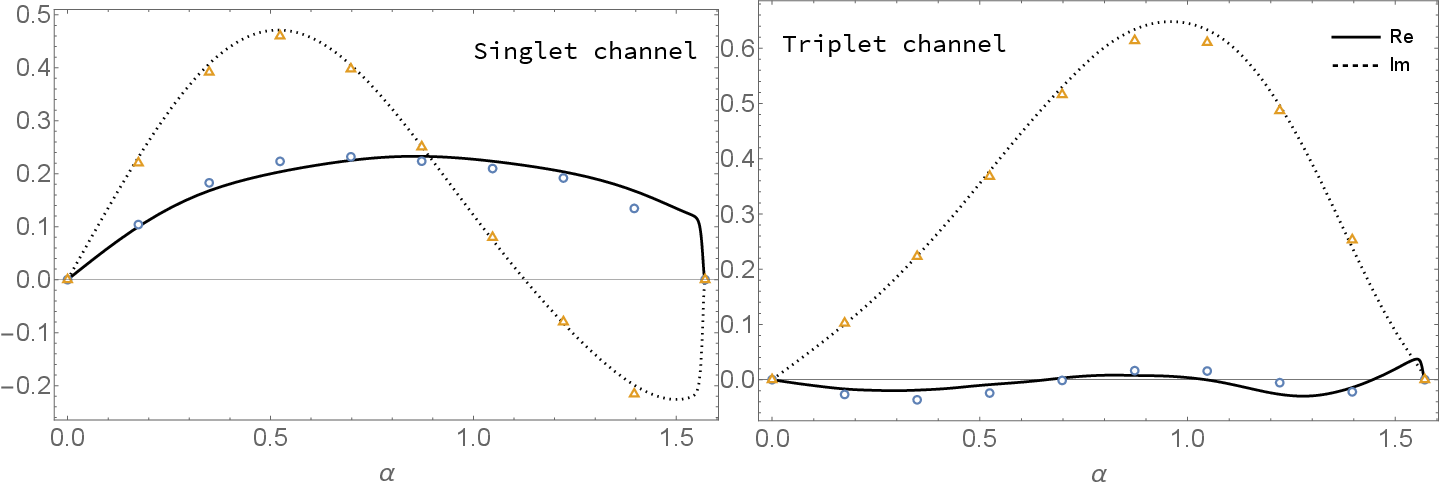
Figure 5: Breakup amplitudes (1+1+1)7 and (1+1+1)8 at (1+1+1)9 MeV, compared to benchmarks.
Three-body recombination matrix elements (1+2)0 and (1+2)1, calculated for initial states given by Delves functions, quantify probabilities for rare processes such as (1+2)2.
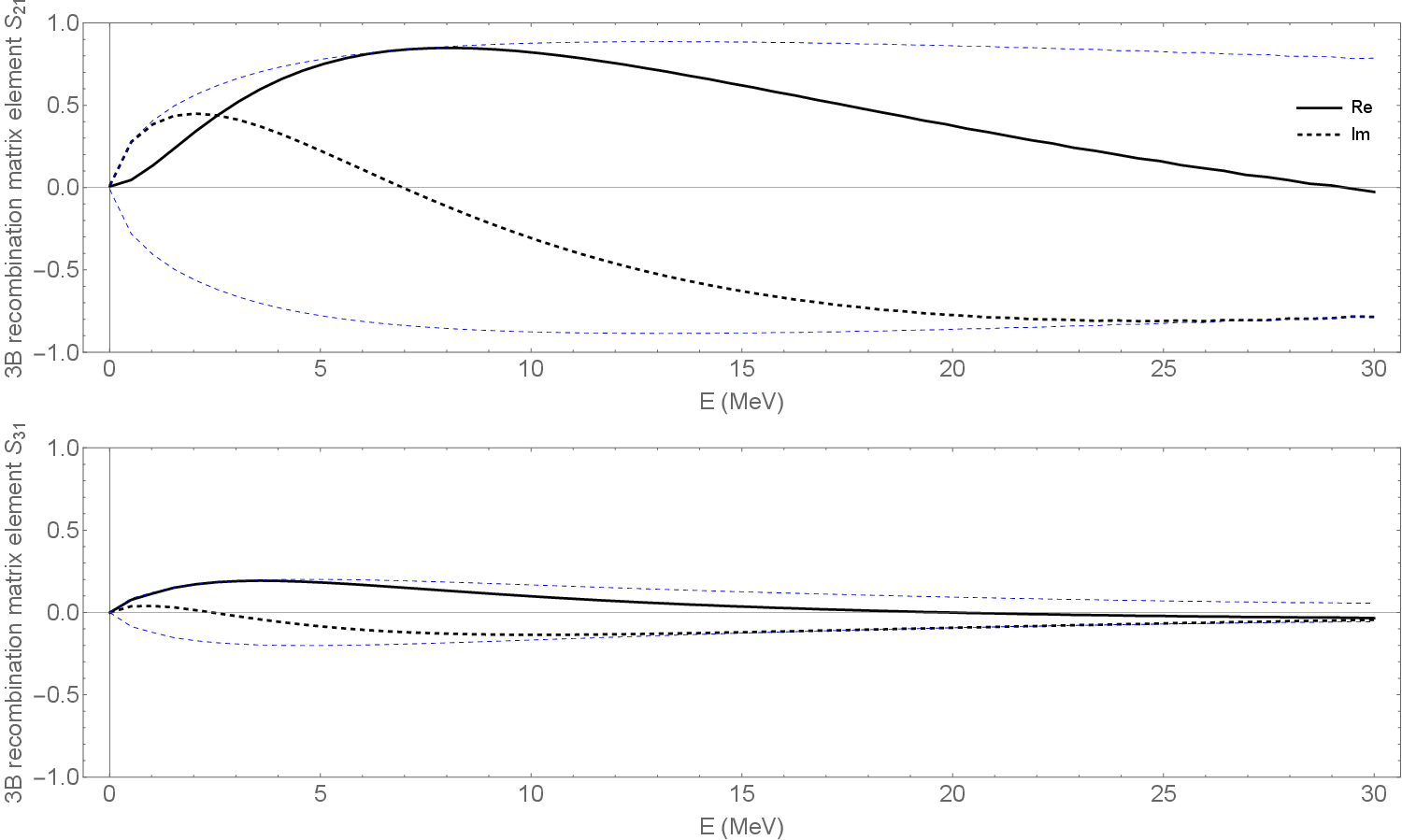
Figure 6: Three-body recombination matrix elements (1+2)3 and (1+2)4 for initial states specified by Delves polynomials.
Elastic (1+2)5 scattering amplitudes for an initial state (1+2)6 are also presented, expanding the practical reach of the formalism.
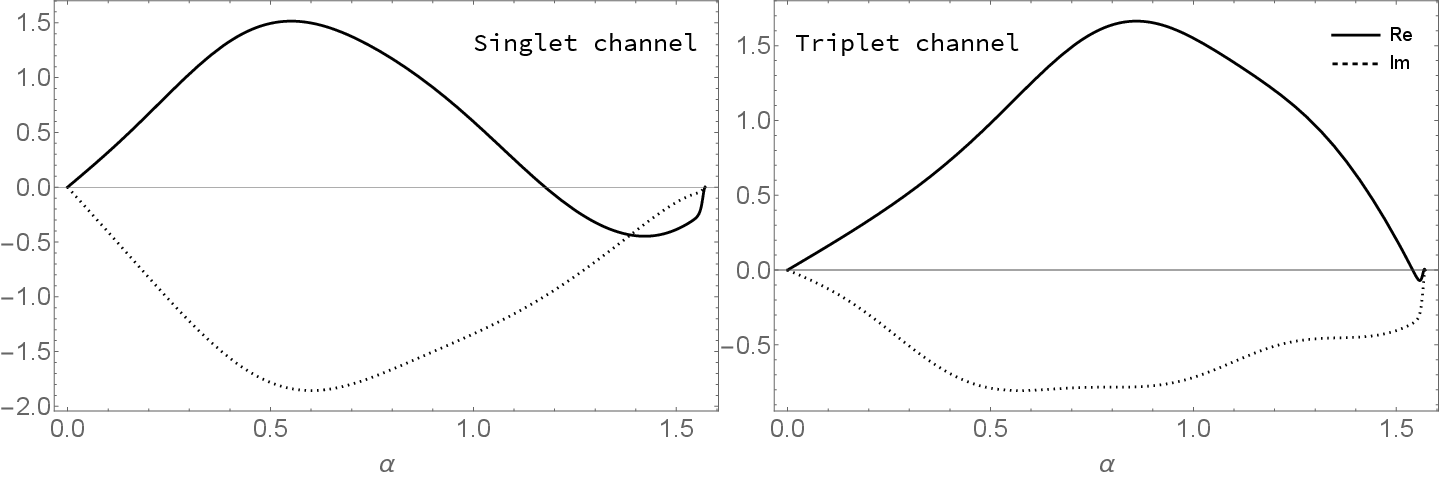
Figure 7: Elastic (1+2)7 scattering amplitudes at (1+2)8 MeV, showcasing double continuum channel behavior.
Defects from unitarity (1+2)9 and reciprocity (1+1+1)0 are quantified across energies, revealing high accuracy ((1+1+1)1 to (1+1+1)2) below breakup and satisfactory consistency ((1+1+1)3 to (1+1+1)4) above—identifying specific oscillatory artifacts caused by boundary condition mismatches.
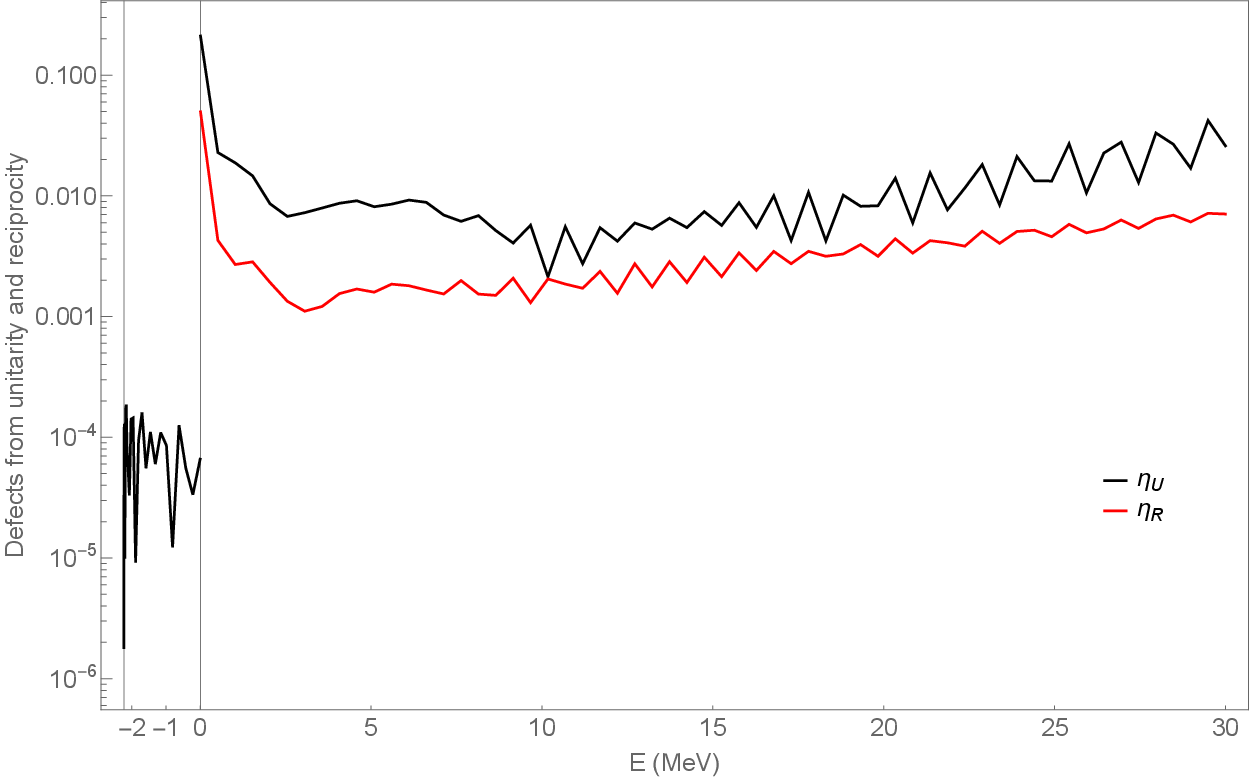
Figure 8: Unitarity and reciprocity defects as functions of energy, diagnosing numerical accuracy and boundary condition effects.
Implications and Future Directions
The presented configuration-space Faddeev approach in the double continuum is robust, numerically efficient, and validated against established benchmarks for neutron-deuteron scattering. The unified scattering matrix framework encompasses all physically relevant processes, with generalizable operator construction for spin and isospin recoupling. The technical innovations, particularly the resampling procedure and efficient operator preconditioning, ensure numerical tractability at large grid densities.
Potential research directions include refinement of grid construction (to address accuracy at extreme angles), systematic extension to quartet states and other three-body systems, and incorporation of long-range (e.g., Coulomb) potentials via adapted boundary conditions. The formalism is directly applicable to atomic, molecular, and nuclear scattering problems, providing the foundation for high-fidelity calculations of three-body reactions and facilitating deeper investigation of fundamental symmetries and reaction mechanisms.
Conclusion
This work provides a comprehensive configuration-space Faddeev treatment for three-body scattering in the double continuum, with unified matrix formalism, robust channel extraction, and validated numerical implementation. The methodology significantly advances the practical computation of three-body scattering observables, enables detailed analysis of all relevant processes, and establishes a versatile platform for future theoretical and computational developments in few-body physics (2604.12516).