- The paper shows that 75% of 4chan resource requests focus on local generation tools, with educator interactions boosting creator transitions by 56%.
- The study employs a dual-pipeline method combining transformer and rule-based annotations to categorize actors, actions, and resources across platforms.
- The research reveals that platform moderation effects are transient, as actors quickly shift to alternative infrastructures to sustain resource sharing.
Detailed Analysis of Resource Sharing Practices in Underground SNCII Content Creation Communities
Introduction
This paper, "Characterizing Resource Sharing Practices on Underground Internet Forum Synthetic Non-Consensual Intimate Image Content Creation Communities" (2604.12190), delivers a granular empirical characterization of the resource flows that sustain SNCII ecosystems on internet forums, focusing on 4chan and Reddit. The study combines large-scale data collection (282,154 4chan comments and 78,308 Reddit submissions) with actor-resource-action typology development, automated annotation, and case-study analysis. By segmenting the SNCII forum ecosystem by stakeholder function and platform affordances, the paper exposes how technical actors, resource brokers, and commercial promoters interact to disseminate tools, knowledge, and content, and highlights the limitations of current regulatory and platform interventions.
Methodology and Data Pipeline
A dual-pipeline approach is applied: one tailored to technical 4chan discourse and one for heterogeneous, commerce-driven Reddit content (Figure 1). For 4chan, a stratified sample is manually annotated to refine a codebook for "actors," "actions," and "resources," and then a hybrid transformer-based and rule-based pipeline scales these labels to the full dataset. Reddit's noisy data is filtered using a hand-vetted commercial application keyword filter targeting commercial nudification tool mentions and referral link patterns.
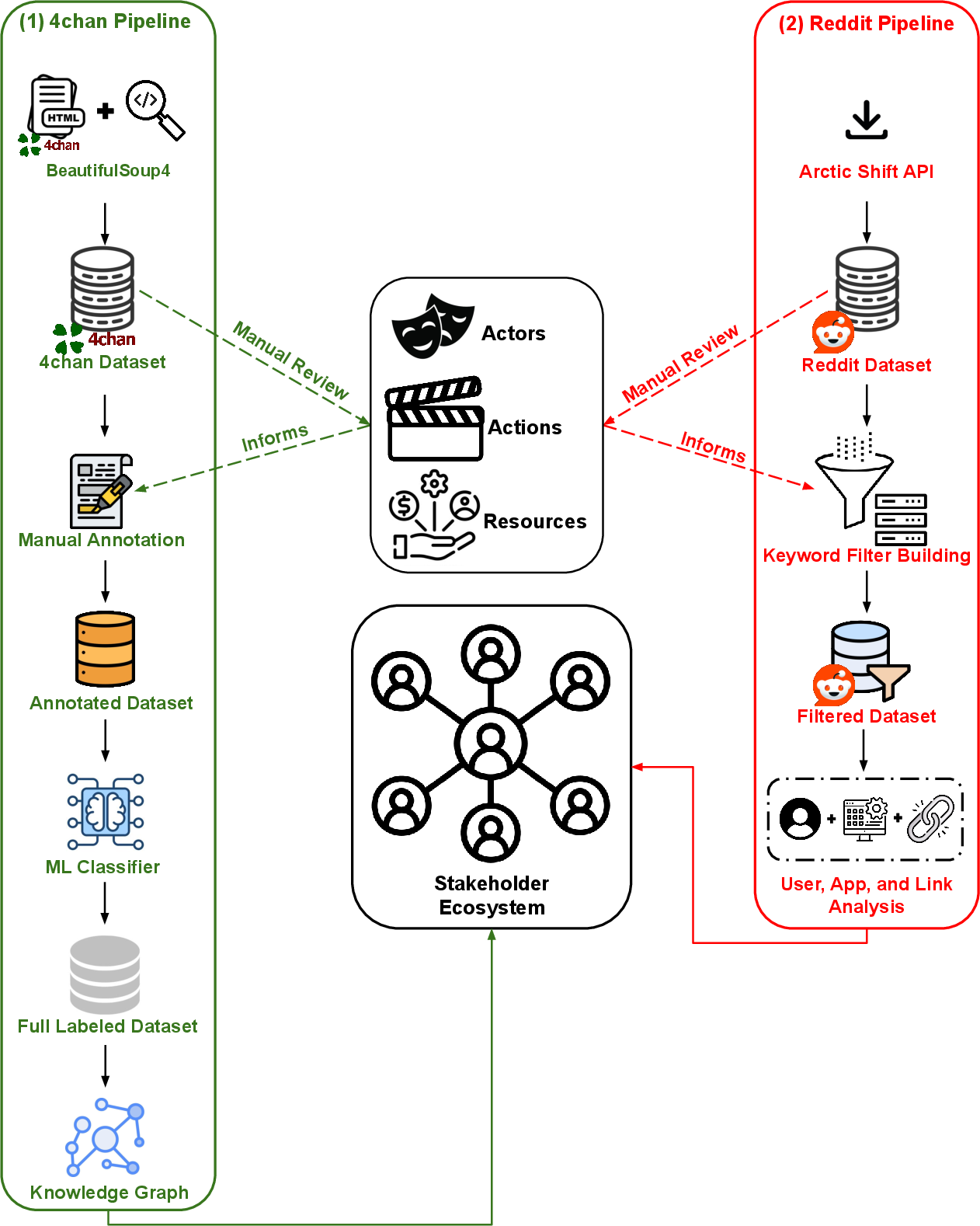
Figure 1: Overview of the dual-pipeline methodology: web scraping, manual annotation, automated labeling for 4chan; Arctic Shift download, filtering, and referral pattern analysis for Reddit; both feed into the actor-action-resource typology.
Resource and Stakeholder Taxonomy
The paper develops a fine-grained taxonomy distinguishing primary resources (e.g., LoRA adapters, model weights, dataset files, prompts, UIs) directly enabling SNCII content creation from secondary resources (e.g., file-sharing services, model hosting repositories, curated guides, ephemeral messaging apps) that facilitate distribution and procedural guidance. Stakeholders are resolved into roles such as "Genners" (content creators/distributors), "Educators" (technical knowledge disseminators), "Promoters" (commercial tool marketers), "Socializers" (general participants), and "Veterans" (highly persistent influencers).
Empirical Findings
The resource sharing graph for 4chan illustrates a system structured around technical exchange, educator-driven skill-up, and distribution via shadow infrastructure. LoRA adapters, model checkpoints, and open-source nudification workflows dominate resource mentions. Notably, 75% of resource requests concern tools for local, customizable generation, signifying preference for operator sovereignty and privacy versus standardized commercial solutions. Analysis of engagement patterns and fulfillment rates reveals a pronounced gap: less than 1% of generation requests are fulfilled by others, but educator interaction is strongly predictive of a socializer transitioning to a content creator role (56% of new Genners had prior Educator contact).
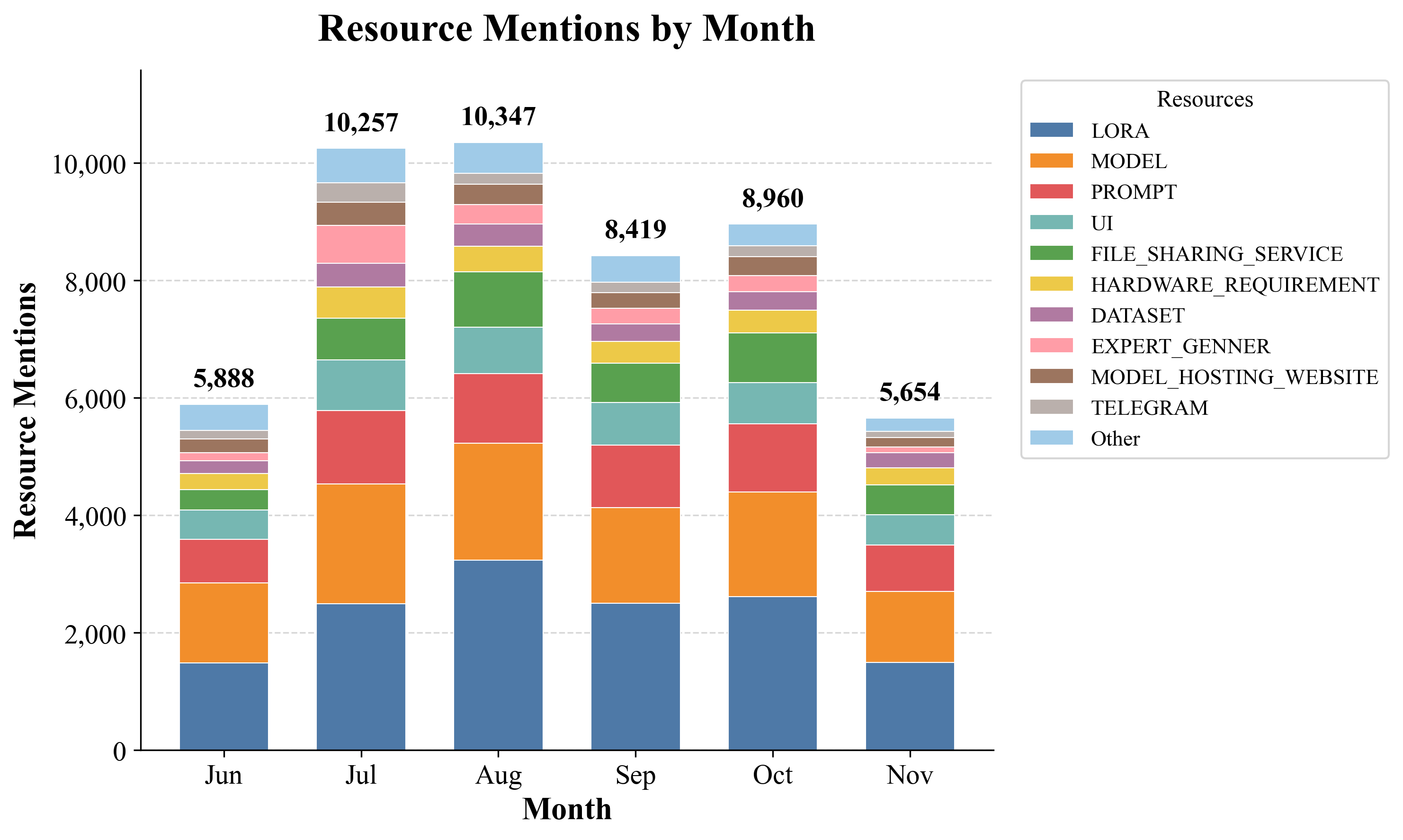
Figure 2: Resource mentions spike on 4chan in July–August 2025, postdating the May removal of real-person likeness models by Civitai, indicating displacement and resource resiliency.
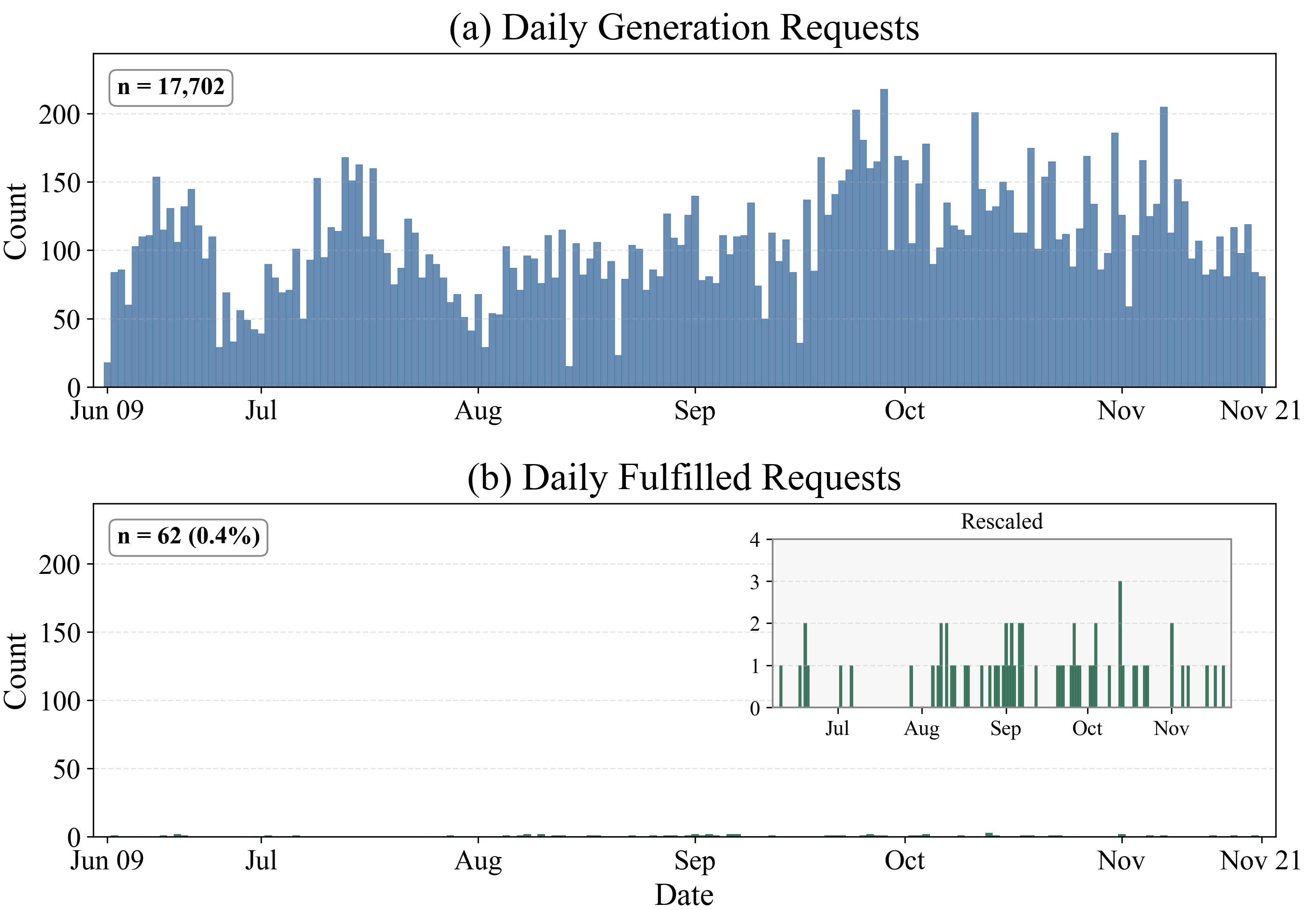
Figure 3: Generation request volume remains high while fulfillment remains extremely low, evidence of a skill barrier and high value placed on educator-facilitated self-sufficiency.
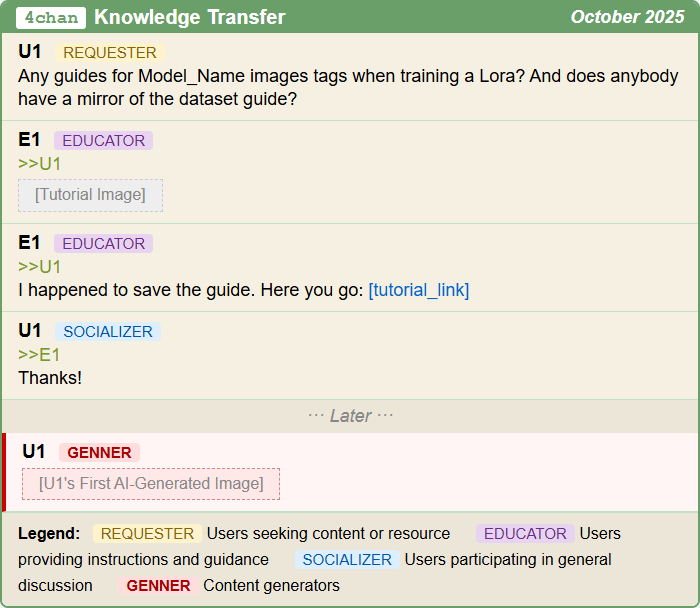
Figure 4: Educator interaction facilitating a transition from a requester to an active content creator.
Reddit hosts a parallel ecosystem where promoters—often transient, incentivized by referral credit systems—drive awareness and adoption of commercial SNCII tools. Up to 41.5% of submissions in some subreddits reference these applications. The majority of app-mentioners (66%) also post referral links, with observable herd behavior where influential posts attract cascades of additional referral posts for maximized reach. The data demonstrates that most high-volume promoters are ephemeral (active on a small number of days, across multiple subreddits) and cross-promote multiple applications simultaneously, indicating a financialized, decentralized bottom-up dissemination model.
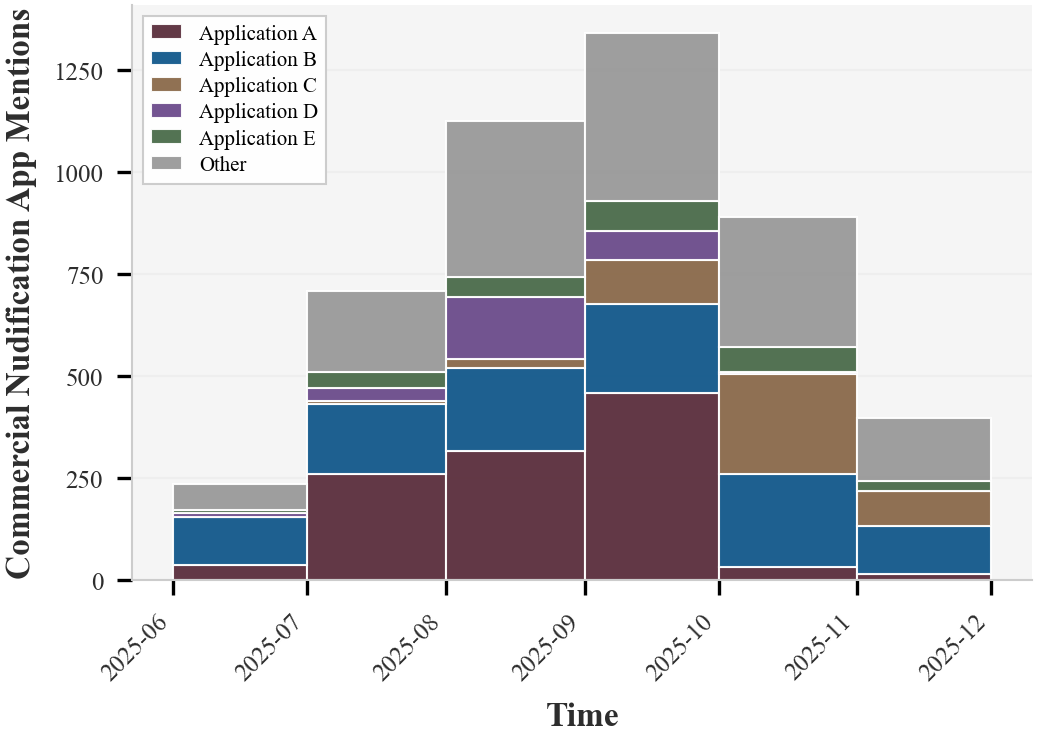
Figure 5: Volume of commercial nudification app mentions by month, with Application A's mentions collapsing following provider-imposed changes to credit policies, illustrating a concrete moderation outcome.
Ecosystem Adaptivity and Legal Infrastructure Gaps
A central empirical finding is the adaptability and resilience of the resource ecosystem. Removal of models from Civitai produced only a brief displacement effect—actors rapidly shifted sharing to file-hosting services or created private knowledge-sharing groups on encrypted messengers. Case studies show that knowledge of legal interventions (e.g., the U.S. TAKE IT DOWN Act) is widespread, but users, especially technical actors and veterans, are not deterred due to limited scope of liability and perceived enforcement lacunae.
Platform-side moderation’s impact is mixed: changes to commercial provider incentives (as documented with Application A’s ToS modifications) produce sharp reductions in promotional activity, suggesting targeted interventions can reduce dissemination but primarily displace rather than eradicate illicit activity.
Engaged Actor Dynamics and Knowledge Transfer
Influence analysis reveals that educator and veteran roles, although only 1.3% and 8% of all posts respectively, are dominant in terms of resource propagation and community engagement. Educators are the backbone of technical knowledge transfer, effectively upskilling consumers into content producers, thus reinforcing ecosystem resilience against content or account removals. The transition from consumer to creator is not primarily demand-supply driven, but realized via explicit skill transmission through public threads and private coordination spaces.
Theoretical and Practical Implications
The paper’s findings strongly suggest that SNCII countermeasures rooted in targeting only share/post actions or platform content moderation are insufficient. The resilience of actor-driven shadow infrastructure, the international and pseudonymous nature of high-risk actors, and the existence of non-liable but essential enabler roles (such as educators and infrastructure providers) undermine the reach of current regulatory interventions. Models trained on adversarial and ambiguous forum dialects must judiciously combine intent-aware machine learning with high-precision rule-based patterns for discourse classification in such domains.
International, harmonized liability regimes extended to secondary enablers (model hosts, file-sharing platforms, credit payment processors) and criminalization of resource solicitation and provision (not only end content sharing) likely constitute higher-leverage intervention points. Torrenting, ephemeral messaging, and rapid migration to newly tolerant platforms represent persistent vectors for resource stickiness, suggesting that partial moderation will only ever have transitory effect.
Conclusion
This work supplies an exhaustive resource-centric analysis of SNCII internet forum communities, specifying the technical and social dynamics by which illicit generation knowledge, primary model assets, and commercial service incentives propagate across adversarial platform boundaries. The study reveals that educator-facilitated skill transfer, referral-incentivized bottom-up commercial app promotion, and the modular shadow infrastructure supporting resource exchange are all highly resilient to both regulatory and platform shocks. Regulatory and technical interventions that fail to address these decentralized, enabler-driven patterns are unlikely to curb SNCII proliferation. Future research should focus on cross-platform, multi-lingual actor/resource tracking, watermarking or infrastructure takedown readiness, distributed incentive disruption, and adaptive community detection in adversarial digital ecosystems.
References:
(2604.12190) Characterizing Resource Sharing Practices on Underground Internet Forum Synthetic Non-Consensual Intimate Image Content Creation Communities

