- The paper develops a novel polytropic f(Q) model that combines a power-law non-metricity extension and a polytropic fluid to explore the H0 tension.
- It analytically derives modified Friedmann equations and employs Bayesian MCMC sampling with CC, SNIa, BAO, and CMB data to tightly constrain model parameters.
- The results indicate that while the model replicates ΛCDM behavior with minor deviations, it does not significantly alleviate the >5σ H0 tension at the background level.
Polytropic f(Q) Cosmology and the H0 Tension: An Expert Analysis
Theoretical Background and Motivation
The persistent discrepancy between early- and late-universe determinations of the Hubble constant, commonly referred to as the H0 tension, remains a focal challenge in modern observational cosmology. The standard ΛCDM paradigm, though consistent with diverse datasets, is unable to reconcile the low H0 values inferred from CMB and BAO measurements (Planck, WMAP, SPT/ACT) with the higher values from local distance ladder methods (SH0ES, Cepheid-calibrated SNe Ia). This tension motivates the exploration of gravitational frameworks beyond general relativity, as well as generalized cosmic fluid models.
The paper "Polytropic f(Q) cosmology and its implications for the H0 tension" (2604.11821) investigates a cosmological scenario wherein the cosmic fluid is described by a polytropic equation of state (EoS), embedded in the power-law f(Q) extension of non-metricity gravity. The f(Q) formalism, representing the symmetric teleparallel equivalent to general relativity when f(Q)=−Q, replaces curvature with non-metricity and modifies the background dynamics while maintaining second-order field equations. The polytropic EoS H00 generalizes several notable cosmological models such as dust (H01), the cosmological constant (H02, H03), and the Chaplygin gas (H04, H05).
This construction allows for a unified treatment of cosmological epochs and the investigation of whether background-level modifications in both the gravity sector and fluid description can alleviate the H06 tension.
The framework is built by introducing a power-law H07 model H08 with H09 for a flat FLRW metric, and a polytropic EoS for the effective matter component. This leads to modified Friedmann equations where the effective dark energy originates from both the non-metricity sector and the non-linear EoS. The resulting Hubble rate as a function of redshift is found analytically:
H00
This solution encapsulates H01CDM, Chaplygin gas, and other dark energy fluids as parameter subspaces. Five parameters characterize the model: H02, H03, H04, H05, and H06.
Statistical Analysis and Observational Datasets
A comprehensive Bayesian inference is performed using emcee-based MCMC sampling with likelihood contributions from:
- Cosmic Chronometers (CC): H07 measurements via galaxy ages
- SNIa (Pantheon+SH0ES): Luminosity distances calibrated with Cepheids, breaking the H08–H09 degeneracy
- BAO (DESI DR2): Low- and intermediate-Λ0 geometric constraints
- Compressed CMB Distance Priors: Early-universe geometry without reliance on full power spectra
Three dataset combinations are employed: BAO+CMB (early), CC+SN (late), and their union (global).
Parameter Constraints and Contours
The Λ1–Λ2 confidence regions for the model parameters are presented for BAO+CMB, CC+SN, and BAO+CMB+CC+SN data (Figure 1, Figure 2, Figure 3).
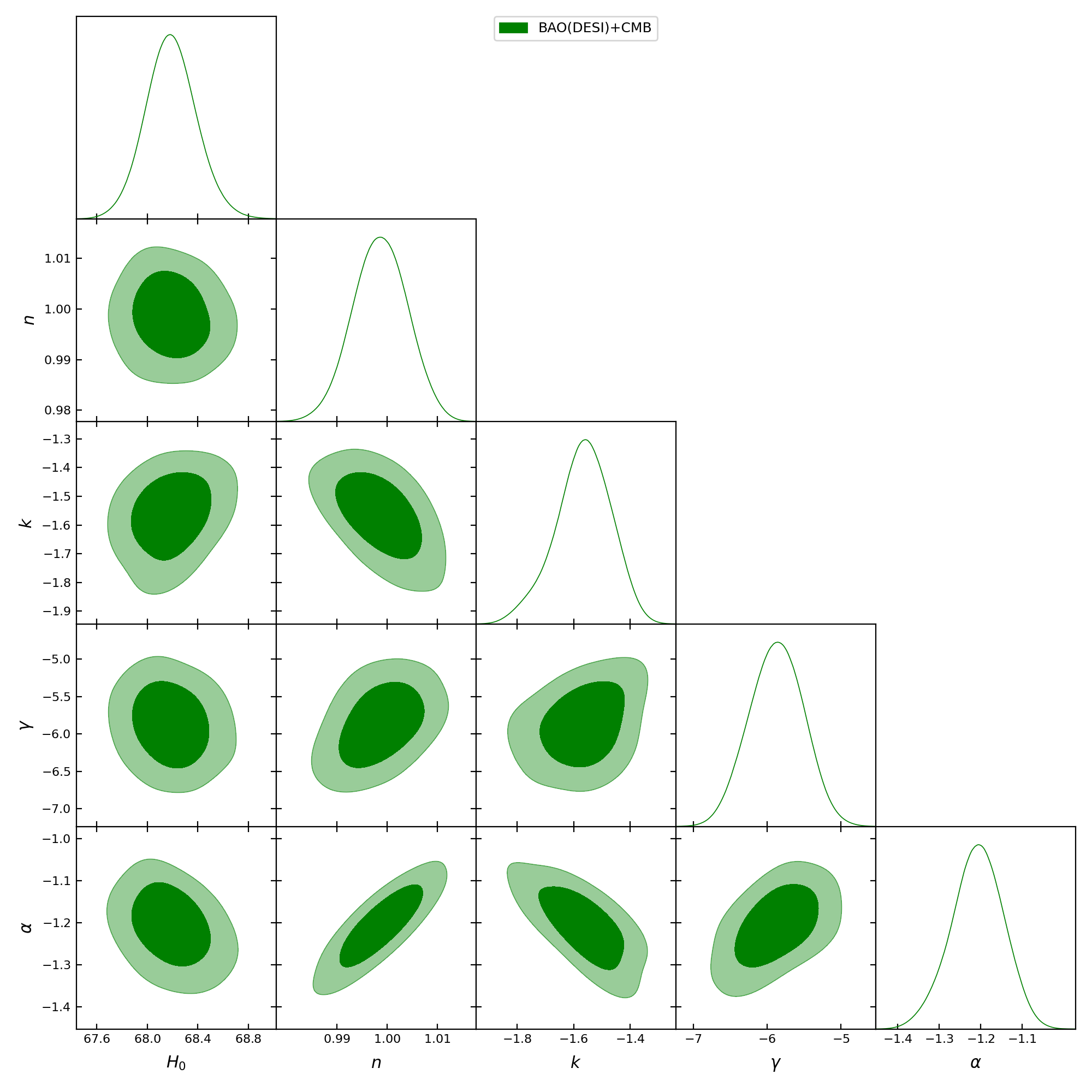
Figure 1: Λ3–Λ4 confidence contours for the polytropic Λ5 model using BAO+CMB data.
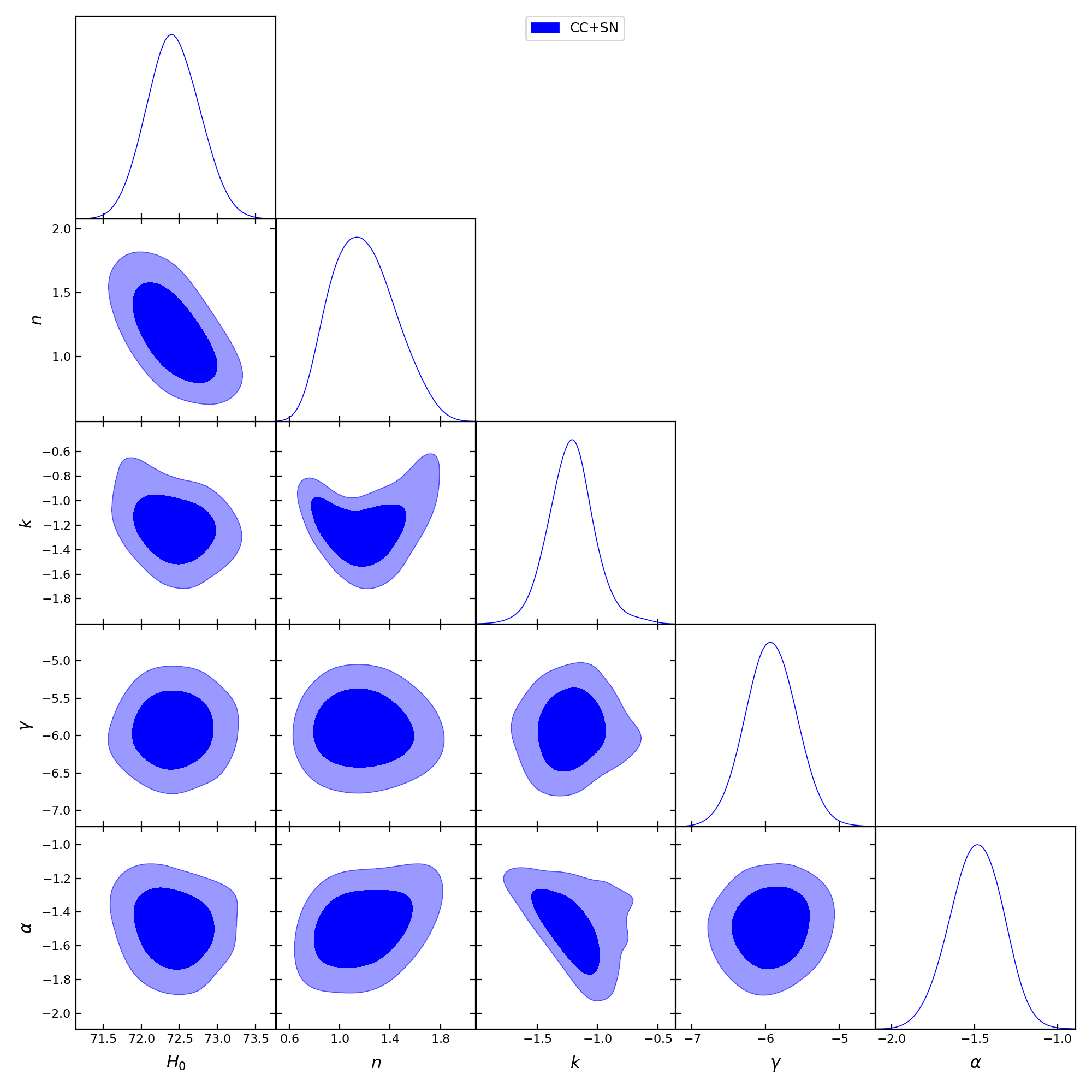
Figure 2: Λ6–Λ7 confidence contours using CC+SN data.
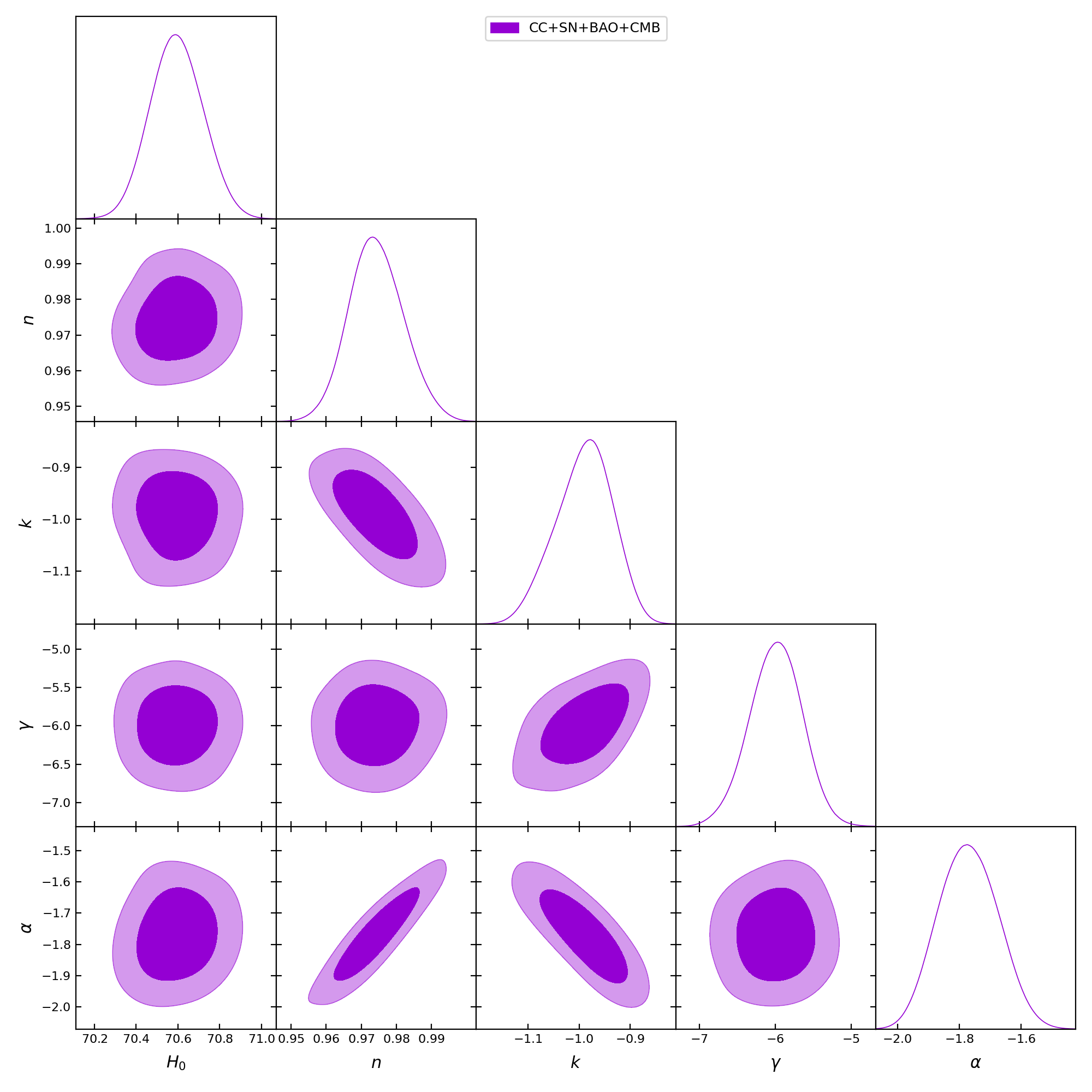
Figure 3: Λ8–Λ9 confidence contours with the combined BAO+CMB+CC+SN datasets.
The marginalized posterior distributions indicate mild but significant degeneracies among H00, H01, and H02, with tight constraints on H03 for each dataset combination. The best-fit regions approach the H04CDM (H05, H06) regime, with small but nonzero departures allowing non-trivial late-time dynamics.
Comparison of Hubble Expansion and Model Fits
The normalized expansion rate H07 is reconstructed Figure 4, showing excellent agreement with both CC and BAO data. The polytropic H08 model tracks the H09CDM background at high redshift but exhibits minor deviations at low redshift, attributable to effective dark energy associated with the non-metricity and the polytropic sector.
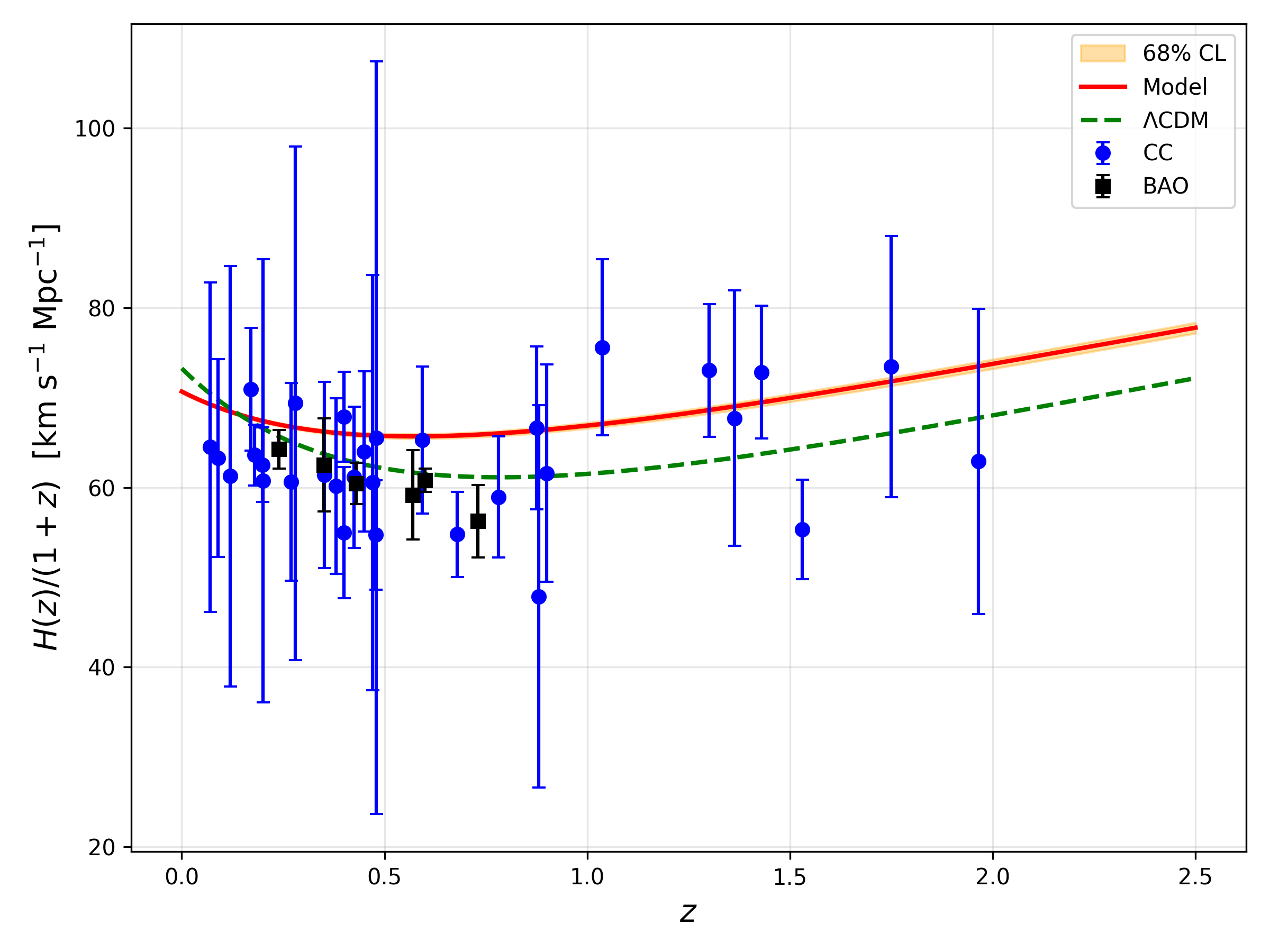
Figure 4: Evolution of the normalized expansion rate f(Q)0; solid (red): polytropic f(Q)1, dashed (green): f(Q)2CDM.
The covariance matrices for each dataset combination exhibit suppressed parameter degeneracies when combining datasets Figure 5, supporting the statistical stability of the multi-probe inference.
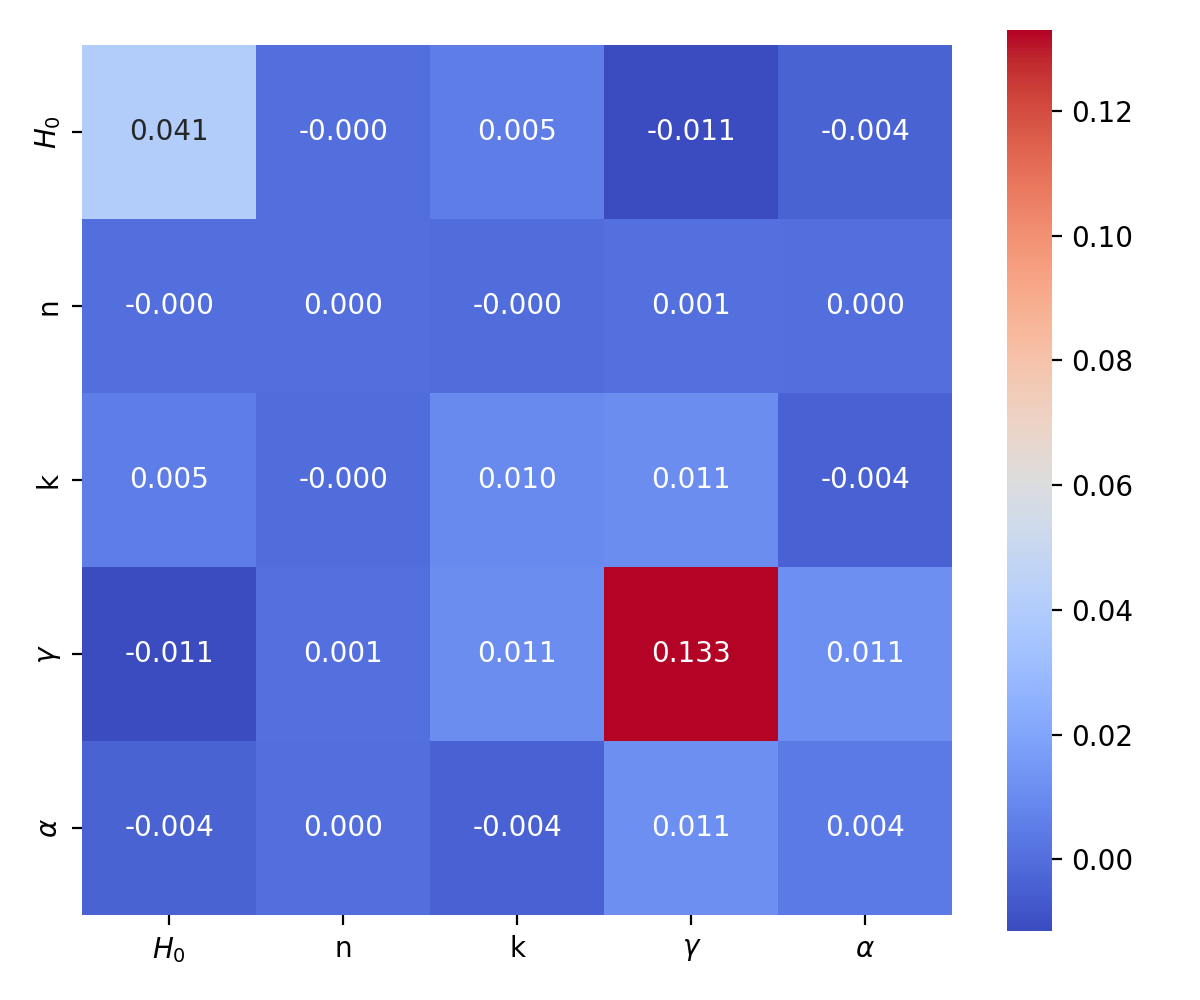
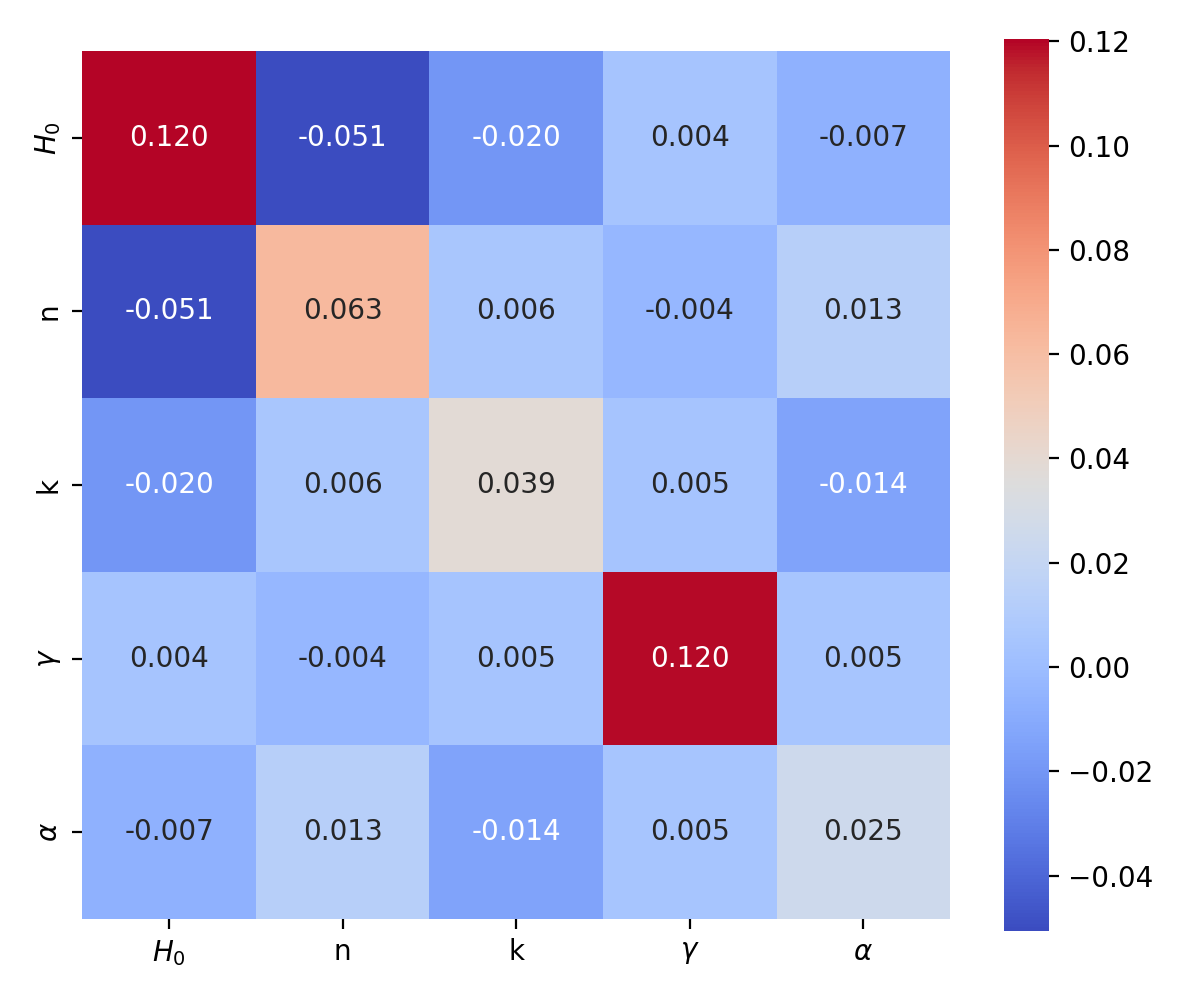
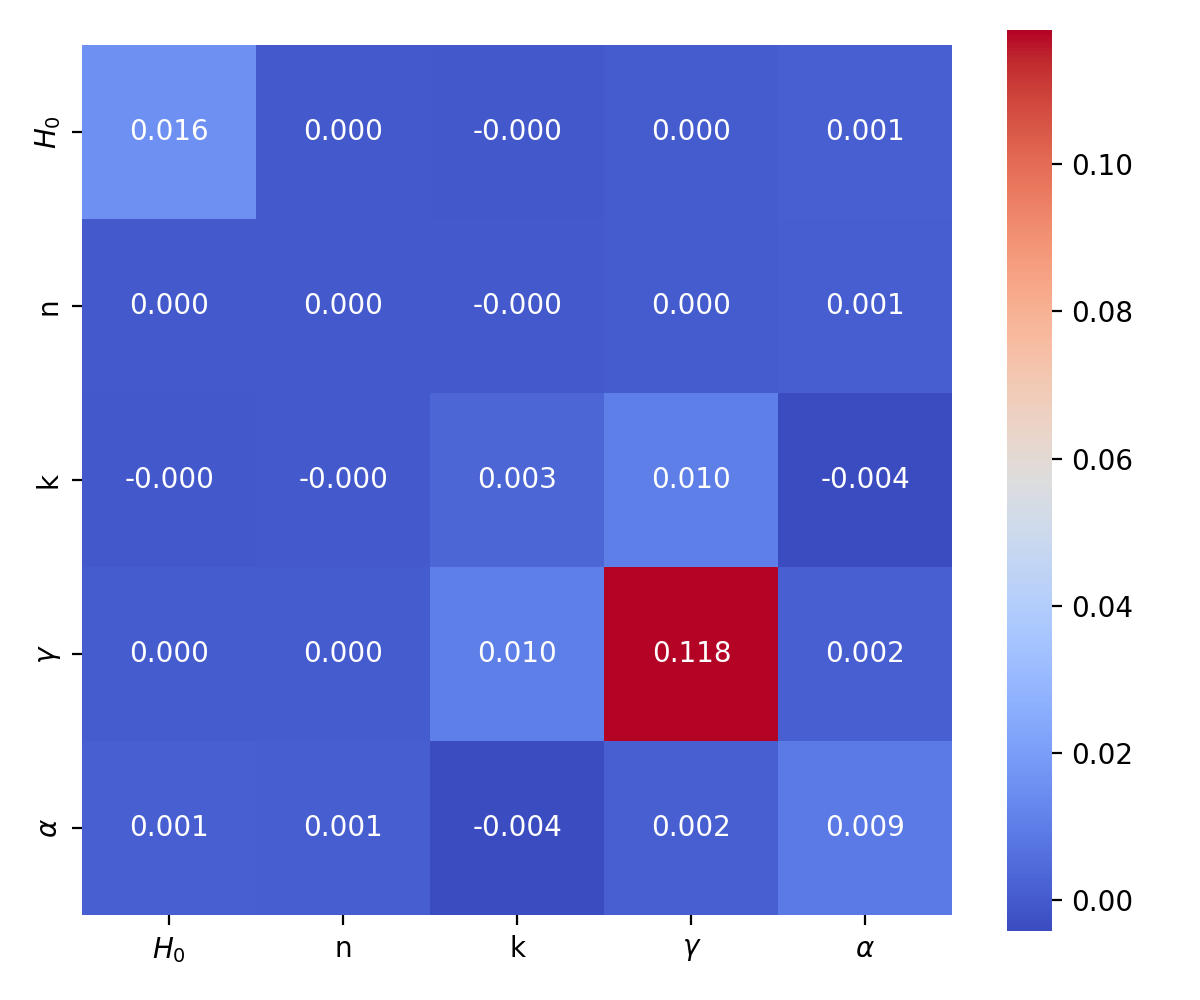
Figure 5: Covariance matrices for parameter constraints using BAO+CMB (left), CC+SN (middle), BAO+CMB+CC+SN (right).
Dynamical and Diagnostic Evolution
The deceleration parameter evolution Figure 6 shows a transition from deceleration (f(Q)3 at f(Q)4) to acceleration (f(Q)5), with the transition redshift f(Q)6–f(Q)7, consistent with SN and CMB inferences.
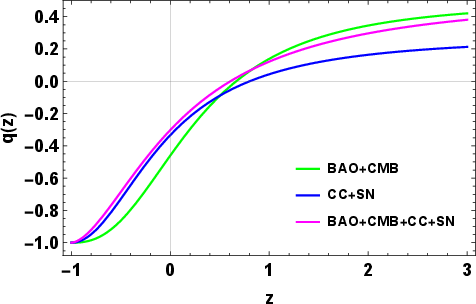
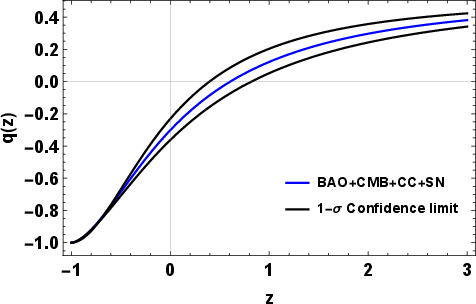
Figure 6: Deceleration parameter f(Q)8 for each dataset combination and global fit (left: separate datasets; right: joint fit with f(Q)9 errors).
The effective EoS Figure 7 and effective dark energy EoS Figure 8 both evolve from dust-like to negative-pressure regimes. The effective H00 declines into the quintessence/phantom region at low H01, indicating that the model can dynamically replicate a range of dark energy behaviors without recourse to a cosmological constant.
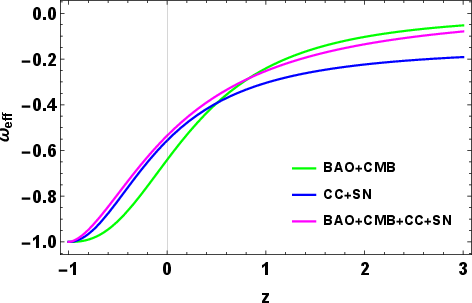
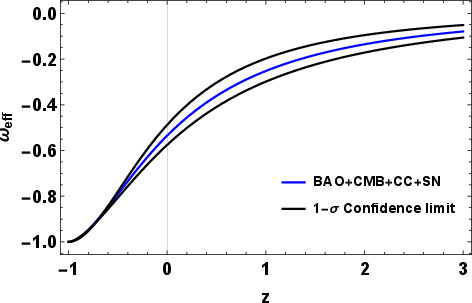
Figure 7: Effective equation of state parameter H02 evolution.
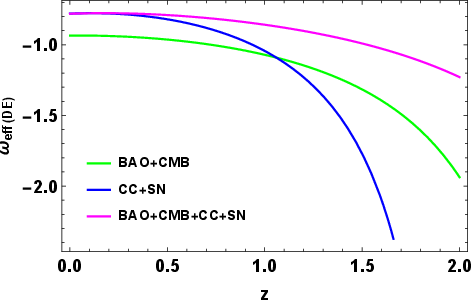
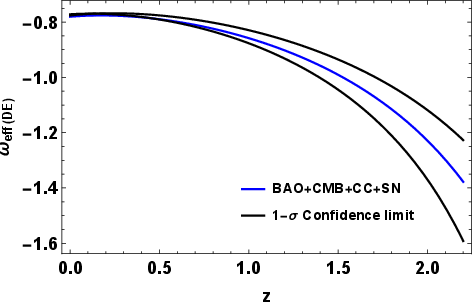
Figure 8: Effective dark energy EoS parameter H03, showing quintessence and phantom-like behavior.
Statefinder diagnostics Figure 9 trace trajectories in the H04 plane that approach H05 at late times, the H06CDM fixed point, but with characteristic departures at intermediate redshift that distinguish the polytropic H07 scenario from standard dark energy models.
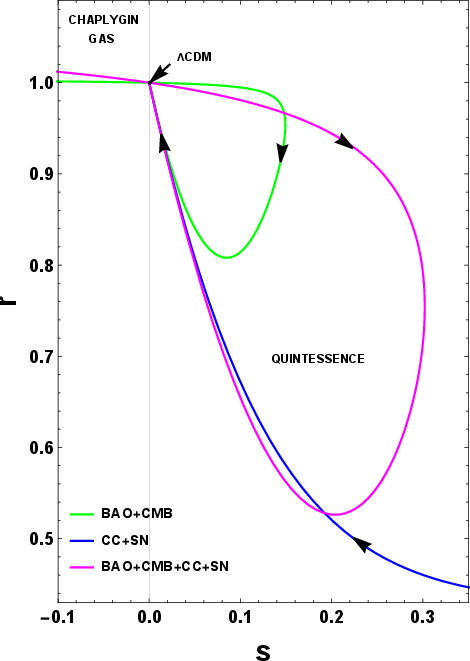
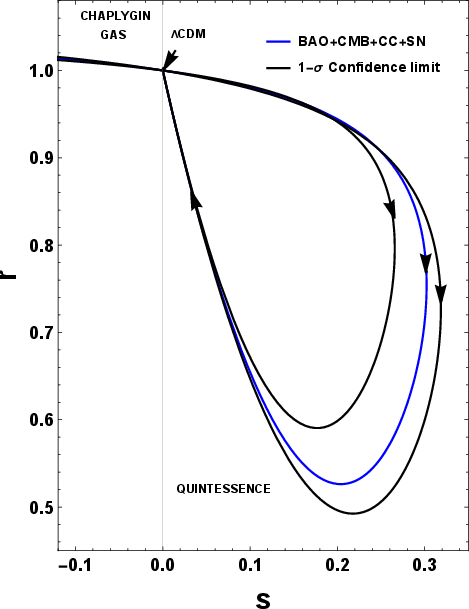
Figure 9: Statefinder H08 trajectories indicating deviation from H09CDM and eventual approach to the de Sitter attractor.
The f(Q)0 Tension in the Polytropic f(Q)1 Framework
Direct comparison of f(Q)2 inferred from early-universe (BAO+CMB) vs late-universe (CC+SN) data:
- f(Q)3CDM: f(Q)4(CC+SN) f(Q)5, f(Q)6(BAO+CMB) f(Q)7, f(Q)8, combined error f(Q)9, tension f(Q)0.
- Polytropic f(Q)1: f(Q)2(CC+SN) f(Q)3, f(Q)4(BAO+CMB) f(Q)5, f(Q)6, combined error f(Q)7, tension f(Q)8.
These results demonstrate no significant reduction in the Hubble constant tension under the polytropic f(Q)9 scenario at the background level, as the f(Q)=−Q0 discrepancy persists—mirroring that of the standard model Figure 10.
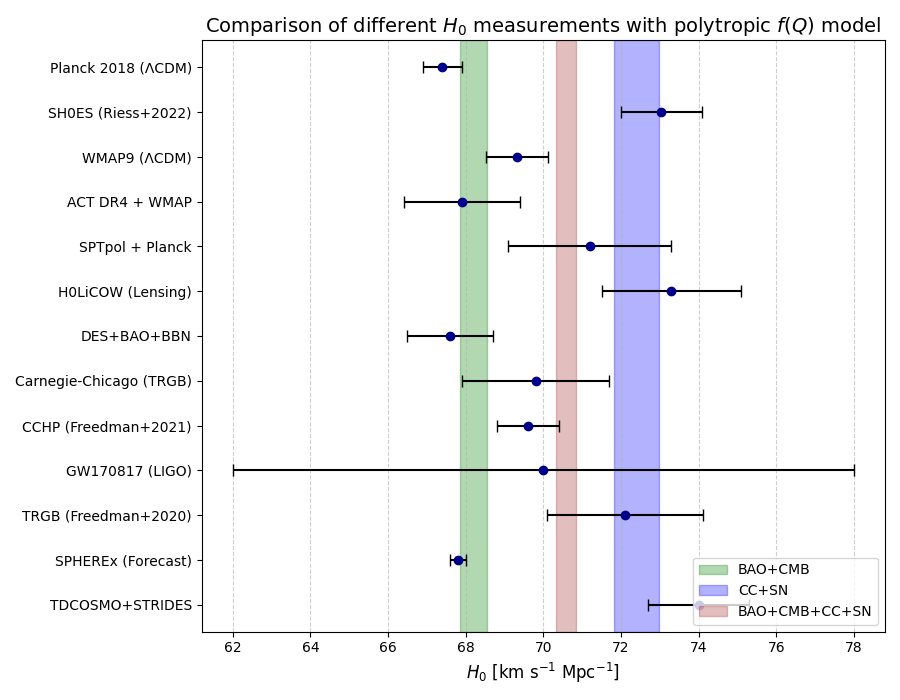
Figure 10: f(Q)=−Q1 determinations from different probes and joint constraints in the polytropic f(Q)=−Q2 scenario.
Nonetheless, the joint fit across all datasets naturally converges to an intermediate f(Q)=−Q3, evidencing that the extended framework can reconcile global cosmological evolution without introducing pathological deviations from observations.
Implications and Future Prospects
Practical implications include the validation of the polytropic f(Q)=−Q4 framework as a viable alternative to f(Q)=−Q5CDM, with the capability to replicate its phenomenology while accomodating a spectrum of cosmic fluid behaviors. The existence of analytical solutions facilitates both analytic and numerical cosmological analyses. However, the inability to fully resolve the f(Q)=−Q6 tension at background level suggests that additional physics—possibly in the perturbation sector, scale-dependent modifications, or nontrivial early-dark energy or dark sector interactions—remains essential.
Theoretical investigation of perturbations, structure formation, and signatures in the CMB and large-scale structure is a critical next step in testing these models. The polytropic f(Q)=−Q7 framework stands as a flexible testbed for confronting cosmological data and exploring the full landscape of modified gravities.
Conclusion
The investigation of polytropic f(Q)=−Q8 cosmology, as presented in (2604.11821), provides a technically robust extension of standard cosmological modeling, unifying diverse dark energy scenarios via a generalized EoS and incorporating non-metricity-based gravitational dynamics. Detailed multi-probe Bayesian inference demonstrates excellent compatibility with current expansion history data, nuanced cosmic acceleration diagnostics, and the capacity to mimic f(Q)=−Q9CDM under suitable parameter regimes.
Despite the dynamical flexibility, the H000 tension is not resolved at the background level, indicating the necessity of further extensions in the gravitational or dark sector for a fundamental solution. Rigorous investigation of cosmological perturbations in this framework is warranted, with implications for both theoretical development and the interpretation of forthcoming survey data.

