- The paper presents explicit classical solutions using Poisson gauge theory that regulate electromagnetic self-energy divergences in noncommutative 3D spacetime.
- It employs a nonlinear groupoid composition law to construct multianyon configurations and derive novel conservation laws, including a generalized Gauss law.
- The analysis confirms noncommutativity as a natural regulator in Maxwell–Chern–Simons theory, emphasizing the need for nonperturbative approaches in quantization.
Overview of Poisson Gauge Theories in Three Dimensions
The paper "Poisson Gauge Theories in Three Dimensions: Exact Solutions and Conservation Laws" (2604.11736) systematically analyzes Maxwell–Chern–Simons (MCS) theory in the semiclassical Poisson gauge formalism on three-dimensional noncommutative spacetimes. Leveraging constant spacelike Poisson structures, the authors construct explicit rotationally invariant classical solutions describing pointlike electric and magnetic charges, investigate novel conservation laws, and elucidate the impact of noncommutativity as a regulator for classical self-energy divergences. The study encompasses pure Chern–Simons, Maxwell, and combined MCS sectors, and introduces multianyon configurations governed by a nonlinear groupoid composition law.
Constructing Exact Classical Solutions
The Poisson gauge theory framework implements noncommutativity via a Poisson bracket {xμ,xν}=θμν with θμν parameterized by a constant spacelike vector ξμ. For time-like noncommutativity, only spatial coordinates fail to commute, controlled by a deformation parameter g. Gauge fields Aμ(x) transform nonlinearly, inducing non-Abelian gauge symmetry even in the classical U(1) theory.
By exploiting SO(2) rotational invariance and adopting an explicit ansatz for gauge potentials, the authors solve the flatness condition Fμν=0 for Poisson–Chern–Simons theory, yielding stationary solutions characterized by a single parameter c, interpreted (upon identification with g) as quantized magnetic flux. In the commutative limit, these reduce to singular θμν0 connections—analogous to Aharonov–Bohm solenoids—while noncommutativity smears and regularizes the singularity.
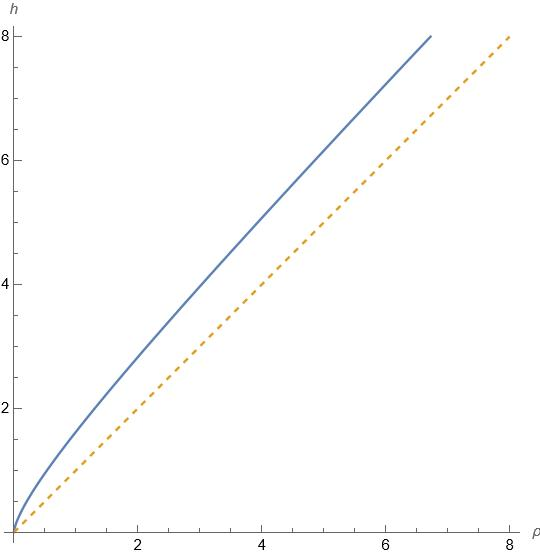
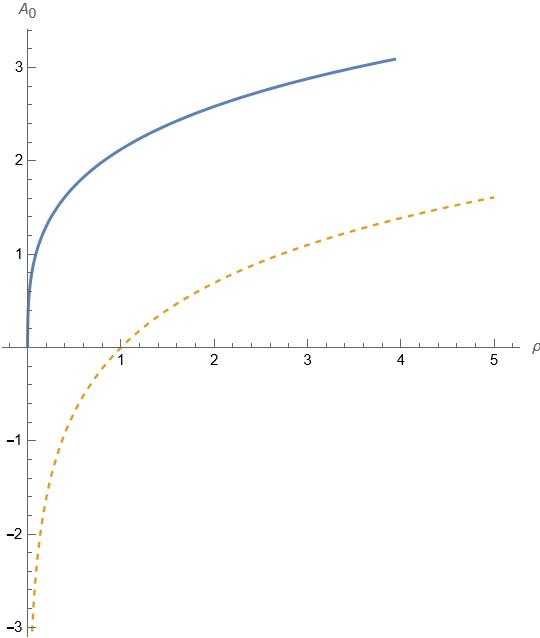
Figure 1: Left: Profile of the regulated function θμν1 for θμν2, θμν3, θμν4. Right: Corresponding scalar potential θμν5 compared to standard Coulomb potential.
The Coulomb-type solutions for Poisson–Maxwell theory are derived by reducing the field equations to a nonlinear ODE system. These solutions demonstrate finite electrostatic potential at the origin—previously divergent in the commutative case—and nonanalytic dependence on θμν6, prohibiting perturbative expansion in noncommutativity.
Multianyon Configurations and Nonlinear Superposition
The nonlinearity of Poisson gauge theory prevents naive superposition. Instead, the authors employ the symplectic groupoid formalism, where solutions correspond to Lagrangian bisections forming a non-Abelian subgroup. The composition law is inherently nonlinear and nonlocal:
θμν7
For θμν8 anyons with fluxes θμν9 and locations ξμ0, the configuration reads:
ξμ1
The group structure results in nontrivial braiding statistics, with commutators ξμ2 generating solutions with four distinct poles and vanishing total flux, consistent with anyon-antianyon annihilation.
Conservation Laws and Gauge-Invariant Charges
The paper introduces a lower-degree conservation law—a noncommutative generalization of Gauss's law—manifested as a closed one-form ξμ3. The total electric charge ξμ4 is extracted via contour integrals over spatial infinity, and computations confirm the interpretation of integration constants as physical charges.
Finite electromagnetic energy is established for Yukawa-type solutions in the MCS sector, with explicit expressions for electrostatic and magnetic contributions converging for all physically relevant configurations. The angular momentum density vanishes for rotation-invariant solutions due to the residual symmetry, and Lorentz invariance is explicitly broken except for the little group associated with the Poisson tensor.
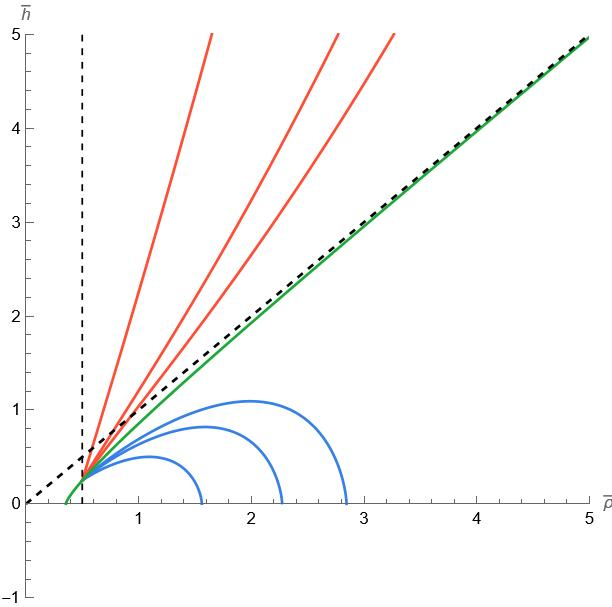
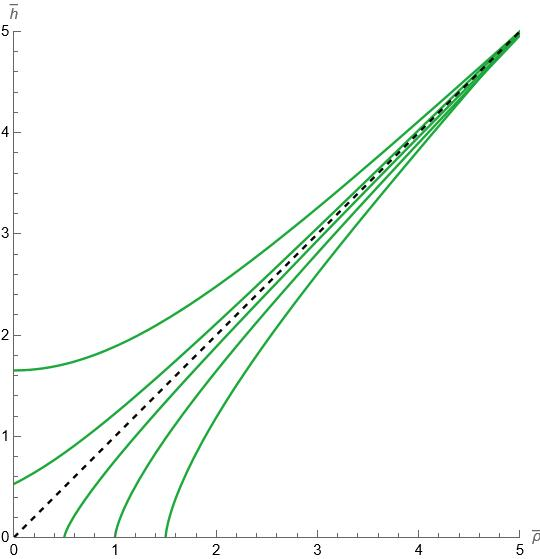
Figure 2: Left: Representative solution curves for the nonlinear MCS field equation. Right: Linear asymptotic solutions, all crossing ξμ5.
Analysis of Maxwell–Chern–Simons Sector
For the MCS theory, the field equations admit both pure anyonic and Coulomb-like Yukawa solutions, the latter decaying exponentially as ξμ6. The exponential tail uniquely regularizes the IR behavior, while noncommutativity ensures UV finiteness. The groupoid structure persists, mixing anyonic and Yukawa contributions. The total magnetic flux and energy remain finite, and the electric charge is recoverable through the generalized conservation law.
Numerical integration demonstrates a one-parameter family of physically relevant Yukawa potentials, partitioning solution space between collapsing and quadratic-growth regimes.
Implications and Future Directions
The results confirm that Poisson noncommutativity serves as an intrinsic regulator for classical divergences in three-dimensional gauge theories, resolving the electromagnetic mass problem for point charges. The emergence of non-analytic dependence on the deformation parameter ξμ7 underscores the necessity of nonperturbative approaches for noncommutative field theory quantization.
The groupoid structure for multianyon solutions may have significant implications for topological phases and braiding statistics in condensed-matter models. The generalized Gauss law offers a systematic method for interpreting physical content in noncommutative gauge configurations.
Extension to higher dimensions and different classes of noncommutativity (including Lie and ξμ8-Minkowski structures) may yield further exact solutions, new conservation laws, and refined understanding of symmetry breaking beyond three dimensions.
Conclusion
This study presents authoritative constructions of exact classical solutions to Poisson gauge theory in three dimensions and demonstrates the key role of noncommutativity as a regulator for electromagnetic self-energies. The formalism elucidates the groupoid structure underlying multianyon solutions, establishes finite charges and energies through generalized conservation laws, and cautions against perturbative treatments in ξμ9. These advances provide a rigorous framework for phenomenological and theoretical analyses of noncommutative gauge theories, with implications for both quantum field theory and condensed-matter physics.