- The paper presents a cognition-coupled reinforcement learning framework that dynamically infers driver cognitive states for improved takeover prediction.
- It employs sequential Bayesian inference with a particle-filter approach within a POMDP to map latent cognitive parameters to control actions.
- Quantitative evaluations show significantly higher early-warning rates compared to standard models, with physiological data confirming the model's predictions.
Adaptive Bounded-Rationality Modeling of Early-Stage Takeover in Shared-Control Driving
Introduction
The period immediately following control handover from vehicle automation to human driver constitutes a critical safety juncture, where traditional proxies of driver state (e.g., hands-on-wheel, eyes-on-road) are insufficient for predicting safe resumption of control. The paper "Adaptive Bounded-Rationality Modeling of Early-Stage Takeover in Shared-Control Driving" (2604.10806) addresses the volatilities in driver actions post-handover by introducing an interpretable, cognition-coupled reinforcement learning (RL) framework that models, infers, and predicts driver behavior based on real-time adaptations of latent cognitive states.
Cognition-to-Control Coupling Framework
The model is instantiated as a closed-loop coupling of structural, mechanism-specific cognitive factors with RL policies that govern closed-loop control output. The architecture centers on three latent cognitive parameters:
- Perceptual uncertainty (parameterized by σ0, σmax): Range-dependent sensory noise in traffic-state estimation.
- Looming aversion (c): Reflex-like risk overweighting to rapid optical expansion (inverse time-to-arrival), biasing toward defensive actions.
- Action delay (d): Perception-to-actuation latency, mapping intention to physical input lag.
Cognitive modules explicitly interface with the observation, reward, and action components of a POMDP-based RL agent, allowing cognitive modes to causally restructure the mapping from raw scene input to vehicle actuation. The RL policy is conditioned on these cognitive parameters, enabling both static and time-varying individualized predictions.
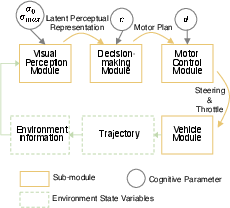
Figure 1: Schematic cognition-to-control coupling framework for early takeover driving.
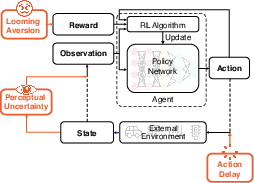
Figure 2: Reinforcement learning framework with embedded cognitive constraints for bounded-rationality modeling of driver behavior in post-takeover processes.
Online Adaptation via Sequential Bayesian Inference
To match the in situ fluctuation of driver states, the framework dynamically infers latent cognitive parameters online using a particle-filter approach. Observed trajectories over a finite sliding window are used to compute the likelihood of different cognitive parameterizations, updating the posterior over θ=[σ0,σmax,c,d] employing sequential Monte Carlo methods. This Bayesian layer enables real-time, interpretable prediction of control actions as cognition fluctuates during takeover, directly conditioning the policy's short-horizon forecasts on current estimated state.
Human-in-the-Loop Experimentation
The model was evaluated using a high-fidelity vehicle-in-the-loop driving simulator with 41 participants executing a standardized highway work-zone avoidance scenario, with factorial manipulations of non-driving secondary task (NDRT), traffic headway (TH), takeover warning types (TOR), and warning lead time (TLT).
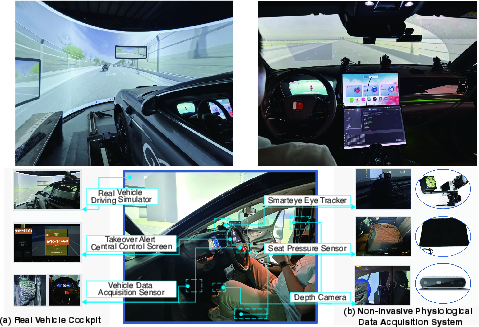
Figure 3: Takeover experiments on a high-fidelity vehicle-in-the-loop driving simulator.
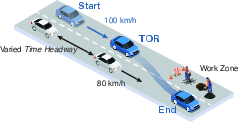
Figure 4: Experimental settings of the unexpected highway work-zone scenario.
A mixed-level orthogonal experimental design enabled the dissociation of scenario factors and their interaction with takeover quality and cognitive load. Over 1300 takeover episodes (41 × 32) were recorded, including comprehensive vehicle state, eye-movement, and physiological metrics, with time-locked labeling of control input, warning perception, and behavioral outcome.

Figure 5: Complete experimental procedure for each participant.
Quantitative Model Evaluation
The cognition-adaptive model outperformed both a constant-velocity heuristic and a non-adaptive PPO baseline on collision prediction under rolling forecast. Early-warning rates (collision flagged ≥0.5 s before impact) reached 89.5%, compared to 41.5% (PPO) and 22.0% (CV); at a 1 s lead time, coverage remained at 80.5% versus 12.0% (PPO). At a 2 s horizon, only the cognition-adaptive model retained substantial warning power (58.5%).
Alignment with Physiological Measures
A critical, non-trivial finding is that fluctuations in the inferred cognitive parameters align with independent physiological signals: time-resolved elevation of σ0 and σmax co-occurred with increased gaze entropy and fixation instability, while c surges aligned with saccadic energy peaks and rapid pupil dilation.
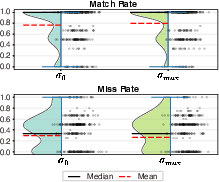
Figure 6: Alignment performance between parameter-derived abnormal segments (σmax0, σmax1) and abnormal physiological segments for perceptual uncertainty.
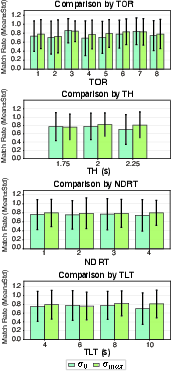
Figure 7: Comparison of the match rate across different scenario settings (perceptual noise).
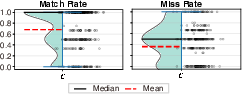
Figure 8: Alignment performance between parameter-derived abnormal looming-aversion segments (σmax2) and abnormal physiological segments associated with looming-related responses.
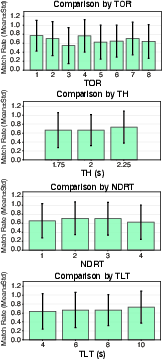
Figure 9: Match rate of σmax3 across scenario settings.
Median match rates for σmax4, σmax5, and σmax6 approached 1.0 in many settings, though miss rates remained non-negligible, indicating the cognitive model captures the physiologically salient subset of variance, but not all abnormal arousal events.
Qualitative Trace Analysis
In episode-level analysis, the adaptive model’s dynamic inference of perceptual unreliability and actuation delay (rising σmax7, σmax8) anticipated the onset of degraded corrective control several seconds before collision—distinct from static models that failed to flag risk until imminent.
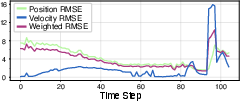
Figure 10: RMSE of position and velocity prediction errors over time step.
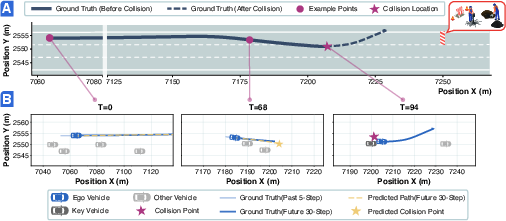
Figure 11: Cognition-aware prediction model evaluation during a takeover episode.
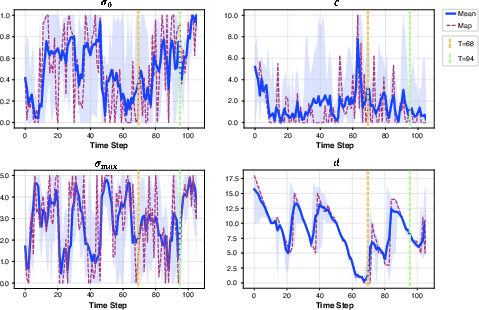
Figure 12: Temporal evolution of inferred cognitive parameters during the takeover episode.
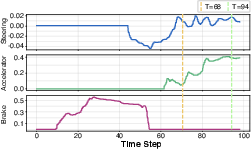
Figure 13: Driver control inputs throughout the takeover episode.
Examining the joint time-series of control input and inferred cognitive state demonstrated that, for instance, delayed throttle application and hesitation after the lane-change corresponded with elevated σmax9 and c0.
Temporal Integration with Eye-Movement Metrics
The temporal overlap between abnormal cognitive parameter excursions and physiological signal anomalies confirms that the inference algorithm does not merely fit kinematics, but encodes interpretable, behaviorally and physiologically coherent cognitive states.
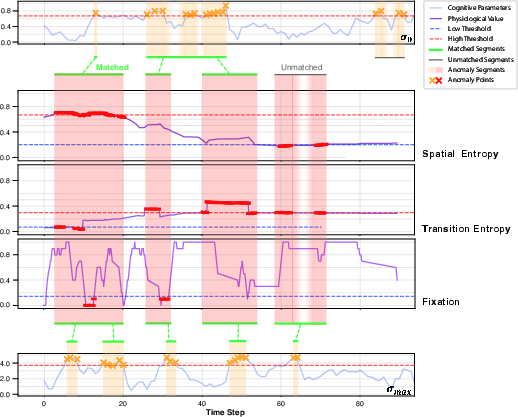
Figure 14: Relationship between abnormal segments of c1, c2, and physiological data segments (spatial entropy, transition entropy, fixation).
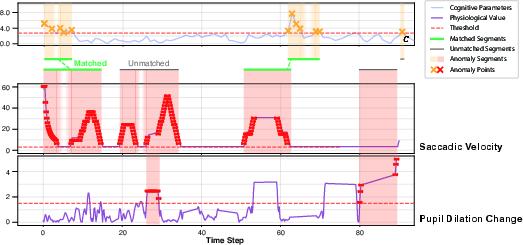
Figure 15: Relationship between abnormal segments of c3 and physiological data segments (saccadic velocity, pupil dilation).
Not every physiological spike is matched by an inferred cognitive anomaly, constraining the interpreted scope of the model—this selective alignment suggests high specificity for cognition-related risk but incomplete sensitivity to all arousal events.
Theoretical and Practical Implications
This work delivers a rigorous, interpretable human-in-the-loop RL framework that dynamically grounds near-term behavior and risk prediction in mechanism-specific cognitive parameters. The strong empirical result—that physiologically tracked driver cognitive states not only enhance lead-time for anticipating hazardous takeovers, but are tightly coupled with concrete steering and pedal control—demonstrates viability for next-generation closed-loop driver monitoring and intervention systems.
Practically, these insights support the development of cognition-aware safety-fallback and assistive technologies. When perceptual unreliability (rising c4) or actuation delay (c5) is detected, interventions (e.g., display simplification, automation buffering, targeted warnings) can be personalized to the concrete driver limitation, rather than dispatched as generic overrides.
Theoretically, the empirical separation of cognitive and scenario factors (with Takeover Request, but not task, headway, or lead time, yielding more variable parameter-physiology alignment) illustrates that closed-loop driver models must distinguish between manipulable external context and intrinsic cognitive state for robust performance generalization.
Limitations and Future Directions
Scenario diversity is limited; further validation on urban, rural, or adverse-weather geometries, and real-vehicle field studies, is required. Current parameter miss rates indicate additional latent cognitive or stress mechanisms—beyond those presently modeled—shape early post-handover behavior. Extensions could incorporate alternative cognitive-computational schemes (e.g., active inference, bounded accumulation) for benchmarking, stress-test across trust and workload subgroups, and further integrate prior cues (like TOR) as direct structured inputs to enhance robustness under unseen driver states.
Conclusion
By fundamentally coupling interpretable cognitive mechanisms with closed-loop action execution and online adaptation, the proposed framework advances the science of driver behavior prediction, offering actionable models that ground assistive interventions in concrete, dynamic human limitations. This approach sets the basis for cognition-adaptive human–machine systems capable of timely, precise, and individual-specific support in the most critical moments of shared control.

