- The paper introduces UniVG, a generative data-engine that achieves state-of-the-art performance in few-shot vascular segmentation by synthesizing diverse, realistic image-label pairs.
- UniVG combines compositional learning with few-shot adaptive transfer, enabling accurate segmentation across multiple imaging modalities using only a handful of annotated images.
- Experimental results demonstrate improved DSC and clDice scores, outperforming 21 alternatives and achieving fully supervised-level accuracy with minimal annotation effort.
Generative Data-engine Foundation Model for Universal Few-shot 2D Vascular Image Segmentation
Motivation and Context
Vascular image segmentation is essential for a range of clinical applications—diagnosis, screening, pre-operative planning, and intraoperative navigation. The central obstacle is the limited availability of high-quality labeled vascular images, due to privacy constraints, the cost of acquiring rare images, and the significant effort required for expert annotation. Conventional supervised and weakly supervised learning approaches, including semi-supervised and meta-learning paradigms, are severely impacted by the scarcity of annotated data, especially given the topological complexity and heterogeneity of 2D vascular networks.
Recent advances in pre-trained foundation models (PFMs) have shown transfer learning and few-shot generalization capabilities but remain limited by rigid architectural biases, domain discrepancies (medical vs natural images), and the inability to synthesize diverse and realistic vascular distributions. To address these challenges, the paper introduces the UniVG framework: a generative data-engine foundation model that combines compositional generative modeling, large-scale pre-training, and architecture-agnostic few-shot adaptation to enable accurate universal vascular segmentation with only a handful of annotated 2D images (2604.10737).
UniVG Architecture and Generative Data-Engine Paradigm
UniVG is centered on a generative data-engine paradigm for universal few-shot vascular image segmentation. The pipeline consists of three major components: (1) vascular mask data-engine, (2) vascular image data-engine, and (3) vascular data synthesis integration with few-shot generative adaptation. The approach is built on the following key innovations:
- Compositional Learning for Rich Vascular Synthesis: UniVG leverages the concept of compositionality, where distinct vascular substructures are decomposed and then recomposed algorithmically to generate diverse, realistic pseudo-samples. This effectively expands the structural and stylistic diversity of both masks and images far beyond what is achievable with limited real data.
- Few-shot Generative Adaptation: The method enables domain adaptation for any target downstream vascular segmentation task by fine-tuning the generative models with only a few labeled real samples, allowing the synthesis of anatomically and modality-accurate data that bridges the gap between synthetic and real domains.
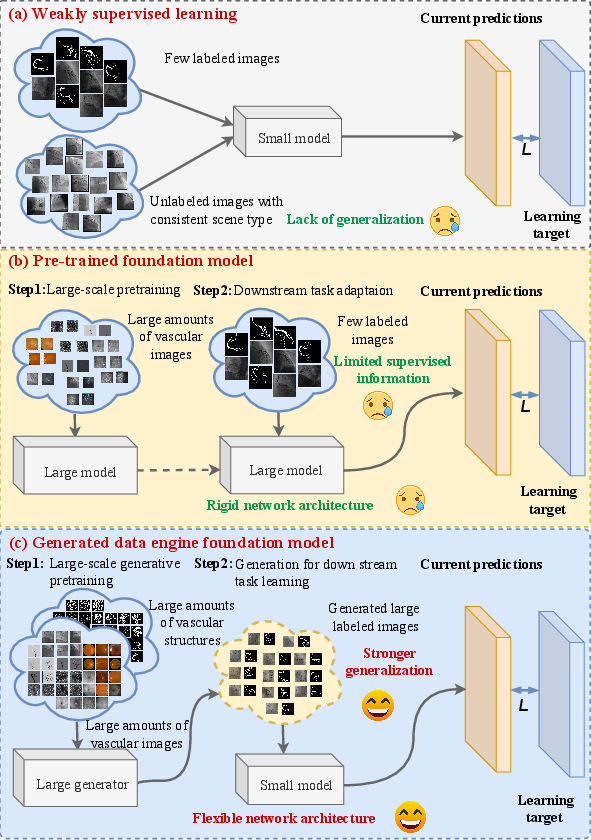
Figure 1: Comparative schematic of weakly supervised learning, fixed-architecture pretrained models, and the proposed generative data-engine which dynamically adapts both data and architectures for each downstream scenario.
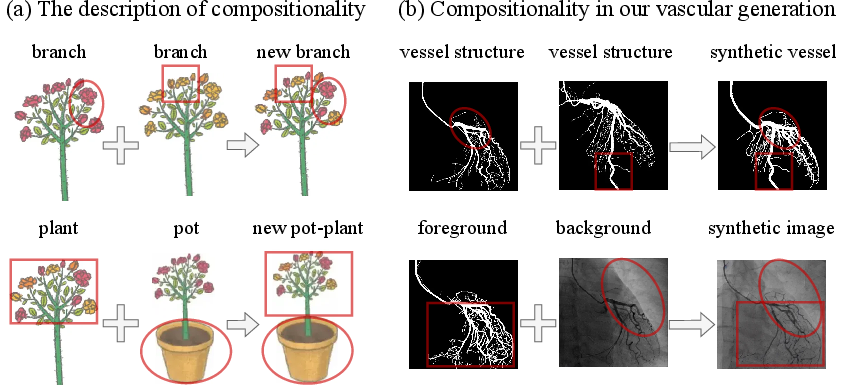
Figure 2: Illustration of compositionality—combining structural primitives to boost vascular morphologic and style diversity.
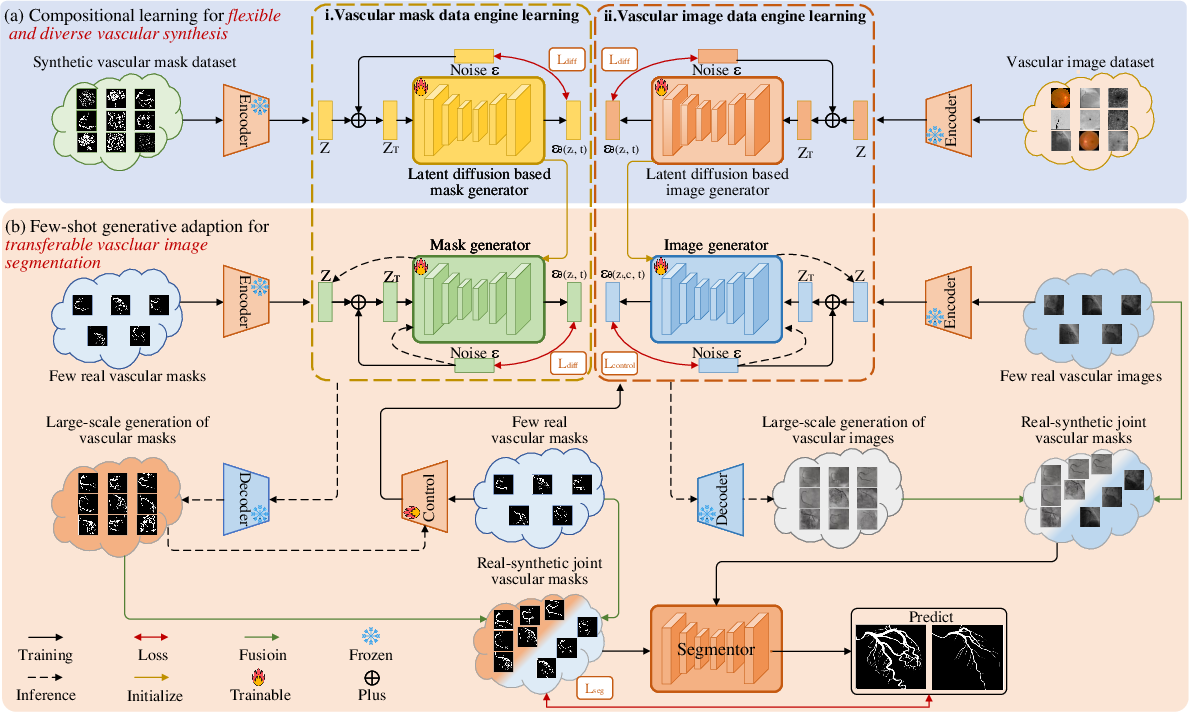
Figure 3: Overall UniVG system architecture with dual generative modules, compositional mask synthesis, and flexible, architecture-agnostic downstream adaptation pipeline.
Generative Representation: Mask and Image Data-Engines
The vascular mask data-engine uses a spatial colonization algorithm (SCA) for procedural mask generation. SCA is initialized by embedding real vessel topology, and attractors and segment placement parameters are modulated to cover the diversity of real anatomical structures across modalities. Large sets of mask candidates are constructed, encompassing wide-ranging bifurcation patterns, vessel thickness variations, and topological permutations. Stable Diffusion with LoRA is subsequently fine-tuned on these pseudo-masks, allowing the generative model to internalize complex multi-level spatial features.
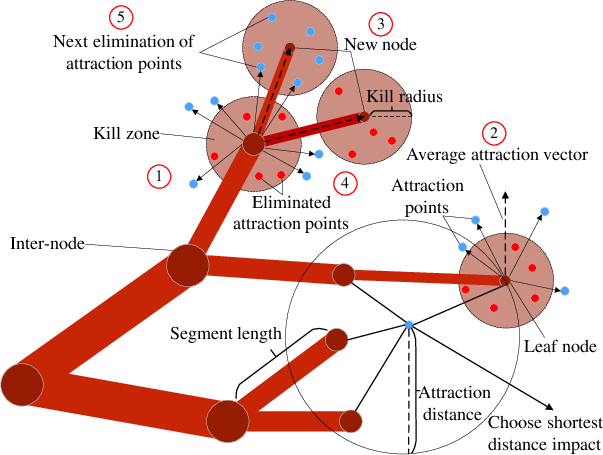
Figure 4: SCA pipeline—nodes iteratively extend along mean attraction vectors; lethal radii and kill zones implement biologically plausible growth and pruning.
The vascular image data-engine is separately trained to capture the background and imaging-specific appearance (modality, illumination, noise, anatomical context) from a curated collection of 58,689 vascular images spanning Fundus, OCT, OCTA, brain DSA, and coronary DSA modalities. The generative model is conditioned on the synthesized masks, enabling the creation of realistic paired image-label data.
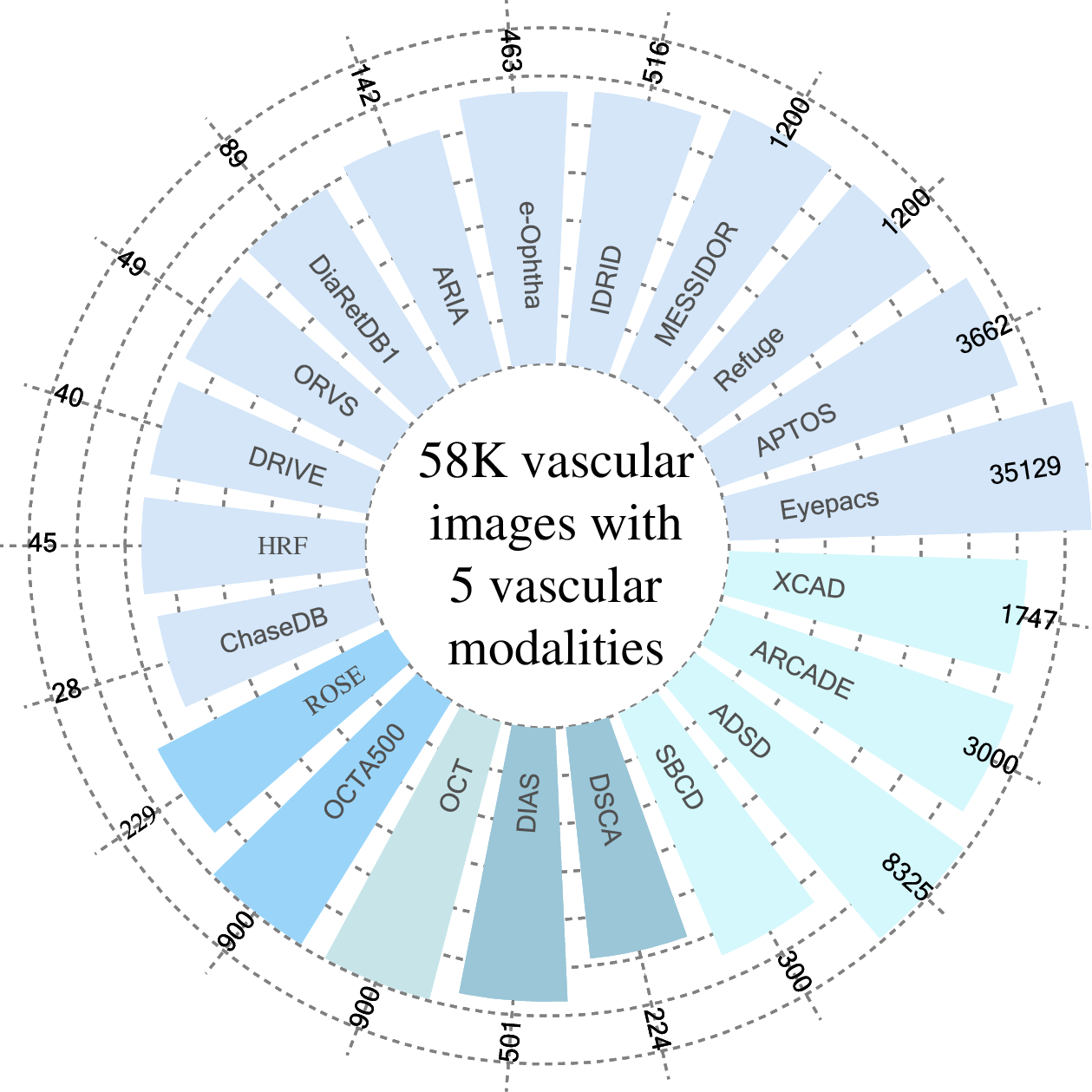
Figure 5: Visualization of the UniVG-58K dataset’s breadth in terms of images and modalities.
Few-shot Generative Transfer and Segmentation Pipeline
Adaptation to a new domain or segmentation task is achieved by few-shot re-tuning of both the mask generator and the conditional image generator using as few as five annotated images. By updating the model parameters (through LoRA/LoHA), UniVG specializes the generative priors for the target morphology and imaging style, producing unlimited synthetic image-label pairs for robust downstream supervised segmentation (UNet, Swin-Unet, or other architectures). Real and synthetic data are jointly used, and the loss design ensures flexible regularization without adverse biases from synthetic artifacts.
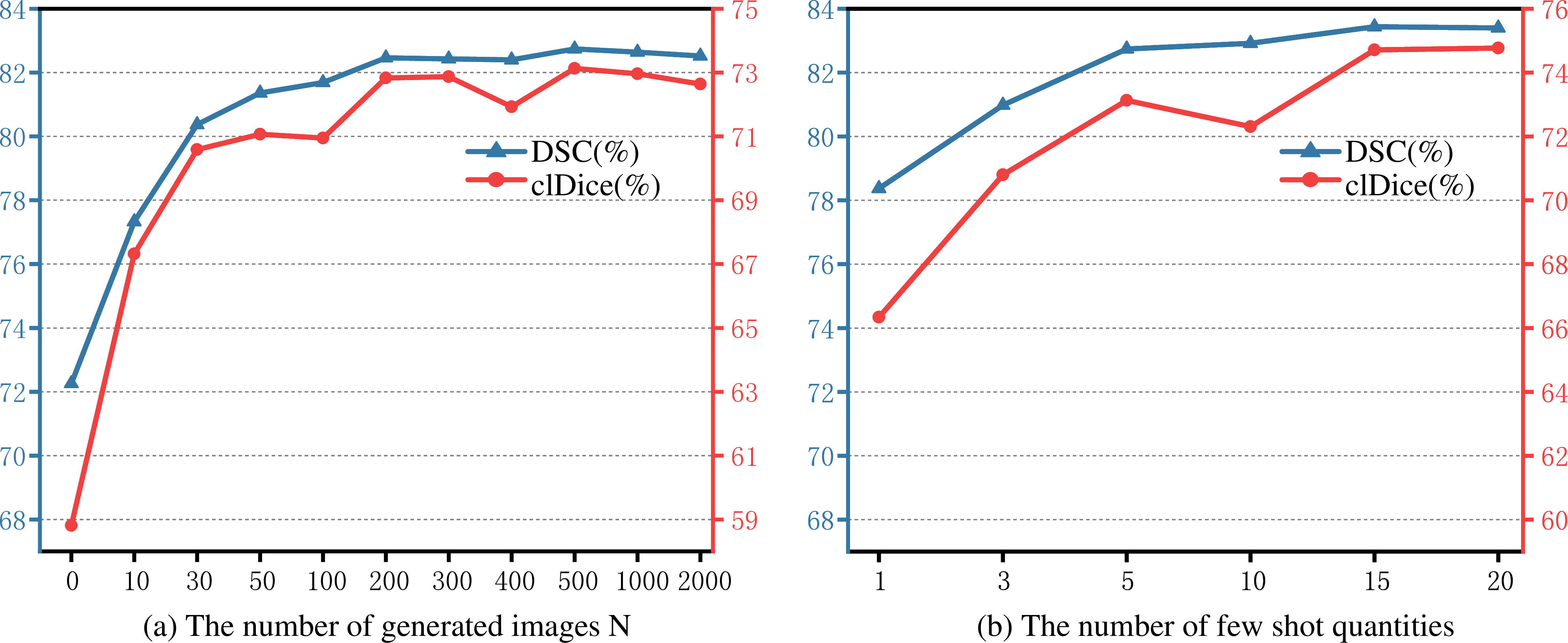
Figure 6: Empirical analysis of the impact of the number of generated images (a) and few-shot labeled data quantity (b) on downstream segmentation performance.
Empirical Results and Highlights
The framework is evaluated on 11 tasks across 5 modalities in an extreme few-shot (5-label) setting and compared with 21 alternatives, including SOTA foundation models (MAE, SimCLR, iBOT, SimSiam, MedSAM, SAM), skeleton-driven data engines (YoloCurvSeg, SOCT), and classical baselines (UNet, nnU-Net, Retina-Unet, FSG-Net). The principal findings include:
- Across all tasks, UniVG achieves the highest average DSC (79.3%) and clDice (81.1%), outperforming direct, weakly-supervised, PFM-pretrained, and skeleton-based approaches.
- On tasks demanding complex structural generalization (e.g., CHASEDB1), UniVG achieves 85.4% DSC, notably surpassing fully supervised models trained with many more labels, and exhibiting greater cross-modal robustness than MedSAM and SOCT.
- Ablation demonstrates significant gains from the synergistic combination of compositional learning and few-shot generative adaptation. Mask-level compositionality provides a larger improvement than image-level, but the performance is maximized by leveraging both.
- The per-class and cross-modal superiority is robust even with limited pre-training and with alternative segmentation heads, confirming the model’s architecture-agnostic and practical flexibility.
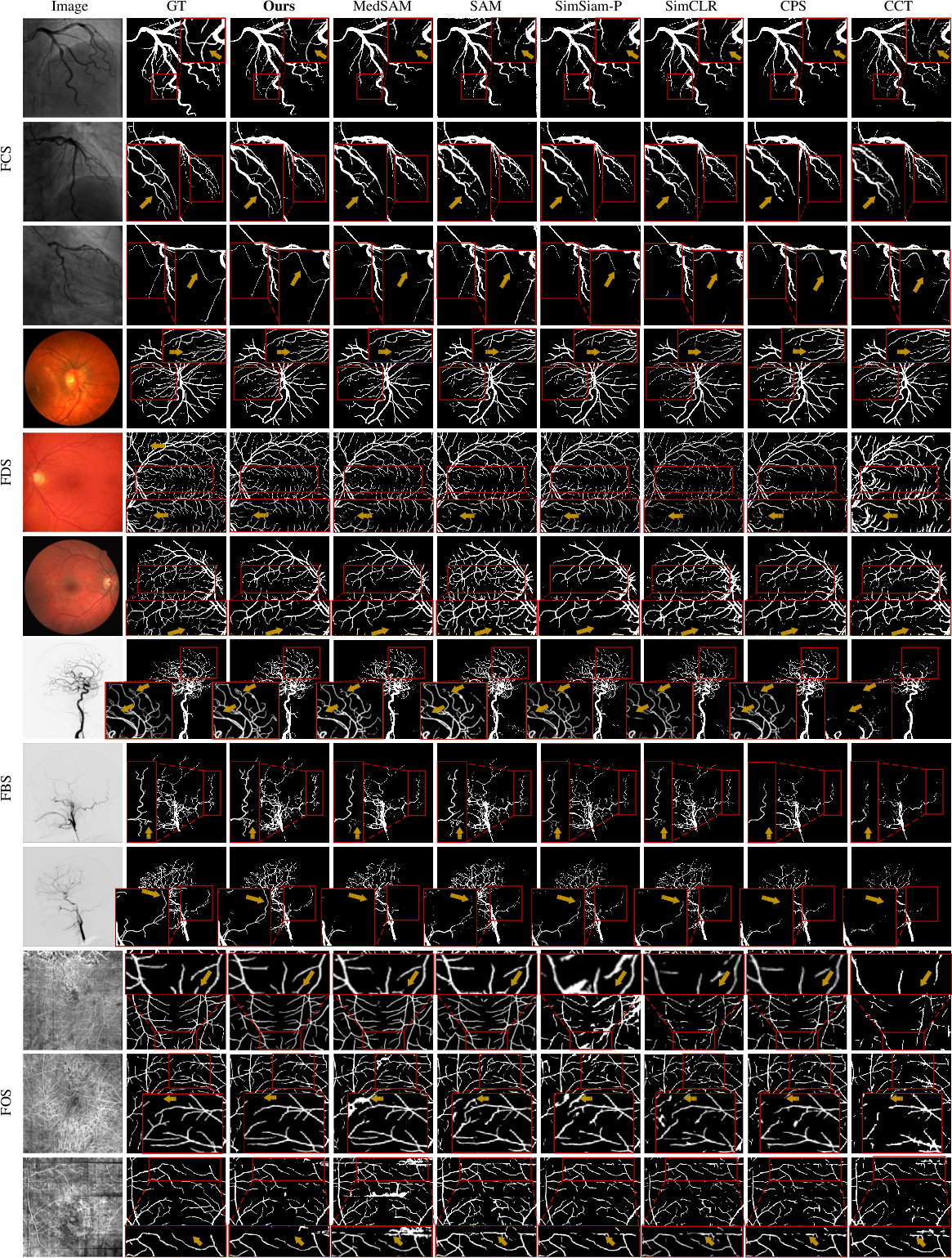
Figure 7: Example qualitative segmentation results across multiple modalities, visualizing UniVG’s resilience and fidelity in segmenting fine vessels.
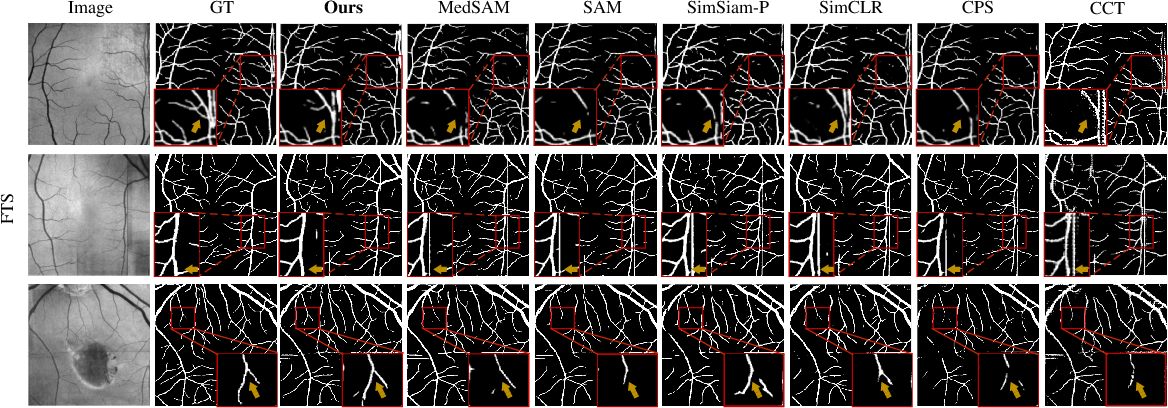
Figure 8: Additional qualitative comparisons illustrating the improved structural fidelity of UniVG outputs relative to baselines.
Analysis of Structural Authenticity, Fidelity, and Generalization
Systematic analysis reveals:
- t-SNE evaluation and FID metrics show that mask distributions generated by UniVG closely match real mask distributions, both in coverage and diversity, outperforming rule-based (e.g., SCA-only, bifurcation) and classic deep generative adversarial approaches.
- Murray's law compliance and parameter sensitivity studies indicate that the generative artifacts preserve vascular biophysical plausibility, maintaining branching exponents indistinguishable from real anatomical trees.
- Increasing synthetic data scale (to ∼2000 samples) quickly saturates diversity and segmentation accuracy, confirming efficiency.
- Sensitivity to generative and segmentation architecture hyperparameters is low, with robust adaptation under a broad range of settings.
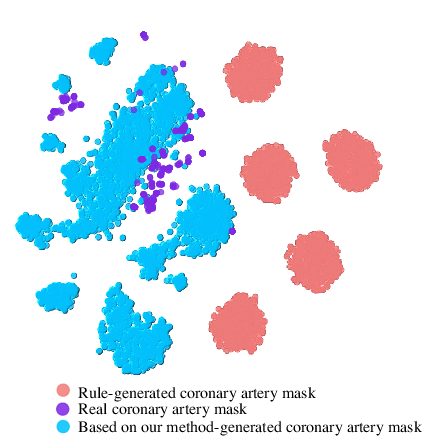
Figure 9: t-SNE visualization—synthetic masks from UniVG maintain real-like distribution and diversity.
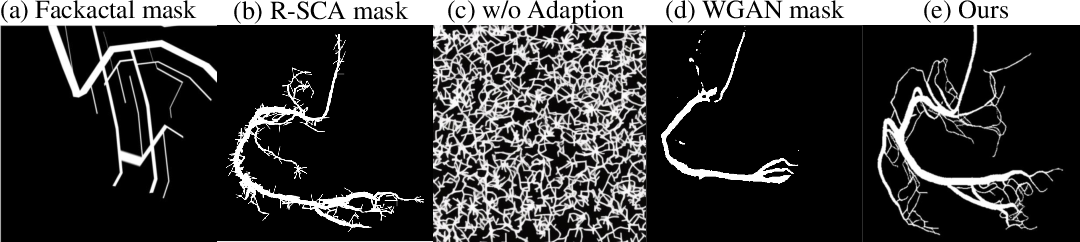
Figure 10: Direct visual comparison of masks generated by various algorithms, highlighting the visual authenticity advantage of the UniVG approach.
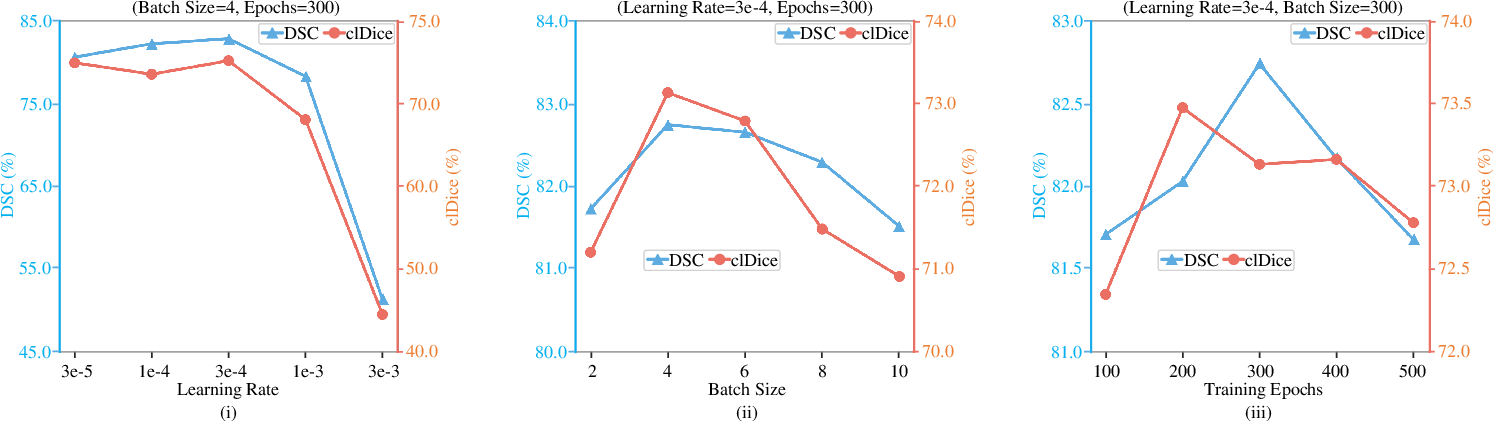
Figure 11: Hyper-parameter sensitivity (learning rate, batch size, epochs) analysis for coronary segmentation.
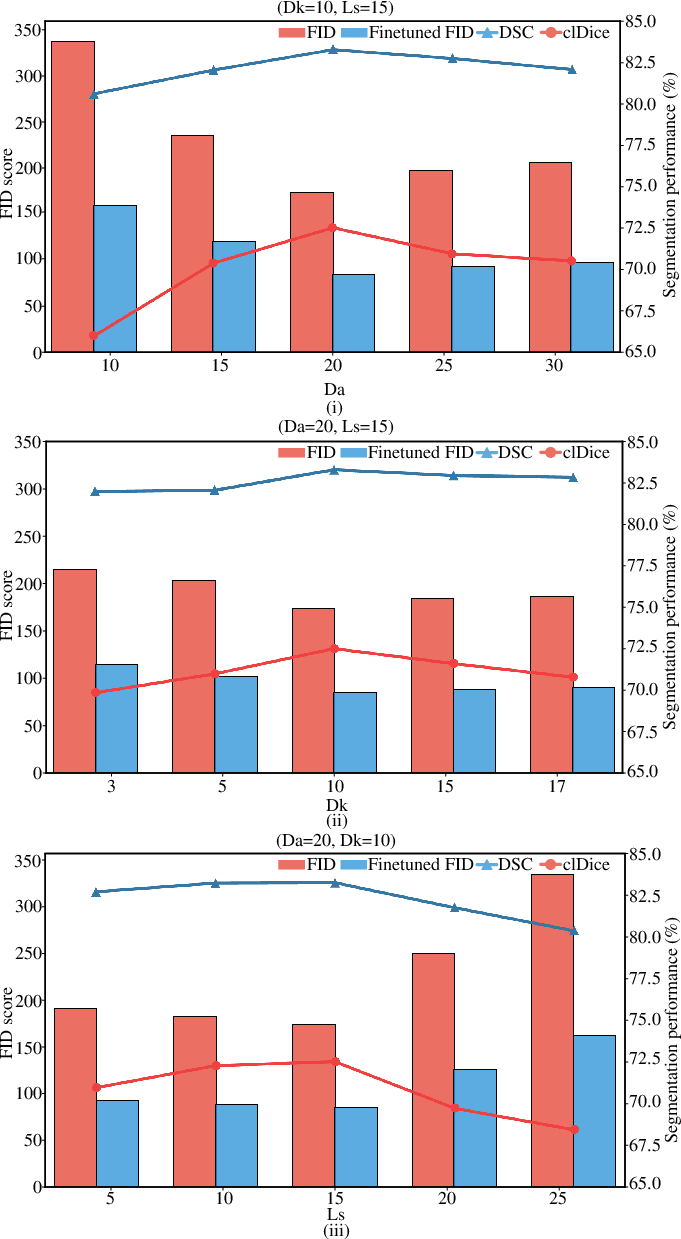
Figure 12: Sensitivity of SCA parameters (attraction distance, kill distance, segment length) to mask fidelity and segmentation outcome.
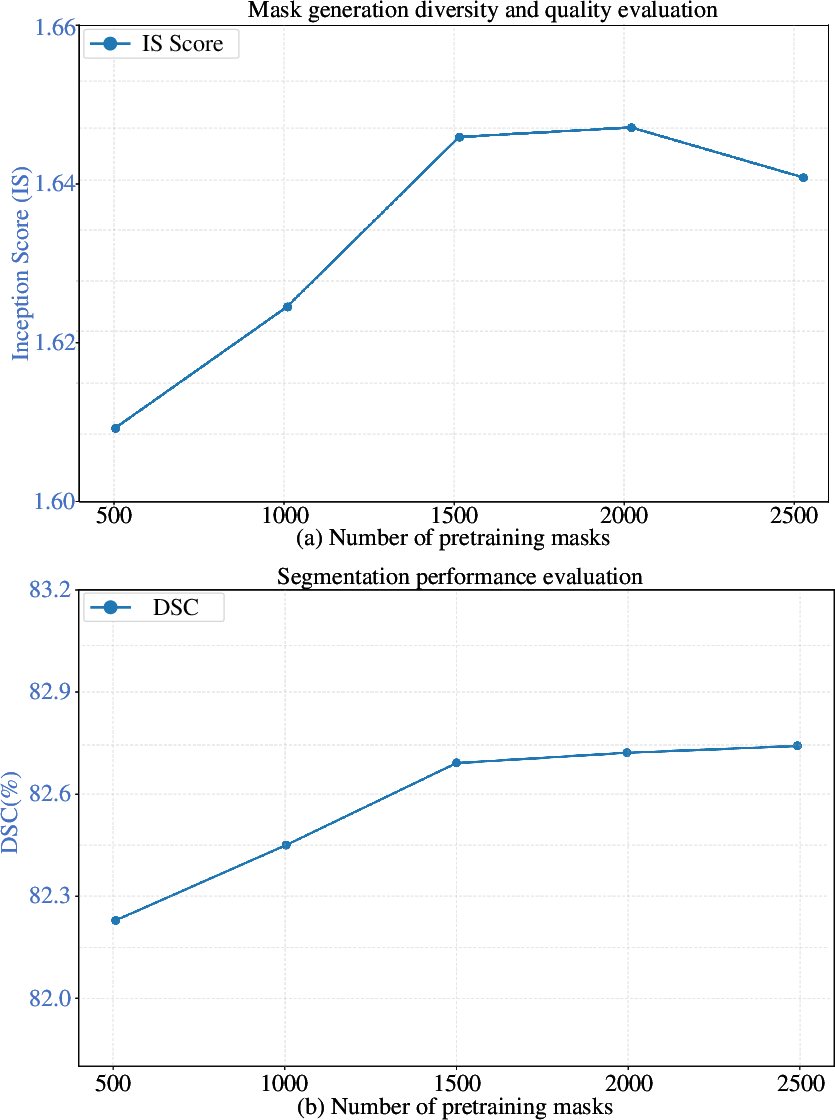
Figure 13: Relationship between synthetic mask diversity and downstream segmentation capacity, demonstrating efficient convergence.
Practical and Theoretical Implications
Practically, UniVG achieves fully-supervised-level vascular segmentation with orders-of-magnitude reduction in annotation effort, overcoming a critical bottleneck for AI deployment in clinical vascular analysis. The compositional foundation model paradigm also provides robust transfer to any new anatomical site or imaging modality, requiring only a handful of target samples. Theoretically, this approach underscores the power of compositionality-driven generative learning for structural medical objects, offering a scalable, architecture-decoupled foundation for both 2D and potentially 3D biomedical image analysis.
The model’s substantial reduction in data requirements (∼5 images vs 20–240 images in SOTA) without a loss in accuracy suggests generalization principles relevant to other complex curvilinear or graph-based biomedical structures.
Conclusion
This work demonstrates that a generative data-engine foundation model leveraging structural compositionality, large-scale pre-training, and task-adaptive few-shot generative transfer can achieve state-of-the-art, architecture-agnostic performance in universal 2D vascular image segmentation. The methodological framework, supported by the UniVG-58K dataset and publicly available code, provides a foundation for future research in data-efficient clinical image analysis and potential extension to richer modalities and higher-dimensional vascular representations (2604.10737).