A search for microscopic black holes, string balls, and sphalerons in proton-proton collisions at $\sqrt{s}$ = 13 TeV
Published 12 Apr 2026 in hep-ex | (2604.10732v1)
Abstract: A search for microscopic black holes, string balls, and electroweak sphalerons using proton-proton collisions at $\sqrt{s}$ = 13 TeV recorded with the CMS detector at the CERN LHC during the 2016$-$2018 data taking, and corresponding to an integrated luminosity of 138 fb${-1}$, is presented. Two search strategies based on control samples in data are used. Model-independent limits on the cross section of physics phenomena with multiple energetic jets, leptons, and photons are set using a method that relies on the shape invariance of the scalar sum of the transverse momenta of all objects in the event. Model-dependent limits on black hole and sphaleron production are set using a newly introduced method that has been developed for the identification of collider events with distinct kinematic features by separating them into classes based on phase space proximity. In the context of models with large extra dimensions, semiclassical black holes and string balls with masses below 8.4$-$11.4 TeV and 9.0$-$10.7 TeV, respectively, are excluded at 95% confidence level, significantly extending the reach beyond previous searches. Results of a dedicated search for electroweak sphalerons are used to derive an upper limit of 0.0034 at 95% confidence level on the fraction of quark-quark interactions above the nominal sphaleron transition energy threshold of 9 TeV.
The paper reports no excess above the Standard Model, setting world-leading limits on black hole, string ball, and sphaleron production.
It employs 138 fb⁻¹ of CMS Run 2 data with innovative machine learning and geometric phase space metrics for enhanced signal discrimination.
The study establishes mass exclusions up to 11.4 TeV for black holes and probes sphaleron transitions near a 9 TeV energy threshold.
Search for Microscopic Black Holes, String Balls, and Sphalerons in pp Collisions at s=13 TeV
Overview
The paper "A search for microscopic black holes, string balls, and sphalerons in proton-proton collisions at s = 13 TeV" (2604.10732) presents an advanced analysis of the CMS data set corresponding to 138fb−1 of LHC Run 2 data. The study systematically searches for TeV-scale Beyond Standard Model signatures predicted by extra dimensional models (microscopic black holes), string theory (string balls), and non-perturbative electroweak processes (sphalerons). The event selection and background estimation leverage innovative machine learning approaches and event geometry observables to optimize sensitivity to these theoretical scenarios. No excess above the predicted Standard Model background is observed, and world-leading constraints are established on all targeted phenomena.
Theoretical Context and Signal Models
The possibility of producing microscopic black holes (BHs) or string balls (SBs) at the LHC arises in large extra dimension scenarios, such as ADD or Randall-Sundrum, where lowering of the Planck scale to the TeV range enables such processes at collider-accessible energies. Semiclassical BHs are expected to decay via Hawking radiation producing high-multiplicity, isotropic final states, while quantum BHs and SBs can result in lower multiplicities and, for SBs, distinctive kinematics tied to the string scale Ms and string coupling gs.
Electroweak sphalerons correspond to exponentially suppressed, baryon- and lepton-number-violating transitions characterized by a Chern–Simons number change NCS. At energies above the sphaleron barrier (Esph∼9 TeV), they can yield final states with multiple quarks and leptons across all generations, manifesting experimentally as events with exceptionally large multiplicities and high total transverse energy.
Event Reconstruction and Key Observables
To efficiently discriminate between the rare signal and overwhelmingly QCD-dominated backgrounds, the analysis employs a combination of model-independent and model-dependent strategies. Several high-level observables are central:
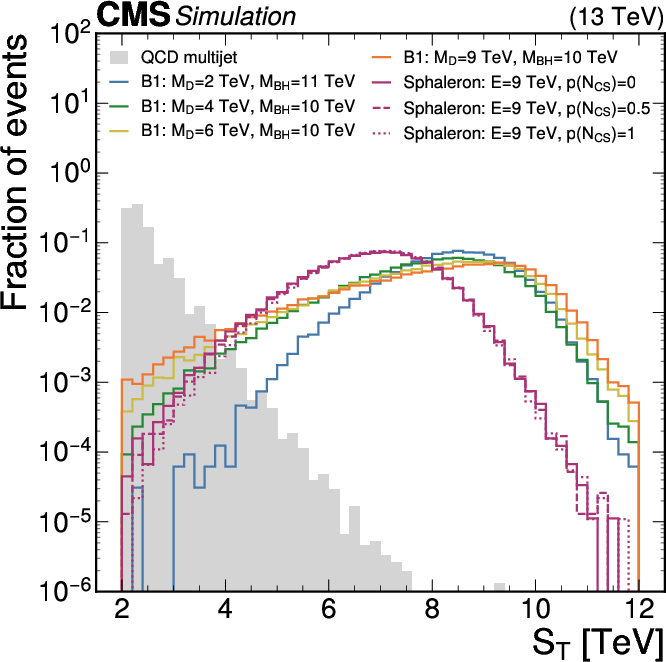
ST: The scalar sum of the transverse momenta of all identified objects in the event, sensitive to high-energy, high-multiplicity final states.
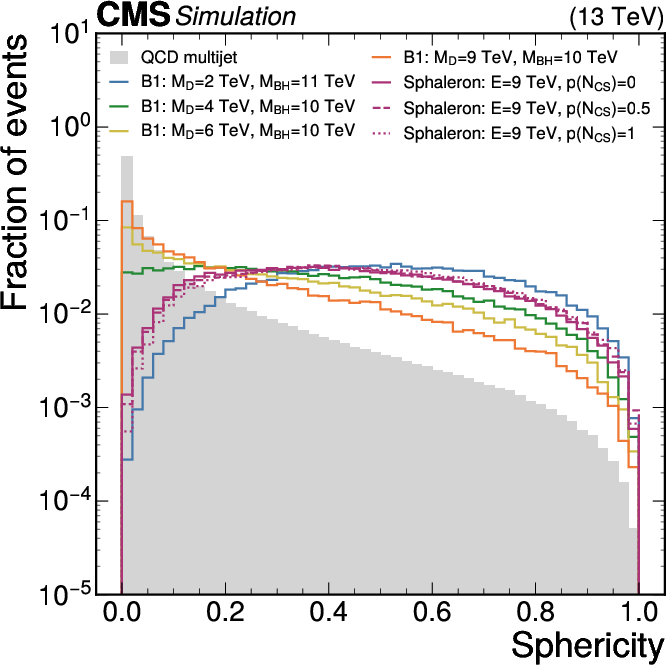
Sphericity (S): Measures the isotropy of the transverse momentum distribution, with signal events tending towards larger s=130 due to the spherical decay topology predicted for both BHs and sphaleron transitions.
Figure 1: The s=131 (left) and sphericity (right) distributions for various BH and sphaleron signal models compared to the normalized QCD multijet background.
The plotted s=132 and sphericity distributions highlight the discriminating power of these observables across background and several signal hypotheses, motivating their use for both event selection and as inputs to downstream machine learning models.
Advanced Event Classification and Phase-Space Metric
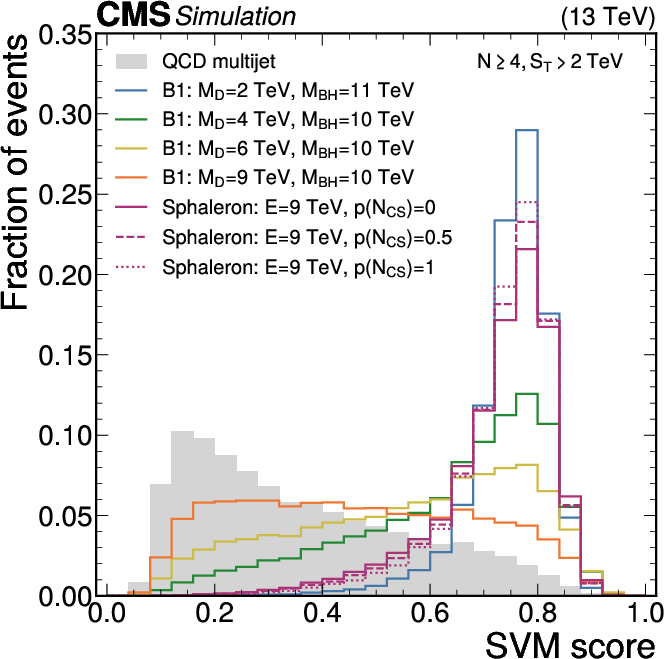
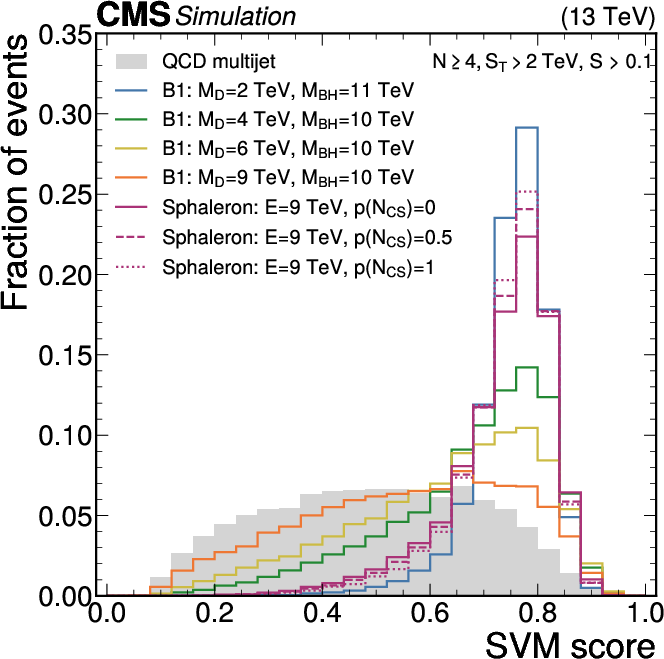
For model-dependent searches, the analysis utilizes an interpretable support vector machine (SVM) classifier trained on a novel phase space distance metric, s=133, which exploits the covariant geometry of the massless s=134-body particle phase space. This approach maintains sensitivity to both event multiplicity and the global topology of the final state, and is particularly well-suited to the multijet, multi-lepton, and multi-photon signatures of interest.
Figure 2: SVM score distributions for simulated QCD, BH, and sphaleron events, before (left) and after (right) the sphericity requirement.
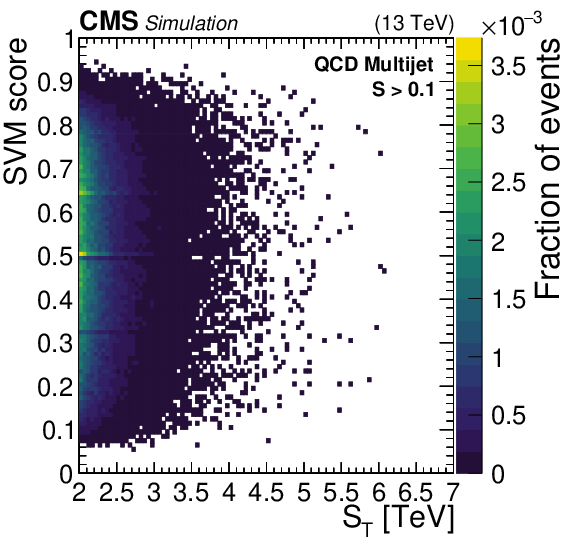
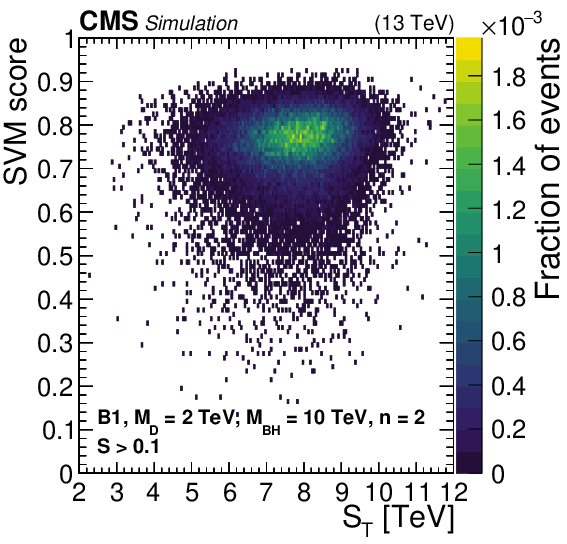
Figure 3: The correlation between SVM score and s=135 for QCD background (left) and a representative BH signal (right) after event selection.
The SVM classifier enhances signal discrimination, and the event selection is optimized using the Punzi figure of merit. The analysis carefully quantifies the impact of varying the SVM threshold on signal efficiency.
Background Estimation and Systematic Uncertainties
Two complementary background estimation techniques are employed:
Shape-Invariance (SI): Assumes the s=136 spectrum for QCD multijet background is invariant to object multiplicity, allowing modeling of backgrounds at high multiplicity from low-multiplicity control samples validated in dedicated control and validation regions.
Alphabet (Phase-Space) Method: Utilizes sideband regions in the SVM output ("PASS"/"FAIL") to extrapolate the background in the signal region via a data-driven transfer function, with robust handling of correlations and systematic effects.
Figure 4: s=137 distribution in s=138 (left) and s=139 (right) events within the shape-invariance validation region.
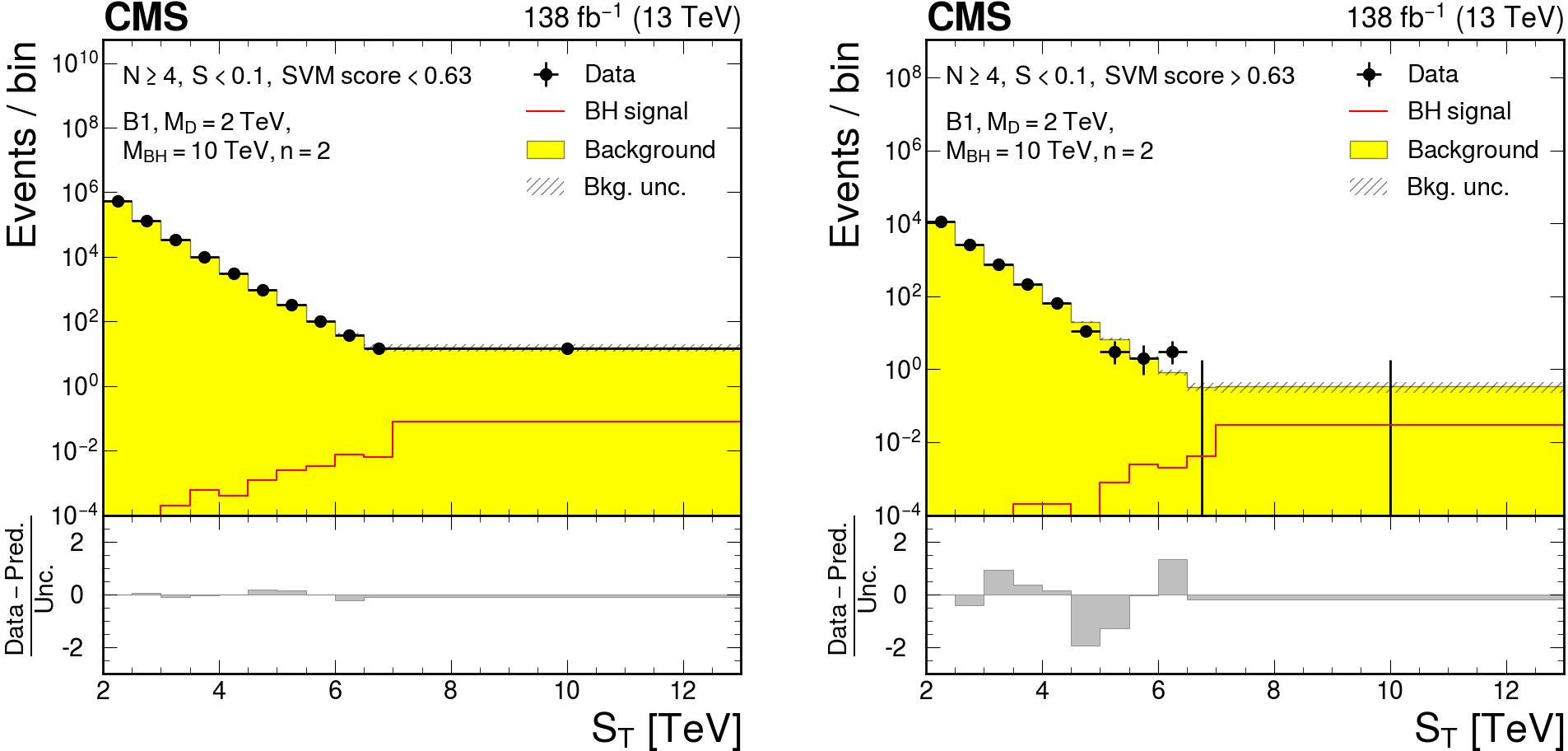
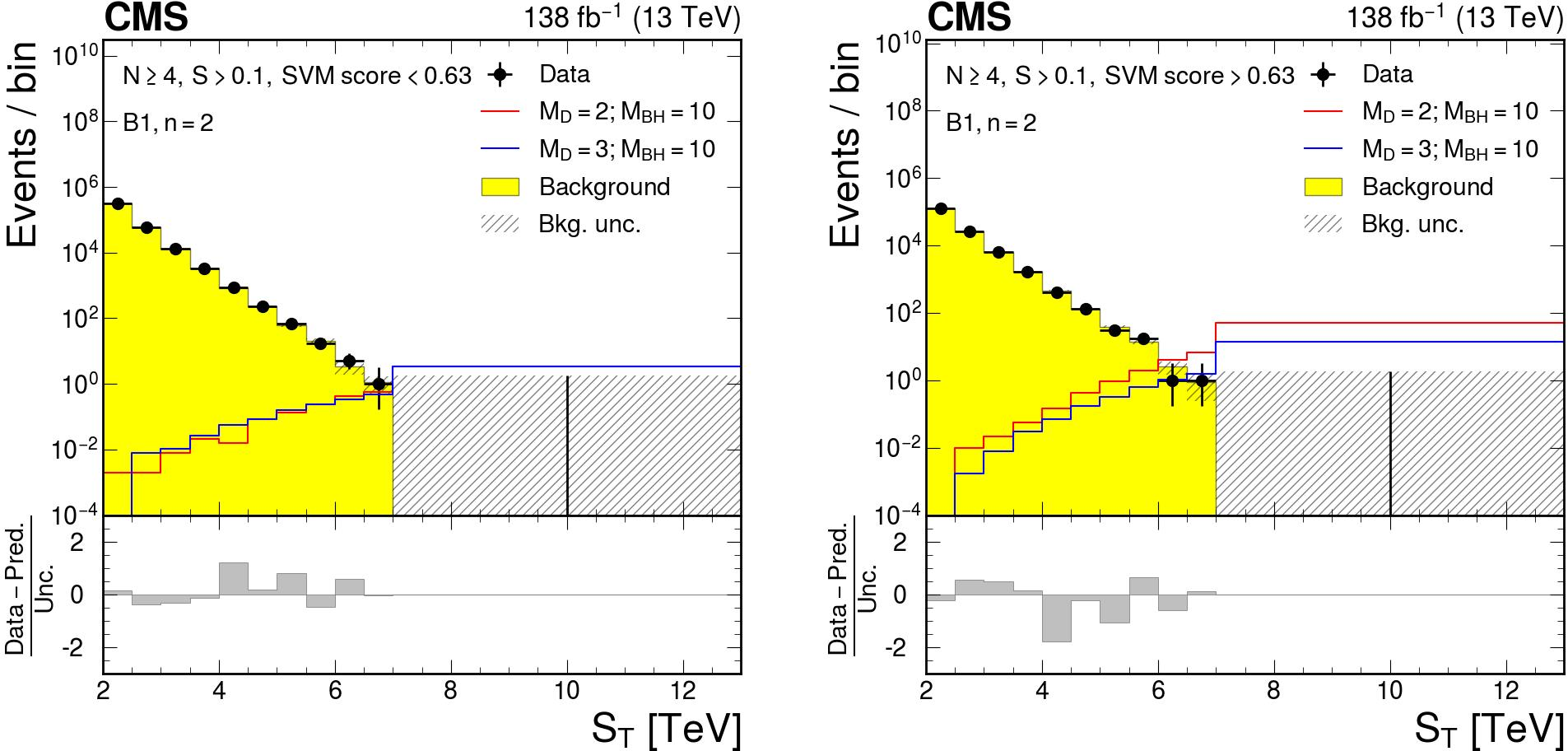
Figure 5: Post-fit s0 distributions in VR-FAIL (left) and VR-PASS (right) with data, background, and signal overlay.
Systematic uncertainties are dominated by the modeling of the high-s1 background tail and include fit-function ambiguity, extrapolation uncertainties, normalization region dependence, and contributions from jet energy scale corrections.
Results: Model-Independent and Model-Dependent Limits
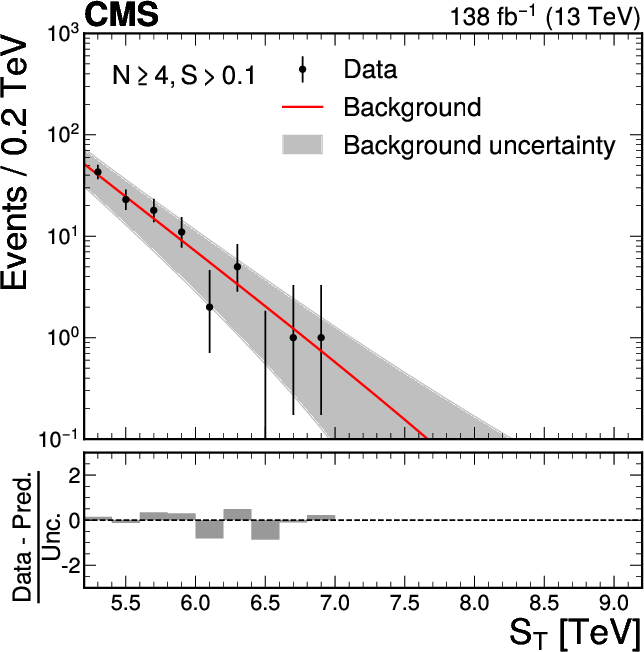
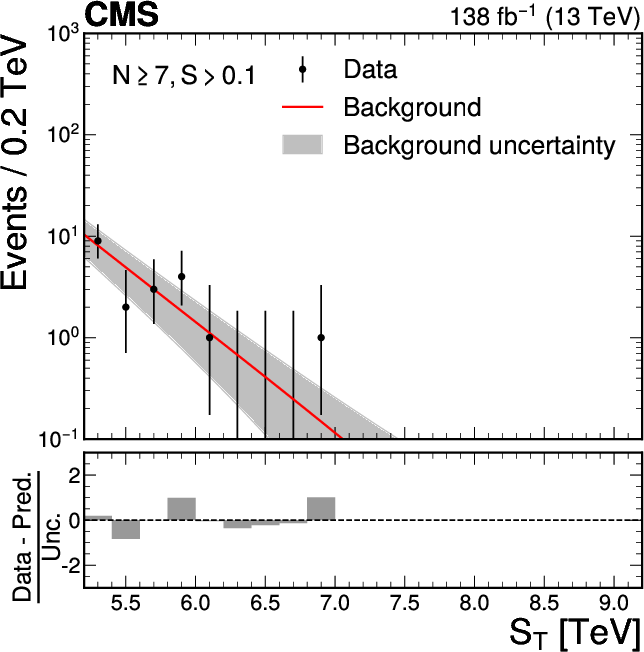
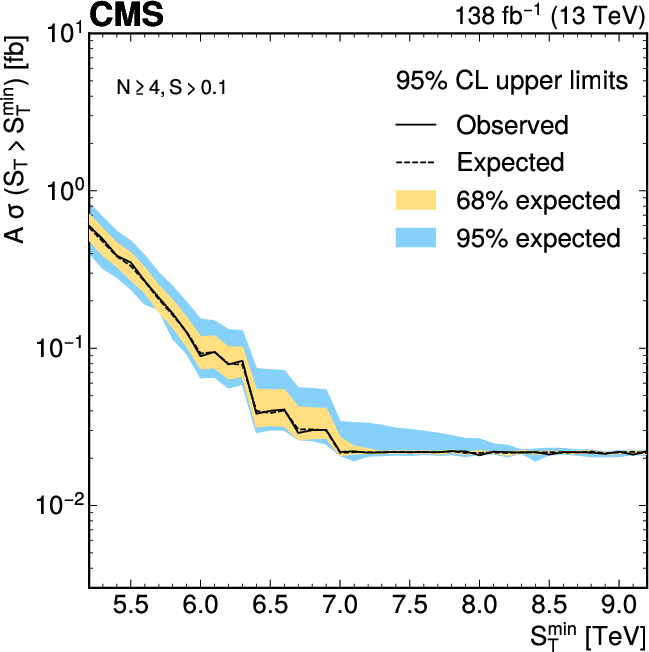
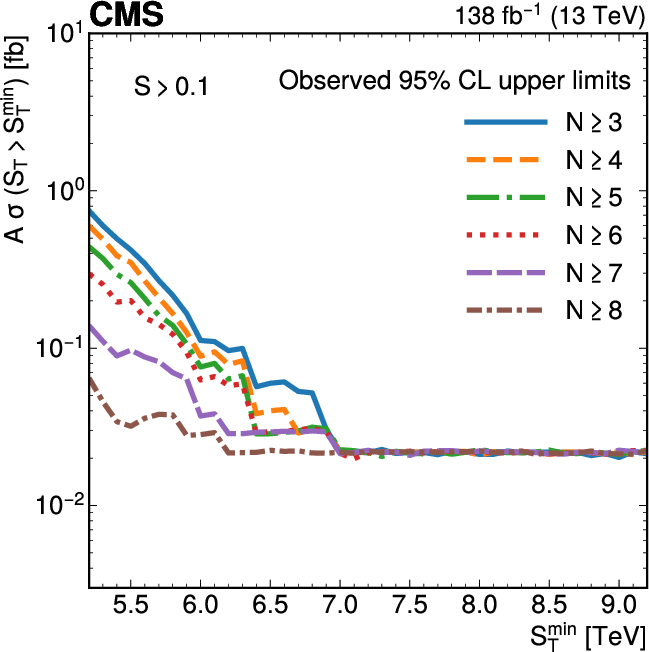
No statistically significant excess above the Standard Model expectation is observed. Model-independent upper limits are derived for the cross section times acceptance as a function of s2 threshold and object multiplicity.
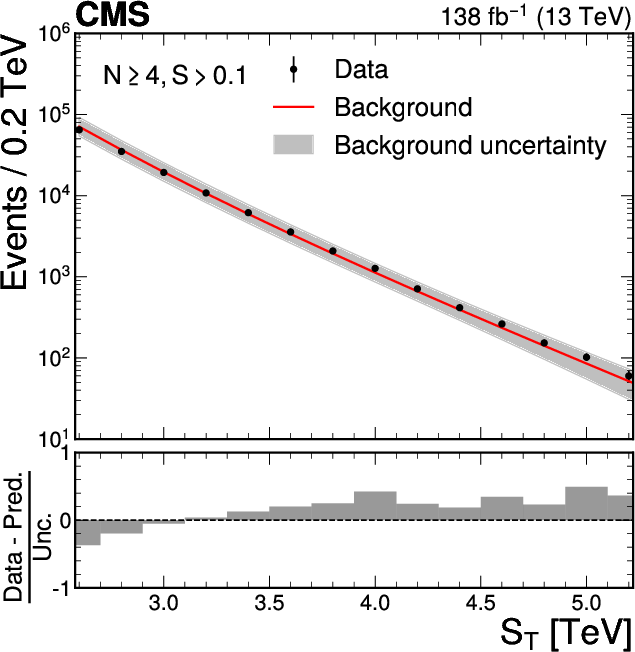
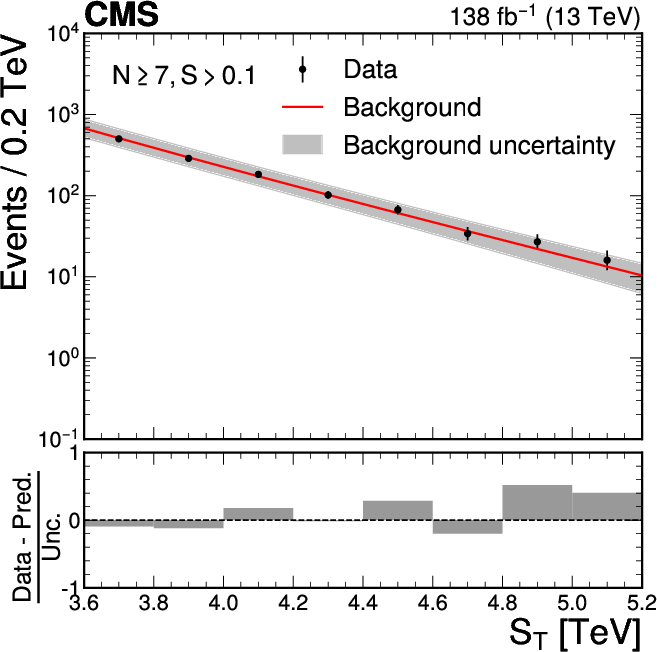
Figure 6: Signal region s3 distributions for data and background in s4 (left) and s5 (right) selections.
Figure 7: Model-independent 95\% CL upper limits on the cross section times acceptance for s6 events versus s7 (left) and multiplicity dependence (right).
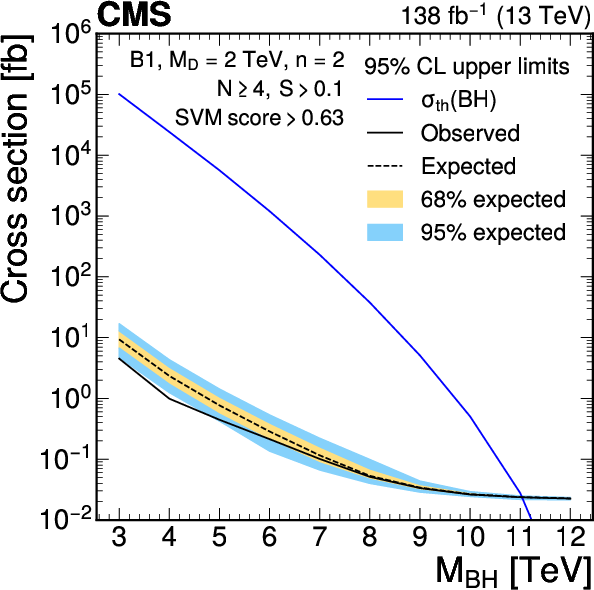
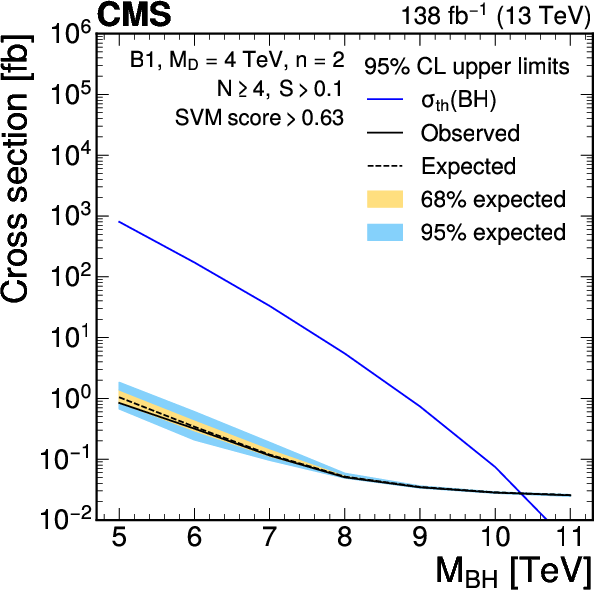
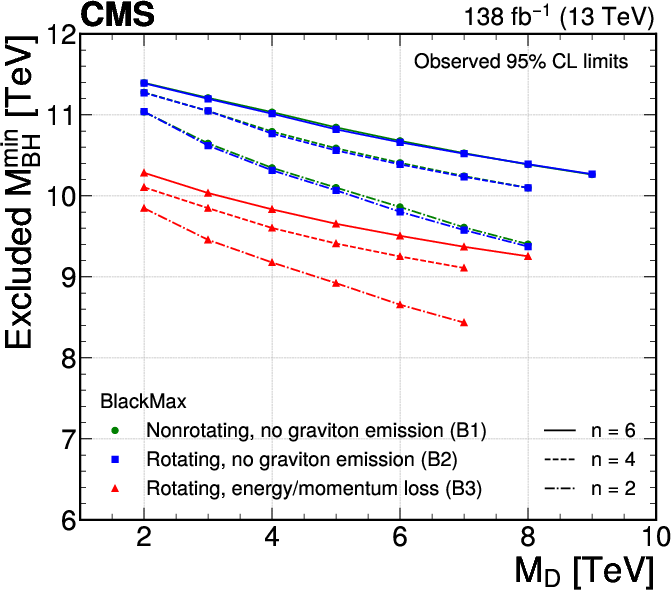
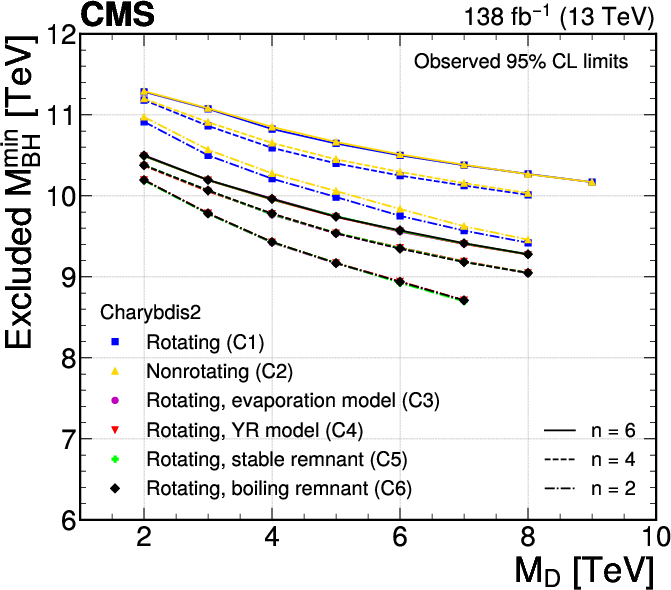
In the context of extra dimensional gravity models and semi-classical BHs, the analysis reports mass exclusions extending to s8--s9~TeV at 95% CL, depending on the BH production and decay scenario, number of extra dimensions, and Planck scale.
Figure 8: Post-fit 138fb−10 distributions for the phase-space-based classifier in FAIL (left) and PASS (right) regions.
Figure 9: 95\% CL upper limits on BH production cross section, with theoretical predictions, as a function of the minimum BH mass for two choices of Planck scale.
Figure 10: Excluded minimum BH mass 138fb−11 as a function of 138fb−12 and 138fb−13 for BlackMax (left) and Charybdis2 (right) models.
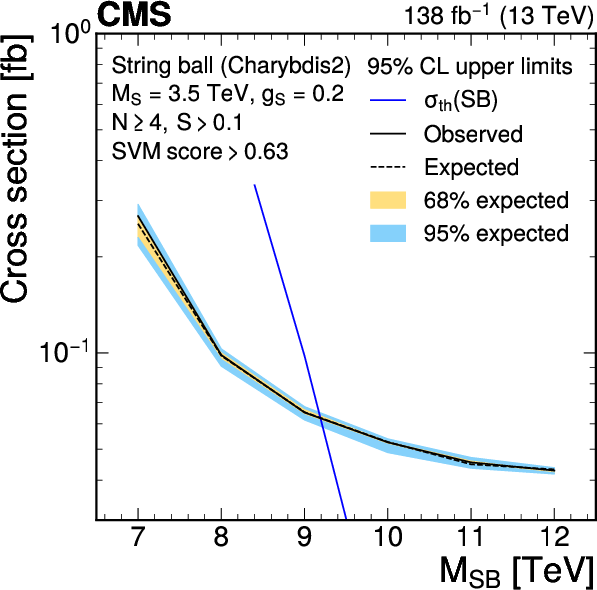
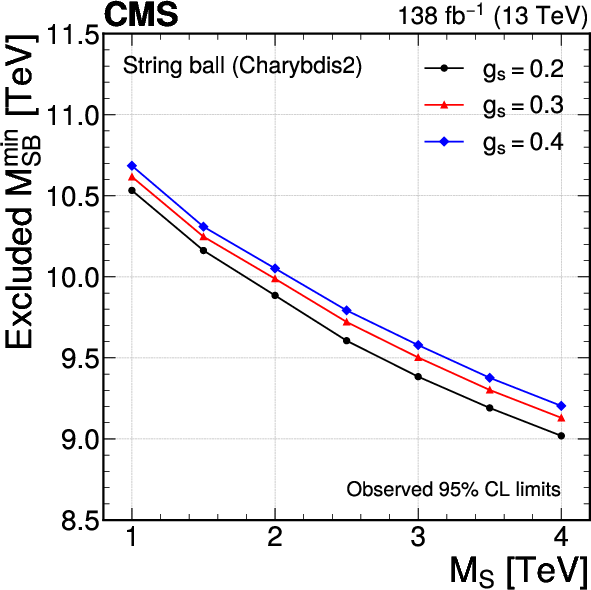
String ball scenarios are probed up to masses 138fb−14--138fb−15~TeV, with the specific limits a function of string parameters (138fb−16, 138fb−17), also constraining the transition region to BHs.
Figure 11: Upper limits for SB models with 138fb−18~TeV, 138fb−19 (left) and excluded SB mass regions for different Ms0 (right).
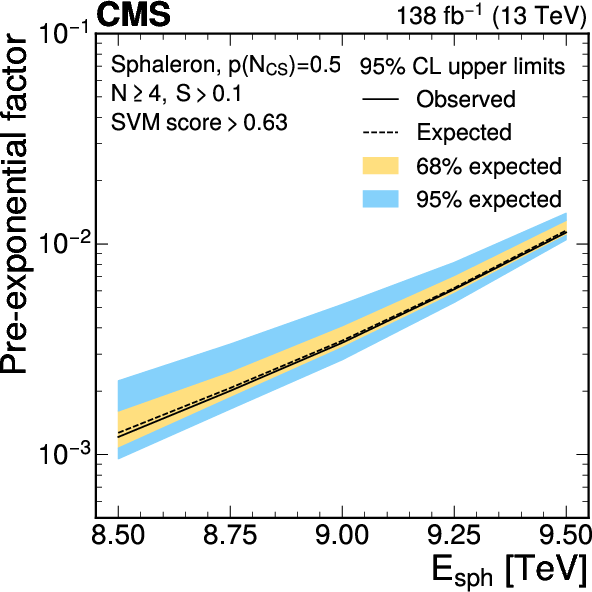
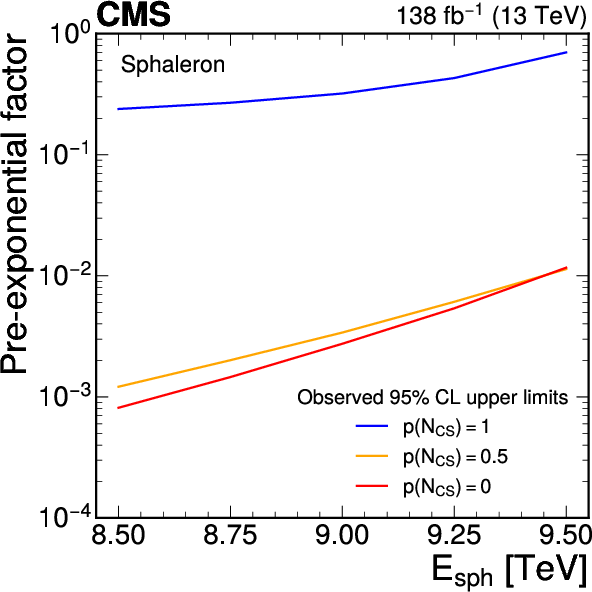
For sphaleron-induced processes, the observed (expected) upper limit on the transition pre-exponential factor for Ms1 TeV is Ms2 at 95% CL, improving upon previous constraints by factors of 6.2 (observed) and 3.4 (expected).
Figure 12: 95\% CL limits on the pre-exponential factor for the sphaleron model for different assumptions on Ms3 as a function of Ms4.
Practical and Theoretical Implications
The results directly limit a broad class of BSM models predicting non-perturbative phenomena at the TeV scale. The methodology, particularly the use of geometric phase space metrics combined with machine learning classifiers, demonstrates strong performance for high-multiplicity event searches and highlights a viable strategy for future analyses in final states with complex event topologies and poorly controlled backgrounds.
The exclusion of large ranges of parameter space for semiclassical BHs and SBs places significant constraints on models with low-scale gravity and TeV-scale strings, substantially strengthening the lower bounds for the fundamental Planck scale and string scale. In the electroweak sector, the constraints on sphaleron processes probe non-perturbative effects close to the theoretically expected threshold, with direct implications for baryogenesis models postulating observable sphaleron-induced baryon/lepton number violation.
Conclusions
This analysis establishes some of the world's strongest constraints on microscopic black holes, string balls, and electroweak sphalerons using the full Run 2 CMS data set (2604.10732). The observed limits significantly extend the coverage both in terms of kinematic reach and theoretical parameter space relative to prior LHC searches. The adoption of geometric phase space approaches and interpretable machine learning classifiers represents a noteworthy advancement for future searches targeting BSM physics with multiparticle, high-energy signatures. The null results reported here guide the direction of subsequent experimental exploration at the energy frontier, further constraining the possible manifestations of new physics at the LHC and future colliders.