- The paper demonstrates that geometric variations, rather than intrinsic surface properties, are the primary drivers behind the observed polarization diversity in magnetars 1E 1547.0-5408 and 1E 2259+586.
- The study employs a robust multi-wavelength Bayesian framework using phase-resolved X-ray and radio data to tightly constrain magnetar geometries.
- The results indicate that significant global magnetospheric twists are disfavored during quiescence, reinforcing the dominant role of large-scale dipole geometry in polarization modeling.
Multi-wavelength Geometrical Dissection of Magnetar X-ray Polarization Diversity
Scientific Context and Motivation
Understanding the physical drivers behind the polarized X-ray output of magnetars is of fundamental interest for neutron star astrophysics, plasma QED, and radiative transfer in strong-field regimes. The pronounced diversity in phase-averaged X-ray polarization degree (PD)—up to ∼65% for 1E 1547.0−5408 contrasted with ≲20% for the majority of other magnetars—motivates a rigorous examination of the roles of viewing geometry, intrinsic surface emission, and magnetospheric structure. This paper (2604.10477) delivers a comparative multi-wavelength Bayesian analysis of the geometrical determinants of polarization characteristics for two extremes: the highly polarized 1E 1547.0−5408 and the low-PD 1E 2259+586.
Data Sets and Multi-wavelength Constraints
1E 2259+586 is analyzed using phase-resolved X-ray polarization measurements from IXPE (2–8 keV), NICER, and XMM–Newton, as well as three-epoch phase-averaged polarization position angle (PA) observations. For 1E 1547.0−5408, the analysis leverages high signal-to-noise phase-resolved IXPE data (2–6 keV), augmented with radio polarization-based geometry estimates. These complementary data sets enable the disambiguation of large-scale geometry, the assessment of temporal PA evolution, and cross-validation against radio-inferred inclination and viewing angles.
Bayesian Modeling Framework
A unified Bayesian inference framework is adopted to fit the phase-resolved PA curves with both the classical rotating vector model (CRVM) and a twisted-magnetosphere extension (MRVM; Tong et al. 2021). The main free parameters are the magnetic inclination (χ), observer viewing angle (ζ), PA zero-point (Ψ0), phase offset (ϕ0/2π), and (for MRVM) the global twist parameter (λ). The methodology accommodates the −0 periodicity of PA and employs angular likelihoods, ensemble MCMC (emcee), and nested sampling (dynesty) for full posterior inference and evidence-based model selection.
Results for 1E 2259+586
The CRVM and MRVM both yield geometries with moderate −1–−2 and −3–−4, while the line of sight maintains a small impact angle (−5–−6), favoring smooth PA swings. The MRVM provides a minimal improvement in fit quality (AIC, BIC, and −7), but fails to yield statistically significant evidence for a nonzero global twist. The upper limit on secular twist variation, derived from joint fitting of the three-epoch PA measurements, is −8 at 95% confidence over a 26-day baseline, indicating an absence of rapid global magnetospheric evolution in quiescence.
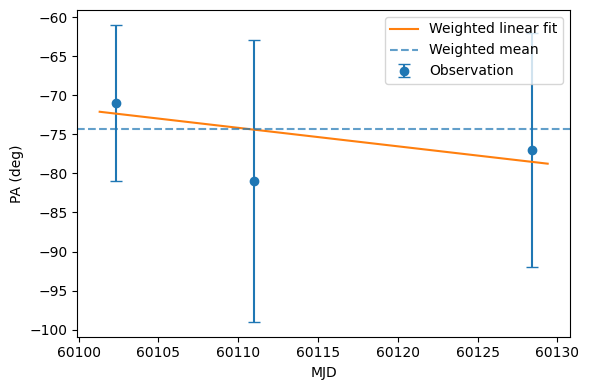
Figure 1: Temporal evolution of phase-averaged polarization position angle for 1E~2259+586; no significant secular drift is observed over −9 days.
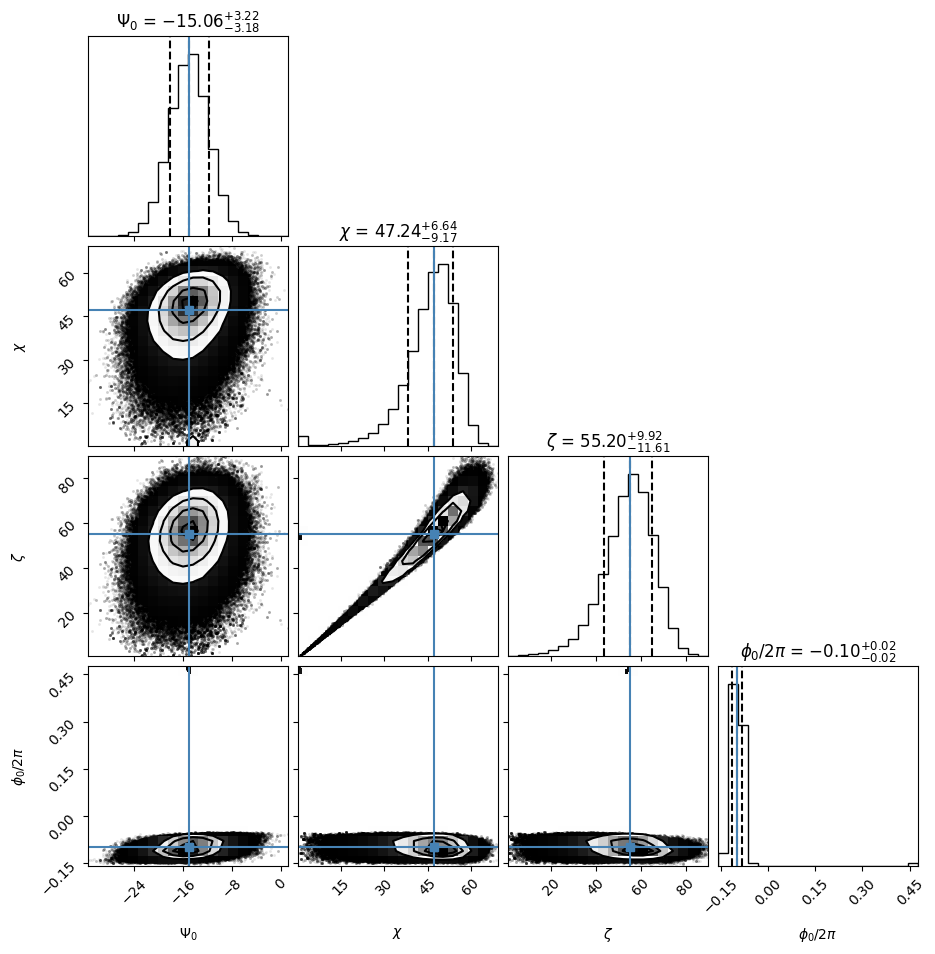
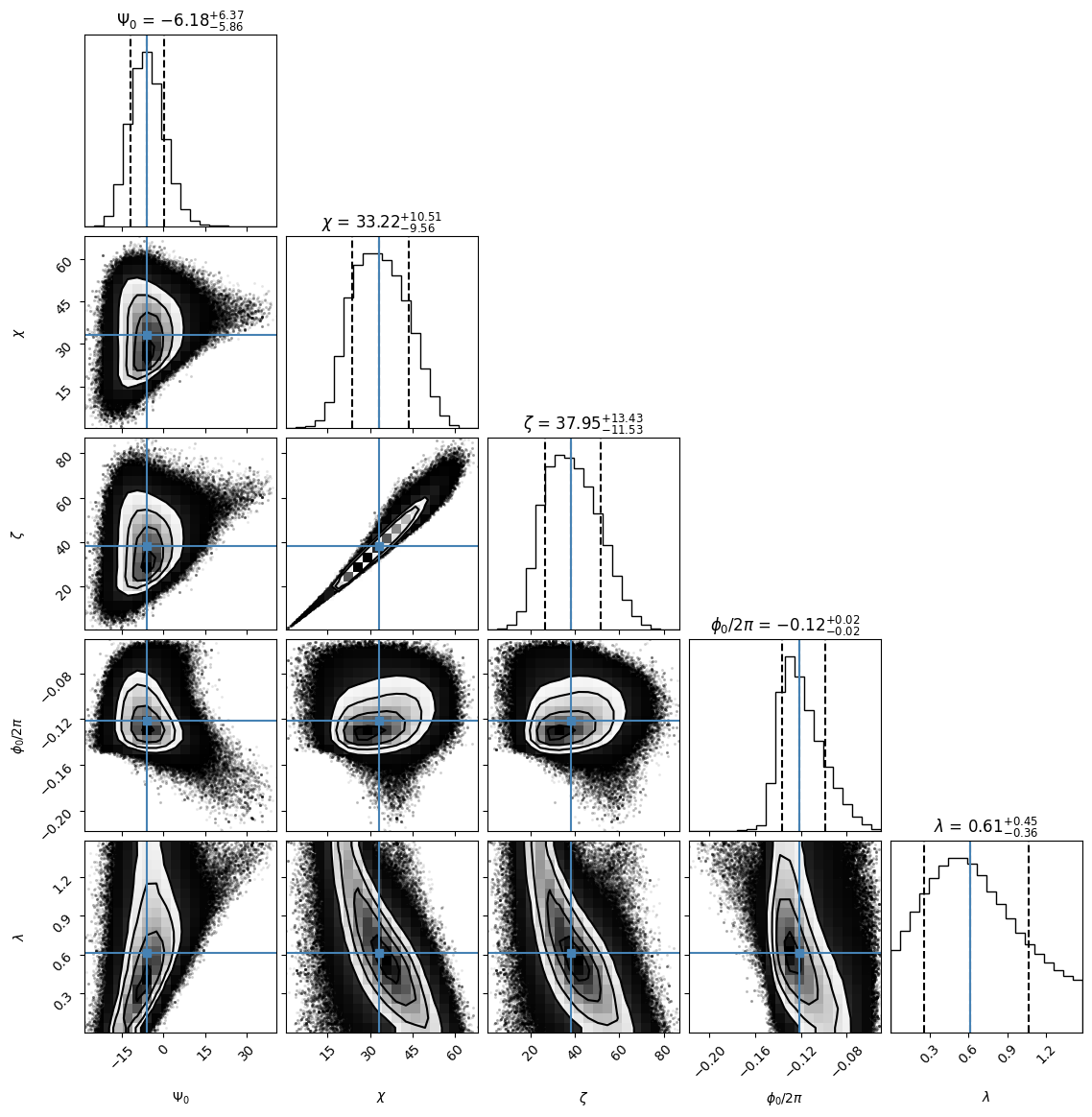
Figure 2: Posterior distribution for CRVM parameters characterizing 1E~2259+586; ≲20%0 and ≲20%1 are both moderate and tightly correlated.
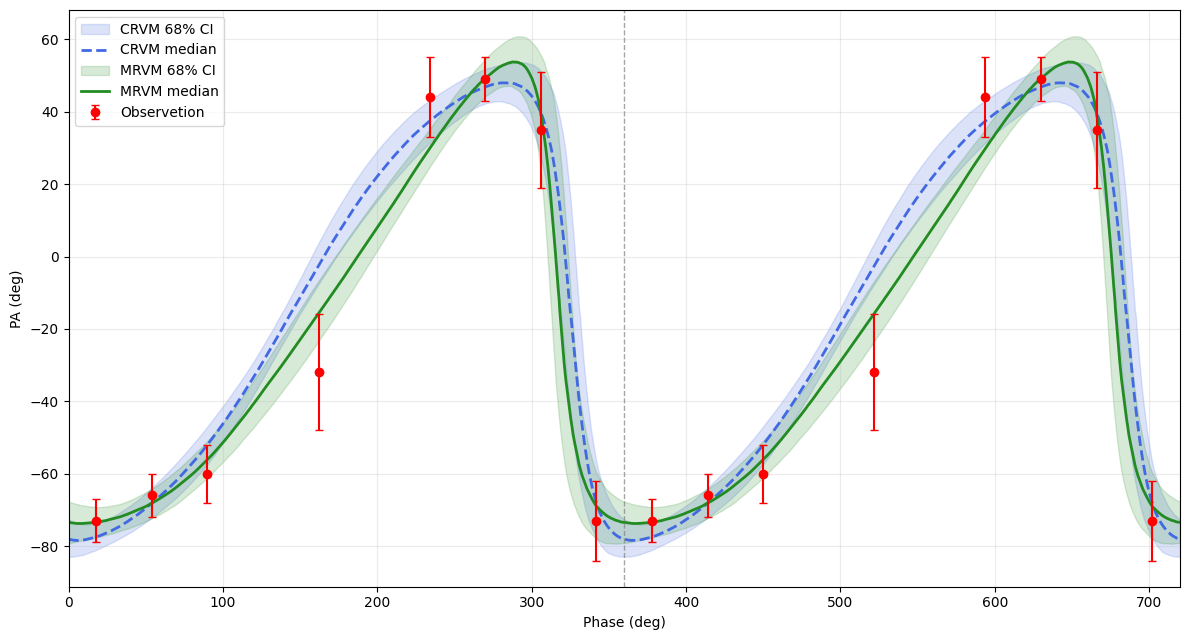
Figure 3: Posterior predictive distribution for 1E~2259+586; model-predicted PA curves tightly envelope the observed phase-resolved PA data.
Results for 1E 1547.0≲20%25408
When fit with flat priors, the CRVM adequately describes the observed X-ray PA curve, with a small ≲20%3 and a wide, weakly constrained ≲20%4. The MRVM does not provide improved likelihood or evidence, and the twist parameter remains unconstrained. Inclusion of radio-informed Gaussian priors for ≲20%5 and ≲20%6 compresses the allowed geometry into a nearly aligned configuration (≲20%7, ≲20%8, ≲20%9), as inferred from independent radio polarimetry. Throughout, the PA predictions of the CRVM and MRVM are almost indistinguishable, and the Bayes factors remain close to unity, indicating no compelling support for a strong, static global twist. The phase-resolved X-ray data alone are demonstrably prior-sensitive.
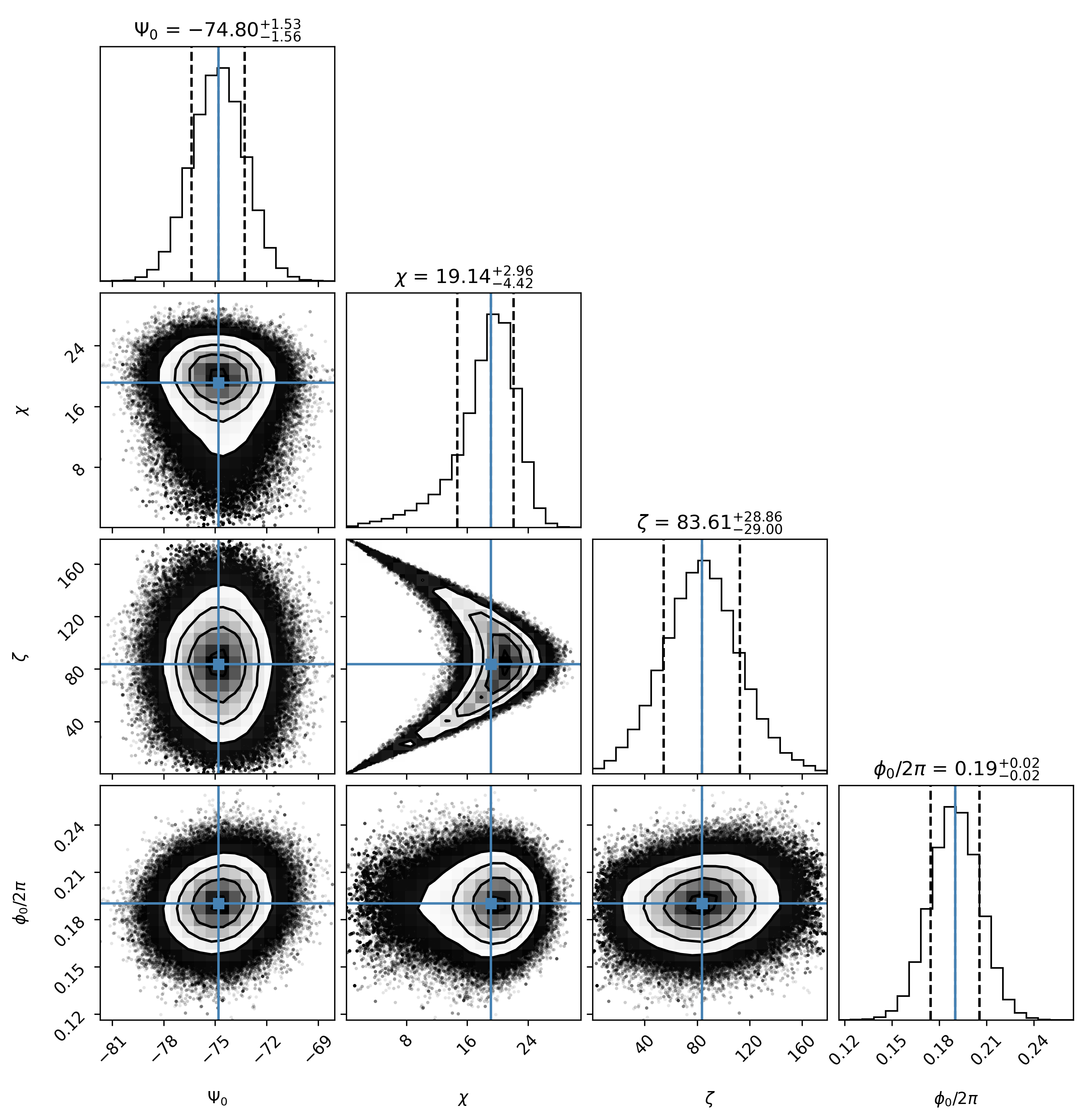
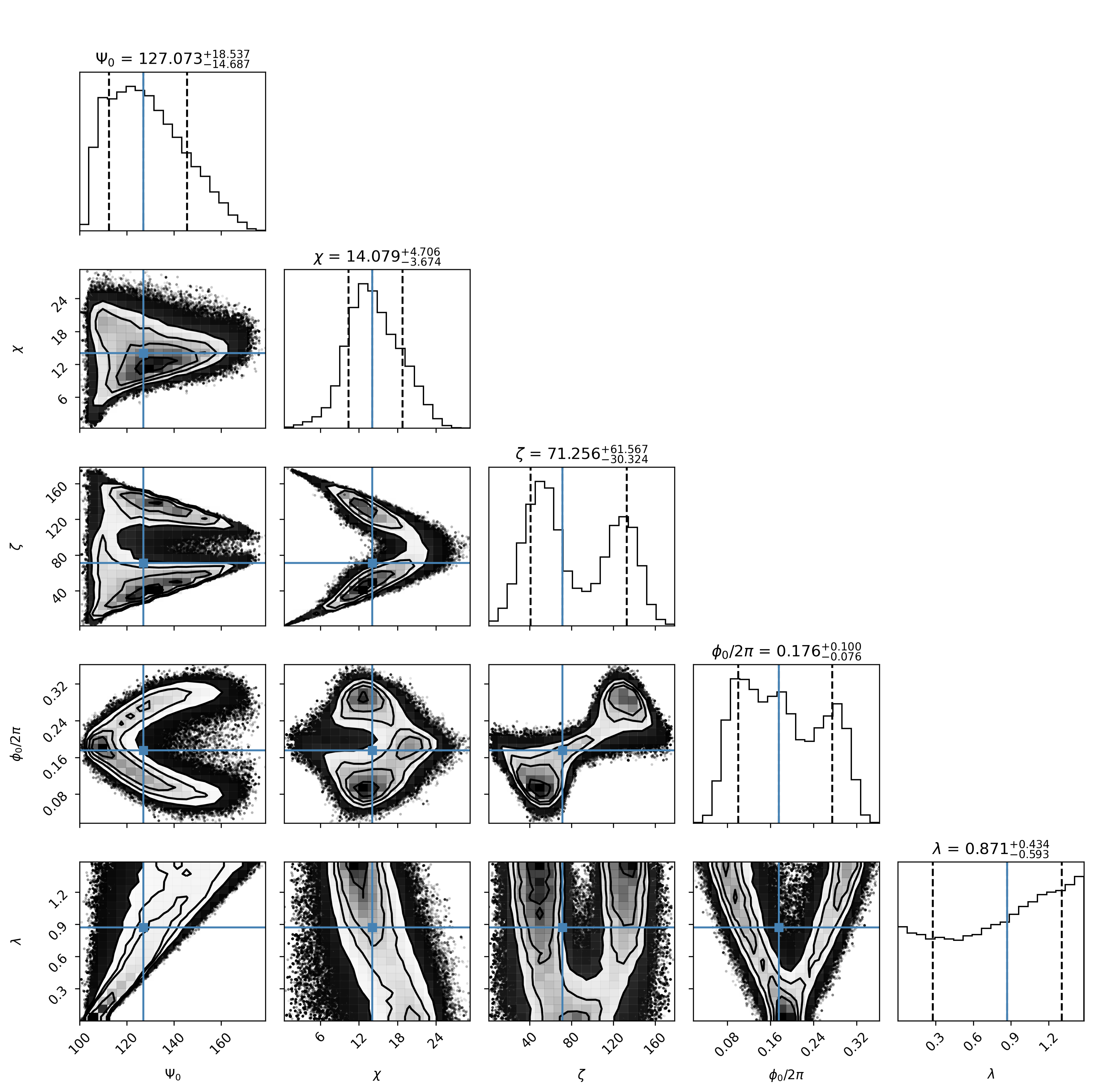
Figure 4: CRVM posterior corner plot for 1E~1547.0−05408 under flat priors reveals substantial degeneracy between −1 and −2.
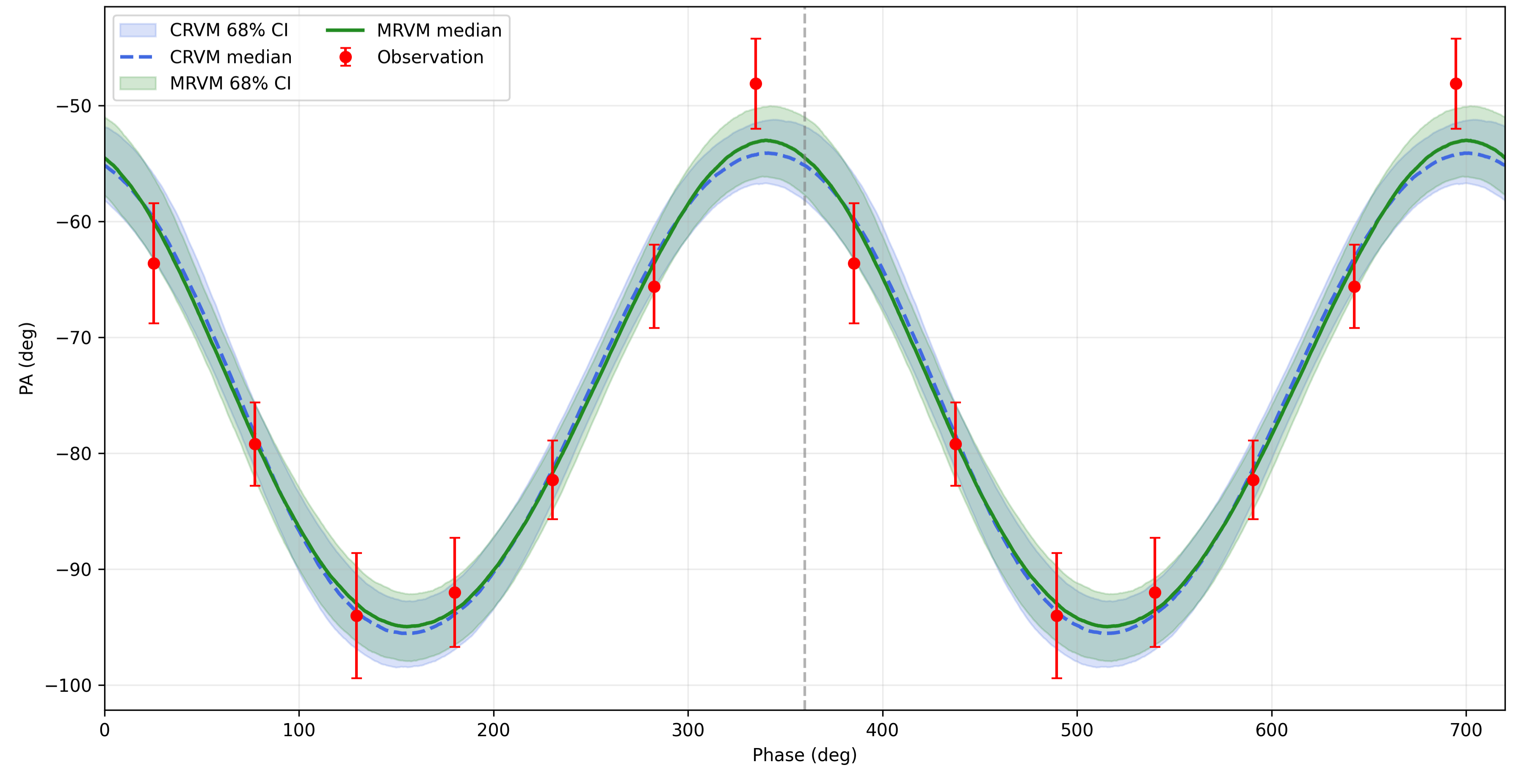
Figure 5: Posterior predictive distributions for 1E~1547.0−35408 under flat priors; CRVM and MRVM PA curves are nearly identical throughout rotation cycle.
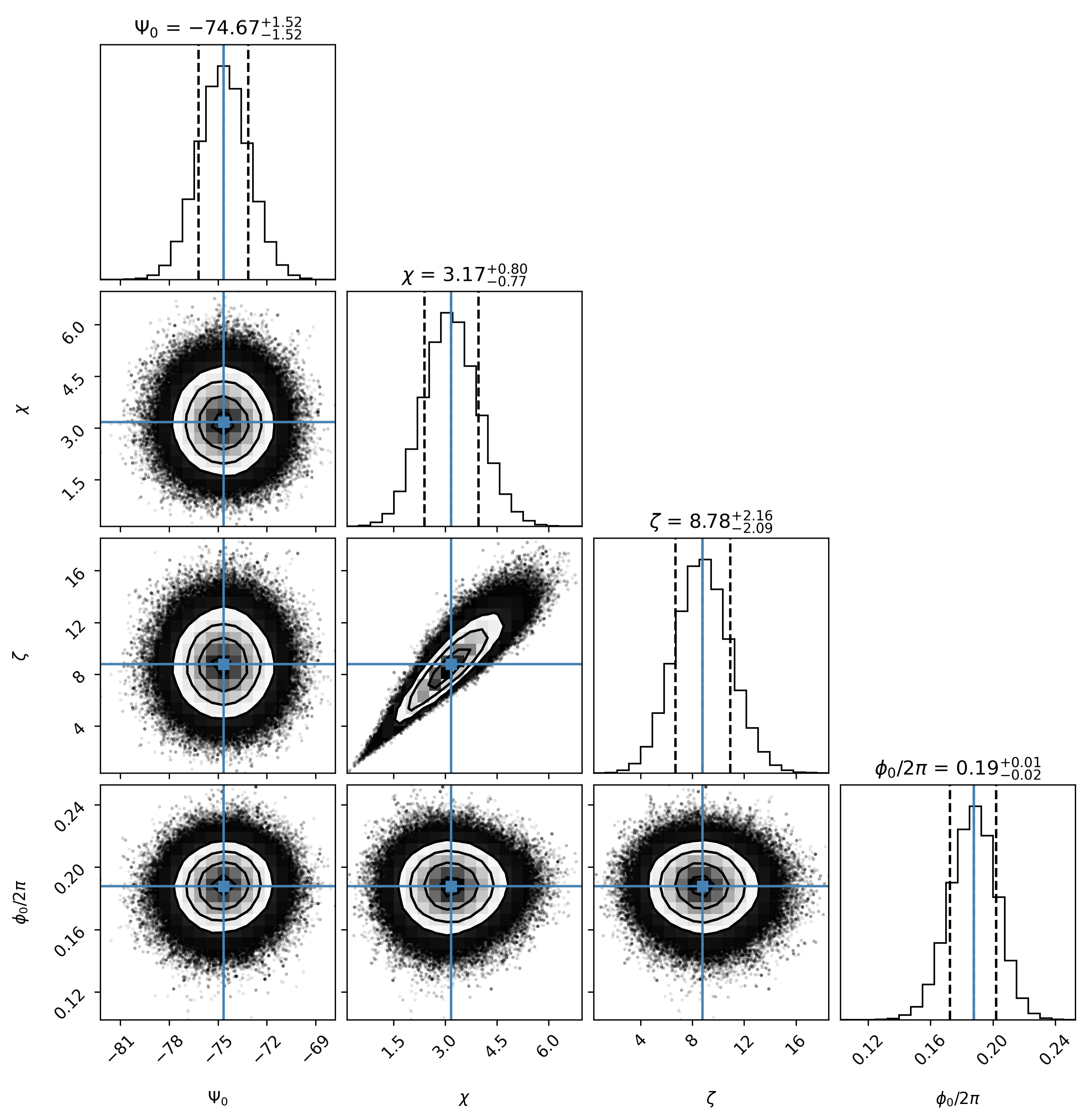
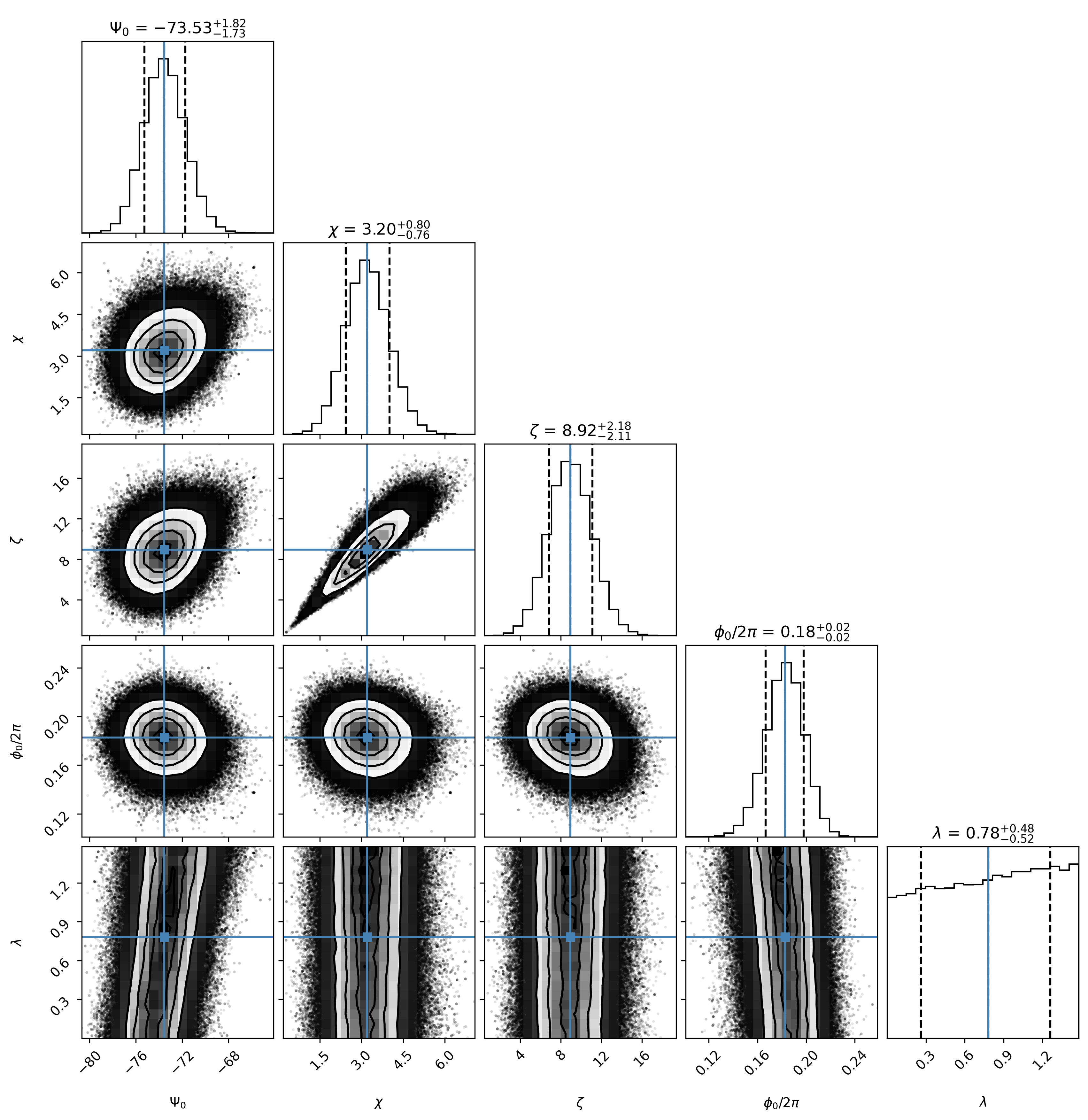
Figure 6: CRVM posterior corner plot for 1E~1547.0−45408 with radio-informed priors; the geometry centers on the nearly-aligned regime favoured by radio polarization.
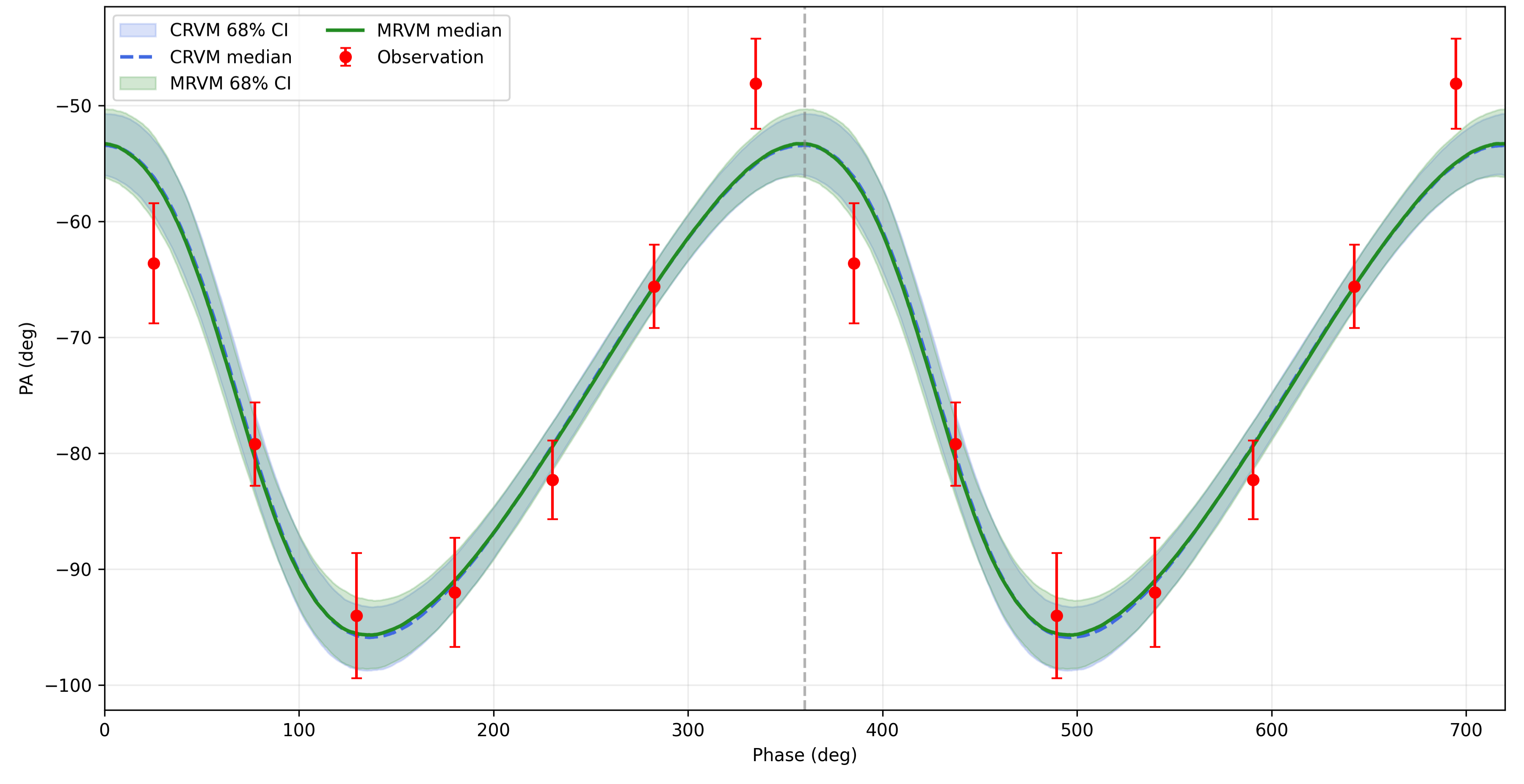
Figure 7: Posterior predictive distributions for 1E~1547.0−55408 under radio-informed priors; both CRVM and MRVM models yield essentially indistinguishable PA curves.
Interpretation and Theoretical Implications
The analysis empirically supports a geometric explanation for the observed polarization dichotomy: the exceptionally high PD seen in 1E 1547.0−65408 is consistent with a pole-on viewing geometry that minimizes geometric depolarization, not necessarily with intrinsic differences in surface physics or strong vacuum birefringence. Conversely, lower PDs in other sources (e.g., 1E~2259+586) can result primarily from intermediate or grazing inclination/viewing configurations, which maximize depolarizing integration over surface patch orientations. The apparent lack of a twist-induced effect on PA curves in both sources—despite the allowance for twist parameters—means that, in quiescence, the dominant observable is a large-scale dipole geometry, and any substantial static magnetospheric twist is disfavored.
This validates the use of rotating vector models for phase-resolved PA modeling and suggests that future polarization population studies must rigorously marginalize over geometry to avoid misattribution of intrinsic physical diversity. The strong prior sensitivity of X-ray-only inference, especially at limited −7, further demonstrates the necessity of multiwavelength (radio + X-ray) constraints.
Outlook for Future Magnetar Polarimetry and QED Tests
The Bayesian framework and joint analysis methodology established in this paper provide a robust template for future multi-epoch and multi-wavelength phase-resolved polarimetry, especially in the context of mission concepts like eXTP. The established geometric baselines will be essential for tracking dynamic changes in magnetospheric topology during outbursts, and for more stringent testing of vacuum birefringence and magnetospheric current/twist physics as instrumental sensitivity increases. Detecting or ruling out sub-degree PA drifts and order −8 twist variations will require high-precision measurements not achievable with current epoch-averaged data but plausible with next-generation X-ray polarimeters.
Conclusions
This paper provides a quantitative, multi-wavelength, and statistically rigorous geometrical dissection of the divergent X-ray polarization properties of magnetars 1E 1547.0−95408 and 1E 2259+586. The polarization diversity is primarily a consequence of viewing geometry rather than intrinsic QED or surface composition differences. The phase-resolved IXPE data for both sources do not require significant large-scale global magnetospheric twist. The established Bayesian inference framework rigorously quantifies the prior sensitivity of geometric inferences and sets the standard for future joint-constraint polarimetric investigations in neutron star systems.
Reference:
"Probing the Origin of Magnetar X-ray Polarization Diversity: A Multi-wavelength Geometrical Study of 1E 1547.0-5408 and 1E 2259+586" (2604.10477)