- The paper presents a systematic study of collisionless reconnection in 3D pair plasmas via the merging of force-free flux tubes under external driving.
- It employs large-scale PIC simulations to analyze instability growth, reconnection rates of ~0.1, and the role of guide fields in energy dissipation.
- The study uncovers a universal high-energy cutoff (γ_cut/σ ≈ 50) independent of guide field strength and drive, offering benchmarks for astrophysical models.
3D Kinetic Modeling of Driven Magnetic Reconnection in Merging Flux Tubes
Introduction
This work presents a systematic investigation of collisionless magnetic reconnection induced by external driving in a fully 3D pair plasma system, focusing on the merger of two force-free flux tubes. The core objective is delineating the impact of 3D structure and guide field on the interplay of magnetic energy dissipation, instability growth, and nonthermal particle acceleration. The analysis leverages large-scale particle-in-cell (PIC) simulations with varying drive strengths and guide field ratios, deploying a suite of diagnostics covering macroscopic sheet evolution, linear instability growth, reconnection rate, and particle energetics. The findings substantially constrain the mechanisms regulating energy conversion and high-energy spectrum formation in astrophysical plasmas.
Simulation Framework and Initial Configuration
The simulations employ TRISTAN-MP v2 in a 16003 grid, resolving both the plasma skin depth and microphysics of the reconnecting sheet. The initial state comprises two Lundquist-type force-free flux tubes, parametrized by the in-plane magnetization σin=6.4, and a tunable guide-field parameter, C. The merging is externally triggered via a controlled push velocity, vpush, spanning $0.02c$ to $0.6c$, and C is varied to probe weak and strong guide-field regimes. The current sheet forms self-consistently under compression, with 3D structure emerging from naturally seeded instabilities. A visualization of the ensuing magnetic field topology is provided in Figure 1.
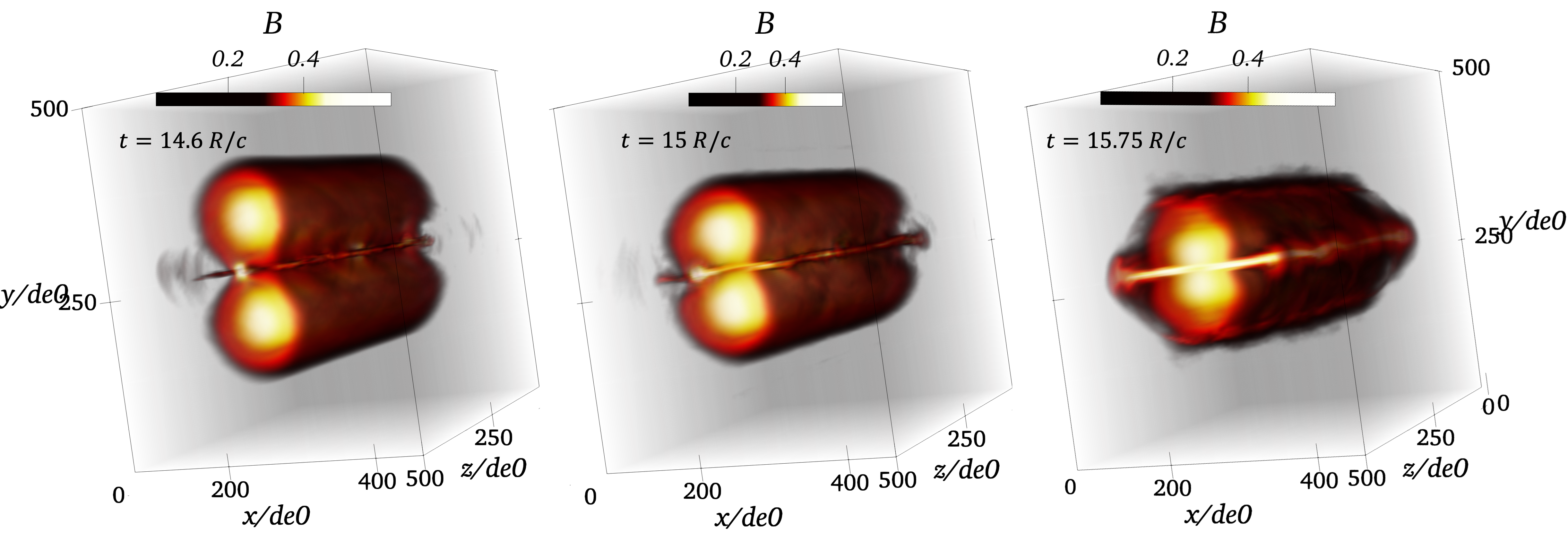
Figure 1: 3D rendering of the magnetic-field amplitude for vpush=0.02c, illustrating sheet formation and tube coalescence during merging.
Current Sheet Evolution and Instability Pathways
Detailed temporal analyses show that sheet thinning in 3D is initially quasi-2D: the current width evolution, a/de0, nearly matches 2D slices when suitably averaged along the ignorable direction, as in Figure 2 and Figure 3. However, 3D geometry introduces a systematic delay of reconnection onset compared to 2D, a delay augmented for large guide fields due to reduced linear growth rates and dephasing of oblique modes.
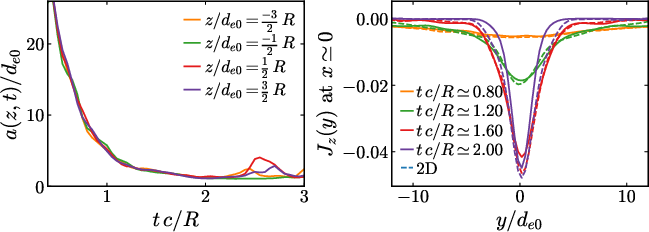
Figure 2: Time evolution of the current-sheet half-thickness at several z planes and comparison of averaged 3D versus 2D transverse current profiles.
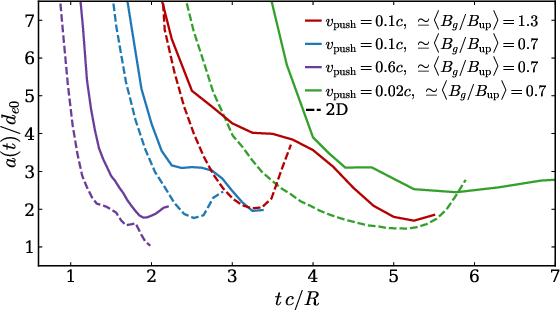
Figure 3: Sheet half-thickness for multiple runs; 3D (solid) vs. 2D (dashed), varying σin=6.40 and guide field.
Mode decomposition of the reconnecting field’s power spectrum, as in Figure 4, demonstrates robust suppression of oblique (σin=6.41) tearing for strong guide field, yielding quasi-2D anisotropy in the global instability structure and delaying nonlinear sheet disruption.
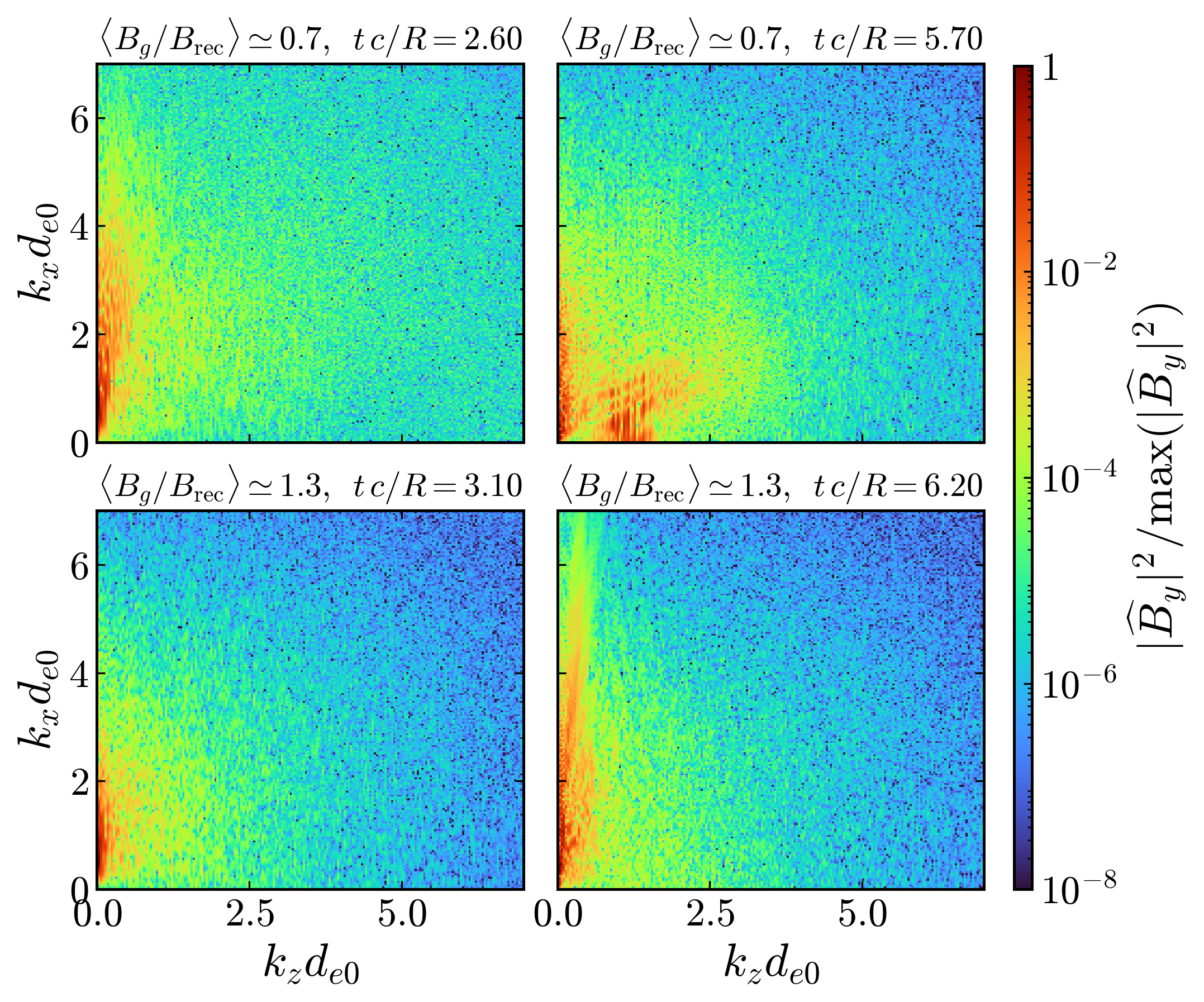
Figure 4: 2D Fourier spectrum of σin=6.42, showing reduced oblique mode power as σin=6.43 increases.
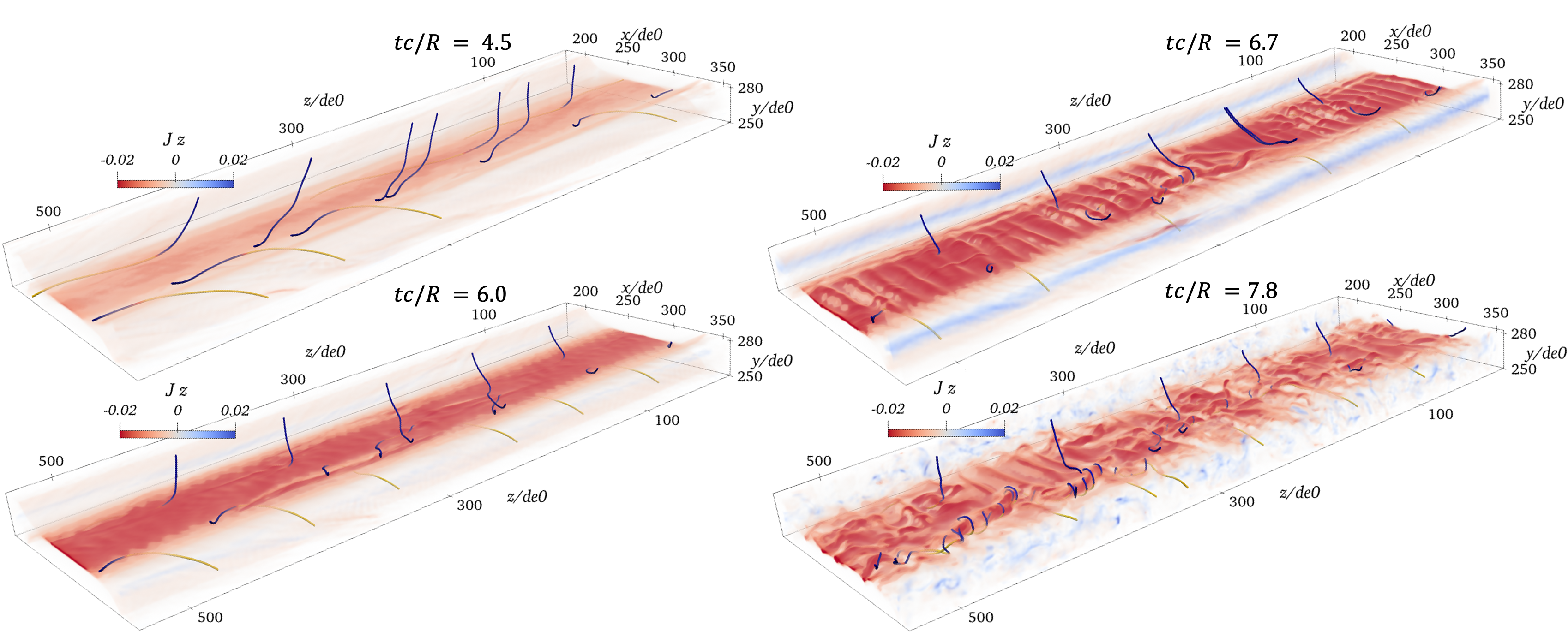
Figure 5: 3D visualization of current sheet evolution, with localized reconnection and formation of flux-rope precursors.
Linear analysis reveals the quantitative scaling of dominant instability growth rates. Tearing mode growth is nearly proportional to σin=6.44: σin=6.45, σin=6.46, σin=6.47 for weak guide and σin=6.48 Figure 6. The drift-kink instability grows faster and is present only for low guide field, with σin=6.49, C0, C1 for the same sequence, but is strongly suppressed as C2 increases to C3 Figure 7.
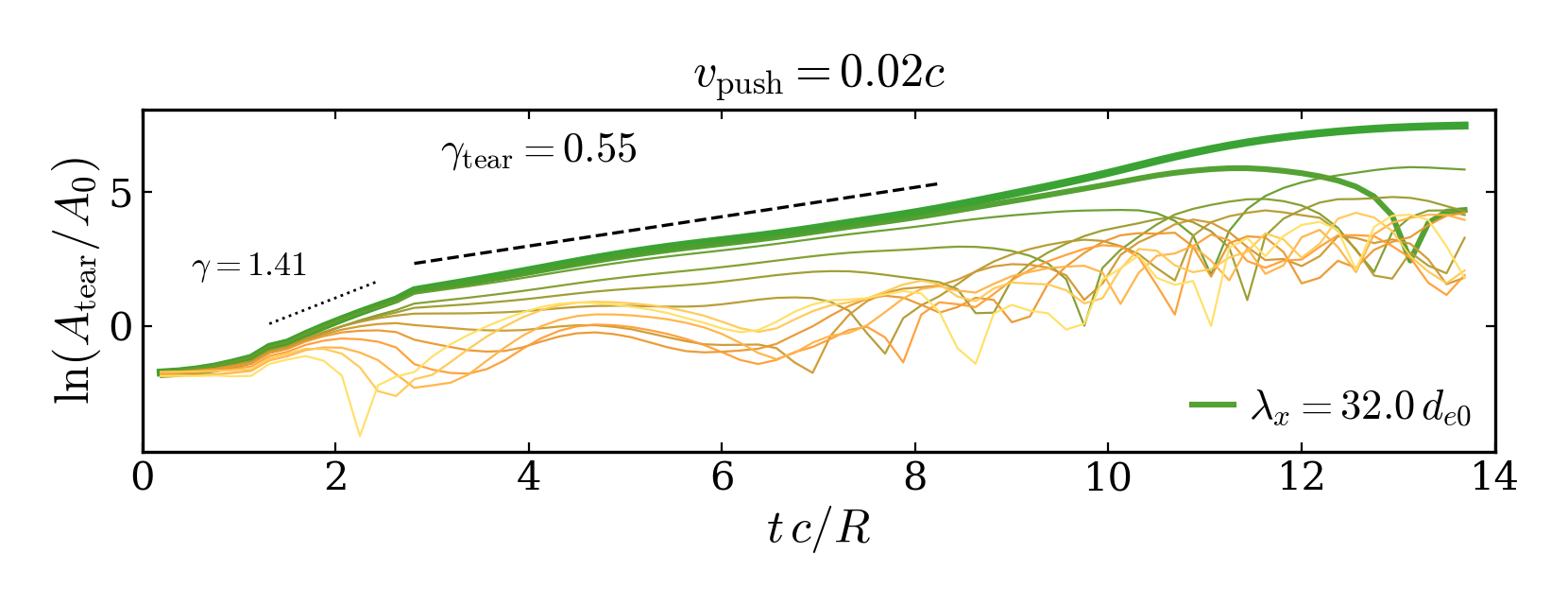
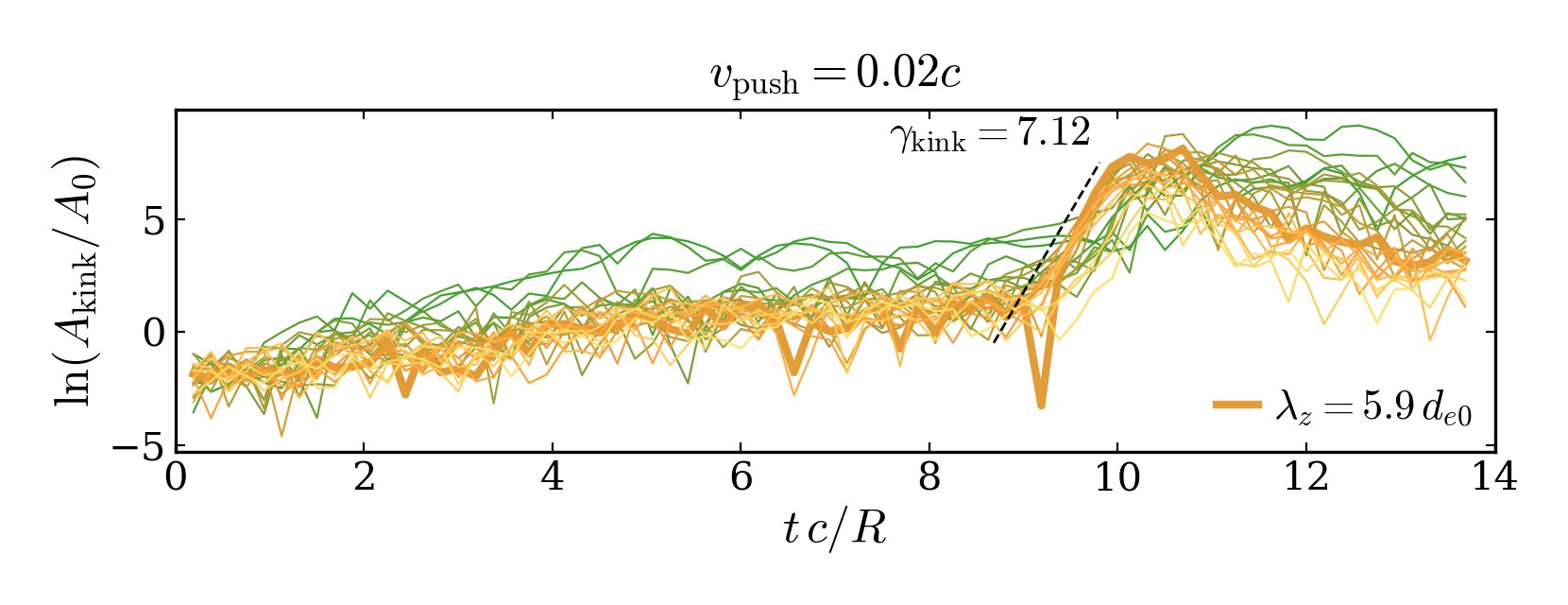
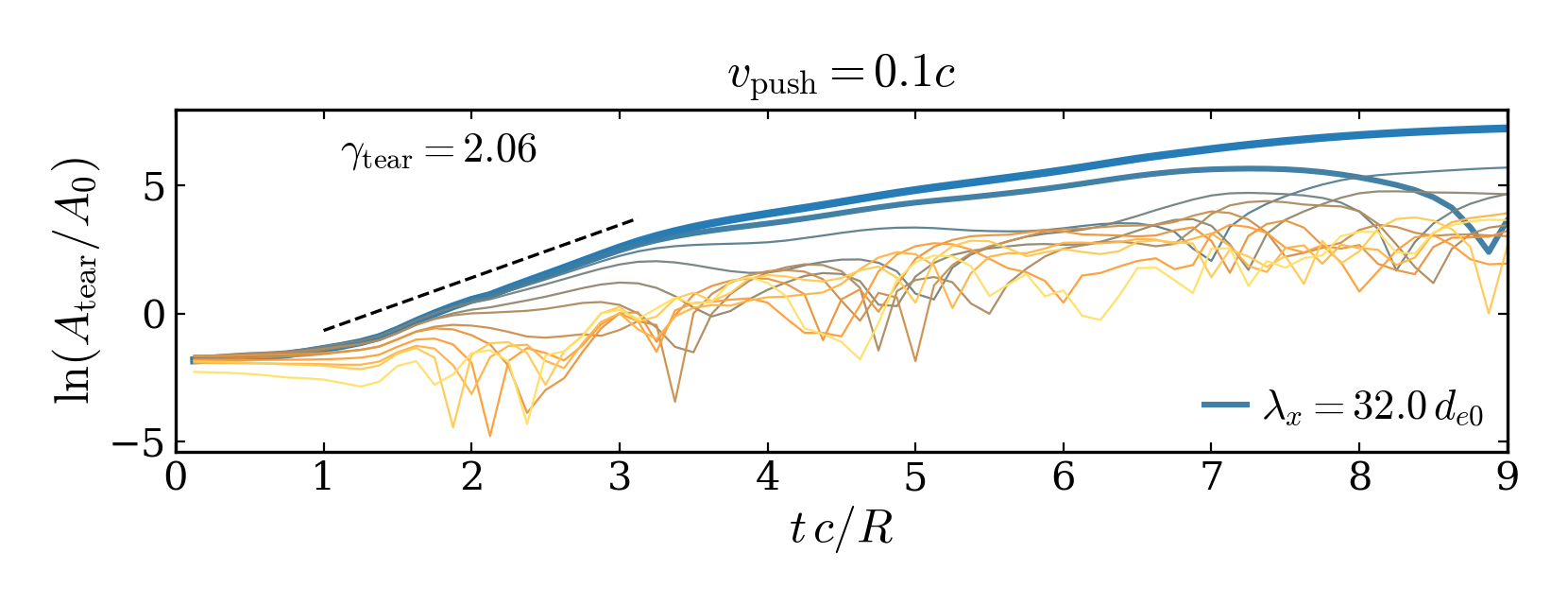
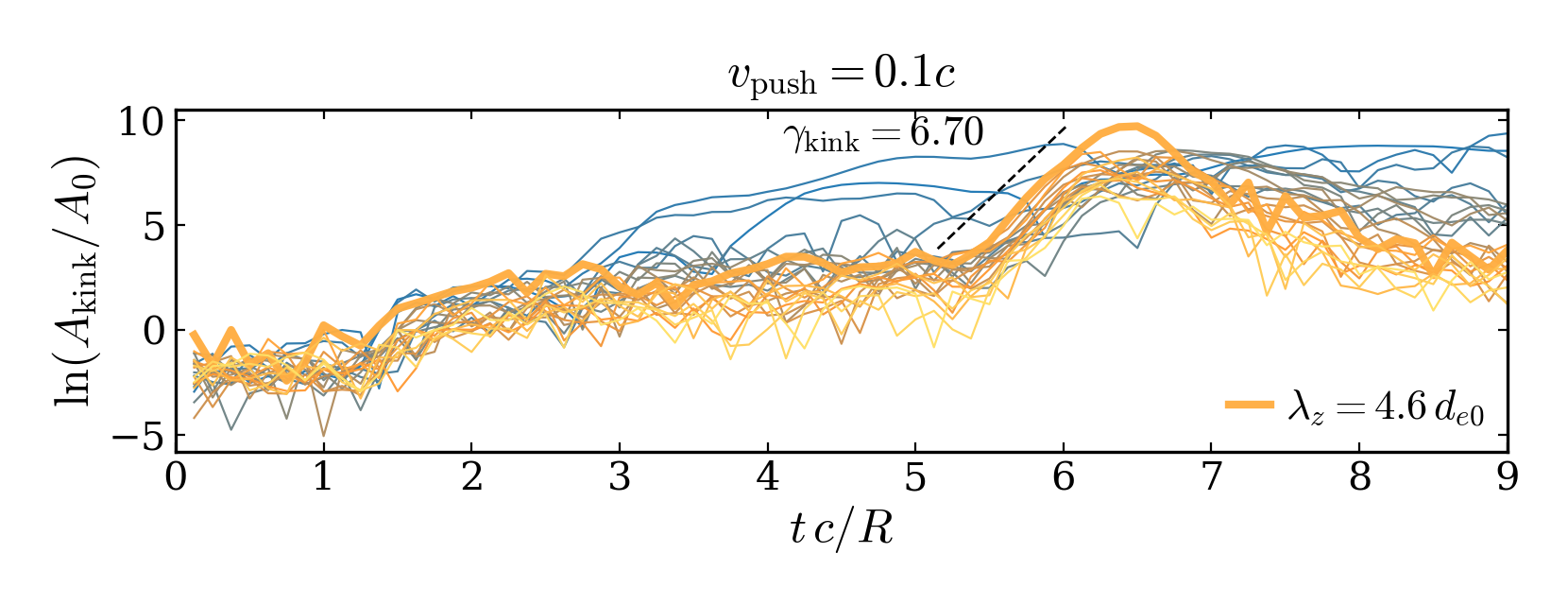
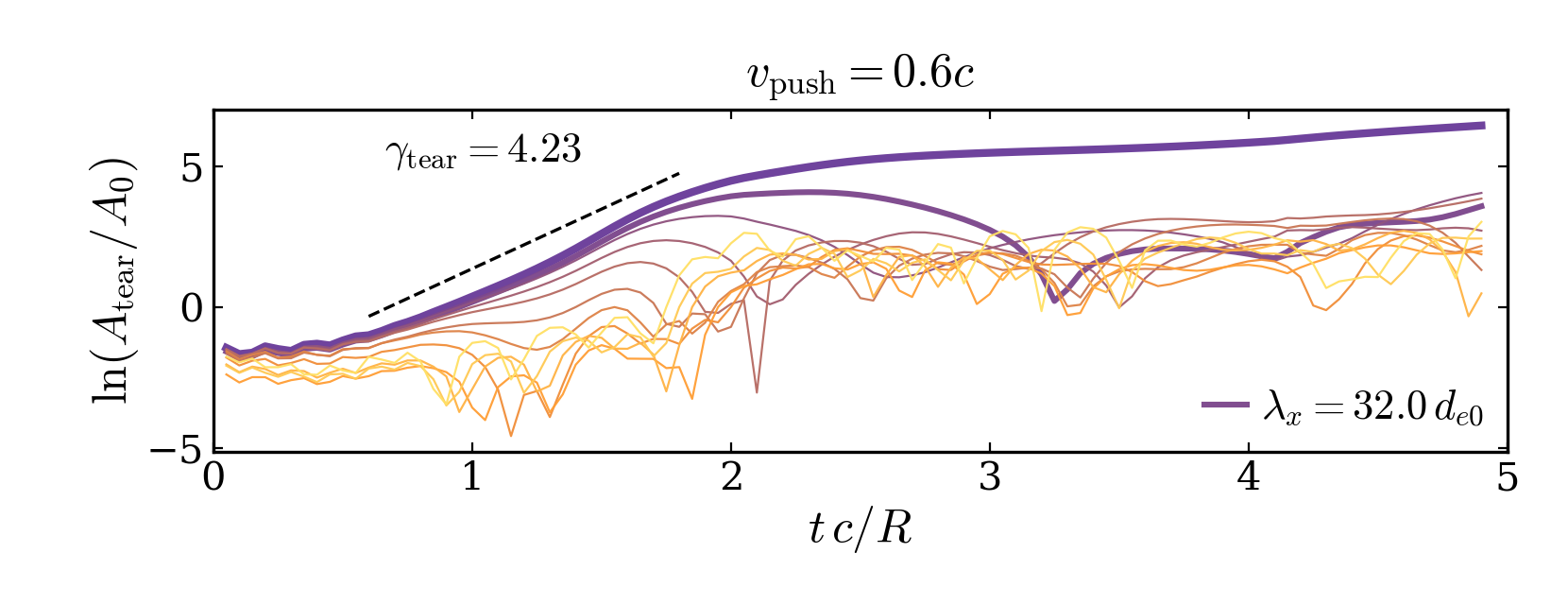
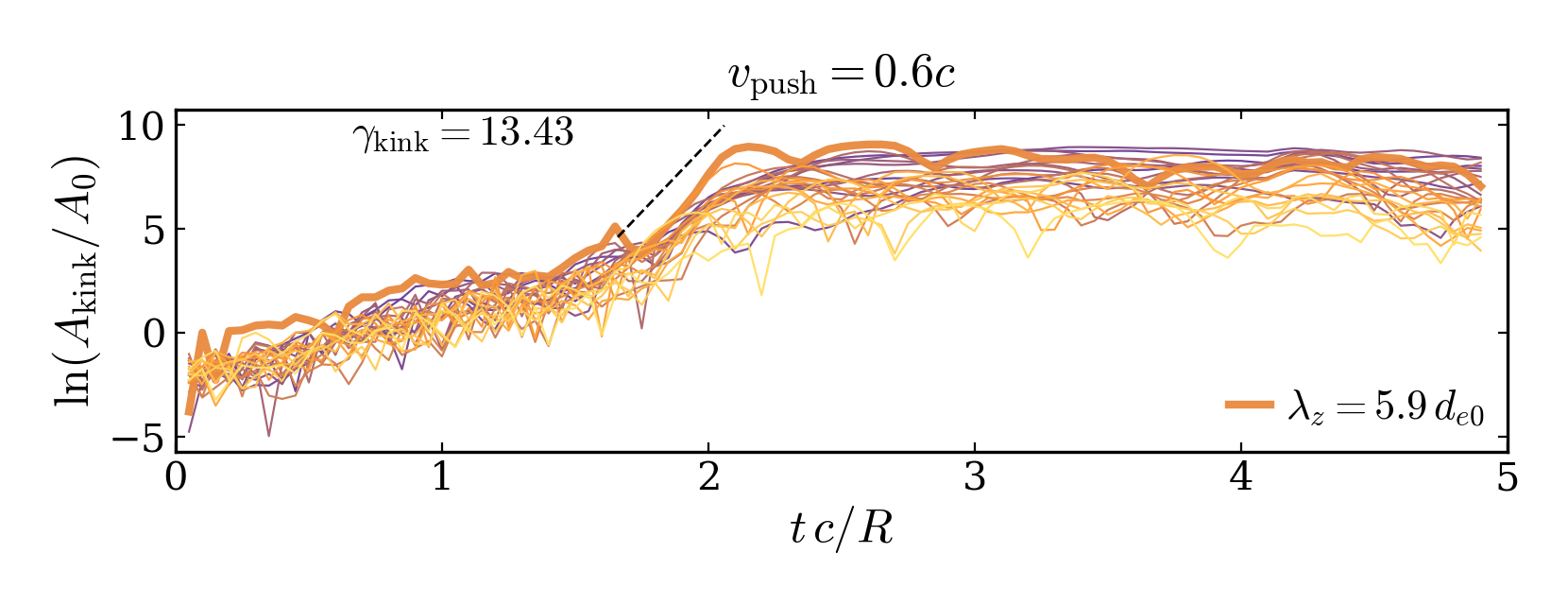
Figure 6: Growth of tearing (left) and drift-kink (right) instabilities, with exponential fits for growth rates.
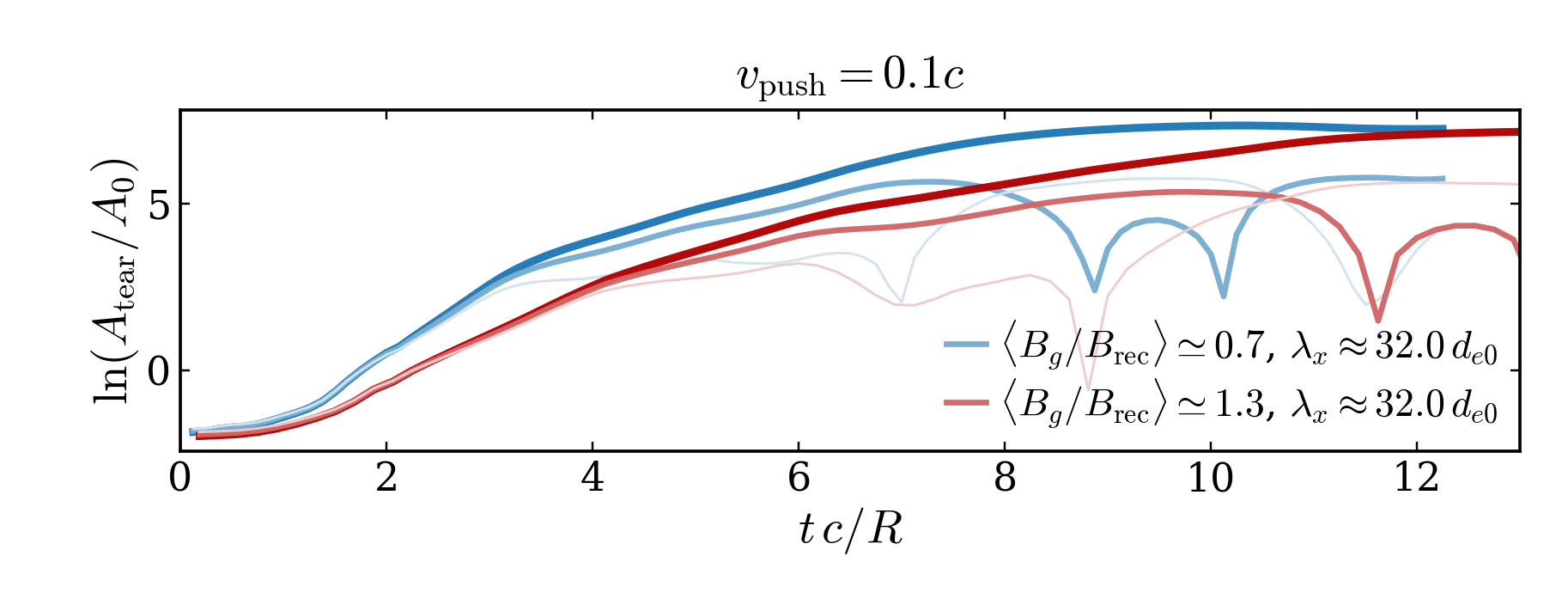
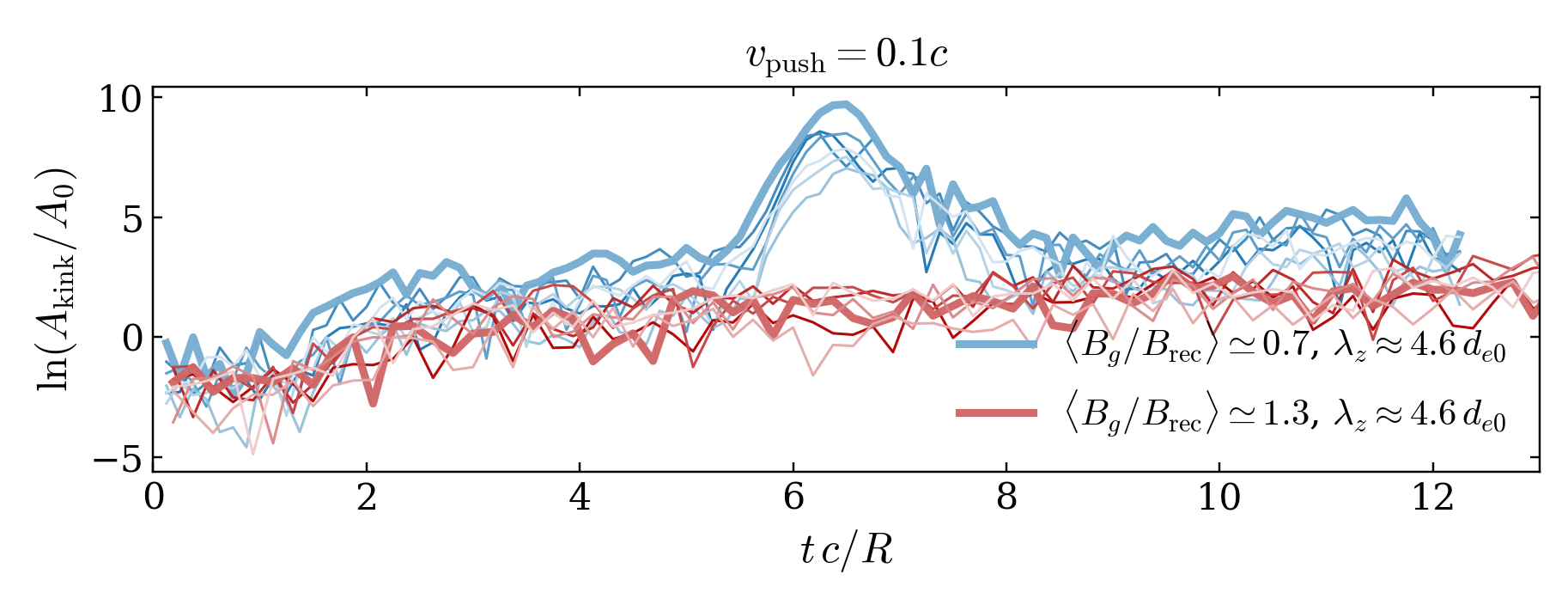
Figure 7: Impact of guide-field ratio on mode growth in C4 runs.
Reconnection Rate and Guide-Field Evolution
All 3D runs enter a rapid merging phase wherein the normalized reconnection rate C5 robustly attains C6--C7, with peaks near C8, essentially independent of the early-time differences imposed by dimensionality or drive Figure 8. This transition is correlated with a transient reduction in the guide-to-reconnecting field ratio inside the sheet—a scenario that facilitates enhanced outflow Alfvén speed and reconnection electric field, even in the presence of a strong guide component.
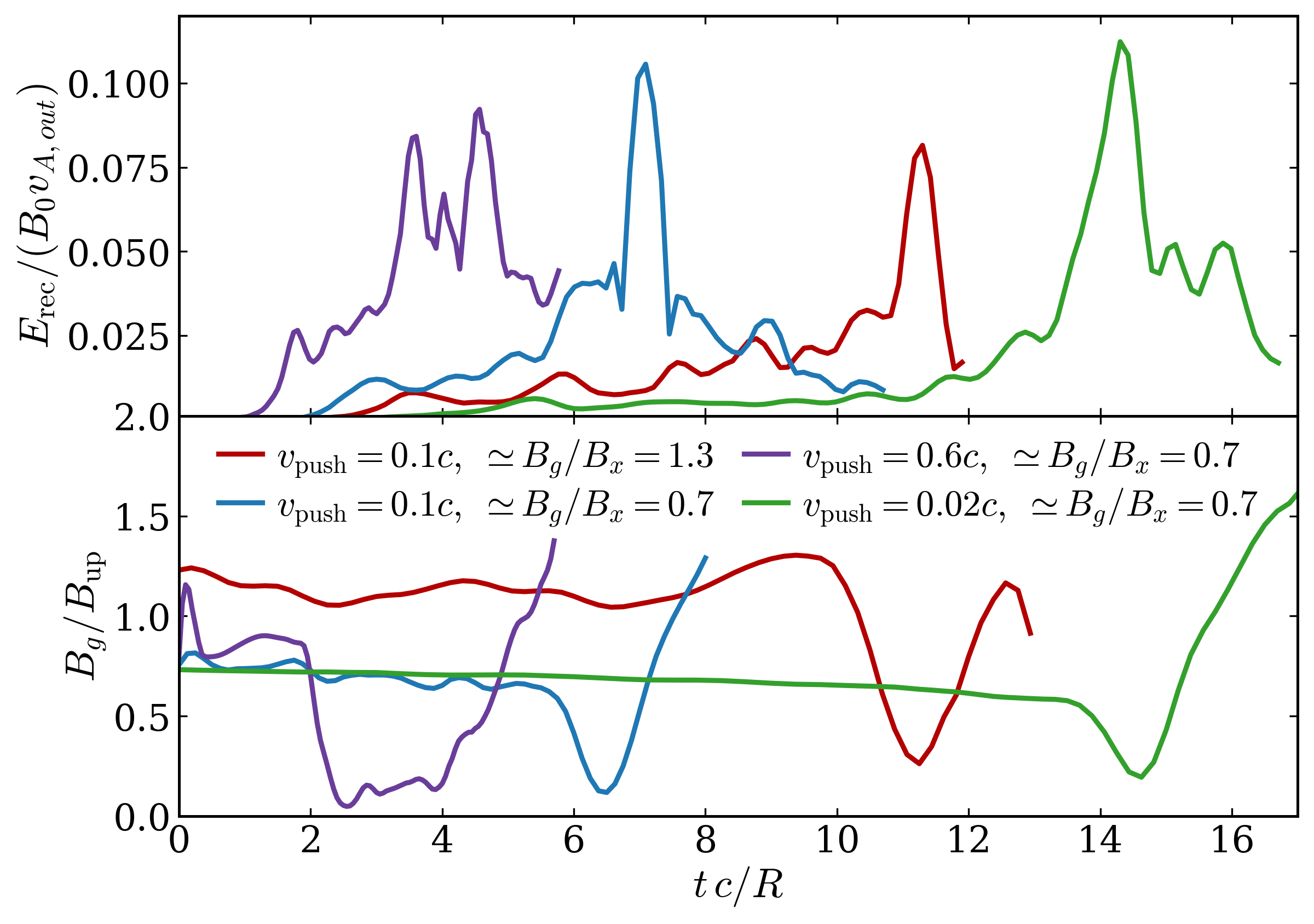
Figure 8: Time evolution of the normalized reconnection rate and guide-to-reconnecting field ratio.
Nonthermal Particle Acceleration and Spectral Properties
Despite pronounced differences in sheet formation and instability dynamics between 2D and 3D, the high-energy cutoff C9 of the particle spectra converges to vpush0 across all runs, with only minor dependence on guide field or drive strength Figure 9. The depletion of perpendicular magnetic energy, a proxy for available reconnection energy, proceeds faster in 3D, facilitating earlier but not ultimately larger particle energization Figure 10.
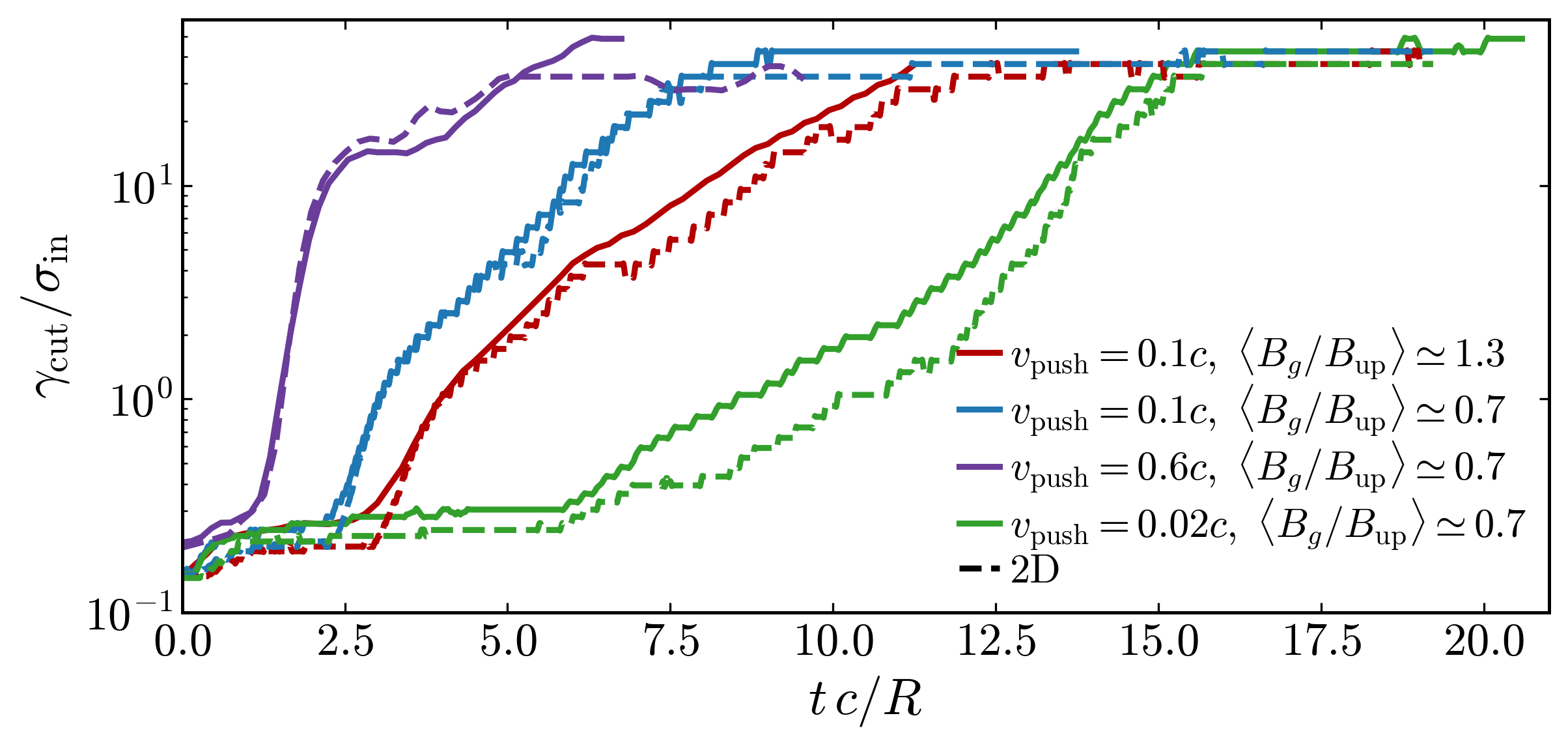
Figure 9: Time evolution of high-energy cutoff of accelerated particle Lorentz factor for 2D and 3D systems.
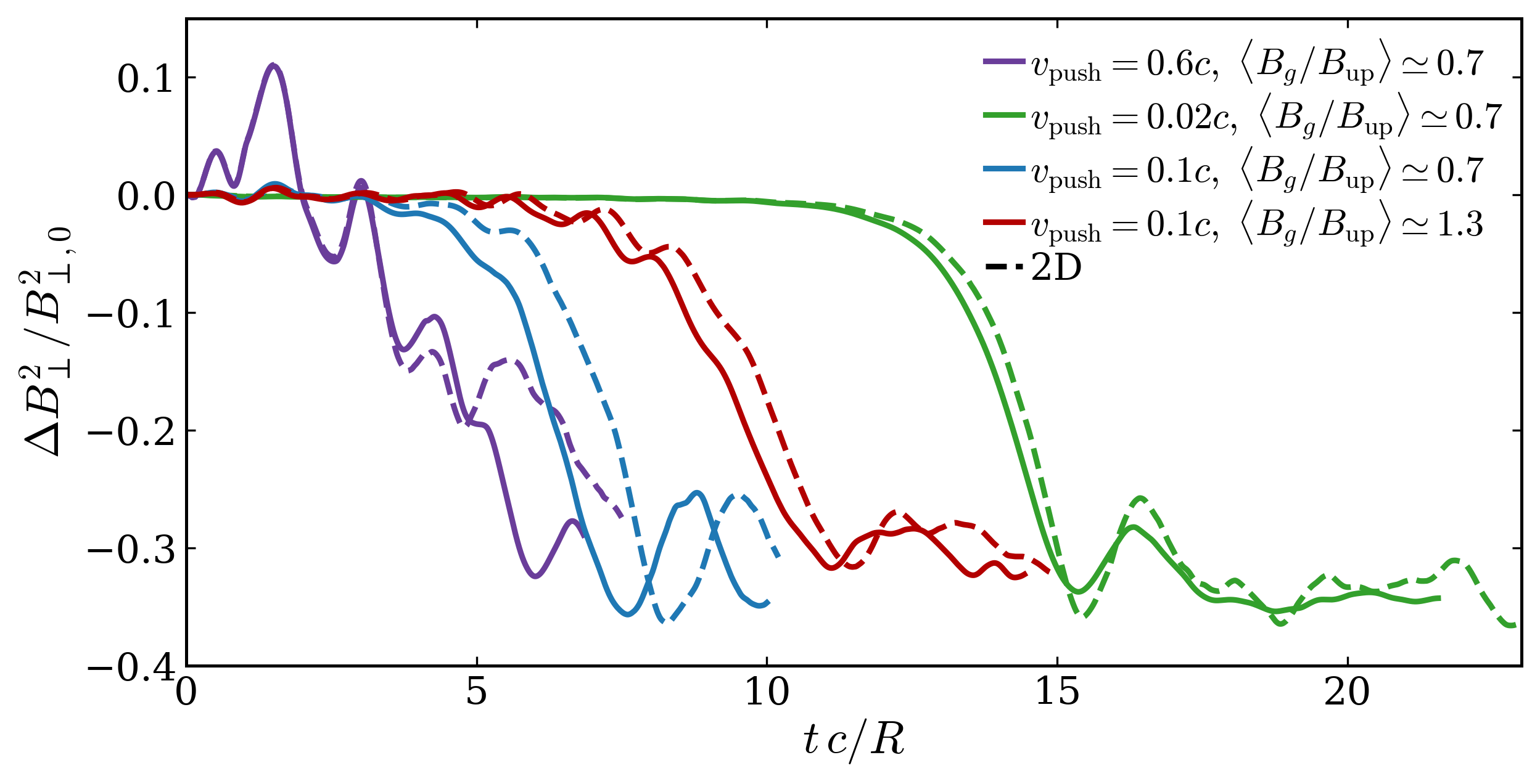
Figure 10: Depletion of total perpendicular magnetic energy—faster in 3D than 2D during merging.
The resulting nonthermal spectra, shown in Figure 11, are robust: power-law indices range vpush1--vpush2 for vpush3, with only modest steepening as the guide field is enhanced, in agreement with previous kinetic studies. The maximal cutoff is consistent with direct acceleration in the reconnection electric field over the available energization time, with linear growth in high-energy content until saturation.
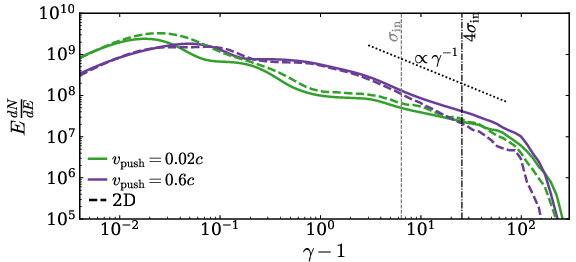
Figure 11: Particle Lorentz factor spectra, comparing fast/slow drive and 2D/3D, highlighting universal spectral shapes.
Statistical analysis of individual particle trajectories, illustrated for the weak and strong drive regimes in Figure 12 and Figure 13, confirms that the energy gain vpush4 correlates primarily with the sheet residence time and not with injection energy, supporting an electric-field-limited rather than pre-heated or Fermi-like mechanism. Repeated sheet crossings and extended residence times are more prevalent in 3D and weak guide field scenarios, but their collective contribution does not alter the final nonthermal extent of the spectra.
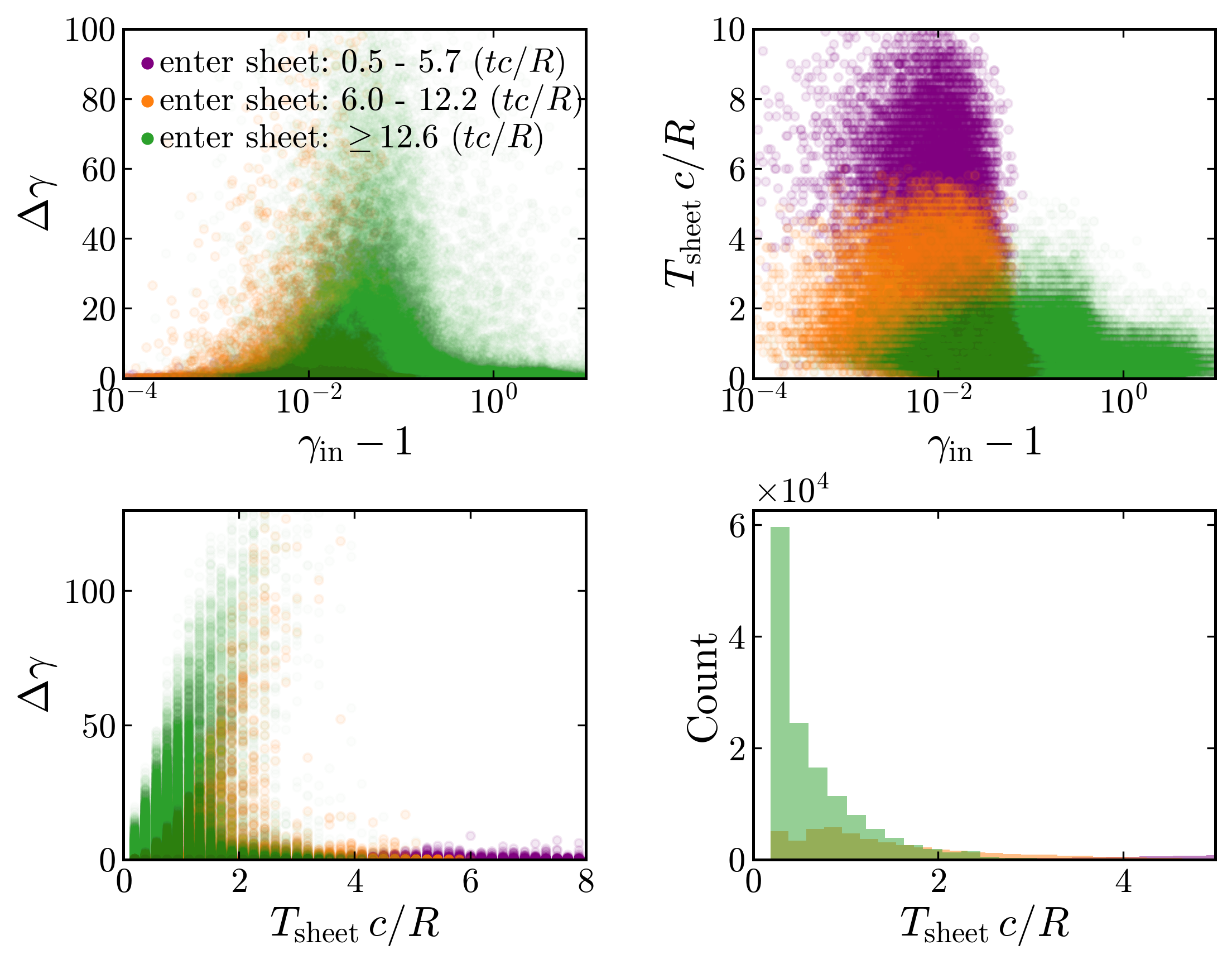
Figure 12: Particle energization statistics (sheet entry/exit, energy gain vs. residence time) in 3D runs with vpush5.
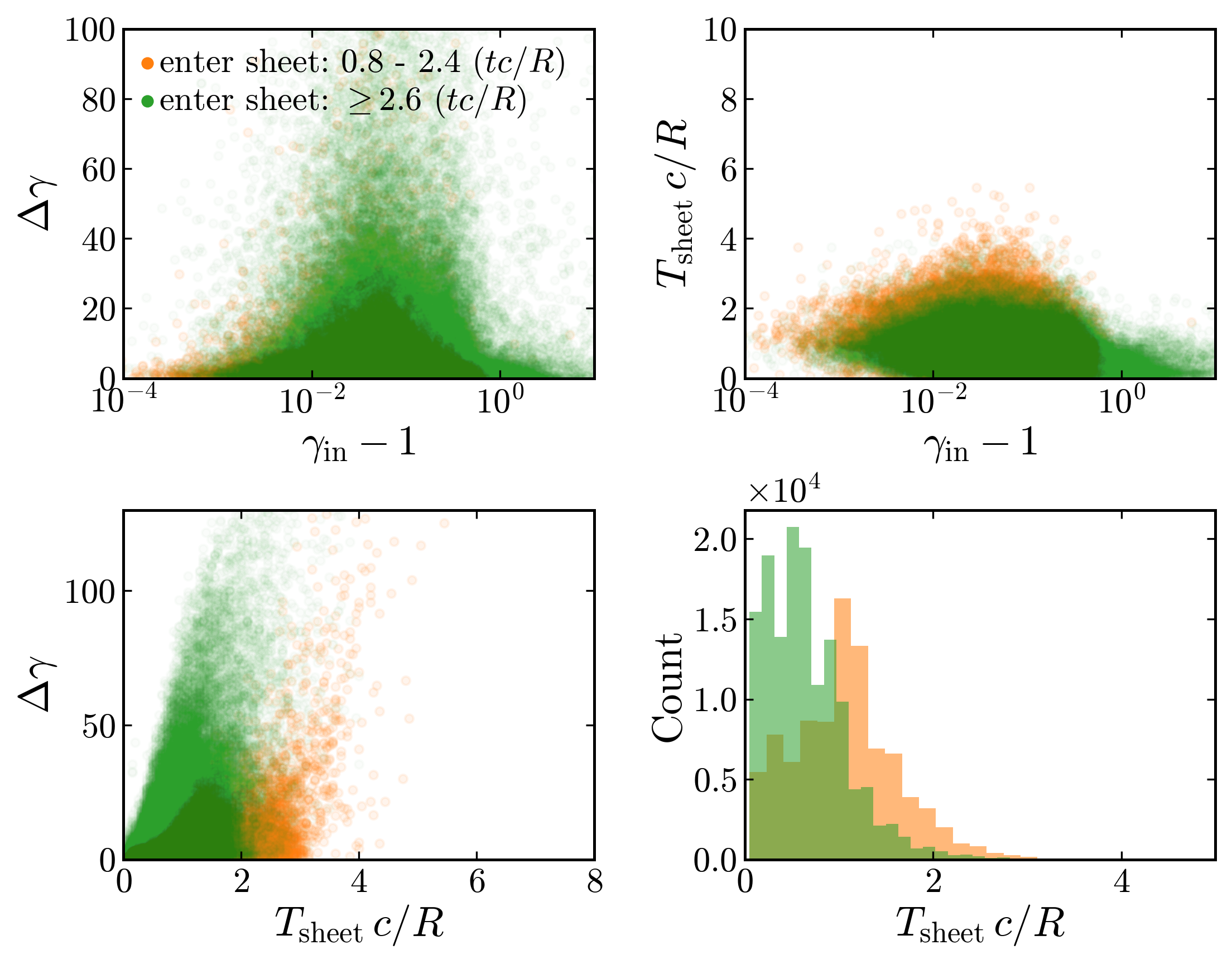
Figure 13: Analogous energization statistics for the stronger drive vpush6.
Implications and Future Directions
These results affirm the generic robustness of nonthermal particle acceleration in 3D driven reconnection, applicable to astrophysical systems such as pulsar wind nebulae, magnetar magnetospheres, and black hole coronae, where external driving via large-scale motions or instabilities leads to rapid magnetic topology rearrangement and particle energization. The independence of the high-energy spectral cutoff from guide field and drive strength (within the present parameter range) constrains acceleration models to mechanisms dominated by direct reconnection electric field energization—limiting the efficacy of models relying on enhanced stochasticity or turbulence in 3D geometry.
From a practical perspective, this provides justification for using 2D models to explore spectral formation and maximum particle energies, provided that reconnection is externally driven and merging proceeds in a strongly magnetized regime. The persistent link between the asymptotic cutoff vpush7 and the reconnection rate underscores the need for large-system, high-magnetization, fully kinetic simulations to inform subgrid models in large-scale astrophysical MHD.
Further advancements should consider extending the system size parameter vpush8 to probe the asymptotic regime, the inclusion of more realistic ion-electron plasmas, and explicit inclusion of radiative losses or radiation reaction for direct application to SGR, AGN, and GRB environments.
Conclusion
This work provides a comprehensive kinetic study of 3D driven reconnection in pair plasmas, detailing the microphysical evolution of the reconnecting sheet, instability growth, and particle energization. Systematic differences between 2D and 3D in the early onset and growth of dynamic instabilities are confirmed, but the late-time reconnection and nonthermal spectra converge to universal scalings governed by direct electric-field acceleration. Strong guide fields retard the drift-kink instability but do not substantially impact tearing, reconnection rates, or high-energy cutoff formation. These results reinforce the theoretical framework for interpreting high-energy emissions in compact-object magnetospheres and provide benchmarks for future large-scale kinetic and MHD hybrid modeling.
Reference: Granier et al., "3D Kinetic Simulations of Driven Reconnection in Merging Flux Tubes" (2604.10431).