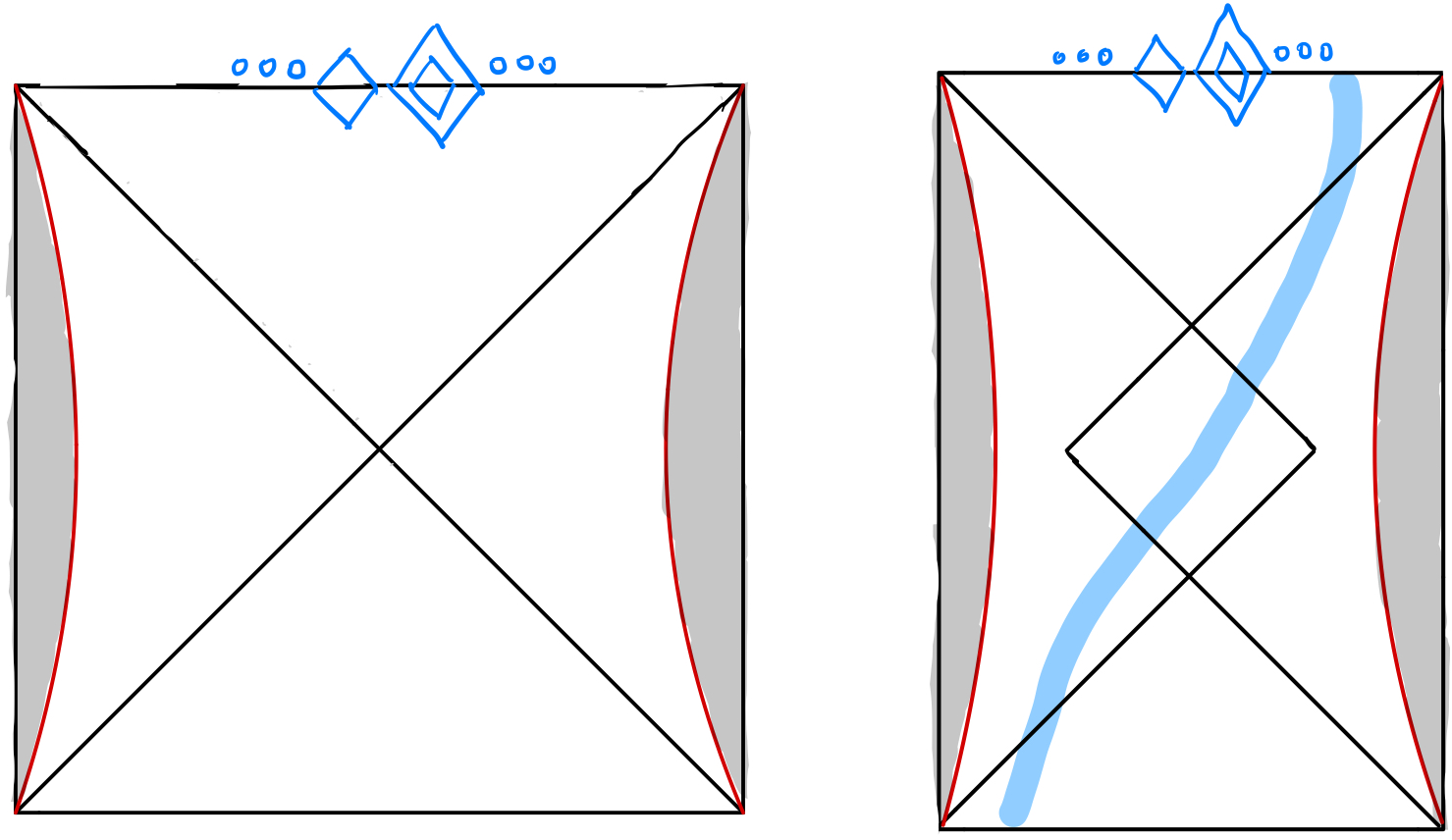
- The paper introduces a doubled microscopic holographic dual that models de Sitter spacetime beyond the cosmic horizon.
- It shows that the entanglement structure aligns with the Gibbons-Hawking entropy via a microcanonical thermofield double state.
- The study stabilizes gravitational path integrals by incorporating UV-sensitive quantum effects and enforcing operator redundancy constraints.
Holography Beyond the Horizon: The Yes Boundaries Wavefunctions of the Universe
Introduction and Motivation
This work develops a microscopic holographic dual for cosmological spacetimes with a positive cosmological constant, building specifically on the role of timelike boundaries in de Sitter (dS) spacetime. The holographic dual is constructed in such a way as to fully capture regions beyond the observer's cosmic horizon, including the so-called "future wedge." This is achieved by leveraging two timelike boundaries and extending the previously constructed single-boundary finite Hamiltonian quantum systems for dS to a doubled, constrained setting. The resulting theory encodes both the high-energy microcanonical structure attributed to the de Sitter entropy and robustly incorporates matter-induced tall geometries, entanglement structure, and redundancy constraints that arise from overlapping causal wedges.
The paper's central claims include:
- The explicit construction of a doubled microscopic boundary theory, with a nearly maximally entangled top band corresponding to connected dS spacetime beyond the horizon.
- A demonstration that holographic entanglement entropy in this framework matches the Gibbons-Hawking entropy of dS.
- The incorporation of tall geometries and smooth extended states through constraints that encode operator redundancy in the overlapped regions.
- A precise analysis of UV-sensitive quantum and matter effects that regulate and stabilize gravitational path integrals, especially in the calculation of entropy.
These developments have significant implications for the theoretical formulation of quantum cosmology, including the understanding of dS entropy, the interpretation of the spectrum of wavefunctions ("yes boundary" vs. "no boundary" conditions), and the non-factorization of global state spaces due to overlapping causal wedges.
Construction of the Doubled Holographic Dual
The foundational step is an extension of earlier quantum mechanical models that provide a microcanonical count of de Sitter entropy for a single timelike boundary [Coleman:2021nor, Batra:2024kjl, Silverstein:2024xnr]. With two timelike boundaries, the paper constructs a product Hilbert space, further subject to nontrivial constraints C that project onto "smoothly joined" states representing connected geometries.
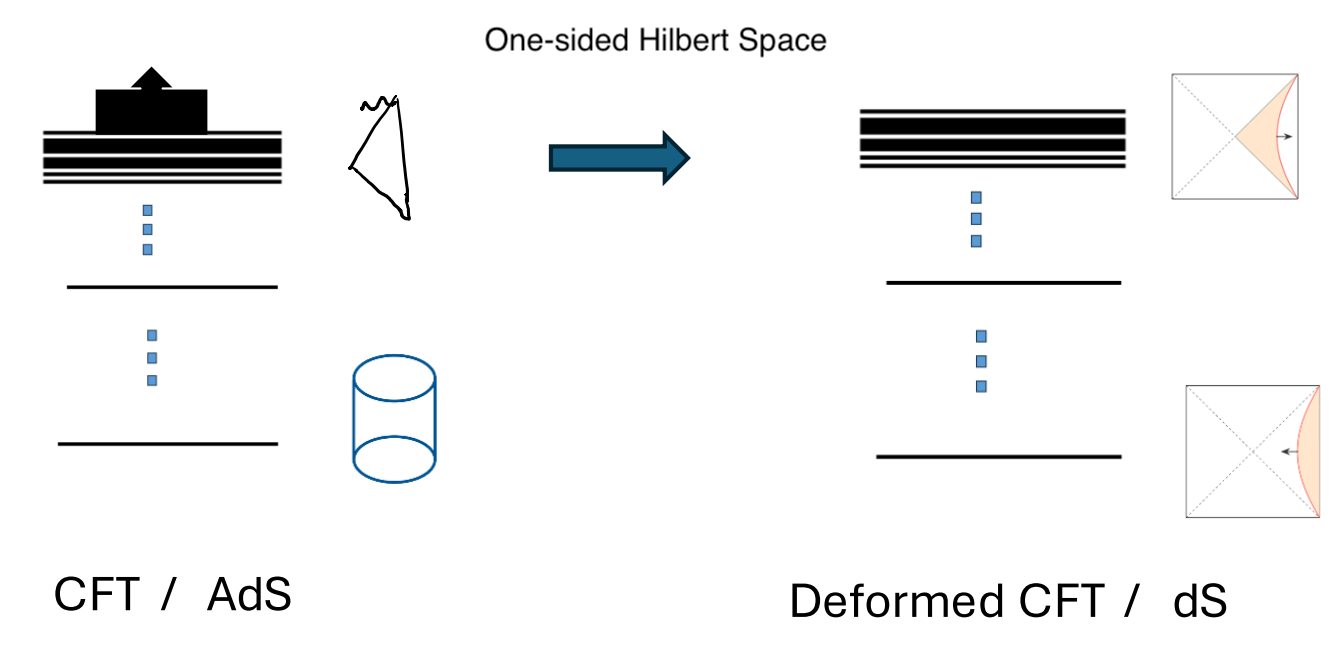
Figure 1: The procedure of [Coleman:2021nor, Batra:2024kjl, Silverstein:2024xnr] gives a quantum mechanics spectrum corresponding to bounded dS spacetimes and local excitations.
The construction proceeds in two principal steps:
Path Integral Analysis and Quantum Gravity Effects
A significant challenge addressed by the paper is the instability of the gravitational saddle in the Euclidean path integral, where the dS solution is a local maximum of the classical Euclidean action. At face value, off-shell configurations appear to contribute more strongly—a problem in computing entanglement entropy and related observables.
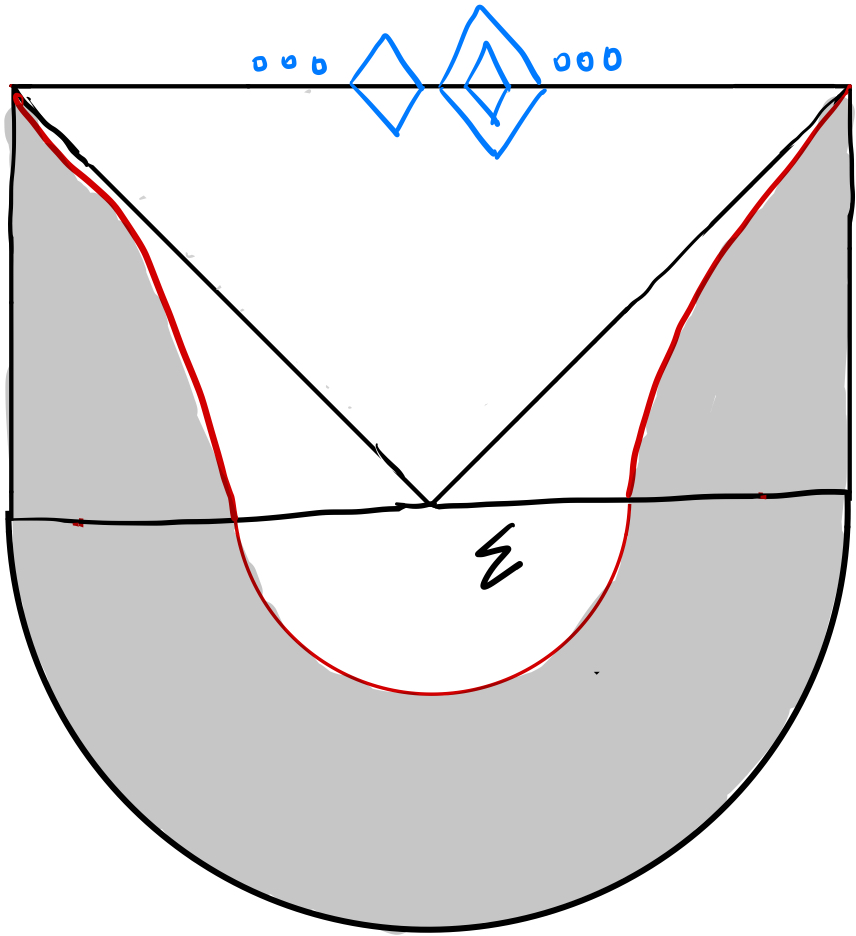
Figure 3: Above the Hawking-Page transition, the dominant saddle connects large boundaries but is a local maximum; physically allowed states are restricted by finite spectrum and UV effects.
The authors demonstrate that:
- Quantum matter and UV-sensitive effects (e.g., QFT stress-energy layers at the boundary, scalar uplift potentials) can stabilize the partition function, changing the effective action's behavior and restricting the dominant configurations.
- The finite microscopic spectrum, derived from the boundary theory, enforces strict limits on the gravitational path integral. High-energy states above the Cardy window are absent, removing dangerous off-shell contributions and converging the entropy calculation to the correct value.
- The analysis extends to the specific heat of dS, resolving the paradox of negative heat capacity by showing that the spectrum's sparsity truncates dangerous fluctuations.
These results are rigorously checked through explicit computations in three bulk dimensions, leveraging both canonical and microcanonical formulations.
Hilbert Space Constraints and Operator Redundancy
A central insight of the work is that the physical Hilbert space does not simply factor into left and right sectors due to constraints encoding operator redundancy. Any would-be independent operator action in the overlap region is projected out, ensuring physical states correspond to smooth, joined bulk geometries.
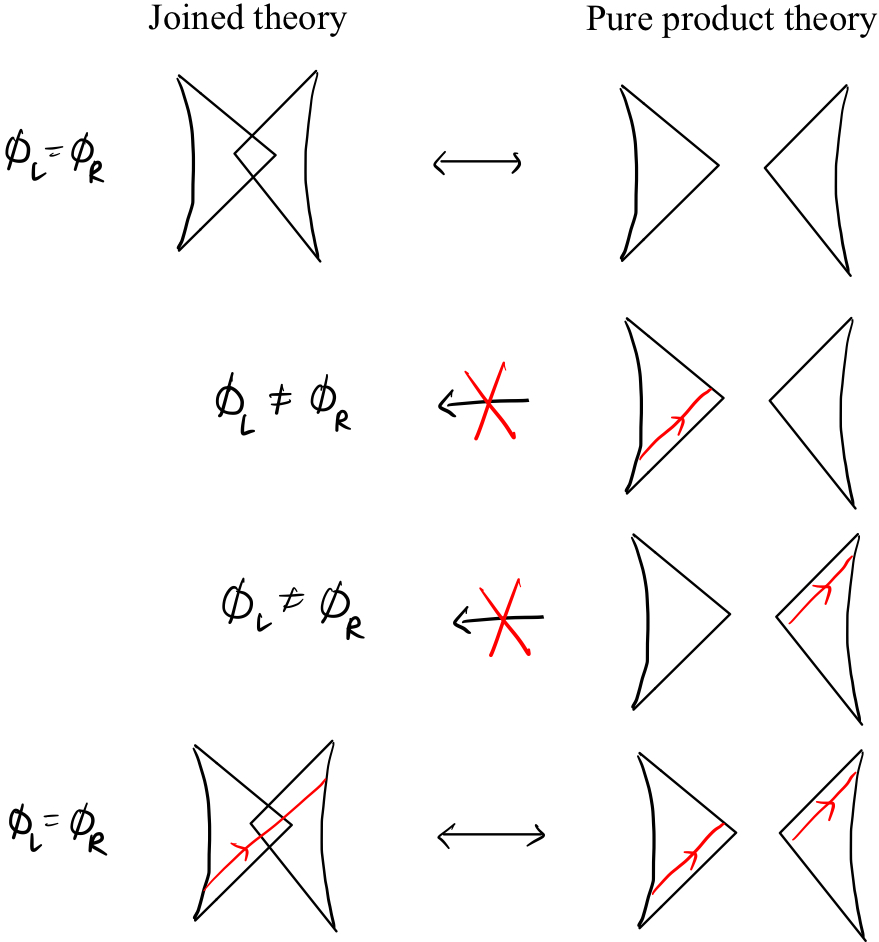
Figure 4: Product of two dressed quantum systems shows that the unconstrained product spectrum includes states disallowed in the joined theory; constraints project onto physically allowed ("consistently joined") states.
Specifically:
- The constraint C removes inconsistently joined configurations and ensures that observable algebras in the overlapped causal diamond are not independent.
- This directly impacts commutator calculations and the dynamics/representation of matter fields propagating into or out of the overlap region.
- The structure is formalized in the Hamiltonian by taking H=C(HL+HR)C, preserving time evolution in the physical subspace.
Bulk Reconstruction and Causal Wedge Overlap
The authors provide a detailed treatment of bulk reconstruction, particularly via HKLL procedures, demonstrating that in de Sitter with matter and tall geometries, the causal wedges of the two boundaries overlap significantly, allowing for reconstruction of the full t=0 slice. This is in contrast with AdS, where the causal wedges are typically more limited.
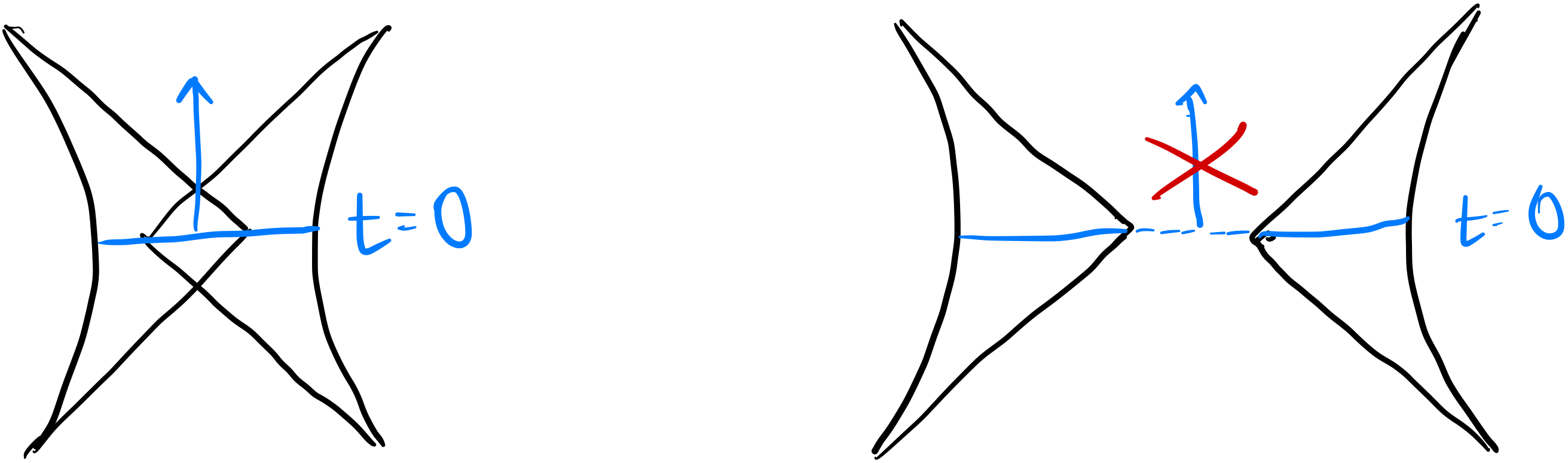
Figure 5: HKLL reconstruction in de Sitter with matter can reconstruct the full t=0 slice, in sharp contrast with limitations in AdS.
Further, the work identifies limitations on the angular resolution: reconstructing information about sub-Planckian bulk regions near the horizon requires access to Planck-scale data at the boundary, reflecting a form of holographic encoding that is deeply quantum gravitational in origin.
Implications and Future Directions
The construction herein provides a precise, UV-complete quantum mechanical model for cosmological spacetimes with positive cosmological constant and timelike boundaries. Its success in matching entropy and stabilizing gravitational path integrals substantiates the physical meaning of dS entropy as microstate counting in this context. The operator redundancy and constrained structure offer a rich arena for further study, both for understanding quantum cosmological initial conditions and for delineating the limits of observer-centric descriptions in gravity.
The formalism suggests multiple observationally consistent sectors—an actualization of the string landscape's ambiguities in cosmological contexts—and points toward new forms of non-predictivity in quantum gravity rooted not in landscape multiplicity, but in holographic optionality and topology.
A crucial future avenue is the development of boundary theories that allow for more general holographic reconstructions, possibly leveraging alternative choices of boundary conditions or further generalizations of the constrained Hilbert space, and the investigation of phenomenological consequences, particularly in the context of cosmological observables sensitive to topology and quantum gravity effects.
Conclusion
This paper presents a comprehensive holographic dual for de Sitter cosmology with timelike boundaries, anchored in a doubled, UV-sensitive, and constrained boundary theory framework. Through sharp technical developments—spanning microcanonical/canonical ensemble analysis, rigorous handling of UV/matter corrections, explicit path integral stabilization, and a precise treatment of Hilbert space structure—the work establishes a robust dual description that resolves entropy calculations, incorporates tall and smooth geometries, and encodes necessary operator redundancies. Its implications extend both to the foundations of quantum gravity and to the theoretical interpretation of cosmological data in a landscape-rich universe.