- The paper introduces an adaptive feedback mechanism for both pairwise and triadic couplings in a second-order Kuramoto framework.
- It analytically and numerically demonstrates that adaptation suppresses abrupt transitions in large oscillator networks.
- The model reveals how system size, inertia, and noise influence multistability and synchronization criticalities in real-world systems.
Adaptive Simplicial Interactions in the Second-Order Kuramoto Model: Synchronization Dynamics and Critical Transitions
Introduction
This work addresses synchronization phenomena in oscillator networks by extending the second-order Kuramoto model to encapsulate adaptive couplings and higher-order (simplicial) interactions. Inertia, commonly omitted in standard Kuramoto formulations, is incorporated to more accurately capture the dynamical behavior of real-world systems such as power grids and neuronal populations. The primary novelty here lies in the adaptive feedback mechanism, modulating both pairwise and triadic couplings based on collective synchronization, and the rigorous analysis of these effects on synchronization transitions—both analytically in the continuum limit and numerically in finite-size systems.
The analyzed system consists of N globally coupled phase oscillators, each described dynamically by
mθ¨i=−θ˙i+Ωi+K1r1γk∑sin(θk−θi)+K2r1γk,l∑sin(2θk−θl−θi)
where m is the inertia, K1 and K2 are strengths for pairwise and triadic (2-simplex) interactions respectively, and γ is the adaptation exponent modulating the feedback strength according to the global synchronization measure r1. The adaptation mechanism ensures that the effective network couplings become dynamically contingent on the instantaneous degree of synchronization, formally K1,2eff=K1,2r1γ. The global order parameter r1 quantifies the level of synchrony, while r2 tracks clustering effects associated with multi-modal distributions in phase space. Intrinsic frequencies mθ¨i=−θ˙i+Ωi+K1r1γk∑sin(θk−θi)+K2r1γk,l∑sin(2θk−θl−θi)0 follow a Lorentzian distribution.
The mean-field reduction facilitates self-consistency analysis, yielding analytical predictions for the existence and stability of incoherent, weakly synchronized, and fully synchronized states in the thermodynamic limit. The reduction leads to a single-oscillator equation analogous to the Josephson junction, which is scrutinized for fixed points, limit cycles, and associated bifurcation scenarios.
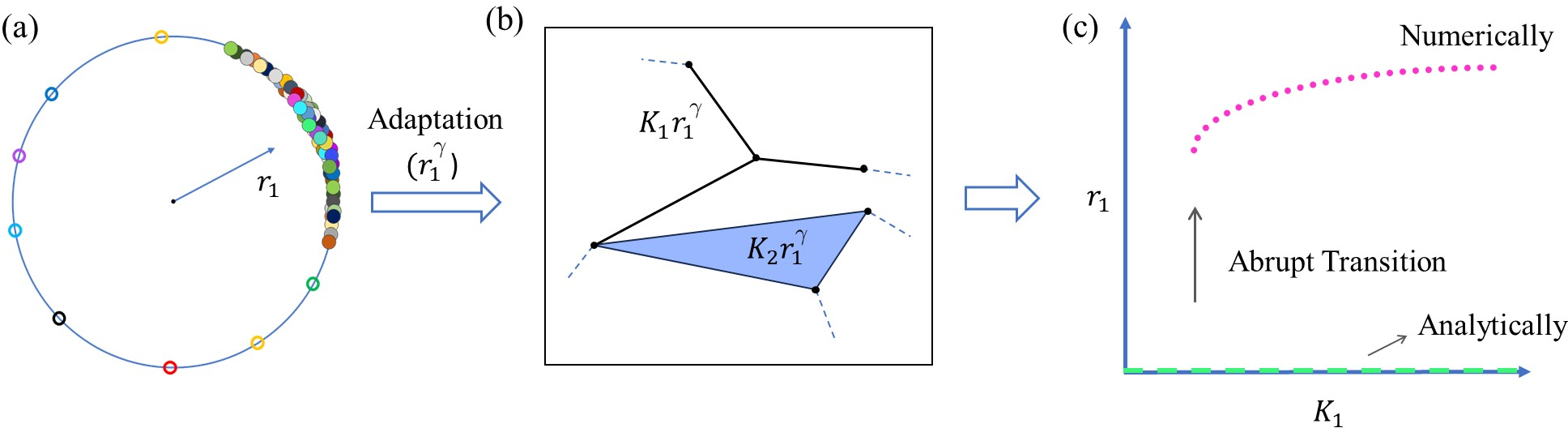
Figure 1: Schematic diagram of the second-order Kuramoto model with adaptive pairwise and triadic couplings, displaying locked and drifting oscillators and illustrating the adaptation controlled by mθ¨i=−θ˙i+Ωi+K1r1γk∑sin(θk−θi)+K2r1γk,l∑sin(2θk−θl−θi)1 and exponent mθ¨i=−θ˙i+Ωi+K1r1γk∑sin(θk−θi)+K2r1γk,l∑sin(2θk−θl−θi)2.
Synchronization Transitions: Thermodynamic Limit and Finite Size Effects
Key analytical results show that with adaptation (mθ¨i=−θ˙i+Ωi+K1r1γk∑sin(θk−θi)+K2r1γk,l∑sin(2θk−θl−θi)3), the incoherent state remains stable for all coupling strengths in the continuum limit (mθ¨i=−θ˙i+Ωi+K1r1γk∑sin(θk−θi)+K2r1γk,l∑sin(2θk−θl−θi)4). This precludes the abrupt first-order transition to synchrony typically observed in the non-adaptive (mθ¨i=−θ˙i+Ωi+K1r1γk∑sin(θk−θi)+K2r1γk,l∑sin(2θk−θl−θi)5) second-order Kuramoto model. However, for finite-size systems, stochastic fluctuations in mθ¨i=−θ˙i+Ωi+K1r1γk∑sin(θk−θi)+K2r1γk,l∑sin(2θk−θl−θi)6 provide a mechanism for the system to escape the basin of attraction of the incoherent state, resulting in an abrupt, fluctuation-driven transition to a weakly synchronized state.
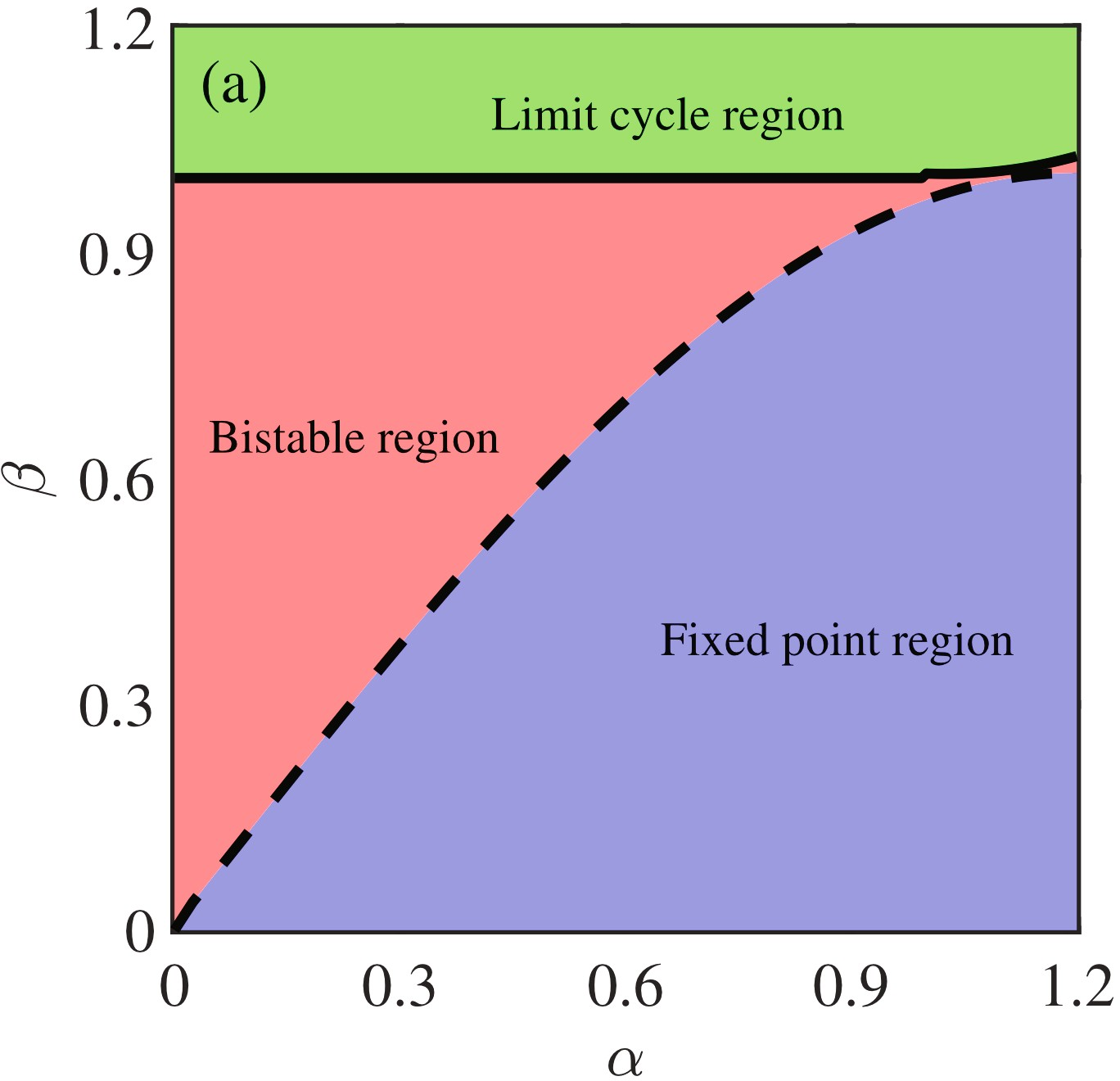
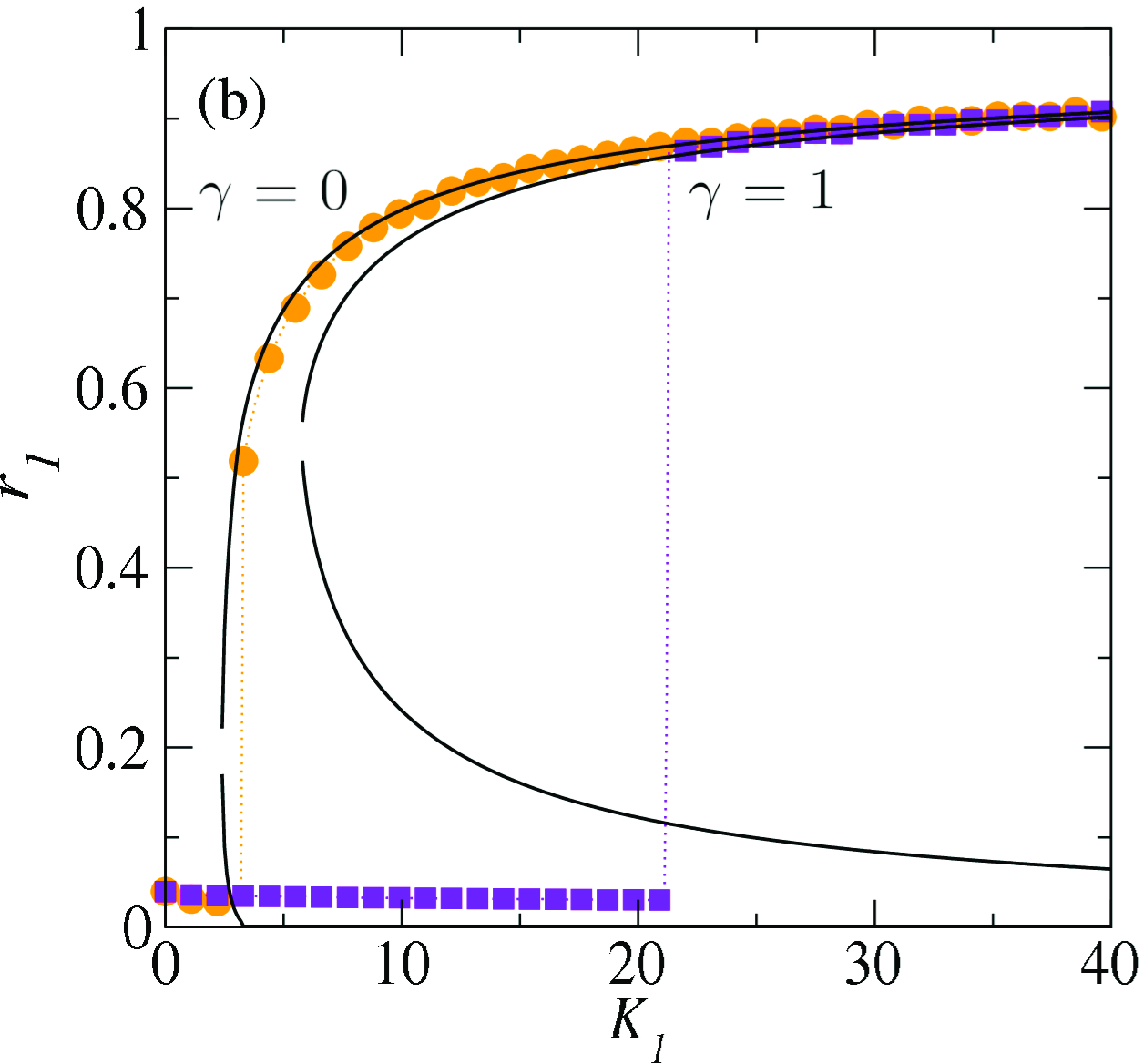
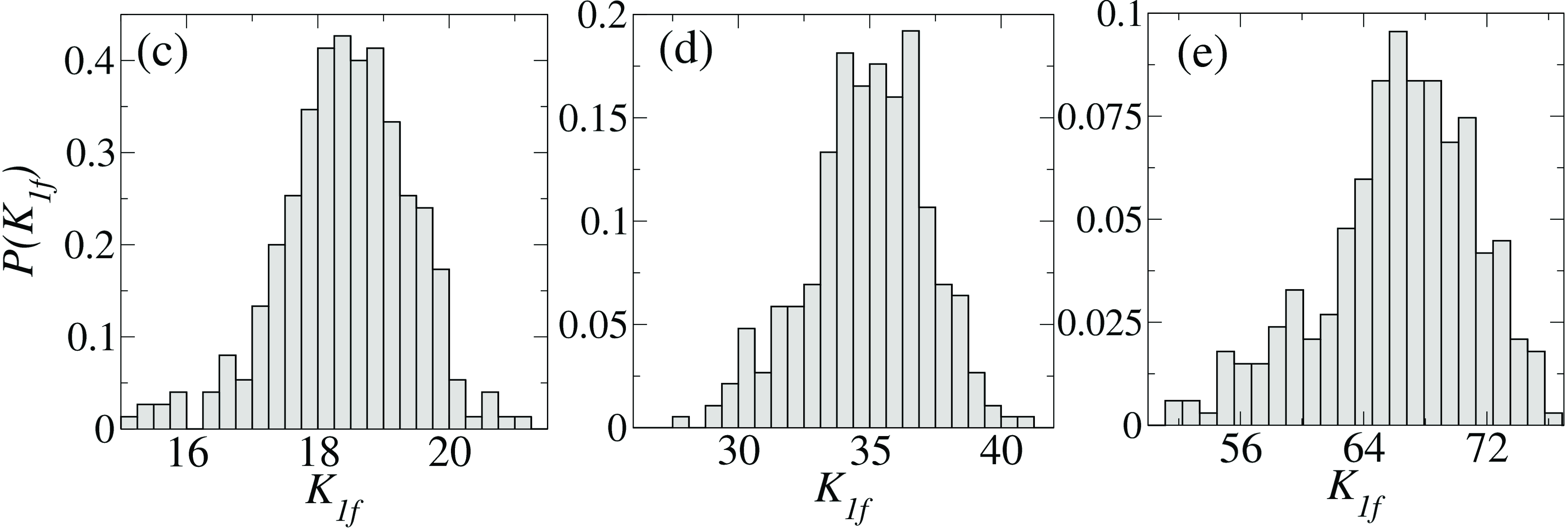
Figure 2: Phase diagram in the mθ¨i=−θ˙i+Ωi+K1r1γk∑sin(θk−θi)+K2r1γk,l∑sin(2θk−θl−θi)7 plane illustrating regions of fixed point and limit cycle solutions, and (b) mθ¨i=−θ˙i+Ωi+K1r1γk∑sin(θk−θi)+K2r1γk,l∑sin(2θk−θl−θi)8 versus mθ¨i=−θ˙i+Ωi+K1r1γk∑sin(θk−θi)+K2r1γk,l∑sin(2θk−θl−θi)9 highlighting the absence or presence of a forward jump depending on m0 and system size.
As m1 increases, the amplitude of fluctuations in m2 scales down as m3, leading the threshold for the forward transition to higher values of m4 and effectively suppressing the abrupt jump in the thermodynamic limit.
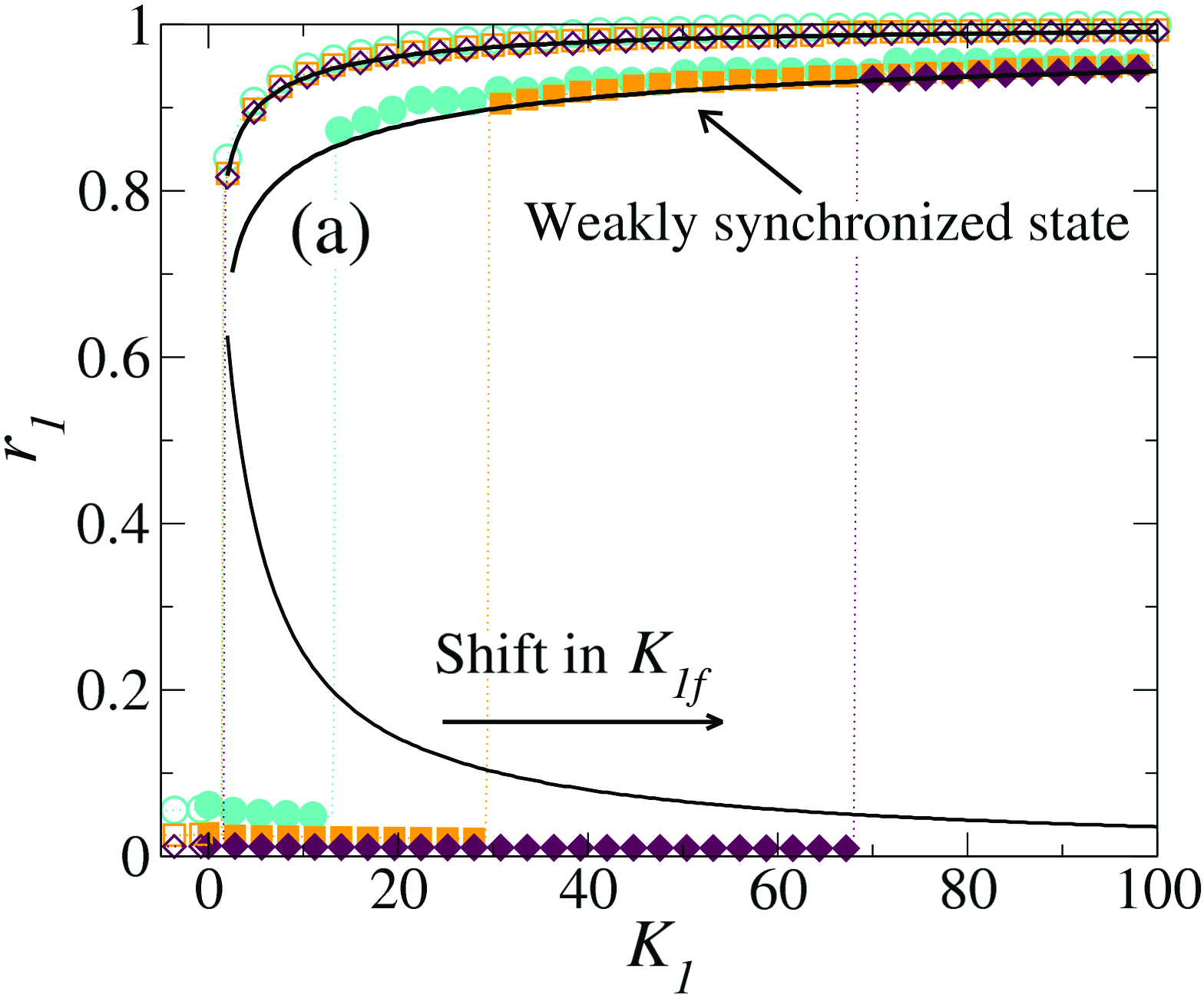
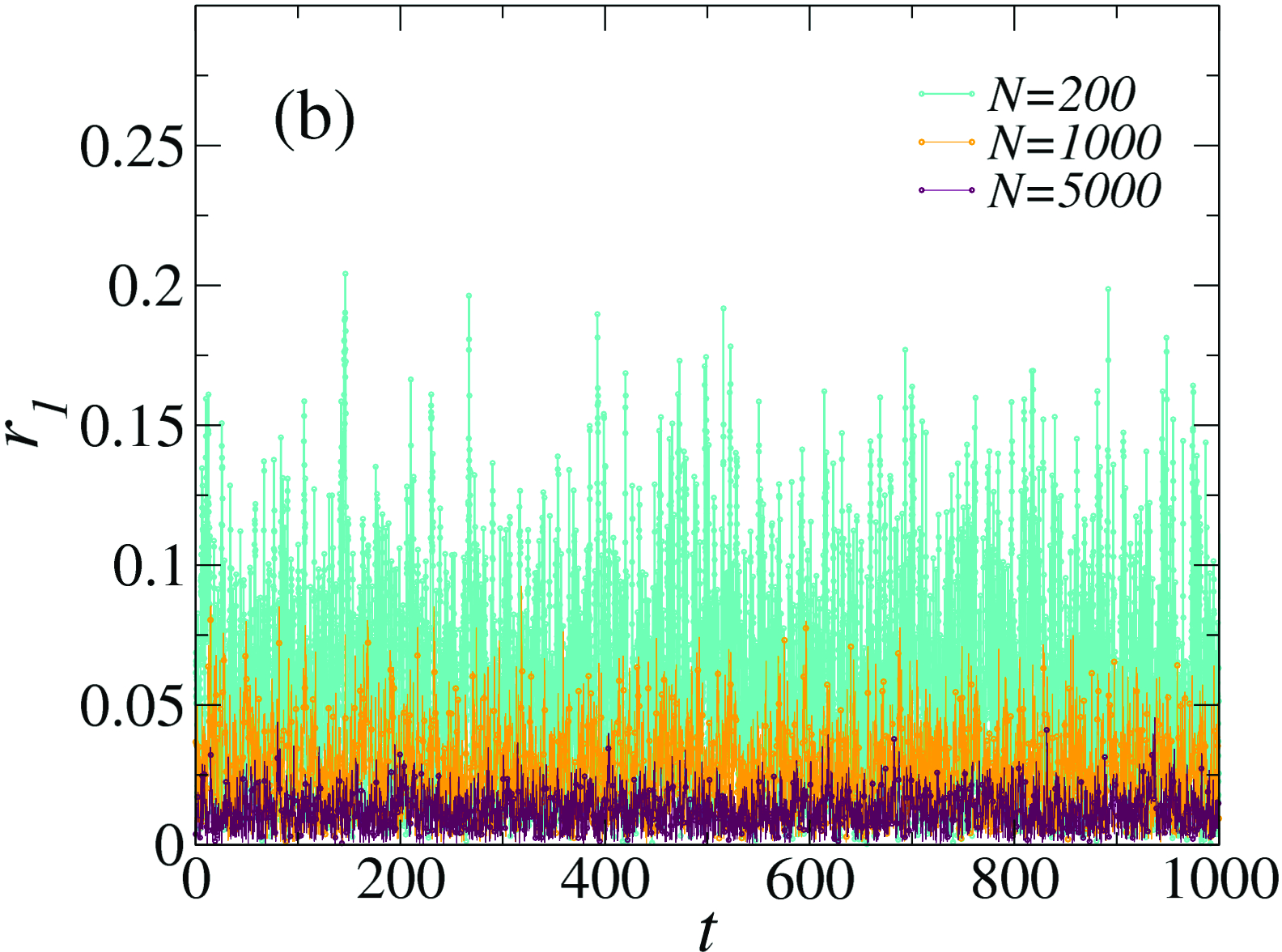
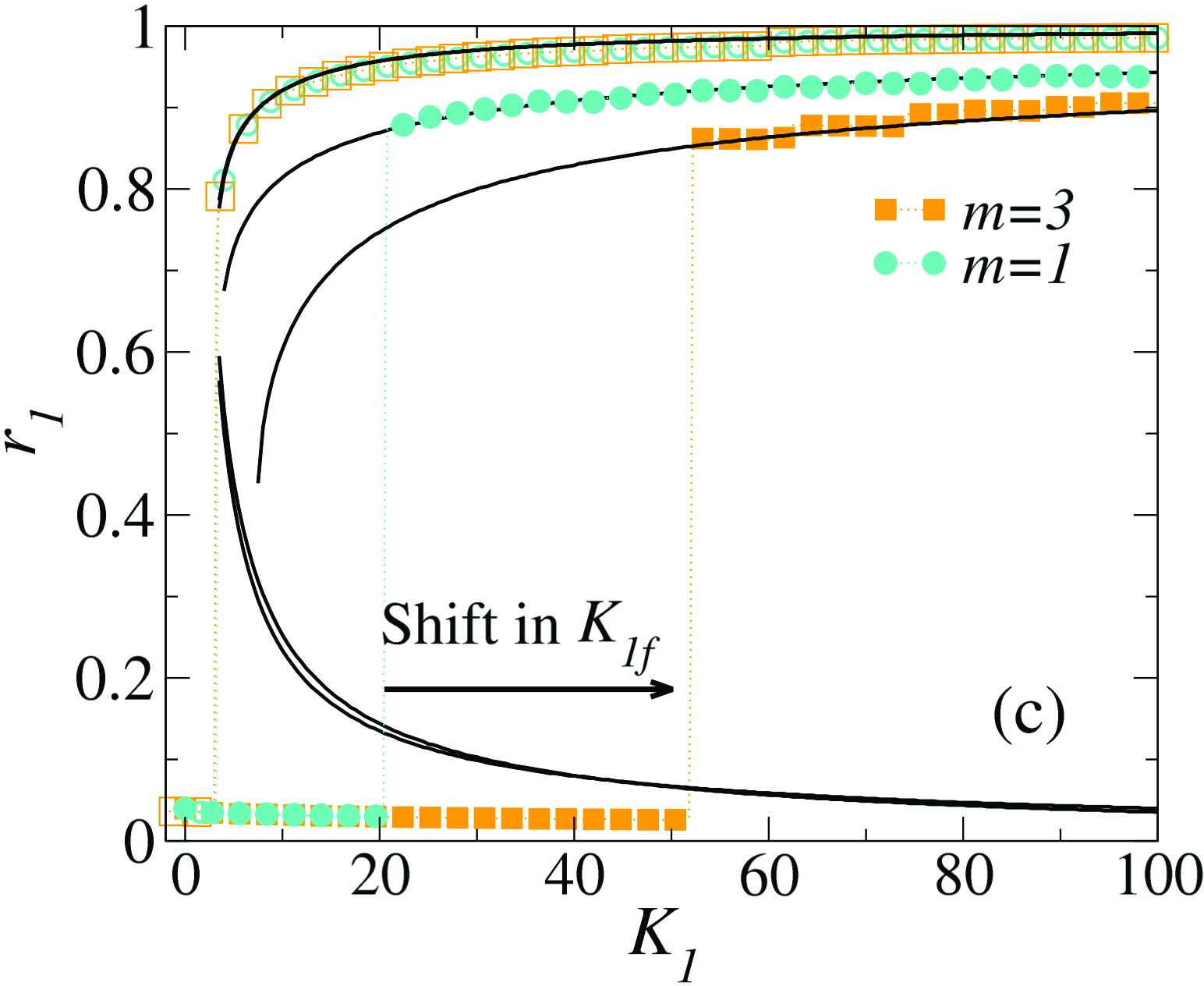
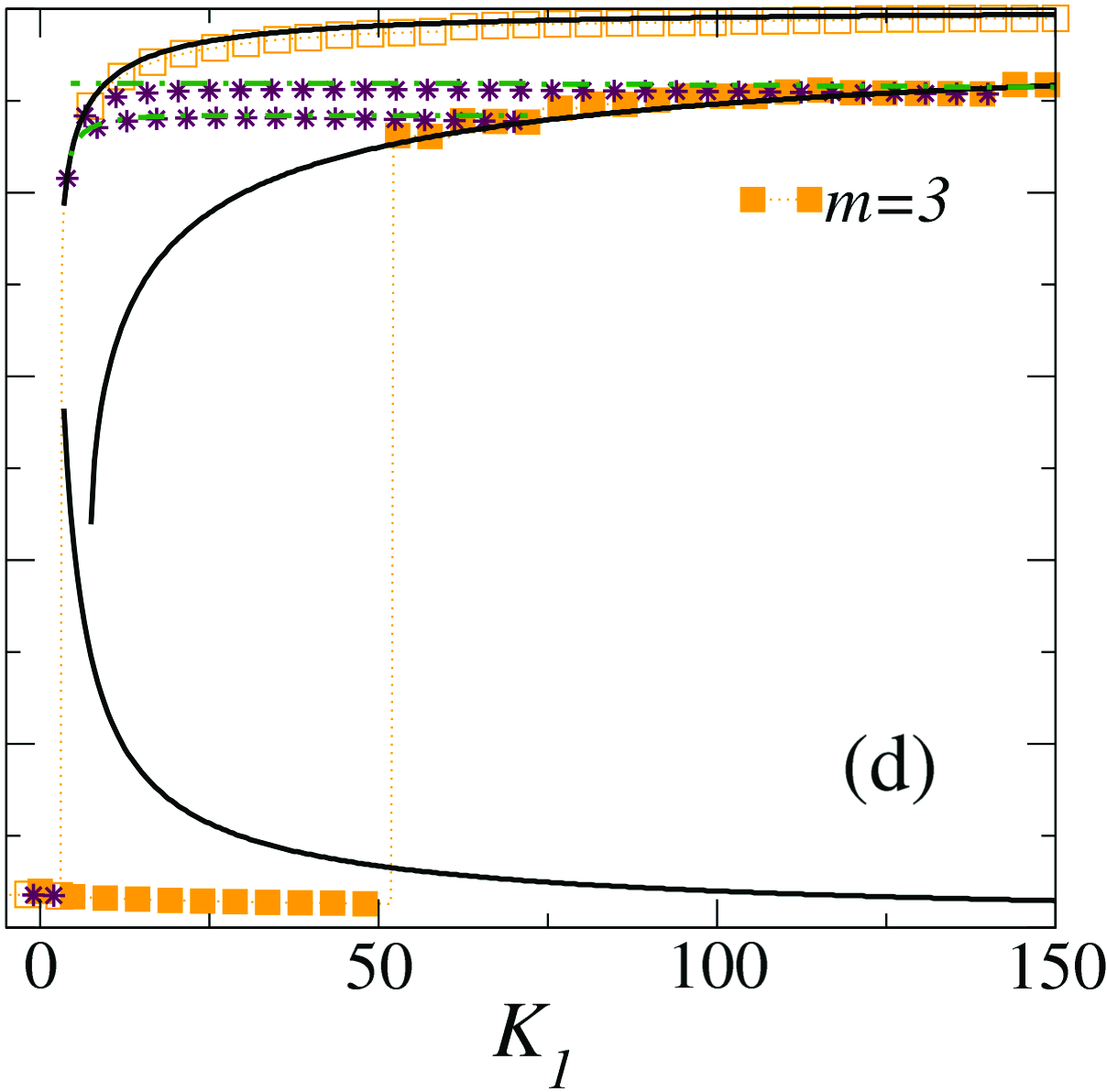
Figure 3: Dependence of synchronization transitions on system size m5, inertia m6, and the onset of multistability—demonstrating the forward jump vanishing with increasing m7 and varied m8 affecting m9 plateau heights.
Multistability and Hysteresis
The model exhibits pronounced multistability due to the coexistence of incoherent and synchronized attractors, especially for large inertia and intermediate coupling. Forward and backward numerical continuations reveal distinct transition points (K10 and K11, respectively), with their separation quantifying the width of the bistable, hysteretic region.
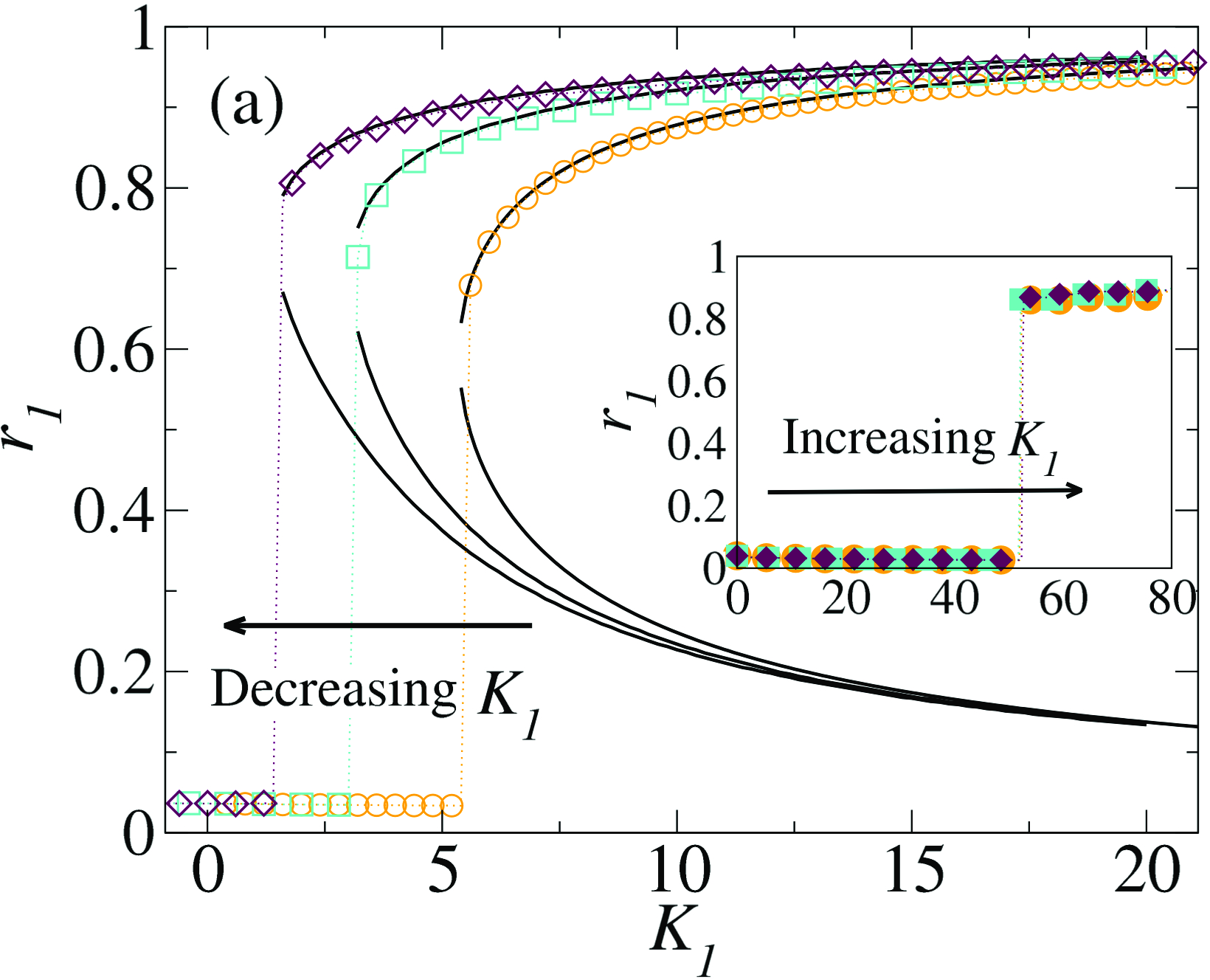
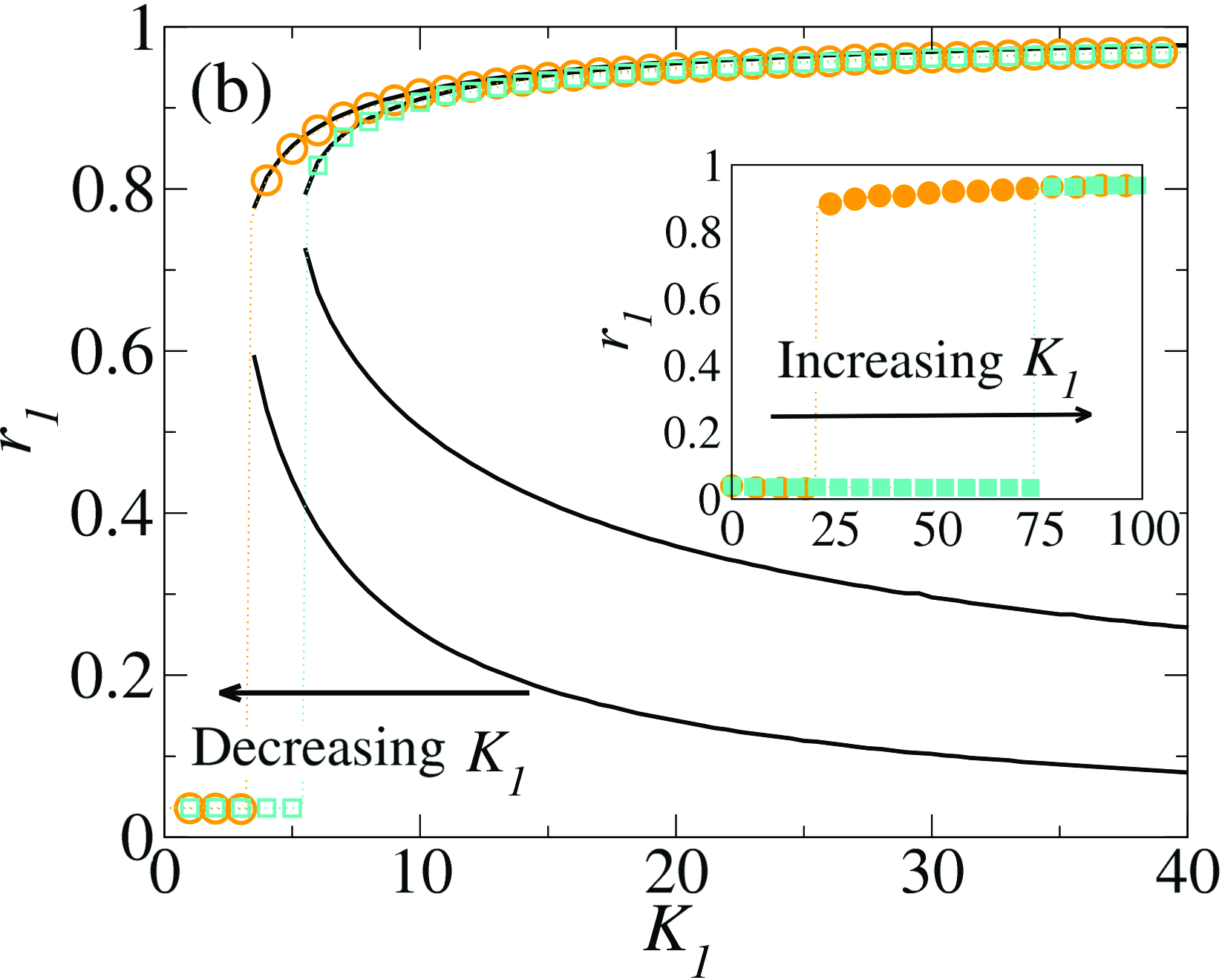
Figure 4: Shifting of K12 as functions of K13 and K14—adaptation exponent K15 is observed to shift both forward and backward transitions, whereas K16 mainly impacts the backward transition.
Analytical predictions for the position of these branches, derived via self-consistency under appropriate frequency limits, agree well with simulation results. The multistable regime appears as a set of branches located between analytically determined bounding curves.
Parametric Dependence of Transition Points
A systematic exploration demonstrates:
- System size K17 and inertia K18: Only the forward transition point K19 increases with K20 and K21.
- Triadic coupling K22: Only the backward transition point K23 is lowered by increasing K24.
- Adaptation exponent K25: Both K26 and K27 increase with K28, reflecting a weakening of effective coupling for larger adaptation exponents.
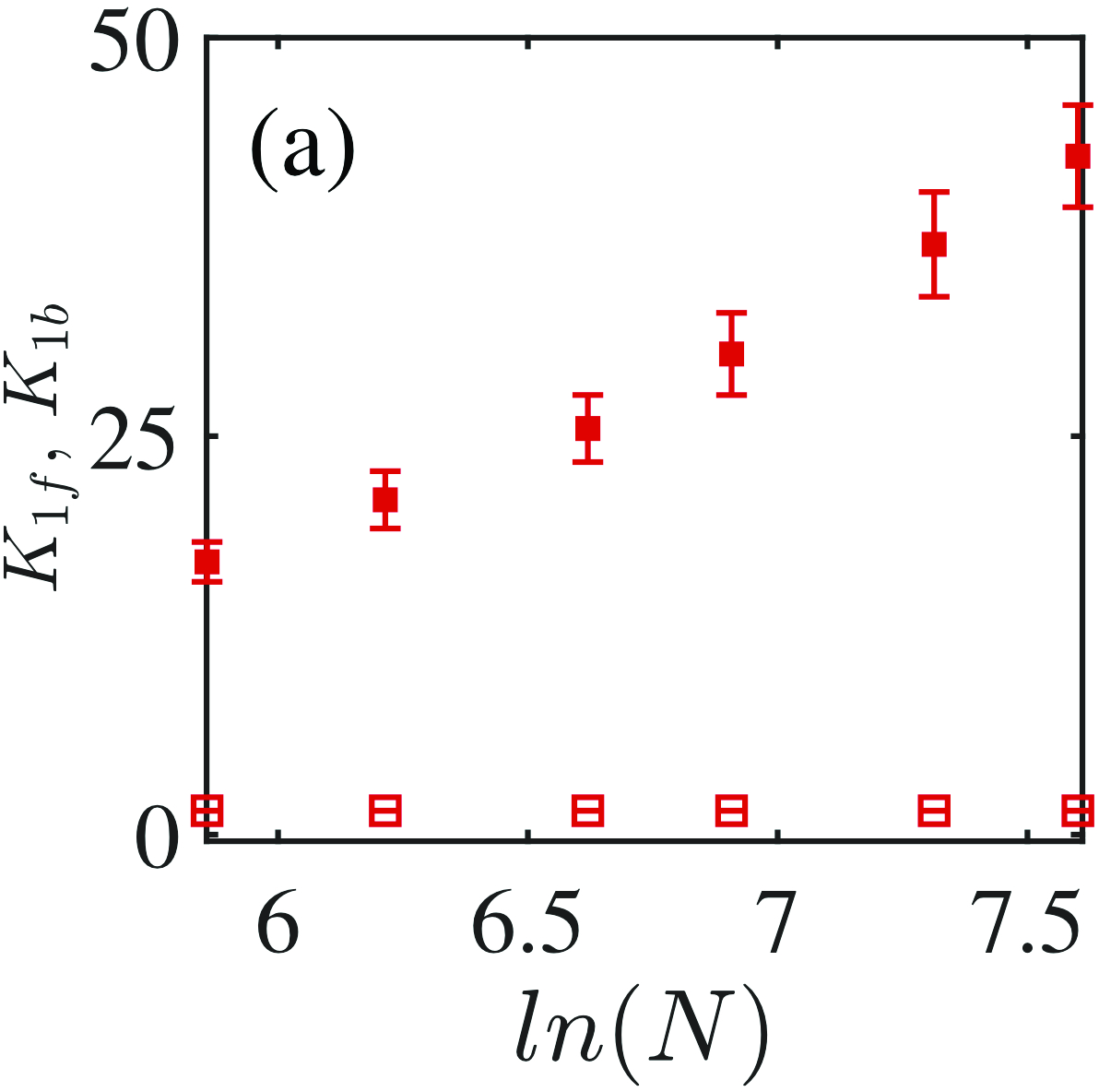
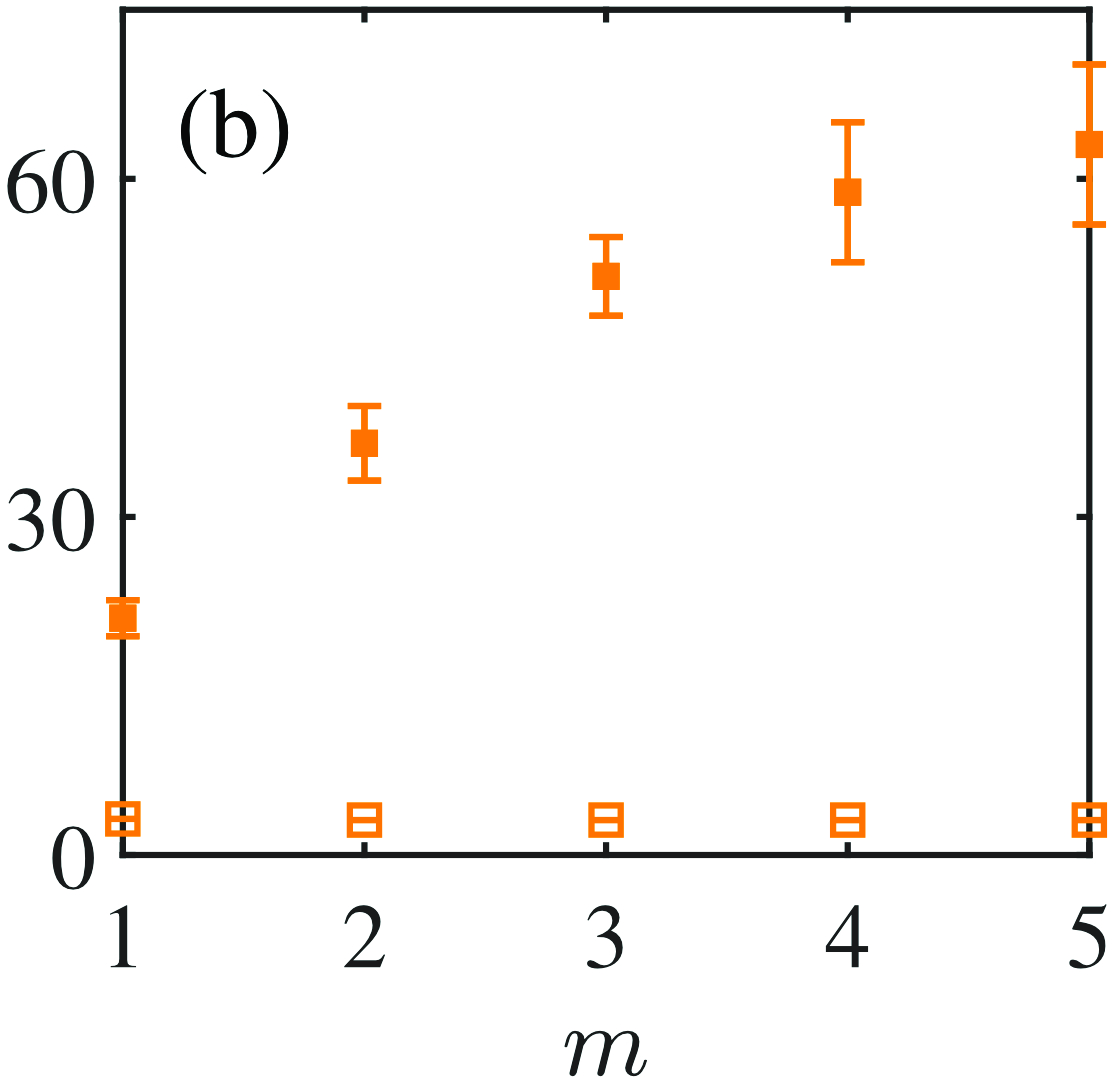
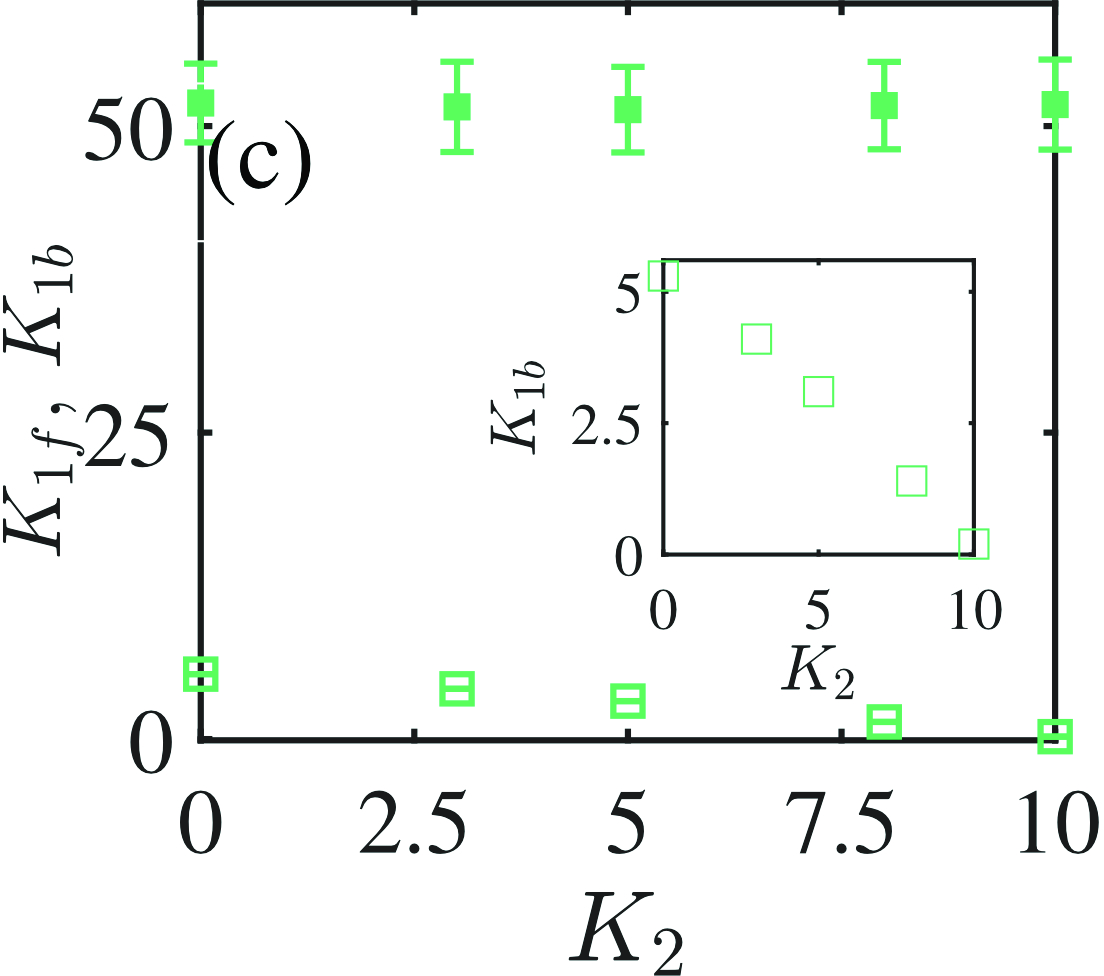
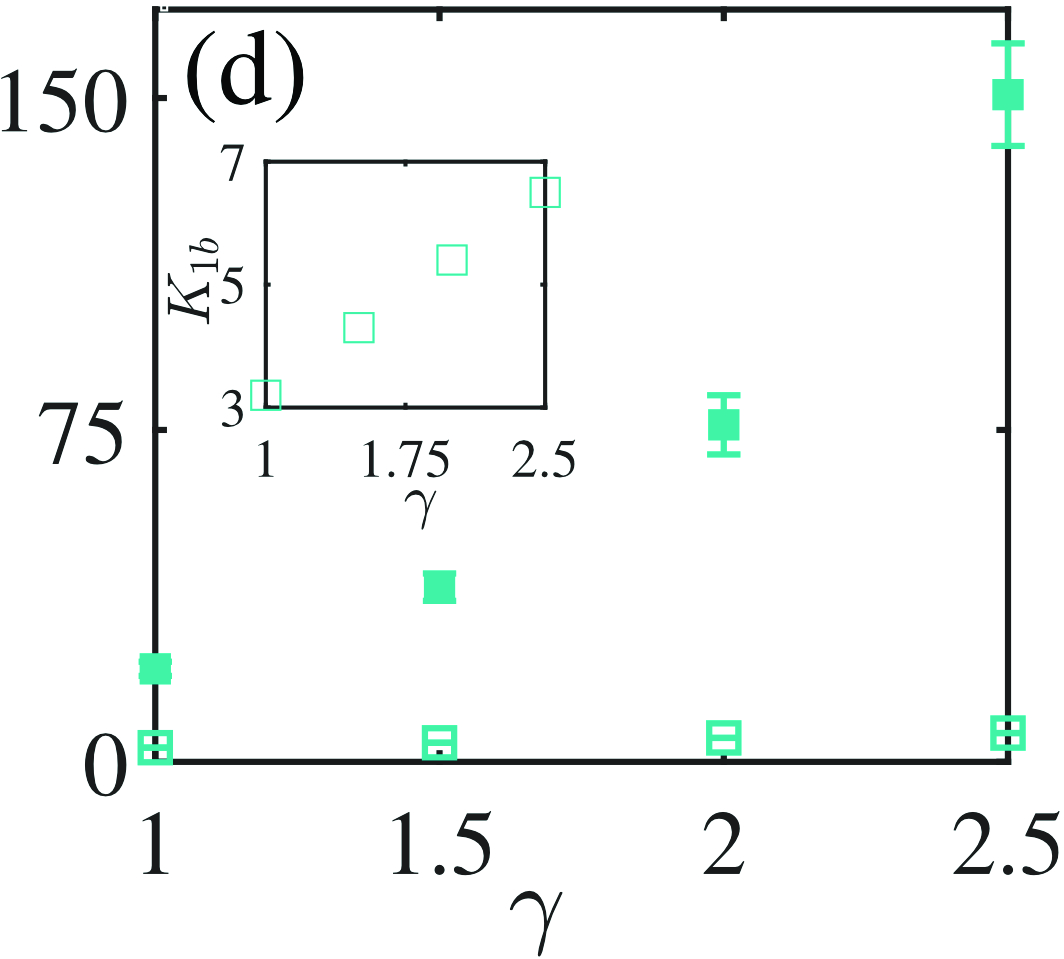
Figure 5: Dependence of K29 and γ0 on γ1, γ2, γ3, and γ4—demonstrating nuanced roles of system parameters and adaptation in shaping critical transitions.
This separation of influence underscores how adaptation can selectively modulate the network's vulnerability and resilience to synchronization as a function of dynamical and structural factors.
Fluctuations, Noise, and Robustness
Introducing additive Gaussian white noise further modulates transition dynamics. Increased noise strength γ5 consistently shifts both forward and backward transitions to higher γ6 values, making synchronization less accessible. For sufficiently large γ7, the distinction between weakly synchronized and fully synchronized branches becomes blurred.
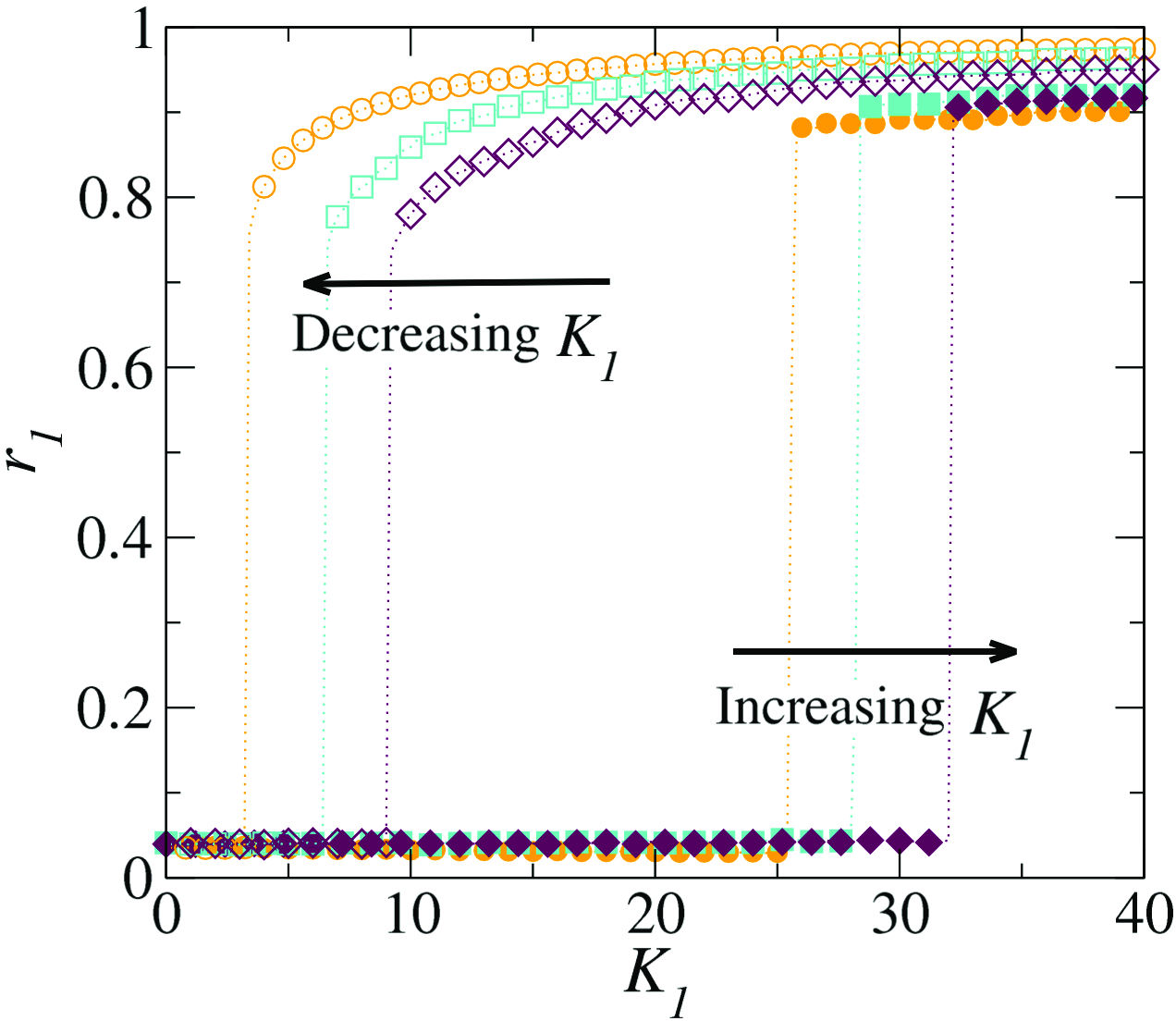
Figure 6: γ8 versus γ9 with varying noise strengths r10, illustrating noise-induced shifts of synchronization transitions and eventual merging of branches at higher r11.
Implications and Future Directions
The findings have direct theoretical and applied implications:
- Power grids and neuronal networks: The framework models adaptive restructuring of coupling during synchronization, relevant to load-dependent transmission in power networks and activity-driven plasticity in neural circuits.
- Robust adaptation: The adaptive scheme resists abrupt global synchronization under parameter drift, which in engineered systems could mitigate risks of sudden cascades or failures.
- Model extension: The analysis, being restricted to globally coupled networks and specific functional forms of adaptation, invites future work on heterogeneous/adaptive topologies and nonlinear feedback.
- Generalizability: The self-consistency approach can be adapted for broader classes of adaptive oscillator models, including those with more general forms of higher-order couplings or adaptation rules.
Conclusion
This study systematically extends the second-order Kuramoto model to include adaptive, simplicial interactions, offering detailed analytic and computational evidence for the profound reshaping of synchronization transitions by adaptation. It reveals that adaptive feedback, via the exponent r12, couples with system size, inertia, and higher-order interactions to determine the onset and robustness of synchrony, the nature and extent of multistability, and the susceptibility to noise. This work thereby establishes an analytic framework for adaptive synchronization in complex oscillator networks, providing guidance for the design and control of synchronization in real and engineered systems.
Reference:
"Second-order Kuramoto model with adaptive simplicial complex" (2604.10247)

