- The paper presents a novel all-fiber NPR-based mode-locked erbium-doped laser that achieves stable multi-wavelength emission through precise birefringence control.
- It demonstrates a transition from single- to seven-wavelength regimes with high OSNR, narrow linewidths, and tunable, reversible channel switching.
- The architecture enables synchronized pulse generation with low timing jitter, promising practical applications in DWDM networks and optical logic.
Engineering Multi-wavelength Emission with NPR in All-fiber Mode-locked Erbium-doped Fiber Lasers
Introduction
The demand for versatile multi-wavelength sources in high-capacity DWDM optical networks, spectroscopy, and advanced photonic systems motivates significant research into reconfigurable multi-wavelength fiber lasers. Conventional approaches using in-cavity spectral filters or nonlinear processes often increase system complexity, limit tunability, or suffer from gain competition due to homogeneous broadening inherent in rare-earth-doped fibers. Nonlinear polarization rotation (NPR) has emerged as a pivotal mechanism for passive mode-locking and realized multi-wavelength operation, offering low loss, robustness, and all-fiber compatibility. However, previous NPR-based systems have not demonstrated fully alignment-free, all-fiber architectures with high-order multi-wavelength mode-locking, broad tunability, and deterministic channel switching within a fixed cavity.
This work presents a compact, purely NPR-based, all-fiber erbium-doped fiber laser (EDFL) that achieves stable and synchronized mode-locked operation from single- to seven-wavelength regimes, with extensive wavelength tunability and reversible, combinational channel switching. The study demonstrates comprehensive engineering of multi-wavelength emission enabled by precise control over intracavity birefringence and nonlinear effects, advancing the flexibility and practicality of ultrafast sources for high-density photonic applications.
Experimental Configuration
The system employs a 25 m ring cavity composed of 3 m erbium-doped fiber (gain medium), 17 m single-mode fiber (SMF) for nonlinearity enhancement, polarization controllers (PC), a polarization-dependent isolator (PD-ISO), and standard fiber-optic components (OC, WDM). The NPR mechanism is realized through the Kerr effect combined with polarization discrimination, providing an intensity-dependent transmission analogous to a fast saturable absorber. PCs adjust the cavity birefringence, and the PD-ISO enforces polarization selectivity and directionality.
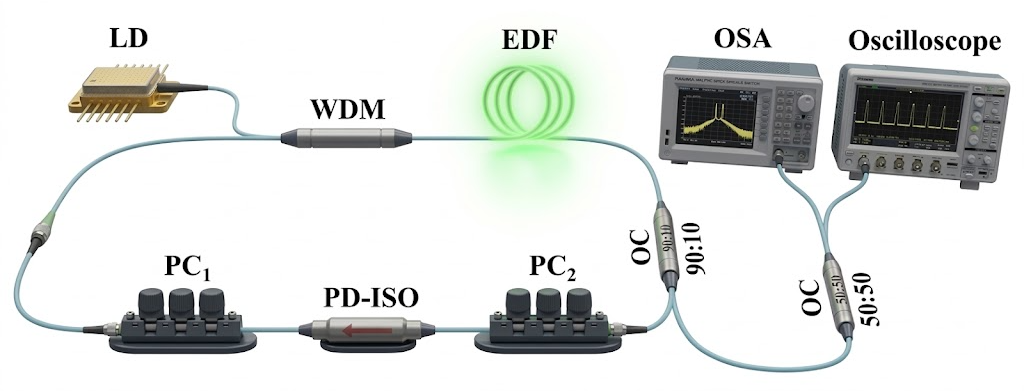
Figure 1: Schematic of the experimental NPR-based mode-locked EDFL configuration integrating gain, filtering, nonlinearity, and polarization control in an all-fiber ring.
Characterization utilizes high-resolution OSA and fast photodetection/oscilloscopy to resolve spectral and temporal features critical to ultrafast pulse analysis.
NPR Mechanism and Cavity Dynamics
Mode-locking via NPR is governed by the combined effect of intensity-dependent and wavelength-dependent transmission, originating from self- and cross-phase modulation, intracavity birefringence, and the action of the polarization-selective filter. The system operates as a Lyot-type birefringent comb filter, providing periodic spectral transmission while simultaneously modulating losses dynamically in response to intracavity pulse intensity.
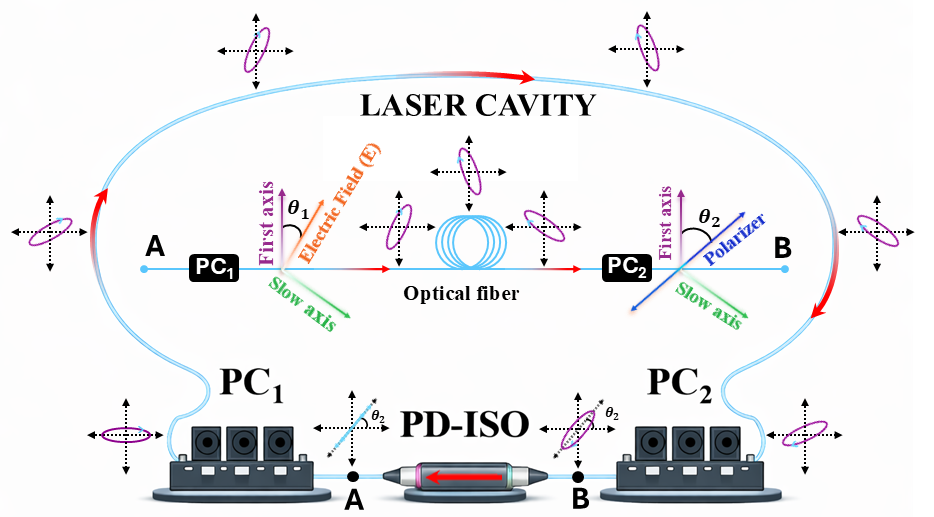
Figure 2: Conceptual depiction of polarization evolution, showing the manipulation of polarization states through the combination of PCs and PD-ISO.
The stable multi-wavelength operation is a consequence of reduced mode competition (mode equalization via well-defined spectral filtering) and strong phase coherence furnished by the synchronous action of the NPR mechanism.
Single-Wavelength and Multi-wavelength Operation
Under appropriate polarization settings and pump threshold (minimum 18 mW), stable single-wavelength mode-locked emission is obtained with the lasing wavelength at 1562.40 nm, OSNR > 47 dB, and SMSR > 41 dB. Time-domain analysis confirms phase-locked, pulse-train generation at 8.014 MHz repetition rate, indicative of low jitter and excellent amplitude stability.
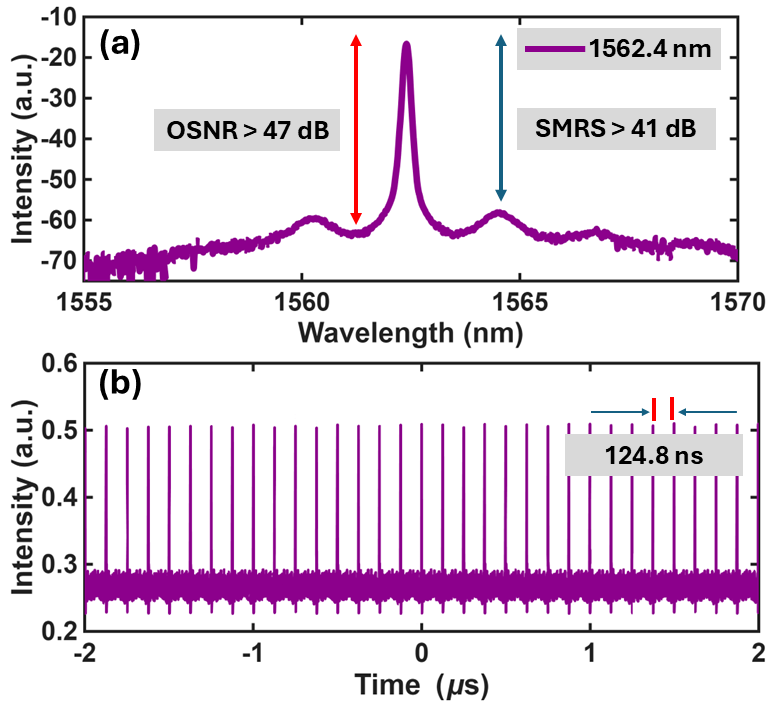
Figure 3: (a) Single-wavelength mode-locked spectrum; (b) Uniform pulse train temporal profile corresponding to the cavity round-trip time.
Fine control over polarization allows the nucleation of higher-order multi-wavelength states within the same cavity. By tuning PCs, the laser seamlessly transitions from single- up to seven-wavelength mode-locked regimes without modifying the cavity hardware.
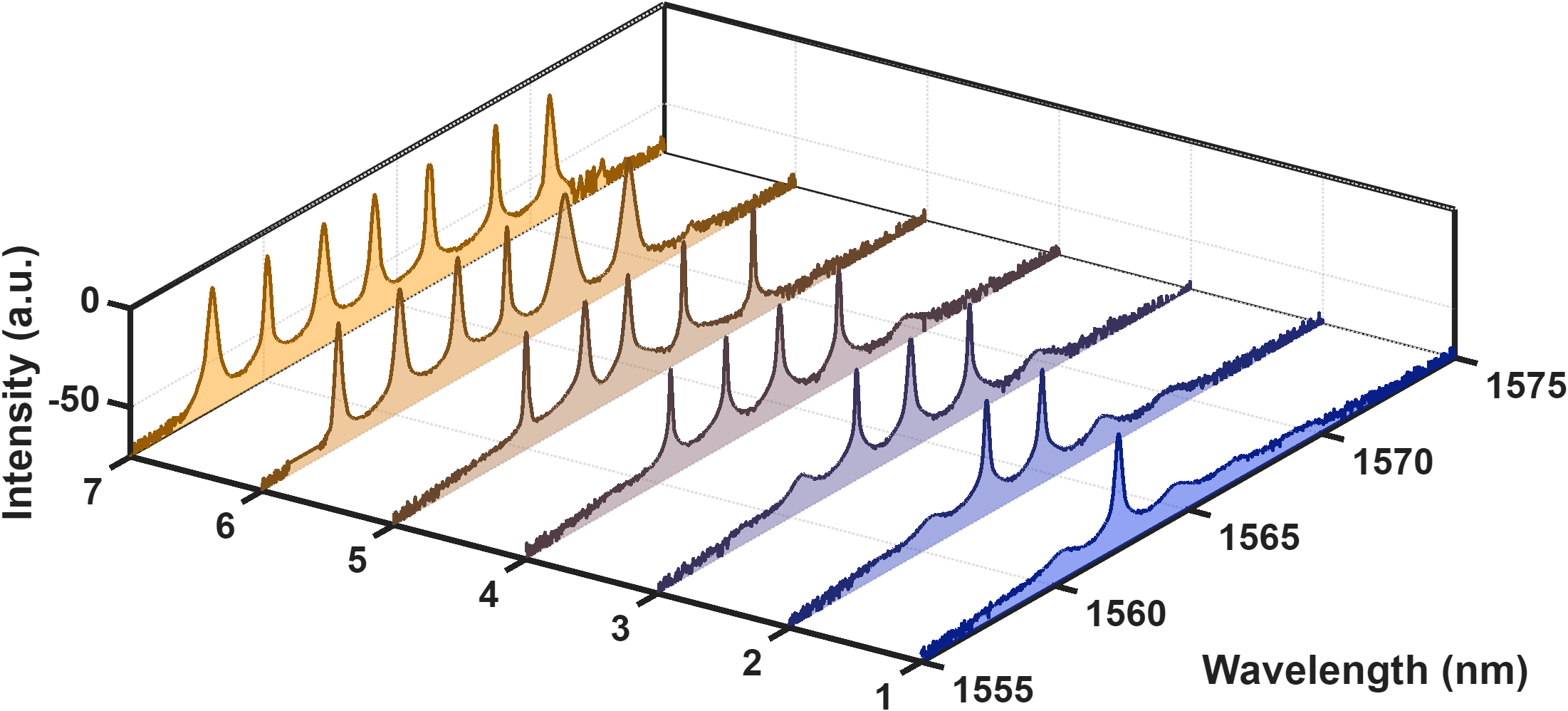
Figure 4: Output spectra illustrating progressive transition from single-wavelength to seven-wavelength operation by polarization tuning.
In the seven-wavelength regime, lasing lines are evenly spaced across the C- and L-bands, each with 3-dB linewidths of 0.10–0.17 nm. OSNR uniformity and consistent output intensities among all channels are maintained.
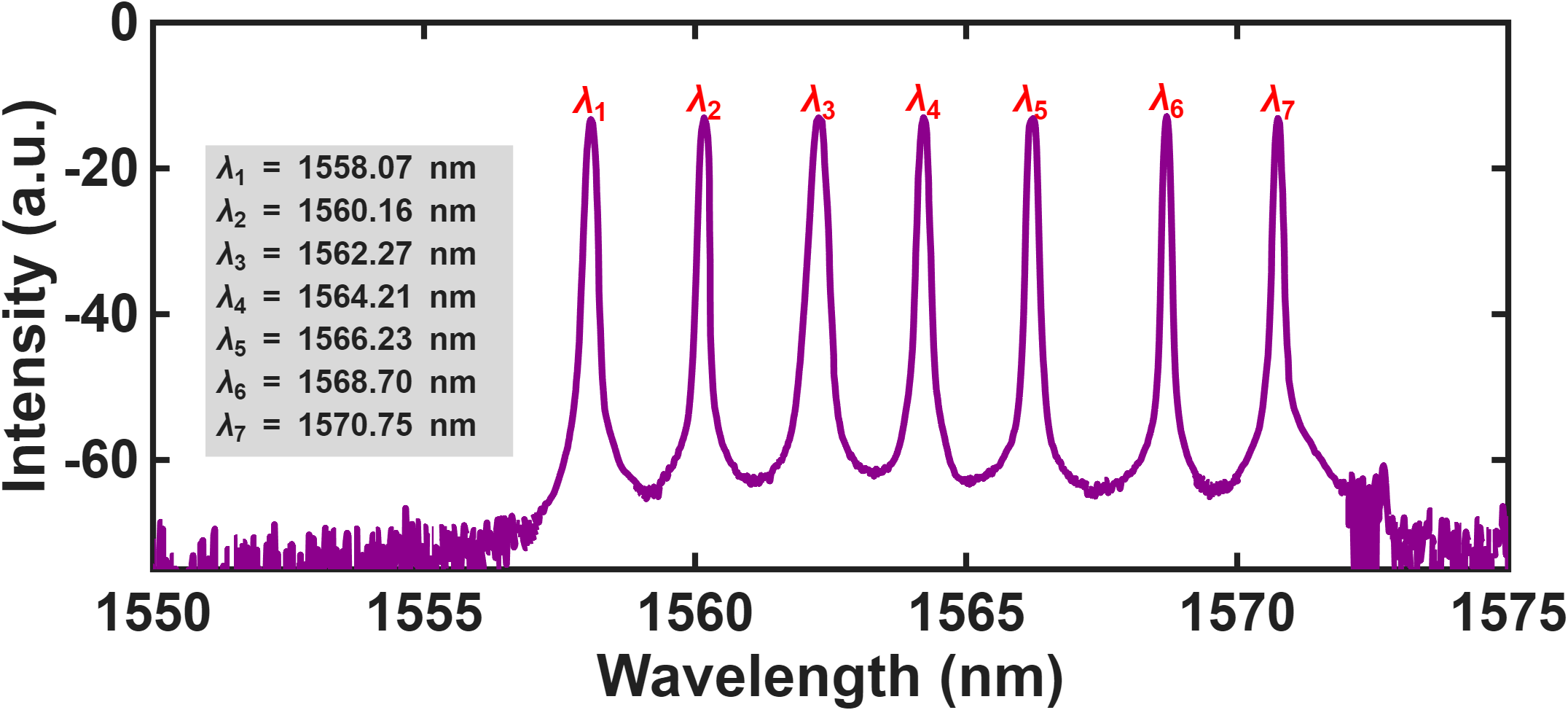
Figure 5: Measured seven-wavelength output spectrum demonstrating well-equilibrated spectral channels.
Temporal and Spectral Stability
Long-term measurements show negligible wavelength drift (<0.02 nm) and minimal power fluctuations (<0.5 dB) for each spectral channel over one hour, confirming robustness against environmental perturbations and stable intracavity dynamics.
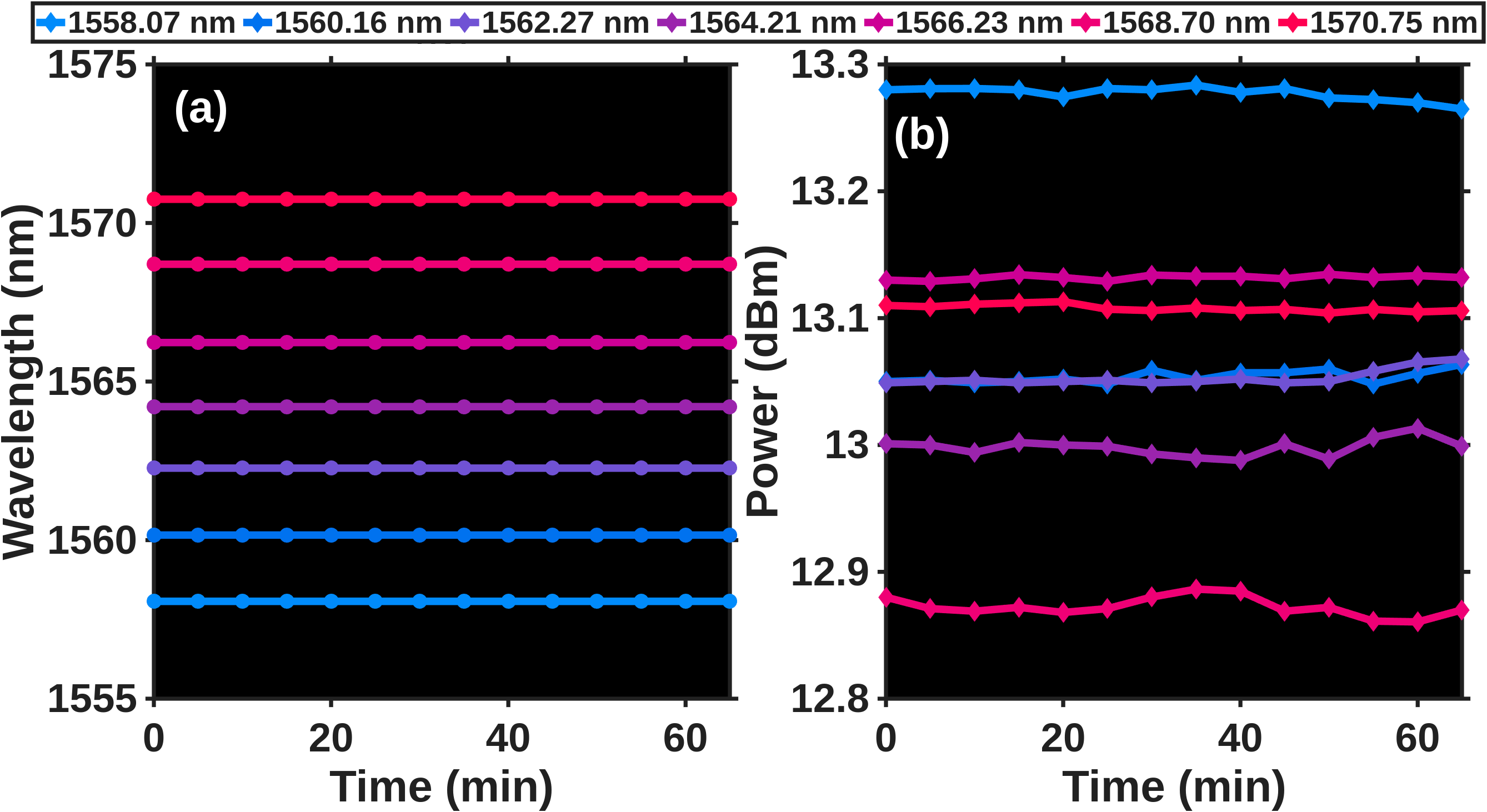
Figure 6: (a) Wavelength drift and (b) power fluctuation traces over one hour for seven-wavelength operation, highlighting outstanding stability.
The multi-wavelength pulses remain temporally synchronized, verified by pulse-train measurements and high-resolution RF spectra. All seven channels share a unique phase-locked pulse envelope synchronized to the cavity period.
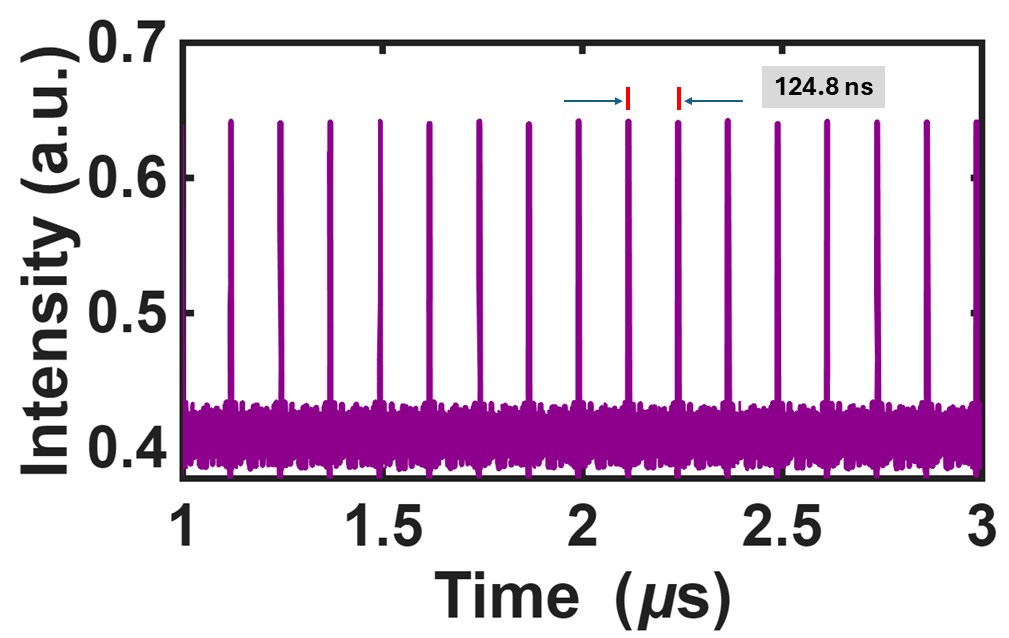
Figure 7: Pulse train for the seven-wavelength mode-locked regime, evidencing group-velocity-locked soliton dynamics.
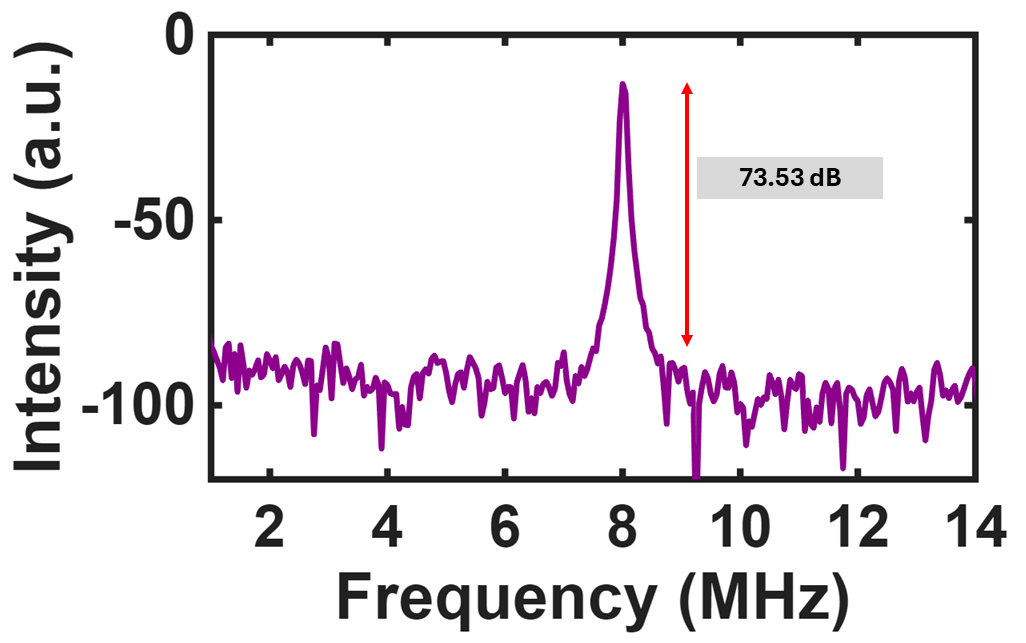
Figure 8: RF spectrum for the seven-wavelength mode-locked regime, showing a fundamental repetition peak with SNR > 70 dB, confirming low timing jitter and phase stability.
Wavelength Tunability and Channel Control
The system provides extensive and distinctive wavelength tunability:
- Single-wavelength regime: Stepless tuning across 11.6 nm by polarization adjustment (Figure 9).
- Dual, triple, and four-wavelength regimes: Synchronous translation of all active spectral peaks with nearly invariant inter-channel spacing, demonstrating true collective tuning (Figures 10, 11).
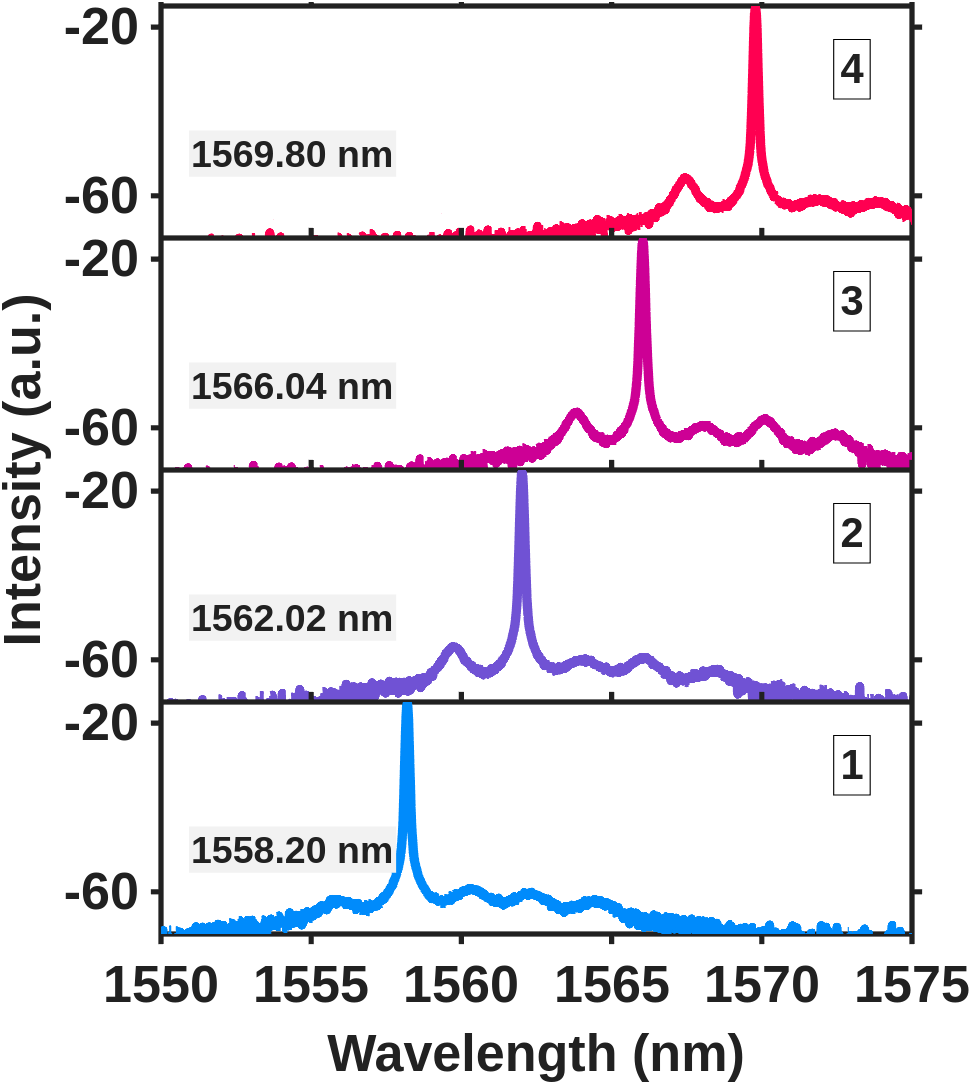
Figure 9: Single-wavelength tunability spanning 11.6 nm via polarization rotation.
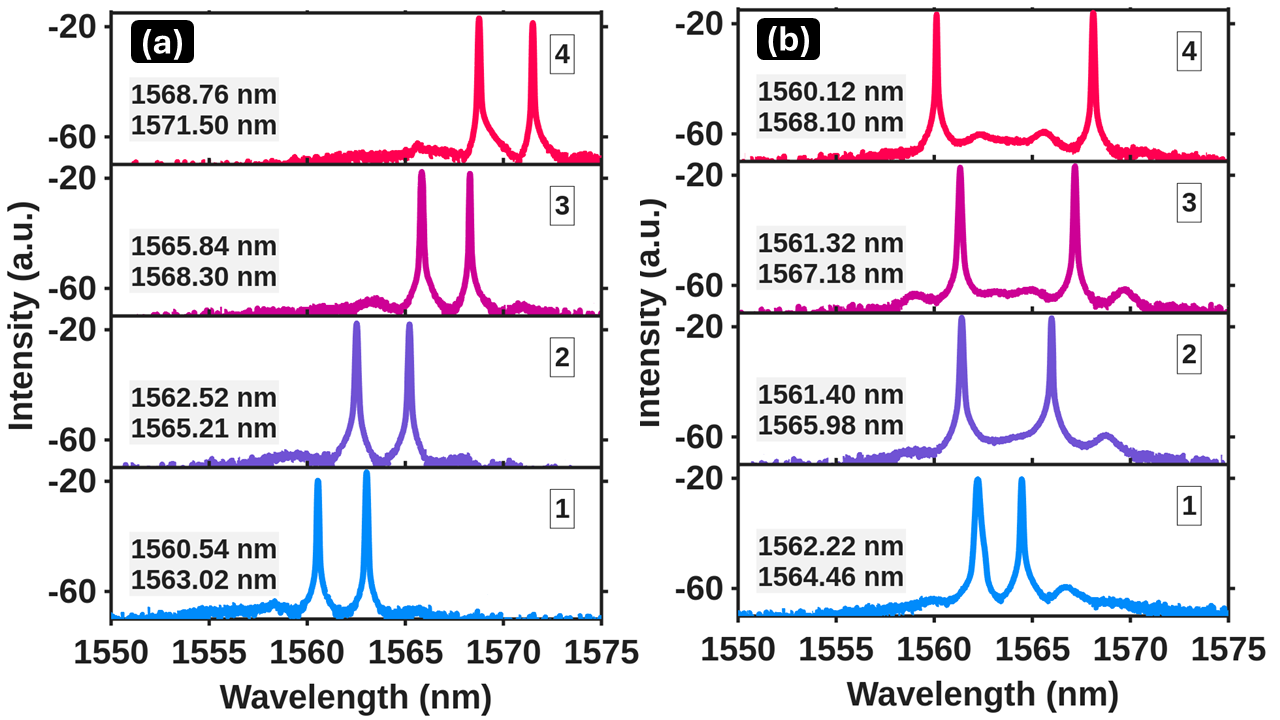
Figure 10: Dual-wavelength tuning in (a) same and (b) opposite directions, illustrating flexible polarization-controlled spectral translation.
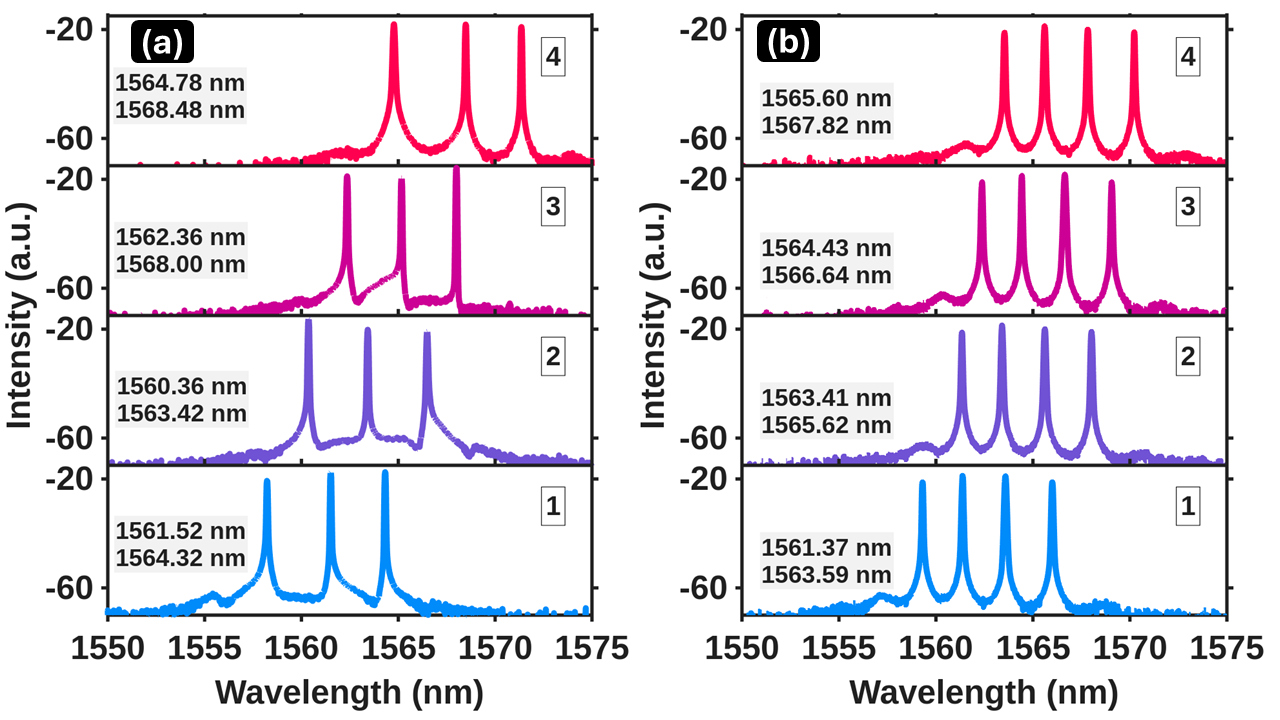
Figure 11: (a) Three-wavelength and (b) four-wavelength tunabilities, with multi-channel peaks tuning collectively under birefringence control.
The collective movement of spectral lines validates that the transmission function behaves as a birefringent comb, with the periodic maxima shifted by changes in effective birefringence and nonlinear phase.
Dynamic Channel Switching and Optical Binary Operation
The cavity supports abrupt, fully reversible, and combinational switching of lasing channels without hardware change or pump variation. Stepwise transitions (activation/suppression) can realize any binary state in the presence of two, three, or four available wavelengths, demonstrating direct optical mapping for binary logic.
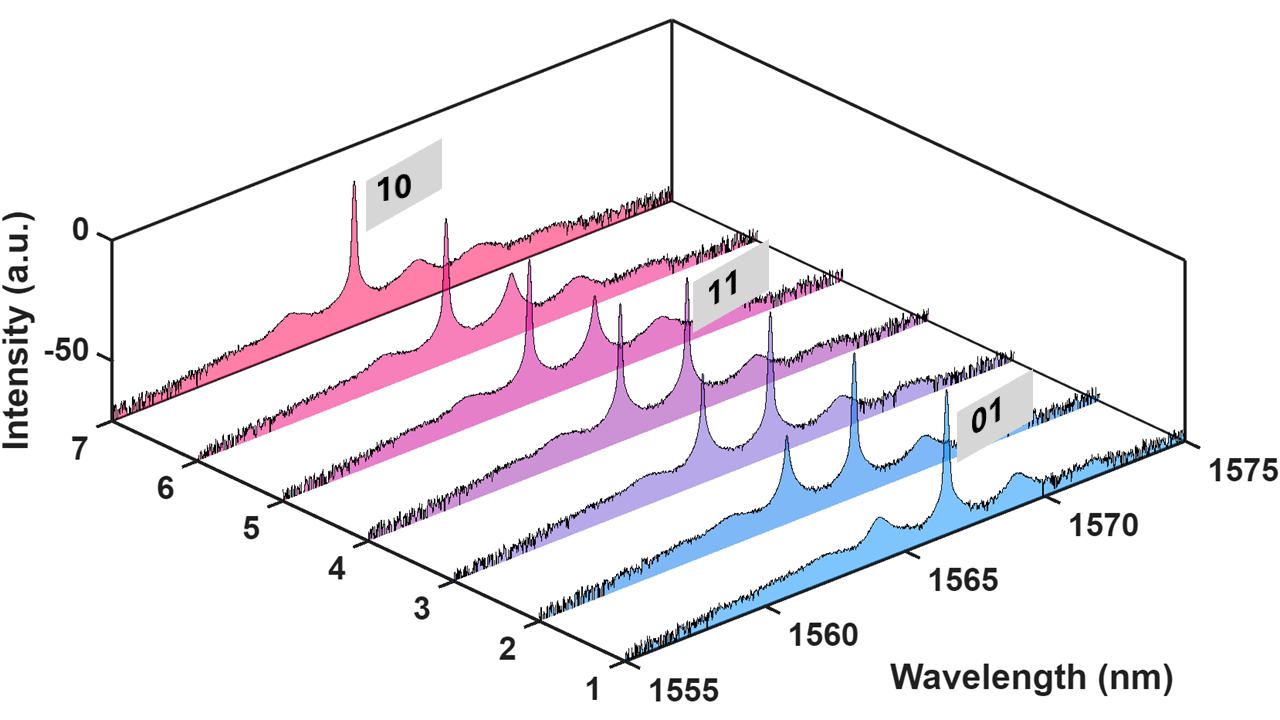
Figure 12: Demonstration of wavelength switching in two-wavelength operation, including individual and simultaneous activation/suppression.
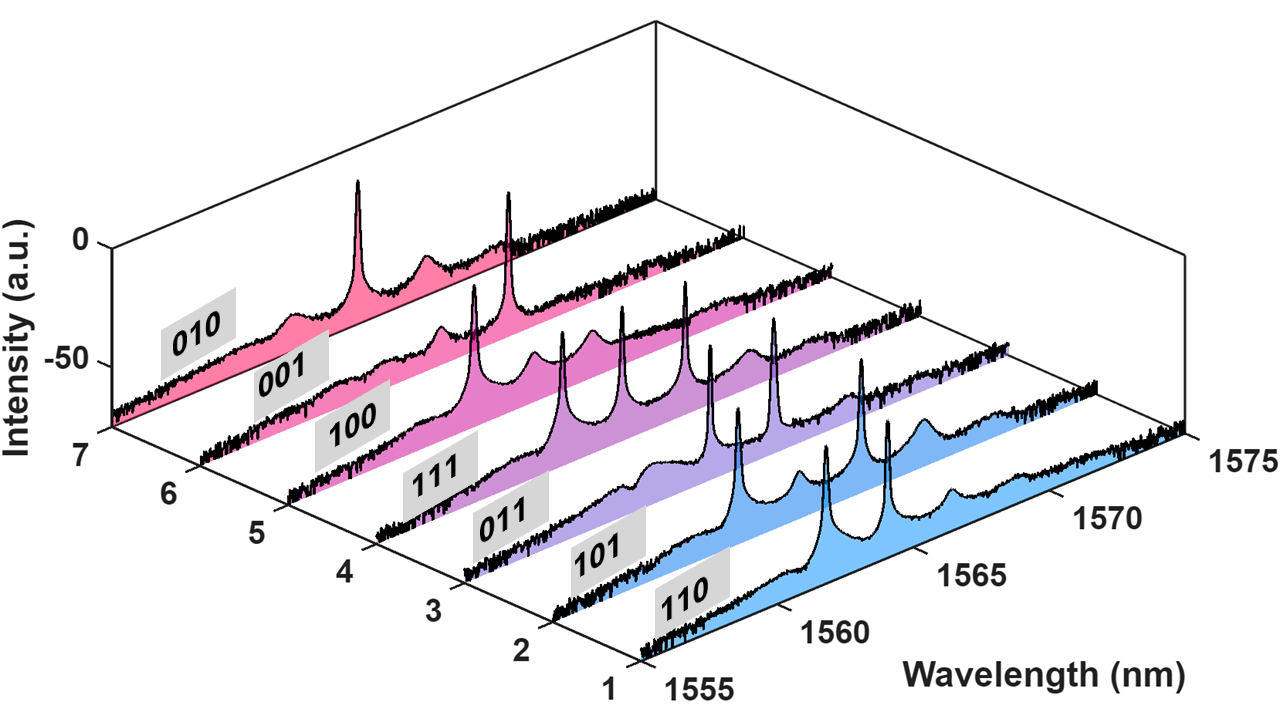
Figure 13: Switchability across all possible three-bit binary states for the three-wavelength mode-locked fiber laser.
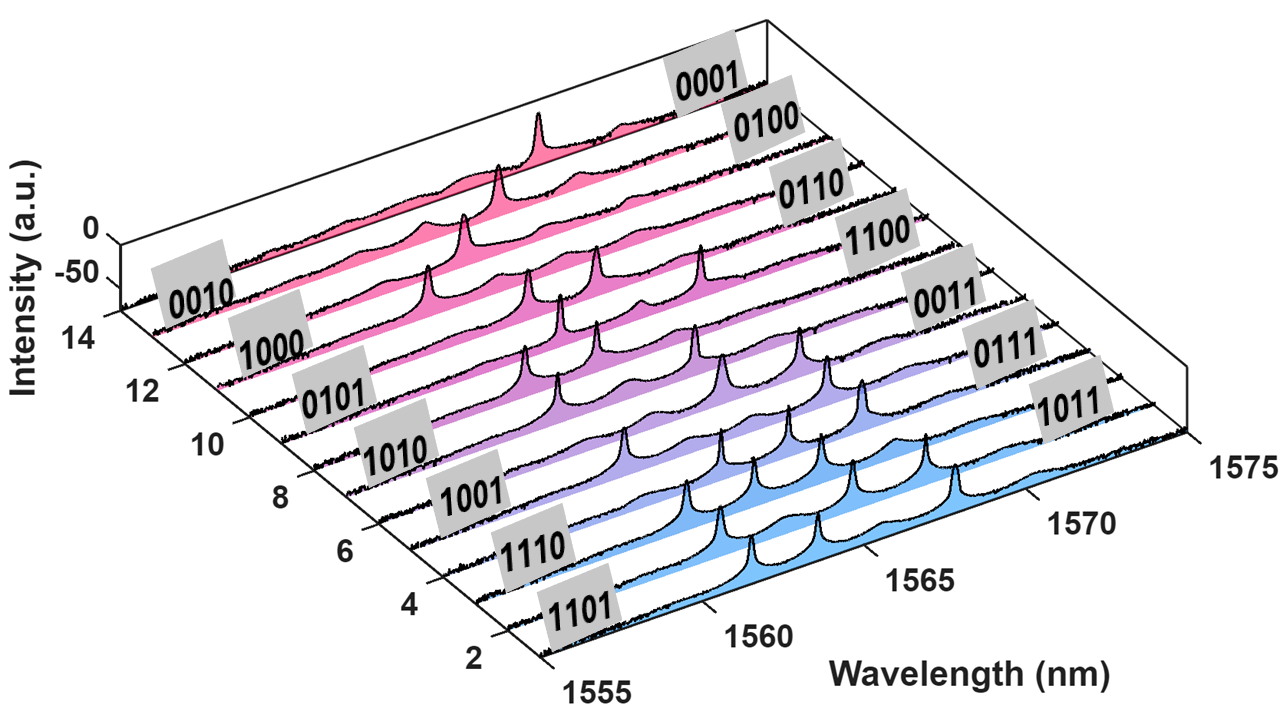
Figure 14: Four-bit binary operation in the four-wavelength mode-locked configuration, showing arbitrary combination of active/inactive channels.
The deterministic nature and repeatability of channel control arise from the polarization-controlled, wavelength-dependent cavity loss imposed by NPR and not from stochastic mode competition.
Implications and Perspectives
The demonstrated architecture provides several unique practical and theoretical advantages:
- Practicality: Fully all-fiber, alignment- and maintenance-free construction; absence of external filtering elements; compact, robust platform.
- Functionality: High-order and continuous tunability; deterministic, rapid, and combinational channel switching; strong channel equalization; temporal synchronization across all emitting lines.
- Applications: Reconfigurable ultrafast sources for DWDM, multi-channel sensing, photonic neural networks, optical logic, and advanced instrumentation.
- Theoretical significance: Clear illustration of how Kerr-induced and birefringence-engineered NPR enables gain equalization, phase locking, and effective mitigation of mode competition; possibility for future integration with adaptive polarization control or programmable birefringent devices.
- Extension: Methodology can generalize to other gain media and bands (e.g., thulium- or ytterbium-doped fibers), as well as to nonlinear photonic circuits for on-chip multi-wavelength sources.
Conclusion
This study demonstrates an all-fiber, NPR-based mode-locked EDFL achieving tunable, switchable, and synchronized multi-wavelength emission from one to seven channels. The unique interplay between birefringent filtering and nonlinear phase modulation enables continuous tuning, abrupt and combinational channel switching, and phase-locked multi-channel pulse generation. The architecture's simplicity, robustness, and rich functionality establish it as a strong candidate for next-generation DWDM and multi-channel photonic systems, and it provides a model framework for engineering multi-wavelength ultrafast sources with unparalleled reconfigurability.
(2604.10198)