- The paper presents a novel algorithm that efficiently mines low-dimensional attribute subspaces for targeted fine-tuning of 3D foundation models using LoRA.
- It employs singular value decomposition to extract orthogonal subspaces associated with texture, geometry, camera motion, and lighting, enabling robust adaptation.
- Experiments on face anti-spoofing and clothed human reconstruction demonstrate significant compute savings and improved transfer performance.
Mining Attribute Subspaces for Parameter-Efficient Fine-Tuning of 3D Foundation Models
Introduction
The paper "Mining Attribute Subspaces for Efficient Fine-tuning of 3D Foundation Models" (2604.10095) addresses an increasingly critical challenge in 3D vision: enabling parameter-efficient adaptation of large pretrained 3D foundation models to specific downstream tasks. Modern 3D foundation models, exemplified by backbones such as VGGT-1B, exhibit considerable representational capacity, yet their broad applicability is frequently bottlenecked by the cost and inefficiency of naïve full fine-tuning procedures. This work systematically mines low-dimensional attribute subspaces associated with distinct semantically meaningful factors—such as texture, geometry, camera motion, and lighting—for task-specific and efficient adaptation via rank-constrained weight updates, notably leveraging the LoRA (Low-Rank Adaptation) paradigm.
Methodology
The core technical contribution is an algorithmic pipeline that, given pretrained weights, automatically discovers, extracts, and allocates low-rank subspaces corresponding to specific 3D scene attributes. These discovered subspaces are subsequently used to enable highly parameter-efficient fine-tuning for new tasks.
Subspace extraction is performed by analyzing the singular value spectrum of parameter variation matrices aggregated from multiple attribute-specific LoRA adapters. Concretely, for each semantic attribute, LoRA adapters are trained under controlled synthetic dataset variation, and differences in corresponding parameter spaces are stacked. Singular Value Decomposition (SVD) reveals the effective rank and the principal directions (subspaces) that dominantly account for each attribute’s variability.
Assignment of rank budgets is addressed via two strategies: a uniform allocation, where each targeted layer receives the same rank; and an importance-based dynamic allocation proportional to layerwise effective rank, computed as the squared ratio of the Frobenius to spectral norm. Notably, empirical benchmarks indicate negligible performance differences between these strategies, attesting to the robustness of the proposed low-rank subspace mining across allocation heuristics.
During downstream adaptation, fine-tuning is exclusively constrained to these discovered subspaces, leaving the bulk of the foundation model parameters frozen (notably, the DINO encoder). This results in significant memory and compute savings while retaining high task performance.
Experimental Results
The experimental protocol demonstrates broad transfer and robust generalization across a range of synthetic and real domains. Two representative tasks are analyzed:
- 2D Face Anti-Spoofing: Attribute subspaces for texture and geometry are identified. Fine-tuning within these subspaces yields reconstructions that display superior fidelity across diverse scenes, with fewer artifacts compared to baselines. Notably, the method's transferability to out-of-distribution samples is visually and quantitatively validated.
- Clothed Human Reconstruction: Here, the authors extract four distinct attribute subspaces (texture, geometry, camera, lighting), fine-tuning on object-centric datasets (THuman and 2K2K). Results indicate that reconstructions are robust even in challenging, cross-domain generalization settings.
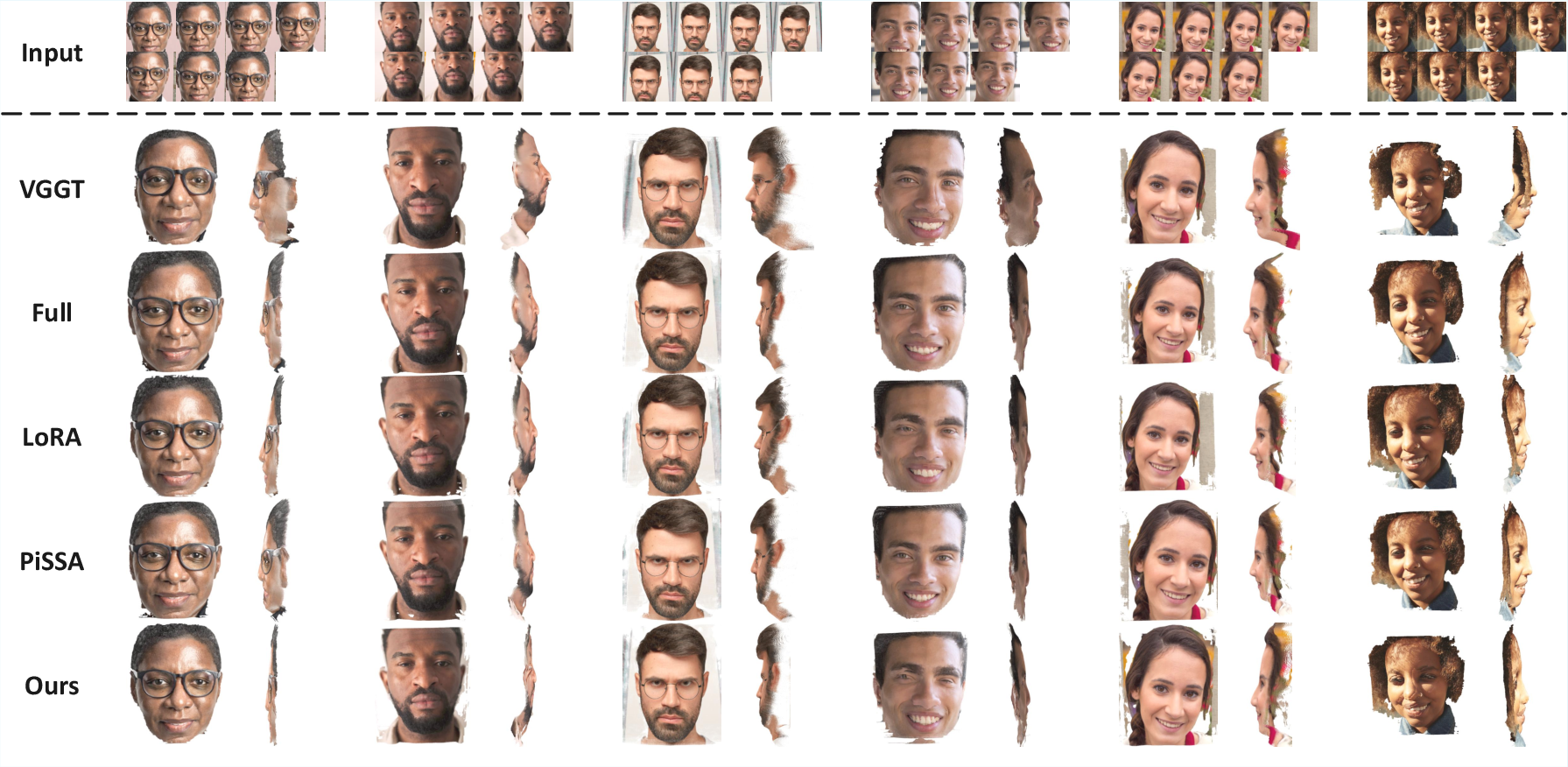
Figure 1: 2D Face anti-spoofing visualizations affirm the method’s artifact suppression and fidelity across scenes.
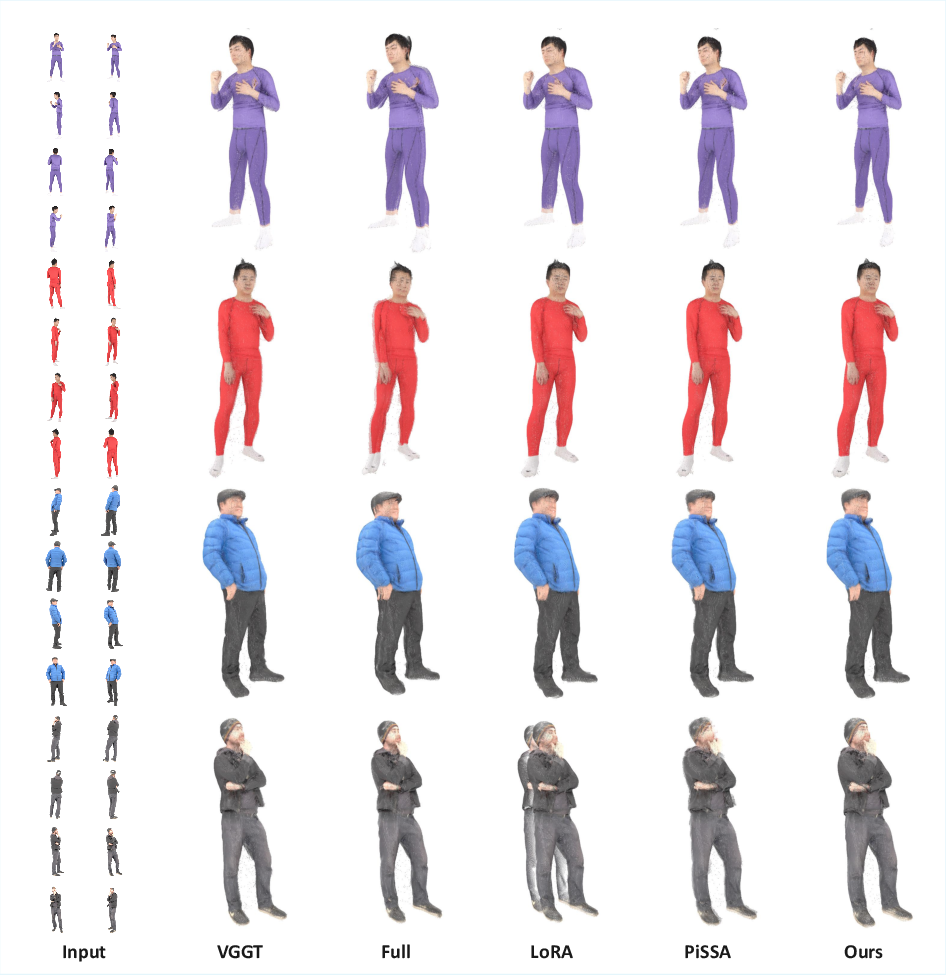
Figure 2: Visual comparisons of clothed human reconstruction highlight resilience against domain shifts and strong generalization.
Analysis of the spectrum of singular values for the parameter aggregation matrices C (in log scale) shows a rapid decay, indicating that a small number of directions explain most attribute-driven variation. Orthogonality analysis across extracted subspaces demonstrates minimal overlap, supporting the assertion that semantically meaningful factors can be independently manipulated and adapted.
The training pipeline is efficient: subspace fine-tuning on a single NVIDIA H200 GPU, with batches of 32 images over 24,000 steps, completes in roughly 20 hours, testifying to the practical tractability of the approach for large-scale deployment.
Theoretical and Practical Implications
This study directly addresses a core limitation in the deployment of 3D foundation models: the inefficiency and redundancy of full-parameter fine-tuning. By mining and exploiting low-dimensional, largely orthogonal subspaces tied to interpretable 3D factors, the method enables:
- Targeted Adaptation: Only those parameter directions relevant to the downstream task are tuned, dramatically reducing overfitting risk and improving sample efficiency.
- Attributional Interpretability: Decoupled subspaces provide a means of attributing changes in predictions to particular physical factors (e.g., lighting or pose), enhancing controllability and diagnosability.
- Scalability: Since memory and compute requirements scale with subspace rank rather than full model parameter count, multi-attribute or multi-task adaptation becomes feasible even for very large 3D models.
The approach also indirectly supports expansion to compositional zero-shot or multi-task scenarios, as orthogonalized subspaces can in principle be mixed and matched to configure novel attribute combinations.
Limitations and Future Directions
While the attribute subspaces are shown to be robust for the analyzed factors (texture, geometry, camera, lighting), as the diversity and complexity of potential scene attributes grow, challenges may emerge regarding maintaining strict orthogonality or handling non-linear entanglements. The current pipeline also leverages synthetic control—scaling to fully real-world data remains an open avenue.
Future research could address mining non-linear (manifold) subspaces, integrating multi-modal attributes (semantics, temporality), and automated subspace discovery in an end-to-end differentiable framework. Furthermore, extending this paradigm to other domains (e.g., generative modeling, robotics) would be a natural progression.
Conclusion
This work establishes a principled foundation for parameter-efficient, attribute-decomposed fine-tuning in large 3D foundation models by explicitly mining semantically linked low-dimensional subspaces. The method is demonstrated to produce robust, transferable, and high-quality reconstructions across representative tasks with substantial computational savings. These advances carry significant implications for scalable, interpretable, and practical use of foundation models in 3D vision, setting the stage for further innovation in efficient transfer and controllable adaptation pipelines in high-dimensional model settings.