- The paper introduces a geometric framework connecting the non-Hermitian skin effect with a right eigenstate-based quantum metric that captures localization lengths.
- It employs canonical models like Hatano-Nelson and non-Hermitian SSH chains to demonstrate distinct divergence behaviors and boundary sensitivity under varied conditions.
- The study highlights implications for engineered quantum systems, enabling experimental detection of nonanalytic features and critical scaling at gapless transitions.
Quantum Geometry of the Non-Hermitian Skin Effect: A Technical Survey
Introduction and Context
The non-Hermitian skin effect (NHSE), resulting from nonreciprocal hopping in open quantum systems, generates extensive boundary-localized states and induces dramatic sensitivity to boundary conditions. While the geometric and topological properties of Hermitian Hamiltonians have been extensively quantified via Berry phases and quantum metrics, a general framework for the quantum geometry of non-Hermitian systems—particularly in relation to the NHSE—has remained elusive. This work establishes a geometric framework that explicitly connects the NHSE to the quantum metric constructed from right eigenstates, setting it apart from the biorthogonal metric involving both left and right eigenstates. The theoretical development is anchored using canonical models: the Hatano-Nelson model and generalized non-Hermitian Su-Schrieffer-Heeger (NH-SSH) chains.
Quantum Metric Structures in Non-Hermitian Systems
For Hermitian Hamiltonians, the Fubini-Study quantum metric, derived from the symmetric part of the quantum geometric tensor, quantifies the infinitesimal distance between states under parameter variations. Extending this to non-Hermitian systems, the lack of equivalence between right and left eigenstates enables multiple inequivalent generalizations:
- Right-based metric (χRR): Built from the right eigenstate alone.
- Biorthogonal metric (χLR): Involves both right and left eigenstates.
While both reduce to the standard Hermitian metric in the Hermitian limit, they can encode distinct geometric and physical content in the non-Hermitian regime.
Hatano-Nelson Model: Localization Length and Quantum Metrics
The Hatano-Nelson model—an archetype for NHSE—provides clear-cut insight into the metric–localization correspondence.
For periodic boundary conditions (PBCs), right and left eigenstates are extended plane waves, and the quantum metric scales quadratically with system size, reflecting delocalization. Under open boundary conditions (OBCs), a non-unitary similarity transformation exposes the eigenstates' exponential localization, parameterized by g=21log(J−γJ+γ).
Critically, the right-based metric χRR captures the skin localization length (scaling as 1/sinh2g), directly reflecting the NHSE-induced collapse of the eigenstates, while the biorthogonal metric χLR remains system-size dependent and insensitive to g:
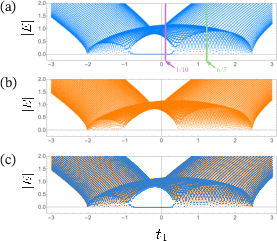
Figure 1: Complex spectrum of the generalized non-Hermitian SSH model, illustrating spectral evolution as system parameters are tuned under OBCs.
These results highlight that only the right-state metric encodes the localization scale responsible for the NHSE.
NH-SSH Chains: Boundary Sensitivity and Metric Singularities
In the NH-SSH model, the interplay of internal (sublattice) structure and boundary-sensitive NHSE calls for a geometric analysis beyond scalar models. Utilizing the non-Bloch band theory formalism, the quantum geometry is probed on the generalized Brillouin zone (GBZ), where wavevectors become complex.
Both χRR and χLR exhibit divergences at gap-closing points. However, the divergence order depends on the metric type:
- χRR shows first-order (simple pole) divergence at gap closings where, e.g., χLR0 and χLR1.
- χLR2 has a second-order pole in its real part, with the imaginary part diverging as a first-order pole.
This differentiated critical scaling at quantum phase transitions is a salient diagnostic for the structural distinction between these metrics.
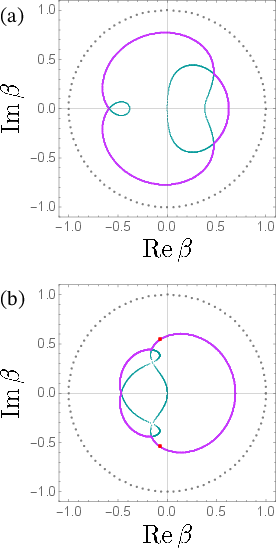
Figure 2: Generalized Brillouin zone trajectories for two representative parameter choices, revealing the nontrivial topology and the emergence of cusp singularities.
Non-Bloch Band Theory: Cusps and Nonanalyticity
By analyzing generalized NH-SSH models with longer-range hopping and additional non-Hermitian terms, the GBZ is shown to generically possess nonanalytic points (cusps), which can correspond to branch switching in the band structure.
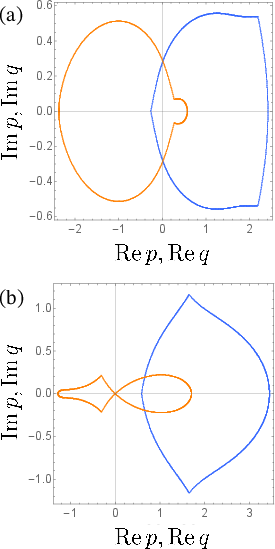
Figure 3: Trajectories of χLR3 and χLR4 in the complex plane along the GBZ, capturing winding numbers linked to topological features.
Both χLR5 and χLR6 are discontinuous at cusps, establishing quantum geometry as a diagnostic for detecting nonanalytic features in the band structure that are unique to non-Hermitian physics. The discontinuities do not always signal topological transitions, but rather reconstruct the geometric backdrop against which such transitions become possible.
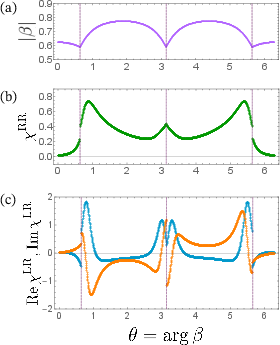
Figure 4: Singular behavior in χLR7 and χLR8 at cusps, where distinct jumps or kinks emerge at specific angles χLR9 on the GBZ.
Critical Scaling at Gapless Points and Divergence Cancellation
At generic gap closing (either g=21log(J−γJ+γ)0 or g=21log(J−γJ+γ)1, not both),
g=21log(J−γJ+γ)2
and
g=21log(J−γJ+γ)3
However, when both g=21log(J−γJ+γ)4 and g=21log(J−γJ+γ)5 vanish simultaneously at a gapless point, leading divergences cancel, yielding finite quantum metrics even at the transition:
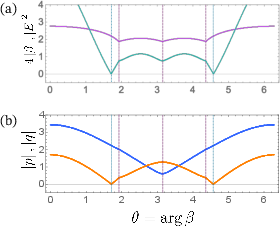
Figure 5: Both g=21log(J−γJ+γ)6 and g=21log(J−γJ+γ)7 vanish at the transition, but the quantum metrics remain regular at g=21log(J−γJ+γ)8, demonstrating robust cancellation of naive divergences.
This behavior is robust and controlled, as illustrated by high-precision calculations and log-log scaling analyses:
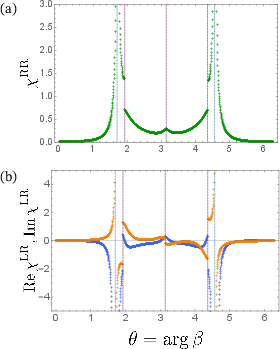
Figure 6: Log-log plot showing the critical exponents of divergence in g=21log(J−γJ+γ)9, χRR0, and χRR1 near a GBZ gapless point.
Implications and Future Directions
The sharp distinction between the right eigenstate metric and the biorthogonal metric in encoding localization, boundary sensitivity, and criticality carries direct implications for both fundamental aspects of non-Hermitian quantum mechanics and practical observables in engineered quantum materials. The findings propose χRR2 as the physically meaningful geometric metric for quantifying NHSE-induced localization, while highlighting the biorthogonal metric’s limitations in this context.
In generic non-Hermitian bands, especially in higher dimensions or with disorder/many-body effects, coexistence of skin and extended bulk states poses an open question for the structure of quantum geometry. Furthermore, experimental detection of GBZ nonanalyticities (cusps) via quantum metric–sensitive observables remains an important direction, particularly given the successful use of quantum metric responses in Hermitian systems.
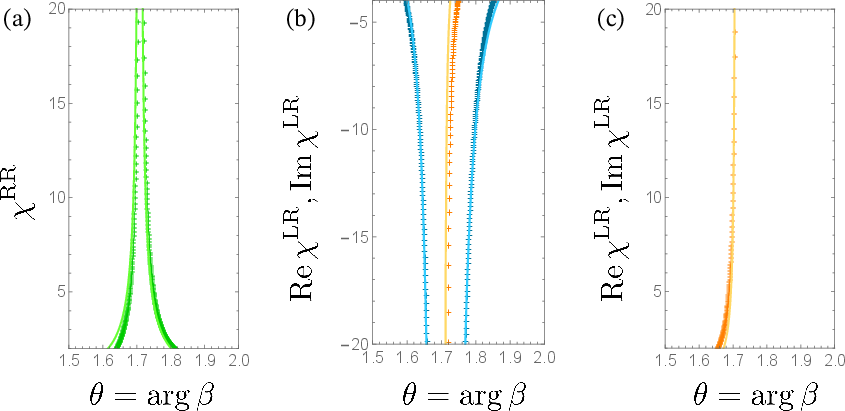
Figure 7: Divergence of quantum metrics in the vicinity of gapless points, obtained with high numerical resolution, confirming analytic scaling predictions.
Conclusion
This work develops and substantiates a geometric characterization of the non-Hermitian skin effect, with the quantum metric formed from right eigenstates serving as the key quantity encoding real-space localization and boundary sensitivity. Through explicit analytic and numerical studies of both Hatano-Nelson and NH-SSH-type chains, the research demonstrates the distinct roles of various quantum metrics, their critical divergences, and the detection of nonanalyticities in generalized Brillouin zones. The results open the way toward a deeper understanding of geometric structures in non-Hermitian quantum systems and their observable consequences in synthetic and quantum materials with engineered dissipation or nonreciprocity.
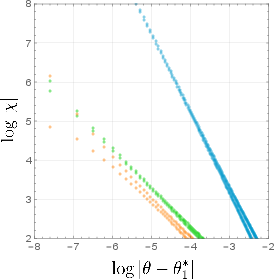
Figure 8: Quantum metric divergence and critical scaling confirmed via log-log plot near a GBZ gapless point, with fitted slopes corresponding to analytic predictions.
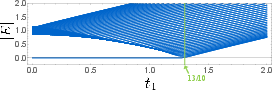
Figure 9: Complex energy spectrum as a function of model parameters, showing phase transitions between topologically trivial and nontrivial states under OBCs.
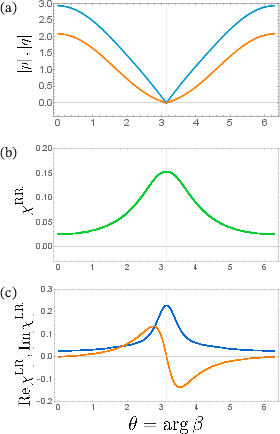
Figure 10: Explicit cancellation of divergences in quantum metrics at gapless points where both χRR3 and χRR4 vanish, illustrating analytic regularity through parameter tuning.

