- The paper introduces TME-PSR, a novel framework that integrates temporal dynamics, multi-interest disentanglement, and explanation personalization to boost recommendation accuracy.
- It leverages a dual-view gated time encoder and multihead LRU to efficiently capture short-term and long-term user behaviors while reducing computational complexity.
- Empirical results across datasets show significant improvements in Recall/NDCG and explanation quality, underscoring the model’s practical efficiency and enhanced user engagement.
TME-PSR: Joint Time-aware, Multi-interest, and Explanation Personalization for Sequential Recommendation
Introduction
The TME-PSR framework introduces a comprehensive solution to sequential recommendation by jointly modeling three orthogonal personalization aspects: time-aware behavior, fine-grained user interests, and individualized explanation alignment. Unlike prior work that typically isolates these aspects, TME-PSR interlocks temporal rhythm modeling, efficient sub-interest disentanglement, and adaptive semantic alignment between recommendations and natural language rationales. This approach directly addresses the heterogeneity and complexity of user interaction patterns encountered in modern recommendation platforms, where both item engagement dynamics and the need for transparent, personalized explanations are pivotal.
Sequential recommendation is formulated as predicting the next item and its explanation for a user given a historically timestamped item-explanation interaction sequence. The authors identify three sources of heterogeneity that impede optimal recommendation and explanation:
- Temporal Rhythm Preference: Users exhibit distinct short/long-term behavioral cycles, requiring explicit modeling to differentiate between recent surges of interest and established, recurring patterns.
- Multi-interest Decomposition: Single-user sequences frequently encompass multiple, sometimes mutually independent, latent interests and sub-interests (e.g., overlapping genre, franchise, or functional preferences).
- Explanation Personalization: The optimal semantic alignment between item recommendations and rationales is not user-invariant — some users require highly tailored, contextually rich explanations, while others prefer generic justifications.
Motivating examples highlight the importance of these aspects (Figure 1).
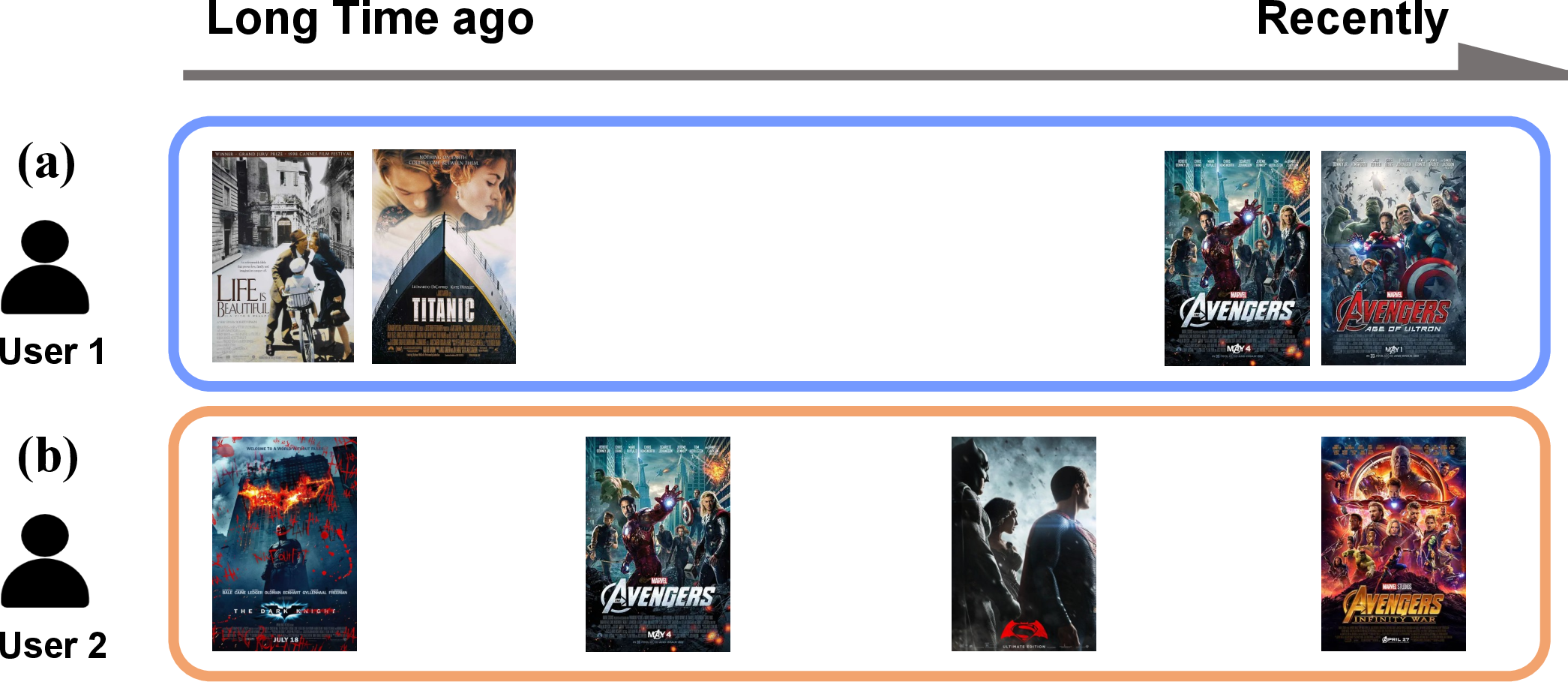
Figure 1: Two user movie interaction sequences highlight shifting and multi-aspect interests — with different requirements for temporal and multi-interest modeling.
Model Architecture
The TME-PSR architecture is modular yet tightly integrated, comprising:
- Dual-view Gated Time Encoder: Extracts per-user, per-task (recommendation/explanation) temporal embeddings, dynamically weighting short-term versus long-term temporal signals.
- Multihead Linear Recurrent Unit (LRU) Encoder: Disentangles multiple fine-grained sub-interests with lightweight, efficient recurrent streams, each responsible for modeling a distinct interest component.
- Dynamic Dual-branch Mutual Information (MI) Weighting: Learns personalized, per-user alignment weights for recommendation and explanation, optimizing semantic proximity according to individual alignment preference.
The overall structure is shown in Figure 2.
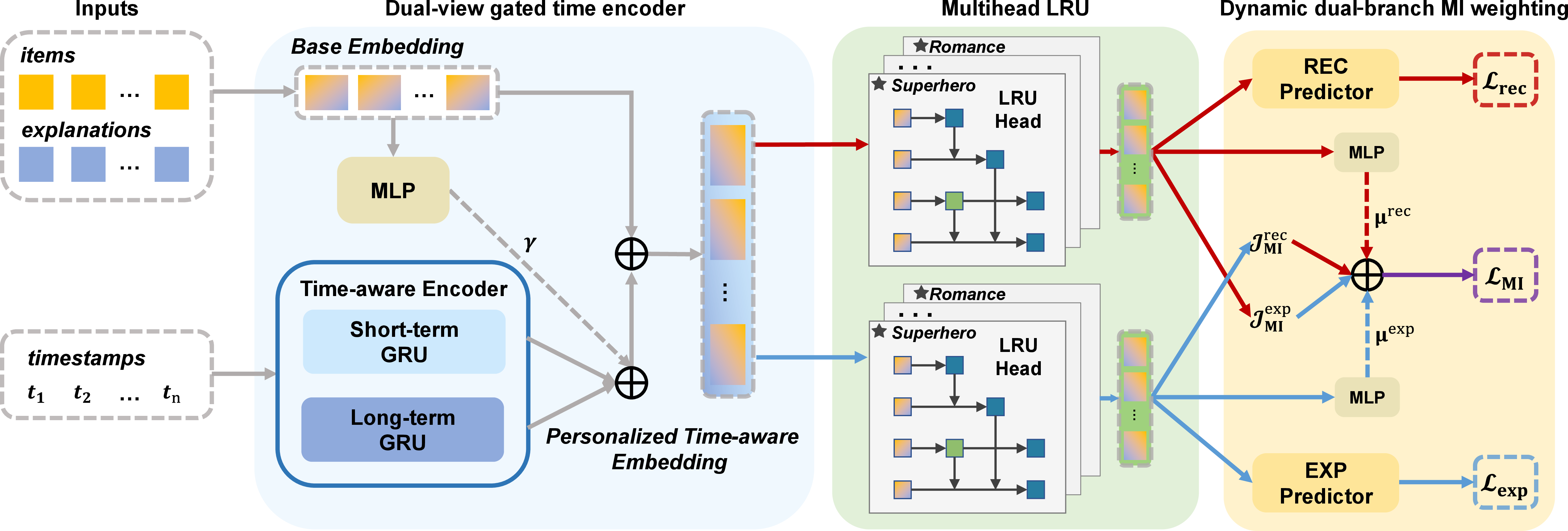
Figure 2: End-to-end TME-PSR pipeline; at each layer, personalized signals (time, interests, semantic correspondence) are adaptively weighted, culminating in joint prediction and explanation.
Time-aware Personalization
Timestamp sequences are mapped to both short-term (adjacent interval) and long-term (absolute time since sequence start) features using separate GRUs. A gating mechanism, parameterized by per-task, per-user learned gates, fuses these features to capture idiosyncratic temporal rhythms. Notably, the gating is dynamically adjusted, reflecting each sequence’s behavioral density and task requirements.
Empirical comparison of different gating strategies (fixed long/short-term, equal weights, adaptive gating) demonstrates the superiority of the adaptive dual-view approach (Figure 3).
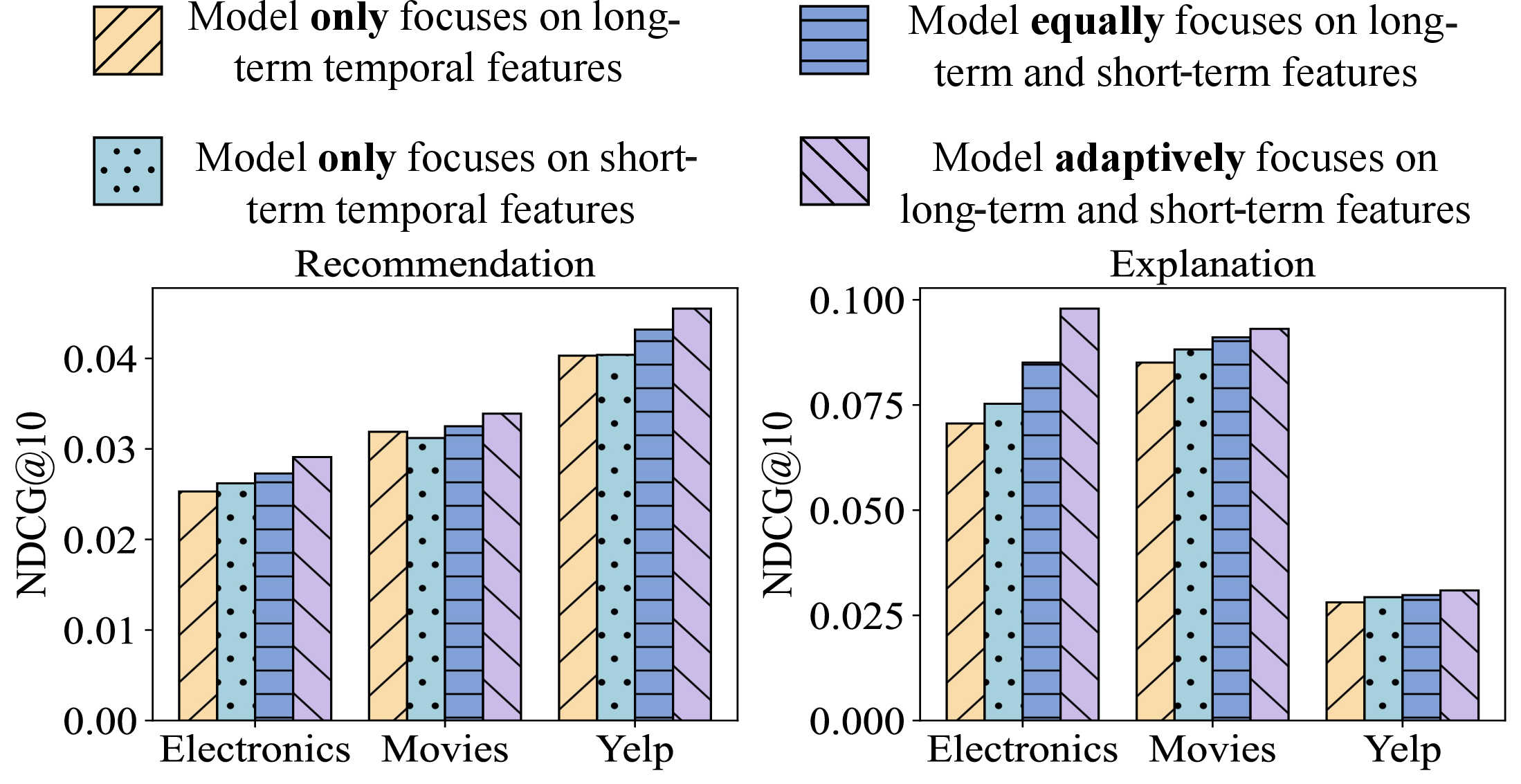
Figure 3: Adaptive dual-view gating on temporal signals consistently outperforms single-pattern or fixed-weight strategies.
Multi-interest Personalization
Each time-aware embedding is partitioned into H subspaces; H parallel recurrent streams (the multihead LRU) independently model these. This structure supports fine-grained interest disentanglement while scaling favorably in both parameter count and computational footprint, with time/space complexity inversely proportional to H.
Systematic evaluation across d (embedding size) and H demonstrates that optimal head count increases with representation dimensionality and yields concurrent gains in accuracy, parameter reduction, and efficiency (Figure 4). Efficient sub-interest modeling is further visualized using t-SNE clusters of head outputs (Figure 5).
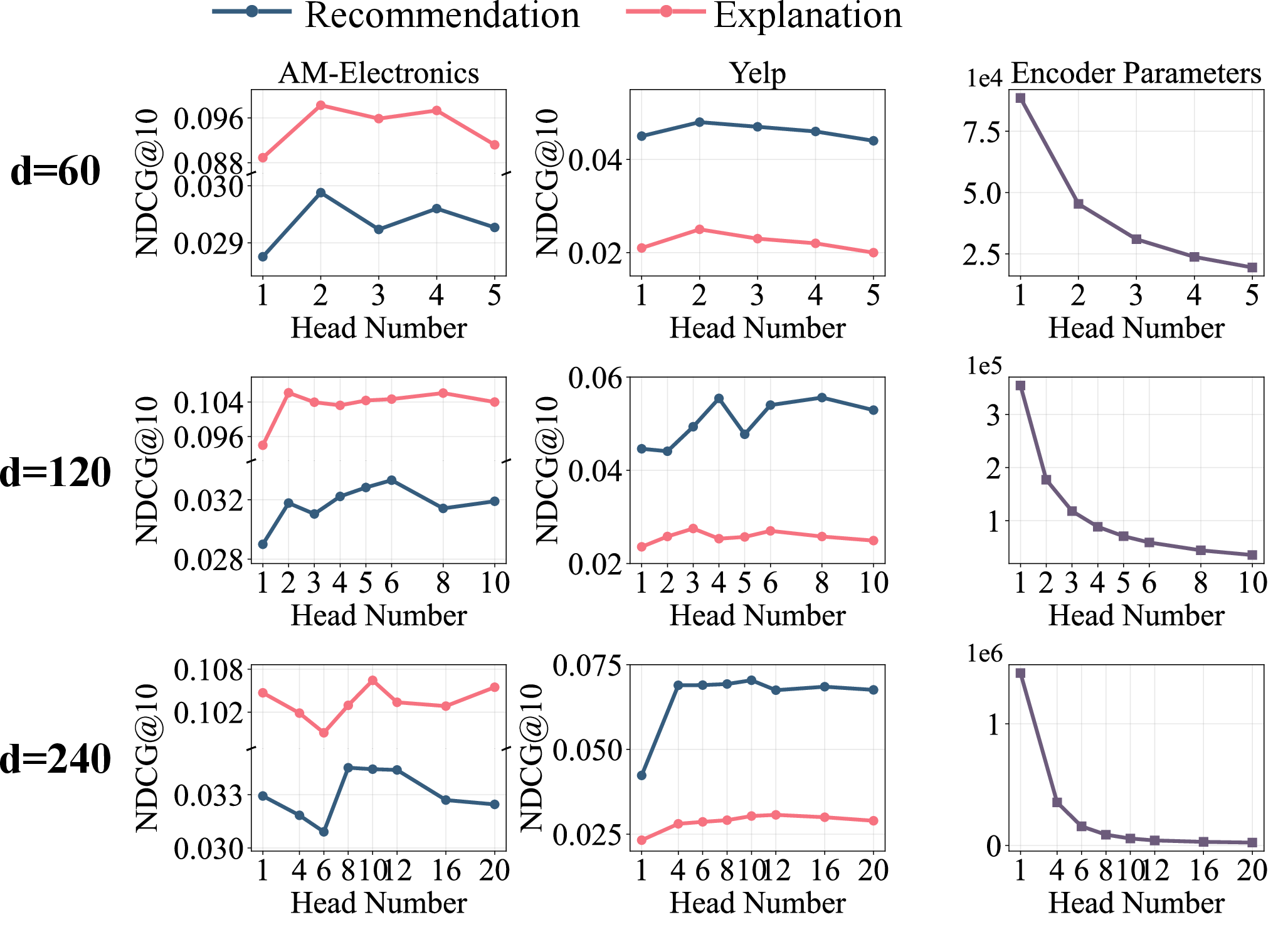
Figure 4: As head number H increases (with sufficient d), performance improves up to an optimal point, and model parameters decrease inversely.
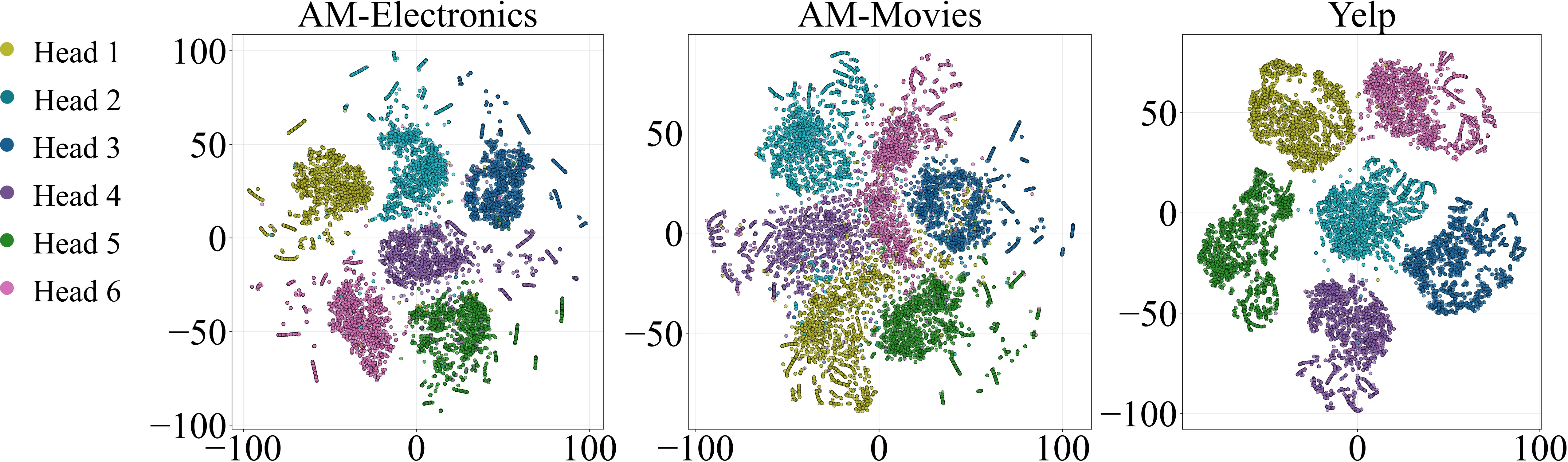
Figure 5: t-SNE projections show distinct, non-overlapping interest subspace clusters across multihead outputs, confirming effective disentanglement.
The efficiency benefits of multihead LRU over established recurrent and Transformer-based encoders are quantitatively supported (Figure 6).
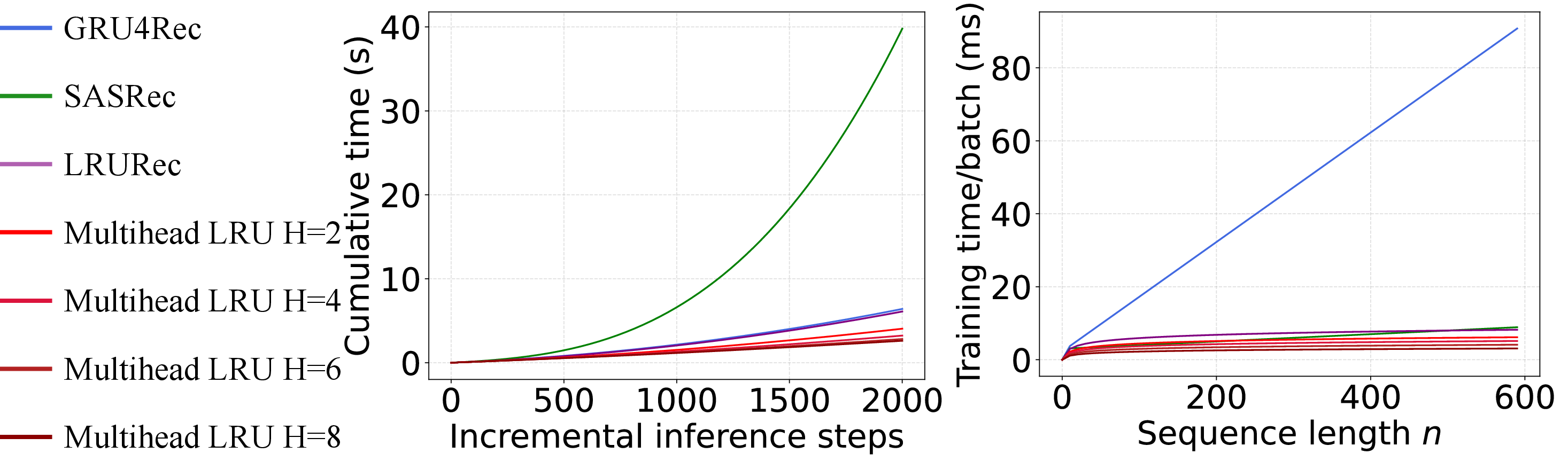
Figure 6: TME-PSR's multihead LRU achieves superior inference/training costs as head count grows, outperforming classic sequence encoders.
Explanation Personalization
Building on mutual information maximization approaches, TME-PSR introduces per-user, dual-branch MI weights — independently learned for item and explanation prediction — to modulate the alignment strength between recommended items and generated rationales. Ablation across fixed, shared, and dual-dynamic weighting validates the two-parameter, branch-specific approach (Figure 7).
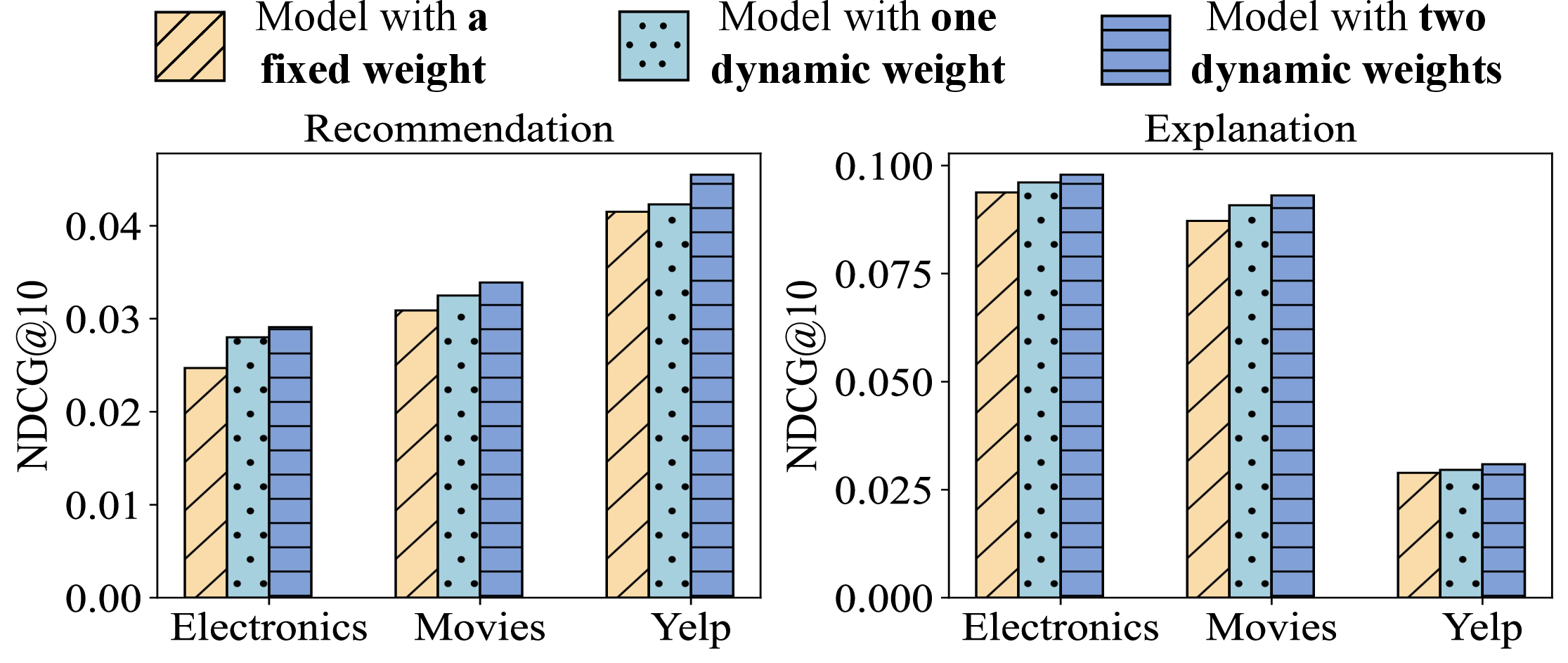
Figure 7: Dynamic dual-branch MI weighting markedly outperforms fixed or single-weight baselines in both recommendation and explanation quality.
Further, the learned weights show empirically that most users do not demand strong alignment, but a meaningful subset requires intense semantic correspondence — and these aligners segment into distinct behavioral groups (Figure 8). User-level clustering reveals population heterogeneity across three axes: balanced, recommendation-centric, and explanation-centric alignment needs.
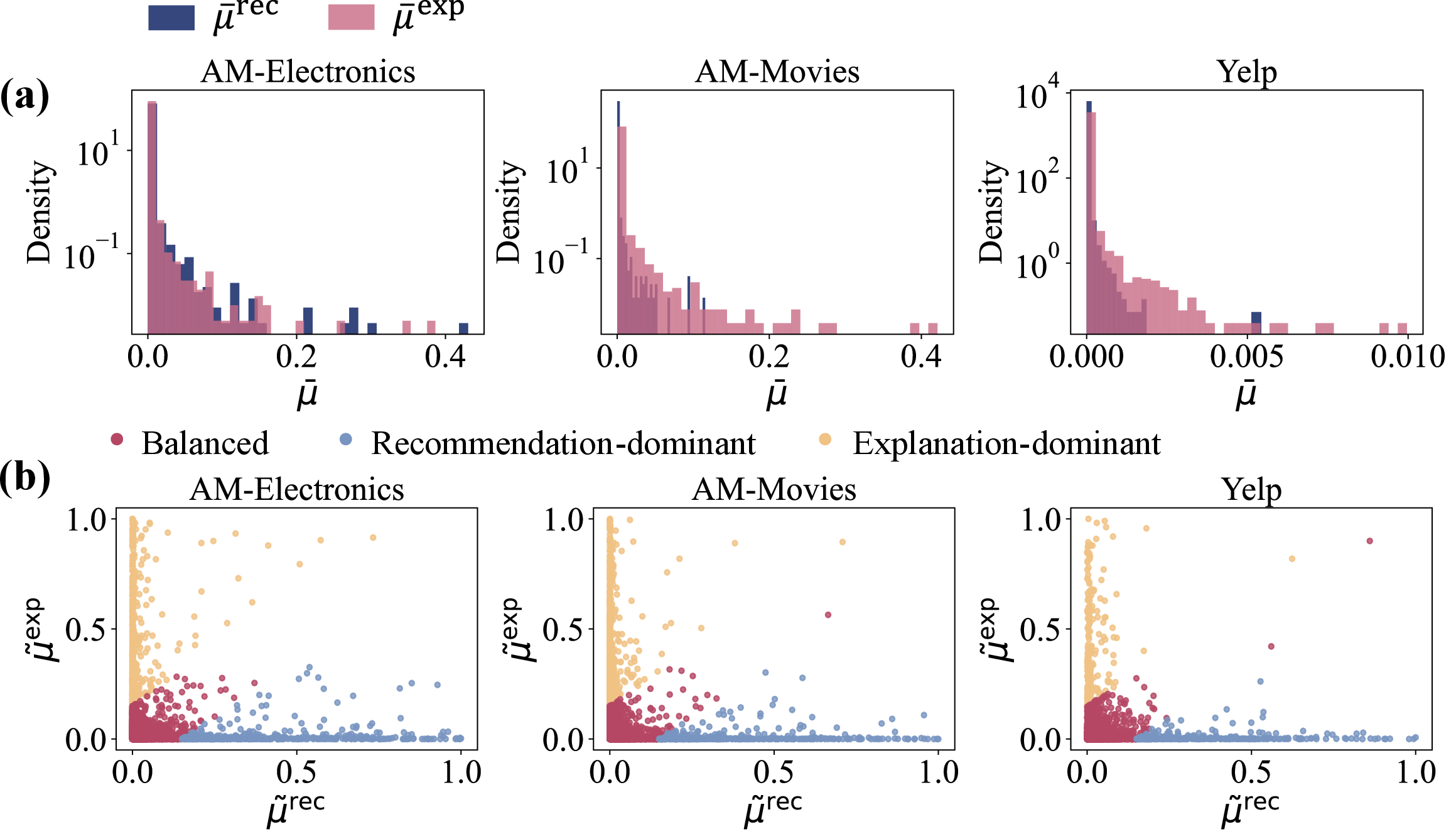
Figure 8: Distribution and clustering of learned dynamic MI weights expose three primary user alignment subtypes.
Experimental Results
TME-PSR achieves improvements from 10.7% to 37.3% in Recall/NDCG@10 for recommendation, and up to 25.7% for explanation tasks relative to the best baselines across Amazon Electronics, Amazon Movies, and Yelp datasets. All gains are achieved with reduced parameter count and improved run-time efficiency, as summarized in the main results.
Ablation studies indicate substantial synergy between the three modules: their joint deployment yields additive (and at times super-additive) gains beyond what any module achieves in isolation or pairwise combination.
Hyperparameter and gating weight analyses confirm the model’s ability to adapt to sequence-level and cohort-level temporal dynamics. Complexity analysis demonstrates that the proposed architecture is substantially more efficient than standard RNN or Transformer-based baselines.
Implications and Future Directions
The explicit, modular factorization of personalization into temporal, multi-interest, and explanation axes is a significant refinement of the sequential recommendation paradigm. The plug-and-play dual-view time encoder and efficient multihead recurrent encoder provide blueprint components for integration into next-generation recommendation systems, especially those operating at industrial scale under latency and explainability constraints.
Practically, personalization of explanation alignment paves the way for more user-engaged, trustworthy systems, potentially reducing churn and increasing satisfaction in markets (e.g., e-commerce, streaming) where user control and model transparency are central.
Potential future research avenues flowing from TME-PSR include:
- Extending modular personalization to cross-domain and heterogeneous multi-modal settings (e.g., text, image, knowledge graphs).
- Deepening the integration between causal inference and personalized user explanation modeling.
- Incorporating active learning or interaction feedback loops to further individualize recommendation and explanation adaptation.
Conclusion
TME-PSR establishes a new standard for sequential recommendation by simultaneously and efficiently personalizing over temporal rhythms, latent interest subspaces, and explanation alignment. The model substantiates strong empirical improvements in both recommendation and explanation generation tasks, alongside parameter and run-time efficiency — providing robust evidence for the utility of jointly addressed multidimensional personalization in recommendation research and deployment (2604.09439).